
I tested over-door bags, stackable racks, and freestanding shelves to find organizers that actually save space and survive daily use. These eight stood out for capacity, build, and ease of setup.
I live and work around small closets and busy entryways, so I look for shoe storage that maximizes space without turning into another piece of clutter. Over the last few months I put eight popular organizers through real-world routines: boot-heavy mudrooms, apartment closets, dorm doors, and a high-traffic foyer.
In this roundup I focus on what mattered to me while using each piece: how many shoes it actually held, whether assembly was annoying or effortless, how stable it stayed under daily wear, and any fit issues with doors or narrow entries. Below are the ones I kept reaching for.
Over-the-door organizers maximize vertical door space and are great for tight rooms; freestanding racks give more load capacity and decorative options for entryways.
1. MISSLO Over-the-Door Shoe Organizer (24 Pockets) – Best Over-the-Door (Compact)
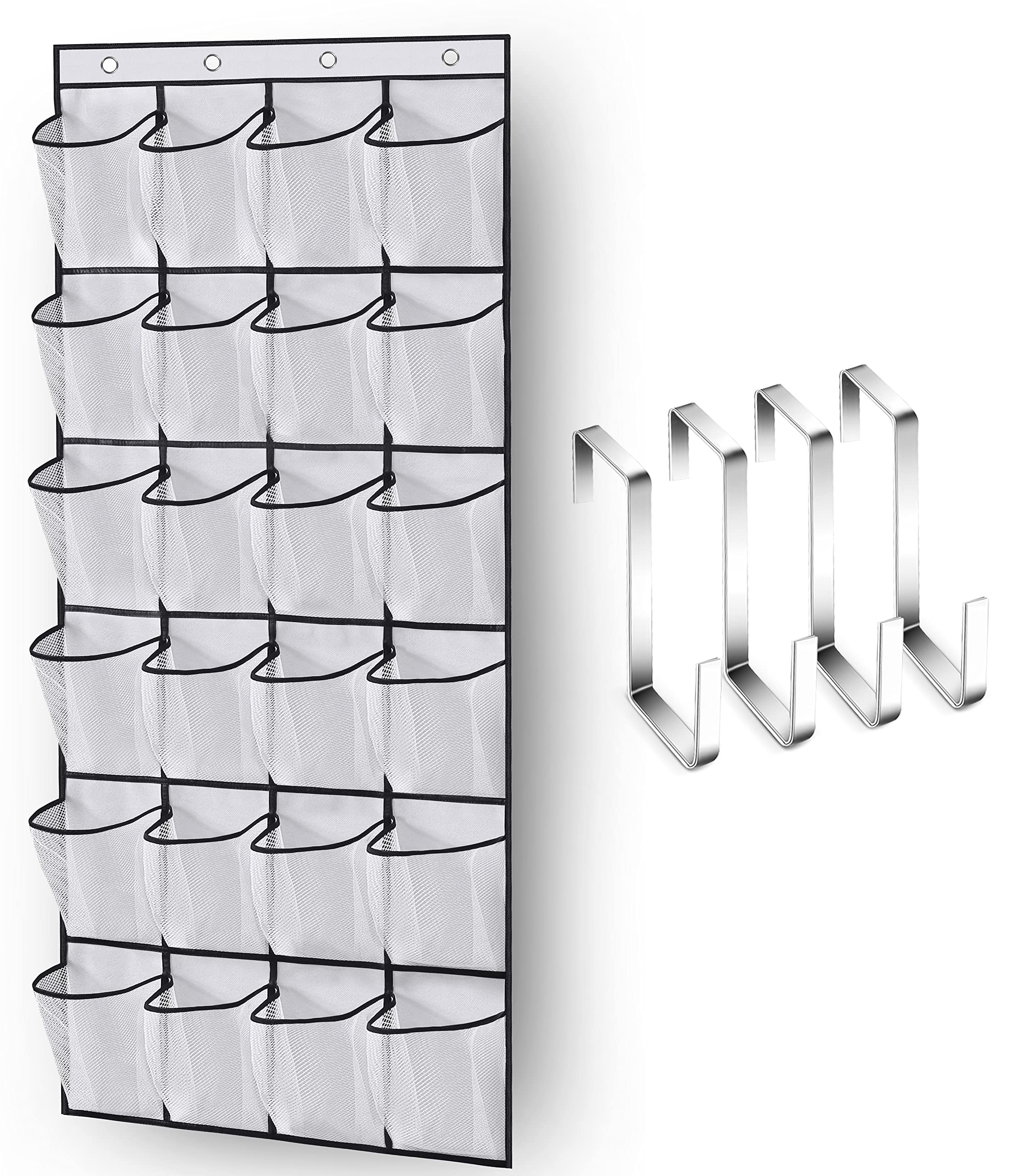
A compact, budget-friendly over-the-door organizer with 24 clear mesh pockets that fit most sneakers and many men's shoes up to large sizes.
Why I picked it: Roomy clear mesh pockets, reversible hooks, and a foldable, travel-friendly design.
Best for: Tight apartments, dorms, bathroom doors, and closets with limited floor space.
Very affordable option for maximizing door space.
Pros
- 24 see-through mesh pockets
- Roomy enough for many large sneakers
- Reversible over-door hooks included
- Folds flat for storage or travel
Cons
- Pockets can stretch with heavy boots
- Hook fit depends on door clearance
My take
I used this behind a bathroom and closet door and appreciated how much floor space it reclaimed. The mesh pockets are clear so I could spot the pair I needed quickly.
The pockets are larger than many over-the-door bags — I was able to tuck in sneakers and some bulkier shoes without them falling out. Heavy winter boots will stress the slots over time, so I treated it like a sneaker-and-sandal solution rather than a boot shelf.
Installation was simple with the four reversible hooks. A heads-up: if your door has an unusually thick trim, those hooks might not sit perfectly and you may want longer hardware.
2. Seville Classics 3-Tier Resin Slatted Shoe Rack – Best Stackable Freestanding
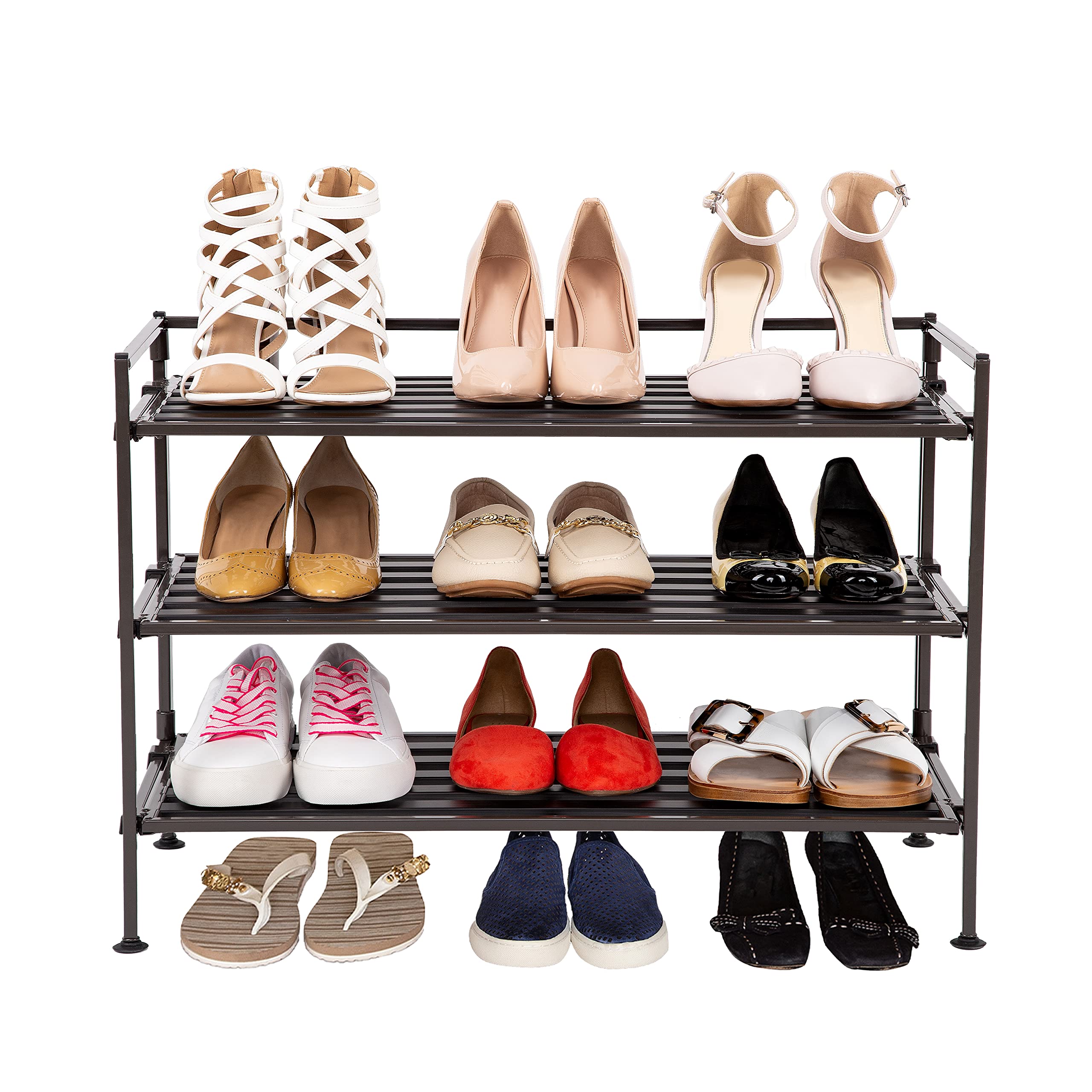
A sturdy, modular 3-tier rack that snaps together quickly and can be stacked or interlocked with other units for custom layouts.
Why I picked it: Interlock modular system, 30 lb per shelf capacity, and quick no-tools assembly.
Best for: Closets, entryways, or anyone who wants a stackable, modular shoe solution.
Solid midrange value for a durable, modular shelf.
Pros
- Interlock modular design
- Supports up to 30 lb per shelf
- Fits various shoe sizes and bins
- Snap-in, tool-free assembly
Cons
- May not fit through narrow door frames
- Resin slats aren’t real wood
My take
I click-assembled this in a few minutes and liked how secure each shelf felt once seated in the steel frame. The resin slats look clean and are easy to wipe down.
Because it uses an interlock feature, I created a horizontal run in my mudroom by linking two units. The shelves accommodate low-profile shoes beneath the bottom shelf, and they handled a couple of heavier pairs without flexing.
One practical note: measure any tight doorways before ordering. The assembled frame can be wider than expected and proved awkward to move through a narrow apartment door in my setup.
3. SONGMICS 3-Tier Metal Shoe Rack – Best for Adjustable Angles
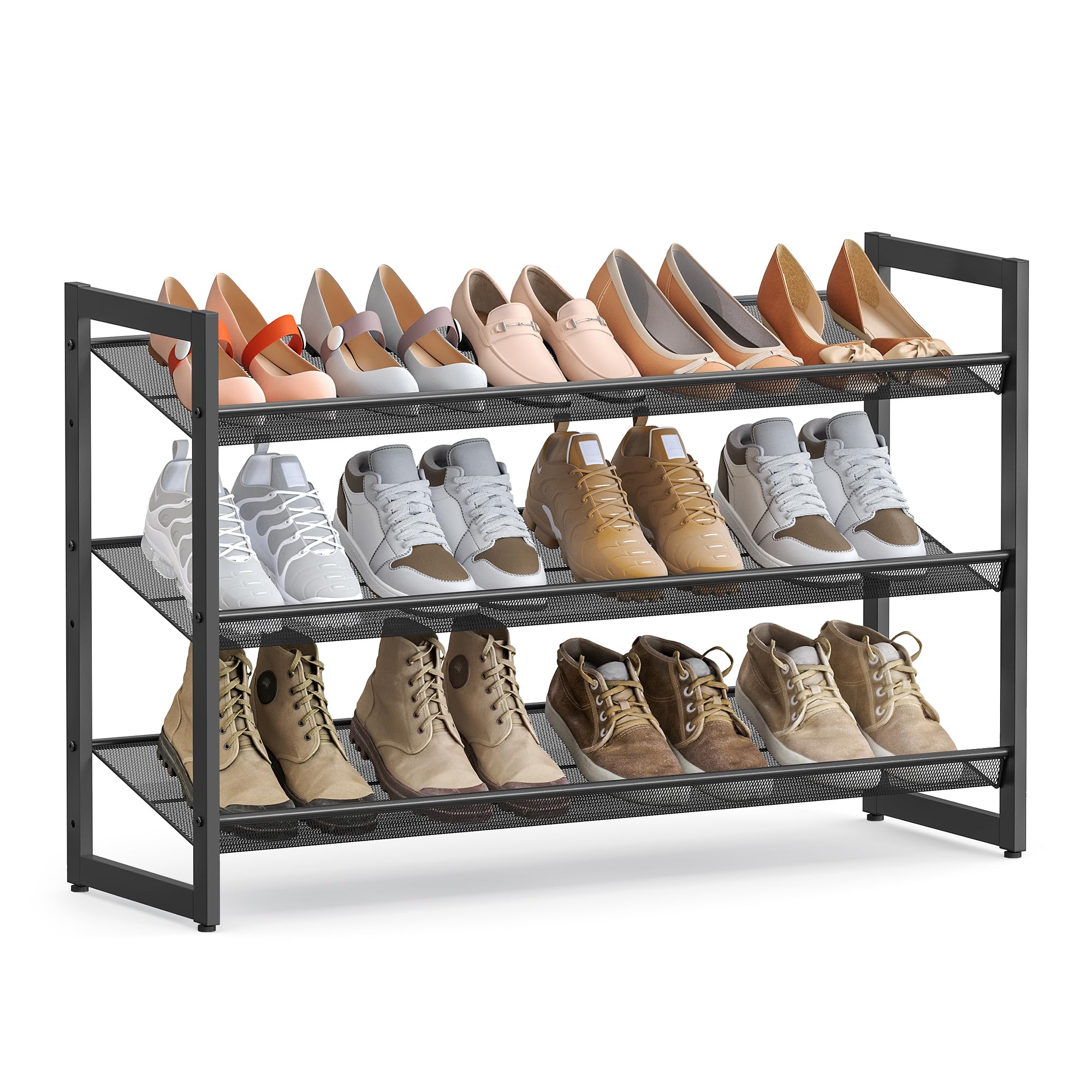
A versatile metal rack with shelves that assemble flat or angled, adjustable feet, and stackable connectors for taller configurations.
Why I picked it: Shelves can be angled for easy access; adjustable feet and anti-tip kit boost stability.
Best for: Closets, garages, and spaces that need versatile shelf angles or taller shoe clearance.
A practical mid-priced pick with adjustable features.
Pros
- Shelves flat or angled
- Adjustable feet for uneven floors
- Stackable with connectors
- Anti-tip kit included
Cons
- Side panels feel thin up close
- Not the heaviest-duty long-term option
My take
I appreciated the option to mount shelves flat for neat stacks or angled for quick access. That flexibility helped when I mixed running shoes, heels, and a couple of taller sneakers.
Assembly was straightforward with labeled parts, and the adjustable feet made it stable on my uneven basement floor. When loaded as intended it felt solid, though the painted metal sides are lighter-gauge than heavy carpentry racks.
If you plan to overload every shelf with the bulkiest boots, I’d opt for a beefier frame—this one is best for a combination of shoe types and frequent reach-and-grab use.
4. VASAGLE 6-Tier Shoe Rack – Best for Capacity
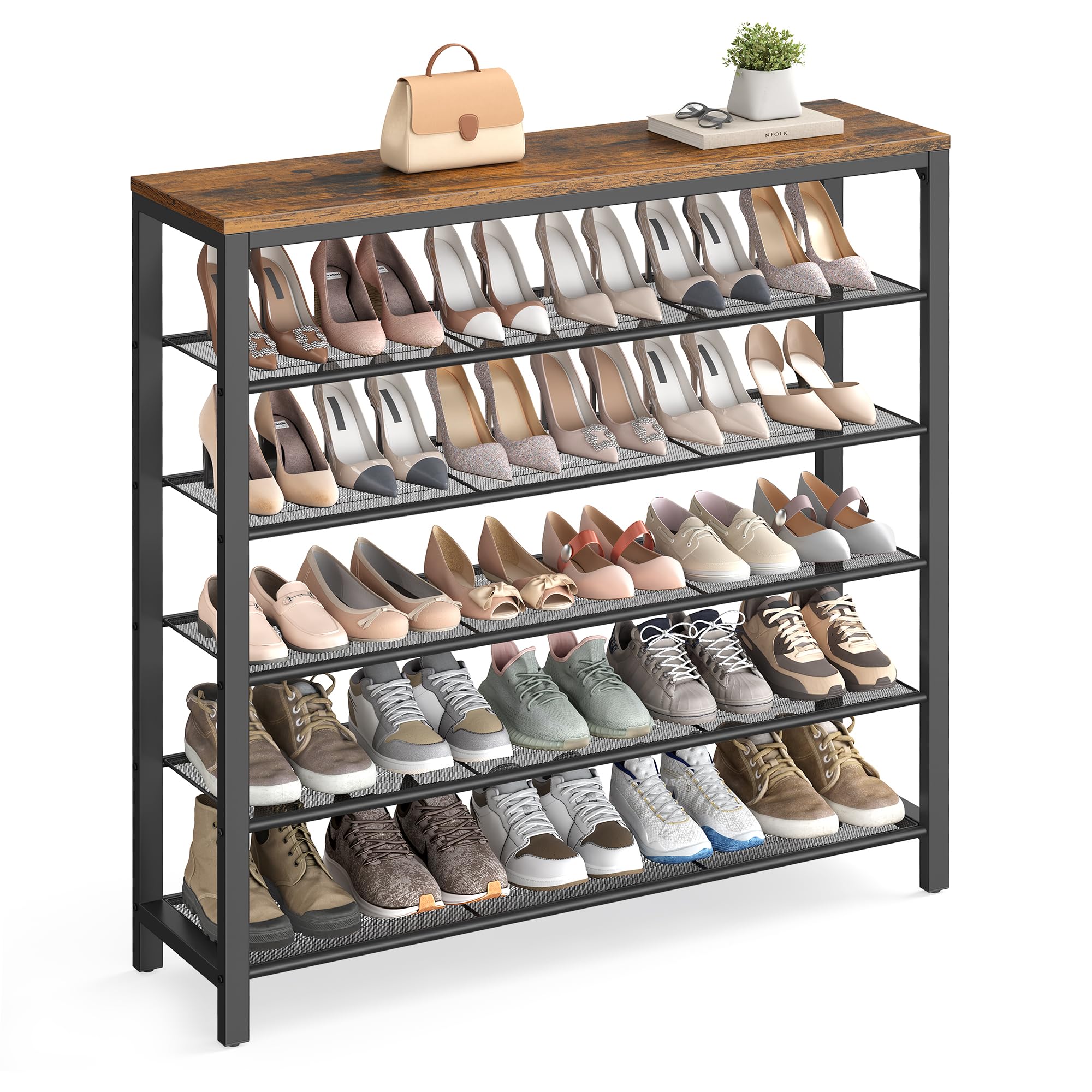
A tall, six-tier organizer built to hold large shoe collections while using minimal floor footprint and offering a decorative top shelf.
Why I picked it: Five mesh shelves plus a top shelf for 24–30 pairs and a decorative storage surface.
Best for: Large households, entryways, or anyone who needs vertical, high-capacity storage.
Higher-capacity option that stays stylish and functional.
Pros
- Holds 24–30 pairs
- Top shelf doubles as display surface
- Dense mesh resists dirt buildup
- Adjustable feet for balance
Cons
- Takes up vertical space
- Requires assembly
My take
I set one of these in my foyer and was immediately impressed by how many pairs it swallowed without looking bulky. The wood-style top gives it a nicer finish than plain utility racks.
The mesh shelves let mud and debris fall through so cleanup is easier, and the frame stayed sturdy after daily use. It’s a unit I’d pick when floor space is tight but shoe volume is high.
Putting it together took a little time, but the instructions and labeled parts kept the process painless.
5. Simple Trending 3-Tier Stackable Shoe Rack – Best Modular & Expandable
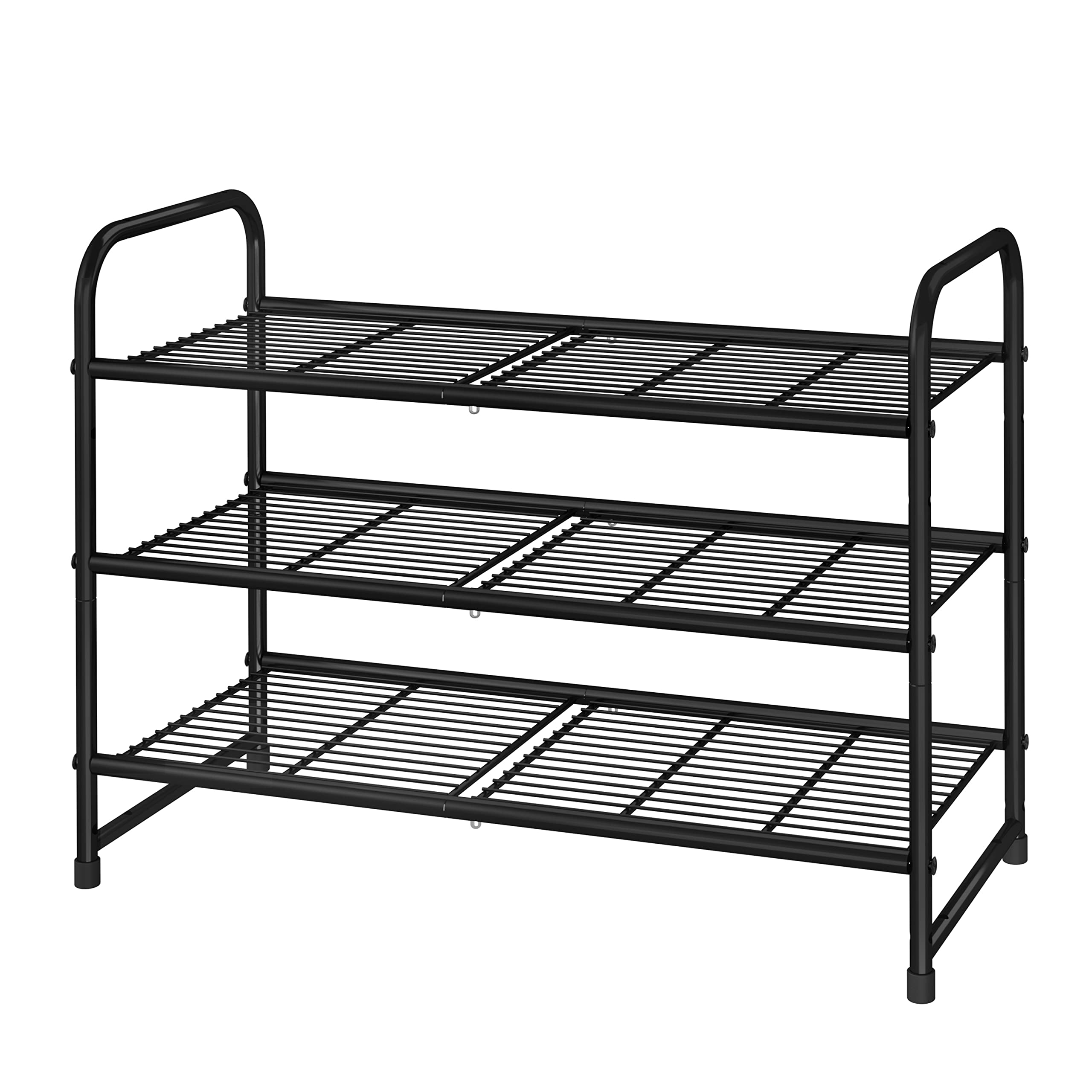
A simple powder-coated metal rack that stacks vertically or bridges horizontally for DIY expansions and offers a visible, tidy layout.
Why I picked it: Stackable and expandable design, durable metal tubing, and very quick assembly.
Best for: Closet systems where you want to build up or bridge units for more capacity.
Affordable and flexible for DIY storage builds.
Pros
- Stackable to create 6 tiers
- Powder-coated metal finish
- Easy and fast assembly
- Good visibility of shelves
Cons
- Included wall anchor feels weak
- Horizontal expansion requires extra units
My take
I replaced older plastic shelving with a set of these and the difference was immediate: no bowing and a much tidier closet face.
Assembly was the easiest of the bunch—screws and connectors are intuitive and it stood square once all shelves were in. I liked that I could stack two units for added height when needed.
If you need lateral expansion you’ll want additional units; horizontal bridging works but isn’t a single-unit feature.
6. ULG Over-the-Door Organizer (5 Large Pockets + 10 Mesh) – Best Heavy-Duty Over-the-Door
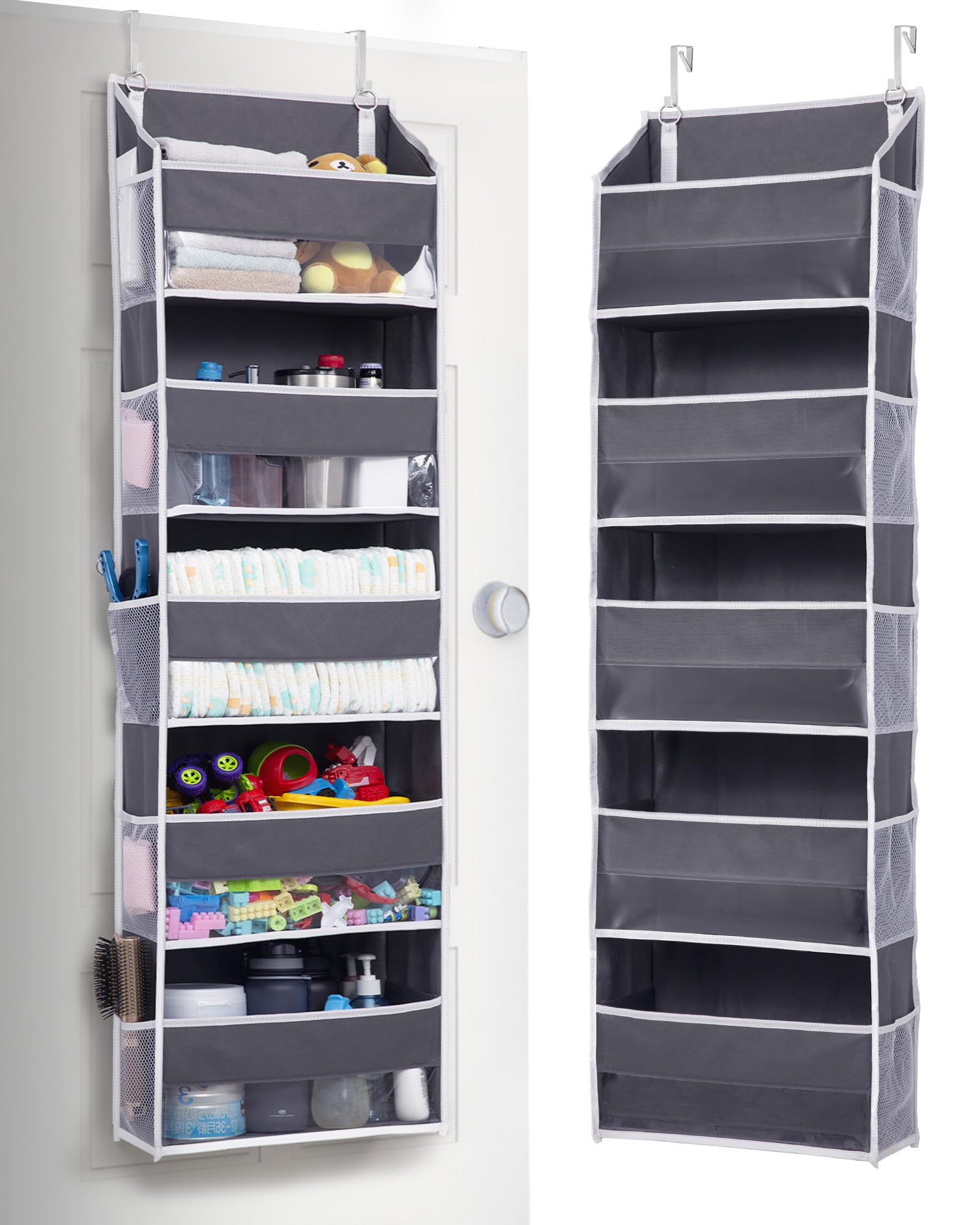
A reinforced over-the-door system with large pockets, additional mesh side pockets, and clear PVC windows built to hold bulkier items without sagging.
Why I picked it: Extra-deep pockets, reinforced cardboard panels, and clear windows for quick content checks.
Best for: Nurseries, baby supplies, hats, accessories, or heavier door-hung storage needs.
Great capacity and structure for an over-the-door bag.
Pros
- Five deep main pockets
- Ten mesh side pockets
- Reinforced panels to prevent sagging
- Clear PVC windows for visibility
Cons
- Door thickness determines fit
- Can block trim on some doors
My take
I hung this in a nursery and relied on the deep pockets for diapers, wipes, and small toys. The reinforced panels kept the pockets from ballooning when full.
The clear windows make quick selection easy and the included metal hooks held the weight without sagging. I did verify door thickness first—this unit fits doors under 2.0 inches of thickness, so measure your frame before you hang it.
For heavier or awkwardly shaped items this felt more secure than thin fabric bags I’ve tried in the past.
7. MISSLO Over-the-Door Organizer (35 Pockets) – Best for Maximum Pockets
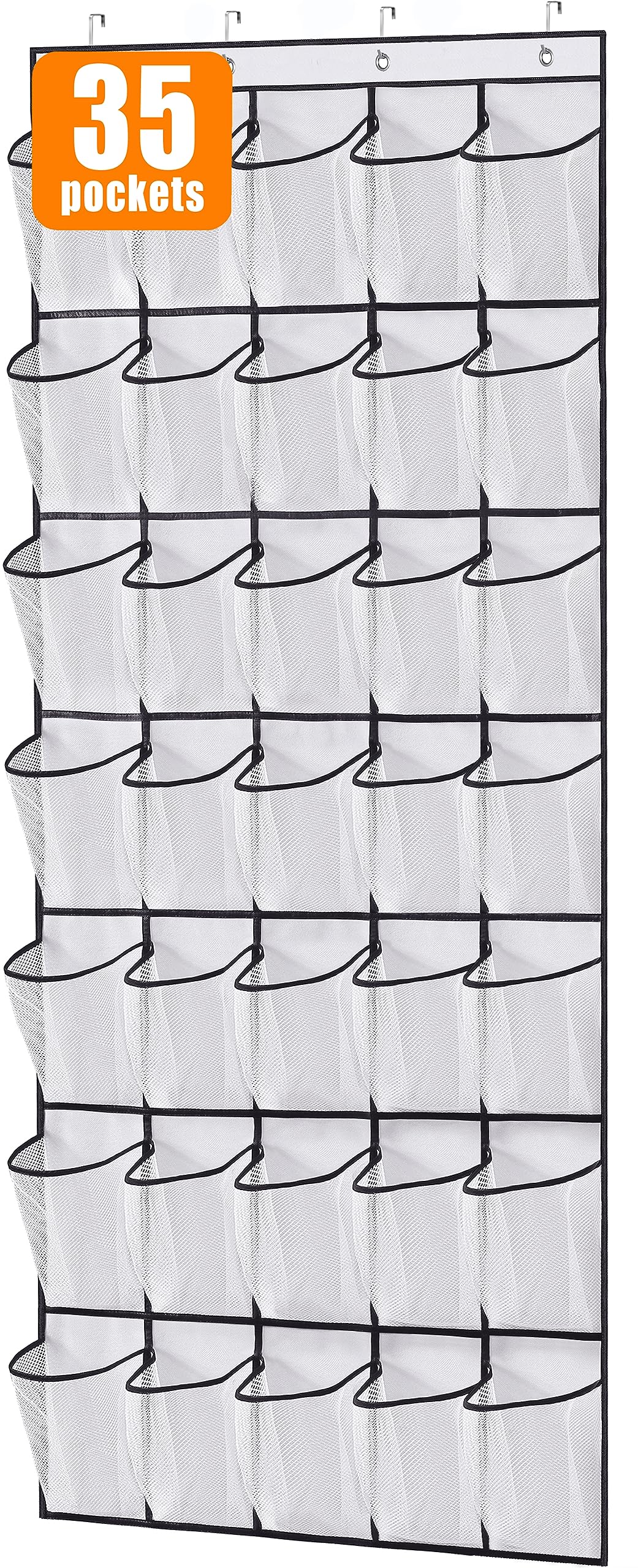
The deepest-pocket over-the-door organizer in this group, built from washable oxford fabric and sized to fit most standard doors.
Why I picked it: A huge 35-pocket layout with deep slots and washable, durable oxford fabric.
Best for: Families, classrooms, craft storage, or anyone needing the most separate compartments.
High-capacity, budget-conscious pick.
Pros
- 35 individual deep pockets
- Large pocket dimensions
- Durable, washable oxford fabric
- Fits most standard doors
Cons
- Overloaded pockets stress hooks
- Material is functional, not premium
My take
I used this to organize yarn and accessories and loved that each skein or item had its own pocket — it really reduced the digging and tangling.
The pockets are generous in depth and width, roomy enough to hold many adult-sized shoes in a single slot. The included metal hooks are sturdy for normal loads, but if you plan to double up heavy shoes in pockets I recommend reinforcing the top hooks.
It’s a great solution when you need the absolute most compartments on a door without resorting to shelving.
8. VASAGLE 4-Tier Shoe Rack – Best Budget Industrial Style
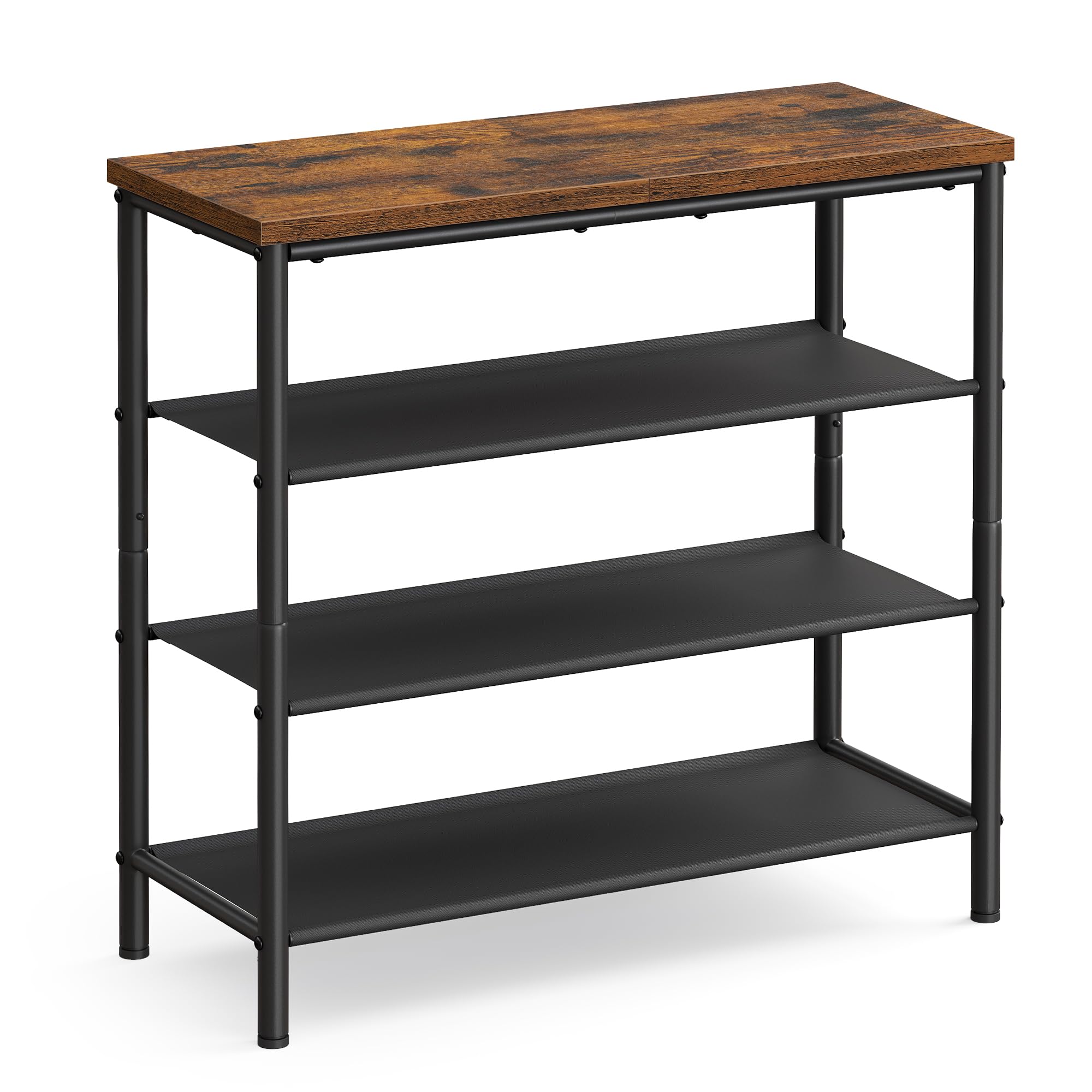
A compact, industrial-style rack with three fabric shelves, a wood-look top, and adjustable feet — a nice-looking, space-conscious entryway option.
Why I picked it: Attractive top shelf, fabric tiers that resist sagging, and a slim footprint for entryways.
Best for: Entryways and closets where aesthetics and function both matter.
Good value for style-forward storage.
Pros
- Attractive wood-style top
- Tight fabric shelves resist sag
- Adjustable feet and anti-tip kit
- Easy to assemble
Cons
- Cloth shelves not as heavy-duty as metal
- Less ideal for constant heavy loads
My take
I was skeptical about fabric shelves at first, but after assembly they proved tighter and more supportive than I expected. The top is a useful staging area for bags and keys.
Assembly required matching a few types of screws, but the predrilled holes aligned cleanly and the frame stayed square. It fits nine to twelve pairs depending on shoe size and worked well in a small foyer.
If you want something decorative but functional, this one hits the balance without feeling like pure utility furniture.
How I Picked and Tested These Shoe Organizers
Key considerations I use when choosing shoe storage
I prioritize capacity relative to footprint first: I compare how many pairs a unit claims to hold against the actual floor or door space it consumes.
Then I check fit and clearance—over-the-door hooks and door trim compatibility can make or break an otherwise perfect organizer. For freestanding racks I pay close attention to shelf load ratings and whether the unit can be stacked or linked.
Durability and materials matter to me: metal frames and reinforced panels outlast thin non-woven fabric if you plan to load heavy boots. But fabric and mesh offer lighter weight and lower visual bulk for entryways.
- Capacity vs footprint: match pair count to your space.
- Over-the-door fit: measure door thickness and trim before buying.
- Materials: metal frames for weight, mesh for dirt-shedding.
- Adjustability: removable shelves help fit tall boots.
- Assembly: look for labeled parts and clear instructions if you want fast setup.
Frequently Asked Questions
Will an over-the-door organizer fit my door?
I always measure my door thickness and any trim first. Some organizers list hook limits (for example, a couple of these hooks fit up to about 1.77 inches while others are rated for doors under 2.0 inches). If your door has thick trim or molding, plan to either swap in longer hooks or use wall anchors.
Can these racks hold boots and heavy work shoes?
I separate heavy boots from shoe-grade organizers. Over-the-door mesh pockets and thin fabric shelves will handle sneakers and sandals fine, but for boots or heavy work shoes I prefer metal-framed or reinforced mesh shelves that list per-shelf weight capacity.
Are fabric shelves that sag over time?
In my experience, tight polyester or oxford fabric panels with reinforced frames stayed snug. Mesh that’s stretched under heavy loads will sag, so check for reinforcement or cardboard inserts if you plan to load the shelves.
Final Take
I recommend picking the form factor that fits your space: over-the-door organizers if floor space is precious, freestanding racks if you need durability and decorative storage.
For the tightest budgets and simplest installs, the over-the-door bags give the biggest immediate space gain. If you want a long-term, heavy-load solution, choose a metal-frame or reinforced shelving system.
Whichever organizer you choose, measure your doorways and intended shoe types first — that little step saved me returns and rework more than once.
