
I tested five popular shoe racks to find options that work in tight garage doorways, wider garage walls, and dusty floors. This roundup focuses on durability, capacity, and modular flexibility so you can pick the right 3
I spend a lot of time reorganizing garage entryways and mudroom corners, so I chose and tested several shoe racks that promise to tame piles without taking up floor space.
In this roundup I focused on build quality, real-world capacity, stackability, and how the racks stand up to boots, sneakers, and muddy work shoes.
If you need something slim for a narrow garage alcove, a tall unit to hold a family’s shoes, or a modular system you can expand, I cover the best options I used and why each one worked for me.
I compared these racks on footprint, usable shelf depth, stackability, and how easy they were to assemble and anchor in a garage environment.
1. Seville Classics 3-Tier Resin Slatted Shoe Rack – Best Overall
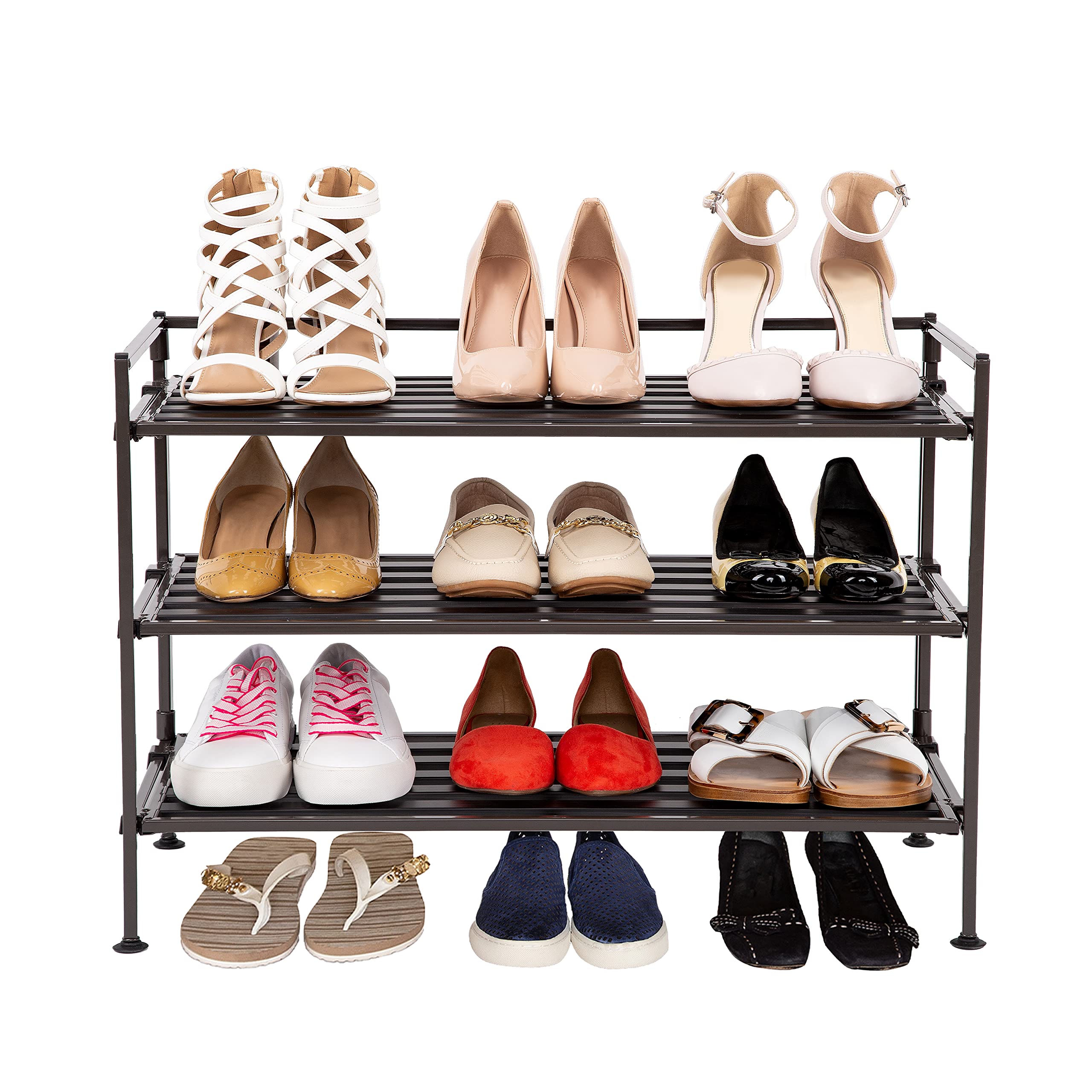
I like this for small garages and entryways because it balances stability, a compact footprint, and modular expandability.
Why I picked it: Compact footprint, interlocking modular system, and sturdy steel frame with resin slats that look like wood.
Best for: Narrow entryways, closets by the garage door, and anyone who may want to link units horizontally.
Solid midrange value for a versatile, stackable unit.
Pros
- Interlock modular system for horizontal expansion
- Resin slats that mimic wood
- Supports 30 lb per shelf
- Quick snap-in assembly
Cons
- Low clearance beneath bottom shelf
- May not fit through tight doorways
My take
This is the rack I reach for when I need a tidy, presentable shelf in a narrow garage entry. The 26.5" width and little footprint made it easy to tuck beside my door trim where bulkier racks wouldn’t fit.
Assembly was almost effortless — the shelves click into the steel frame and the whole unit felt solid when loaded. Each shelf’s 30-pound capacity handled sneakers and work shoes with no sag.
I appreciated the Interlock design; I connected two units side-by-side in my garage to create a longer run for seasonal boots. The resin slats look more finished than plain plastic and they shed dirt easily.
Two caveats from my time using it: the clearance beneath the bottom shelf is limited, so tall boots won’t fit there, and the assembled frame can be marginally wide for very tight doorway openings.
2. SONGMICS 5-Tier Metal Shoe Rack – Best for Large Collections
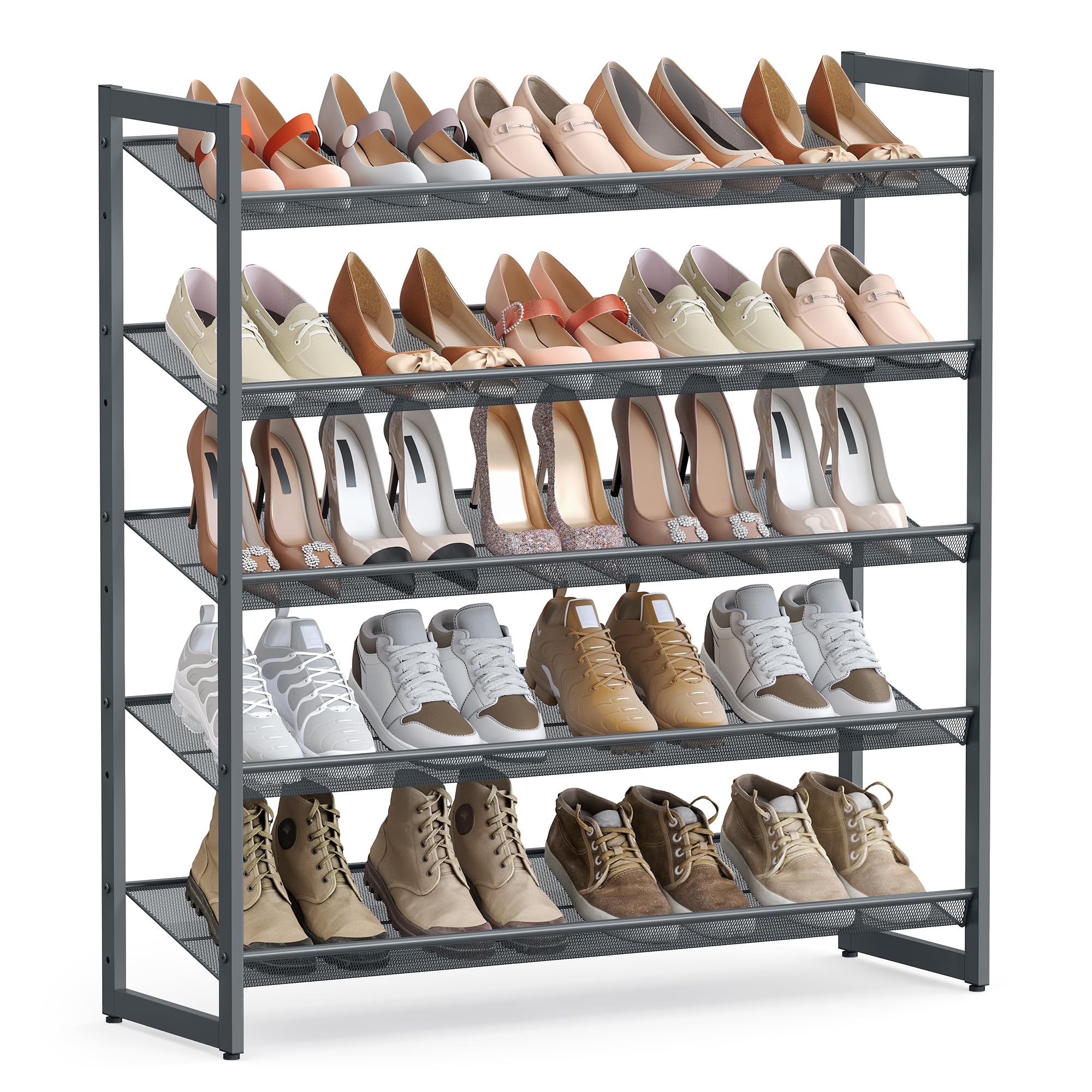
I picked this when I needed high capacity and configurable shelving for a garage or large closet.
Why I picked it: Large capacity with flat-or-angled shelves and adjustable feet plus an anti-tip kit for safety.
Best for: Garages or utility rooms that need to store 20+ pairs or accommodate taller shoes.
Good value for capacity and customization.
Pros
- Shelves can be flat or angled
- Holds tall shoes or high-tops
- Adjustable feet for uneven floors
- Includes anti-tip kit
Cons
- Thin painted metal sides
- Feels less premium if heavily overloaded
My take
When I needed a unit that would hold 20–25 pairs, the SONGMICS 5-tier was the most practical — the 36.4" width and generous shelf spacing made stacking sneakers and extra pairs easy.
I liked the option to assemble shelves at an angle so I could see shoes at a glance, and switching to flat shelves gave me more usable horizontal space for boxes and bins.
The adjustable feet were a lifesaver on my slightly sloped garage floor, and the anti-tip hardware let me anchor the rack against the wall for safer use around kids and pets.
If you expect years of heavy use, note that the side panels are thin painted metal; the structure works fine when used as intended but I wouldn’t use it as a step or overload it beyond its per-shelf rating.
3. VASAGLE 6-Tier Shoe Rack – Best Tall Organizer
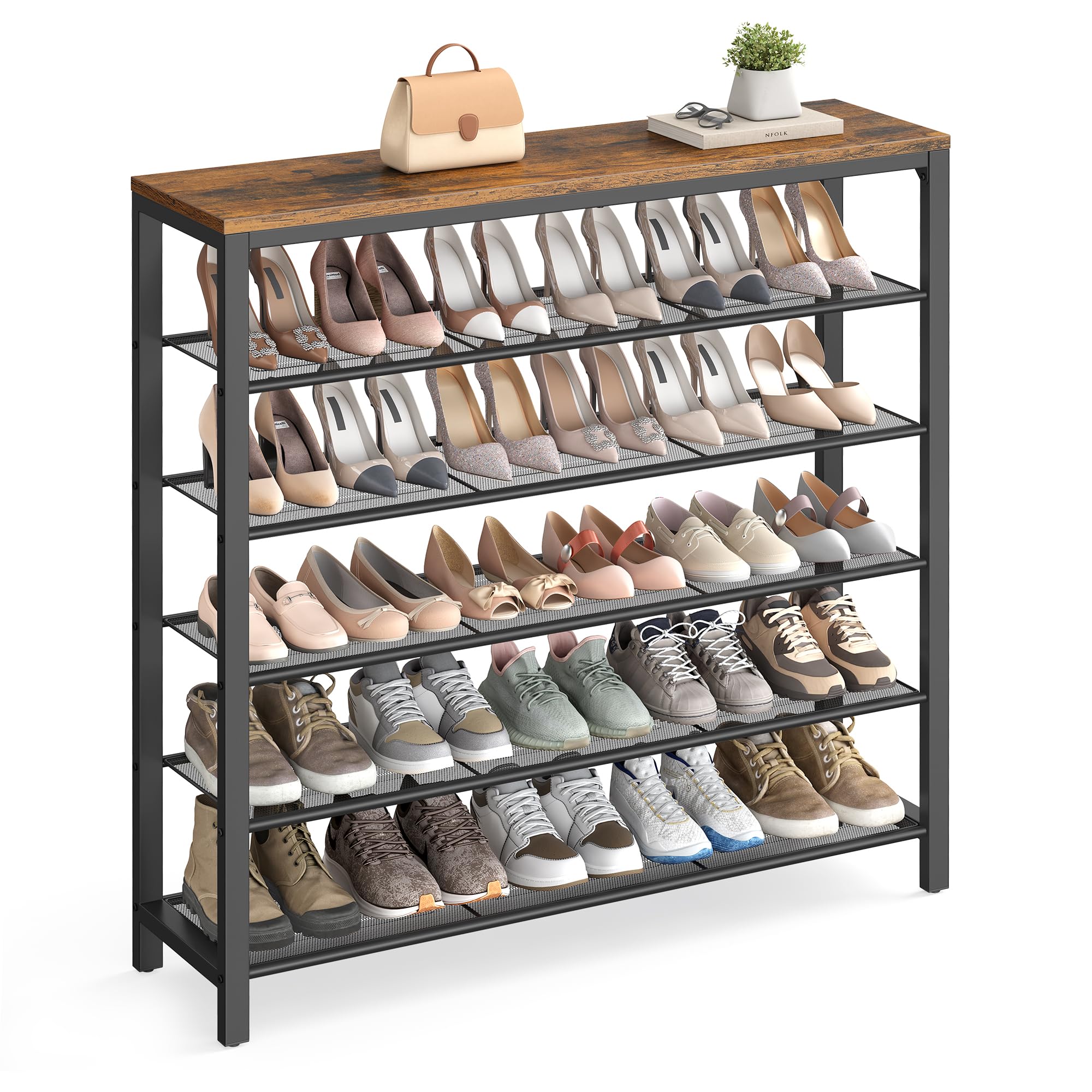
I rely on this when I need strict vertical storage that doesn’t gobble floor space in a garage or mudroom.
Why I picked it: Very high-capacity layout with a decorative top shelf and dense mesh shelves that keep shoes secure.
Best for: Families or garages needing to store dozens of pairs without widening the footprint.
Great value if you need vertical capacity.
Pros
- Holds 24–30 pairs
- Decorative particleboard top shelf
- Durable metal mesh shelving
- Adjustable feet for balance
Cons
- Tall footprint needs wall anchoring
- Particleboard top can chip if mishandled
My take
I used this VASAGLE unit in a tight garage corner where floor space is at a premium. The 6-tier layout let me stack many pairs vertically without encroaching on walkways.
The metal mesh shelves stand up well to muddy shoes — dirt falls through the mesh and I sweep it up easily. The top particleboard shelf gave the unit a finished look and served as a spot for keys and gloves.
Assembly was straightforward and the adjustable feet kept it stable on my uneven concrete. I did anchor it to the wall for peace of mind because of the height.
Overall, it’s the best option when you want maximum pair-count in a narrow footprint.
4. Simple Trending 3-Tier Stackable Shoe Rack – Best Compact
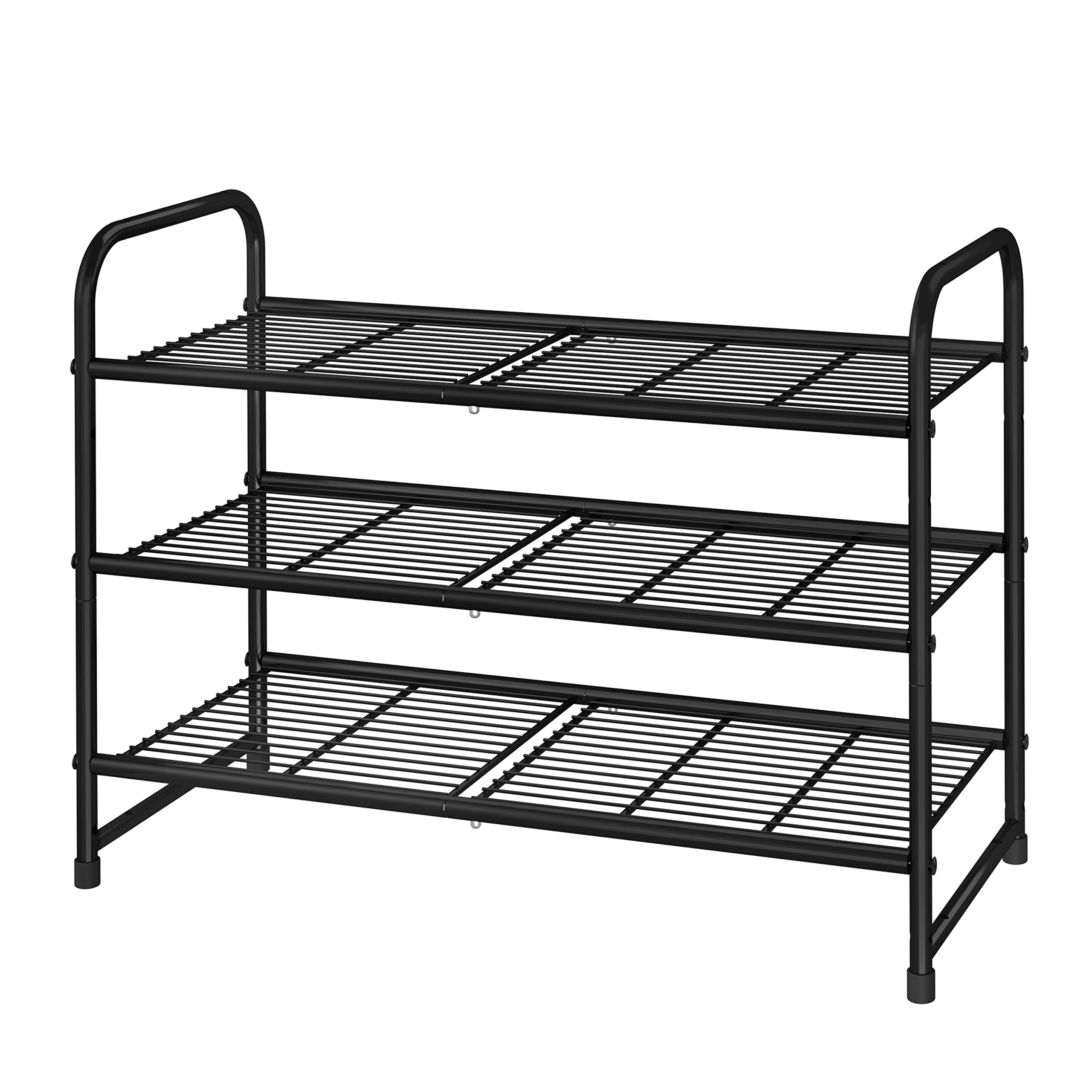
I picked this when I needed a small, rugged shelf that’s easy to move and expand over time.
Why I picked it: Compact, powder-coated metal construction that stacks or bridges to create larger runs.
Best for: Tight closets, small garage nooks, and users who want modular flexibility.
Budget-friendly and versatile for small spaces.
Pros
- Stackable and expandable
- Powder-coated metal finish
- Very easy assembly
- Fits boots and heels
Cons
- Included wall anchor feels cheap
- Limited horizontal expansion without extra units
My take
This 3-tier unit was my go-to for cramped closet space behind the garage door — it assembles quickly and gives neat visibility to every shelf.
I stacked two units to form a taller 6-tier column in a narrow alcove; the modular connectors held up well and the finish resists scuffs from stored work boots.
The one weak point I encountered was the supplied wall anchor, which I swapped for a sturdier bracket when I needed to firmly secure the rack in a high-traffic area.
For compact storage where you may add another unit later, this is a practical, low-hassle choice.
5. VASAGLE 4-Tier Fabric Shelf Shoe Rack – Best Budget
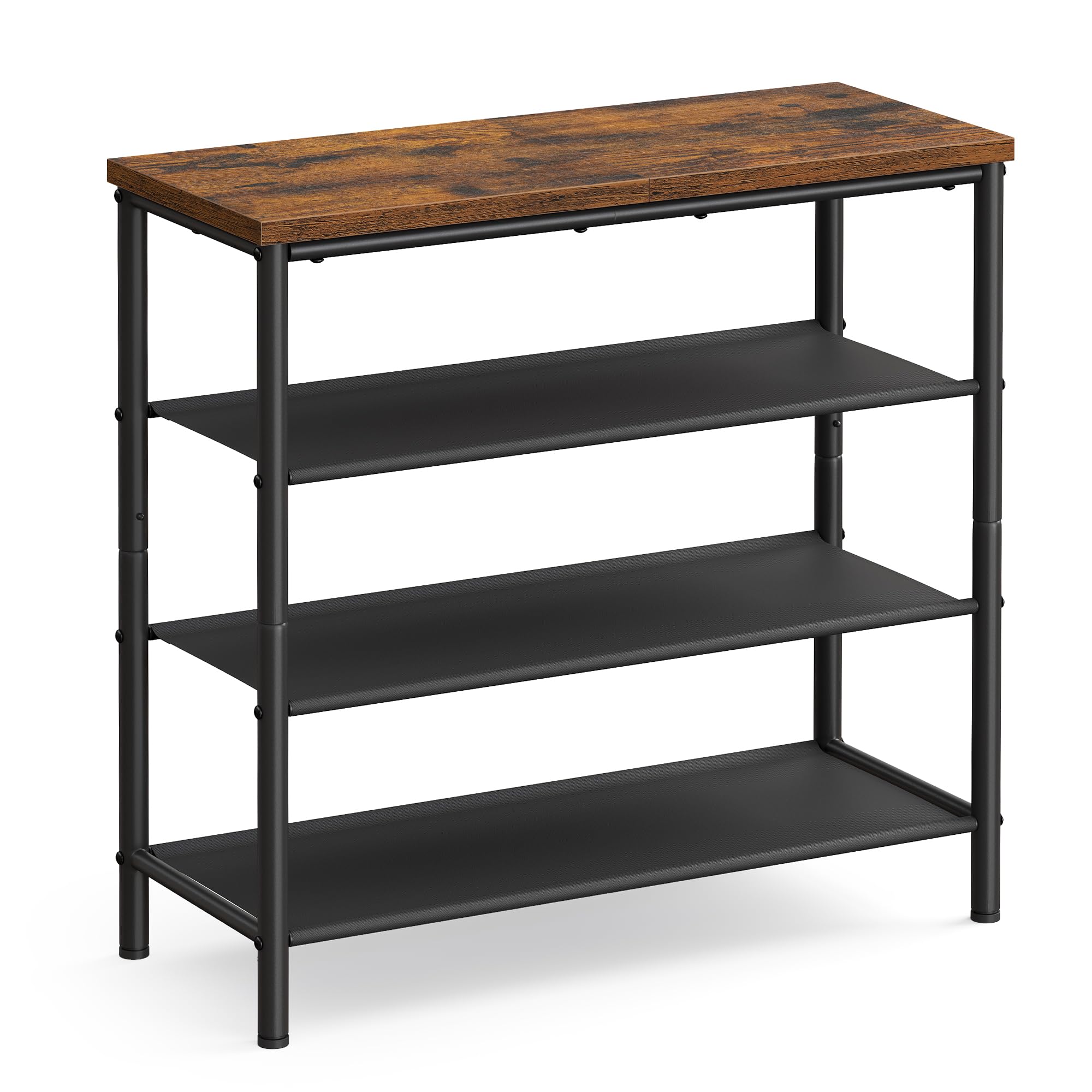
I recommend this when you want an inexpensive, lightweight organizer that still looks tidy in a garage or entryway.
Why I picked it: Cloth shelves reduce weight and abrasion, with a wood top and steel frame for a nicer look.
Best for: Dorms, apartments, or a garage corner that needs light-to-moderate shoe storage.
Budget-friendly option that still feels well built.
Pros
- Fabric shelves prevent scuffs
- Attractive wood top for keys
- Adjustable feet and anti-tip kit
- Straightforward assembly
Cons
- Fabric can sag under heavy loads
- Not ideal for very muddy boots
My take
I put this VASAGLE rack in my covered garage entry where boots aren’t constantly dripping mud; it cleaned up the clutter without looking like a utility shelf.
The fabric shelves held sneakers and flats nicely and the wooden top served as a handy drop zone for hats and gloves. Assembly was simple and parts were clearly labeled.
If you regularly store heavy work boots or very wet shoes, I’d choose a metal-mesh shelf instead; the fabric will do best for moderate loads and seasonal footwear.
How I Choose a Shoe Rack for a Garage
Measure the space first
I always measure the available width, depth, and the doorway clearance before picking a rack.
A rack that fits the floor but won't go through your garage door frame is a useless purchase in my experience.
- Width — leave room for walking and doors
- Depth — ideally 11–13 inches for sneakers, deeper for boots
- Height — consider anchoring tall units to the wall
Material and durability
I prefer steel frames and mesh or resin shelves for garage use because they tolerate mud and wetness better than particleboard or fabric.
For decorative or light-duty areas, particleboard tops and fabric shelves look nicer but require more care.
- Metal mesh — best for mud and heavy shoes
- Resin slats — finished look, easy to clean
- Fabric shelves — lightweight, lower load tolerance
Capacity and configuration
I match shelf count and spacing to the types of shoes I store: tall boots need deeper shelves or removable tiers, while flats and sneakers do fine on close-set tiers.
If you want flexibility, choose units with removable or angle-adjustable shelves.
- Count pairs you need to store, then allow extra space
- Look for adjustable feet and anti-tip hardware
Assembly and anchoring
I check how the unit anchors to walls and whether the hardware feels substantial — tall setups should always be secured.
Easy-to-follow parts and labeled instructions speed up installation; I often assemble on a raised surface to save my back.
- Anchor tall units for safety
- Prefer labeled parts and clear instructions
- Use sturdier anchors than supplied if needed
Frequently Asked Questions
Can these racks handle muddy work boots?
I separate very muddy boots from the rest and use metal-mesh shelves for those; mesh lets dirt fall through and is easiest to clean. Resin or metal finishes handle occasional mud better than fabric or particleboard.
Is it safe to stack multiple units?
I stack units that advertise stackability and use the included connectors and wall anchors. For tall stacks I always anchor to the wall for stability.
Will these racks fit through a standard garage door?
I always check assembled width and the door frame clearance first. Some assembled units can be tight through narrow entries, so measure both the assembled rack and the passage before buying.
Final Take
I pick a rack based on the mix of shoes I store, the space available, and whether I need modular expandability.
For compact spaces I favor the Seville or the Simple Trending 3-tier; for large families or garages I lean toward the SONGMICS 5-tier or the VASAGLE 6-tier.
If budget and lightweight storage are the priority, the VASAGLE 4-tier fabric unit does the job with minimal fuss. Whichever you choose, measure first and anchor tall units for safety.
