
I tested compact, stackable, and high-capacity shoe racks so you can reclaim entryways, closets, and dorm rooms without wasting floor space.
I live in a small apartment and have tried every compact shoe storage option I could find. This roundup focuses on racks that maximize vertical space, fit narrow footprints, and actually hold real shoes without collapsing.
My picks balance footprint, build quality, and versatility so you can pick a rack that fits your closet, entryway, or mudroom. I explain where each rack works best and what trade-offs to expect.
If you want the smallest footprint that still holds multiple pairs, choose a compact fabric or wire rack. If you need long-term durability and flexibility for larger shoes, focus on metal or resin slatted designs.
1. Simple Houseware 3-Tier Fabric Shoe Rack – Best Value Compact
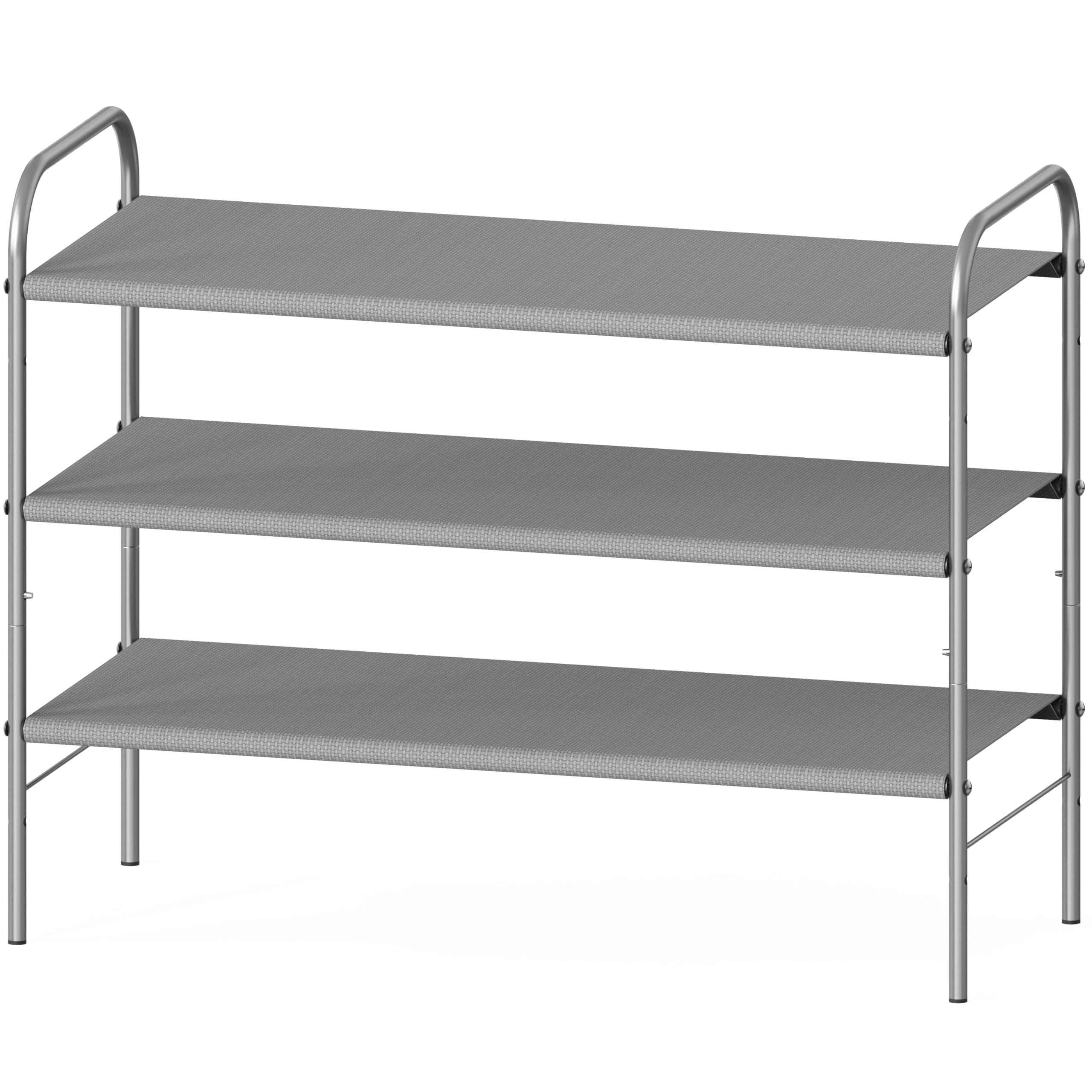
A slim, washable 3-tier rack that fits narrow closets and entryways; shelves support up to 30 lbs and you can convert to two tiers for taller shoes.
Why I picked it: Tiny footprint, washable fabric, and removable panels make it flexible for tight spaces.
Best for: Closets and entryways where depth is limited and budget matters.
Affordable, strong value for a compact solution.
Pros
- Very compact footprint
- Removable panel for two- or three-tier use
- Washable polyester shelves
- Holds up to 30 lbs per shelf
- Quick single-person assembly
Cons
- Shelves are less rigid than metal
- Not ideal for very deep or heavy boots
My take
I used this rack inside a narrow closet where depth was the main constraint and it fit perfectly. I can typically place three pairs across each shelf with casual shoes and it kept the doorway neat.
Assembly took just a few minutes and I appreciated that one person can do it. The metal frame feels solid and the 600D polyester is washable, which mattered after muddy days.
If you need completely rigid shelves for heavy boots, this won’t perform like a solid-metal unit. For everyday sneakers, flats, and sandals, though, it’s a dependable, budget-friendly option.
2. Simple Houseware 3-Tier Wire Shoe Rack – Best Stackable
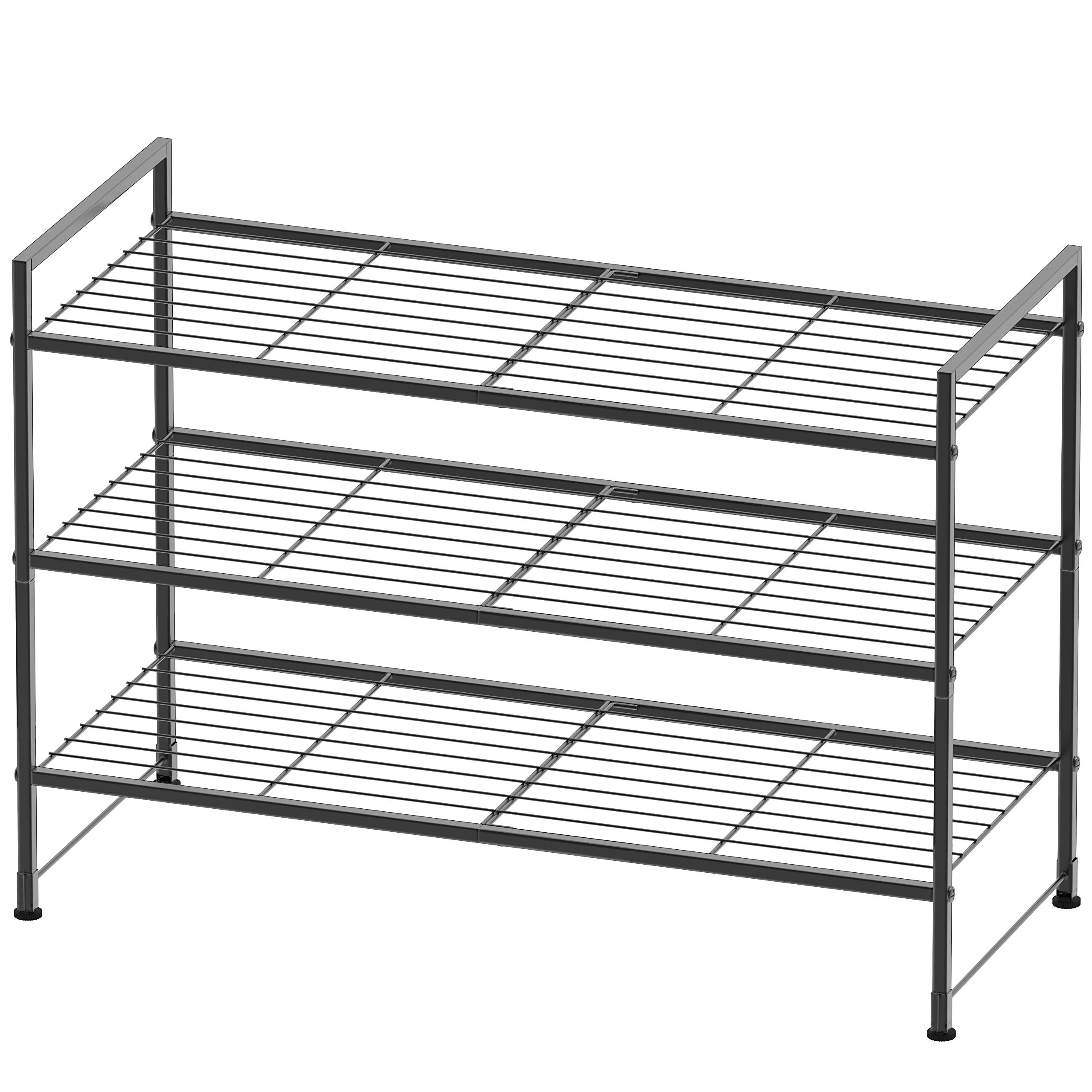
A snap-together metal rack with a slim profile that stacks easily—good for building a tailored storage column over time.
Why I picked it: Stackable design and sturdy wire construction that scales with your needs.
Best for: People who want to stack multiple racks or expand storage later.
Moderately priced for a durable, stackable metal option.
Pros
- Stackable to expand storage
- Sturdy metal shelves
- Supports up to 30 lbs per shelf
- Simple snap-together assembly
- Sleek low-profile design
Cons
- Wire shelves show items underfoot
- May need two people to stack safely
My take
I put one in my laundry room and later stacked a second unit; the snap-together assembly is fast and the racks interlock securely.
Each shelf holds roughly three pairs of smaller shoes or a mix of sneakers and sandals, and the metal coating resists bending under normal loads.
If you plan to stack several units, I recommend doing the final assembly with two people to steady the columns. The result is a neat, efficient vertical setup that doesn’t eat floor space.
3. Seville Classics 3-Tier Resin Slatted Shoe Rack – Best for Durability
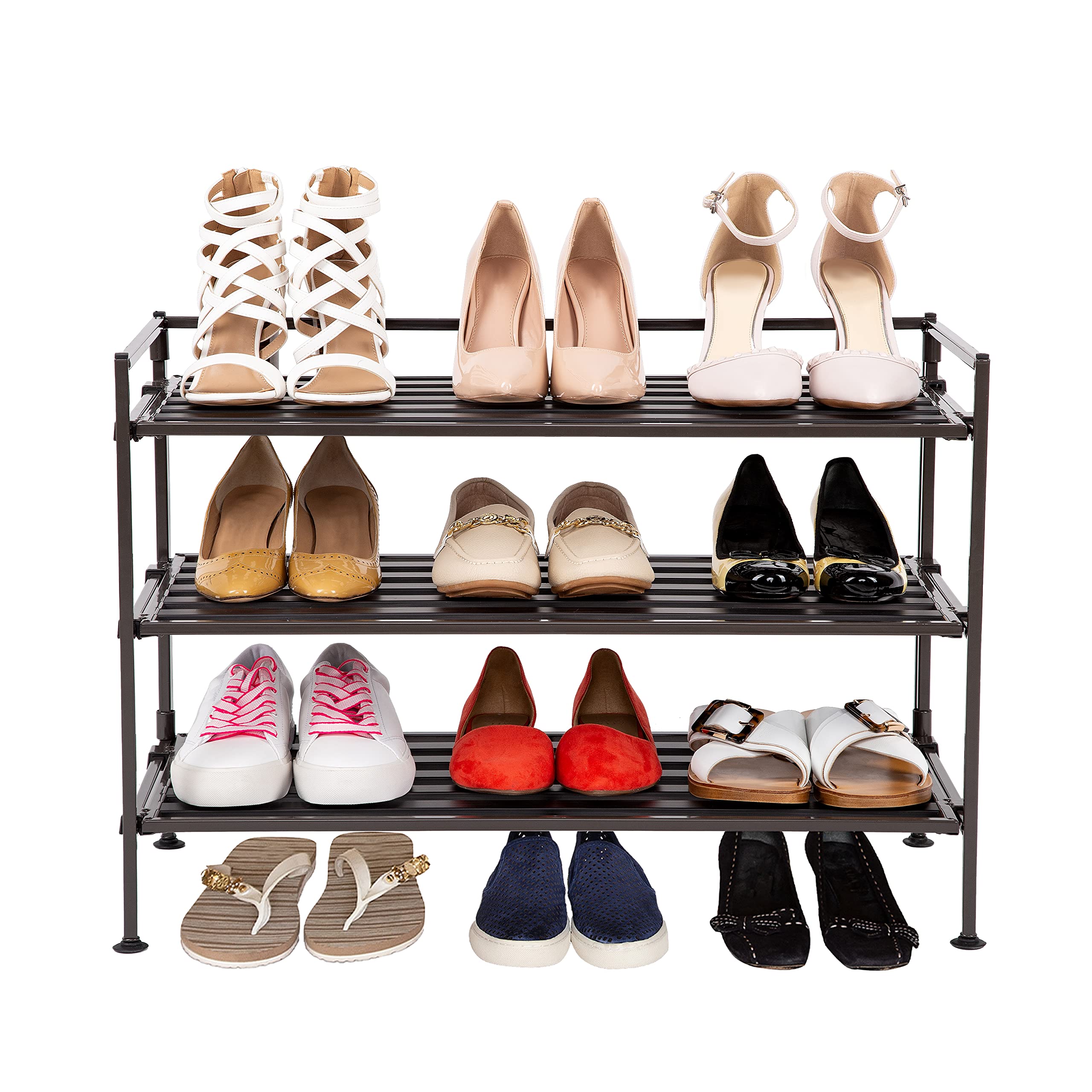
A rugged metal frame with resin slats that clicks together quickly; the Interlock system lets you connect units horizontally or stack vertically for long-term flexibility.
Why I picked it: Solid construction, modular interlock, and enough depth for larger shoes.
Best for: Closets and areas where you want durable, long-lasting storage.
A more durable, slightly premium option for frequent use.
Pros
- Durable steel frame
- Resin slats resist wear and look like wood
- Interlock lets units connect
- 30 lbs per shelf capacity
- Easy press-fit assembly
Cons
- Wider frame can be tough to maneuver through narrow doors
- Not the cheapest option
My take
I appreciated how quickly the frame unfolded and how each shelf clicked into place—assembly felt effortless and secure.
The slatted resin looks like wood and holds heavier shoes without flex. I was able to store larger sneakers and even fit storage bins beneath the bottom shelf.
When I needed to line up multiple units horizontally, the Interlock feature made a clean, continuous shelf that’s both sturdy and tidy.
4. VASAGLE 5-Tier Mesh Shoe Rack with Wood Top – Best for Entryway
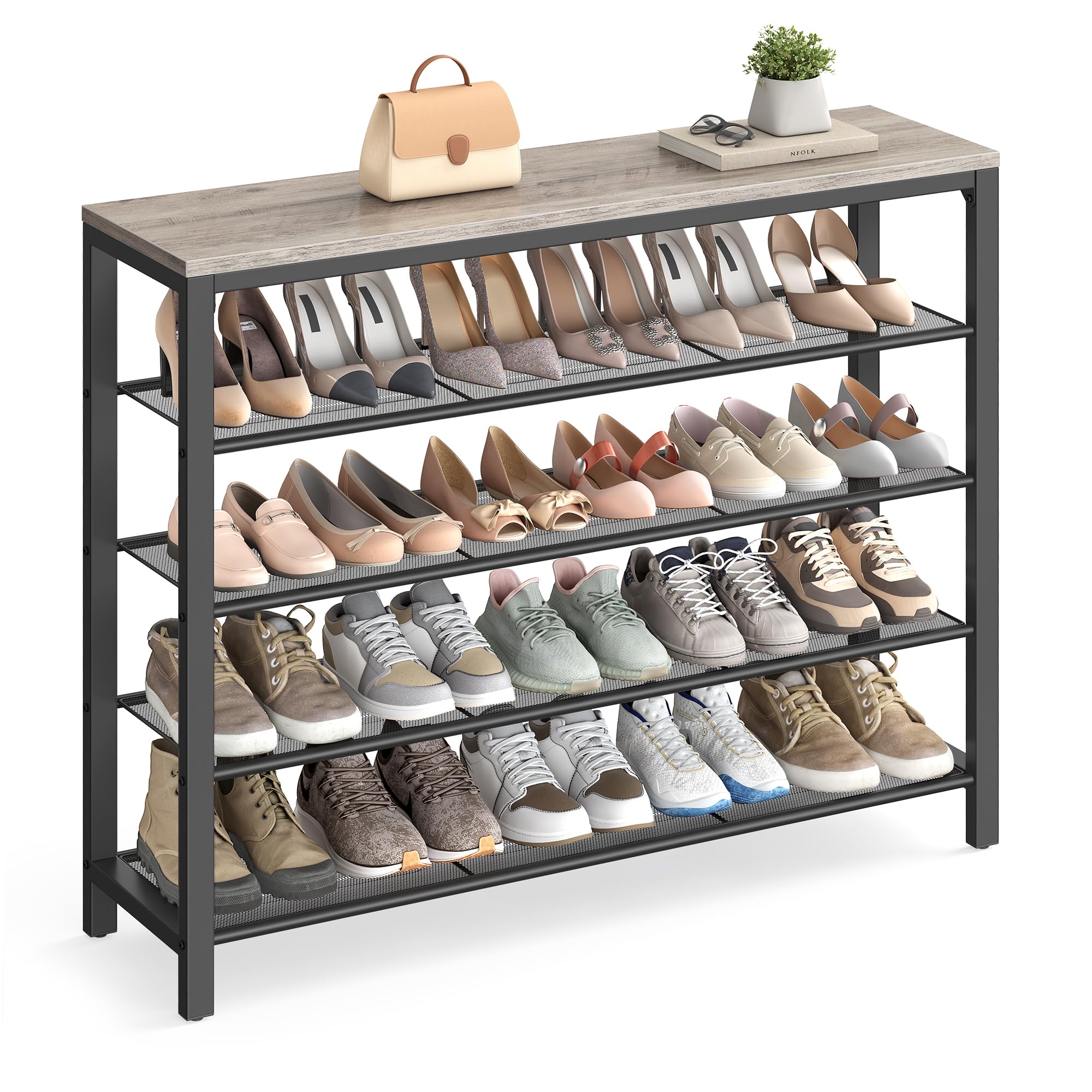
A taller, decorative 5-tier organizer that blends a wood top with mesh shelves—great for holding shoes plus keys or a small basket on top.
Why I picked it: Attractive industrial look, adjustable feet, and a useful top surface for entryway items.
Best for: Entryways and hallways where style and storage meet.
A midrange choice that balances looks and capacity.
Pros
- Decorative wood top surface
- Mesh shelves hide mud and debris
- Adjustable feet for uneven floors
- Holds multiple pairs per shelf
- Sturdy, decorative finish
Cons
- Each shoe shelf has limited weight capacity
- Larger boots need lower-shelf planning
My take
I set this in my foyer and immediately used the top as a drop zone for bags and keys—the top holds small items comfortably while shoes live below.
The mesh shelves let dirt fall through, which makes cleaning simpler than solid shelves. The rack stayed level on my slightly uneven entryway thanks to the adjustable feet.
This felt both decorative and functional in a visible space; if you have a family or several pairs per person, the five tiers help tame shoe piles without looking utilitarian.
5. Bamboo 2-Tier Shoe Rack – Best Bamboo Small Rack
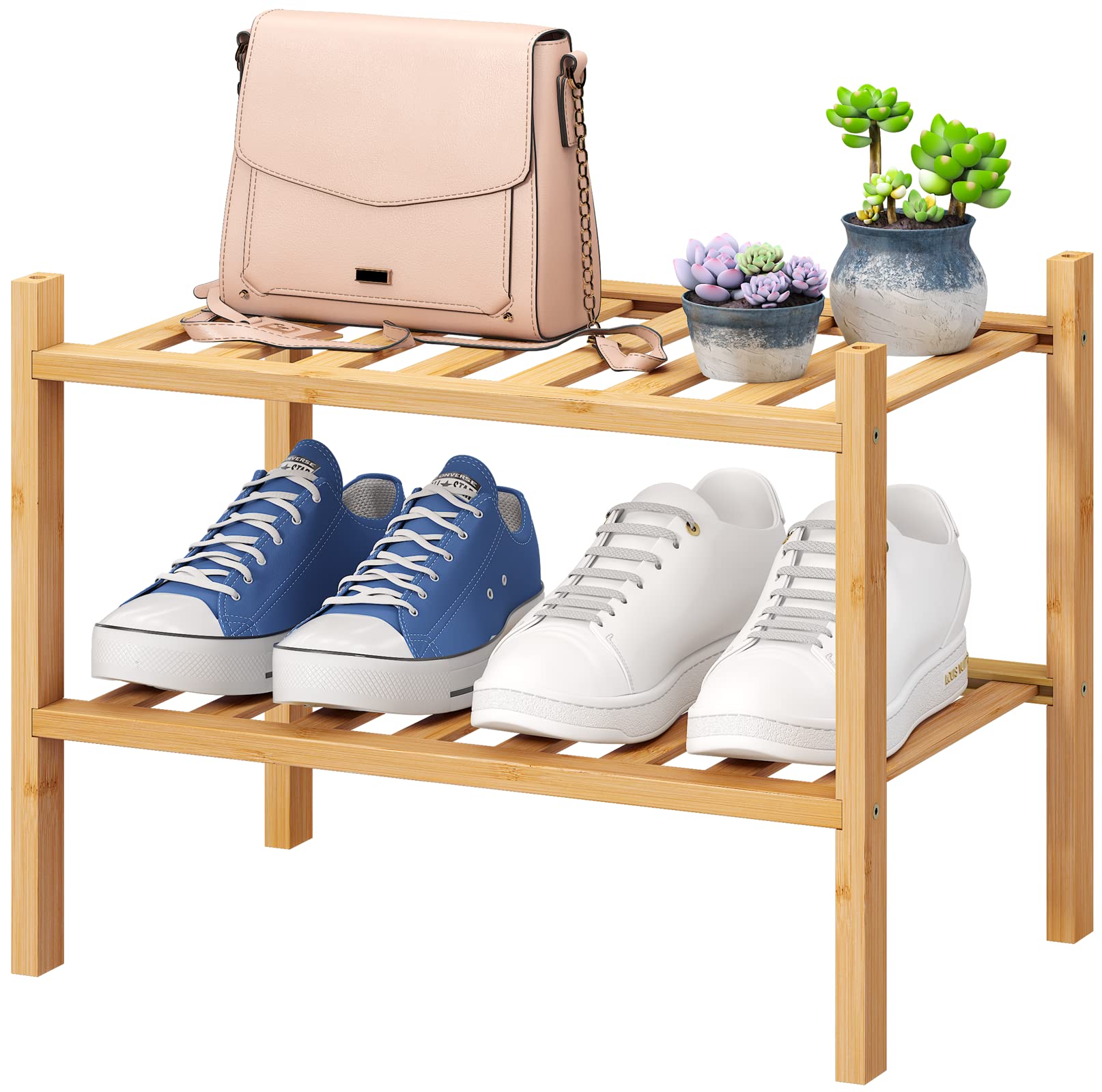
A compact two-tier bamboo shelf that’s simple, attractive, and easy to assemble with a tenon joint system—fits near doors or under small shelving.
Why I picked it: Natural look, tool-free tenon assembly, and surprising strength for a small rack.
Best for: Small entryways or closets where aesthetics matter.
Affordable and attractive for a natural wood option.
Pros
- Attractive natural bamboo finish
- Tenon joint for tool-free assembly
- Lightweight but sturdy
- Stackable for modular use
- Fits 3–5 pairs in a small footprint
Cons
- Limited capacity compared to taller racks
- Small hardware can be fiddly with arthritic hands
My take
I loved the clean look of the bamboo and found assembly straightforward even with limited hand strength; the interlocking joints slide together easily.
Two tiers are perfect for a single-person entry or for placing one beside another to form a low bench area. I also use the top for a plant without worrying about stability.
If you need maximum capacity, this won’t replace a tall metal organizer, but for a neat, natural accent that stores a handful of daily shoes, it’s ideal.
6. SONGMICS 12-Tier Metal Shoe Organizer – Best High Capacity
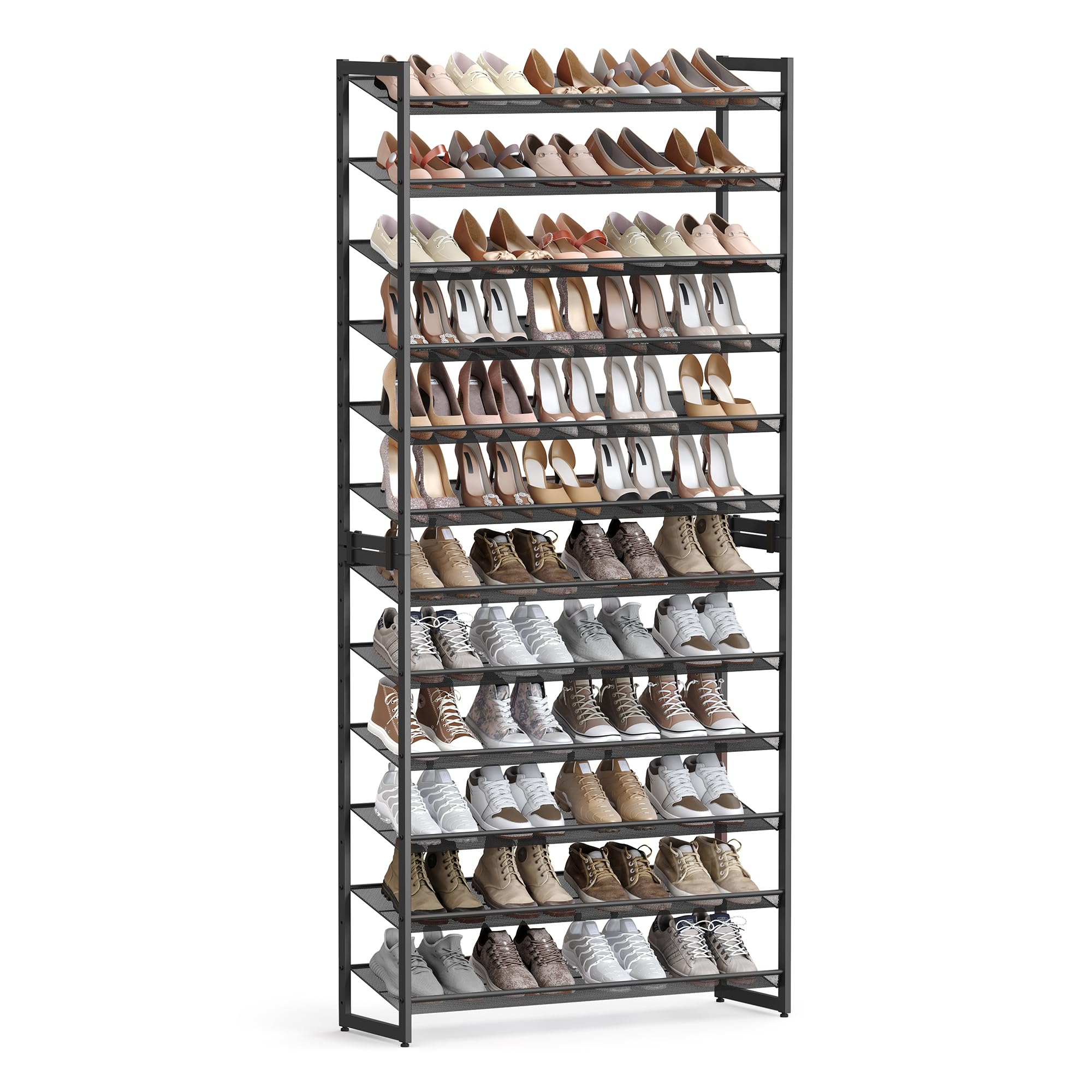
A tall, modular metal system with adjustable flat or angled shelves that can split into two 6-tier racks—designed for very large collections and taller shoes.
Why I picked it: Massive capacity, adjustable shelf angle, and included anti-tip hardware make it a versatile closet workhorse.
Best for: Large closets, garages, or anyone who needs to store many pairs without increasing floor footprint.
Higher capacity means a higher-cost but long-lasting solution.
Pros
- Huge capacity up to 48–60 pairs
- Shelves flat or angled for visibility
- Can split into two 6-tier racks
- 7.3" clearance fits tall shoes
- Includes anti-tip kit and adjustable feet
Cons
- Tall unit needs space planning
- Assembly is easier with two people
My take
I put this in a large closet and was amazed at how many pairs it handled while still keeping everything visible and accessible.
The option to assemble shelves flat or angled is useful—angled shelves make it easy to see pairs at a glance, while flat shelves maximize stacking for bulk storage.
Assembly is straightforward with labeled parts, but two people make the process quicker. The anti-tip hardware gave me confidence using such a tall unit in a home with kids.
How I Choose Shoe Racks for Small Spaces
What I look for first
I always measure the intended footprint—width, depth, and doorway clearance—before choosing a rack. A slim depth is more important than width when space is tight.
Next, I match shelf spacing to my shoes. If I own taller boots or chunky sneakers, I prioritize adjustable or removable tiers.
- Footprint: measure depth and doorway width first
- Shelf height: allow clearance for boots and heels
- Modularity: stackable or connectable units save space
- Material: metal/resin for durability; fabric or bamboo for light use
- Stability: look for adjustable feet and anti-tip hardware
Durability vs. footprint
I choose metal or resin when I want long-term durability and higher per-shelf weight capacity. Fabric and bamboo work well for light daily use and smaller living spaces.
If you need both space-saving and strength, pick stackable metal racks that allow splitting into multiple units.
- Metal/resin = higher load and longevity
- Fabric/bamboo = lighter, often cheaper and attractive
- Check per-shelf weight ratings for heavy footwear
Practical tips from my tests
Always factor in additional width for handles, heels, and shoe boxes when counting capacity.
If the rack will sit in a visible area, consider a model with a top surface or a decorative finish so it doubles as a drop zone.
- Measure inside the door frame, not just wall space
- Use adjustable feet to level on uneven floors
- Anchor tall units to the wall for safety
Frequently Asked Questions
How many pairs will a compact 3-tier rack hold?
In my experience a compact 3-tier rack fits roughly 9–16 pairs depending on shoe width and how you arrange them; smaller sneakers and sandals allow more pairs per shelf.
Can these racks hold boots and high-top sneakers?
Yes, but you need to watch shelf spacing. I either remove a middle tier or choose racks with taller shelf clearance—some models offer 7"+ between tiers for taller shoes.
Are tall shoe racks stable on uneven floors?
The racks I recommend with adjustable feet stayed level on slightly uneven floors; for very tall units I always install the anti-tip hardware to prevent tipping.
How hard is assembly?
Most of these racks assemble quickly with simple snap-fit connections or a few screws. Larger, high-capacity units are easier with two people, but single-person assembly is often possible.
Final Take
After testing these options in real closets and entryways, I found there’s no one perfect rack—only the right one for your space and shoe mix.
For a tight budget and narrow closets I favor compact fabric or wire racks. If you need long-term durability or huge capacity, the metal or resin systems are worth the investment.
Pick the rack that fits your measured footprint, accommodates your tallest shoes, and offers the stability you need. That’s how I avoid wasted space and daily shoe chaos.
