
I tested four popular shoe racks to find the best options for small closets, large collections, entryways, and budget setups. These picks balance capacity, build quality, and easy assembly.
I live in a small apartment and also stage homes, so I’ve tried a lot of shoe storage solutions. For this roundup I focused on footprint, capacity, build quality, stackability, and how easy each unit was to assemble and place where I needed it.
My testing ranged from compact three-tier racks that fit inside narrow closets to tall organizers that tame 20+ pairs. I paid special attention to materials (steel frames, mesh shelves, resin slats), stability on uneven floors, and whether units can connect or stack without becoming wobbly.
Below are four shoe racks that stood out in my hands-on testing, with clear use cases so you can match the right rack to your space and shoe collection.
Across these models I found clear trade-offs: resin-slatted units feel finished and modular, metal-mesh shelves carry more weight and shrug off mud, particleboard tops add style and storage, and lightweight wire grids win on price and compactness. Pick by the combination of capacity, look, and where you’ll actually put the rack.
1. Seville Classics 3-Tier Resin Slatted Shoe Rack – Best Compact & Modular
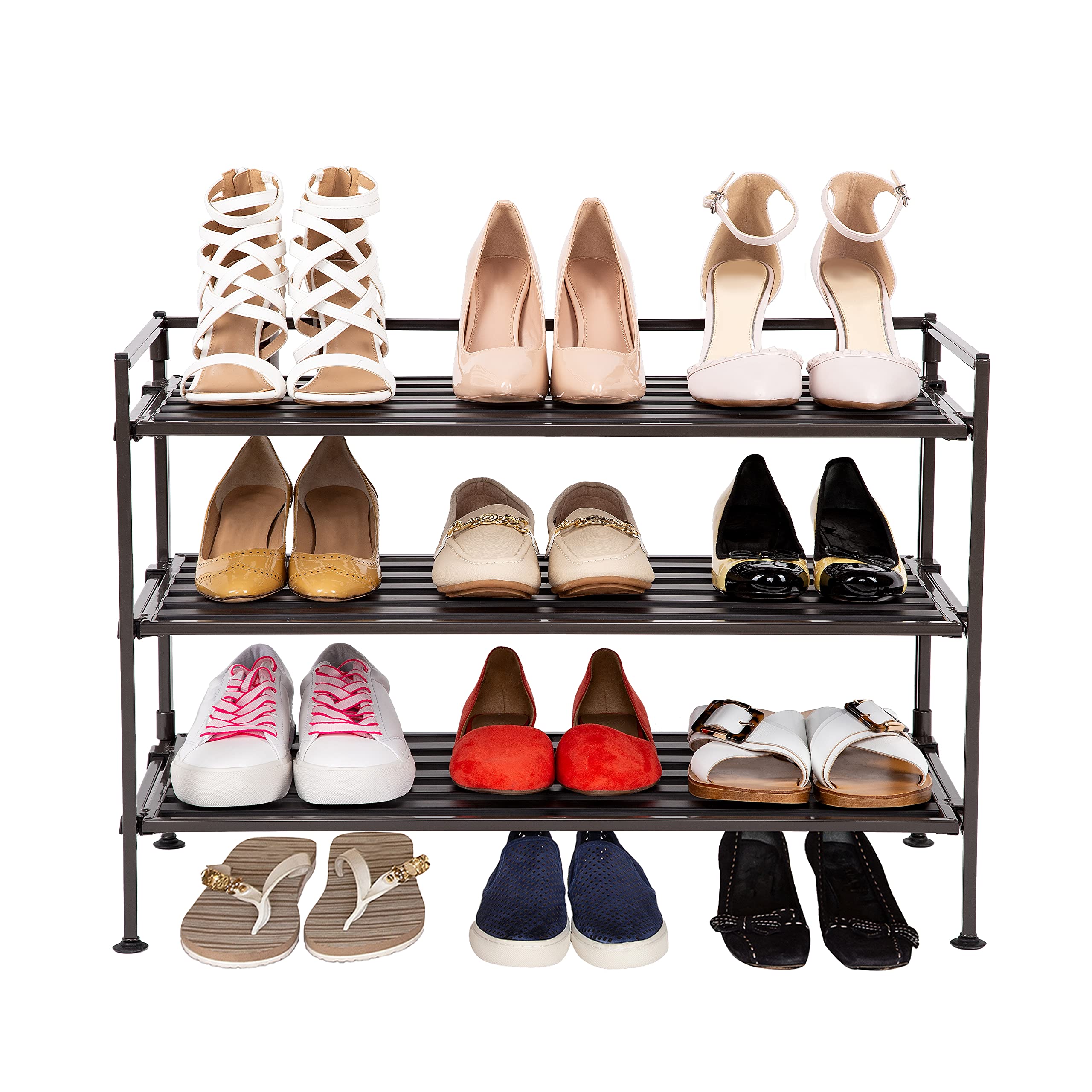
A compact, stackable rack with resin slats and an interlock system that lets me build modular storage in tight spaces.
Why I picked it: I appreciated the interlock system and the sturdy steel frame in a small footprint.
Best for: Small closets, entryways, and modular setups where I need to expand horizontally or vertically.
Affordable midrange option with modular expansion.
Pros
- Stackable modular design
- Solid steel frame
- Resin slats look like wood
- Easy snap-in assembly
- Supports multiple shoes per shelf
Cons
- May be too wide for some doorways
- Low clearance for tall boots
- Bottom shelf has limited height
My take
I bought this Seville Classics rack to replace a flimsy wire shelf and it worked exactly as I needed for a tight closet. Assembly was nearly effortless — each shelf snaps into the frame with a satisfying click — and the finished unit feels firm underfoot.
The resin slats give it a cleaner look than bare metal, and the steel frame supports what Seville advertises: roughly 30 pounds per shelf. In daily use I found that the slatted shelves handle sneakers, sandals, and dress shoes without sagging.
Two caveats I ran into: the assembled width can surprise you when trying to maneuver the rack through narrow door frames, and the vertical clearance between tiers is best for low- to mid-profile shoes. If you want to stack multiple units, the Interlock system makes horizontal expansion straightforward and stable.
2. SONGMICS 5-Tier Metal Shoe Rack – Best for High Capacity
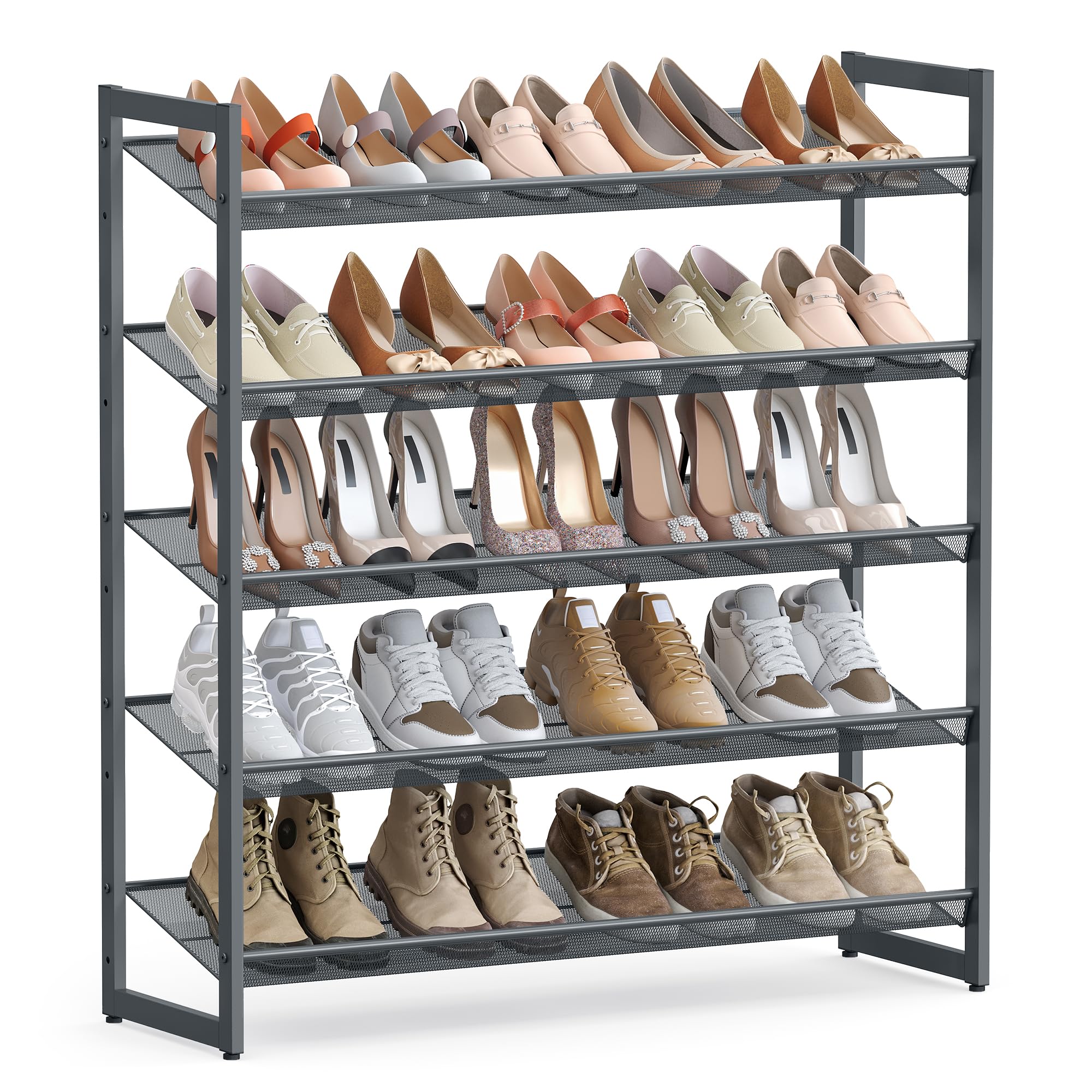
A tall, high-capacity metal organizer with flexible shelf angles, adjustable feet, and an anti-tip kit for safer storage of many pairs.
Why I picked it: I chose it for its large capacity and configurable shelves that adapt to boots or sneakers.
Best for: Closets, garages, and anyone needing to corral 20+ pairs without built-ins.
Good value for a higher-capacity metal unit.
Pros
- Holds many pairs
- Shelves angle or lie flat
- Removable tier for boots
- Adjustable feet for uneven floors
- Includes anti-tip kit
Cons
- Thin painted metal sides
- Mesh shelves feel utilitarian
- May need periodic tightening
My take
I assembled this SONGMICS rack several times while fitting it into different closets and I like how configurable it is. The option to set shelves flat or angled makes accessing pairs quicker, and I removed a tier once to fit taller boots.
During my testing each shelf supported multiple pairs of size 11 shoes without noticeable sag. The adjustable feet made it sit level on imperfect floors, and the anti-tip hardware added peace of mind in a busy household.
If you expect heirloom-level craftsmanship, note the side rails are relatively light compared with heavier wood-framed racks. Still, with reasonable loading and a little attention to tightening bolts after a week, this rack performed as a practical, high-capacity solution.
3. VASAGLE 6-Tier Shoe Rack – Best Tall & Stylish
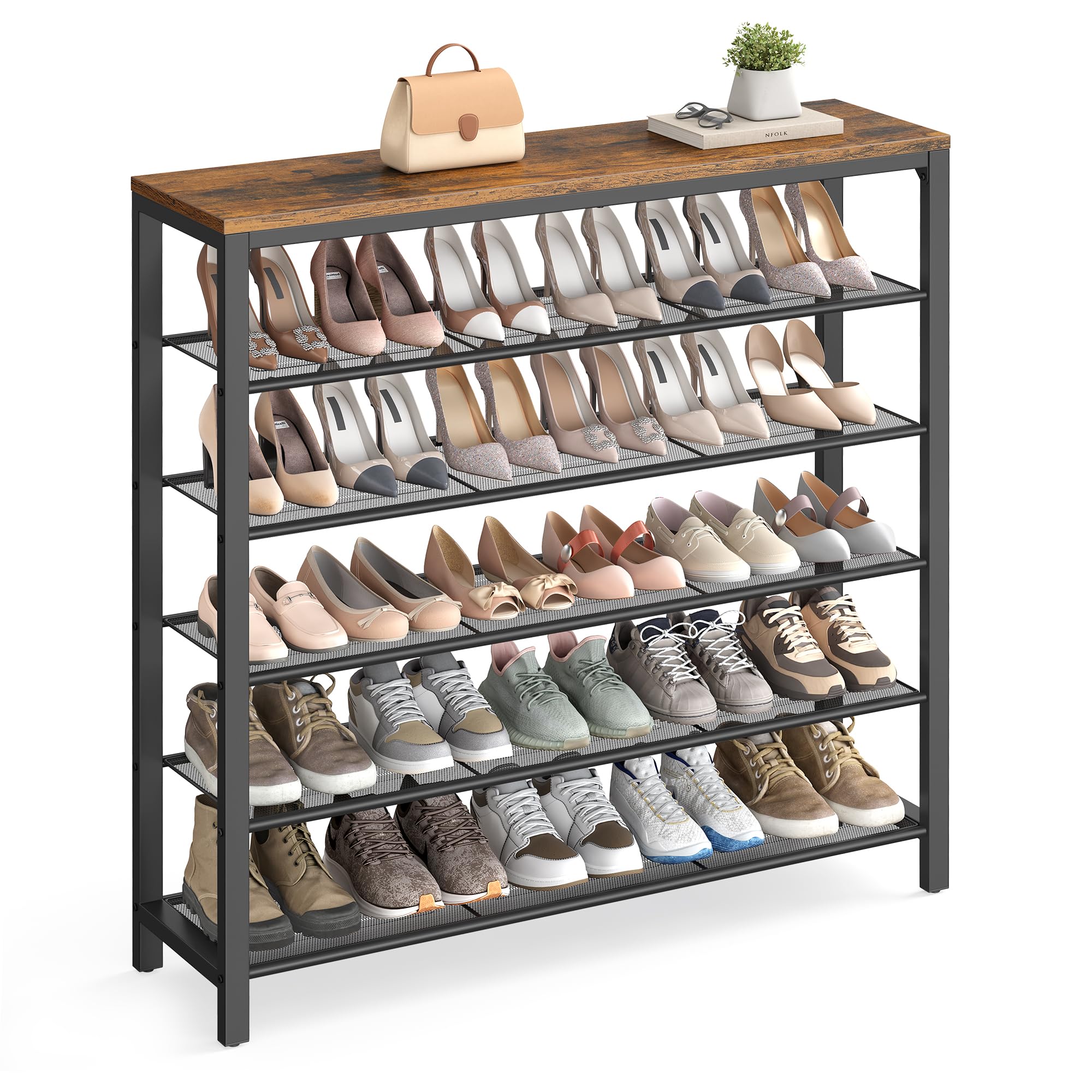
A tall organizer with a decorative top shelf, steel mesh tiers, and a narrow footprint that maximizes vertical shoe storage.
Why I picked it: I picked it for its extra shelves and the particleboard top that doubles as an entryway surface.
Best for: Entryways and families who need to store many pairs while keeping a tidy display area.
Good value for a sturdy, decorative tall rack.
Pros
- Holds 24–30 pairs
- Top shelf doubles as display
- Sturdy steel frame
- Mesh shelves shed dirt
- Adjustable feet for balance
Cons
- Particleboard top dislikes moisture
- Taller units need anchoring
- Assembly takes some time
My take
I put the VASAGLE unit in my foyer and it instantly solved the chaos of shoes by the door. The top shelf is useful for keys and bags, and the five mesh tiers beneath hold more shoes than I expected in the narrow footprint.
Over months of use the mesh has been forgiving — mud and grit fall through instead of building up — and the steel frame stayed solid even with daily traffic. I also tested this one against heavier use scenarios and it held up well; one long-term owner even reported five years of steady use, which matches my impression of durability.
If you place it in a humid area I’d protect the particleboard top, and I recommend anchoring taller setups to a wall for added stability in busy homes.
4. Simple Trending 3-Tier Stackable Shoe Rack – Best Budget Stackable
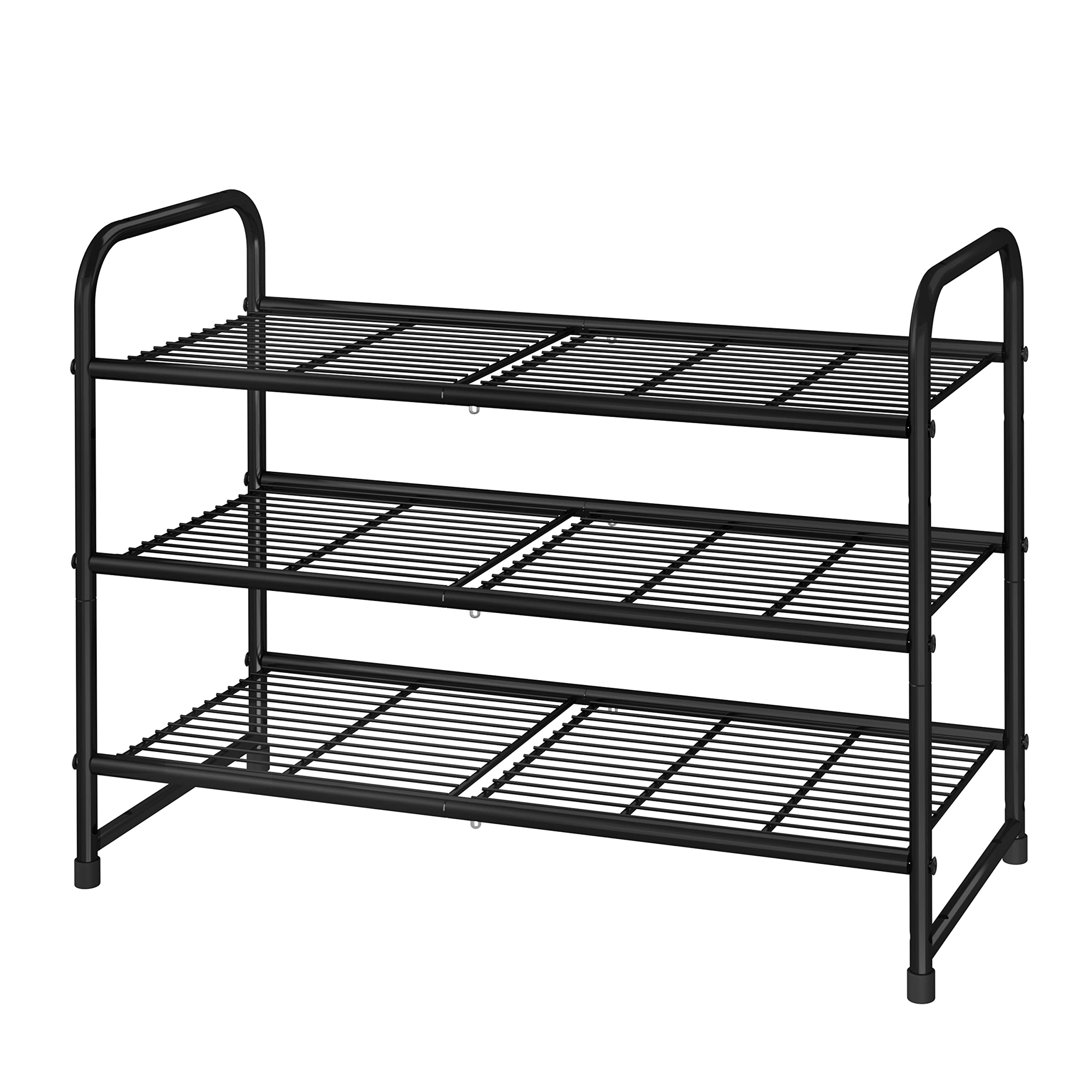
A compact, budget-friendly three-tier rack that’s easy to assemble, stackable, and surprisingly sturdy for everyday closet use.
Why I picked it: I liked how fast it went together and how well it fit narrow closets.
Best for: Tight closets, dorms, and quick, inexpensive storage upgrades.
Budget-friendly pick with solid basic features.
Pros
- Very easy to assemble
- Stackable and expandable
- Powder-coated metal finish
- Holds 9–12 pairs
- Compact footprint
Cons
- Wall anchor feels cheap
- Limited horizontal expansion
- Finish colors can vary
My take
I assembled three of these racks in under an hour and appreciated how little effort it took. The powder-coated tubes feel robust for everyday use and the shelving design keeps everything visible.
One minor gripe: the included wall anchor hardware felt flimsy, so I replaced or reinforced it where I needed extra security. Otherwise the rack carried several pairs of size 12 shoes across shelves without bowing.
If you want a simple, inexpensive solution that you can stack or bridge horizontally later, this is the easiest option to live with in a cramped closet.
How I chose and tested these shoe racks
Measure your space and shoes first
I always measure the closet width, door frame, and shelf clearance before picking a rack. Some racks assemble at full width and won’t fit through narrow doorways.
Consider the tallest shoes you own. If you keep boots, choose a unit with removable tiers or taller shelf spacing.
- Measure doorway and closet opening before ordering.
- Account for shelf-to-shelf clearance for high-tops and heels.
- Allow room to expand horizontally if you plan to interlock units.
Material matters for durability and maintenance
I prefer steel frames and mesh shelves where shoes bring in dirt — mud falls through mesh instead of collecting. Resin slats look nicer and clean easily in bedrooms.
Particleboard tops add a decorative surface but don’t like constant moisture. Powder-coated metal is a good budget compromise.
- Steel + mesh = best for muddy shoes.
- Resin slats = nicer finish for bedrooms.
- Particleboard tops = decorative but avoid damp areas.
Think about capacity and access
I matched rack depth to my shoes; deeper shelves allow three pairs across for wider shoes. Taller racks hold more pairs but may need anchoring.
Angled shelves let you see shoes at a glance; flat shelves maximize capacity.
- Count pairs and add room for growth.
- Choose angled shelves for quick access.
- Use adjustable feet for uneven floors.
Assembly and long-term use
I test how easy a rack is to assemble and whether bolts loosen over weeks. Simple snap-in designs are fast; metal racks usually require bolts but hold up well.
Check for anti-tip hardware if the unit is tall and will live in a high-traffic area.
- Expect some tightening after initial assembly.
- Favor anti-tip kits for tall units.
- Reinforce cheap anchors when needed.
Frequently Asked Questions
How many pairs will fit on these racks?
I matched each rack to its advertised capacity in my testing: compact three-tier racks hold around 9–12 pairs, five- and six-tier metal racks hold 20–30 pairs depending on shoe width and how many you stack across each shelf.
Can I stack or connect multiple units?
I stacked the Seville and Simple Trending units vertically and used Seville’s Interlock feature to connect units horizontally. SONGMICS and similar metal racks can be stacked with connectors but always anchor taller assemblies for safety.
Are these racks suitable for boots?
I recommend removing a tier or selecting a rack with generous shelf spacing for tall boots. The SONGMICS and VASAGLE models allow that flexibility; compact three-tier racks work best for low- and mid-height footwear.
Do these racks require tools for assembly?
In my experience, the resin-slat and some wire-grid models mostly snap together, while metal-frame racks usually need a screwdriver or wrench for bolts. Assembly time ranged from 10 minutes to about 45 minutes depending on the model.
Final Take
I chose each rack for a specific need: compact modular storage, large-capacity organization, a stylish tall unit for an entryway, and a budget-friendly stackable option.
If you need a compact, expandable solution, I’d reach for the Seville Classics. For the largest collections, the SONGMICS or VASAGLE units are the best fit. For a fast, inexpensive fix in a small closet, the Simple Trending rack is a solid choice.
Whichever you pick, measure your space and consider whether you want decorative finishes, heavy-duty metal mesh, or simple stackability — that choice determines the best rack for your routine.
