
I tested cedar and plastic shoe trees across dress shoes, boots, and sneakers so I could recommend the right design for shape retention, odor control, and value.
I spend a lot of time keeping shoes in top condition, so I tested these shoe trees across dress shoes, boots, and casual sneakers to identify which designs actually deliver. I focused on material, fit, how well they absorb moisture or hold shape, and daily usability.
Below I summarize the strengths of each option and how I used them in my rotation, so you can pick the right shoe tree for your needs—whether you want premium American-made cedar, a split-toe expander, or an economical plastic set for travel and mass use.
I found cedar and plastic trees serve different jobs: cedar excels at moisture absorption and scent control while split-toe designs form the vamp better than solid toes. Plastic trees are lighter and cheaper, great for travel or bulk use, but they won’t provide the same odor control or wood benefits as cedar.
1. Stratton Cedar Shoe Tree (X-Large) – Best Overall
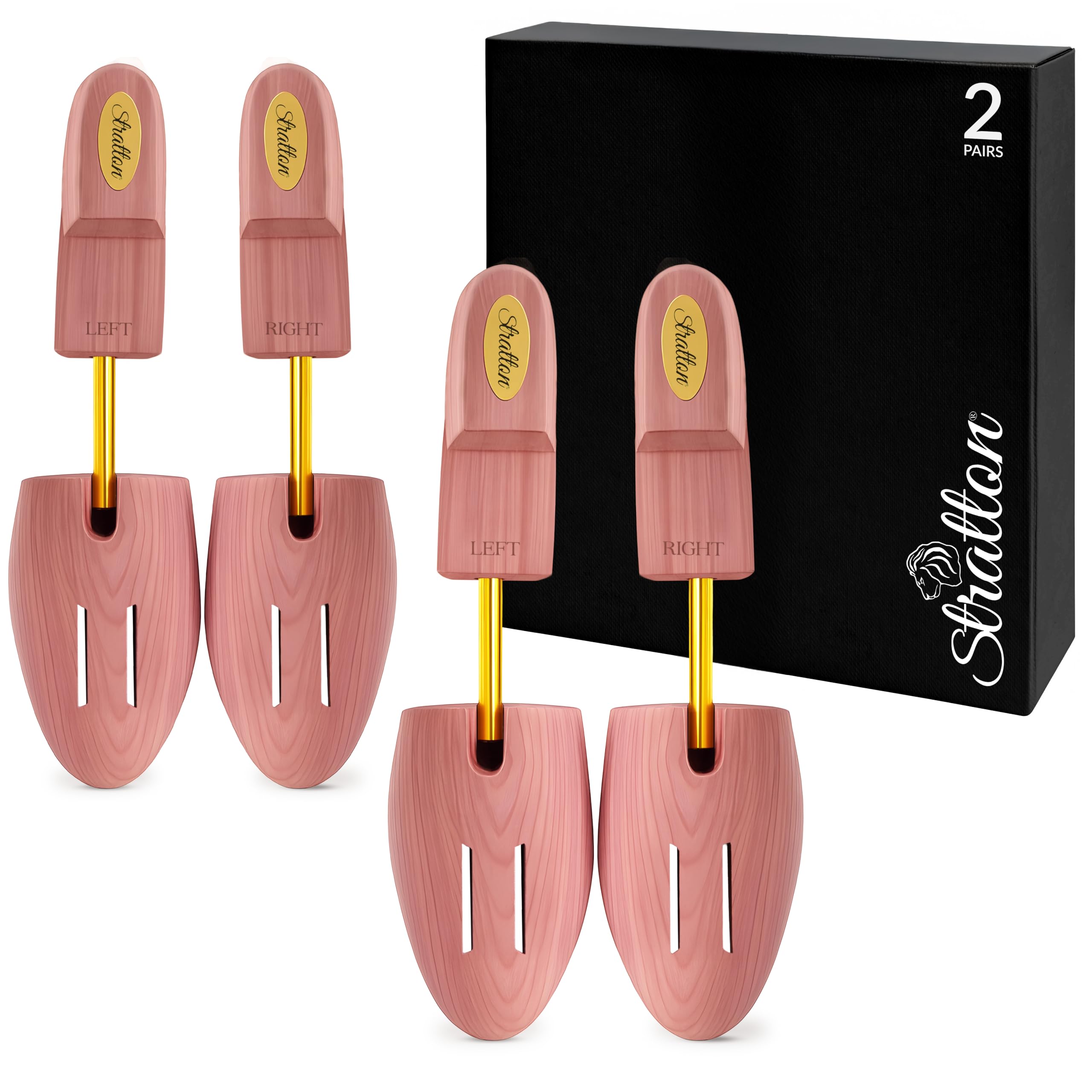
A solid all-around cedar tree with a strong aroma, sturdy feel, and spring-loaded hold that preserves shape reliably.
Why I picked it: I like the potent cedar scent, full-foot coverage, and spring-loaded center that keeps length and form.
Best for: Those who want a reliable cedar tree that preserves shape and controls moisture in larger shoes.
Excellent value for a premium-feeling cedar set.
Pros
- 100% natural red aromatic cedar
- Noticeably strong cedar scent
- Spring-loaded center for secure hold
- Solidly built, good surface area
Cons
- Solid toe may suit wide shoes better
- X-Large intended for very big sizes
My take
I used these Stratton trees in several dress shoes and boots and immediately noticed how much cedar aroma they pull through the leather; the scent is stronger than many cedar trees I’ve owned, and that translates into faster moisture control and fresher shoes.
The solid toe gives more surface contact with the vamp, which I prefer for smoothing creases, and the spring-loaded centerpiece keeps a consistent length without pushing too hard on the upper.
They arrived nicely presented, and in daily use they feel durable and heavy enough to last. I recommend the solid-toe shape for wider or round-toe shoes; for very pointed toe boxes I’d consider a split-toe alternative.
2. HOUNDSBAY Cedar Shoe Tree (Medium) – Best Sustainable Option
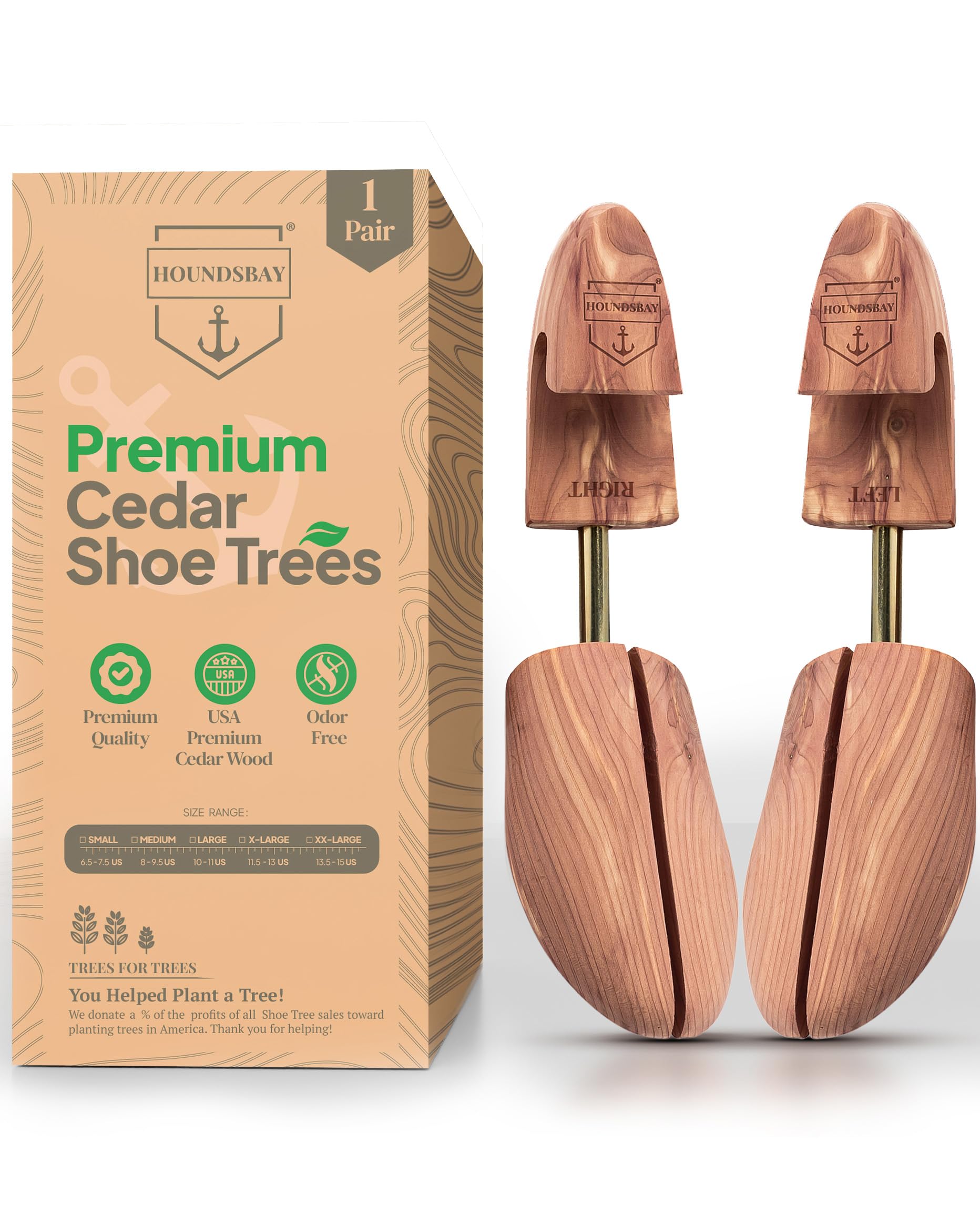
A well-designed split-toe cedar tree with a custom hook heel and a sustainability pledge that appealed to me.
Why I picked it: Split-toe shaping and a custom heel hook preserve the back of the shoe better than basic shapes.
Best for: People who want adjustable split-toe shaping and prefer brands that support replanting efforts.
Good value for a thoughtfully designed cedar tree.
Pros
- Split-toe design for versatile shaping
- Custom-length hook heel preserves heel shape
- Premium aromatic cedar
- Company donates to tree-planting programs
Cons
- Sold as a single pack
- May not erase deep creases
My take
I appreciate the split-toe shape on the HOUNDSBAY tree; it fills the vamp area and lets me use one tree across multiple pairs with different toe profiles.
The custom-length hook heel matters in daily use—I found it holds the back of the shoe firmly, preventing heel collapse. The cedar scent is fresh and helps reduce odor after humid days.
The brand’s sustainability program was a nice bonus for me. If you need more than one pair, be aware this listing is a single pack, so plan accordingly for a whole shoe rotation.
3. Stratton Split-Toe Cedar Shoe Tree (Large) – Best Split-Toe
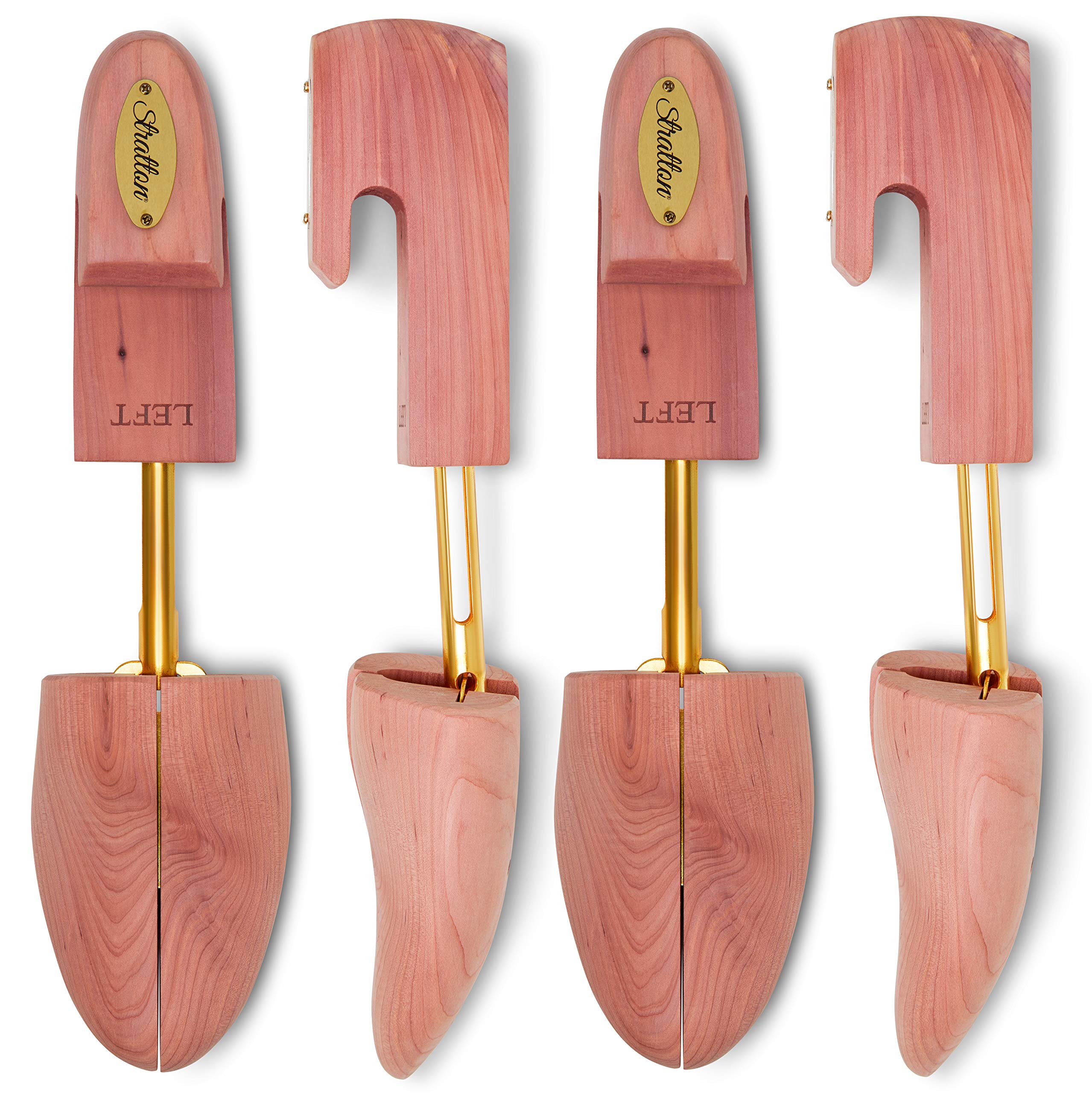
A dependable split-toe cedar expander with firm spring tension and an elegant finish that performs well across dress shoes.
Why I picked it: Firm spring tension and a split toe that shapes the vamp without overfilling pointed areas.
Best for: Anyone who rotates several dress shoes and wants a versatile, adjustable cedar tree.
A higher-end option that still feels worth the investment for dress shoe care.
Pros
- Adjustable split-toe for precise shaping
- Firm spring keeps consistent tension
- Long-lasting cedar aroma
- Polished presentation makes a good gift
Cons
- Cedar scent can be strong for some
- Won’t completely fill very pointed toe boxes
My take
I’ve relied on these Stratton split-toe trees in multiple pairs of leather dress shoes. The split design is unobtrusive but effective at forming the area where the vamp meets the toe box.
The spring is firm enough to hold tension without making insertion hard, which is important when I rotate them daily. I noticed faster drying and less odor after rainy commutes.
If you have very narrow, pointed shoes, the split toe won’t push into the extreme tip of the toe box—and that’s intentional—so I still get excellent shaping where it matters most without stressing seams.
4. Allen Edmonds Woodlore Cedar Shoe Trees – Best Premium (Made in USA)
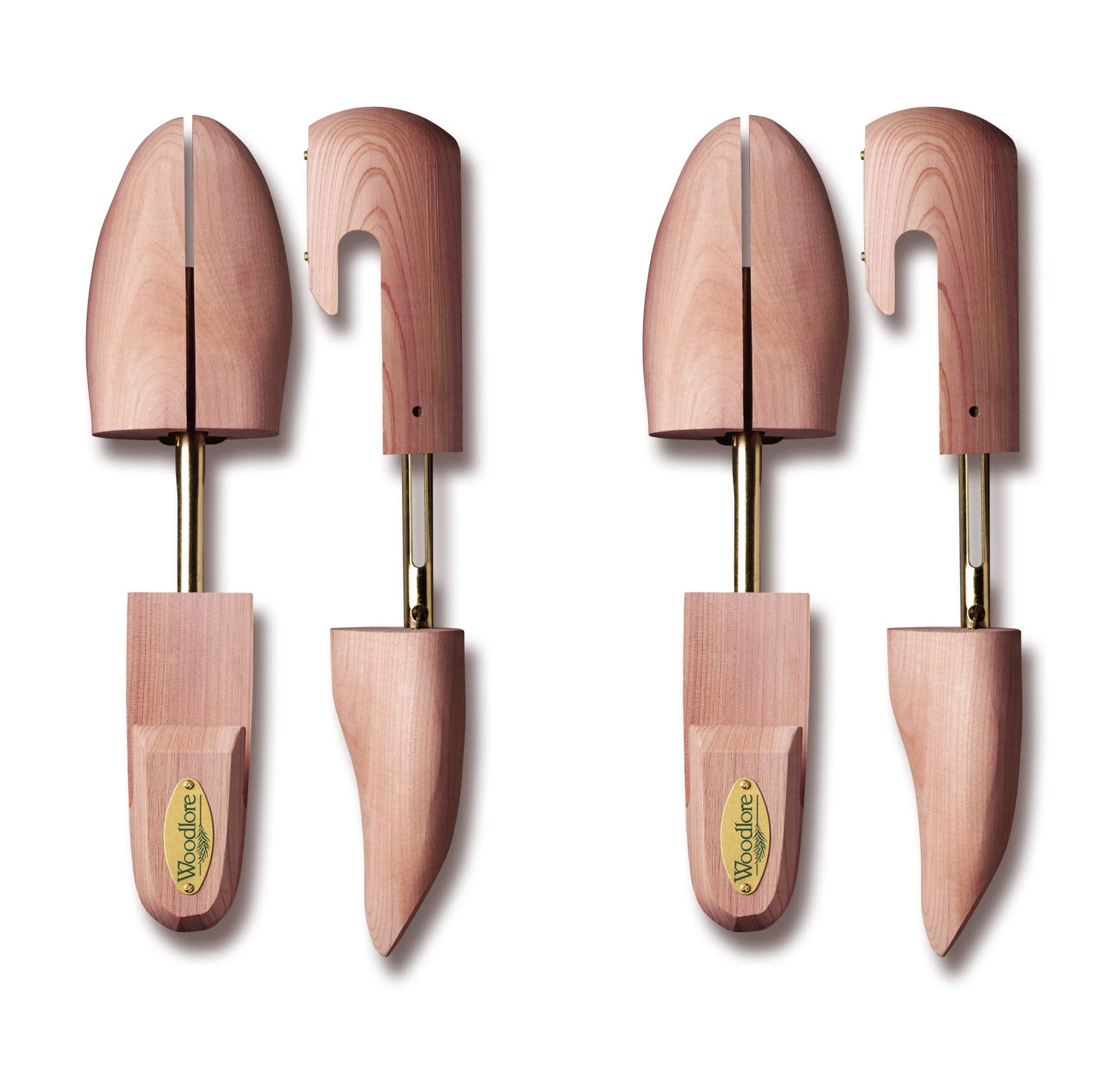
My go-to when I want premium American-made cedar with a high percentage of red heartwood and a refined finish.
Why I picked it: Made in the USA from red heartwood cedar with a silken finish and solid hardware.
Best for: Owners of investment dress shoes who want the best in craftsmanship and cedar performance.
A premium purchase that suits serious shoe care routines.
Pros
- Made in the USA
- High red-heartwood content for moisture control
- Silken finish protects interiors
- Bulk pack options available
Cons
- Hardware felt a touch less premium
- Higher-cost choice
My take
When I want to preserve more expensive dress shoes, I reach for the Woodlore trees. The red heartwood cedar absorbs moisture quickly and leaves a fresh scent that helps leather breathe between wears.
The build quality and finish are excellent; they slide into shoes without snagging and maintain a snug form. I did notice the metal hardware isn’t as beefy as I expected at this price tier, but it has held up in my daily rotation.
Overall these feel like an investment in shoe longevity, particularly for loafers, wingtips, and other dress pairs I wear regularly.
5. Plastic Adjustable Shoe Trees — 10 Pair – Best Budget / Travel
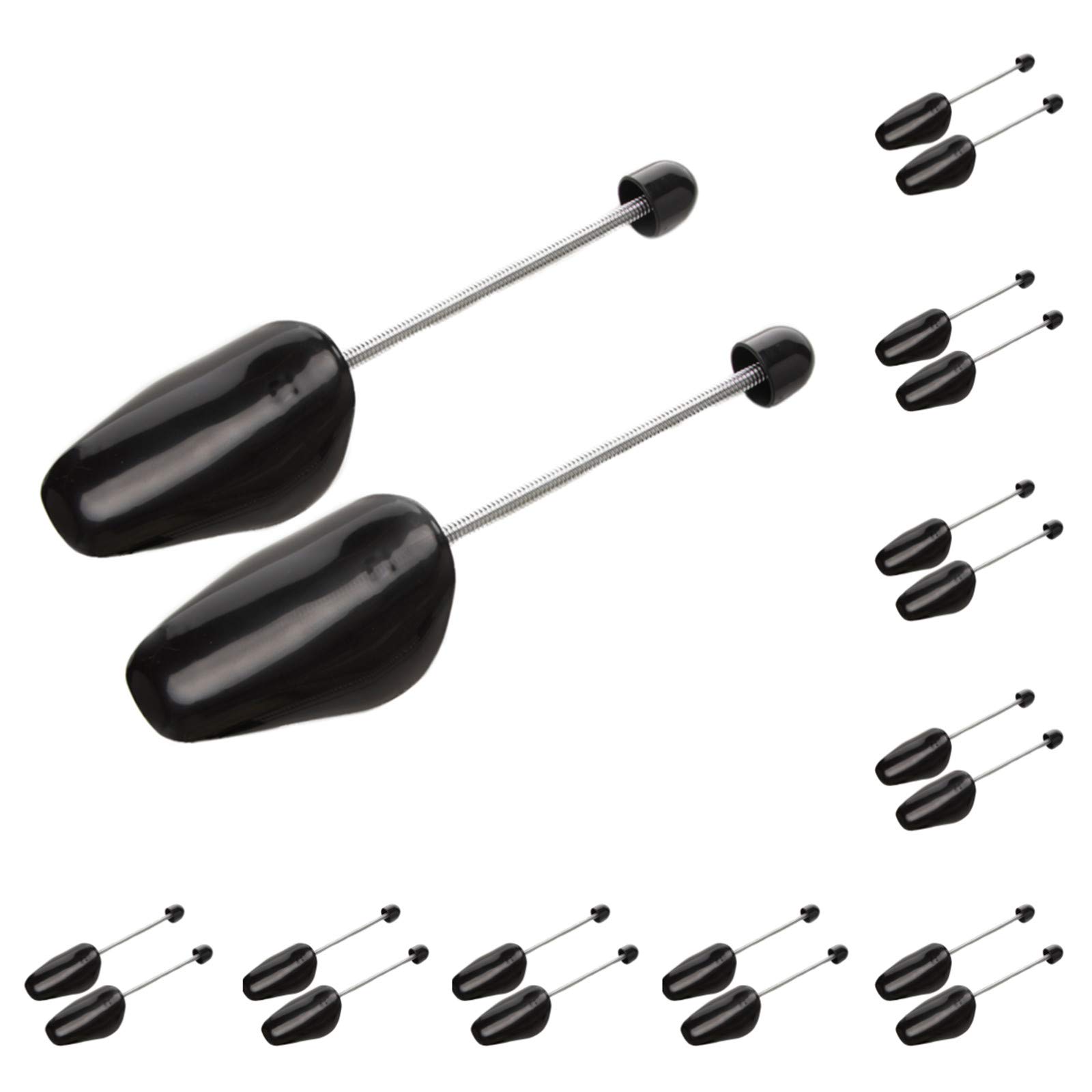
A practical ten-pair pack that I use for travel, sneakers, and when I need mass coverage for a shoe collection.
Why I picked it: Ten adjustable pairs let me protect an entire rotation without the cost or weight of wood.
Best for: Travelers, mass coverage, or anyone who wants a cheap, lightweight solution.
The most affordable way to protect many shoes at once.
Pros
- Ten pairs for broad coverage
- Lightweight and durable plastic
- Adjustable length fits many sizes
- Good for travel and storage
Cons
- No cedar odor or moisture absorption
- Toe shape is less natural
- Some sneakers need extra stuffing
My take
I keep a set of these plastic trees for trips and for shoes where cedar isn’t necessary. They’re lightweight, sturdy, and the metal spring gives reliable length adjustment.
They won’t replace cedar for odor control or moisture wicking, but they do a surprisingly good job of maintaining length and preventing collapse in casual shoes and many boots.
The plastic toe box is a bit angular, so for some sneakers I add a wadded tissue to improve contact. For the price and quantity, they’re a very practical option.
How I Choose Shoe Trees
Material: Cedar vs Plastic
I prefer cedar when my priority is moisture absorption, natural deodorizing, and scent. Cedar helps leather dry and smells fresh.
I use plastic trees when I need lightness, low cost, or lots of pairs for travel and bulk storage.
- Cedar: best for dress shoes, moisture control, natural fragrance.
- Plastic: best for travel, budget, or mass coverage.
Toe Design: Solid vs Split
A solid toe maximizes contact across the vamp and works well with rounded toes. I reach for split-toe designs when I want versatility across different shoe shapes.
Split toes are better at shaping the area where the vamp and toe box meet without overstressing seams.
- Solid toe = more surface contact, good for smoothing creases.
- Split toe = adaptable fit across multiple shoe profiles.
Fit, Tension, and Hardware
I check that the spring provides light, consistent tension—enough to hold shape without overstretching. A good hook or heel piece helps preserve the back of the shoe.
For premium wood trees, I look for quality hardware and a finished surface so the tree slides in and out without scuffing.
- Choose a size that fills length without forcing the toe.
- Prefer a spring that’s firm but not brutal on insertion.
- Look for a heel hook to support the shoe’s rear.
Practical Tips
Rotate shoe trees nightly when possible to speed drying and keep shape. Store cedar trees in a dry place so their aroma and absorption stay effective.
For travel, plastic pairs are lighter and less likely to be restricted in luggage.
- Use cedar for daily leather wear, plastic for travel.
- Buy at least two pairs if you rotate shoes frequently.
Frequently Asked Questions
How often should I use shoe trees?
I use shoe trees after every wear when possible; nightly placement helps shoes dry and retain shape faster than occasional use.
Do plastic shoe trees damage leather?
I haven’t seen damage from quality plastic trees, but they lack cedar’s moisture control and scent. I avoid plastic for long-term storage of premium leather.
Should I size up for wide feet?
When I have wide feet I often size up one size in cedar trees to get proper width and avoid overstressing seams.
Final Take
I choose cedar for dress shoes when moisture control and longevity matter, and plastic when I need quantity, portability, or a low-cost solution.
Pick a split-toe if you want versatility across multiple shoe shapes, or a solid-toe if your goal is smoothing creases on rounder shoes. With the right trees in rotation, I’ve kept my footwear looking and performing better between wears.
