
I tested four compact sinks that save space without sacrificing style. I focused on mounting style, bowl depth, glazing, and installation needs so you can pick the right sink for a tiny bathroom or powder room.
I spend a lot of time fitting sinks into tight bathrooms and powder rooms, so I selected four small sinks that balance style, durability, and installation simplicity.
In this roundup I compare wall-mounted, countertop vessel, deep-basin, and compact round options so you can match a sink to your space, plumbing, and aesthetic.
I compared each sink by measured footprint, bowl depth, mounting type, drain opening size, and whether faucets or drains were included. I also prioritized durable glazes and packaging protection for shipping.
1. Lordear 14.5 x 10 Wall-Mounted Rectangular Sink – Best Space-Saving Wall Mount
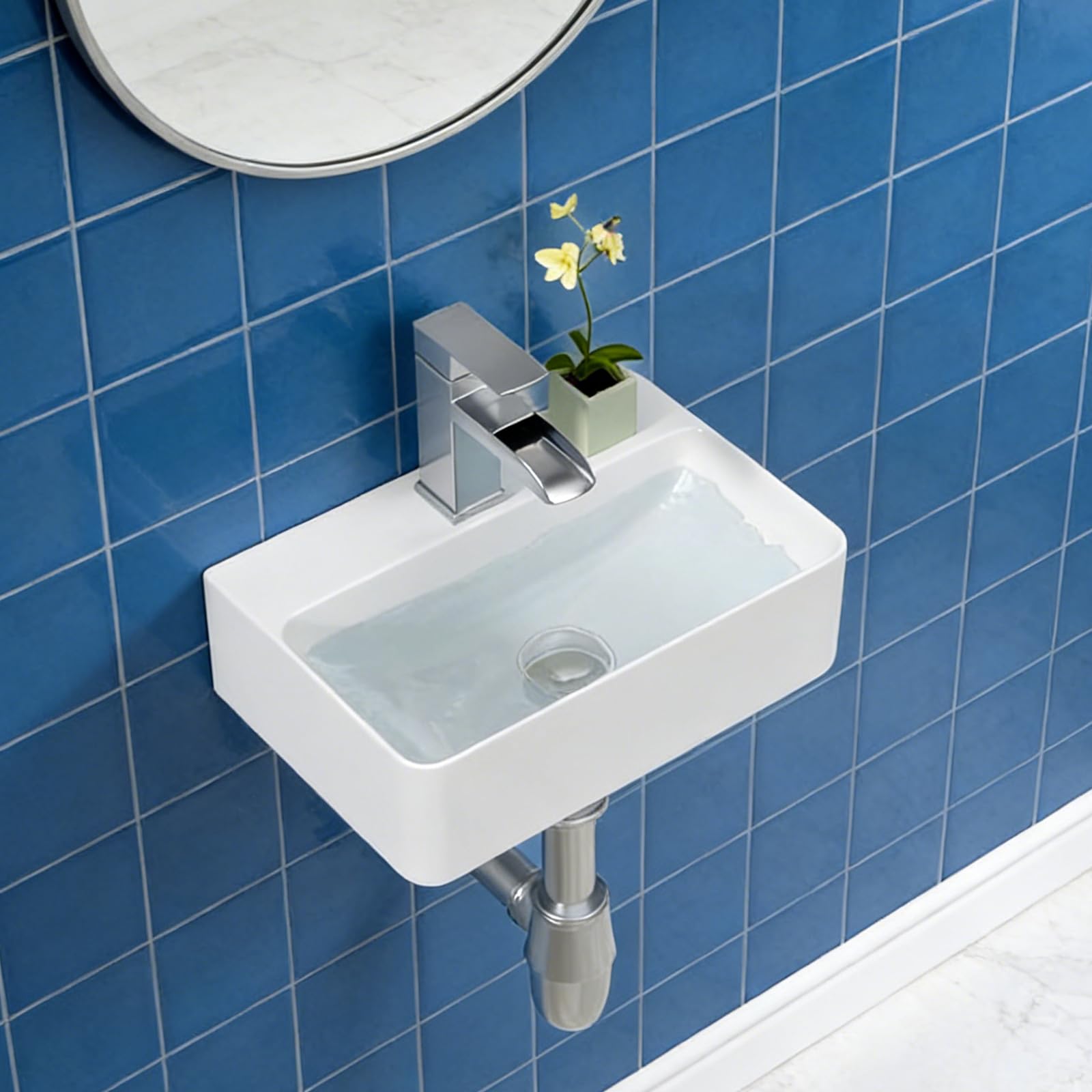
A true compact wall-mounted sink that frees up floor and counter space while delivering a glossy, easy-to-clean surface.
Why I picked it: I picked this for tight corners where counter space is precious and I wanted a clean, modern wall-hung look.
Best for: Tiny bathrooms, cloakrooms, and corner installations where saving counter space is the priority.
An affordable space-saving option compared with larger counters and vanities.
Pros
- Very compact footprint
- Wall-mounted saves floor space
- High-temperature fired glaze resists stains
- Hardware included for installation
Cons
- Shallow bowl can splash with high-flow faucets
- Faucet and drain not included
- Smaller inner basin limits washing space
My take
I installed this Lordear sink in a narrow powder room and appreciated how it freed up the counter and made the room feel larger.
The packaging arrived well protected and the included mounting hardware made the wall installation straightforward.
At 14.5 by 10 inches with a 1.75-inch drain opening, it fit the standard drain parts I had on hand, but I still needed to buy a separate drain and faucet.
The glaze is smooth and resists stains, so daily cleaning is quick. Because the bowl is only 4.2 inches deep, I used a gentle-flow faucet to avoid splashing and it worked well.
2. KES 16 x 12 Rectangular Vessel Sink – Best Countertop Vessel
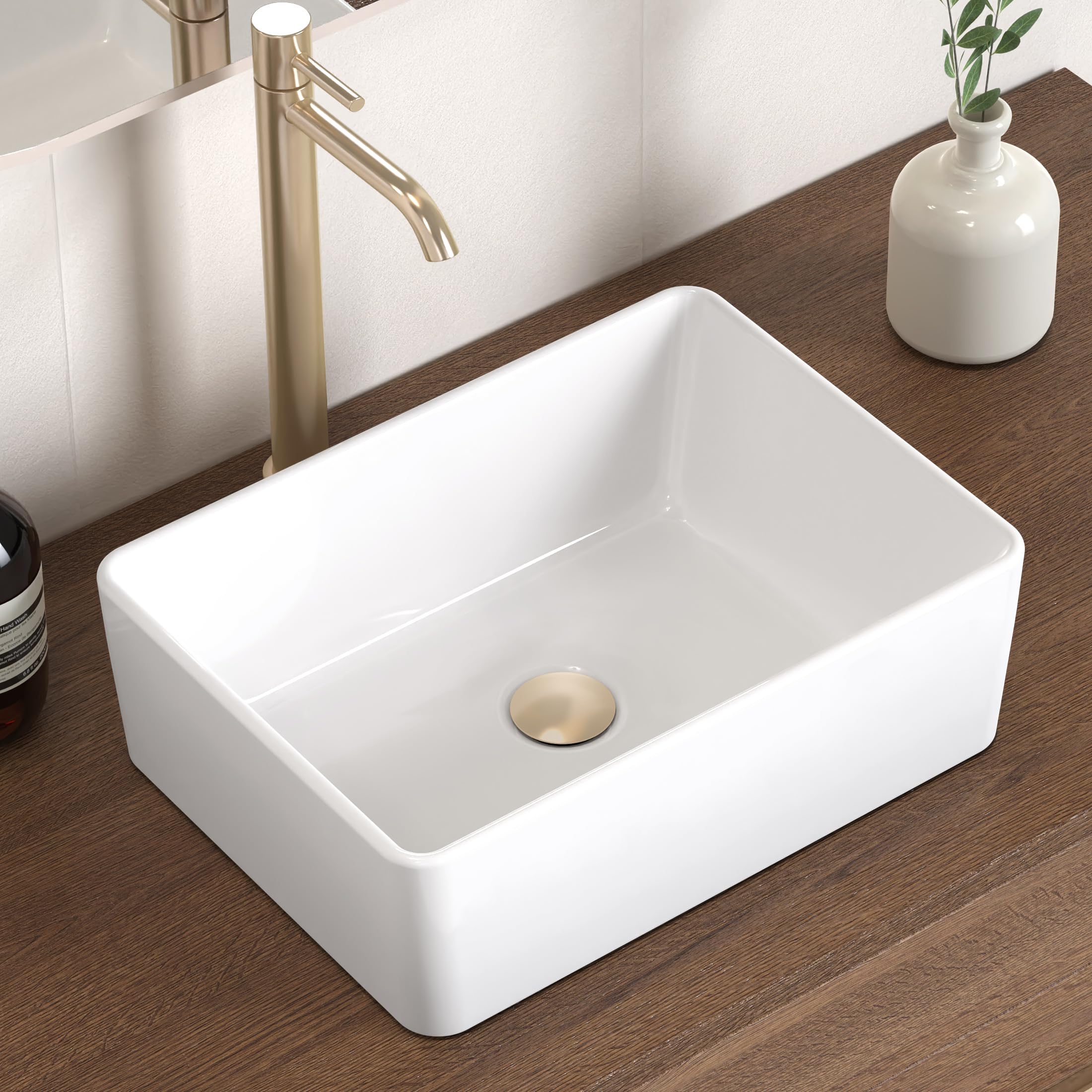
A roomy rectangular vessel with a hard-baked glaze and enough depth to avoid splash while sitting attractively on a vanity top.
Why I picked it: I chose this when I wanted a countertop sink that feels substantial and cleans up easily without requiring an undermount cut.
Best for: Countertop installations where you want a modern vessel look with useful bowl depth.
A solid mid-range value for a glazed porcelain vessel sink.
Pros
- Generous bowl depth
- Durable baked-on glaze
- Impact-resistant porcelain
- Well-packed for shipping
Cons
- No faucet or drain included
- No overflow — needs compatible pop-up drain
- Requires a taller vessel faucet
My take
I mounted the KES sink on a narrow vanity and found the 16 by 12 footprint fills the counter without overpowering it.
The surface has a high-gloss, baked-on glaze that wipes clean of toothpaste and soap scum with minimal effort.
Because this is a vessel style with no faucet hole, I used a wall-mounted faucet; it’s important to pair it with a non-overflow pop-up drain to match the sink.
Packaging arrived with thick foam, which reduced my risk of chips during transit, and the sink’s weight felt reassuringly solid during installation.
3. 16 x 12 Rectangular Vitreous China Sink – Best Deep Basin
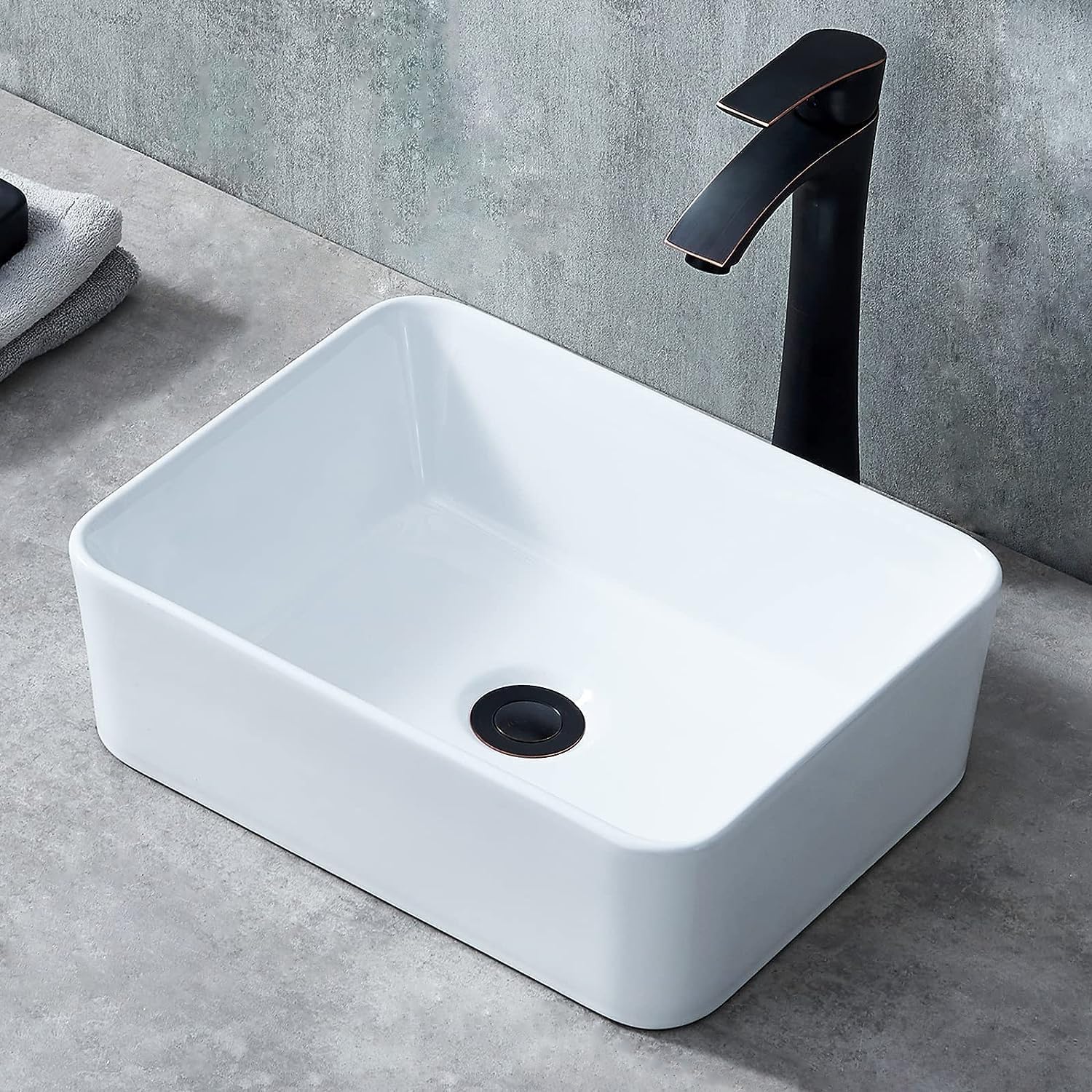
A high-fired vitreous china vessel with a deeper bowl profile that minimizes splash and handles daily use without fuss.
Why I picked it: I picked this for the deeper bowl and hard-fired construction that stands up to temperature changes and frequent use.
Best for: Small bathrooms where face washing and shaving happen at the sink and splash control matters.
An affordable option that offers a deeper bowl than many compact vessels.
Pros
- Deep, splash-minimizing bowl
- Vitreous china resists chips
- High-gloss glaze cleans easily
- Thermally stable with hot/cold water
Cons
- May lack an overflow
- Requires compatible drain and faucet
- Some recommended faucets may not fit
My take
I used this sink when splash control mattered most; the deeper bowl noticeably reduced water on the counter compared with shallower vessels.
The vitreous china feels dense and chip-resistant — I trust it more than thinly made vessels for long-term durability.
Installation was simple as an above-counter unit, but I double-checked drain and faucet clearances because a few faucet types didn’t line up perfectly with the bowl shape.
The glazed surface wipes clean quickly, and I appreciated the standard drain opening size when sourcing a pop-up drain.
4. Sarlai 13-inch Round Vessel Sink – Best Compact Round
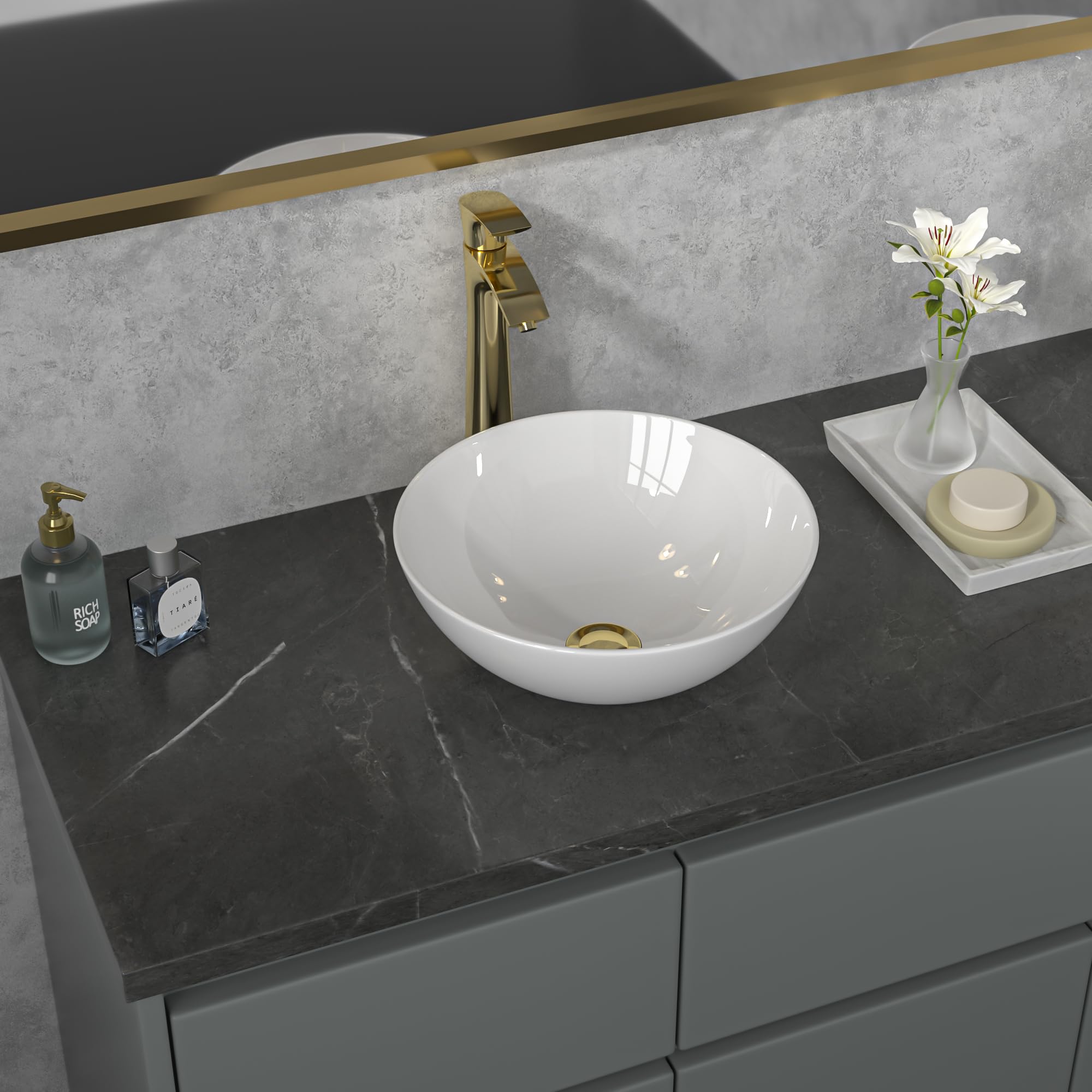
A tidy, classic round vessel that gives small bathrooms a refined look and installs easily on most counters.
Why I picked it: I picked this for tight vanities where a round profile softens the space and still delivers dependable performance.
Best for: Powder rooms and small vanities that need a timeless, compact vessel sink.
A budget-friendly round option with a polished finish.
Pros
- Compact, space-saving circle
- Timeless aesthetic
- Sturdy ceramic construction
- Simple above-counter installation
Cons
- No overflow — needs non-overflow drain
- Must match plumbing for pop-up drain
- Round shape limits countertop workspace
My take
I installed the Sarlai on a narrow vanity and appreciated how the round shape created a soft, balanced look in the small room.
The porcelain finish stays bright and is forgiving to routine cleaning; I also liked that the sink arrived well packed and unscathed.
Because it’s a non-overflow vessel, I paired it with a non-overflow pop-up drain and a taller faucet to avoid splattering.
It’s one of the easiest sit-on-top sinks I’ve installed — practical, attractive, and ideal when counter space is tight.
How I Choose a Small Bathroom Sink
1) Measure Everything First
I always start by measuring the available footprint, the distance to the wall, and cabinet or counter depth.
Measure the drain center and check clearance for faucet spouts and handles so nothing rubs the wall or mirror.
- Match sink footprint to vanity top space
- Confirm drain opening size on the sink (common sizes ~1.75–1.81 in)
- Check bowl depth to avoid splash or too-shallow basins
2) Pick the Right Mounting Style
I choose wall-mounted sinks to save floor space and vessel sinks when I want a design focal point on a countertop.
Undermounts and top-mounts require different cutouts and fabricator work — plan for that before buying.
- Wall-mounted: great for tiny rooms, needs solid wall anchoring
- Vessel: stylish on counters, needs taller or wall faucets
- Top-mount: simpler countertop cutout and often less costly install
3) Material and Finish Matter
I prefer high-fired vitreous china or well-glazed porcelain because they resist chips and stains better than thinner ceramics.
A baked-on or high-gloss glaze keeps cleaning simple and helps the sink retain a new look over time.
- Vitreous china = dense, durable, thermally stable
- Porcelain with baked-on glaze = stain- and scratch-resistant
- Avoid thin or poorly glazed ceramics if longevity is a priority
4) Watch for Overflow and Drain Compatibility
I always check whether a sink has an overflow and buy a matching pop-up drain — mismatch leads to poor drainage or leaks.
If a sink has no faucet hole, plan for a vessel or wall-mounted faucet with appropriate reach and height.
- Non-overflow sinks need non-overflow pop-up drains
- Confirm drain opening diameter to match drain hardware
- Measure faucet spout reach so water lands in the bowl
5) Shipping, Warranty, and Installation
I look for sinks that ship with foam or thick packaging and a straightforward warranty — they reduce risk and give me recourse if damage occurs.
Decide whether you’ll DIY or hire a plumber; wall-mounted sinks sometimes need a more skilled install.
- Thick foam packaging lowers damage risk
- Check if mounting hardware is included
- Plan for contractor cuts if undermount or countersink needed
Frequently Asked Questions
How do I know which sink depth I need?
I choose deeper bowls (around 5 inches) when I want to minimize splash for face washing and shaving. For tiny powder rooms where only hand washing occurs, a shallower bowl can be fine and saves visual bulk.
Do these sinks include drains and faucets?
In my experience the sinks in this roundup do not include faucets or drains. I always buy a compatible pop-up drain and ensure the faucet type (vessel, wall, or deck) matches the sink’s design.
Can I use a wall-mounted faucet with a vessel sink?
Yes — I often pair a vessel sink with a wall-mounted faucet to avoid a tall deck-mounted spout. Just double-check spout reach so water hits the center of the bowl.
What if my sink has no overflow?
If a sink lacks an overflow I use a non-overflow pop-up drain and avoid faucets that create excessive splashing. I also monitor fill rates after installation to ensure safe drainage.
Final Take
I chose these four sinks to cover the space-saving wall-mount, countertop vessel, deep basin, and compact round categories so you can match form and function to your bathroom.
If floor space is scarce, go with the Lordear wall-mounted sink; if you want a countertop statement with useful depth, the KES or the vitreous china option are smart choices.
For a classic compact look that installs easily, the Sarlai round sink is my pick. Measure carefully, match drains and faucets, and you’ll have a small sink that performs as well as it looks.
