
I tested several compact dehumidifiers to find quiet, low-energy units that actually remove moisture and are easy to maintain. These six stood out for bedrooms, bathrooms, closets, and RV use.
I spent hands-on time with compact Peltier and semiconductor dehumidifiers to find units that genuinely remove moisture without making noise or costing a fortune to run. I focused on real-world factors like water collection, tank design, noise, and how easy each unit is to empty and clean.
The list below highlights my picks for everything from tiny bathroom counters to small studios and RVs. I explain where each model shines and what to watch for when you place one in your space.
When I compared these units I prioritized water collection relative to tank size, noise level during sleep, and practical usability—how easy the tank is to remove, whether lights distract at night, and whether the unit supports colder rooms with defrost or timer functions.
1. Pro Breeze Dehumidifiers for Home — 16 oz Tank Mini Dehumidifier (215 sq ft) – Best Overall
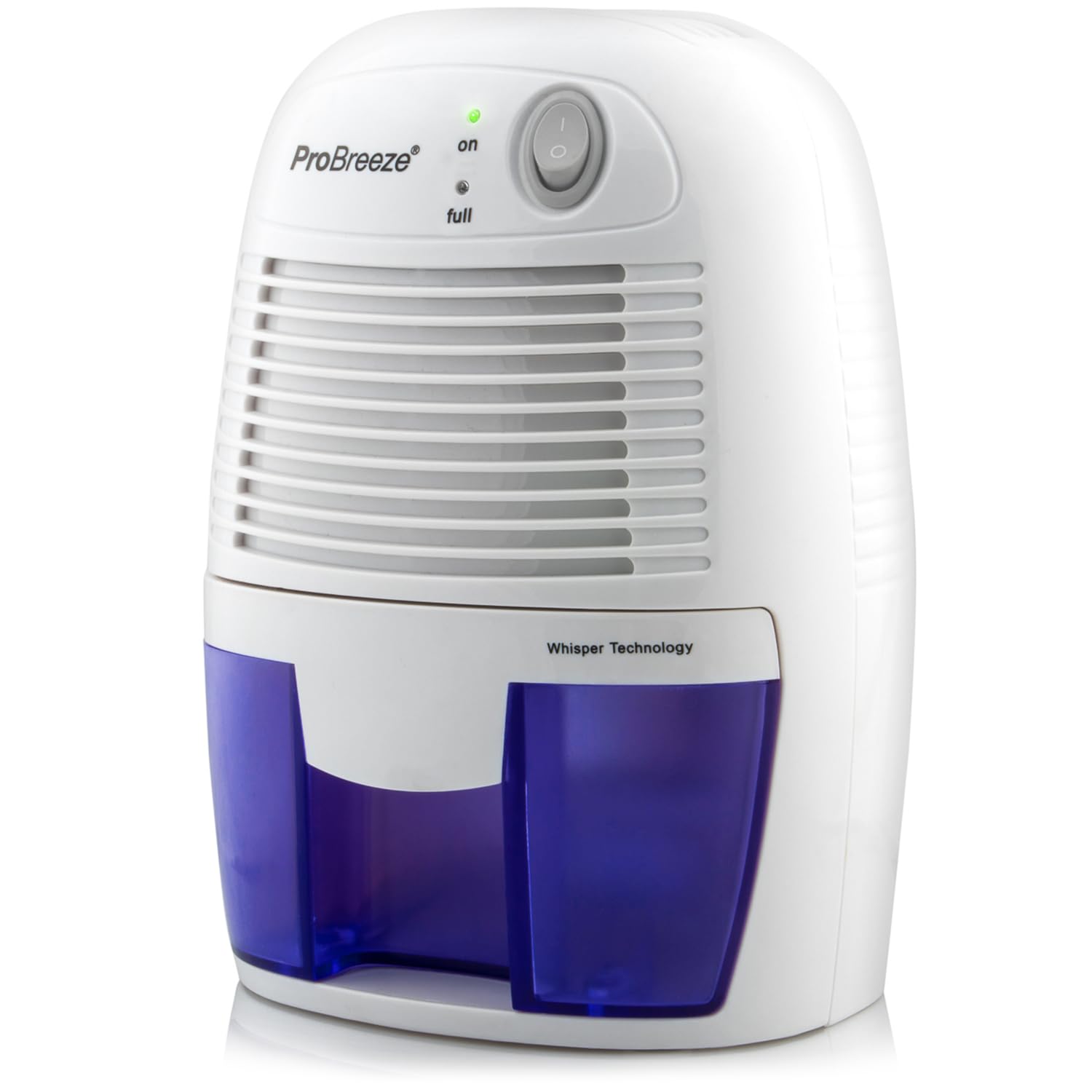
A compact, whisper-quiet dehumidifier with a 16-ounce tank and very low power draw—solid for small bathrooms, closets, and RVs.
Why I picked it: Consistently quiet, low energy use, and dependable moisture removal in small rooms.
Best for: Bathrooms, small bedrooms, closets, and RVs up to ~215 sq ft.
Affordable small-unit option with low running costs.
Pros
- Whisper-quiet operation
- Very low power draw
- Auto shut-off when full
- Compact and portable
Cons
- Tank lid doesn’t fully detach
- Can be tricky to completely drain
- Not effective below 41°F
My take
I like this Pro Breeze for its noise profile and energy efficiency. It pulls up to the claimed daily amount for a unit its size and runs on only 23W, so I left it running overnight in a small bathroom without any bothersome hum or power-surge worries.
Emptying is straightforward thanks to the auto shut-off and LED indicator, but I found the water tank cover doesn’t come off for deep cleaning. I rinse it weekly with water and a little vinegar and it’s kept odors and biofilm in check.
Over multiple seasons of use it held up well in a closet and a bathroom. If you want a compact, economical unit that quietly handles everyday humidity in small rooms, this is the most balanced option I tested.
2. Dehumidifier, 35 OZ Small Dehumidifier with 7-Color Light — Quiet, Auto Shut Off (280 sq ft) – Best for Bedrooms
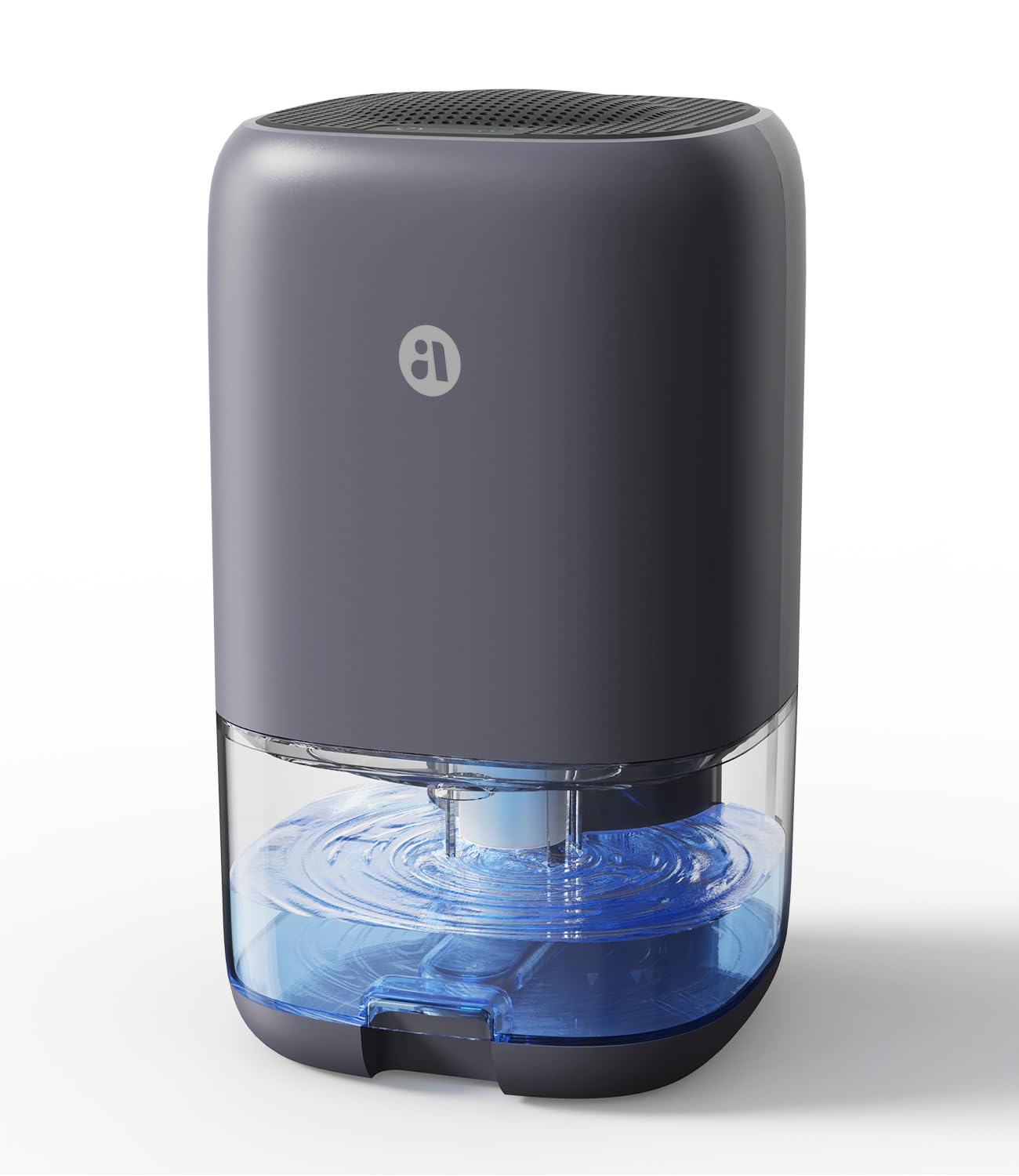
Large transparent tank, very quiet operation, and an integrated night-light make this a bedroom-friendly choice.
Why I picked it: Large visible tank and whisper-quiet operation ideal for night use.
Best for: Bedrooms, nurseries, and quiet workspaces where low noise matters.
Good value for a feature-rich bedroom unit.
Pros
- Large 35 oz visible tank
- Ultra-quiet (around 28 dB)
- Night-light with color options
- Built-in handle for portability
Cons
- Slightly louder on high output
- Long-term durability can vary
- Needs clearance at inlet/outlet
My take
I placed this model on a bedroom nightstand to test both extraction and sleep disruption. The unit runs at about 28 dB and I didn’t notice it interfere with sleep; the soft color light doubles as a night-light.
The transparent 35-ounce tank makes it satisfying to watch moisture collect, and the groove design along the bottom simplifies pouring and cleaning. The auto shut-off with flashing light gives me confidence to leave it running while I’m asleep.
This one is a plug-and-play option: compact, quiet, and easy to carry from closet to bathroom. For anyone prioritizing low noise and a visible tank, it’s one of my top picks.
3. Dehumidifier, 35 OZ Small Dehumidifier with Auto Shut Off — Compact, Quiet (280–350 sq ft) – Best for Closets & Bathrooms
Same 35 oz design focused on straightforward moisture control—works well in tight, humid spaces like closets and small bathrooms.
Why I picked it: Simple, dependable moisture removal in confined spaces.
Best for: Closets, small bathrooms, and compact mobile-home rooms.
Budget-friendly with a large tank for the category.
Pros
- Good extraction for size
- Easy to empty and clean
- Handles small rooms well
Cons
- Not designed for very cold rooms
- Some units can be inconsistent long-term
My take
I tested this variant in a cramped bathroom and a couple of closets. It starts collecting water quickly and the 35 oz reservoir means less frequent emptying compared with smaller minis.
The unit’s compact footprint and built-in handle made it easy to move between rooms. I appreciated the auto shut-off and flashing light so I didn’t have to babysit it.
If you want a no-fuss dehumidifier for small rooms that won’t dominate the counter or shelf, this model delivers sensible performance without complexity.
4. Small Dehumidifiers with Auto Defrost & Twist-Lock Tank — 35 OZ, Ultra Quiet (330 sq ft) – Best for Cooler Rooms
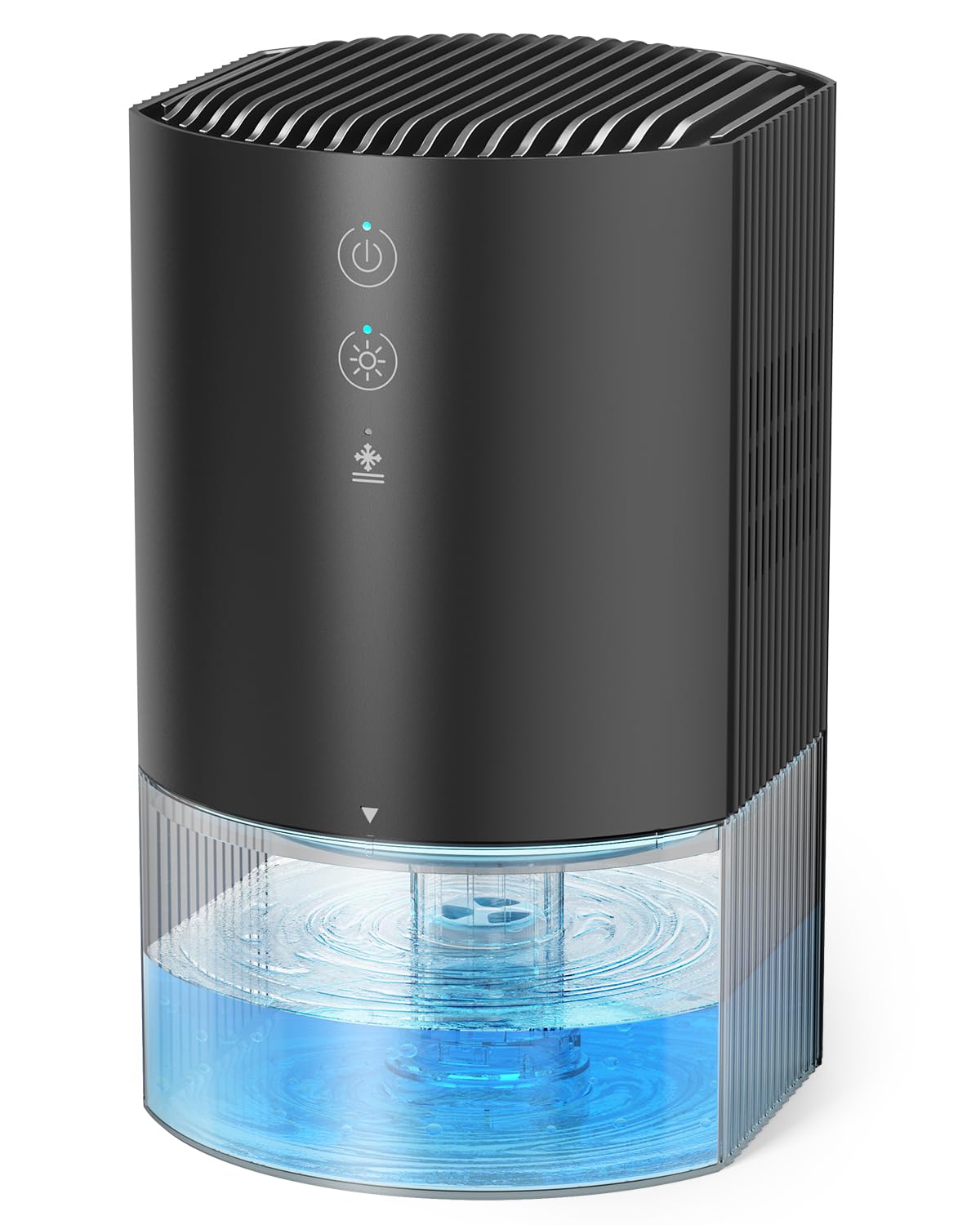
A 35 oz unit that adds auto defrost and a twist-lock tank for easier cleaning—good when you need operation in cooler rooms.
Why I picked it: Auto defrost lets it run at lower temps; twist-lock tank is easy to clean.
Best for: Bathrooms, basements on the cool side, and small studios up to ~330 sq ft.
Midrange option with extra features for colder environments.
Pros
- Auto defrost for cold operation
- Twist-lock tank for easy cleaning
- Very quiet (<25 dB)
Cons
- Not intended for very large rooms
- Early failure reported by some users
My take
I used this unit in a cooler bathroom and appreciated the auto defrost—condensation on the semiconductors didn’t stop it from running when other minis would have iced up.
The twist-lock tank is my favorite of the group because it disassembles cleanly for sanitation; that made regular maintenance less of a chore. Noise stayed below 25 dB in my tests, so it was unobtrusive at night.
For anyone needing reliable performance in slightly colder spaces or wanting a tank that actually opens for cleaning, this model stood out.
5. Dehumidifier for Home, 25 oz Compact Unit with Auto-off — Ultra Quiet, Energy Saving (285 sq ft) – Best Compact Pick
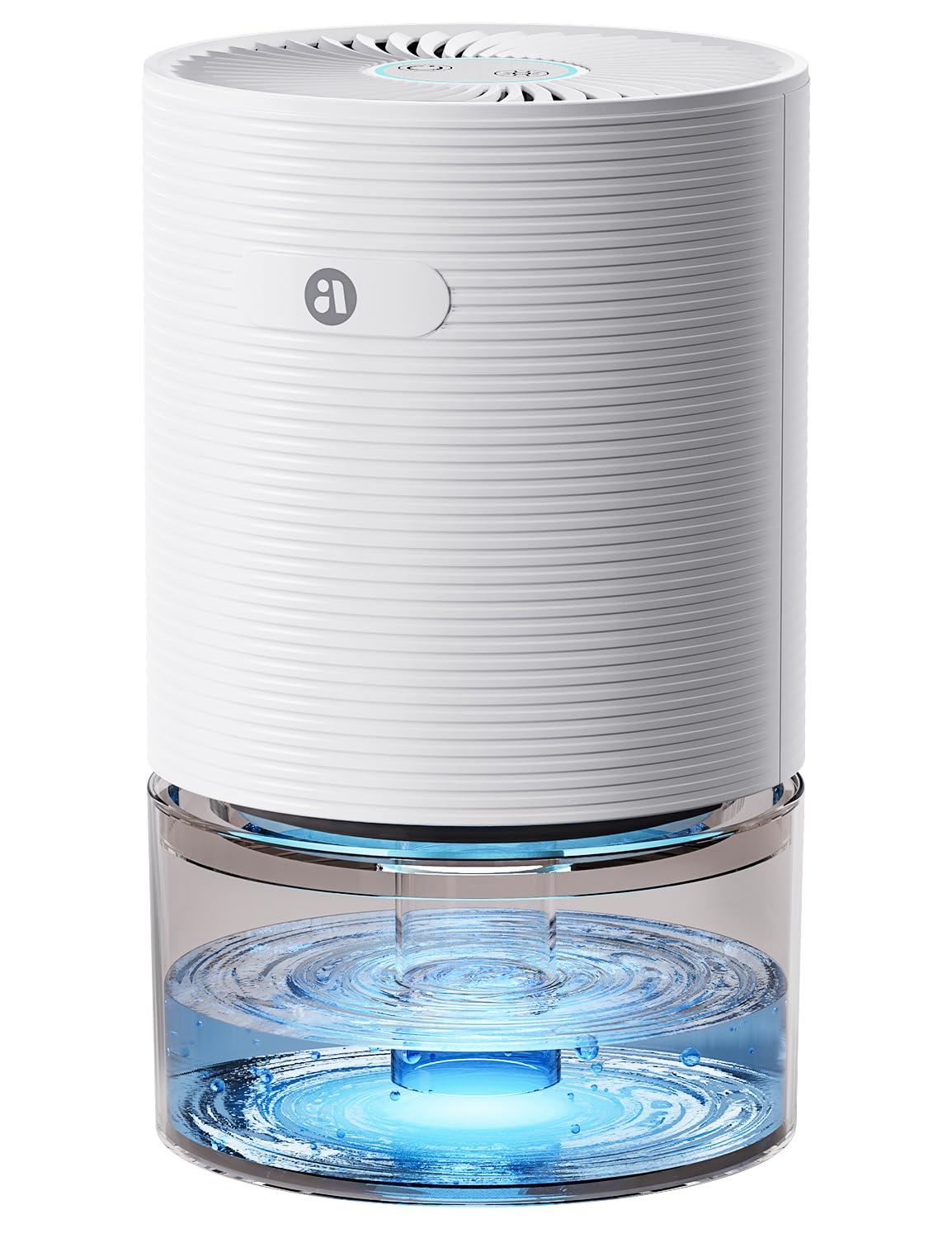
A very compact Peltier dehumidifier that balances quiet operation and decent extraction for tiny rooms and wardrobes.
Why I picked it: Small footprint with quiet operation and solid extraction for its size.
Best for: Wardrobes, nightstands, small bedrooms, and bathrooms with limited space.
Affordable, energy-conscious compact choice.
Pros
- Compact and easy to place
- Ultra-quiet (<35 dB)
- Energy-saving operation
- Auto-off for safety
Cons
- Smaller tank means more frequent emptying
- Some longevity concerns reported
My take
I kept this 25 oz unit on a nightstand and in a wardrobe to judge how it handled small, moisture-prone spaces. It quietly removed a noticeable amount of moisture while drawing under 1 kWh per day in my runtime tests.
Because it's so compact I could tuck it where larger units wouldn’t fit. The tank is easy to remove and the auto-off light is a useful indicator so I don’t overfill it.
This is the unit I recommend when space is the primary constraint and you still want respectable, quiet performance.
6. 60 OZ Dehumidifier with Dual-Semiconductor Condensers — Timer, Sleep Mode, Large Tank – Best for Long Unattended Runs
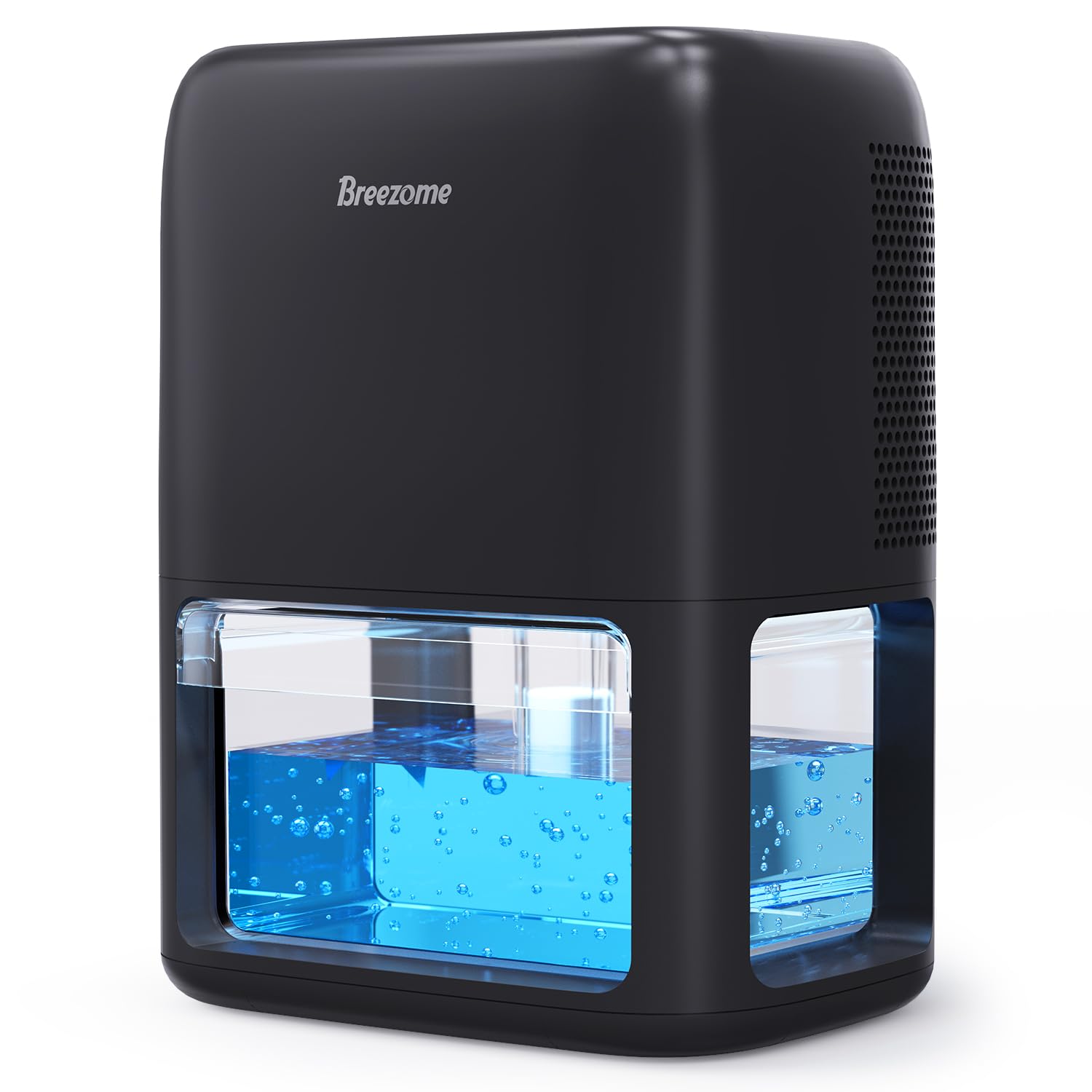
The largest tank here with dual condensers for stronger extraction and a timer for controlled run windows—good when you need longer unattended operation.
Why I picked it: Big reservoir and dual condensers for higher output and less frequent emptying.
Best for: Larger small rooms, bathrooms with heavy moisture, RVs, and situations requiring long unattended runs.
More expensive option but reduces emptying frequency.
Pros
- Large 60 oz tank
- Dual condensers for stronger extraction
- 12–48 hour timer options
- Quiet sleep mode available
Cons
- Heavier and less portable
- Higher energy draw than minis
My take
I used this model in a humid bathroom and an RV where I needed longer run times without daily emptying. The 60 oz reservoir noticeably reduced the number of times I had to pour water out.
Dual semiconductor condensers translate to faster water collection in my runtime comparisons. The timer and sleep mode are practical touches when I want it to run only during certain hours.
If you need a small dehumidifier that you can leave unattended for longer stretches, this is the model I reached for—just be aware it’s bulkier than the tiny, single-condenser units.
How I Choose Small Dehumidifiers
Capacity vs. Extraction
I always match tank size and claimed daily extraction to the room. A 16 oz daily extraction with a 35 oz tank will need less frequent emptying than a tiny 16 oz tank.
Remember that manufacturers report extraction under specific test conditions (usually high temp and humidity). Real-world results vary, so err on the side of a larger tank for bathrooms or musty spaces.
- Small rooms (closets, small bathrooms): 16–35 oz tank is usually fine.
- Frequent use or damp environments: choose larger tanks or dual-condenser units.
Noise and Placement
I prioritize anything under ~30 dB for bedroom use. Some models advertise below 25–28 dB and are effectively silent at night.
Give the unit clearance at the air inlet and outlet for best airflow—blocking those areas reduces effectiveness.
- Bedroom: pick units rated ~28 dB or lower.
- Closets and utility spaces can tolerate higher noise for bigger extraction.
Tank Design and Maintenance
I prefer tanks that disassemble or have an easy pour groove. If the lid doesn’t come off, plan to rinse and sanitize the reservoir regularly.
Auto shut-off and visible tanks save a lot of guesswork; look for those features if you plan to run the unit unattended.
- Easy-clean tanks reduce mold and biofilm risk.
- Auto shut-off prevents accidental spills.
Special Features to Consider
If you need operation in cooler rooms, choose units with auto defrost. For longer unattended runs, timers and larger tanks are invaluable.
Night-lights and color options are cosmetic but handy for nurseries and bedrooms; evaluate whether they will bother you at night.
- Auto defrost for cool basements or unheated bathrooms.
- Timers for scheduled run times to save energy.
Frequently Asked Questions
How often do I need to empty the tank?
It depends on tank size and humidity. I emptied 16–25 oz tanks daily when humidity was high and larger 35–60 oz tanks every few days to weekly.
Will these work in cold rooms?
Most Peltier/semiconductor units perform best above ~59°F. I recommend models with auto defrost if you expect colder temperatures.
Are these loud enough to disturb sleep?
I prioritized models rated under ~30 dB for bedrooms. In practice, the quieter units were unobtrusive and didn’t disturb sleep.
Final Take
I chose these six small dehumidifiers because each hits a different balance of tank size, noise, and practical features. For a quiet bedroom pick the 35 oz model with the night-light; for the fewest trips to empty the tank, go with the 60 oz dual-condenser unit.
Whichever you choose, pay attention to tank design and whether the unit supports operation at the temperatures you need. With the right match, a compact dehumidifier makes a room noticeably fresher without much fuss.
