
I tested adhesive, suction, plastic savers, and teak options to find soap holders that keep bars dry, declutter showers, and last.
I replaced my soap dishes dozens of times while testing these five designs so I could recommend solutions that actually work. Over several weeks I installed adhesive racks, suction-cup trays, foam savers, and a teak dish to see how each handled wet conditions, heavy bars, and everyday cleaning.
In this roundup I focus on real-world fit: how well each holder sticks or sits, how it drains, what surfaces it needs, and whether it makes soap last longer. I also note upkeep and what I would use each type for in my house.
I compared adhesive racks, suction-cup trays, foam soap savers, and a teak dish. The biggest difference I found is surface compatibility: suction units need smooth, non-porous walls, adhesives prefer flat clean tile or glass, and foam pads sit on shelves. Choose based on your wall or counter material.
1. Nieifi Stainless Steel Adhesive Soap Holder – Best Overall
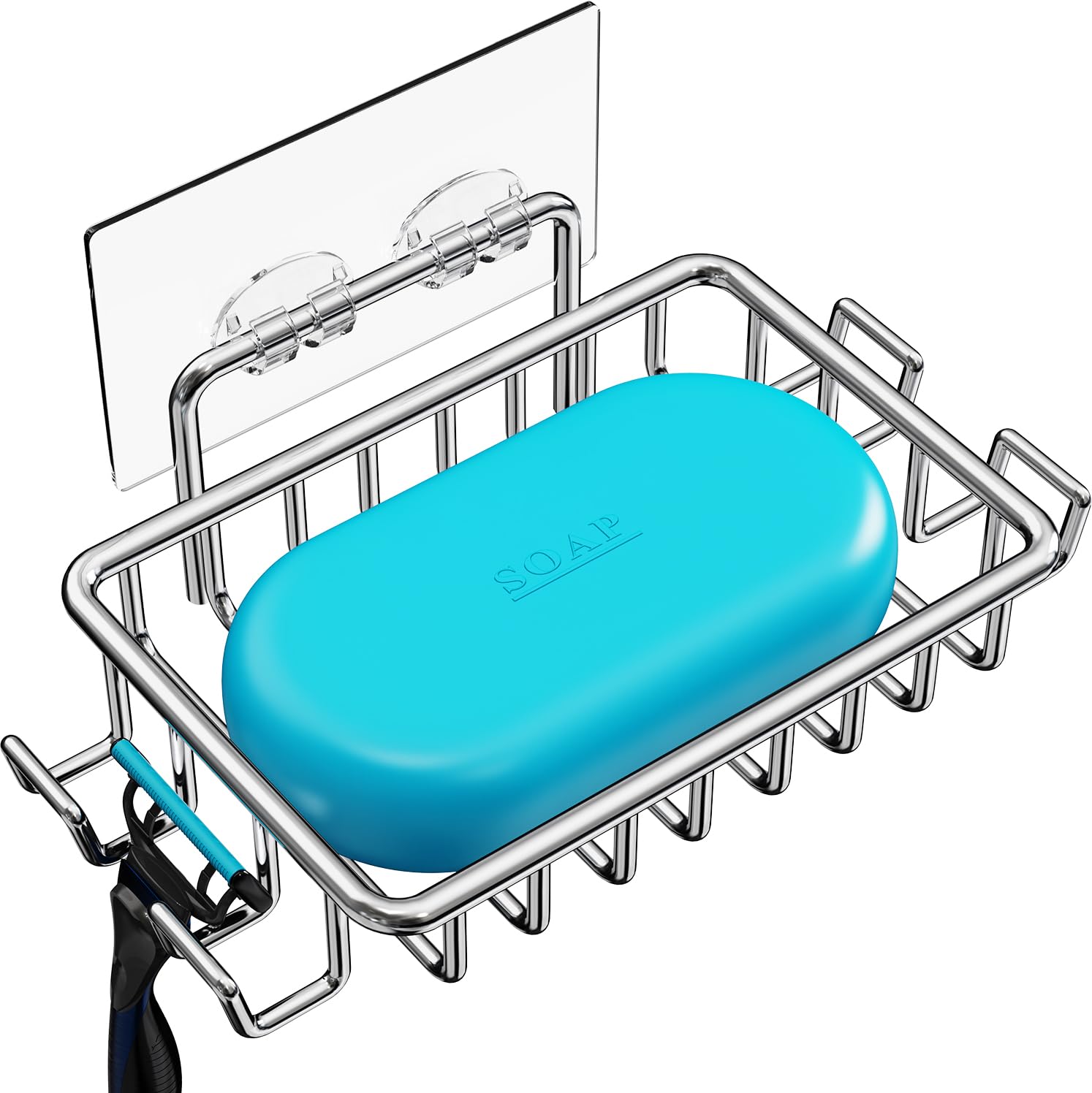
A rustproof stainless rack with four hooks and a strong adhesive patch I relied on for a tidy, drill-free shower setup.
Why I picked it: Durable SUS304 stainless, dependable adhesive, and handy hooks for loofahs and razors.
Best for: Showers where I want a sleek, drill-free rack that holds soap and accessories.
Very affordable value option.
Pros
- SUS 304 rustproof stainless steel
- Strong adhesive holds reliably
- Four hooks for loofahs and razors
- Removable for easy cleaning
Cons
- Adhesive can fail on textured surfaces
- Razor fit depends on handle size
My take
I installed this stainless holder in under five minutes using the included adhesive patches, and it has stayed put through daily showers. The stainless is properly rustproof and the basket drains well so soap doesn’t sit in a puddle.
The four side hooks are genuinely useful — I hung a loofah and a razor without crowding the soap bed. Removing the basket for cleaning is quick and simple, which made maintenance painless during my testing week.
My only caveat is surface prep: the adhesive bonds best to smooth, clean tile or glass. I wouldn’t trust it on very textured tile or painted surfaces, but on the right wall this is the most practical all-purpose holder I used.
2. S&T INC. Soap Saver Pads (4-Pack) – Best Budget
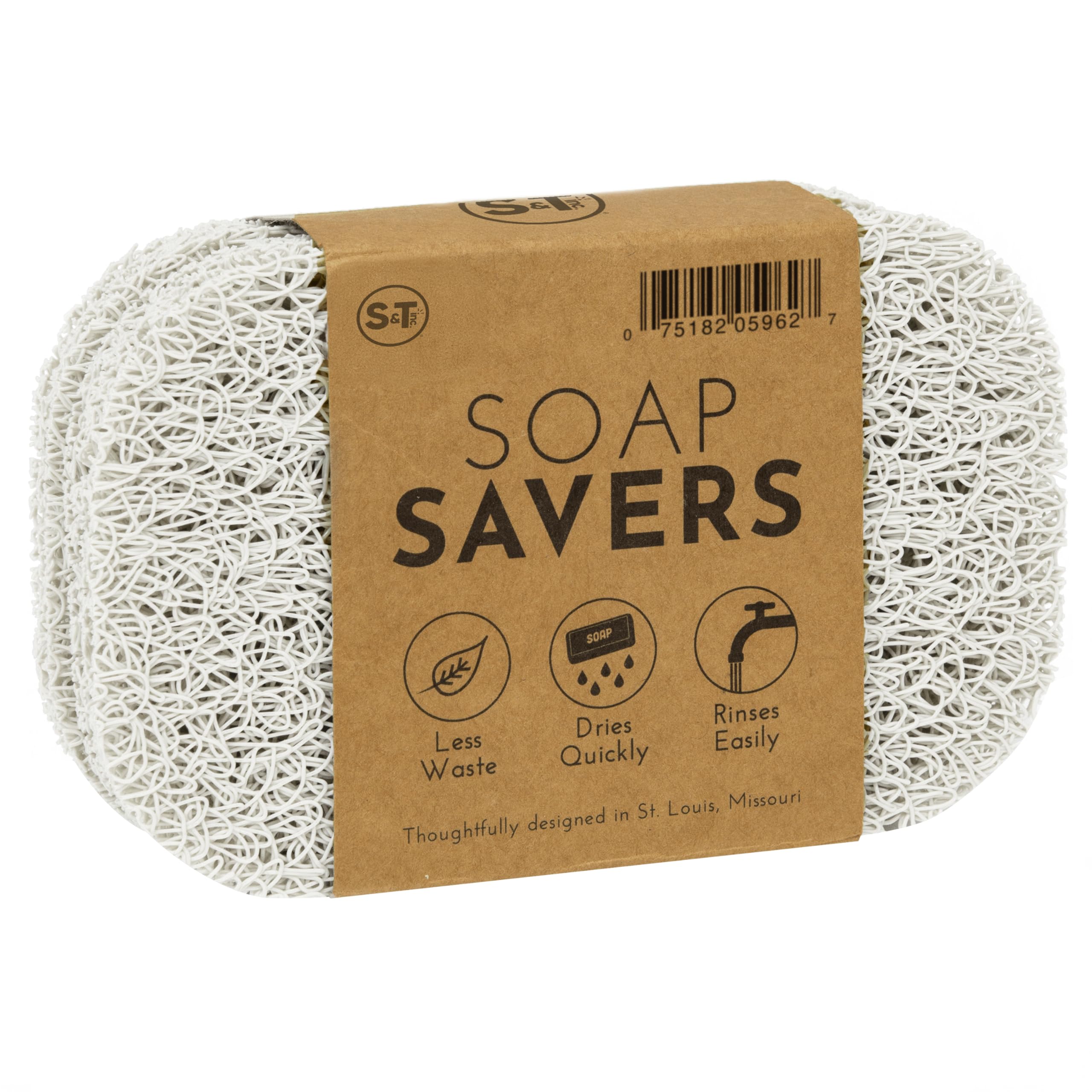
Simple foam soap savers that keep bars elevated and dry; inexpensive, trim-to-fit, and washable.
Why I picked it: Extends soap life cheaply and fits nearly any dish after trimming.
Best for: Sinks, shower shelves, or travel—anywhere I want to keep soap from getting mushy.
Lowest-cost, replaceable saver pack.
Pros
- Keeps soap elevated and dry
- Trim-to-fit for any dish
- Washable and reusable
- Neutral look blends in
Cons
- Can slip around on slick surfaces
- Needs replacing after months of use
My take
These foam savers are the simplest change I made that actually extended bar life: they lift soap off wet surfaces so bars dry between uses instead of turning to mush.
I trimmed one pad to fit a small soap dish and another to sit under a heavy shampoo bar on a shower shelf. Both roles worked well and cleaning them is as easy as a quick rinse.
If you want a no-fuss, low-cost fix for soap mess and waste, these pads are the easiest route. I did notice they can slide on very slick shelves, so I pair them with a little double-sided tape when necessary.
3. TAILI Suction-Cup Double Dish Soap Holder – Best for Heavy Bars
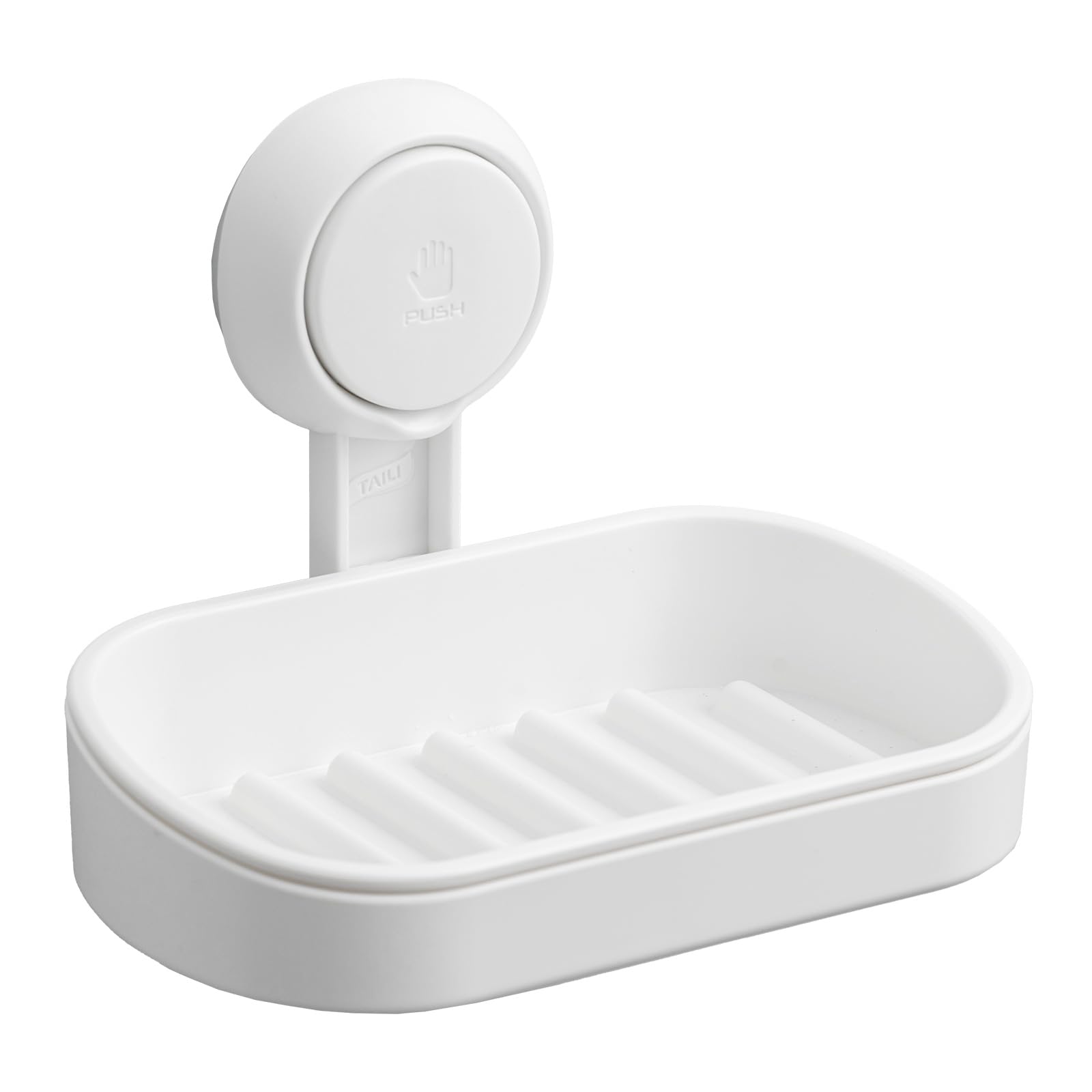
A two-tier suction tray with strong bionic-style suction that held heavy bars in my testing and gives a removable, easy-to-clean setup.
Why I picked it: Powerful suction rated for heavy bars plus removable dishes for cleaning.
Best for: Glass or smooth tile showers where I need a drill-free, heavy-duty solution.
Mid-range suction-cup option.
Pros
- Very strong suction up to heavy bars
- Two-dish design for faster drying
- Removable trays for easy cleaning
- Holds large soap bars securely
Cons
- Only sticks to smooth, non-porous walls
- May fail on uneven or textured tiles
My take
I pressed the suction firmly to a glass shower wall and the TAILI dish stayed put under a heavy 9 oz soap I used for a week. The suction design is genuinely robust when attached to the recommended surfaces.
The double-dish option is the practical win here: one tray is sealed and easy to remove, while the other has drainage holes so soap dries quickly. That combination kept soap from becoming soggy during my tests.
If your shower walls are textured, grout-lined, or unfinished, this won’t be as reliable. On smooth tile or glass it’s one of the most secure suction solutions I used.
4. LEVERLOC Double-Layer Suction Soap Holder – Best Design
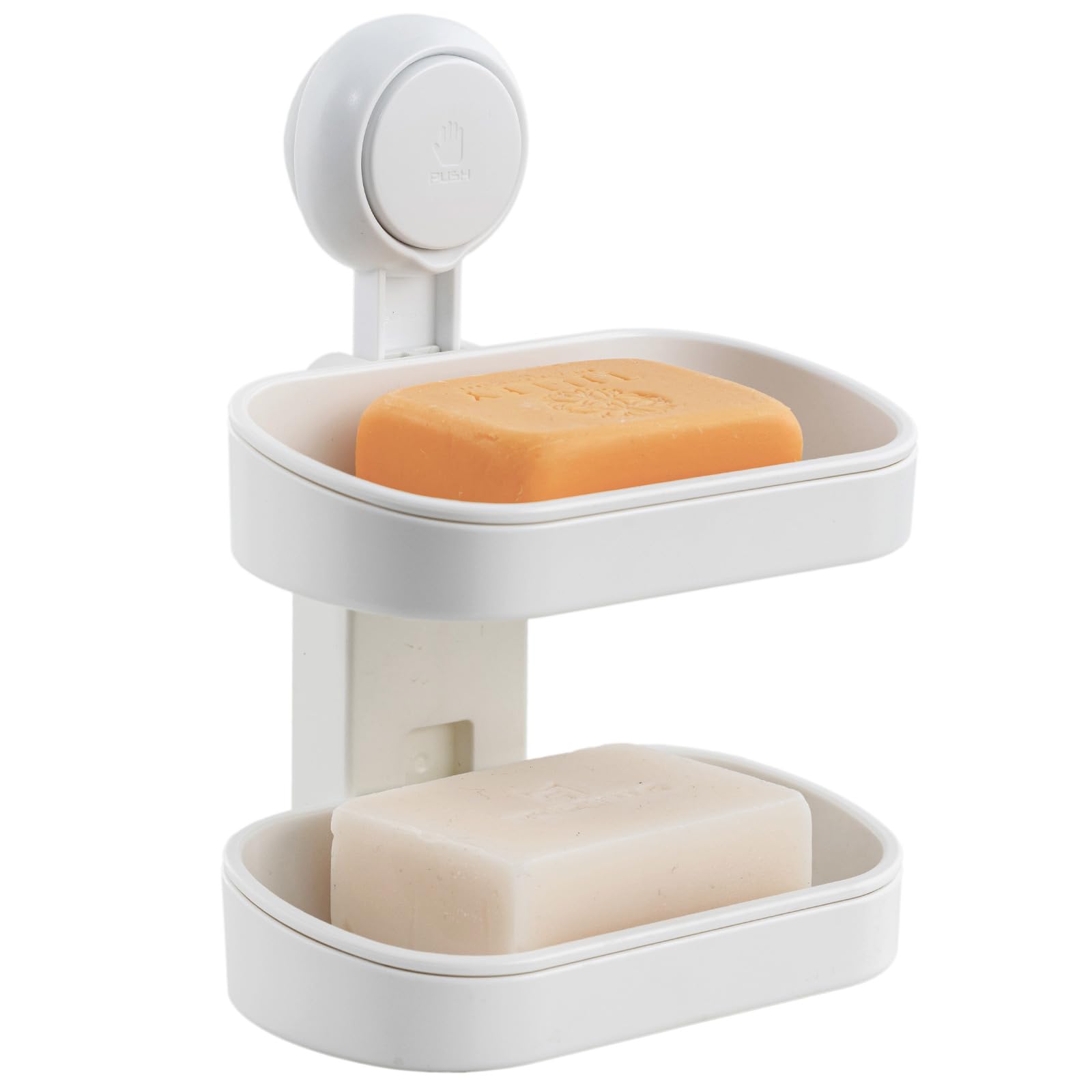
A compact, sleek two-tier suction dish with a removable inner rack and a strong support back that stayed put on my subway tile.
Why I picked it: Compact footprint with a removable insert and dependable suction support.
Best for: Small showers or tubs where I want a neat, space-saving holder.
Slightly more expensive, premium suction design.
Pros
- Compact, sleek modern design
- Removable inner layer for cleaning
- Strong suction with support backing
- Can hold two small bars
Cons
- Plastic feels a bit flimsy
- Insert could drain more freely
My take
I liked how this unit looks on the wall — the rounded edges and small footprint make it unobtrusive in my subway-tiled shower. Installation required a firm push but then it locked in place and held tight.
The removable inner layer makes cleaning straightforward, though I did wish it had more perforations to speed drainage. Even so, the dish kept soap elevated and mostly dry during daily use.
Overall, this is my pick when style matters but I still need a suction solution that performs. It handled two smaller soap bars side-by-side when I rotated it, which was a useful trick.
5. HTB Teak Wood Slanted Soap Dish – Best Natural Material
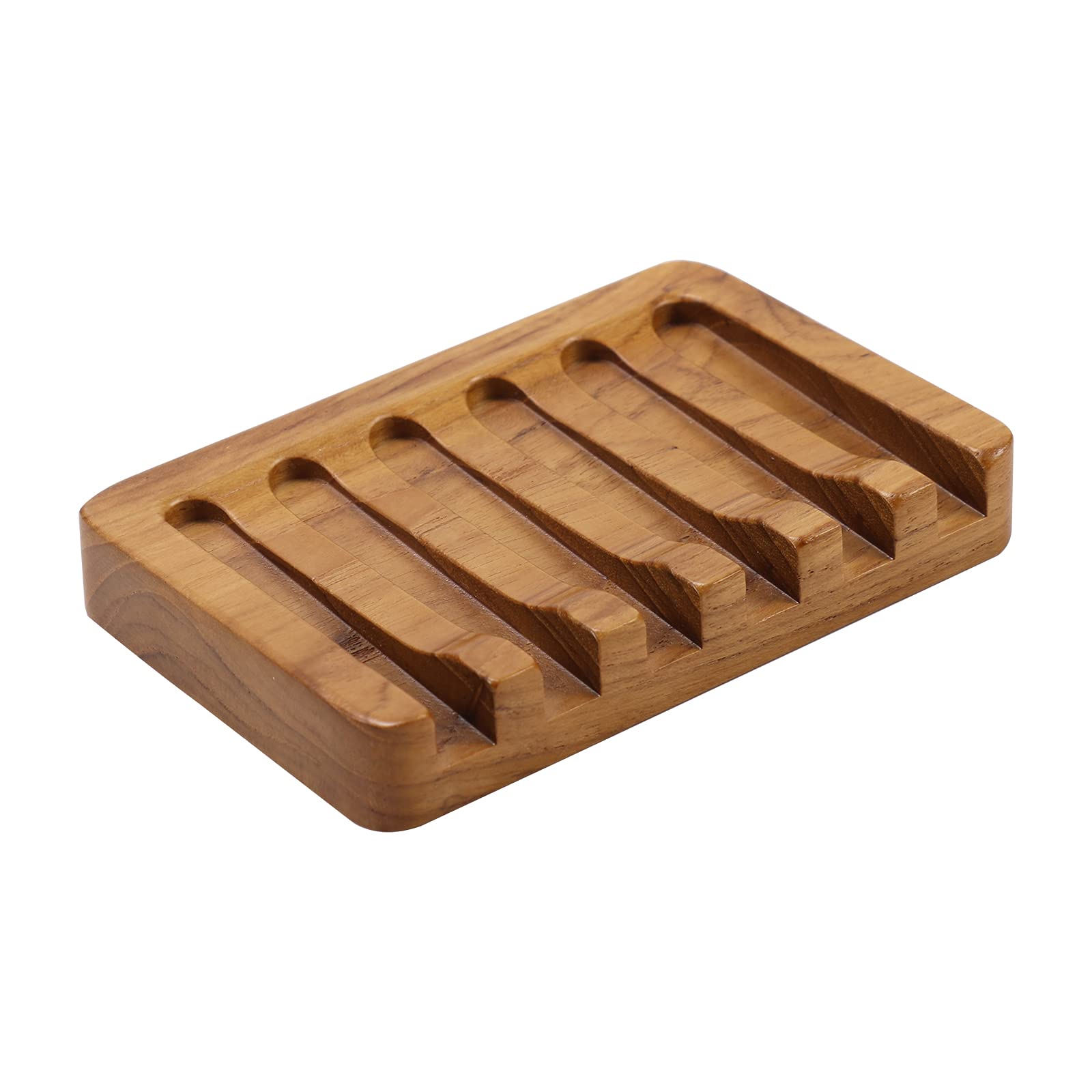
A one-piece teak soap dish with a slanted, comb-style top that promotes airflow and keeps bars dry without plastic.
Why I picked it: Solid teak construction with natural drainage and an attractive, minimal look.
Best for: Counters, sinks, and showers where a natural, non-plastic option suits the decor.
Affordable wooden alternative.
Pros
- 100% teak — durable and attractive
- Slanted comb design drains water
- One-piece solid construction
- Non-slip concave soap cradle
Cons
- Needs occasional deep cleaning
- Must sit level to drain properly
My take
I put this teak dish at my sink and appreciated how the slanted top and comb grooves channeled water away from the soap — bars stayed firmer and lasted longer than when left on flat dishes.
The one-piece teak feels sturdy and looks better than plastic in my bathroom. It’s multifunctional too: I also used it to hold a sponge at the kitchen sink and it performed well.
Expect to rinse or soak it periodically; certain soaps can cake into the grooves and require a scrub. When positioned on a level surface it drains reliably and keeps counters tidy.
How I Choose Soap Holders
Surface compatibility matters most
I always check what surface the holder needs before buying. Suction products demand smooth, non-porous walls like glass or polished tile. Adhesive racks work well on clean, flat tile and glass but struggle on textured grout or painted drywall.
If I’m placing a holder on a countertop or shelf, I favor a foam saver or teak dish that doesn’t rely on adhesives or suction.
- Suction-cup: best for glass, glazed tile, polished metal
- Adhesive: best for smooth tile or glass, avoid textured grout
- Foam pads/soap savers: sit on shelves and are easy to replace
- Wood dishes: need level placement and periodic cleaning
Drainage and soap life
I prioritize holders that keep soap out of standing water. Raised ridges, perforations, or slanted designs make a real difference in how long a bar lasts.
Removable inserts or trays make cleaning much easier, so I prefer designs that let me pop parts out and rinse them quickly.
- Raised bars or ribs prevent soap from sitting in water
- Removable trays simplify cleaning
- Slanted or perforated designs speed drying
Durability and materials
Stainless steel and teak hold up well in wet environments. Plastics vary: thicker ABS lasts longer, cheap flimsier plastic can warp.
For long-term use in the shower I lean toward SUS304 stainless or teak; for temporary or travel use, foam pads or basic plastic are fine.
- Stainless steel: rust-resistant and long-lasting
- Teak: naturally water-resistant but needs cleaning
- ABS plastic: lightweight and often durable
- Foam pads: inexpensive but need periodic replacement
Installation and upkeep
I test installation time and how often I need to reattach or clean a holder. The quickest wins are suction or adhesive products that install in minutes, but they require surface prep.
Plan for occasional deep-cleaning, especially with wood or groove-style designs where soap can accumulate.
- Clean and dry the surface before applying adhesive or suction
- Remove and dry trays weekly to prevent buildup
- Rotate or replace foam savers every few months
Frequently Asked Questions
Will suction soap holders stick to my bathroom tile?
I only rely on suction holders for smooth, non-porous surfaces such as glass, polished tile, or stainless steel. They’re unreliable on textured, unfinished, or grout-lined tiles.
How do I keep a wooden soap dish from getting gunky?
I rinse teak dishes regularly and give them an occasional soak and scrub if soap cakes into the grooves. Keeping the dish level so water runs off helps minimize buildup.
Can adhesive-mounted racks damage walls?
In my experience the adhesive patches on quality racks remove cleanly from smooth tile or glass if you follow the removal steps, but they’re not ideal for painted drywall or porous surfaces.
Do soap saver pads actually extend soap life?
Yes — by lifting the bar off wet surfaces they let the soap dry between uses, which slows shrinkage and mushiness. I replace them periodically as they wear.
Final Take
I found that no single soap holder fits every situation: choose based on your wall or counter surface and how much maintenance you want to do.
For a durable, all-purpose option I reach for the stainless adhesive rack. For the lowest cost and simplest fix, foam savers work well. Suction-cup double dishes are my go-to when I need a drill-free option that can handle heavy bars, and the teak dish is my pick when I want a natural look.
Pick the holder that matches your surface and cleaning habits, and you’ll stop wasting soap and keep your shower or sink noticeably tidier.
