
I tested five socket organizers across rails, magnetic trays, trays, and a tool roll to find the most durable, portable, and space-efficient options for a busy toolbox.
I keep my sockets organized because I work faster and make fewer mistakes. Over months of hands-on use I tested snap rails, magnetic trays, molded trays, a tool roll, and a multi-rail clip set to see which systems actually stood up to shop use.
In this roundup I focus on build quality, how securely sockets seat, ease of grabbing and returning sockets, portability, and how each option fits into a drawer or on a toolbox. Below are the five organizers I kept coming back to while working on cars, bikes, and at job sites.
I evaluated these products by loading them with my usual mix of shallow and deep sockets, moving them in and out of drawers, mounting the magnetic pieces to my steel toolbox, and carrying the rails and roll between the truck and shop. The result: options that excel at drawer organization, options that travel well, and one magnetic set that’s ideal for toolbox-side mounting.
1. Olsa Tools 3/8″ Drive Socket Organizer Rail – Best Overall
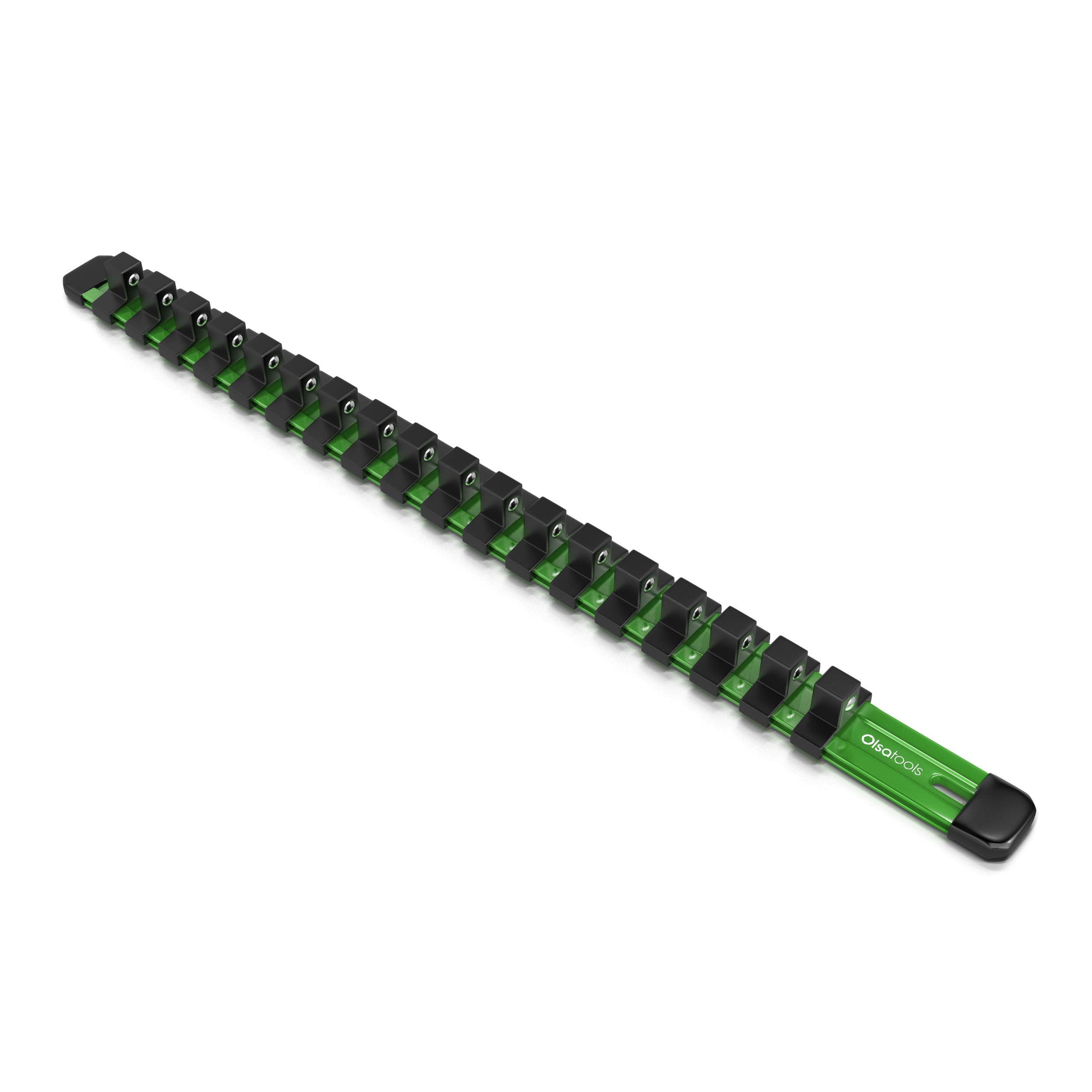
A durable anodized-aluminum rail with 18 spring-loaded ABS clips that holds sockets securely and travels well between jobs.
Why I picked it: Solid aluminum rails, spring-loaded clips, and real-world durability made this my go-to rail for 3/8" sockets.
Best for: Mechanics who want a tough, portable rack for heavy use.
Midrange — built for long-term shop use without being overpriced.
Pros
- Strong anodized aluminum rails
- Positive spring-loaded ball detents
- Holds impact and chrome sockets
- Limited lifetime warranty
Cons
- Available only in specific drive sizes
- Requires drawer or rail space
My take
I bought multiple Olsa rails and put them to work in my rolling tool cart and portable toolbox. The anodized aluminum feels rigid and the ABS clips with steel ball bearings engage sockets with a satisfying click.
Switching sockets is quick because the clips release cleanly; I had zero binding compared with older metal racks I used. I like that the rail holds both chrome and many impact sockets without letting them wobble loose, and the limited lifetime warranty is a reassuring touch.
If you want a shop-grade rail that you can carry from vehicle to bench and still expect to last, these are the ones I reach for first.
2. NEIKO 3-Piece Socket Tray Organizer – Best Drawer Organizer
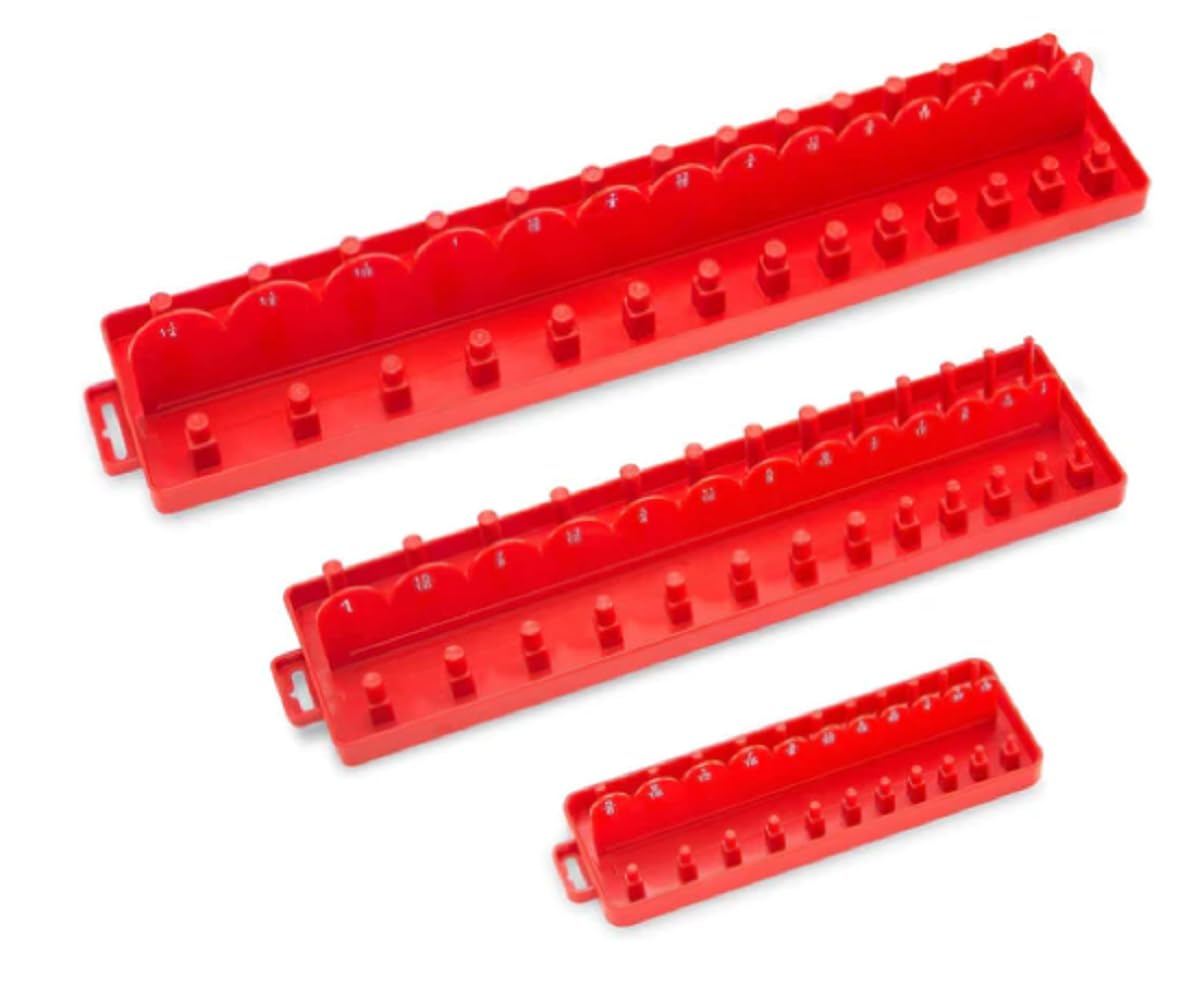
Three molded plastic trays with dual rows and etched size markings that make drawer storage visible and tidy.
Why I picked it: The molded trays give clear socket placement and etched markings that speed finding sizes in a drawer.
Best for: Technicians who keep sockets in a dedicated drawer and want clear labeling.
Affordable — a practical option for drawer-based organization.
Pros
- Clear etched size markings
- Dual-row capacity
- Lightweight molded plastic
- Bright, visible color
Cons
- Short bits sit deep in some posts
- Not ideal for heavy impact sockets
My take
I dropped these trays into my socket drawer to replace a mixed pile of loose sockets and immediately noticed faster retrieval. The etched SAE/metric markings are easy to read and the dual-row design gives more capacity than a single rail.
The holding nubs secure most sockets well, though I had to work my fingers a bit to extract very short bits from the deeper posts. For standard shallow and deep sockets the trays perform reliably and they’re light enough to move between job sites.
If you want a clean drawer layout and quick visual identification, this is the organized, budget-friendly choice I use when space is limited.
3. Olsa Tools Magnetic Socket Organizer (3-Piece) – Best Magnetic
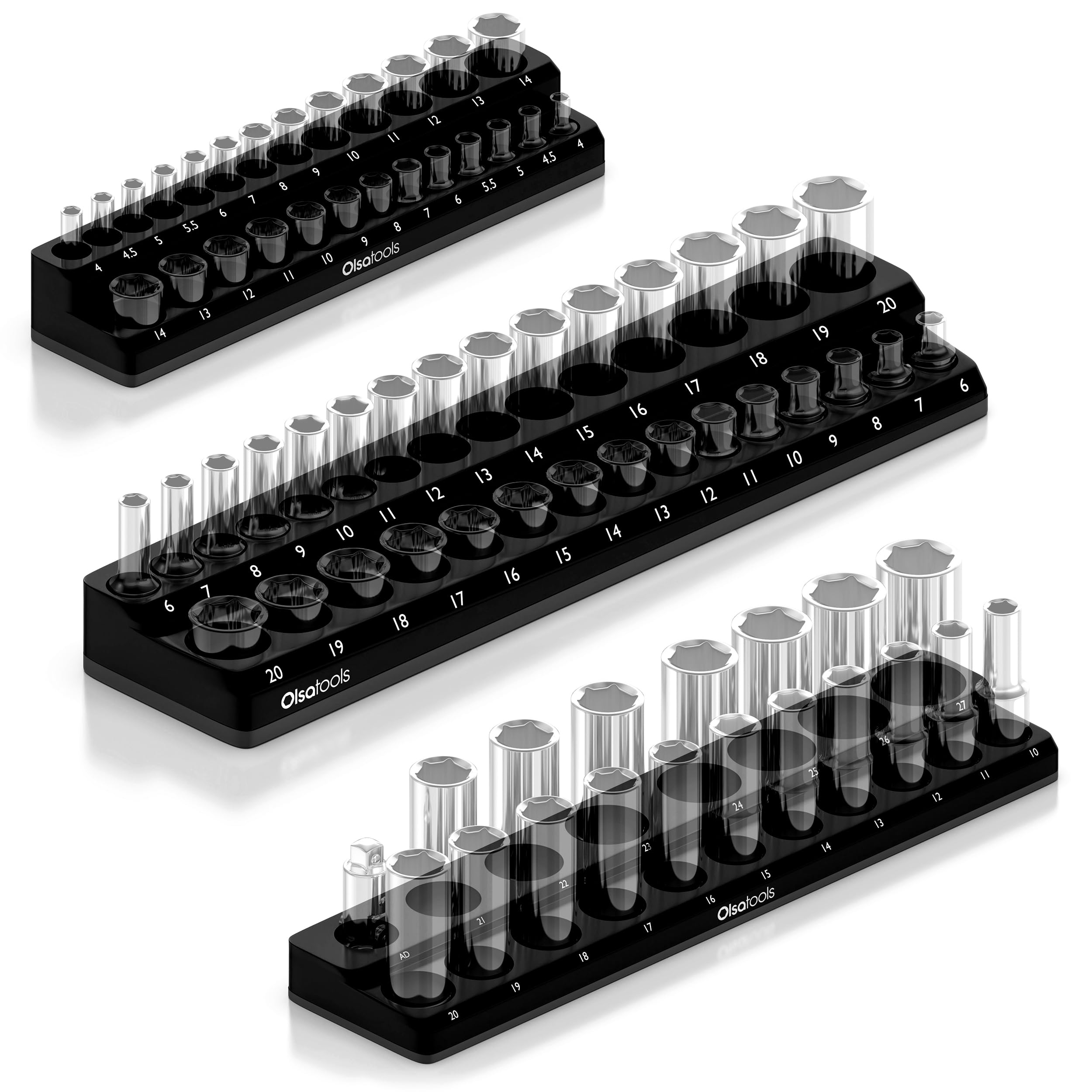
A three-piece magnetic system with rubberized bases that mounts to steel surfaces and holds both shallow and deep sockets.
Why I picked it: Strong, scratch-free magnets and the ability to mount trays to my toolbox made this the most convenient organizer for active work.
Best for: Mechanics who want toolbox-side organization or a magnetic drawer solution.
Midrange — convenient mounts justify the cost for toolbox use.
Pros
- Rubberized scratch-free magnetic base
- Holds deep and shallow sockets
- Mounts securely to steel surfaces
- Three-piece set for all drive sizes
Cons
- Impact sockets don’t fit
- Some small sockets tip forward
My take
I keep the magnetic trays stuck to the side of my steel toolbox and they make socket access effortless while I’m wrenching. The rubberized magnet surface protects the paint and the magnets themselves are strong enough to hold loaded trays even when bumped.
They accept both deep and shallow sockets, which is convenient, but I did find that a few smaller deep sockets can tilt inside oversized holes — they don’t fall out, but they won’t stay perfectly horizontal unless seated carefully.
Overall, if you want sockets visible and at arm’s reach on a toolbox wall or inside a steel drawer, these magnetic trays are the easiest system I’ve used.
4. Rugged Tool 32-Pocket Tool Roll – Best for Portability
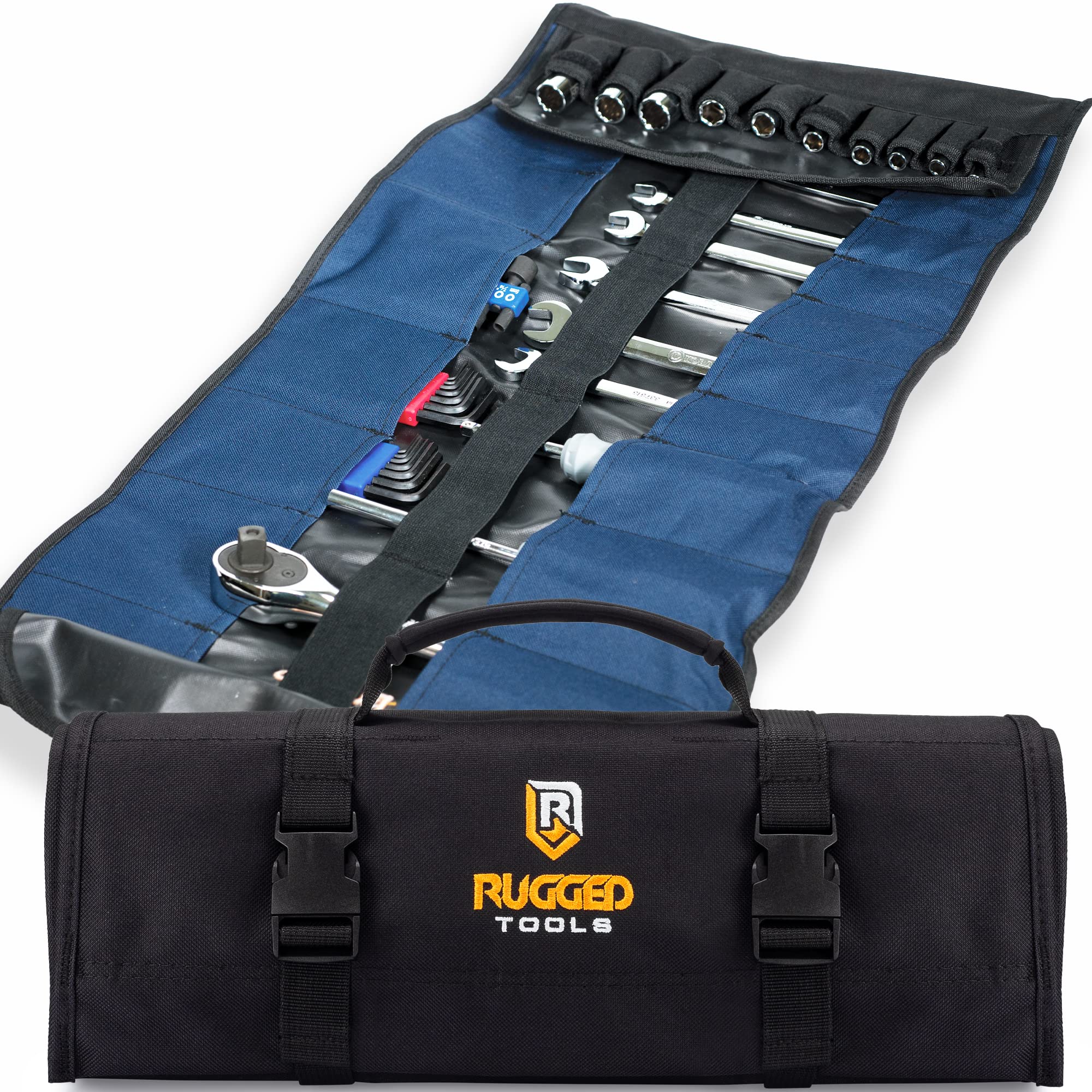
A heavy-duty 600D polyester tool roll with 22 pockets, 10 socket holders, and an internal elastic strap for secure transport.
Why I picked it: The roll packs a lot into a compact, carryable package that’s ideal for site work and moto gigs.
Best for: Field techs and contractors who need a portable, compact socket and wrench organizer.
Affordable — practical for everyday carry and job-site use.
Pros
- Durable 600D polyester
- Compact roll-up design
- Internal elastic strap secures tools
- Top handle for carrying
Cons
- Pockets not sewn to exact wrench sizes
- Larger tools may not fit
My take
When I need to take a selection of sockets, wrenches, and pliers to a job, this tool roll is what I grab. It unrolls flat for easy access and rolls up compactly with a handle that makes transport effortless.
The materials feel tough and the elastic center strap helps keep sockets and wrenches from shifting. I did have to adjust which wrenches go in which pockets because the pocket sizes aren’t strictly graduated, but that’s a small trade-off for the portability.
For mobile work where drawer rails aren’t an option, this roll is the most practical organizer I rely on.
5. 9-Piece ABS Socket Clip Rail Set – Best Value Set
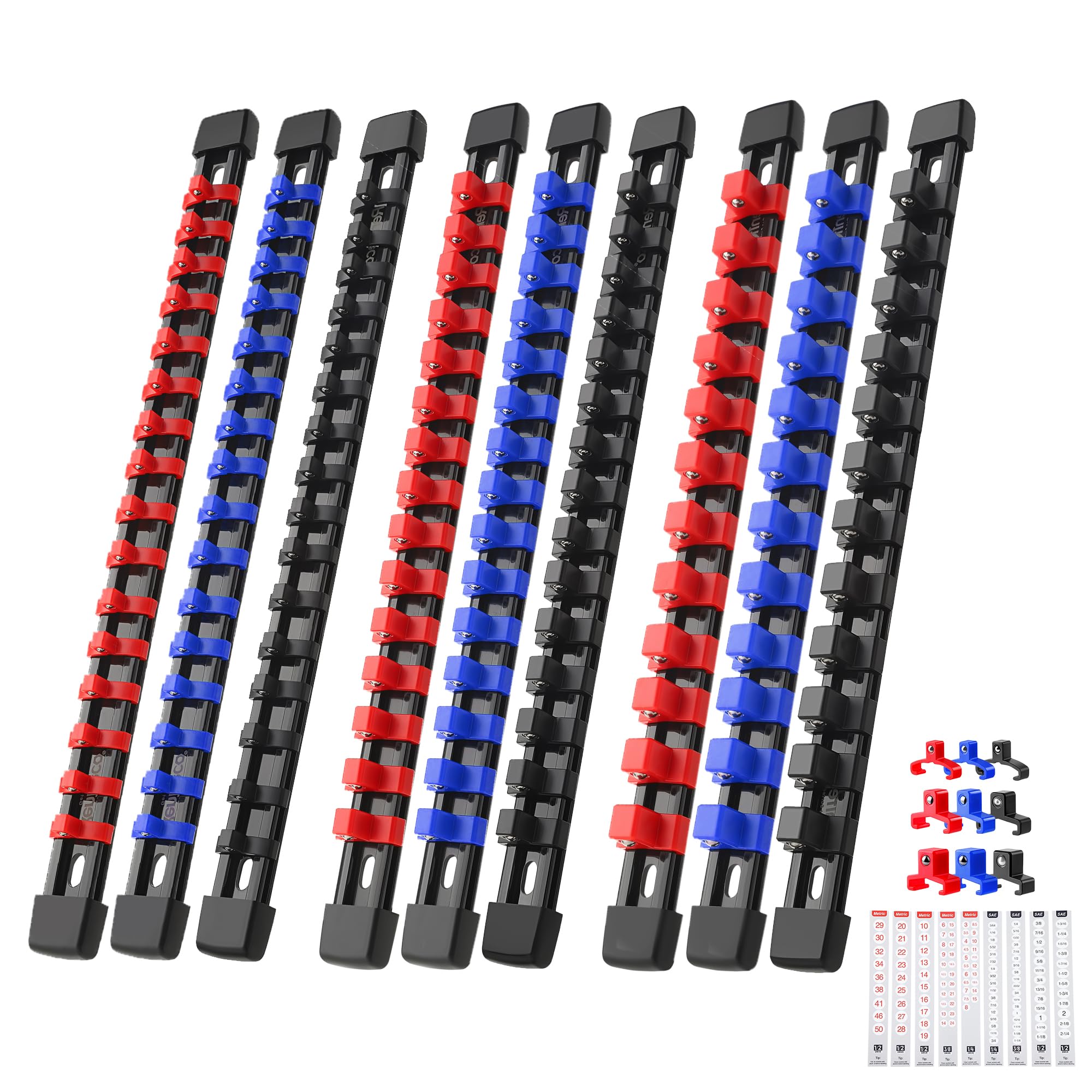
Nine ABS rails with removable end caps and 128 clips that let you configure drive sizes and layout to match your socket collection.
Why I picked it: Huge clip count and customizable rails make this my pick when I need to outfit an entire chest on a budget.
Best for: Anyone organizing a full socket chest who wants flexibility and lots of clips.
Budget-friendly — excellent capacity and customization for the price.
Pros
- Very customizable clip layout
- Large clip and rail count
- Impact-resistant ABS plastic
- Spring-loaded detents
Cons
- Color scheme mixes drive sizes
- Plastic rails less rigid than metal
My take
I used the nine-piece set to build out several drawer rows and liked how easy it was to add, remove, or rearrange clips to fit my mix of shallow and deep sockets.
The ABS rails feel tough enough for drawer use and the spring-loaded detent gives a positive hold when I pull sockets out. The only minor annoyance was that the color sleeves don’t segregate each drive size, so I ended up arranging by drive manually.
For outfitting a chest without spending on aluminum rails, this set delivered the best capacity-to-cost ratio I’ve found.
How I Choose a Socket Organizer
Drive Size and Compatibility
Start by matching the organizer to your most-used drive sizes. If your box is heavy on 3/8" drives, rails made specifically for that drive will hold sockets more securely.
Magnetic trays are great for shallow and deep sockets, but many magnetic trays don’t accept impact sockets—double-check compatibility if you use impact gear.
- Rails: choose aluminum for rigidity, ABS for budget flexibility.
- Trays: verify deep vs. shallow socket fit before relying on them.
- Tool rolls: pick only if you need portability over permanency.
Holding Mechanism and Durability
I prioritize systems with positive retention—spring-loaded ball detents or strong magnets prevent sockets from bouncing free when moved.
Materials matter: aluminum rails resist flex and corrosion, molded trays are lightweight, and ABS works well for drawers if you need a cheaper option.
- Spring-loaded clips hold during transport.
- Rubberized magnets protect toolbox paint.
- Consider lifetime warranties for long-term value.
Layout and Workflow
Think about where you keep sockets during a job. Drawer trays make retrieval fast; magnetic trays keep sockets at your bench or toolbox side; rolls and rails are best for portability.
Configure by size or by task—sometimes grouping sockets used together saves more time than strict ascending order.
- Drawer-first: molded trays or ABS rails.
- Toolbox-side: magnetic trays with rubberized backing.
- On-the-go: compact rails or a tool roll.
Frequently Asked Questions
Will these organizers hold deep and shallow sockets?
Most of the products here accept both deep and shallow sockets, but the magnetic trays and larger-clip rails handle both best. I avoid magnetic trays for big impact sockets because they often won’t seat properly.
Can I mount magnetic trays without scratching my toolbox?
Yes—magnetic organizers with rubberized bases protect painted surfaces while providing strong holding power. I mount mine directly to a steel toolbox side with no damage.
Are plastic rails durable enough for daily use?
ABS rails are durable for drawer and light portable use; for heavy daily hauling or frequent drops I prefer anodized aluminum rails, which resist flex and wear better over time.
Final Take
I keep different organizers for different jobs: aluminum rails for heavy shop use, magnetic trays for toolbox-side accessibility, molded trays for tidy drawers, and a tool roll when I’m on the road.
If you want one recommendation to start with, pick the organizer that matches where you spend most of your time—drawer, toolbox edge, or field work—and prioritize secure retention and durable materials.
Whichever system you choose, organizing sockets pays back in faster work and less frustration on the next job.
