
I tested six popular soft-serve and home ice cream makers to find options that deliver quick soft-serve, large batches, nostalgic fun, and professional-level texture. Here are the models I keep coming back to dependingon
I make ice cream at home several times a month, so I’ve lived with every annoyance and advantage these machines throw at me. For this roundup I focused on machines that produce soft-serve or scoopable ice cream reliably, with a range of approaches: freezer-bowl churners, a pint-based processor, a vintage-style ice-and-salt bucket, and a self-freezing compressor unit.
If you want fast soft-serve for one or two people, a 1.5-quart freezer-bowl machine is the easiest route. If you plan to entertain frequently, a larger 2-quart or a compressor model that doesn’t require pre-freezing makes life much simpler. And if you want shop-quality texture and total ingredient control, the Ninja CREAMi gives me the closest result to professional churns in a small footprint.
I tested for speed, texture, ease of use, and how much hands-on prep each model needs. Machines that require pre-freezing trade spontaneity for lower cost; compressor and pint-based systems cost more but remove that prep step.
1. Cuisinart ICE-21 1.5-Quart Ice Cream Maker – Best Quick & Simple
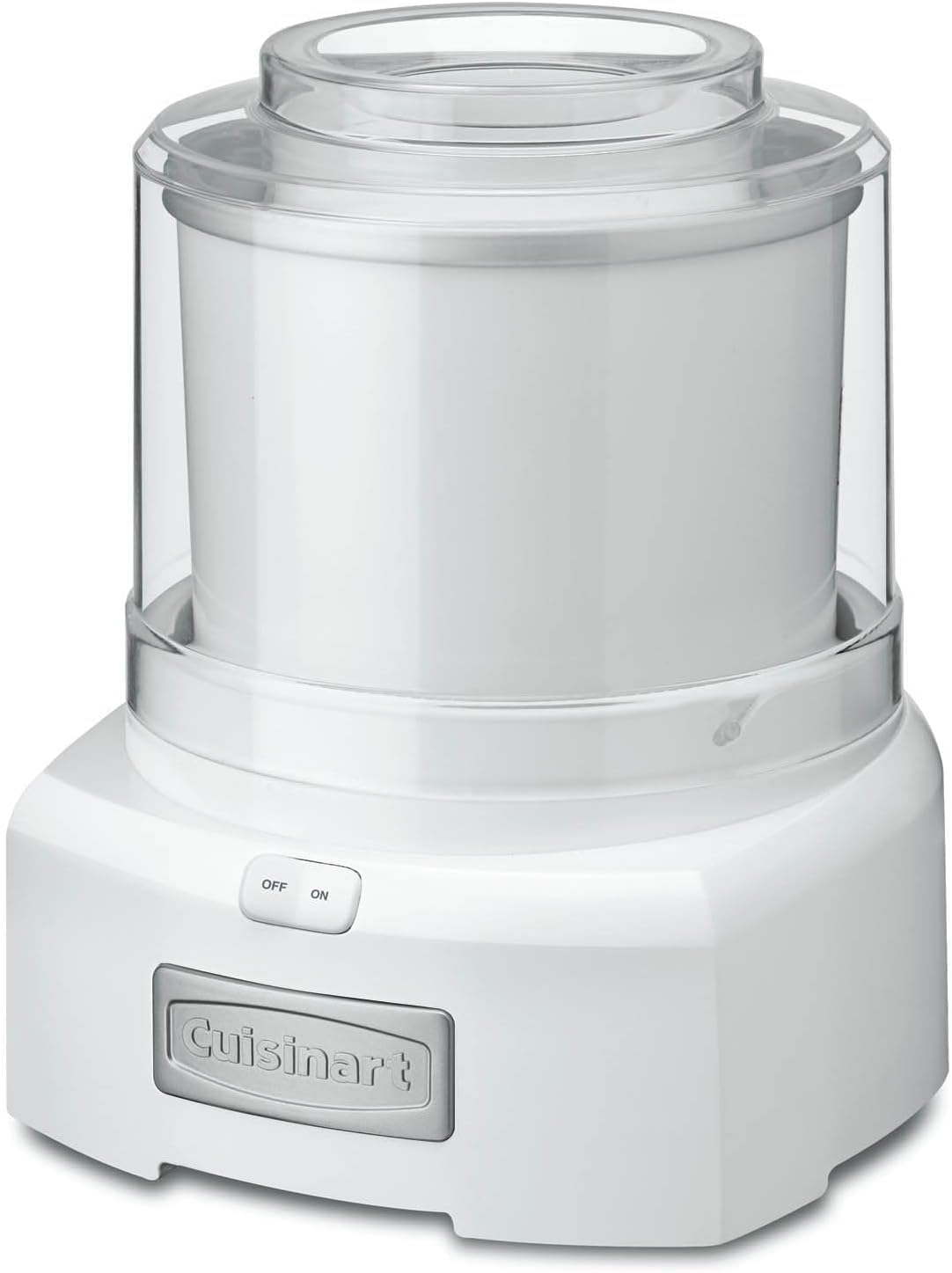
I reach for this one when I want a fast, no-frills soft-serve batch that’s ready in about 15–20 minutes.
Why I picked it: Fast churn time, double-insulated bowl, and a single-button setup that never overcomplicates the process.
Best for: Quick soft-serve batches for small households and novice makers.
Affordable entry-level choice that covers the basics extremely well.
Pros
- Churns in 15–20 minutes
- Simple one-button operation
- Double-insulated freezer bowl
- Transparent lid with large spout
- Lightweight and easy to store
Cons
- Requires pre-freezing the bowl
- Small capacity for parties
- Can be noticeably noisy
My take
I use the ICE-21 when I want soft-serve fast. The double-insulated bowl means I don’t need ice, and once the bowl has been overnight-frozen I can pour in a chilled mix and have soft, creamy ice cream in under half an hour. The mixing paddle produces a pleasantly airy texture that works great for cones or bowls.
Operation is delightfully simple — one on/off switch and a large pour spout on the transparent lid so I can add mix-ins without a mess. It’s lightweight, easy to clean, and I appreciate that the unit feels built to last. The trade-offs are the usual ones for freezer-bowl machines: you must keep the bowl in the freezer ahead of time, and the 1.5-quart capacity is best for small groups.
If I overfill the bowl I do get slight overflow, so I stick to slightly reduced recipe volumes. Overall, this is the dependable, no-nonsense machine I use when I want good soft-serve quickly without fuss.
2. Cuisinart ICE-30 2-Quart Ice Cream Maker – Best for Larger Batches
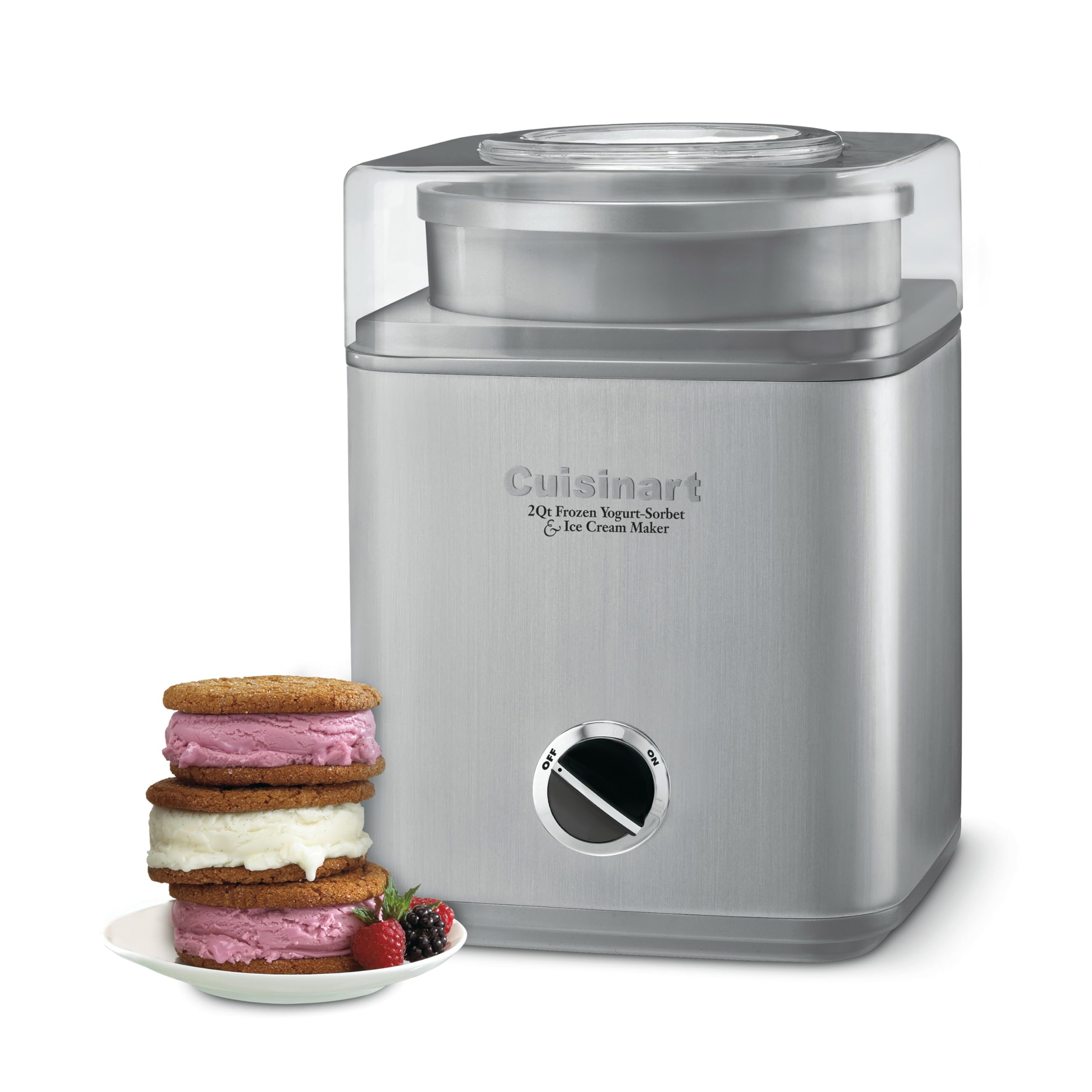
I reach for this model when I need more ice cream per batch — the 2-quart capacity is genuinely handy for families and gatherings.
Why I picked it: Heavy-duty motor, larger capacity, and a useful ingredient spout make it a workhorse for bigger batches.
Best for: Families, backyard gatherings, and anyone who wants twice the output of a small freezer-bowl model.
Midrange investment for a durable, larger freezer-bowl machine.
Pros
- 2-quart capacity
- Heavy-duty motor
- Large ingredient spout
- Recipe book included
- Retractable cord storage
Cons
- Requires pre-freezing the bowl
- Can be loud during churn
- Larger footprint on counters
My take
When I need a bigger batch I use the ICE-30. The stainless-steel housing and heavier motor feel more robust than smaller units, and the full 2-quart capacity means I don’t have to make two runs for everyone. I freeze the bowl thoroughly and usually get good results in about 25–30 minutes.
The large spout makes adding late mix-ins and syrups effortless while the machine is running. It’s not silent — the motor gets louder toward the end of a cycle — but the speed and capacity are worth that trade-off when I’m serving guests.
A quick tip I follow: chill the custard or base before pouring it in, and make sure the freezer is set cold so the bowl freezes solid. For what it does, this model feels like a reliable step up if you outgrew a 1.5-quart machine.
3. Nostalgia Electric Ice Cream Maker – Best for Vintage Charm
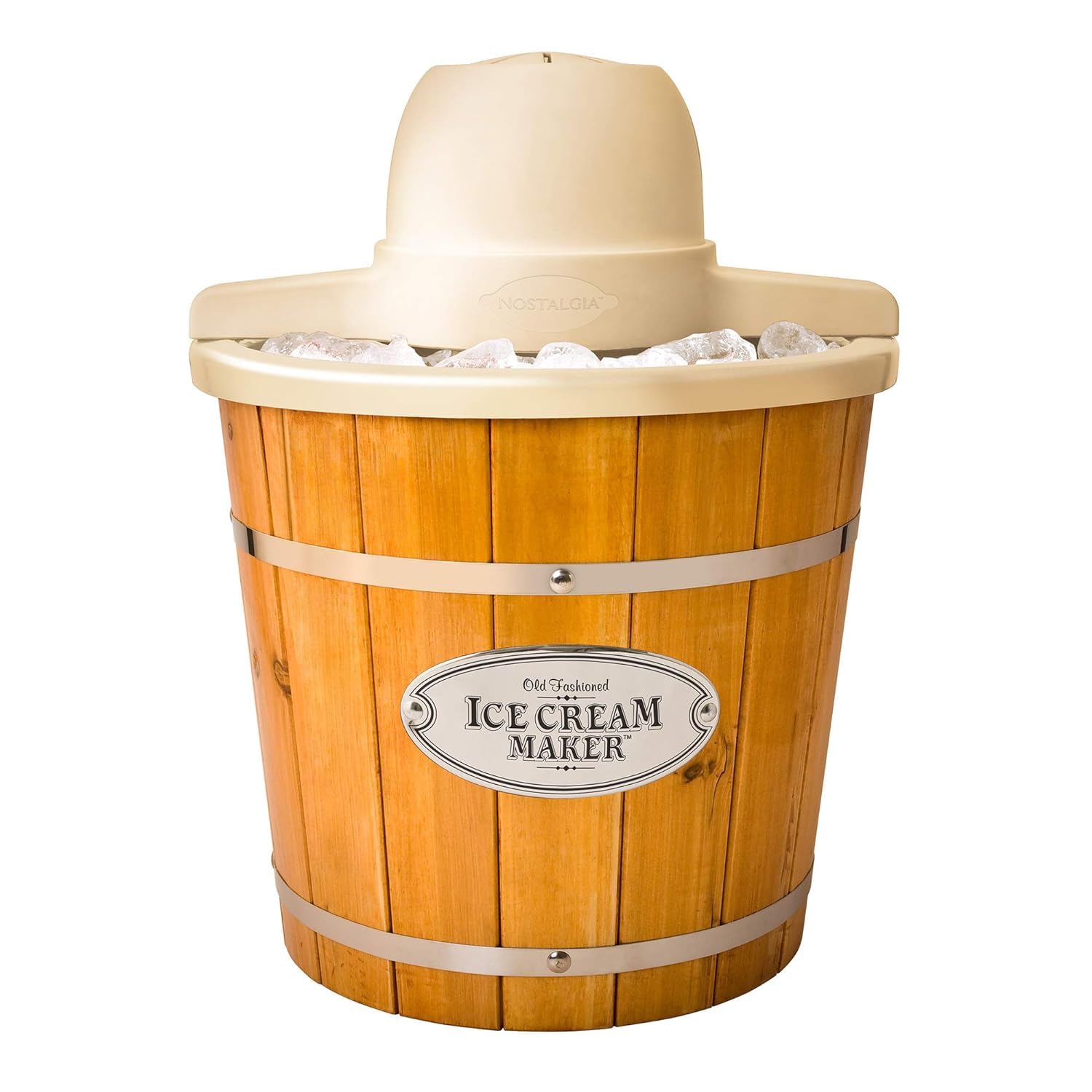
I bring this one out when I want a showpiece and large batches — the classic ice-and-salt method makes it a fun party machine.
Why I picked it: Vintage styling, four-quart capacity, and a hands-on ice-and-salt process that turns ice cream making into an event.
Best for: Family parties, nostalgic presentations, and those who enjoy the old-school method.
Budget-friendly for big batches but requires ice and salt prep.
Pros
- Large 4-quart capacity
- Retro, crowd-pleasing design
- Convenient carrying handle
- Makes big batches for parties
Cons
- Requires ice and rock salt
- More manual setup than electric freezers
- Durability varies with heavy use
My take
This is the unit I pick when I want making ice cream to be part of the entertainment. The removable aluminum canister sits in the bucket while I layer ice and rock salt — it’s tactile and fun, and the electric motor does the churning without me having to hand-crank.
The four-quart capacity is genuinely useful for gatherings. Cleanup is straightforward and the included lid and cap make storing leftovers easy. The drawback is that you need to load lots of ice and salt, and if you plan to make ice cream frequently the extra effort adds up.
I’ve seen the paddle and motor hold up well for regular family use, but if you expect heavy weekly batches you should be mindful that this style is more mechanical and sometimes shows wear sooner than sealed, compressor-driven units. For occasional big-batch fun and a vintage vibe, I keep this on my short list.
4. Cuisinart ICE-70 2-Quart Ice Cream Maker – Best for Precision & Timer
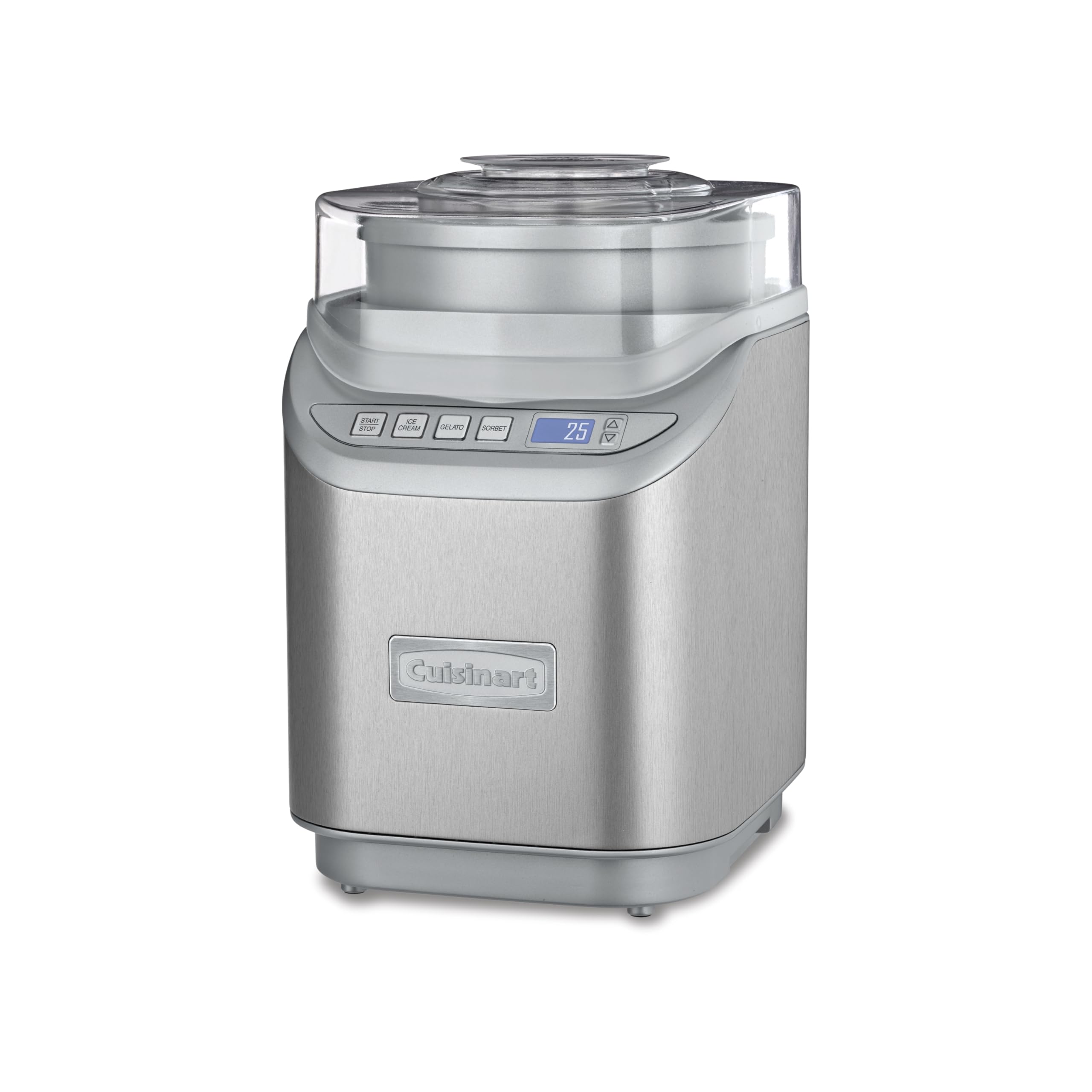
I use this model when I want predictable timing and multiple speed options — the LCD and auto shutoff keep batches consistent.
Why I picked it: Countdown timer, multiple speeds, and an auto shutoff make batches repeatable and predictable.
Best for: People who value precise cycles and an easy-to-follow electronic interface.
A bit more for extra digital convenience and control.
Pros
- LCD countdown timer
- Three speed settings
- Auto shutoff
- 2-quart capacity
Cons
- Inner bowl needs 24-hour freeze
- Motor can be noisy
- Takes freezer space for bowl storage
My take
The ICE-70 is my go-to when I want consistent results without babysitting. The digital display and countdown timer tell me exactly when a batch will finish and the auto shutoff prevents over-churning. I usually get thick, ready-to-serve ice cream in 20–25 minutes once the bowl is properly frozen.
I value the integrated measuring cup in the lid and the three speed options for different textures — sorbet, gelato, and ice cream all come out with the expected mouthfeel. The need to freeze the 2-quart bowl for at least 24 hours is the usual limitation, but I find the trade-off worth it for the repeatability.
Cleanup is straightforward and the machine handles add-ins well. If you want digital control without stepping up to a compressor model, this gives me the best balance of convenience and results.
5. Ninja CREAMi NC301 – Best for Texture Control
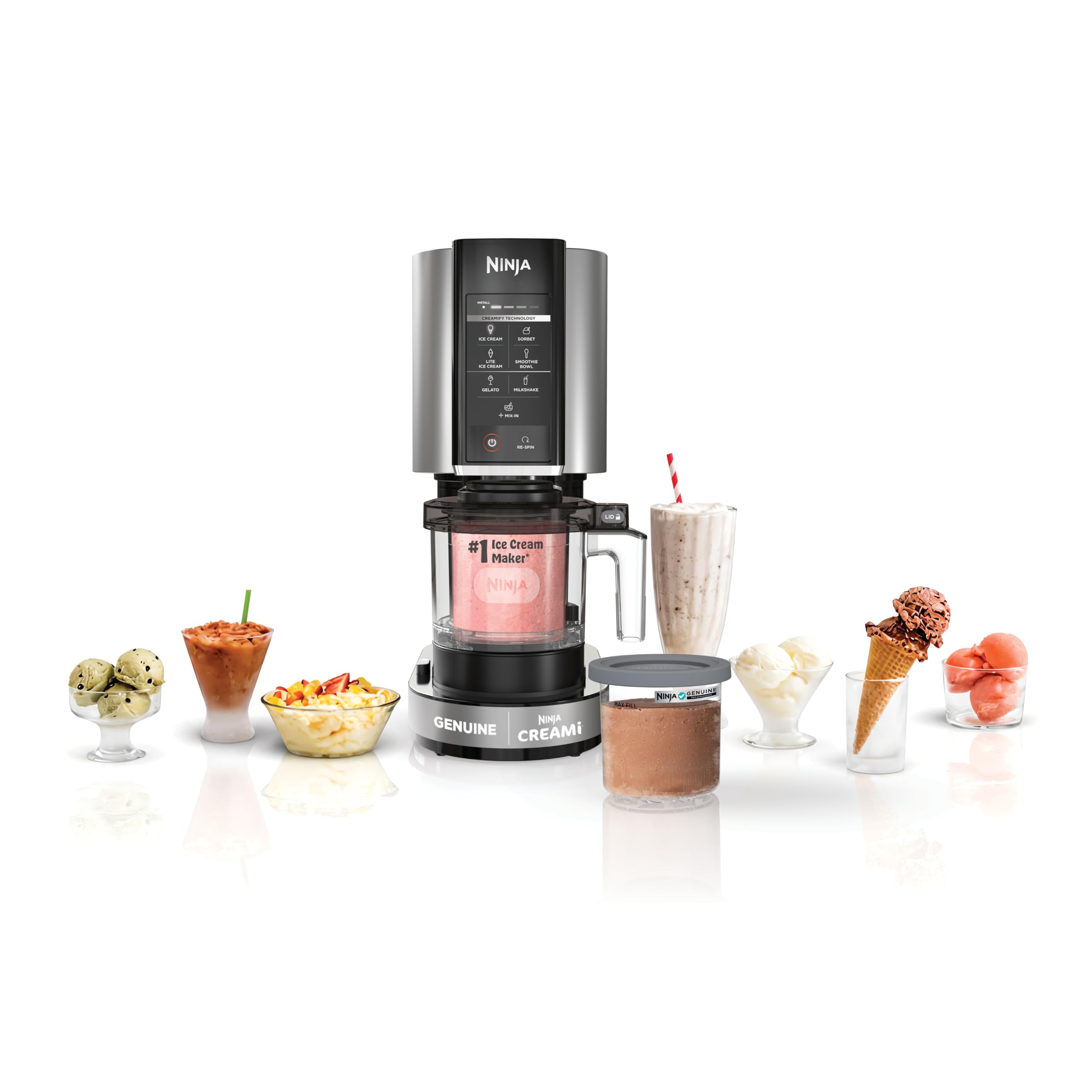
I use the CREAMi when I want shop-style texture and maximum ingredient control — it transforms frozen pints into silky ice cream or gelato.
Why I picked it: Seven one-touch programs and the re-spin option let me dial in texture for every recipe.
Best for: Anyone who wants professional-like texture, dietary customization, or to experiment with mix-ins.
Higher-end for a compact machine with many processing programs.
Pros
- Seven one-touch programs
- Re-spin to improve texture
- Great for keto and dairy-free bases
- Compact footprint
Cons
- Requires 24-hour freeze in pint containers
- Limited to pint-sized batches
- Short but noticeable processing noise
My take
The CREAMi changed my approach to frozen desserts. Instead of churning a liquid base, I freeze pints of my recipes and then the machine shaves and creams them into exceptionally smooth results. The seven programs cover ice cream, gelato, sorbet, milkshake and more, and the re-spin function is a lifesaver for crumbly first spins.
I’ve found the texture rivals premium shop ice cream when I follow recipes with sufficient fat and sugar. It’s compact, so I keep multiple pint containers frozen and swap them for different flavors without taking up too much space. The requirement to freeze bases 24 hours ahead is worth it for texture control — and I usually buy extra containers so I can prep several flavors at once.
If you want to experiment with dairy-free, low-sugar, or specialty diets the CREAMi gives me the flexibility to make those recipes shine without compromise.
6. Whynter ICM-128 Compressor Ice Cream Maker – Best No-Fuss Compressor
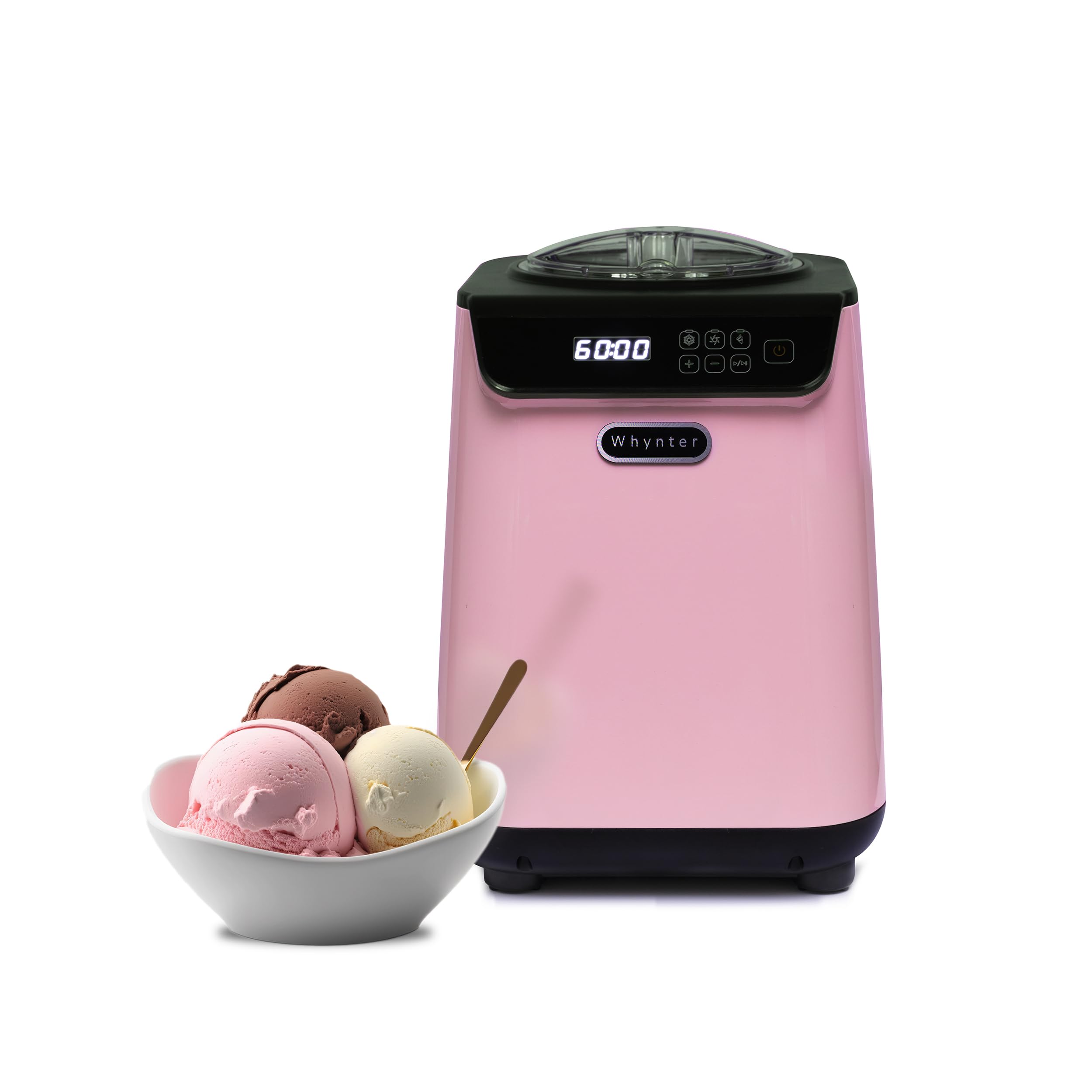
I pick this unit when I want continuous batches and zero bowl pre-freezing — the built-in compressor turns out soft, scoopable ice cream on demand.
Why I picked it: Self-freezing compressor and extended cooling let me make multiple batches back-to-back without freezer juggling.
Best for: Frequent ice-cream makers and entertaining where multiple batches are needed quickly.
Higher upfront cost but replaces the hassle of pre-freezing bowls and saves freezer space.
Pros
- Built-in compressor (no pre-freeze)
- Continuous use for multiple batches
- Extended cooling and motor protection
- Compact upright footprint
Cons
- More expensive upfront
- Takes countertop space
- Slight learning curve for optimal fill level
My take
The Whynter compressor model is the closest thing to a small commercial unit I’ve used at home. I can put a chilled base straight into the removable stainless bowl and start — no overnight freezing of a canister. That self-freezing capability means I do several flavors back-to-back when I’m entertaining.
I like the extended cooling function; it prevents melting during add-ins and the motor protection feature has saved me from hard-stopping damage on firmer custards. The see-through lid is useful for monitoring and adding mix-ins mid-cycle.
It’s a sturdier, more expensive appliance, but for my frequent use it’s worth the investment. Whynter’s parts availability and responsive support have also made long-term ownership easier.
How I Choose a Soft Serve or Home Ice Cream Maker
Decide how you want to make ice cream
I start by choosing the method that fits my routine. Freezer-bowl machines are inexpensive but require freezing the bowl ahead of time. Compressor machines are ready on demand and let me make consecutive batches, but they cost more and take countertop space. Pint-based processors like the CREAMi trade batch size for top-level texture control.
Think about how often you’ll make ice cream and whether you want the spontaneity of a compressor or the budget-friendliness of a freezer bowl.
- Freezer-bowl: cheap, fast churn, needs 12–24 hrs pre-freeze
- Compressor: no pre-freeze, continuous batches, higher cost
- Pint processor: best texture control, requires freezing pints
Capacity and batch size
I match capacity to my entertaining needs. A 1.5-quart machine is perfect for couples and small families. A 2-quart machine handles guests without multiple runs. If I’m hosting frequent gatherings, I opt for a compressor or a 4-quart bucket-style machine.
- 1–1.5 qt: everyday soft-serve and small households
- 2 qt: family-sized batches and add-ins
- 4 qt or more: parties and large gatherings
Controls, programs, and convenience
I value features that save me time: countdown timers, auto shutoff, and large spouts for adding mix-ins make a difference. The Ninja CREAMi’s presets and re-spin option let me fine-tune texture, while Cuisinart’s LCD timers give repeatable cycles.
Also check how easy the machine is to clean and whether parts are dishwasher-safe or easily removable.
- Look for timers and auto shutoff for consistency
- Large spout or removable lid for effortless mix-ins
- Dishwasher-safe parts speed cleanup
Noise, footprint and storage
I consider where the machine will live. Freezer-bowl units are lighter and storable; compressors sit on the counter and are heavier. Most machines get louder toward the end of a cycle, so I plan accordingly if I’m using them during gatherings.
If noise is a big concern, expect a compromise between power and quiet operation.
- Freezer-bowl: compact, easy to store
- Compressor: louder, permanent countertop presence
- Pint processors: compact but limited by pint size
Ingredients and recipe flexibility
I always match the machine to the recipes I plan to use. Custard-based gelato benefits from longer churn times and robust motors, while light sorbets and dairy-free bases need machines that handle ice crystals well. The ability to add mix-ins mid-cycle matters for texture and presentation.
If you follow specialty diets, prioritize a machine that handles low-fat or dairy-free bases without producing a grainy result.
- High-fat bases: use models with stronger motors
- Sorbet/frozen fruit: aim for machines that handle high-ice content
- Dietary-friendly recipes: pint processors and compressors offer the best control
Frequently Asked Questions
Do I always have to pre-freeze the bowl or can I make ice cream immediately?
It depends on the machine. Freezer-bowl models like most Cuisinart units require that you freeze the removable bowl 12–24 hours in advance. Compressor models like the Whynter do not require pre-freezing, so you can start a batch right away. The Ninja CREAMi requires freezing your base in its pint containers for about 24 hours before processing.
How long does it typically take to make soft-serve at home?
Most freezer-bowl machines produce soft-serve in about 15–30 minutes once the bowl is frozen and the base is chilled. Compressor models usually finish in 20–40 minutes depending on recipe and machine settings. Pint processors require a 24-hour freeze of the base, then a couple minutes of processing.
Can I add mix-ins like chocolate chips or nuts while the machine is running?
Yes — several machines offer wide spouts or removable lids so you can add mix-ins mid-cycle. For machines without that feature, I either fold in add-ins near the end or press them into the surface after churning to preserve texture.
Final Take
I keep different machines for different jobs: a compact freezer-bowl model for quick soft-serve, a 2-quart unit for larger family batches, the CREAMi for texture-focused experiments, and a compressor model when I want no-prep, back-to-back batches. Choose the machine that matches how you make ice cream most often, and you’ll be rewarded with far better results than store-bought.
Whichever you pick, focus on chilled bases, proper fill levels, and following the machine’s prep instructions — those details are what turn good recipes into great ice cream at home.
