
I tested a mix of solar and low-voltage deck lights so you can pick the right setup for your deck, dock, or driveway — from heavy-duty solar markers to recessed hardwired kits.
I spent time installing and running each of these lights in real outdoor conditions so I could judge brightness, durability, installation, and nightly run time.
In this roundup I compare solar marker-style lights that bolt to surfaces with hardwired recessed kits that give a built-in look — both have clear use cases depending on whether you want a plug-and-play solution or a permanent low-voltage system.
My main takeaway: choose solar markers for no-wiring, weather resilience, and easy placement; choose a hardwired recessed kit when you want a low-profile, dimmable installation with consistent brightness under an outlet or transformer.
1. VOLISUN Solar Deck Lights (12‑Pack) – Best All‑Weather Solar Dots
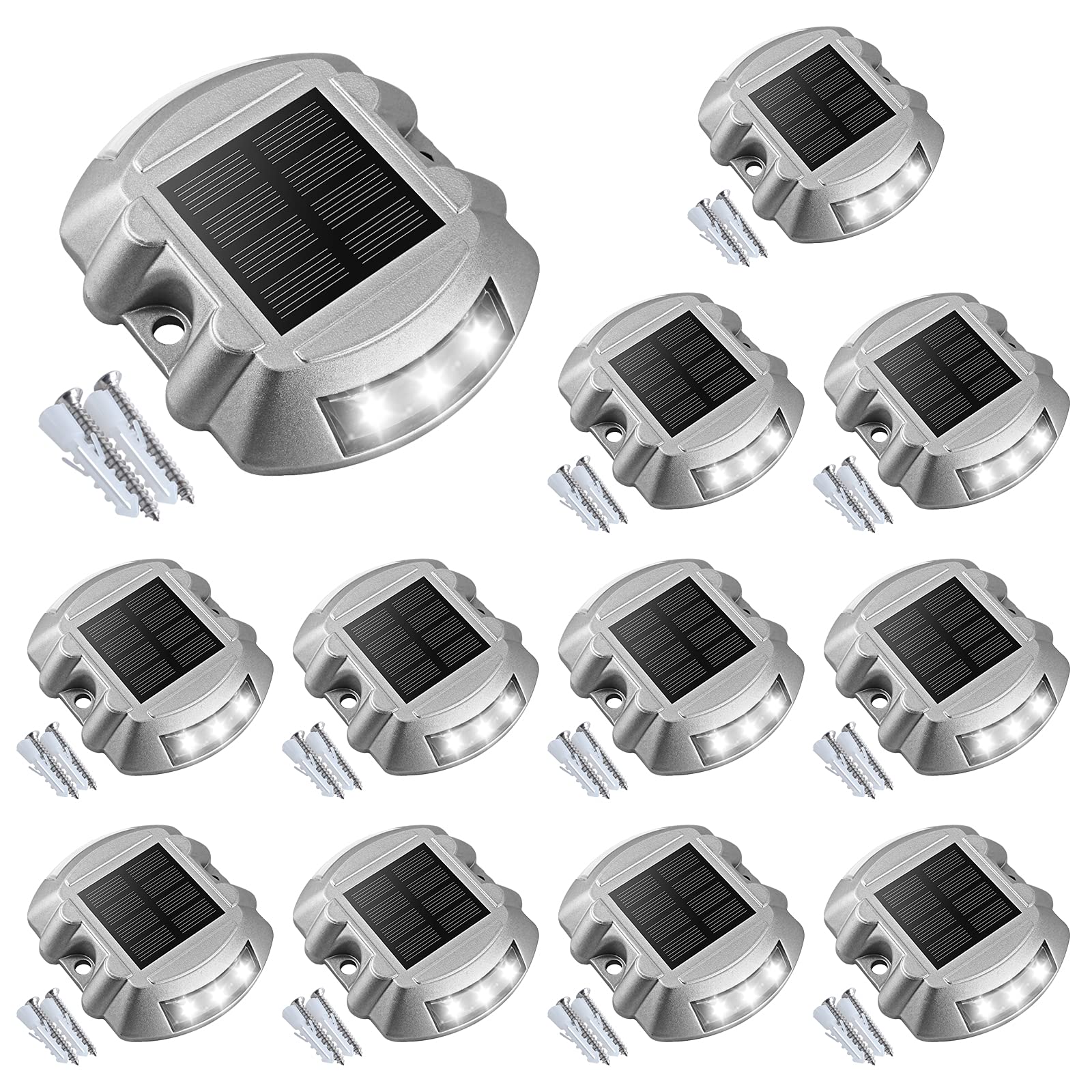
Rugged, high‑output solar dock lights with an IP68 metal housing and long nightly runtime.
Why I picked it: Most dependable sealed solar dots for heavy‑use areas and wet conditions.
Best for: Driveways, docks, boat trailers, and any high‑traffic outdoor path.
Durable, built to justify a mid‑range cost with long service life.
Pros
- Solid metal housing
- IP68 waterproofing
- Bright, consistent output
- Long overnight run time
- Simple screw or glue install
Cons
- Battery not user replaceable
- Single fixed color option
My take
I installed a dozen of these on a dock and on driveway edges to test real exposure to saltwater, heavy rain, and foot and vehicle traffic. The heavy metal enclosure felt noticeably more robust than thin plastic alternatives, and the IP68 rating meant I didn’t worry about puddles or occasional submersion.
Out of the box the lights came on automatically at dusk and produced steady, non‑flickering light. I saw full‑night performance after a good sunny day; the built‑in 600mAh cells kept them lit reliably overnight and through several cloudy days in a row.
Installation was straightforward — I used the supplied screws and for one spot I used adhesive where screwing wasn’t possible. With no wiring required I could reposition units quickly to chase sunlight, which I appreciated when setting them on a floating dock.
The main tradeoff I experienced is that the battery is sealed. These feel like long‑lived units, but if the internal battery eventually degrades I won’t be able to swap it myself.
2. SMY Lighting Recessed LED Deck Light Kit (10‑Pack) – Best Hardwired Recessed Kit
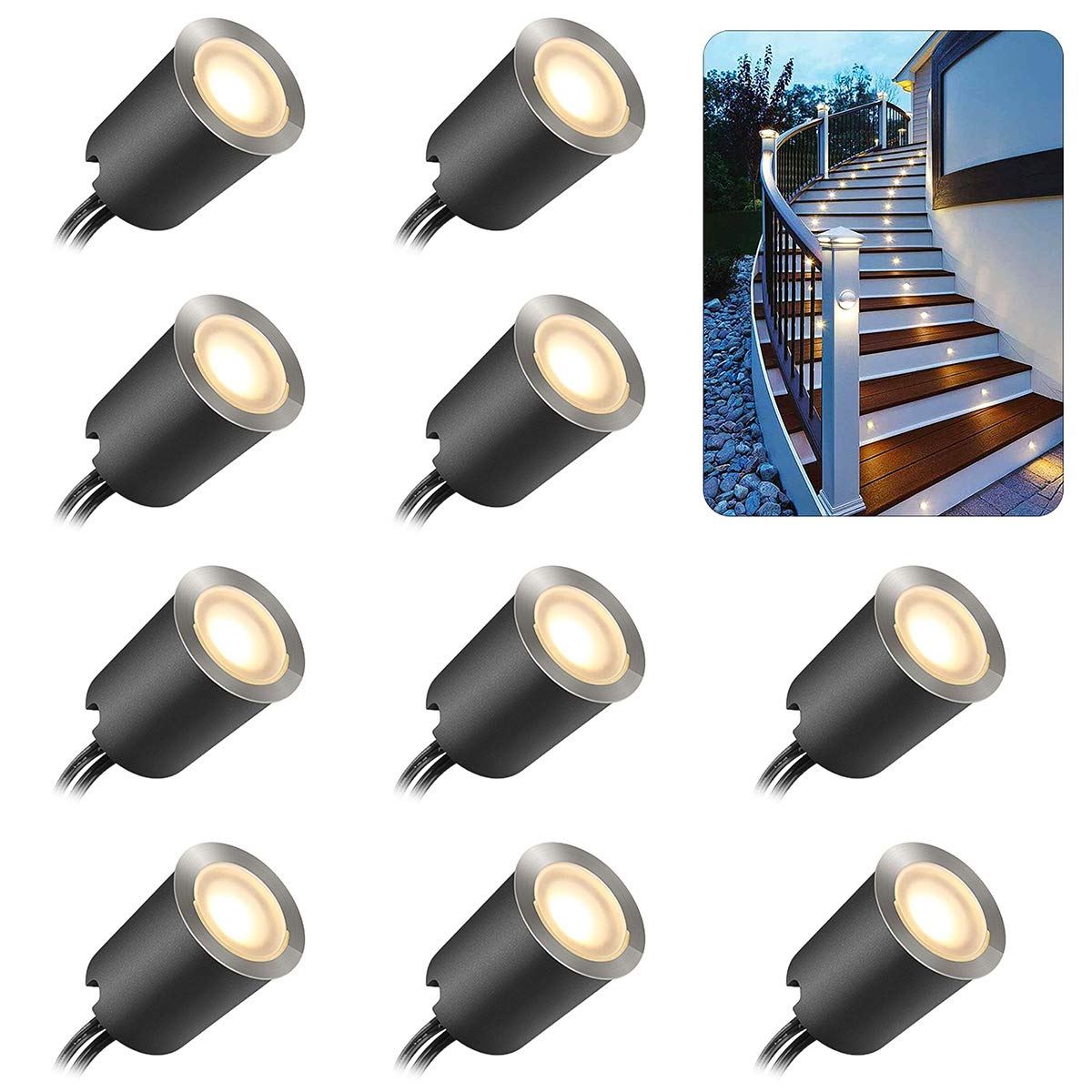
A low‑voltage, dimmable recessed kit that delivers a polished, permanent look for steps and decks.
Why I picked it: Complete low‑voltage kit with transformer and protective shell for recessed installs.
Best for: Permanent recessed lighting on stair risers, patios, and under‑deck downlighting.
An affordable option for a professional hardwired setup.
Pros
- Transformer included
- IP67 waterproof
- Dimmable for ambiance
- Protective shell for recessing
- Modular parallel wiring
Cons
- Very bright at full power
- Requires drilling and electrical hookup
My take
I used this kit when I wanted a finished recessed look for stair risers and under‑deck downlighting. The lights slide into the protective shell and give a clean, built‑in appearance that looks far more intentional than stick‑on solar markers.
The included DC12V transformer simplified setup; wiring the lights in parallel was straightforward and allowed me to leave a few units out without affecting the rest. I paired the kit with a dimmer and remote so the output sits around 10% most nights — at 100% these are uncomfortably bright for direct sightlines.
Because these are a hardwired solution you’ll need the tools to cut holes (a Forstner or hole saw) and either an outlet nearby or a pro to wire the transformer into an outdoor circuit. Once installed they stayed dry and performed reliably under rain.
If you want a permanent, low‑voltage installation with dimming control and a polished aesthetic, this kit is very hard to beat — just plan the hole sizing and power access ahead of time.
3. AGPTEK Solar Driveway & Deck Lights (12‑Pack) – Best Dual‑Color Solar Markers
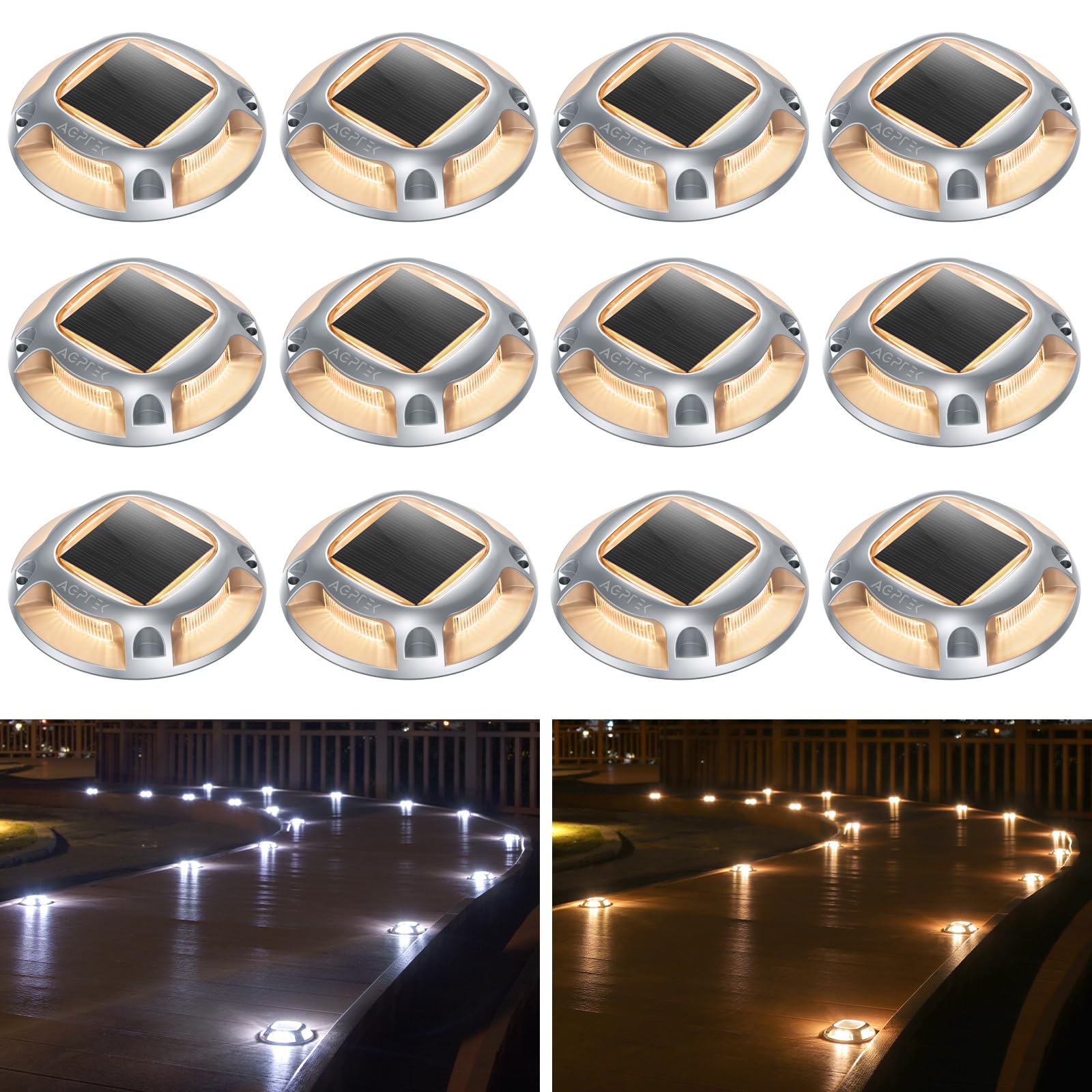
Two‑color solar markers with strong illumination and a heavy aluminum shell for long runs and marine use.
Why I picked it: Dual color modes and high load capacity make these versatile markers for long runs.
Best for: Long driveways, fence lines, and dock fairways where visibility matters.
Solid mid‑range value for bright, switchable markers.
Pros
- Warm and cool color modes
- Around 40 lumen per unit
- IP68 waterproof
- Aluminum alloy shell
- High load capacity
Cons
- Occasional DOA units reported
- Saltwater longevity may vary
My take
I used these to mark a long driveway and a boat slip and appreciated having both warm and cool white modes available. Switching colors before installation let me match the look to each location.
With eight LED beads per unit and an advertised ~40 lumens, they read as noticeably brighter than many other solar markers, which helped when I spaced them 10–15 feet apart down a long run. The aluminum shell felt robust against foot traffic and the stated weight tolerance gave me confidence for driveway placement.
Installation was push‑button simple — flip the power, screw them down where needed, and let the monocrystalline panels charge. In a salt environment I’ve seen good short‑term performance, though I’d advise monitoring long runs in heavy salt exposure over multiple seasons.
A pragmatic note from my testing: on any large multi‑pack job I always check each unit before final fastening — I did encounter a unit that didn’t power up out of the box during one install.
4. VOLISUN Solar Dock Lights 2‑Color (12‑Pack) – Best Marine‑Grade Color‑Switch
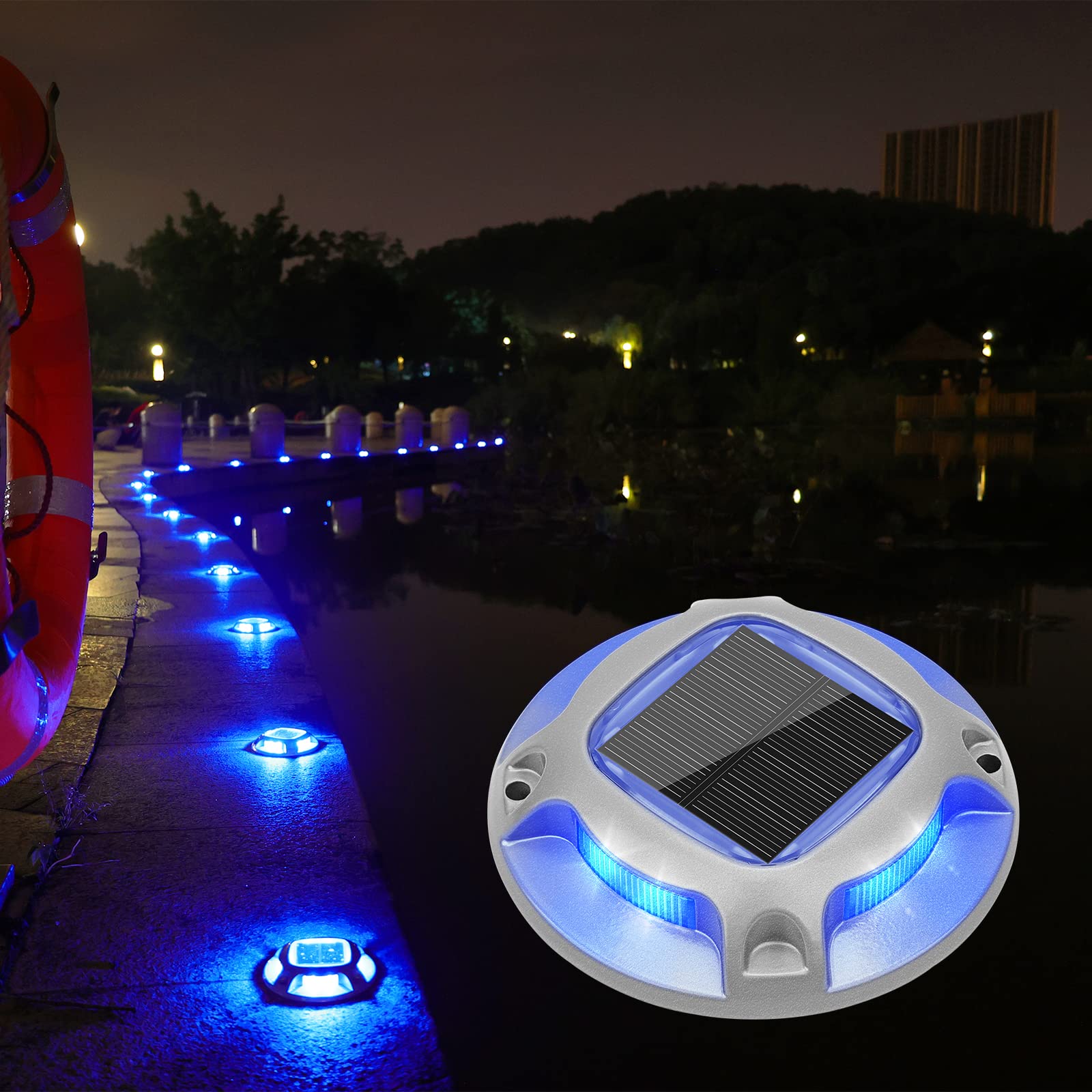
Marine‑focused solar lights with two color options, anti‑rust aluminum shell, and strong waterproofing.
Why I picked it: Color switching plus a cast aluminum, salt‑resistant body for dock and driveway use.
Best for: Docks, driveways, and saltwater‑exposed locations needing color options.
A durable choice intended for marine exposure and heavy use.
Pros
- Switchable white/blue
- Anti‑rust aluminum casing
- IP67 waterproof
- Easy no‑wiring install
- Solid build quality
Cons
- Changing color requires removing unit
- Color switch not remote
My take
I installed a set along a composite dock and on near‑driveway pavers to evaluate the color options and corrosion resistance. The aluminum body felt substantial and the IP67 rating was reassuring in wet conditions.
The two color modes — white and blue — are convenient for mixing decorative and functional lighting. In practice I switched colors before mounting because the bottom switch requires removal of the unit once installed, which is a minor annoyance but manageable if you decide on a color up front.
These lights powered through nights reliably after adequate sun exposure, and the no‑wiring install made placement flexible. For saltwater installations I liked the anti‑rust shell; over time I’d still inspect mounting points and seals, but early performance has been solid.
If you want a marine‑grade, color‑switchable marker that installs without wires, these strike a good balance between durability and decorative flexibility.
How I Choose Solar Deck Lights
Solar vs Hardwired
I decide between solar and hardwired based on permanence and power access. Solar markers are fast to place and require no wiring, while hardwired kits give consistent output and dimming but need a transformer or outlet.
- Pick solar for quick, flexible installs with no trenching or conduit.
- Pick hardwired when you want a recessed, dimmable, permanent installation.
Waterproof Rating & Load Capacity
I look at IP ratings and build materials to match the environment. IP67/IP68 and metal shells support docks and driveways better than thin plastics, and high load tolerance matters if vehicles may pass over.
- Choose IP68 for submersion risk and heavy‑traffic areas.
- Aluminum or cast metal housings resist corrosion and crushing better than plastics.
Brightness & Color
I evaluate lumen output and color temperature. Warm white feels inviting on decks; cool white or blue can be used for wayfinding or nautical accents. Dimmable hardwired kits offer the most control over glare.
- Use dimmers when lights are line‑of‑sight on stairs.
- Switchable colors are handy for seasonal or aesthetic changes.
Installation & Maintenance
I plan how permanent the install will be. Recessed kits require hole saws and wiring, so hire an electrician if you’re not comfortable. With solar markers I always test units before final fastening.
- Confirm hole sizes and protective shells before cutting decking.
- Test each solar unit before screwing it into place to avoid rework.
Battery Life & Replaceability
I check if batteries are sealed or user‑replaceable. Sealed packs simplify waterproofing but mean eventual replacement of the whole unit; replaceable batteries extend service life if you don’t mind a bit of maintenance.
- Expect sealed battery units to last several seasons but be non‑serviceable.
- If long lifespan matters, favor kits with replaceable components or reputable metal housings.
Frequently Asked Questions
Will solar deck lights stay lit all night?
In my testing, properly sited solar markers reached full‑night performance after a full sunny day. Battery capacity and multi‑day cloudy stretches affect runtime, so I place panels where they get the most direct sun.
Can these lights handle vehicle or boat traffic?
I installed metal‑housed units on driveways and dock edges; those with high load ratings handled occasional vehicle and trailer traffic without damage. Avoid placing lightweight plastic markers in high‑load zones.
Can I change colors after installation?
Some dual‑color models let you switch colors before mounting, but several require removing the unit to flip the bottom switch. I plan the color ahead or leave access for future changes.
Final Take
I recommend solar markers when you need fast, no‑wiring placement and robust weather resistance, and a hardwired recessed kit when you want a polished, dimmable installation.
For docks and driveways where durability matters I favored the metal‑housed solar markers; for stair risers and ambient under‑deck lighting the SMY hardwired kit gave the cleanest result.
Pick the option that matches your installation style and power access, and plan hole sizes, sun exposure, and whether you want replaceable batteries before you buy.
