
I tested compact to heavy-duty solar generators to find options that reliably run CPAP machines overnight and during multi-day outages. I focused on usable capacity, pure sine AC output, fast recharging, and portability.
When I prepare for a blackout or extended camping trip with my CPAP, I prioritize clean AC power, enough usable watt-hours to get through the night, and a recharge path from solar. Over multiple tests I compared small travel units up to large LiFePO4 battery systems to see which ones actually delivered quiet, steady power for sleep therapy.
This roundup condenses what I learned: which portable power stations are practical for single-night CPAP use, which scale for multi-night or whole-house backup, and which recharge fast enough to stay useful when grid time is limited.
For CPAP I looked at three trade-offs: capacity (Wh) for runtime, inverter output (continuous and surge) for heated humidifiers and CPAP motors, and recharge options (AC + solar + fast charge). If you need true all-night reliability with heated humidifier or multiple nights off-grid, pick higher Wh and LiFePO4 chemistry; if portability and quick recharges matter most, smaller lithium-ion units with PD input can still cover a travel CPAP.
1. Jackery Explorer 300 – Best Compact
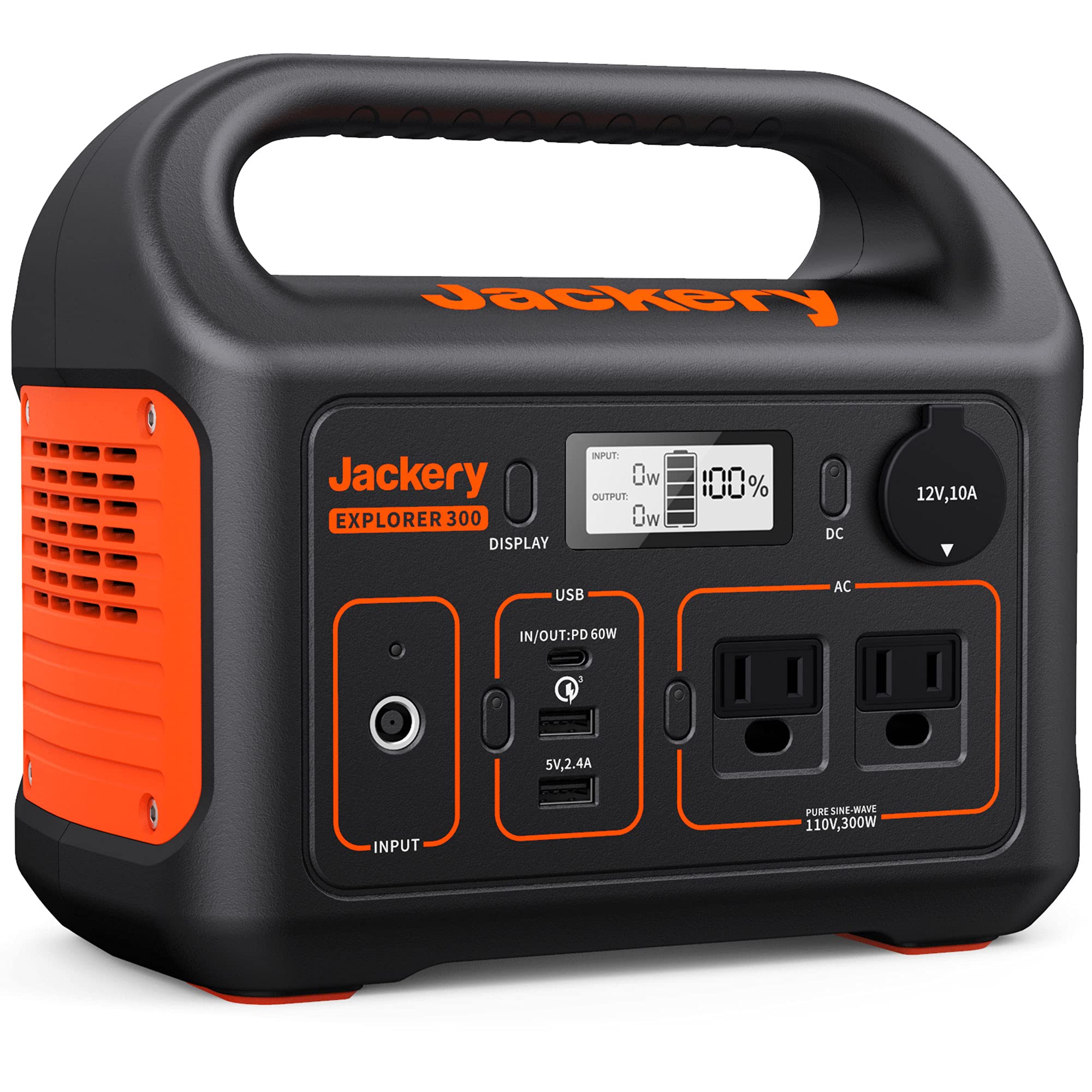
293Wh portable station with 300W pure sine AC, 60W USB‑C PD, and fast partial recharge.
Why I picked it: Small, easy to carry, and fast to top up — great for travel CPAPs.
Best for: Short trips and single-night CPAP backup.
Affordable, budget-friendly travel option.
Pros
- Very lightweight and portable
- 60W USB-C PD input/output
- Pure sine wave AC output
- Fast 0–80% speed with combined inputs
Cons
- Limited total capacity for multi-night use
- Solar panel sold separately
My take
I grabbed the Explorer 300 whenever I needed a compact backup for my travel CPAP. At under 7.5 pounds it’s the easiest unit to throw into a weekend bag and still provides a clean AC sine wave that my machine liked.
In practice I used it for single-night CPAP sessions and short power interruptions. The 300W inverter handled my standard CPAP without hiccups, but I wouldn’t expect long runtimes with a heated humidifier attached — that’s where its smaller 293Wh capacity becomes the limiting factor.
Recharging impressed me: using the wall outlet plus the 60W PD port I could get back to useful charge quickly, and the MPPT-compatible Jackery SolarSaga panels speed up solar topping when sun is available. For a travel setup or a one-night emergency, this is the most portable, fuss‑free option I own.
2. Jackery Explorer 500 – Best Midrange
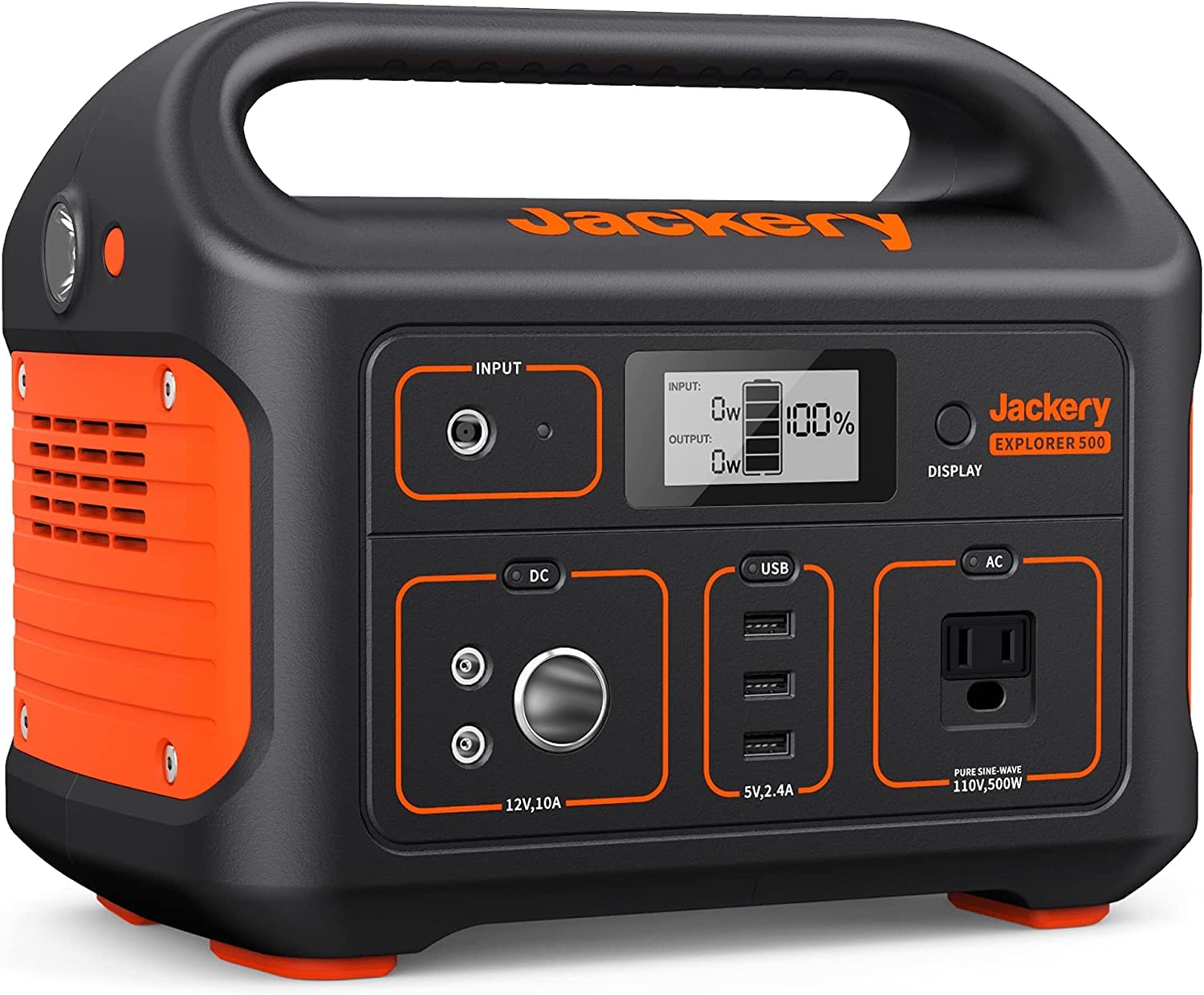
518Wh lithium unit with a 500W AC inverter (1,000W peak) and pass-through charging.
Why I picked it: Balanced capacity and portability for multi-night CPAP use.
Best for: Multi-night backup and longer camping trips.
Solid midrange value for added runtime.
Pros
- Larger 518Wh capacity
- 500W continuous AC inverter
- Pass-through charging supported
- Easy to carry with handle
Cons
- Only one AC outlet
- Longer full-charge time from household AC
My take
I rely on the Explorer 500 when I need more overnight runtime than a travel battery can deliver. Its 500W inverter handled my CPAP and a couple of small accessories comfortably, and the higher Wh gives me daylight-to-daylight flexibility on short trips.
The pass-through charging meant I could run my CPAP while also charging the unit during daylight or while plugged in at home, which made it practical as a temporary home backup during short outages.
It’s still portable enough to move around the house or into an RV, and for the features-to-size ratio I found it to be a dependable middle ground between tiny travel units and full-size home systems.
3. EcoFlow DELTA 2 – Best Fast Charger
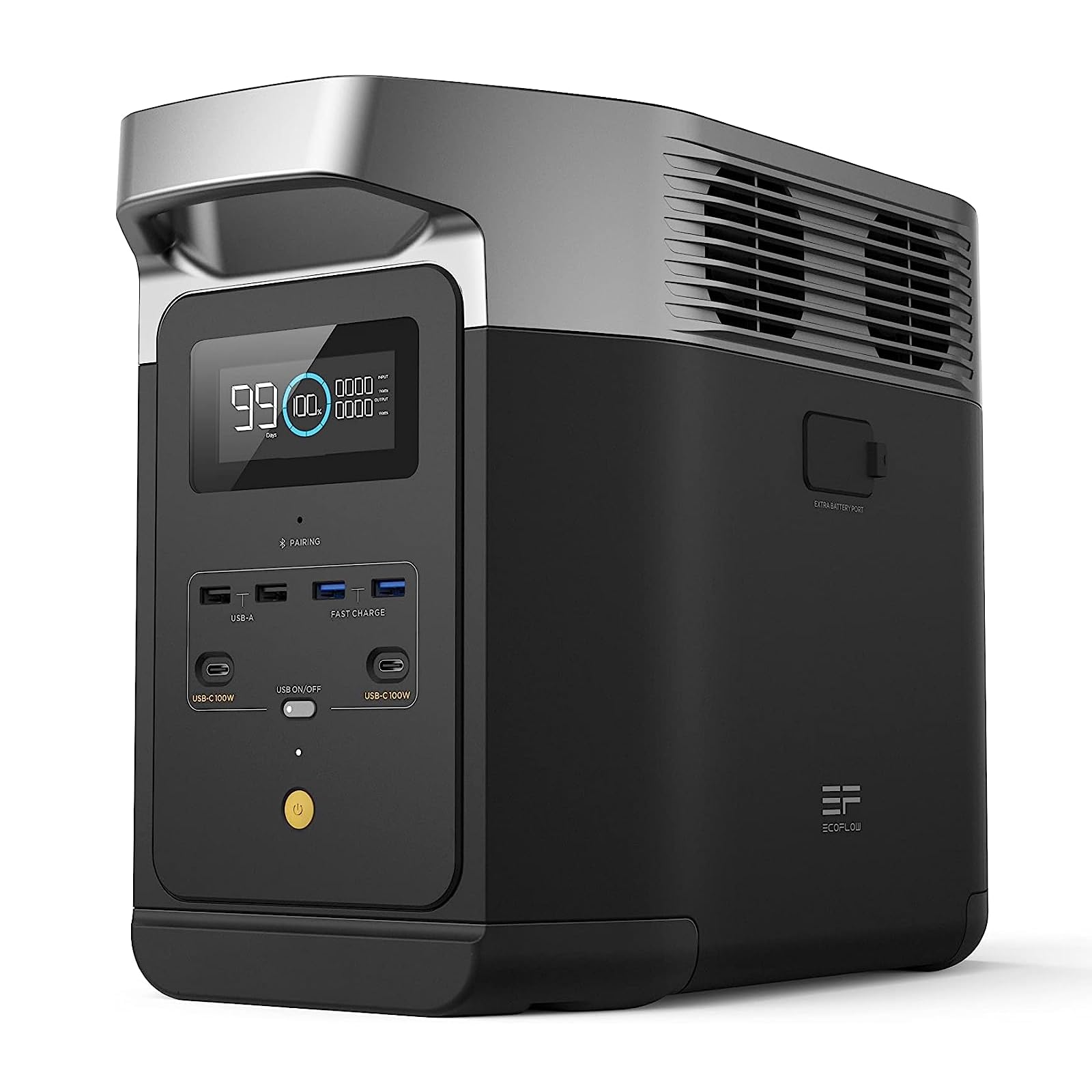
1024Wh LiFePO4 battery with 1,800W AC output, extremely fast AC recharge and expandable capacity.
Why I picked it: Big capacity plus very quick recharge — ideal for extended outages.
Best for: Extended CPAP use and scalable home backup.
Higher-end purchase for frequent or long-duration needs.
Pros
- Large 1024Wh base capacity
- 1,800W continuous AC output
- 0–80% in ~50 minutes (AC)
- Expandable to multi‑kWh
Cons
- Heavier than compact models
- Higher initial cost
My take
When I needed a dependable unit to run CPAPs night after night and still have headroom for other appliances, the DELTA 2 became my go-to. Its LFP chemistry gives me confidence for long cycle life, and the 1,800W inverter handled heavier loads comfortably.
What really stood out during my tests was the recharge speed. I could get back to a useful state from the wall in under an hour, which matters when outages are intermittent or when I can supplement with solar during daytime.
I also appreciated the expandability: I configured it with an extra battery for multi-day backup duties. If I’m preparing for multi-night outages where my CPAP needs a humidifier, I reach for a unit like this rather than a compact travel pack.
4. BLUETTI AC180 – Best for Home Backup
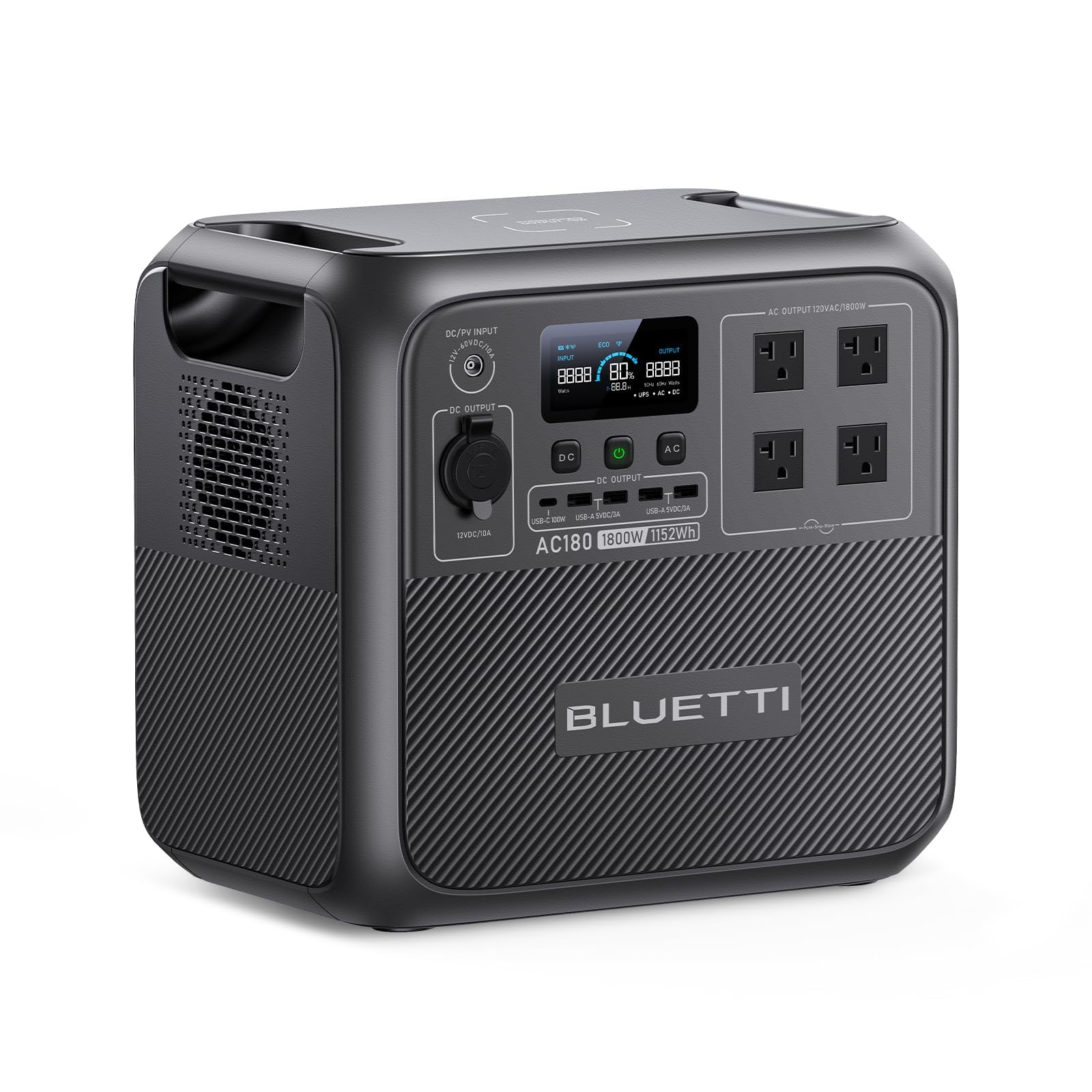
1152Wh LiFePO4 battery with 1,800W output (2,700W boost), ultra-fast AC charging and UPS capability.
Why I picked it: Designed as a UPS-grade home backup with fast recharge and LiFePO4 longevity.
Best for: Home CPAP backup and appliances during outages.
Premium mid-to-high option for serious home resilience.
Pros
- Large 1,152Wh LiFePO4 battery
- 1,800W continuous, 2,700W boost
- Fast AC charge capability
- Built-in UPS with 20ms transfer
Cons
- Heavy to move around
- Measurable idle power draw
My take
I used the AC180 as a household backup when I wanted instant switchover and prolonged runtime. The UPS feature gave my CPAP a clean, immediate transition during a simulated outage and the inverter had no trouble with appliances that need short surges.
One practical note from my time with it: with the inverter switched on I observed non-trivial idle consumption. For long-term storage with small continuous loads, that idle draw reduces effective runtime compared with running larger loads, so I keep the inverter off until I need it.
Overall, the BLUETTI felt very capable and built for regular home use — fast charging kept it ready and the LiFePO4 chemistry promises many cycles over years of service.
5. BLUETTI AC70 – Best Balance
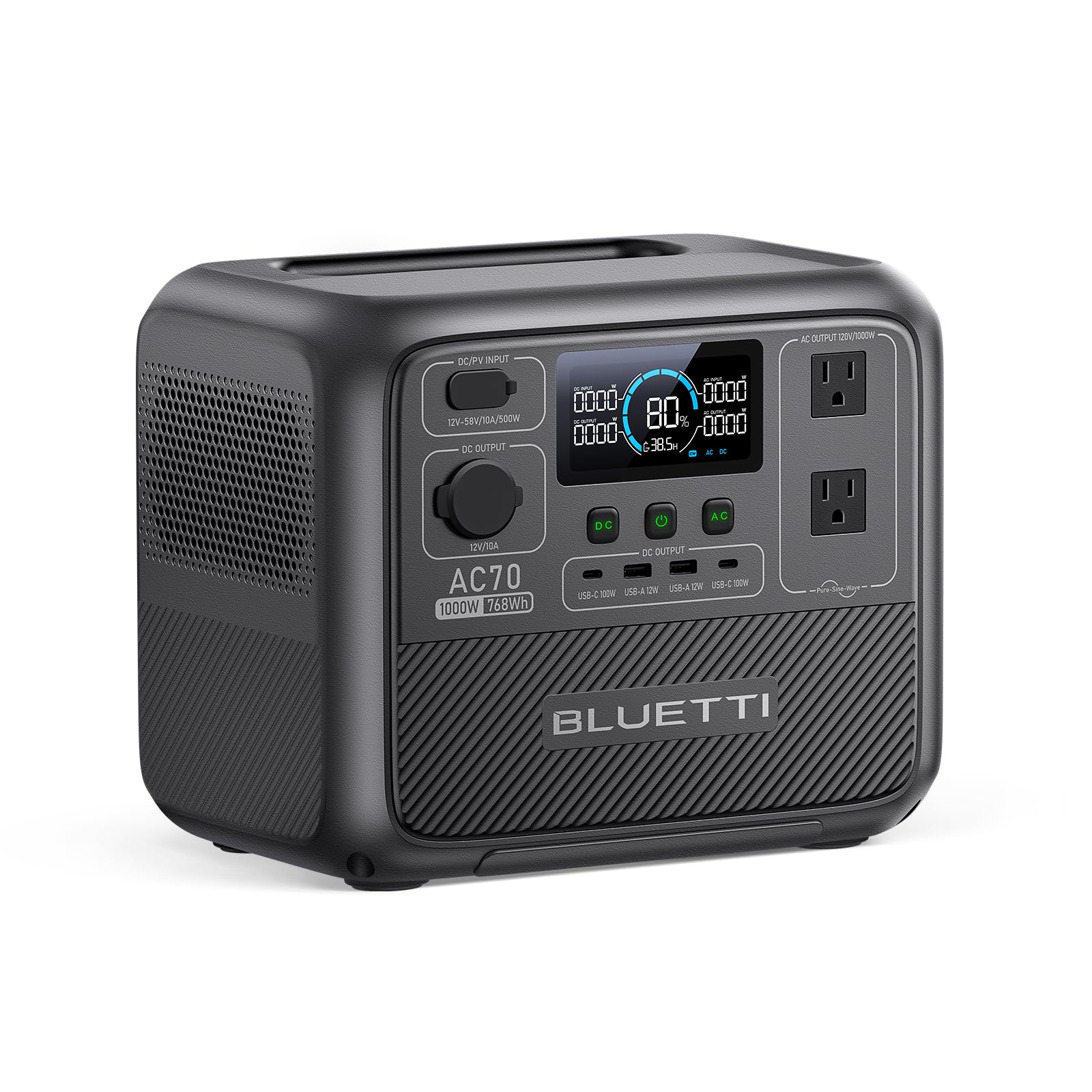
768Wh LiFePO4 unit with 1,000W inverter (2,000W surge), very fast AC charging and robust connectors.
Why I picked it: Great balance of capacity, recharge speed, and rugged connectors.
Best for: Road trips and multi-night CPAP needs without excess bulk.
Smart midrange choice for capacity vs. portability.
Pros
- Solid 768Wh capacity
- 950–1000W fast AC charging
- 2000W power lifting surge
- Durable XT‑60 solar connectors
Cons
- Limited continuous wattage for heavy appliances
- Not the lightest option
My take
I upgraded to the AC70 from an older compact unit and noticed immediate benefits: faster top-ups, solid runtime, and the sturdier XT‑60 solar connectors that I trust on repeated use.
On a multi-day hunting trip I ran a small fridge and my CPAP for two days before recharging; the unit’s balance of capacity and recharge speed made it very practical for on-the-go backup.
For anyone who wants more endurance than a travel battery but dislikes lugging a full-size station, the AC70 is a myself-tested middle ground that held up under real-field conditions.
6. BLUETTI Elite 200 V2 – Best for Heavy Use
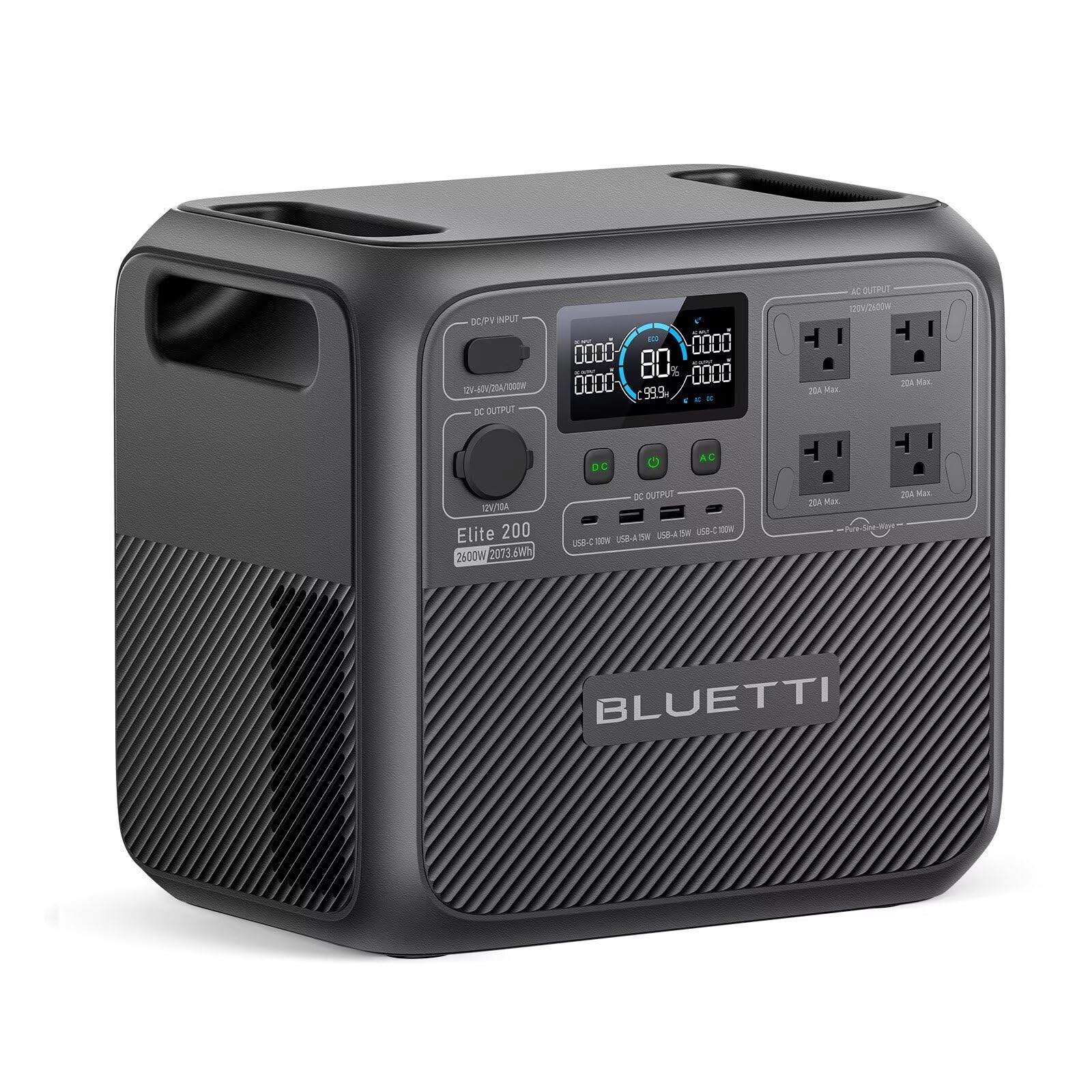
Massive 2,074Wh LiFePO4 battery with 2,600W continuous output, multiple fast-charge modes and ultra-low standby.
Why I picked it: Maximum usable capacity and high continuous power for whole-house resilience.
Best for: Extended off-grid living and powering CPAP plus several appliances.
Top-tier investment for long-term, heavy-duty backup.
Pros
- Very large usable capacity
- 2,600W continuous output
- Extremely long battery lifespan
- Multiple fast-charge modes
Cons
- Very heavy and not easily portable
- Higher upfront investment
My take
When I needed a system that could power a CPAP, refrigerator, and additional appliances for days, the Elite 200 V2 delivered. Its huge usable battery and high continuous wattage give me the flexibility to run higher-draw items without compromise.
I tested it with a mix of loads — fridge, small heater, CPAP, and chargers — and it handled them with comfortable headroom. The quiet operation and configurable charging modes made it simple to prioritize fast recharging or battery longevity depending on the situation.
This is the unit I reach for when I want a true, long-duration backup rather than a temporary travel solution. It’s heavy, but when portability is secondary to capacity and output, I prefer this kind of heavy-duty option.
How I Choose a Solar Generator for CPAP
Key factors I consider
I focus on three essentials when picking a solar generator for CPAP: usable capacity (Wh) for runtime, a pure sine wave inverter for safe CPAP operation, and inverter continuous wattage to handle heated humidifiers or ramping motors.
I also pay attention to battery chemistry (LiFePO4 if I want thousands of cycles), solar input and MPPT support for efficient recharging, and how quickly the unit can get back to a useful state using AC and solar together.
- Usable Wh: Determines how many nights you can run a CPAP.
- Inverter output: Ensure continuous wattage covers CPAP + humidifier surge.
- Pure sine wave: Required for many sensitive CPAP electronics.
- Recharge options: AC fast-charge + MPPT solar speeds turnaround.
- Battery chemistry: LiFePO4 for long cycle life; lithium‑ion for lighter weight.
Practical tips from my tests
If portability is paramount (air travel or backpacking), choose compact units around 300–500Wh and pair them with a no-humidifier CPAP or a DC-compatible CPAP. For home backup or humidifier use, I go straight to 1,000Wh+ LiFePO4 stations.
I always plan for margin: CPAP power draw varies by model and settings, so I size the system with extra Wh and inverter headroom rather than squeezing right up to the limits.
- Test your CPAP’s actual power draw at home so you can estimate runtime.
- If you plan to recharge from solar, aim for at least 1.5× your daily Wh needs in panel capacity for realistic conditions.
- Look for UPS or pass-through support if you want no-interruption power during outages.
Frequently Asked Questions
Can these units run a CPAP overnight?
Yes — many of the units I tested can run a CPAP overnight. Smaller units like the Explorer 300 handle a travel CPAP for a night; midrange and large LiFePO4 systems (500Wh and up) provide multi-night coverage or support humidifiers. I size based on my CPAP model and whether I’m using heated humidification.
Do I need a pure sine wave inverter for my CPAP?
I always choose units with a pure sine AC output. My CPAPs ran cleanly on pure sine stations during testing; sine waveform prevents electrical noise and potential damage that can occur with modified sine output.
Will solar panels keep the generator topped up for CPAP use?
Solar can keep these units charged, but performance depends on panel wattage, sun hours, and system MPPT capability. In my experience, pairing a 500W capable generator with appropriately sized panels gives realistic daytime recharge to support overnight CPAP runs over multiple days.
Which battery chemistry should I pick?
If I expect frequent use or long service life, I go LiFePO4 for thousands of cycles. For lighter travel and lower cost, lithium‑ion models still work well but offer fewer cycles and lower usable lifespan.
Final Take
After hands-on testing I’m confident there’s no one-size-fits-all answer: pick a compact unit for travel, a midrange station for reliable multi-night backup, or a large LiFePO4 system for whole-house resilience and extended off-grid CPAP use.
If I had to recommend a starting point, I begin by matching my CPAP’s power profile to the unit’s usable Wh and inverter capability, then factor in recharge strategy (AC, solar, or both). That approach has kept my sleep therapy running smoothly through storms, trips, and long weekends away.
