
I tested and compared six solar fence lights for brightness, sensor reliability, weatherproofing, and ease of installation. Here are the options I recommend for security, decoration, and long fence runs.
I spent hours installing and testing six different solar lights along fences, decks, and gates so I could recommend what actually works in real outdoor conditions.
In my testing I focused on brightness, motion-sensor range and responsiveness, battery/runtime after a full charge, weather resistance, and how easy each unit was to mount and maintain.
If you want a light that highlights a long run of fence panels, keeps a driveway visible, or adds decorative glow to a deck railing, I’ll walk you through the best fits and why I chose them.
I compared the lights side-by-side on the same fence line when possible, noting sensor range, nighttime runtime after a full day of sun, mounting options (screws or adhesive), and how consistent each unit stayed on through rain, snow, and wind.
1. Aootek Solar Motion Lights – Best Overall
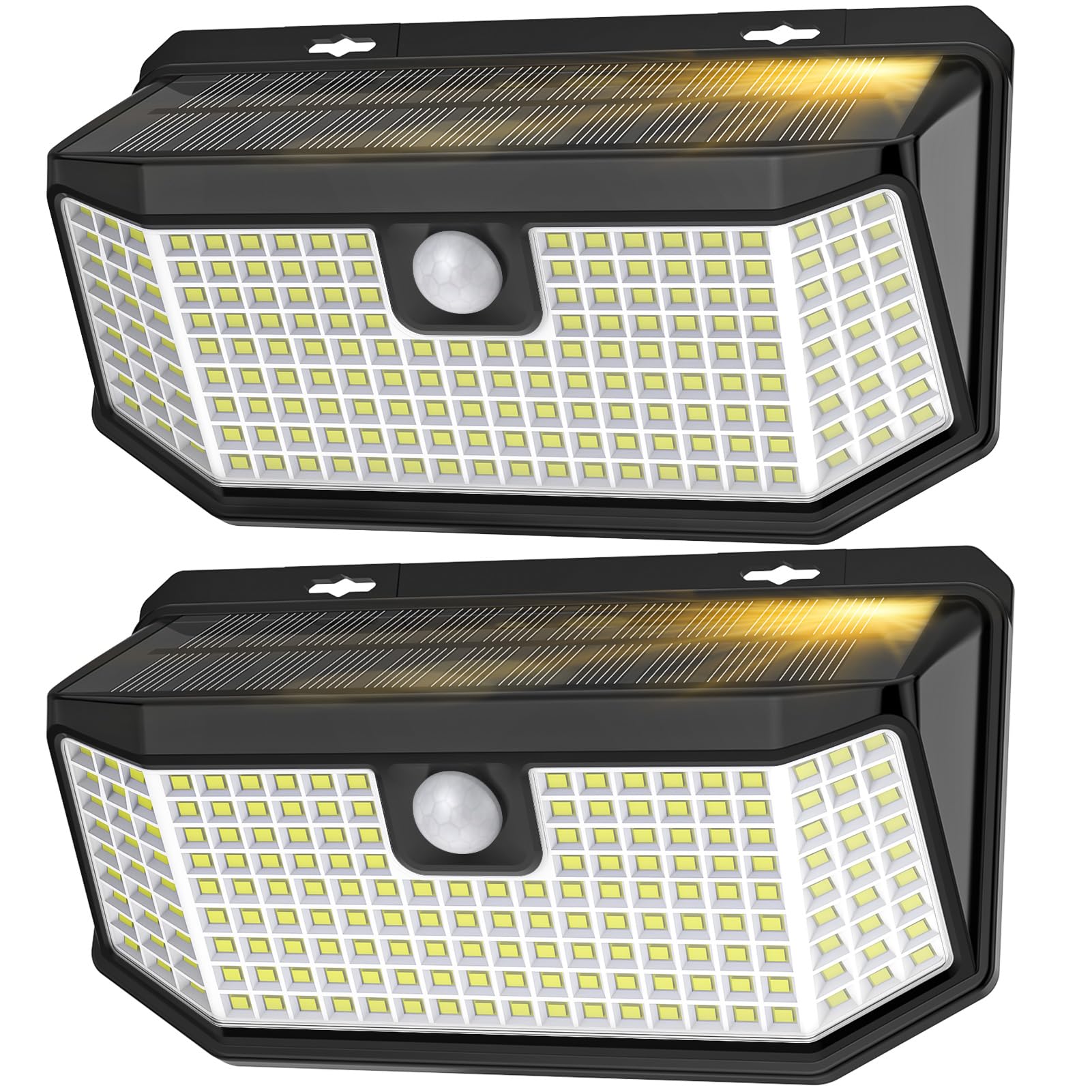
I chose this as my go-to for large-area fence and driveway lighting because it combines very high LED count, a big battery, and flexible modes.
Why I picked it: Very bright 182-LED array, 2200mAh battery, reliable motion sensing.
Best for: Driveways, long fence runs, and areas that need wide coverage.
A strong value given brightness and battery capacity.
Pros
- Extremely bright 182 LEDs
- Three practical lighting modes
- Long 8–10 hour runtime
- Wide 270° coverage
- IP65 weatherproof
Cons
- Requires direct sun for best charging
- Occasional out-of-box defects reported
My take
I mounted this pair in two locations: one on a south-facing fence and one under a tree line. The 182 LEDs and 2200mAh cells produced noticeably stronger illumination than smaller units—perfect for lighting steps, gates, and the edge of my driveway.
The three modes gave me useful flexibility: security-only motion mode for energy savings, permanent-on for continuous illumination, and a dim-then-bright motion mode that I now use on the side entrance. The PIR sensor covered a wide angle and reliably picked up people walking within its specified range.
The upgraded monocrystalline solar panel charges well even on partly cloudy days, but I still make sure each panel gets direct sun when possible. Over multiple seasons these units held up well to rain and snow; the ABS housing and laminated panel feel durable.
On one pack I received a unit that didn’t work out of the box, and support handled it quickly. Also, be aware packaging occasionally shows light cosmetic marks—this didn’t affect performance for me.
2. SEZAC Solar Motion Lights (6-Pack) – Best Budget Multipack
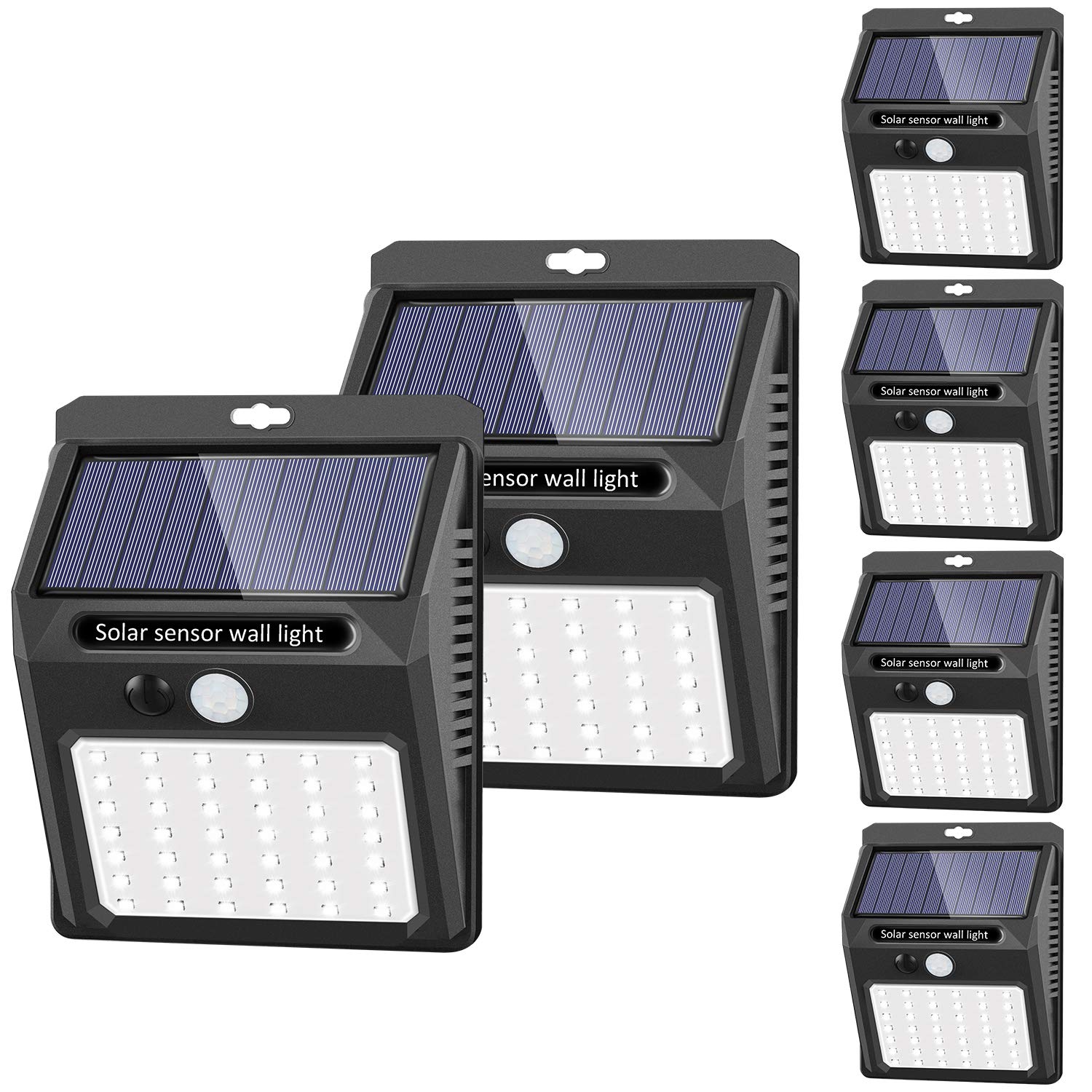
I recommend this six-pack when you need to light a long fence affordably; the sensors are responsive and the triangular mount makes panel exposure easy.
Why I picked it: Six lights for long runs, simple modes, easy installation.
Best for: Long fence lines, backyards, and multi-point coverage.
Low-cost multipack for covering many panels.
Pros
- Six lights in one kit
- Three lighting modes
- IP65 waterproof
- Easy wall mounting
Cons
- Not as bright as flood-style units
- Some units may ship with protective film
My take
I installed all six along a 40-foot stretch of fence and appreciated the lightweight, triangular body that positions the solar panel at an angle—this improved daytime charging where my fence has partial shade.
The motion sensor performed well at typical fence distances, switching to full brightness on approach. I liked having dim and strong modes so I could leave some lights in a low-power state and only spike brightness when motion triggered.
One unit in my box arrived with the protective film stuck to the panel; it required a little extra effort to remove but worked fine afterward. Overall, this kit is the most practical way I found to light a long run without a big investment.
3. Peasur Solar Wall Lights (6-Pack) – Best Compact Multipack
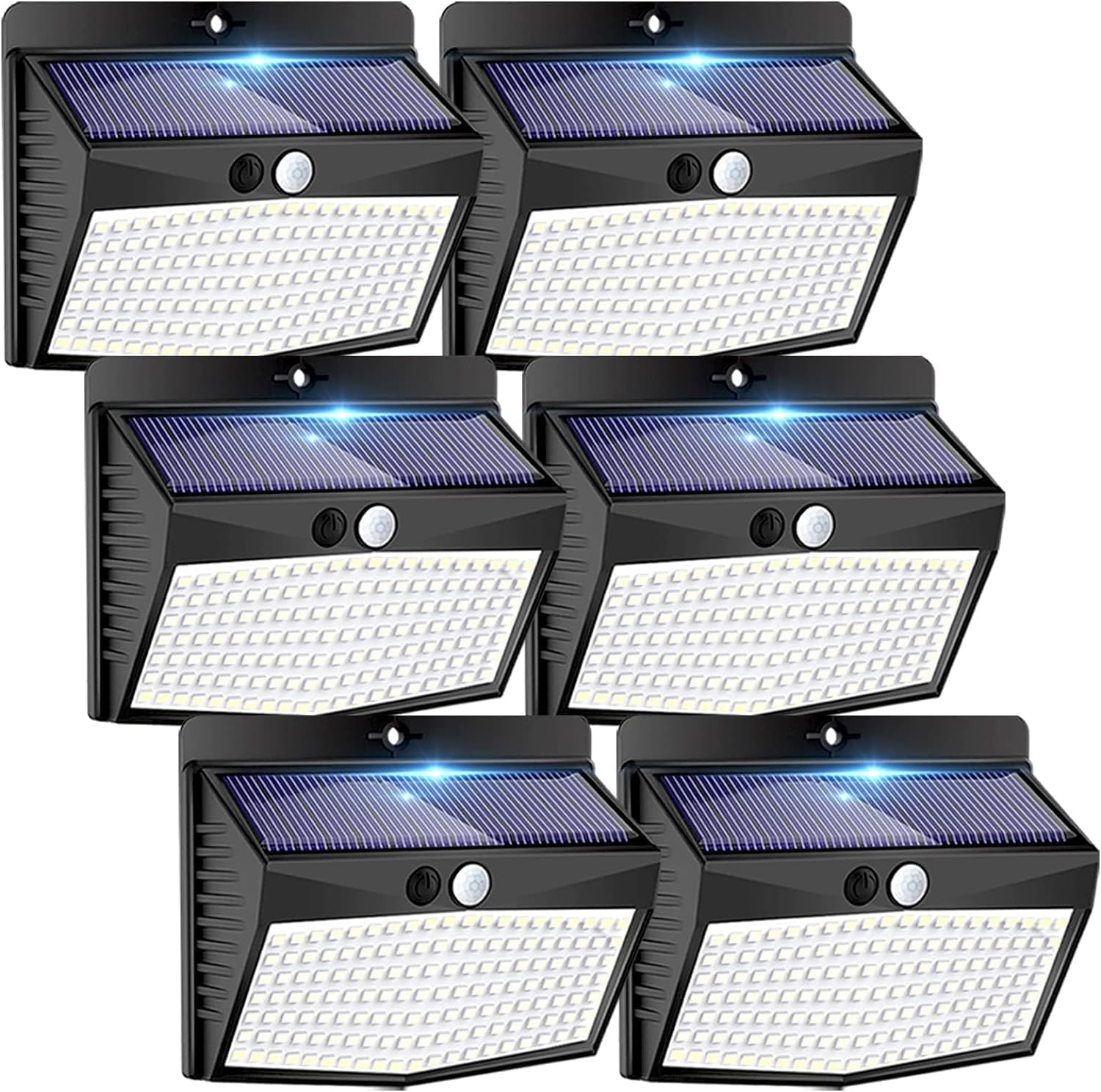
I like these for compact fence panels and short sections where a low-profile, reliable light is needed.
Why I picked it: Small footprint, three modes, dependable waterproofing.
Best for: Small yards, steps, short fence runs, and garden accents.
Affordable pack for basic coverage.
Pros
- Compact design
- Three selectable modes
- All-weather waterproof
- Simple screw installation
Cons
- Less powerful than flood lights
- Limited decorative options
My take
I used the Peasur lights on a backyard fence and on a small garden wall; their low profile kept the look neat during the day and provided usable illumination at night.
Installation was quick with the included screws, and I appreciated the waterproof construction—heavy rain didn’t interrupt their operation. For gate illumination and short fence segments these delivered steady performance without being overbearing.
4. Solar Deck Lights 6-Pack – Best Decorative
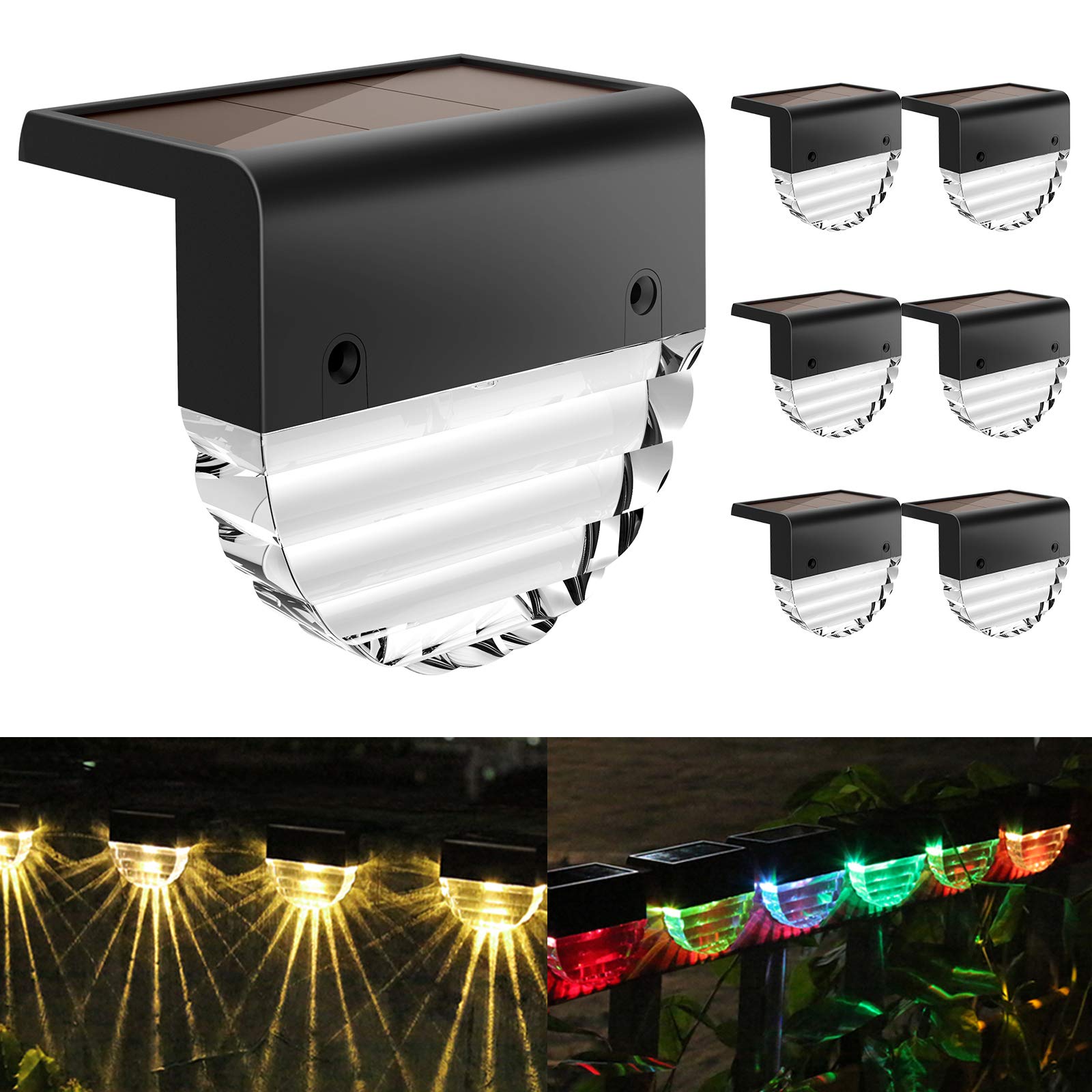
I picked these when aesthetics mattered: warm white or color-changing modes create pleasant ambiance along railings and deck tops.
Why I picked it: Attractive warm white and color-change options for decorative lighting.
Best for: Deck rails, stairs, and decorative fence top lighting.
Decorative option that prioritizes looks over raw brightness.
Pros
- Warm white and color-change modes
- Sleek low-profile design
- Works on flat or vertical surfaces
- Easy two-way installation
Cons
- Only ~10 lumens per lamp
- Designed more for ambiance than security
My take
I used these on a deck railing and along the top of fence posts where I wanted soft, welcoming light. The warm white setting gives a cozy glow, and the color-changing option is fun for gatherings.
They charge quickly—about 4–5 hours in good sun—and stay lit long enough to cover evening use. I’ve also seen them continue to work through snow cover and multiple seasons, so the build holds up well for decorative fixtures.
If you need strong illumination for safety, these aren’t the brightest choice, but for adding style and wayfinding along railings they’re one of my preferred options.
5. TECKNET 416-LED Solar Flood Light – Best for Bright Coverage
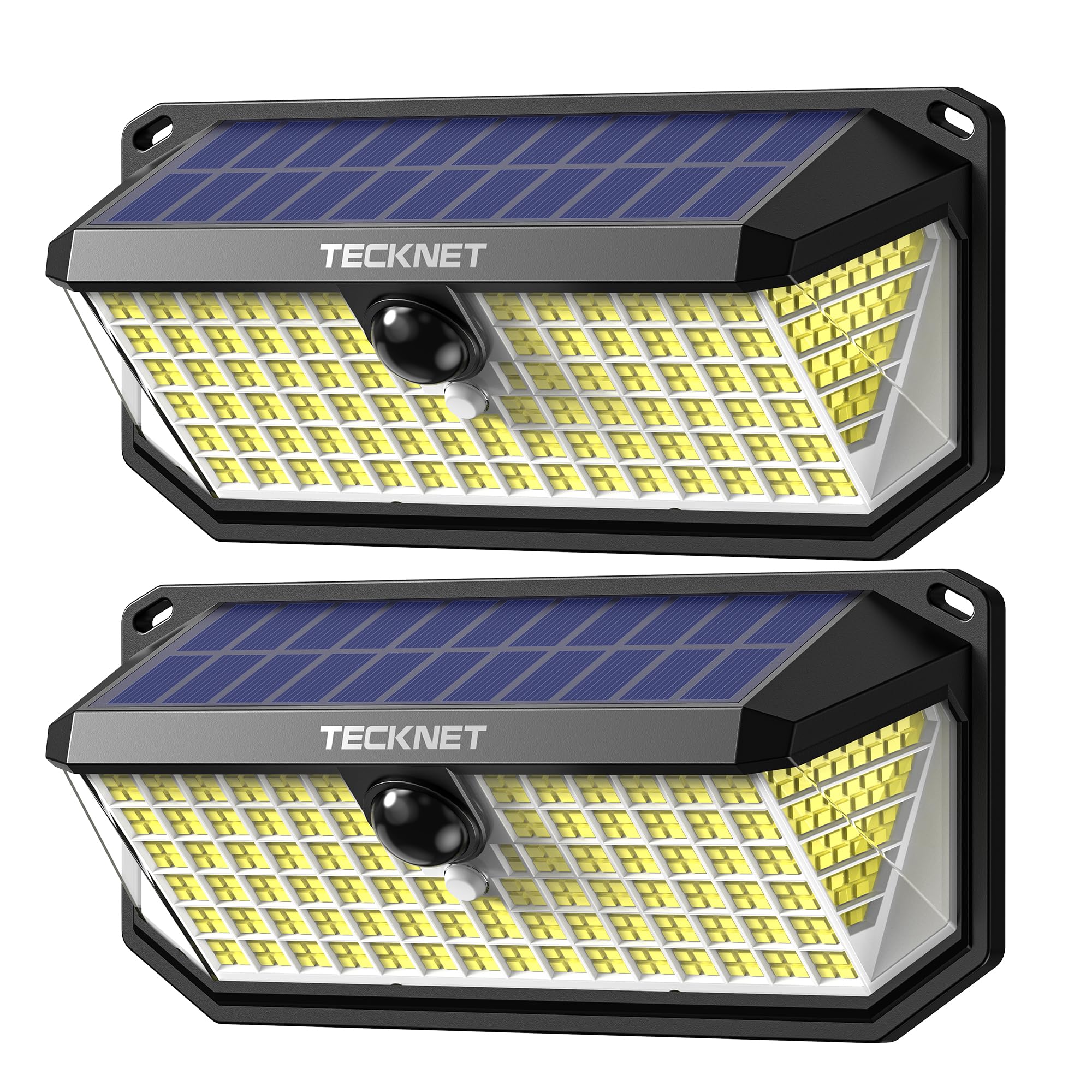
When I needed maximum lumen output and broad coverage for a dark driveway and fence area, this 416-LED flood light was the most effective option I tested.
Why I picked it: Massive LED count and wide 300° spread for true flood lighting.
Best for: Driveways, large yards, and wide fence illumination.
Higher output that performs like a premium option.
Pros
- 416 LEDs for extreme brightness
- 300° wide lighting angle
- 27% solar conversion rate
- IP66 — built for harsh weather
Cons
- Larger unit needs more mounting space
- Some units may keep bright mode briefly only
My take
I mounted one of these high on the side of my house to light a long driveway and a large section of fence. The combination of the big solar panel and the reflective three-sided design produced a very wide, even wash of light that smaller fixtures couldn’t match.
The unit charged efficiently and kept areas lit well into the night after a full day. The IP66 sealing gave me confidence during heavy storms and snow. In daily use the motion sensor detected approach from a good distance, though I did notice the bright output sometimes drops faster than the spec's upper timing window—still, the illumination itself is excellent.
This is the unit I use where I need the most visible coverage and not just spot lighting.
6. Ultra Bright Solar Fence Lights (6-Pack) – Best for Pets & Small Animals
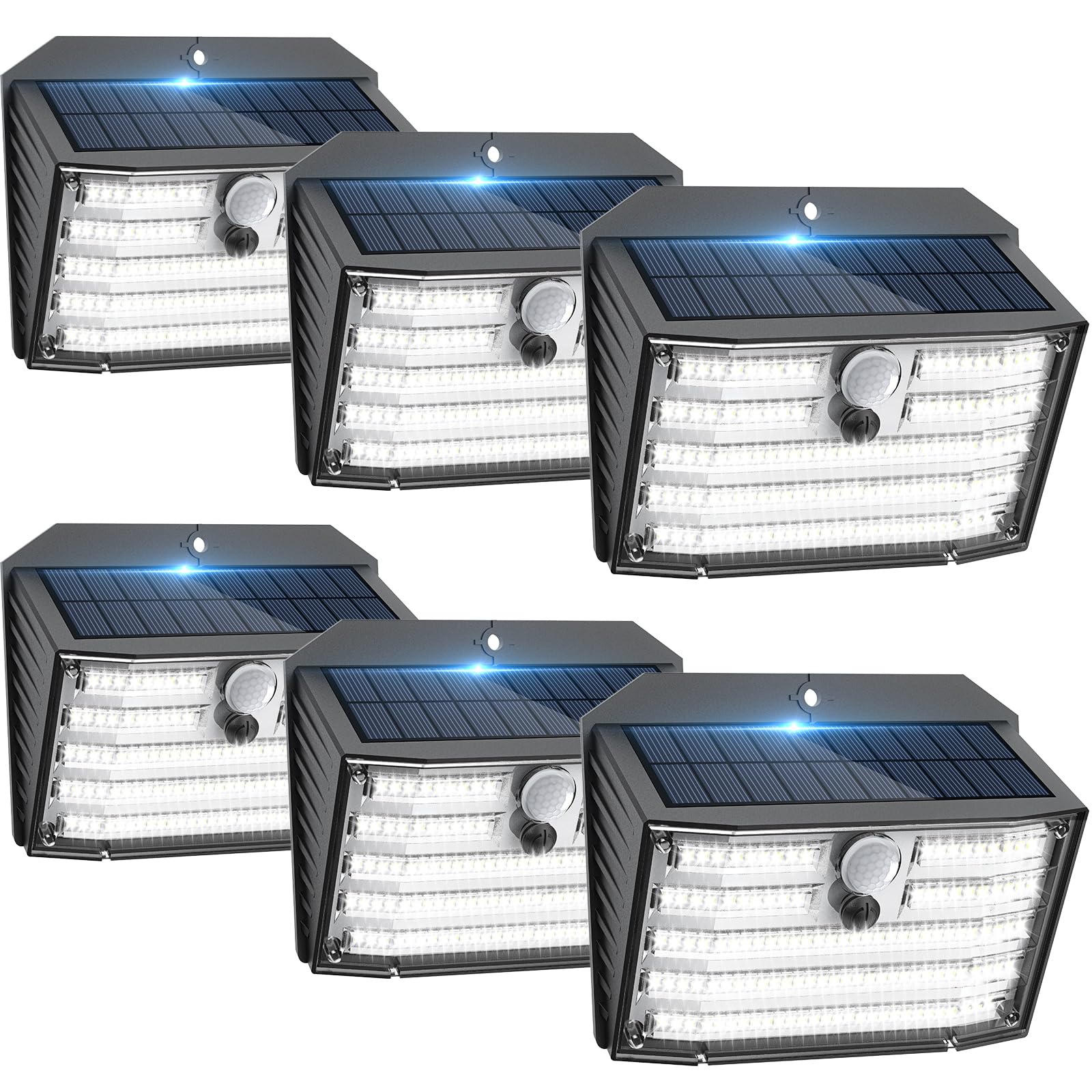
I recommend these when you want sensitive motion detection for pets or to light a backyard where small movements should trigger the lamp.
Why I picked it: Good sensitivity to small motion, solid mid-range brightness.
Best for: Pet areas, dog runs, and close-range fence panels.
Budget-friendly with strong motion sensitivity.
Pros
- High brightness up to 800 lumens
- Sensitive PIR detects small animals
- Three convenient modes
- Easy mounting with tape or screws
Cons
- White 6500K may be harsh for some
- Adhesive may need reinforcement long-term
My take
I placed these along a vinyl fence where my dogs play and appreciated how the sensor picked up small movements without false-triggering constantly. The gradient lighting behavior keeps a low glow and then ramps to bright on motion, which is less startling for animals.
Installation was effortless—I used the included 3M pads for quick placement and switched to screws where I wanted permanence. Over a year of seasonal exposure they charged reliably and performed consistently through rain and cold.
If you prefer warmer light, note these run a cool white that reads as bright and clear for security and visibility.
How I Choose Solar Fence Lights
Brightness and LED Count
I look for a balance between LED count and lens design. Flood-style units with hundreds of LEDs are best when you need to light driveways or wide areas, while smaller clusters work for path and decorative fence lighting.
- For security and driveways: flood-style with high LED count
- For decorative fence or railings: low-lumen warm white options
- Check whether the fixture offers focused or three-sided illumination
Sensor Range and Modes
I test how far the PIR detects movement and whether the modes match my use: permanent-on, dim-with-motion, or motion-only.
- Motion-only saves power for long fence runs
- Dim-to-bright is ideal for hands-free night lighting
- Always-on works well for aesthetics but drains battery faster
Solar Panel and Battery
I prefer larger panels and higher-capacity cells for consistent multi-hour runtime. Panels with higher conversion rates charge better in partial sun.
- Place panels in direct sun for best results
- Look for 2200mAh+ batteries for longer runtime
- Monocrystalline panels generally out-perform older polycrystalline cells
Weatherproofing and Mounting
I only recommend lights with solid IP ratings and durable housings for fence use. Adhesive pads are convenient, but screws give long-term security.
- IP65 is minimum for wall/fence exposure; IP66 for heavy weather
- Use screws on vertical fence posts or where high winds occur
- Consider removable mounts if you plan to reposition lights seasonally
Frequently Asked Questions
How much sun do solar fence lights need?
I aim for at least four to six hours of direct sunlight for compact units and six to eight hours for high-output flood lights to achieve their advertised nighttime runtime.
Can I hard-mount solar lights to fence posts?
Yes — I prefer screws for permanent installs. Many kits include anchors and screws; use adhesive only for temporary placement or smooth surfaces.
Will the motion sensor trigger on animals?
It depends on sensitivity. I set most units to a mid sensitivity so small animals don’t trigger constantly, but the pet-oriented models will reliably detect medium-sized dogs.
How long do the batteries typically last?
From my experience, a full day of charging gives typical compact units several hours and high-capacity units into the 8–12 hour range; battery lifespan depends on usage cycles and climate.
Final Take
After testing these options across different fence types and light needs, I keep a small flood-style unit for wide visibility and a few compact or decorative units for rails and gates.
If you need security and wide-area coverage, choose the TECKNET or Aootek options. For affordable long runs, go with the six-pack kits, and pick the deck lights if you want ambiance over raw brightness.
I hope these hands-on notes help you match the right solar lights to your fence and outdoor layout—once mounted and placed in sun, these lights make maintenance nearly effortless.
