
I tested a range of motion-activated outdoor lights — wired flood lights, decorative dusk-to-dawn sconces, and multi-pack solar fixtures — and I’m sharing the models I’d install on my own home, plus how I chose them and?
I spent time installing and using both hardwired motion floods and solar motion fixtures to understand what actually works for porches, driveways, pathways, and fences.
My picks prioritize real-world brightness, sensible sensor behavior, weather durability, and how straightforward the unit is to install and maintain.
Below I explain which light I’d pick for each situation and why, and I include tips that helped me place and tune each model during testing.
I compared products by how they perform in place: brightness and coverage, sensor range and sensitivity, weather sealing, installation complexity, and whether the light runs on mains power or solar. If you want all-night illumination with no charging concerns, go wired; if you need zero wiring and easy multi-point coverage, a solar multi-pack is the faster route.
1. LEPOWER 3-Head LED Security Motion Light – Best Overall
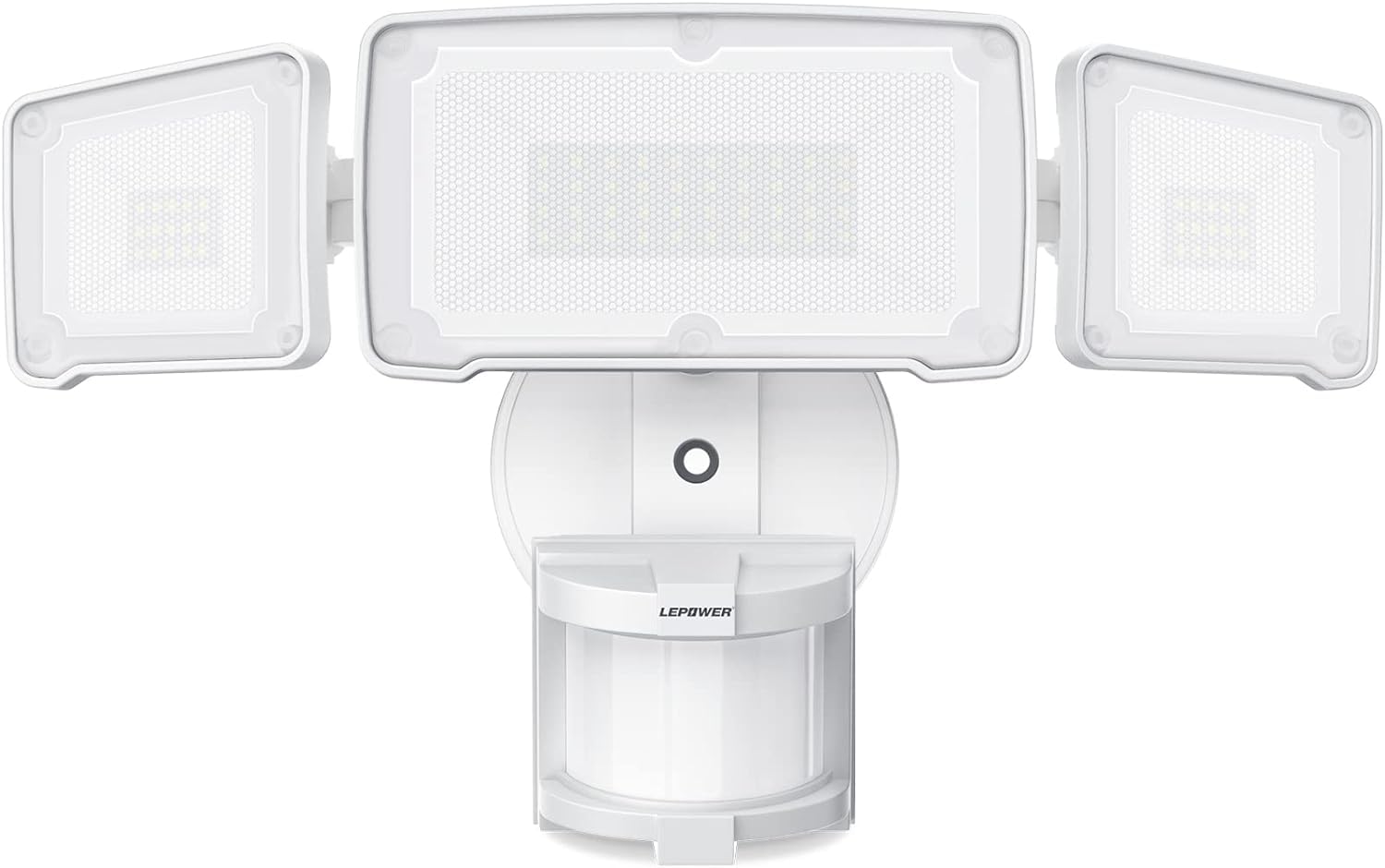
A powerful 38W flood with adjustable triple heads, long-range PIR sensing, and IP65 durability that I relied on to light big driveways and yards.
Why I picked it: Huge effective output with flexible head adjustment and a long 72 ft sensor range.
Best for: Driveways, large yards, garage entries where bright, directed light is needed.
Excellent brightness-to-cost balance for a wired security flood.
Pros
- Very bright 4200 lumens
- Three adjustable light heads
- Long 72 ft motion range
- Aluminum body, good heat dissipation
- IP65 weatherproof rating
Cons
- Hardwired installation required
- Sensor can be overly sensitive out of the box
- Not a solar unit
My take
This LEPOWER unit became my go-to when I needed a strong, directed flood. The three heads swivel independently, so I could light the driveway, garage door, and a side path without shadows.
Installation takes standard wiring skills; once mounted on a 4" junction box the fixture felt solid and the aluminum housing helped keep the LEDs cool during long evening runs.
The PIR sensor reaches out far; I routinely had it detect motion at long drive distances. It can be tuned by angle to avoid repeated triggers, but I did dial down sensitivity for street traffic.
Overall durability and value impressed me: the lens optics produce a wide, useful beam and the unit held up in rain and gusty nights during my tests.
2. Dusk-to-Dawn Motion Wall Lantern (Aluminum, E26 Socket) – Best for Porches
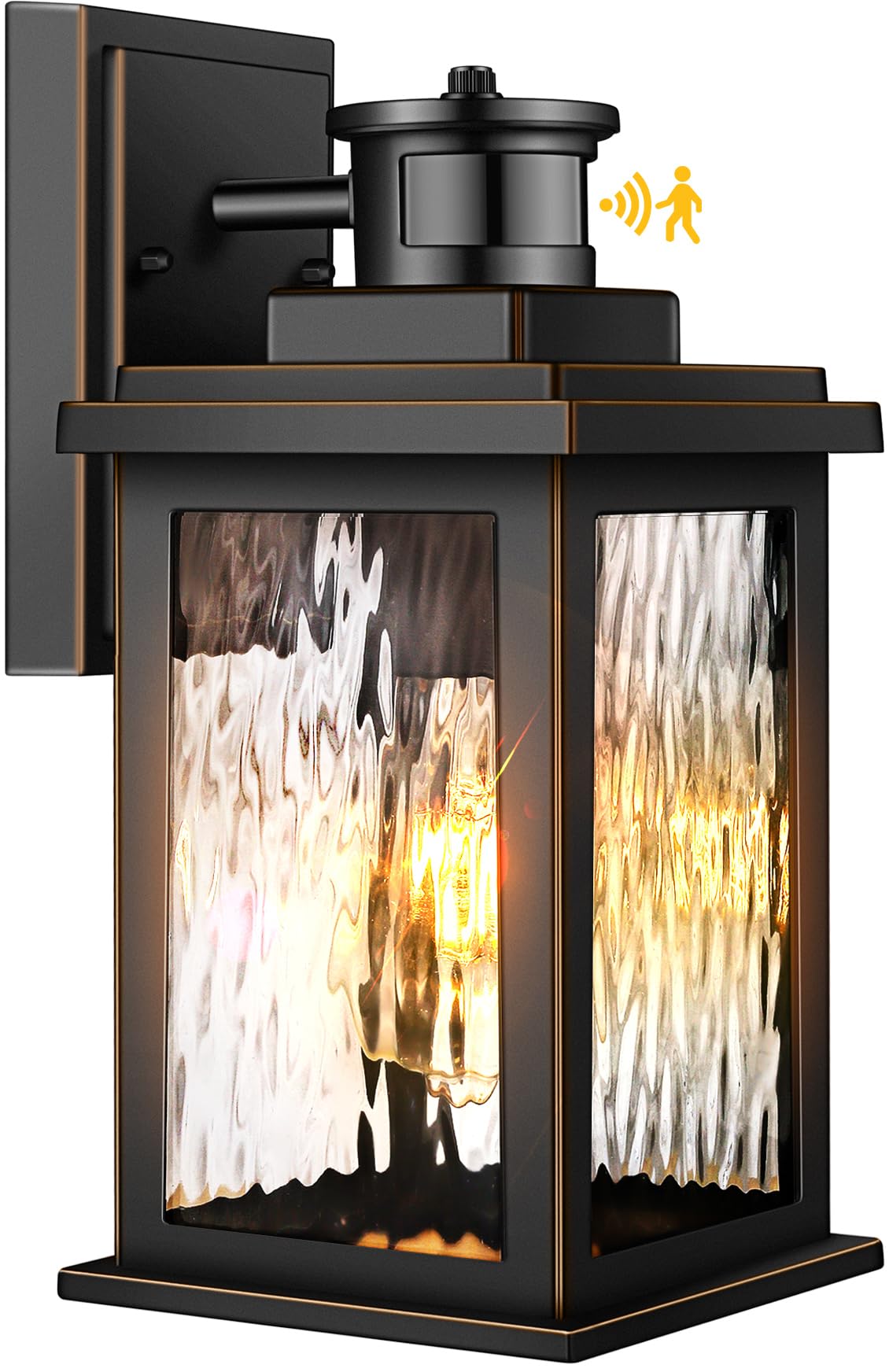
A decorative aluminum wall lantern with dusk-to-dawn behavior, motion-activated boost, and an E26 socket so I could choose the bulb look I wanted.
Why I picked it: Attractive rippled glass and useful dusk-to-dawn with a tactile manual override.
Best for: Front porches and entryways where style matters as much as motion activation.
A stylish midrange sconce that pairs well with vintage or dimmable bulbs.
Pros
- Classy rippled water glass
- Dusk-to-dawn plus motion boost
- Manual override for parties
- Anti-rust aluminum construction
- Easy bulb replacement with E26 socket
Cons
- Bulbs are not included
- Small single button is confusing at first
- Top-mounted sensor may trigger from street traffic
My take
I used this lantern on a small front porch and appreciated that it comes fully assembled; swapping in dimmable vintage bulbs gave the exact look I wanted.
The unit’s photocell keeps the light at a low dim level at night and then jumps to full when motion hits; the manual override is handy for gatherings when I wanted continuous light.
The single control button handles both mode and dim settings, which took a careful read of the instructions. After a brief setup I valued the combination of style and automatic operation.
If you put this on a busy street, angle and height matter—cars can cause frequent triggers if the sensor points outward. I adjusted mounting position to solve that.
3. VIANIS Motion Sensor Wall Light (2-Pack) – Best Value Pack
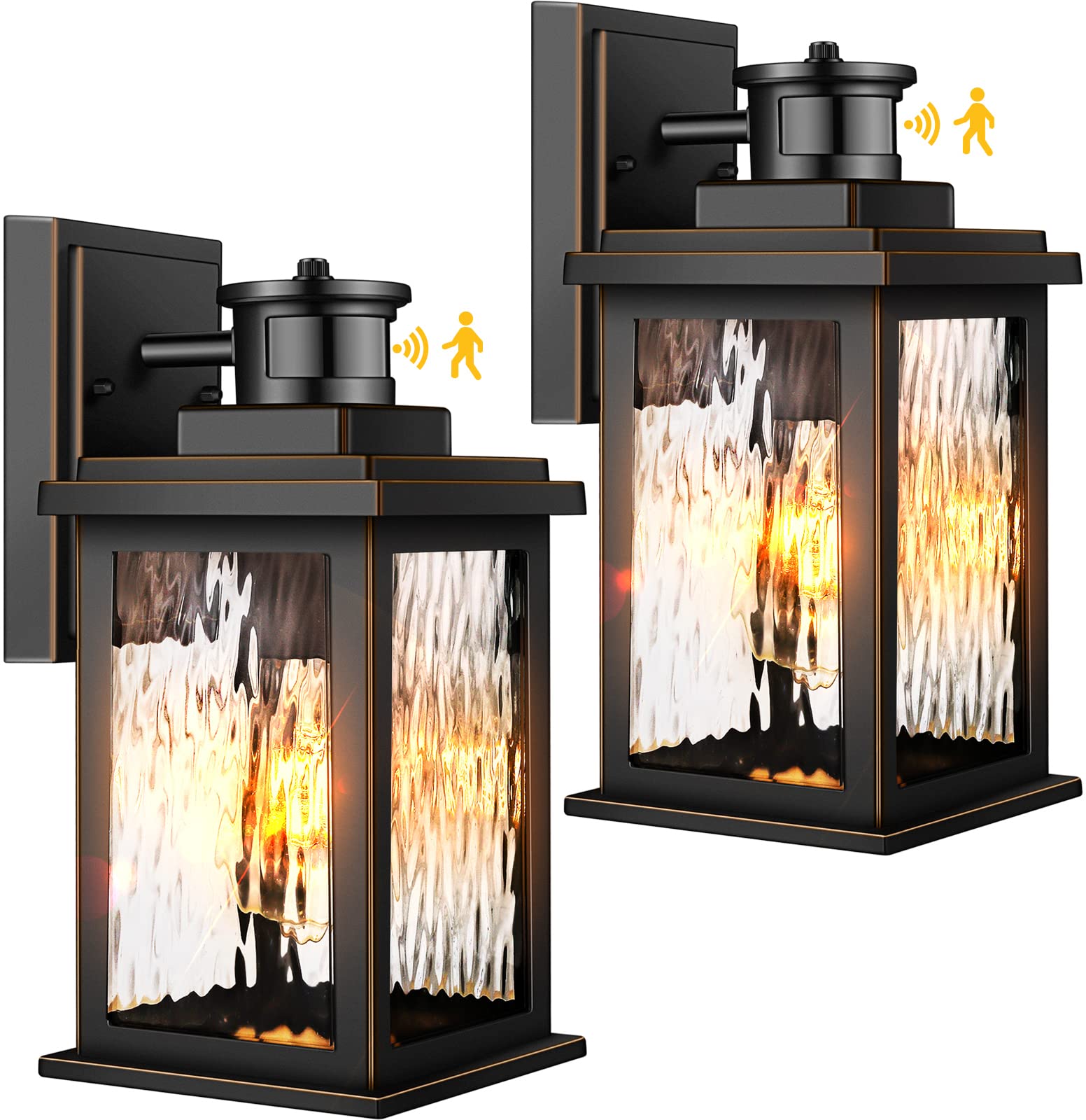
A two-pack of coach-style fixtures with one-button mode switching, durable aluminum construction, and handy dusk-to-dawn behavior I used around both sides of my house.
Why I picked it: Two fixtures and simple one-button mode memory make whole-house placement quick.
Best for: Matching pairs for both sides of an entry, garage flanks, or a coordinated exterior look.
Good value when you need two coordinated exterior fixtures.
Pros
- Two fixtures included
- One-button mode switching
- Three working modes
- Anti-rust aluminum finish
- Standard E26 bulb socket
Cons
- Bulbs not included
- Some dimmable LEDs can flicker
- May brighten from road traffic
My take
I installed the Vianis pair on matching entry pillars and liked that they were well-packaged and came with a clear manual.
The single button mode switching is genuinely convenient—press it and the light remembers DIM, ECO or override. I switched modes several times depending on how I wanted evening lighting to behave.
A note on bulbs: use properly rated dimmable LEDs to avoid flicker. Once I matched bulbs to the fixture the lights performed reliably and the finish looked upscale.
Overall the two-pack is a fast way to get a consistent exterior look with sensible motion and dusk-to-dawn control.
4. TECKNET Solar Motion Lights (6-Pack, 416 LEDs) – Best Solar Pack
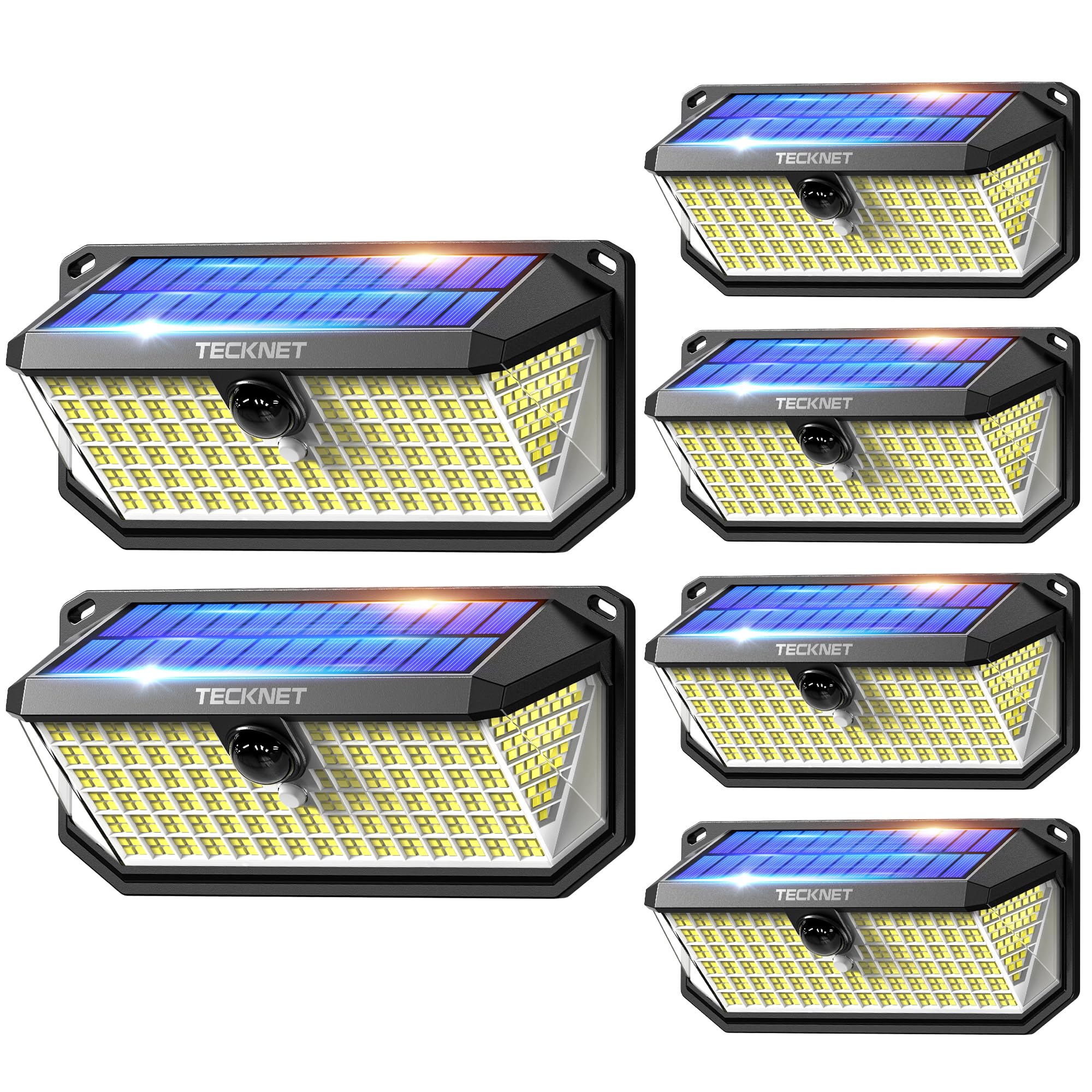
A six-pack of solar motion lights that impressed me with wide-angle coverage, long run times after full sun, and a bright multi-LED array for fences and paths.
Why I picked it: Massive LED count and long runtime make this the easiest way I covered multiple spots without wiring.
Best for: Pathways, fences, sheds, and multi-point lighting where running wire is impractical.
Cost-effective multi-pack for wide, solar-powered coverage.
Pros
- Long runtime after full charge
- 416 LEDs for broad illumination
- Three lighting modes
- IP66 fully waterproof
- Wide 300° lighting angle
Cons
- One unit can fail occasionally
- Limited detection range vs. wired sensors
- Depends on good sun exposure
My take
I put several of these around a long fence line and immediately noticed the broad, even wash from the three-sided lighting design—the reflective structure really reduces dark spots.
After a full sunny day the units routinely lasted through the night in my testing; cloudy days shorten runtime, so placement where panels see direct sun matters.
The PIR sensor range is shorter than hardwired floods (about 13–20 ft in spec), but for pathway and shed applications that range worked well. One unit stopped working for me; Tecknet’s replacement process was fast when I contacted them.
For illuminating multiple outbuildings or lighting a long property without conduit, this 6-pack was the fastest, cleanest solution I’d choose again.
5. Philips 44W LED Flood Light with PIR – Best Midrange Flood
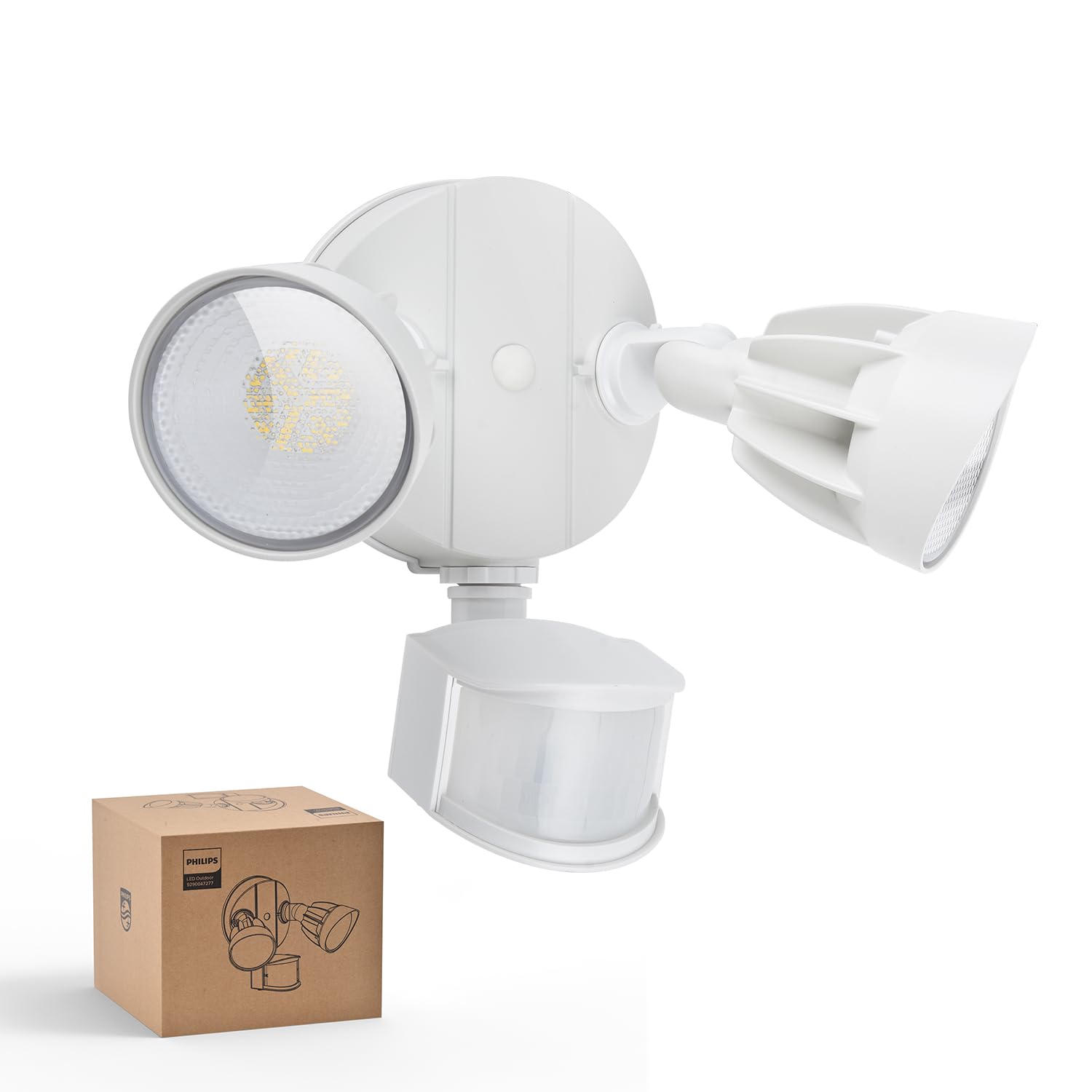
A balanced 44W integrated LED flood that delivered bright 4200-lumen output, flexible coverage with two adjustable heads, and four useful modes I relied on around my garage.
Why I picked it: Integrated LEDs, a solid lumen output, and four practical modes make it a reliable everyday flood.
Best for: Home garages, medium driveways, and yard areas needing a dependable wired fixture.
Solid middle-ground option between ultra-bright and budget lights.
Pros
- Integrated LEDs, no bulbs to replace
- 4200 lumens with wide beam
- Four lighting modes
- IP65 weatherproof
- Adjustable heads for targeting
Cons
- Wired installation required
- Mode switches are a little fiddly
- Not solar powered
My take
I used the Philips 44W as a direct replacement for an older flood and immediately appreciated the brighter, farther throw relative to similar units.
Mounting was straightforward and the seal felt tight, which matters where salt or heavy rain are a factor. The two adjustable heads let me aim one light toward the driveway and the other at the yard.
Programming the modes requires a careful button sequence, but once set it was stable. The dusk-to-dawn and security options are convenient for different needs.
Overall it felt like a dependable, well-built unit for everyday outdoor area lighting.
6. Philips 72W 3-Head LED Security Light – Best for Large Areas
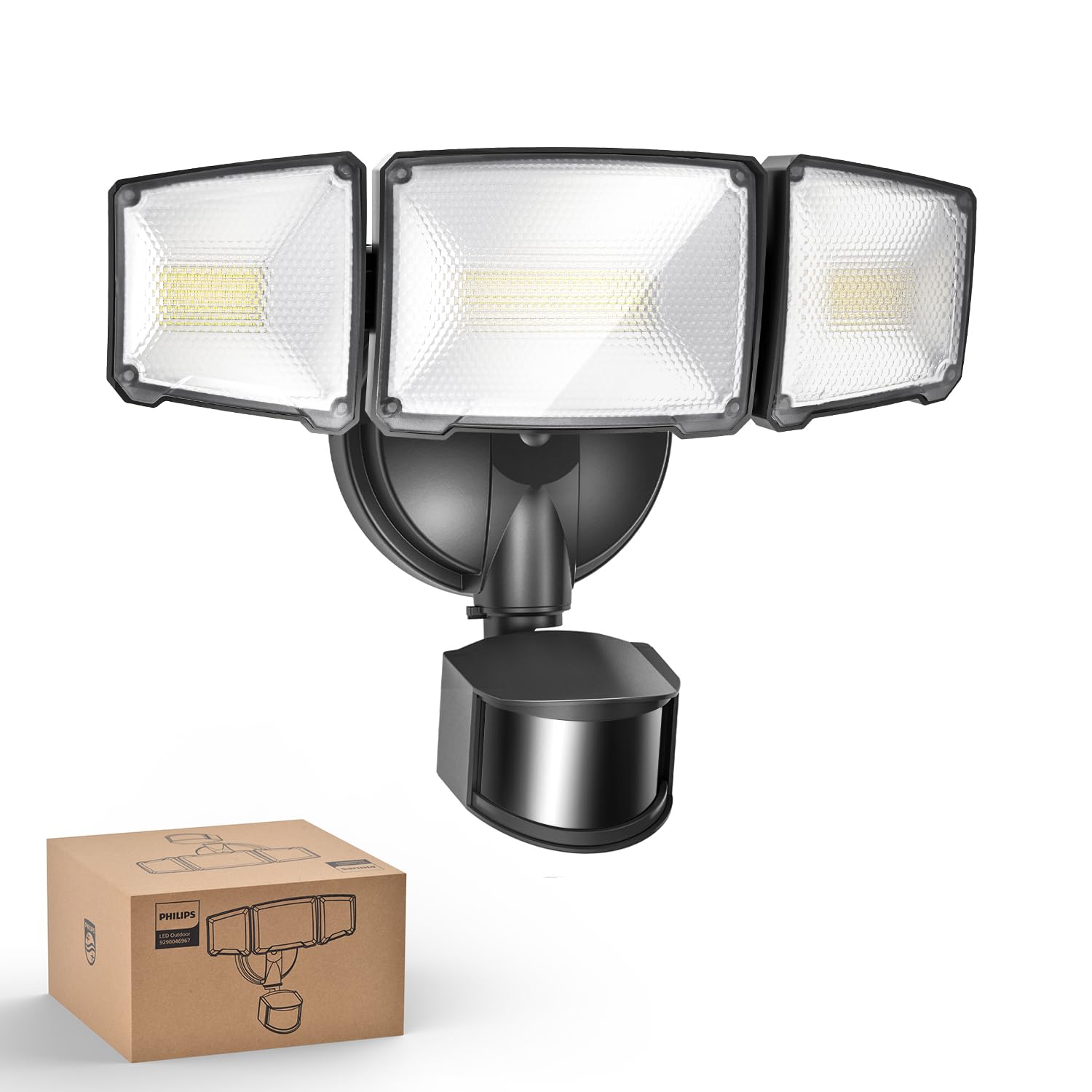
A top-tier brightness option that produced a very wide, clear spread (7400 lumens) with three adjustable heads and a high-sensitivity PIR, ideal where I needed maximum coverage.
Why I picked it: The highest output here and long PIR reach make it my pick for large driveways and open yards.
Best for: Large properties, wide driveways, and areas that require extremely bright coverage.
A higher-output, premium wired option for serious coverage needs.
Pros
- Very high 7400-lumen output
- Three adjustable heads for targeted coverage
- PIR sensor up to 69 ft
- Durable aluminum body
- Excellent heat dissipation
Cons
- Bulky for small mounting boxes
- Setup instructions could be clearer
- Requires mains wiring
My take
When I needed to light a very long driveway and yard, the Philips 72W was the only unit in this group that filled the space without dark zones.
The three rotatable heads let me fine-tune coverage so I didn’t blind neighbors while still reaching the street. The PIR’s long reach also helps detect cars earlier than smaller floods.
Build quality felt premium and the rear heat fins seem to help performance during extended use. Be prepared for a larger footprint on the wall and to spend a little extra time aligning the heads.
If you want the brightest wired option for large areas, this unit is exactly that.
7. LUTEC 74W 8000-Lumen Motion Flood Light – Best with Night Light
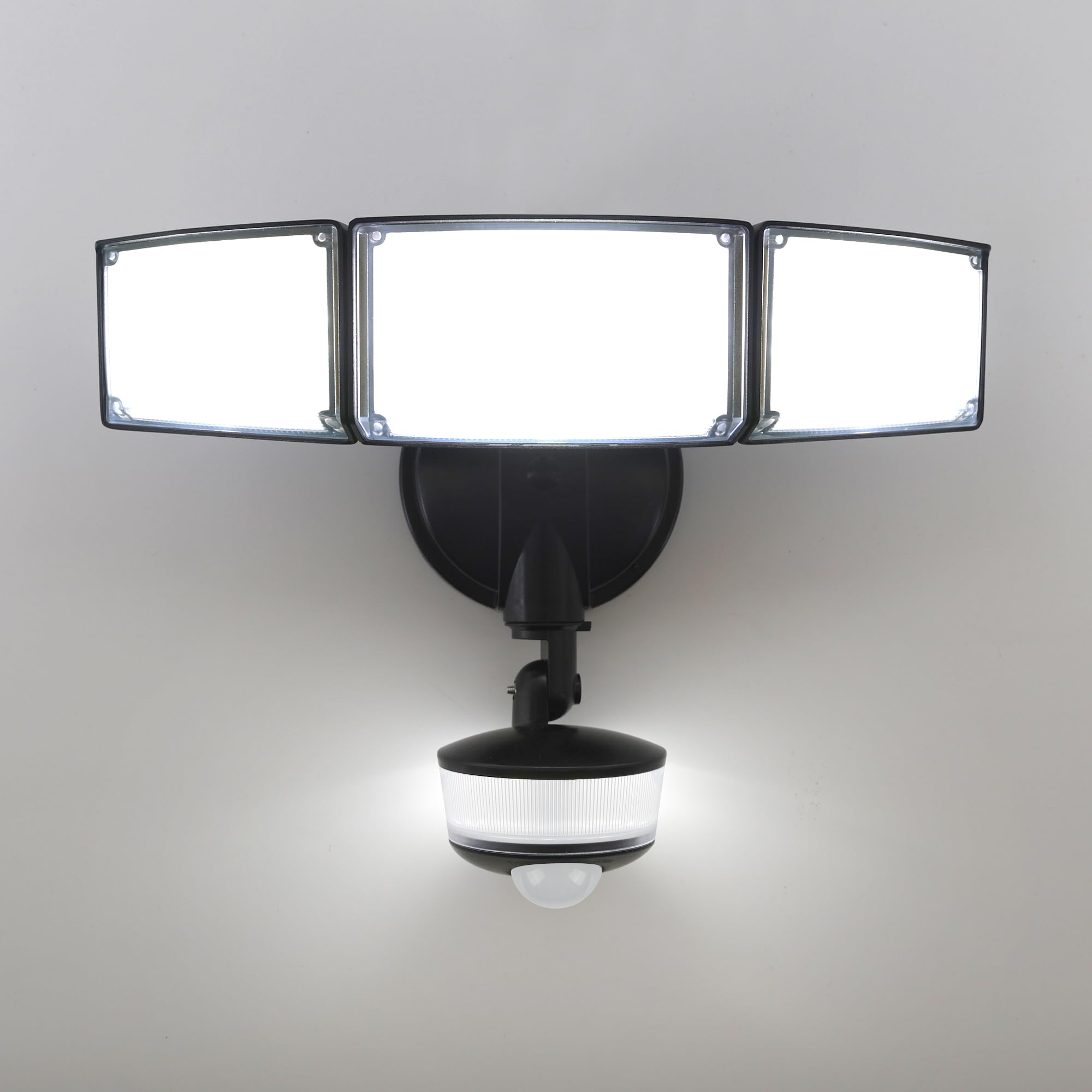
A powerful 8000-lumen flood with a built-in night-light mode, wide detection, and multiple modes that I used to keep both security and gentle all-night lighting on one fixture.
Why I picked it: Extremely bright output plus a convenient night-light function for continuous low-level illumination.
Best for: Driveways and large yards where a small night glow plus a motion boost is useful.
High-output value for those who want both all-night and motion-boost lighting.
Pros
- Built-in night light option
- Very bright 8000 lumens
- Wide 180° detection angle
- Four lighting modes
- IP65 weather resistant
Cons
- Night light may start brighter than expected
- Attracts insects if left bright
- Installation can be awkward solo
My take
I installed this Lutec flood on my garage and liked having the small night-light level for basic visibility plus a full 100% boost when motion fired.
In practice the night-light behavior varies a bit; mine started brighter during initial evenings before stepping down to the lower level later, so expect an initial adjustment period.
The unit is solidly built with a good gasket, and once wired I enjoyed the combination of a persistent low glow and an instant motion surge for guests or deliveries.
If you want an all-night presence that still offers a blast of light on motion, this is the best hybrid option in the group.
How I chose and what I checked
Power source: wired or solar
I decide between hardwired and solar based on permanence and coverage needs. Hardwired units give consistent all-night illumination and higher detection ranges; solar is quick to deploy and avoids trenching or conduit.
If I need long-range detection and the brightest throw, I choose a wired flood. If I want several lights across a long fence or remote shed, I go solar.
- Wired: higher lumens, longer sensor reach, needs circuit wiring.
- Solar: no wiring, easier multi-point placement, runtime depends on sun exposure.
Sensor behavior and adjustability
I always check sensor angle, maximum detection distance, and whether sensitivity or time-on is adjustable.
A sensor that’s too sensitive will trigger from passing cars; one that’s too weak won’t detect visitors early enough. I aim the sensor and reduce sensitivity if street traffic triggers it.
- Look for adjustable heads and an adjustable sensor angle.
- Prefer devices with configurable time-on settings (10s–10min range is common).
Weatherproofing and build
I inspect IP ratings and housing materials. Aluminum bodies with good gaskets and heat dissipation fins lasted longest in my wet and sunny tests.
For solar lights I prefer IP66 sealing because the panels and internal battery have to stay dry.
- IP65 is a baseline; IP66 is better for sealed solar units.
- Aluminum bodies resist corrosion better than cheap plastics.
Installation and bulbs
I check whether the fixture needs bulbs and which socket it uses. E26 sockets let me choose look and color temperature; integrated LEDs reduce maintenance.
For wired lights, make sure your junction box and mounting surface support the unit’s weight and that you turn off power before wiring.
- E26 socket = flexible bulb choices but bulbs not included.
- Integrated LED = simpler maintenance, fixed output and color.
Frequently Asked Questions
Can I mix solar and wired lights on the same property?
Yes—I mixed solar path lights with wired flood lights on my property. I used wired high-output floods for driveways and solar fixtures for gates and sheds where running cable was impractical.
How do I stop lights from triggering from the street?
I reduced false triggers by angling the sensor away from the road, lowering sensitivity where available, and mounting the unit slightly higher so passing cars fall outside the PIR cone.
Will solar lights stay lit all night?
In my experience they last through clear nights after a full day of sun; runtime drops on cloudy days. Choose units with larger panels and good battery specs if you need reliable all-night light.
Are dusk-to-dawn lights different from motion lights?
Dusk-to-dawn controls a baseline on/off based on ambient light. I prefer combos that provide a low-level night light and then boost to full brightness on motion—this saves power and keeps a presence without constant full blast.
Final Take
I chose these seven lights because each solved a different real-world need: wired floods for reach and power, stylish sconces for porches, and solar multi-packs for fast, wire-free coverage.
If you want bright, reliable security light with minimal fuss, pick a wired flood with adjustable heads. If you need many points lit quickly, go for the solar multi-pack and place panels in full sun.
Whichever route you choose, aim sensors carefully and match bulbs or modes to your desired balance of visibility and neighbor-friendly illumination.
