
I tested these sous vide machines and containers over weeks of real cooks—long roasts, quick steaks, eggs, and veggies—and picked the gear that delivered reliable temperature control, practical features, and everyday use
I cook sous vide several times a week and depend on gear that heats fast, holds precise temperatures, and fits my workflow. In this roundup I walk through the immersion circulators and containers I actually use, why each one earns a spot in my kitchen, and which option makes the most sense depending on how you cook.
I focused on real-world performance: heat-up speed (wattage), temperature stability, ease of use, and the accessories or lids that make long cooks practical.
1. Greater Goods Kitchen Sous Vide Machine – Precision Cooker (Onyx Black) – Best Overall
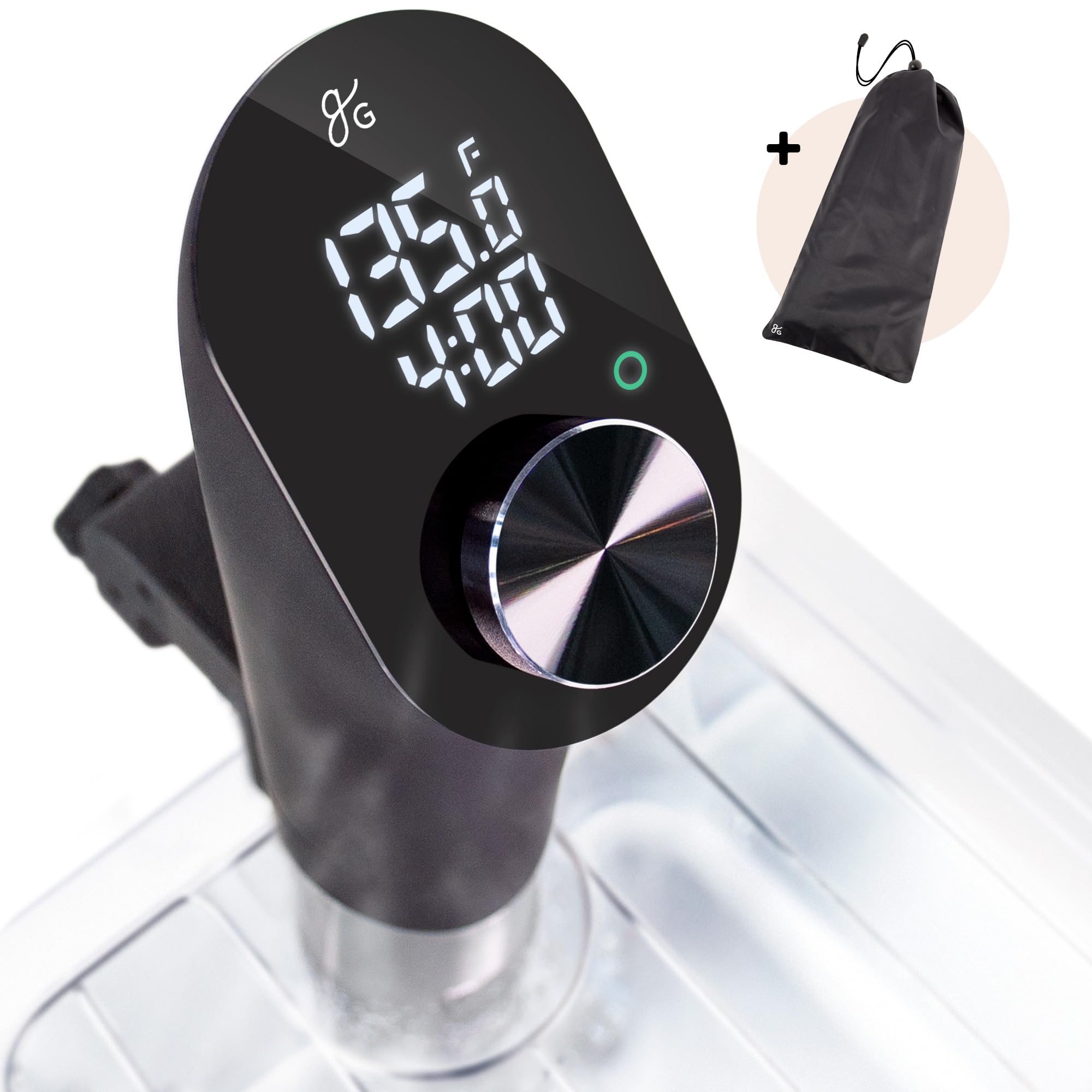
A powerful, quiet immersion circulator with simple dial controls and precise temperature regulation.
Why I picked it: High power for fast heat-up, rock-solid temperature control, and a simple knob interface without needing a phone.
Best for: Home cooks who want a powerful, no-frills sous vide that just works.
Mid-priced option with premium performance.
Pros
- 1100W heats water quickly
- Very quiet in normal operation
- Simple knob; no smartphone required
- Large, easy-to-read LED display
Cons
- Mid-cook changes require stopping
- Rubberized finish can get tacky long-term
My take
I used this unit for both a 28‑hour beef roast and short pork chop cooks and it handled both tasks without breaking a sweat. The 1,100‑watt motor brings the bath up to temp rapidly and keeps it rock steady during long cooks.
The single dial/button interface is my favorite practical feature — I can set temp and time in seconds without fiddling with apps or Wi‑Fi. The large LED makes monitoring simple from across the counter.
It runs very quietly; I usually only hear a gentle ripple. The stainless steel cover is removable and dishwasher safe, which makes cleanup effortless after a long session.
My only real long-term note is cosmetic: the soft-touch coating can attract oils and feel tacky after years of handling. Functionally it’s been reliable, but I mention the finish because it affects how the unit ages on a busy kitchen counter.
2. SOUSVIDE ART Sous Vide Immersion Cooker Kit – Machine with Digital Timer and Vacuum Pump – Best Budget Kit
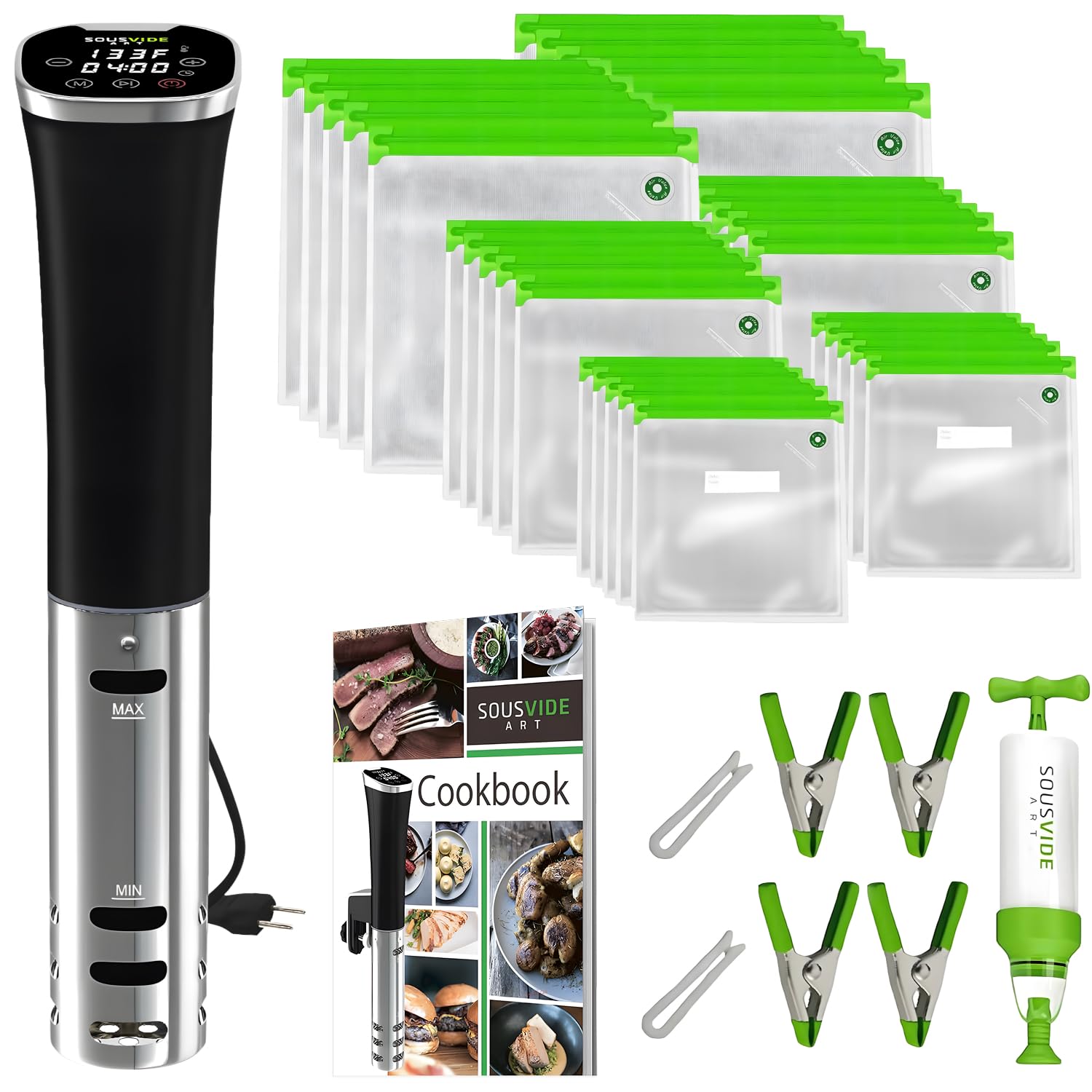
An all-in-one starter kit that includes an 800W immersion circulator plus bags, a hand pump, and a cookbook.
Why I picked it: Complete kit with vacuum bags and pump, plus accurate temperature control for the price.
Best for: Beginners who want a turnkey sous vide setup without buying extra accessories.
Budget-friendly kit that covers essentials.
Pros
- Includes 30 reusable bags and pump
- Built-in timer and LED controls
- Compact and easy to clean
Cons
- 800W heats slower in large baths
- Manual pump is less convenient than chamber sealer
My take
I appreciated that this kit arrived ready-to-go: the circulator, bags, clips, and a cookbook mean I could start cooking right away.
The 800‑watt heater isn’t as fast as higher‑watt models, but it reached precise temps and held them well for steaks and eggs. The digital touch panel and timer made setup straightforward.
If you want an inexpensive entry point, this is a great choice. Expect slightly longer heat‑up times on very large water baths, and know the included hand pump is perfectly usable but manual compared with an electric sealer.
3. VÄESKE Insulated Sous Vide Container with Lid and Rack | 12 QT – Best for Small Kitchens
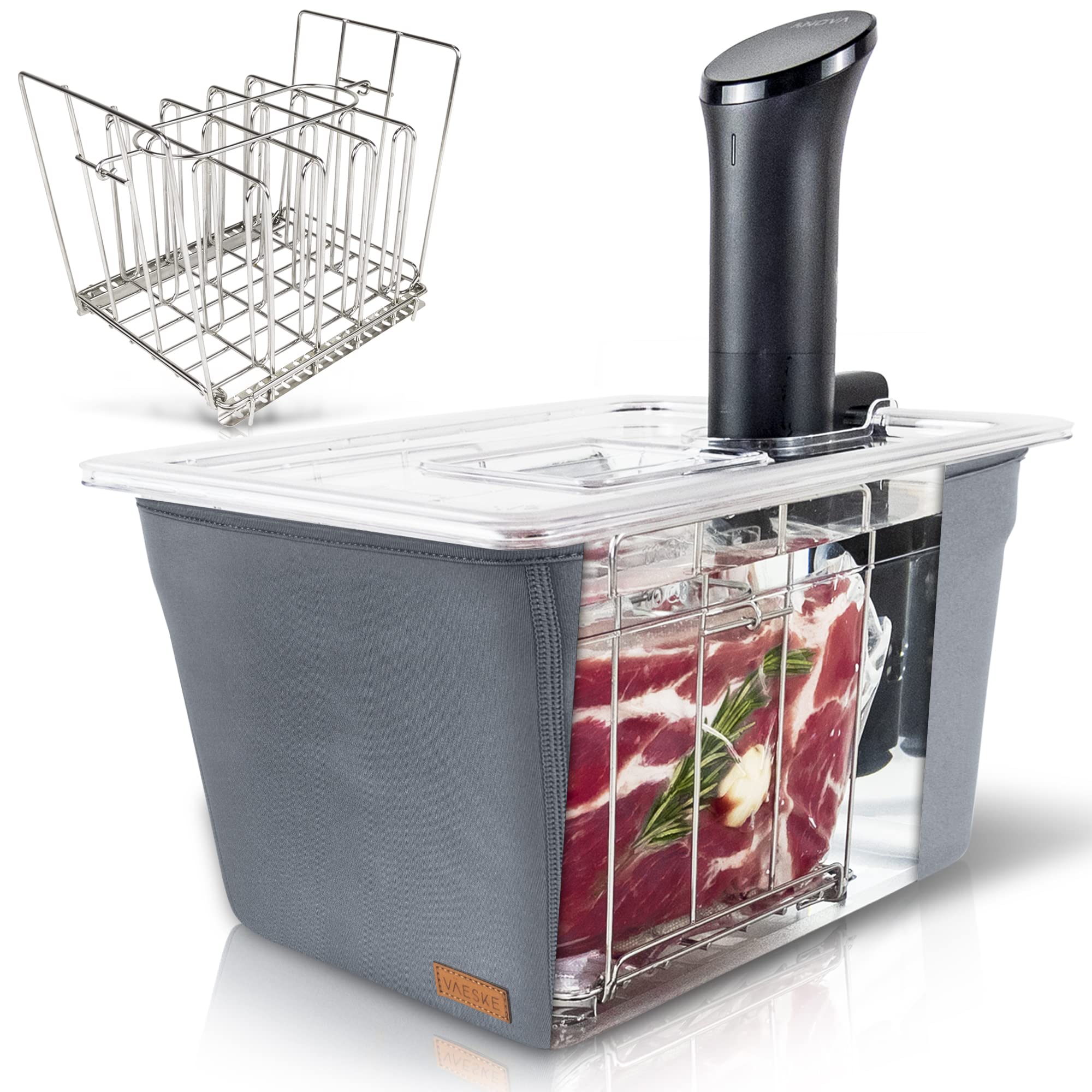
A compact, insulated 12‑quart container with neoprene sleeve, anti‑float rack, and tight lid for efficient small-batch cooks.
Why I picked it: Neoprene insulation and a stainless rack keep temps steady and bags submerged on long cooks.
Best for: Solo cooks, couples, or anyone with limited counter space who still needs reliable temperature control.
Compact capacity with good thermal performance for the cost.
Pros
- Neoprene sleeve reduces heat loss
- Rack prevents pouches from floating
- Lid reduces evaporation on long cooks
Cons
- Cloth lining can shift
- Small for very large cuts
My take
I use this 12‑quart container for weeknight steaks and medium-length roasts; the neoprene sleeve noticeably cuts heat loss and the bath warms faster than an open pot.
The stainless rack is essential — it keeps pouches separated so water flows evenly and nothing floats. When I’m doing sous vide indoors (especially in humid climates), the lid stops excess evaporation and prevents humidity buildup.
Small details matter: the cloth lining can slip if you tug at it, and very large roasts feel cramped. For one‑ to two‑person cooks it’s perfect, and it stores more neatly than a huge tub.
4. VÄESKE Large Sous Vide Container with Lid and Rack Kit | 26 QT – Best for Large Cooks
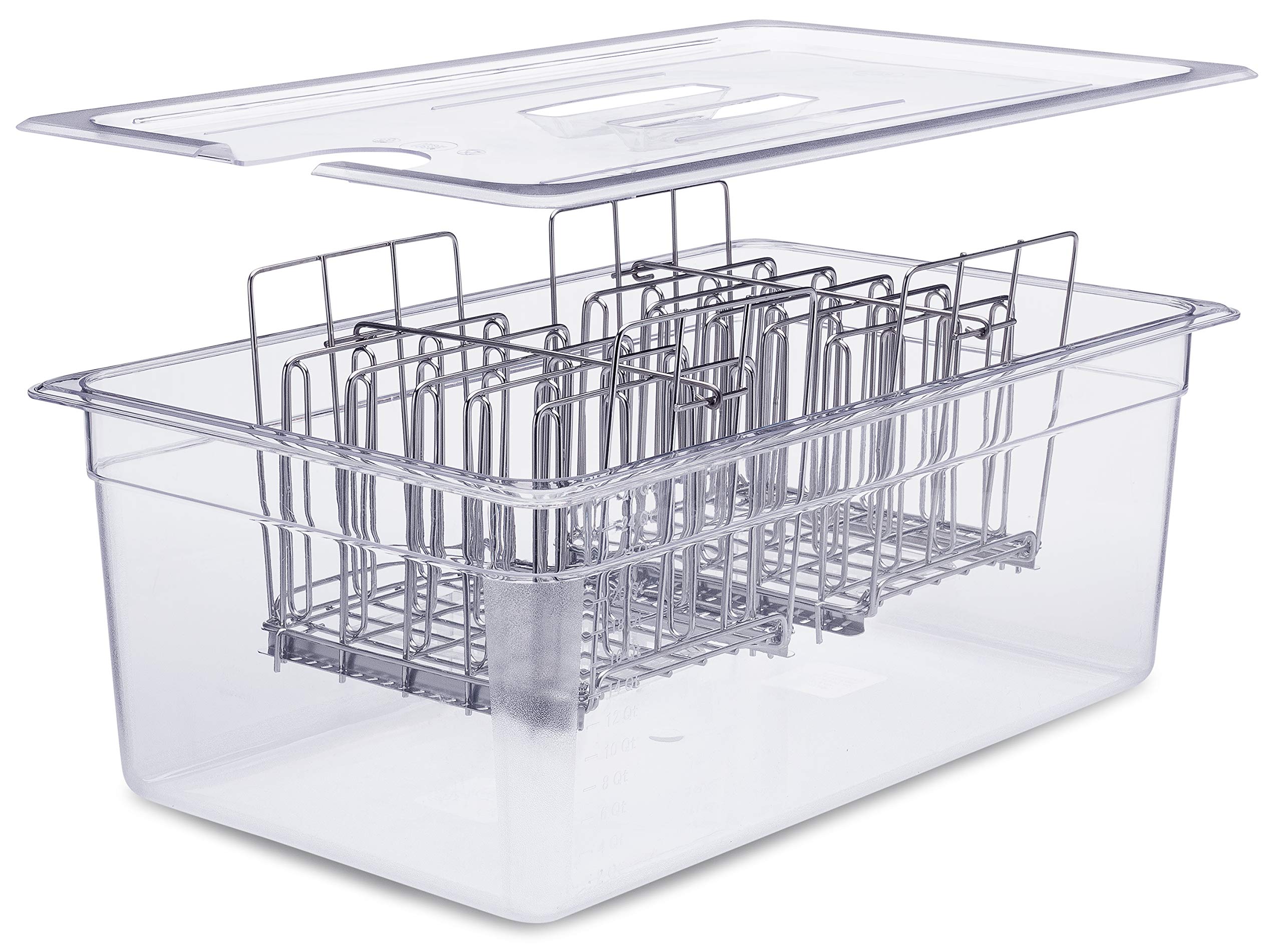
A commercial‑grade 26‑quart container designed for family meals and marathon cooks, with a fitted lid and heavy polycarbonate construction.
Why I picked it: Plenty of room for big cuts, dependable lid for marathon cooks, and durable construction for heavy use.
Best for: Families, batch cooks, and anyone who needs space for multiple steaks or a whole brisket.
Higher-cost investment for frequent, large cooks.
Pros
- Huge 26‑quart capacity
- Sturdy polycarbonate resists warping
- Lid prevents evaporation on long cooks
Cons
- Bulky to store
- Double‑racking can be tight
My take
When I’m cooking for a crowd or doing full‑size roasts, this 26‑quart container is the one I grab. It comfortably fits multiple steaks or large roasts with room to spare.
The lid and optional insulator lock in heat so I can run 24–72 hour cooks without babysitting water levels. The polycarbonate is tough; I haven’t seen any warping during heavy use.
It’s a big piece of gear and not as easy to tuck away as a smaller tub, but the tradeoff is consistency and capacity — exactly what I need for entertaining or batch meal prep.
5. Greater Goods Sous Vide Container 12 Qt with Stainless Steel Rack and Insulation Sleeve – Best Mid-Size Container
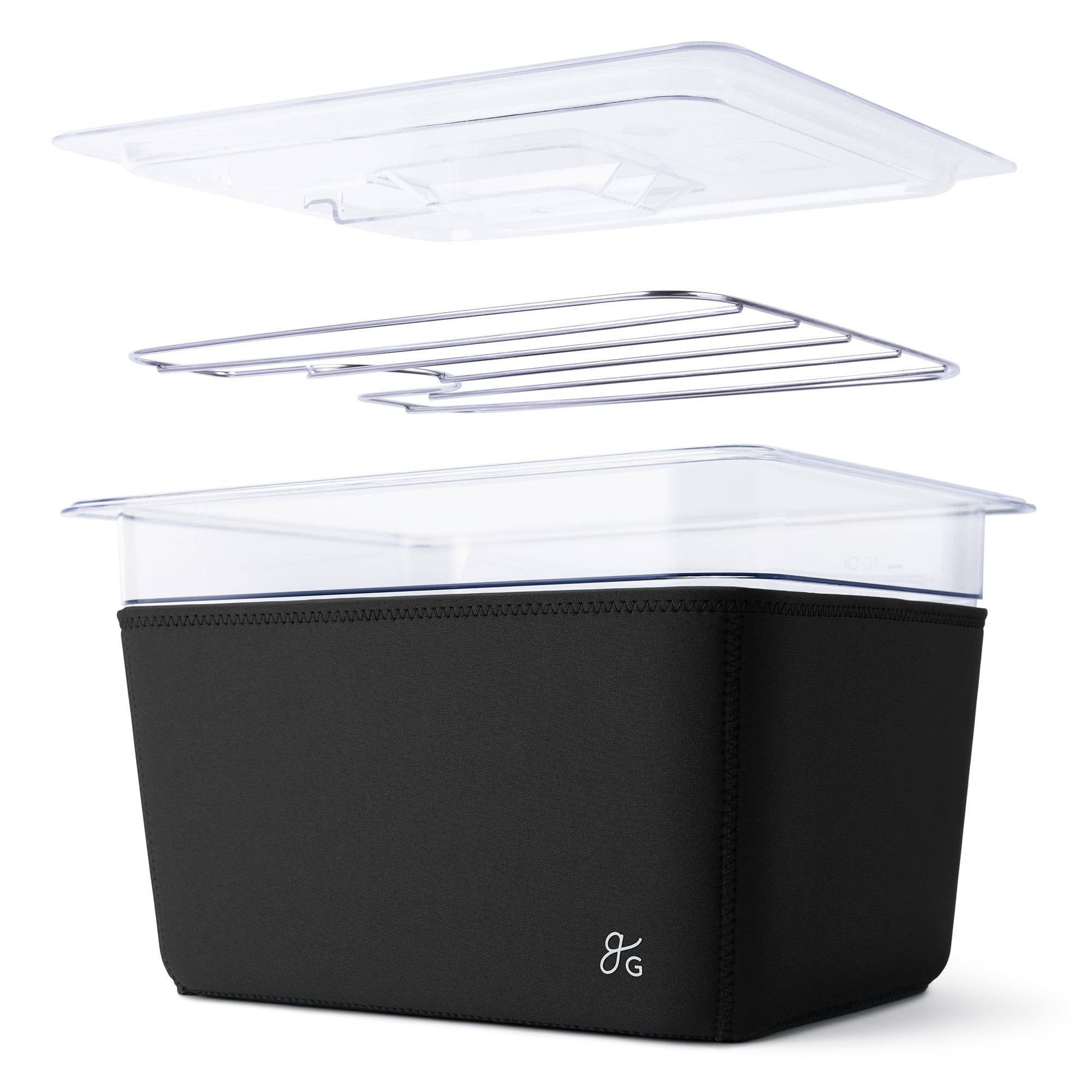
A well-built 12‑quart container with NSF materials, measurement markings, neoprene sleeve, lid, and stainless rack.
Why I picked it: NSF‑rated materials, clear measurement marks, and a snug lid make everyday sous vide easier.
Best for: Home cooks who want a dependable, mid-size container that doubles as general kitchen storage.
Solid mid-range container with practical features.
Pros
- NSF-certified materials
- Clear measurement marks
- Dishwasher-safe components
Cons
- Clips may interfere with the lid
- Not ideal for very large pieces
My take
This container has become my go-to when I want something that’s both reliable and compact. The NSF certification and sturdy construction give me confidence for regular use.
I like the measurement markings — they make filling to the correct level fast — and the neoprene sleeve keeps the bath stable for higher-temp cooks.
The included rack and lid make sous vide less fiddly: bags stay organized, evaporation is reduced, and cleanup is straightforward. If you already own multiple wand cookers, this fits most of them securely.
6. INKBIRD WIFI Sous Vide Cooker & 44PCS Vacuum Sealer Pump Starter Kit – Best for Remote Control
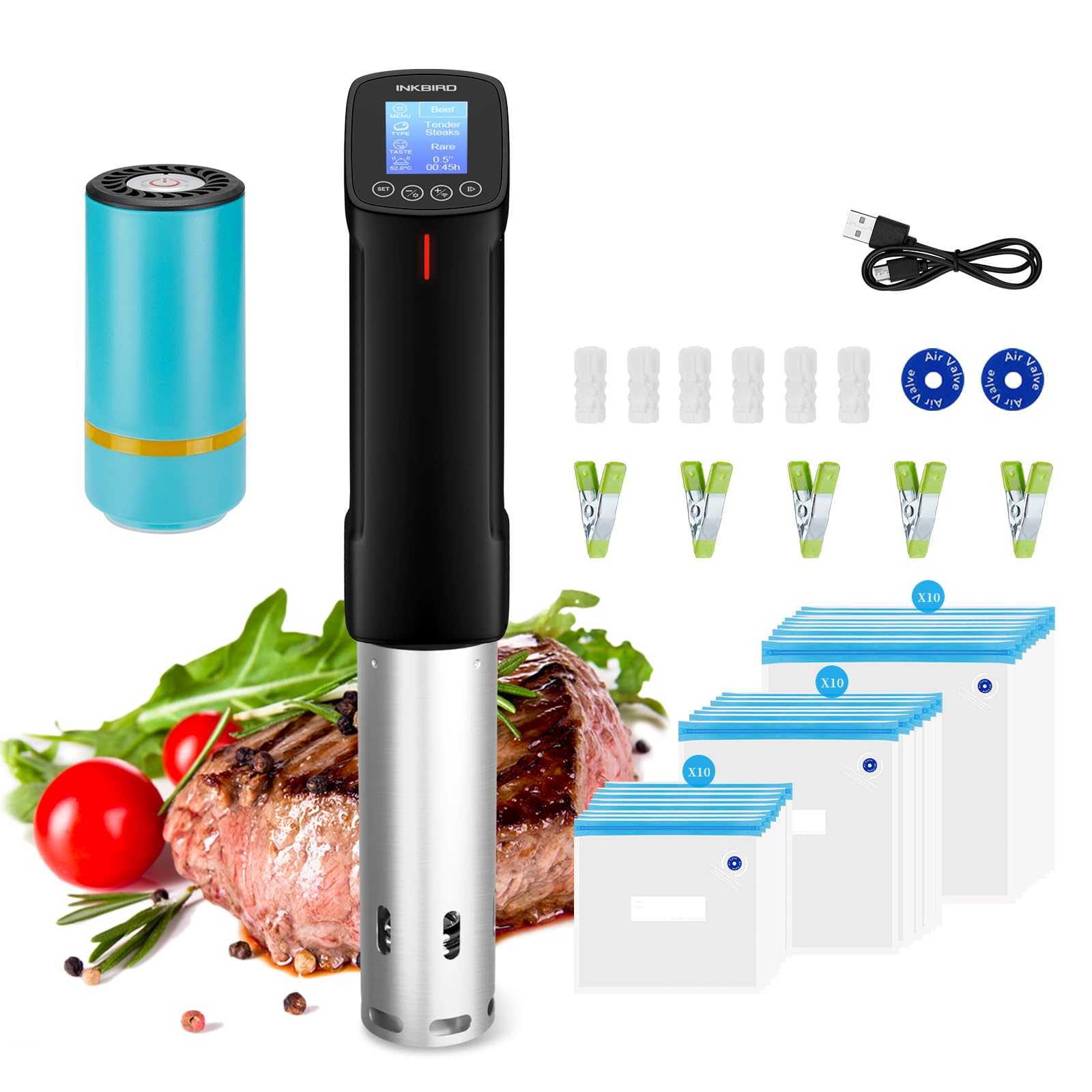
A 1,000W Wi‑Fi enabled circulator bundled with bags and accessories, plus app recipes and remote monitoring.
Why I picked it: Wi‑Fi control plus a robust 1,000W heater gives remote convenience without sacrificing heat-up speed.
Best for: Tech-forward cooks who want to monitor and change cooks from their phone.
Feature-packed starter kit with remote control.
Pros
- Wi‑Fi app control and recipes
- 1000W for fast heating
- Comes with bags and accessories
Cons
- On-device controls are less intuitive
- Included bags may go unused
My take
I value being able to start a cook and check progress from my phone — the Inkbird app paired quickly and kept everything under control while I finished other prep.
The 1,000‑watt heater brings the bath up fast and maintains a steady temp, and the unit has safety features like a low‑water alarm that I appreciate during long cooks.
If you like app-based recipes and remote monitoring this is a great pick. The hardware controls on the device take a minute to learn, but once linked the app makes day-to-day operation effortless.
How I Choose a Sous Vide Setup
Wattage and Heat-Up Time
I prioritize wattage because it determines how quickly a unit brings a large water bath to temperature. For everyday home use I prefer 1,000W or higher; 800W works fine for small pots.
If I’m planning long cooks or large-volume batches, faster heat-up saves time and reduces the window where accuracy matters most.
- 800W: fine for 1–3 servings and smaller baths
- 1000W–1100W: my pick for faster, more consistent heating
Temperature Accuracy and Stability
I expect my circulator to hold temperature within a tight band — sous vide is all about consistency. Look for precise controls and features like manual calibration or a clear LED readout.
If I’m doing multi-day or 24+ hour cooks I add an insulated container and a tight lid to reduce the circulator’s workload.
- Manual calibration helps if your unit drifts
- A clear display or app makes monitoring easier
Containers, Lids, and Insulation
I always use a purpose-built container with a fitted lid and neoprene sleeve for marathon cooks. These keep evaporation low and the bath stable, which is crucial for long cooks.
Match container size to the food you cook most often — a 12‑qt tub suits singles/couples; 26‑qt is worthwhile if you regularly cook for many people.
- Insulated sleeve = less heat loss
- Racks prevent floating and improve circulation
Accessories and Kits
Kits that include bags and a hand pump are great for getting started. If I plan to sous vide frequently, I upgrade to a vacuum sealer.
Clips, racks, and measurement markings are small features that speed setup and improve consistency.
- Starter kit = faster setup for first cooks
- Vacuum sealer improves bagging speed and reliability
Connectivity: App vs. Knob
I choose based on how I cook. If I like remote monitoring and timers I use Wi‑Fi units; for straightforward bench cooking I prefer a knob and display that don’t need a phone.
Either approach works; prioritize one that fits how you actually cook, not the one with the flashiest app.
- Wi‑Fi: remote start, notifications, recipes
- Knob-only: simple, reliable, no network setup
Frequently Asked Questions
Do I need a vacuum sealer to sous vide?
I don’t always use a vacuum sealer. Zip-lock bags with the displacement method or a hand pump work fine for most cooks. I upgrade to a vacuum sealer if I’m packing large roasts or prepping many portions ahead of time.
How much water should I use for sous vide?
I fill to the circulator’s min and max lines and add food while keeping pouches fully submerged. The container’s measurement marks make this quick — don’t overfill, and allow room for displacement when you add food.
Can I use regular plastic bags instead of vacuum bags?
Yes. I often use heavy-duty freezer zip bags and the water‑displacement method. Make sure the bags are heat‑safe and sealed tightly before submerging.
How do I prevent evaporation during long cooks?
I use a fitted lid and neoprene insulation sleeve to cut evaporation. For multi‑day cooks, those two items save frequent refilling and keep humidity out of the kitchen.
What wattage should I choose?
For single meals and smaller pots I’m comfortable with 800W. If I want faster heat-up and more margin in larger baths I choose 1,000W or above.
Final Take
I picked these immersion circulators and containers because they consistently delivered predictable, repeatable results in my kitchen.
If you want a simple, powerful circulator that just works, the Greater Goods precision cooker is my go-to. For buyers starting out, the SOUSVIDE ART kit gives you everything you need to begin. Choose the container size and features that match the meals you cook most often — insulation and a lid make long cooks painless.
Whichever path you take, focus on temperature stability, sensible accessories, and a setup you’ll actually use regularly.
