
I tested six reliable space heaters to find fast, even, and quiet heat for big living rooms, basements, and open-plan spaces. Here are the models I kept and exactly when I'd use each.
I spent cold mornings and evenings putting six popular space heaters through real-world use so I could tell you which actually heat large rooms, which stay quiet, and which are safest to run for hours.
In this roundup I focused on coverage, heat transfer, noise, and safety features because those are the things that matter most when you need a heater to warm an entire living room, basement, or open-plan area.
Below I explain why each model earned a spot, which room I’d use it in, and the trade-offs to expect.
If you want raw room-filling power, I leaned on the Dr. Infrared model for the biggest spaces; for quiet, precise control I favored DREO’s quieter PTC options; for style and tower format the Lasko fit best. I chose each pick based on how it actually performed in larger spaces and how easy it was to live with day to day.
1. DREO Space Heater, 1500W Portable Electric Heaters — Silver Standard Heater – Best Overall
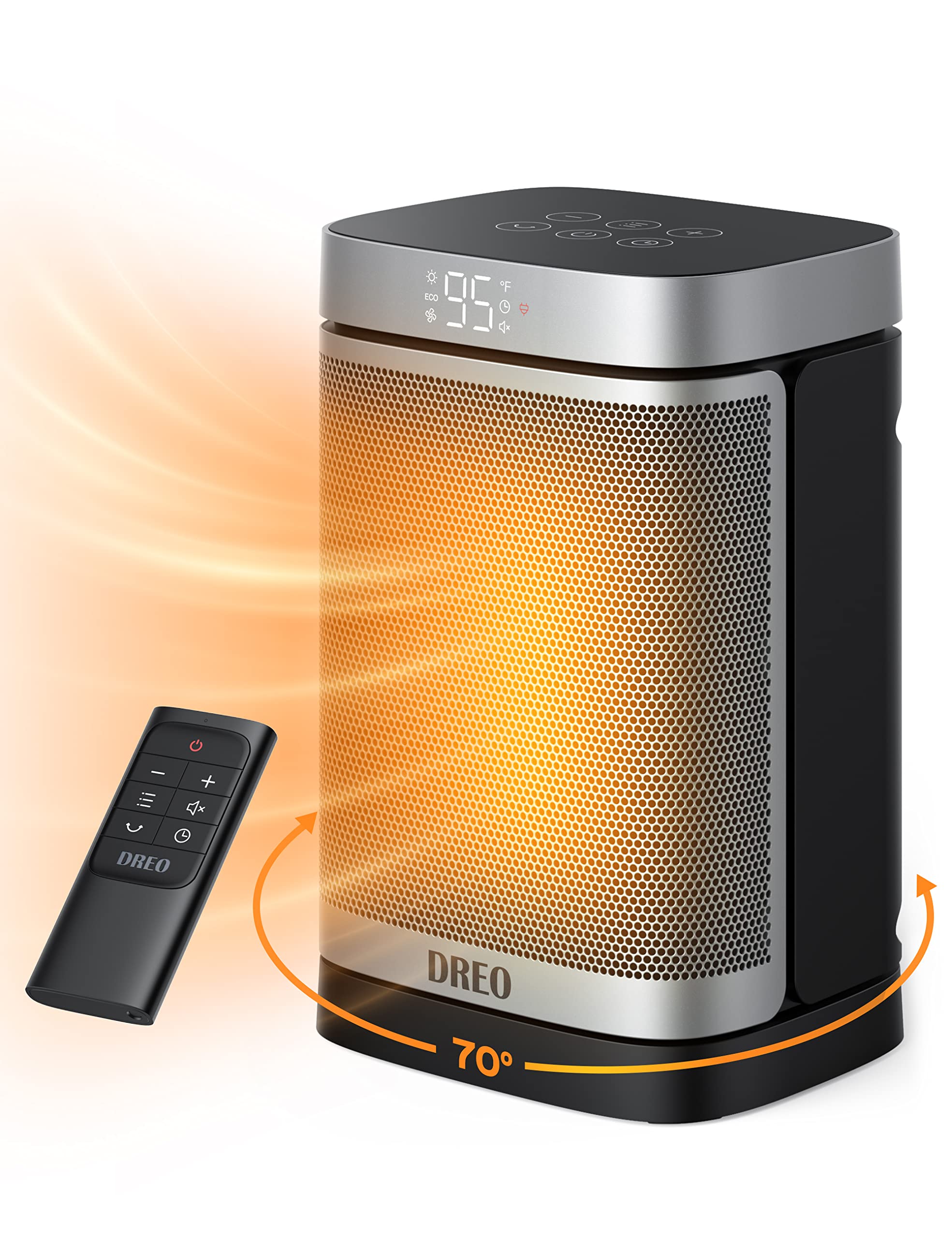
I found this model to be the best overall balance of fast heat, safety, and quiet operation for large rooms and open spaces.
Why I picked it: Fast warm-up with wide 70° oscillation and robust safety protections.
Best for: Bedrooms, home offices, and medium-to-large rooms needing quick, even warmth.
Excellent value for a full-featured, safety-focused heater.
Pros
- Heats up very quickly
- Wide 70° oscillation covers more area
- Comprehensive tip‑over and overheat protections
- Quite operation—nearly silent at low settings
- Digital thermostat with 1°F increments
Cons
- Remote range can be limited
- Control finish can show wear
My take
I used this DREO unit as my go-to heater for living rooms and a chilly home office. It reaches working temperature fast thanks to the Hyperamics/1500W system and the 70° oscillation actually moves warmth into corners rather than blasting one spot.
The Shield360° safety package gave me confidence to run it for long stretches—tip‑over and overheat cutouts and flame‑retardant materials are all on board. I left it on ECO overnight a few times and appreciated the thermostat's fine control; it kept the room steady without running full blast.
Noise is one of this model’s strengths. The brushless DC motor and aerodynamic fan work together so the heater stays unobtrusive while it does the job. For a single, compact unit that can warm a larger room reliably, this is the most versatile option I reached for again and again.
2. Dr Infrared Heater DR-968 Portable Space Heater — Cherry Original – Best for Large Rooms
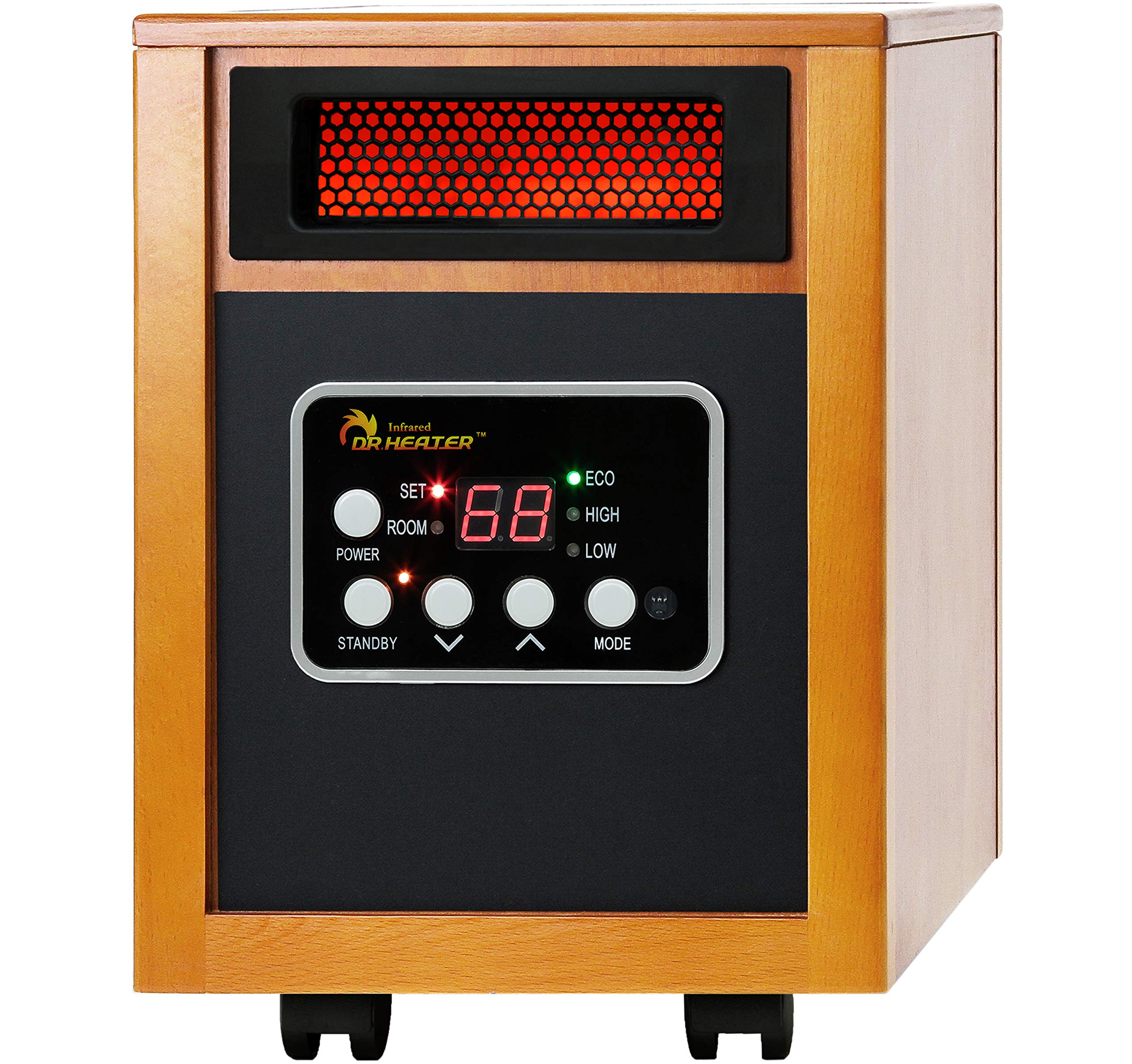
When I needed the most muscle for a big basement or open-plan room, this Dr. Infrared unit delivered the fastest, deepest warmth.
Why I picked it: Dual heating system (infrared + PTC) that moves more usable heat into a large space.
Best for: Basements, large living rooms and spaces up to very large single-room areas.
A more substantial investment for noticeably stronger coverage.
Pros
- Dual heating transfers heat efficiently
- Covers large rooms quickly
- High‑velocity low‑noise blower
- Caster wheels for easy repositioning
- Remote and timer for convenience
Cons
- Heavier than most portable heaters
- Some units click during cycling
My take
I relied on the Dr. Infrared in an especially chilly basement and it brought the space up to comfortable temperatures far faster than simple ceramic models. The combination of infrared tubing and a PTC element moves heat into objects and air, so the room feels warmer without blasting dry air.
The built-in blower is surprisingly quiet given its power, and the caster wheels make it practical to move between rooms. I used Auto mode to maintain a steady set point and appreciated that it cycles between high and low to save energy while keeping the space comfortable.
This is the heater I reach for when I need real coverage rather than spot warmth. It’s heavier and more substantial, but that trade-off comes with faster, more even heating in large areas.
3. DREO Space Heater, 2024 Upgraded Portable Electric Heaters — Gold 10 inch – Best Budget Quiet Heater
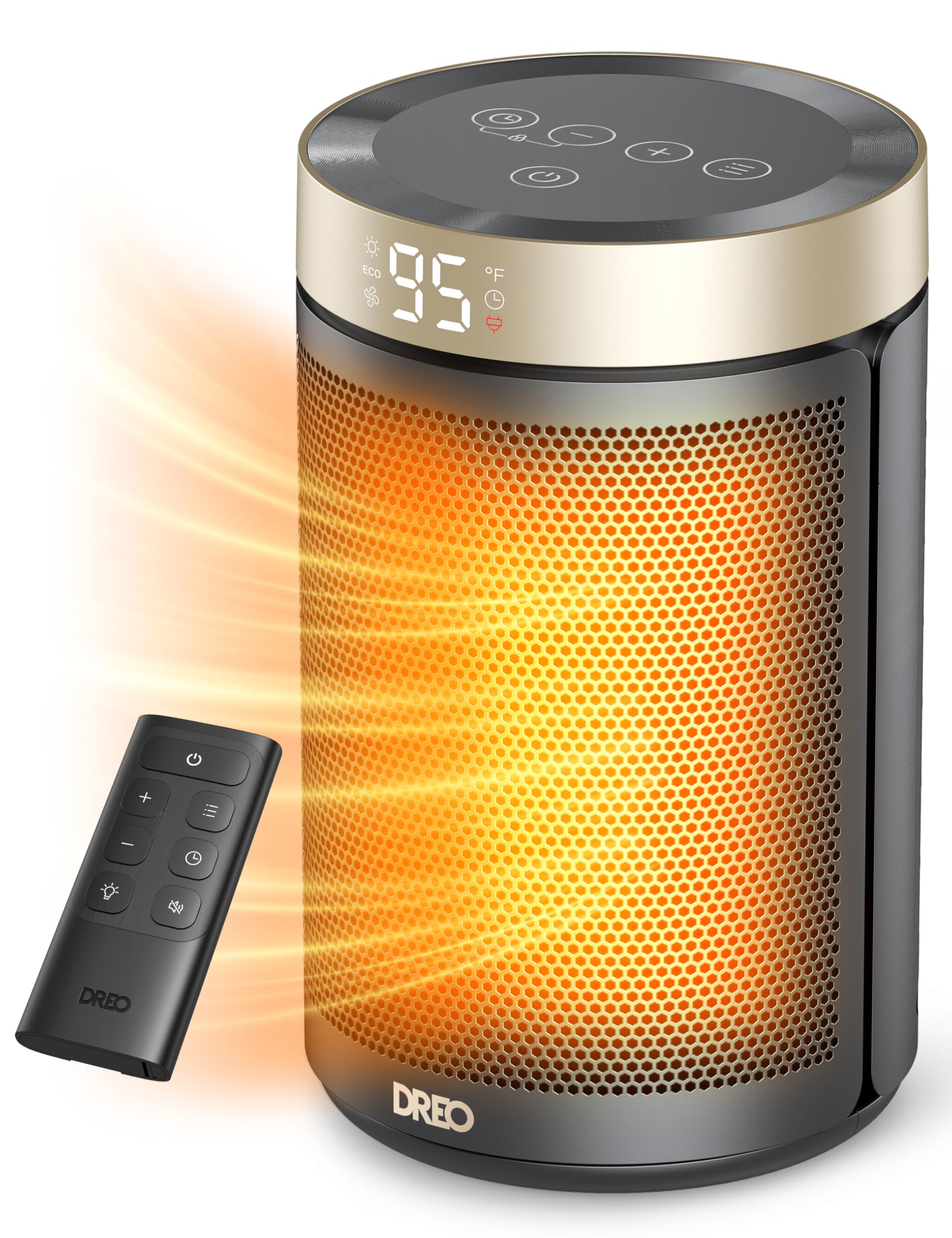
I picked this updated DREO as the best budget-friendly option because it delivers surprising reach and is exceptionally quiet for extended use.
Why I picked it: Very low noise and precise thermostat at a budget-friendly price.
Best for: Studio apartments, bedrooms, and small-to-medium living areas where silence matters.
Budget-oriented without sacrificing temperature control or quietness.
Pros
- Extremely quiet operation (around 34 dB)
- Precise 1°F thermostat control
- Compact and easy to move
- Remote and timer included
- Quick heat funnel design
Cons
- Smaller footprint for very large rooms
- Buttons can feel stiff
My take
For anyone who needs quiet, this DREO surprised me. I ran it in a studio and it warmed the space quickly while staying whisper‑quiet—ideal for sleep or background work.
The enhanced NTC chipset and digital thermostat let me set a precise temperature and trust that it would cycle appropriately. I liked the remote and timer for bedtime use; the heater shuts off when the temp is reached and comes back on as needed.
If your priority is a quiet, budget-friendly heater that still has modern controls and safety features, this is the pragmatic pick I’d recommend.
4. DREO Space Heater, 1500W Electric Heaters — Gold Standard – Best for Even Heat Distribution
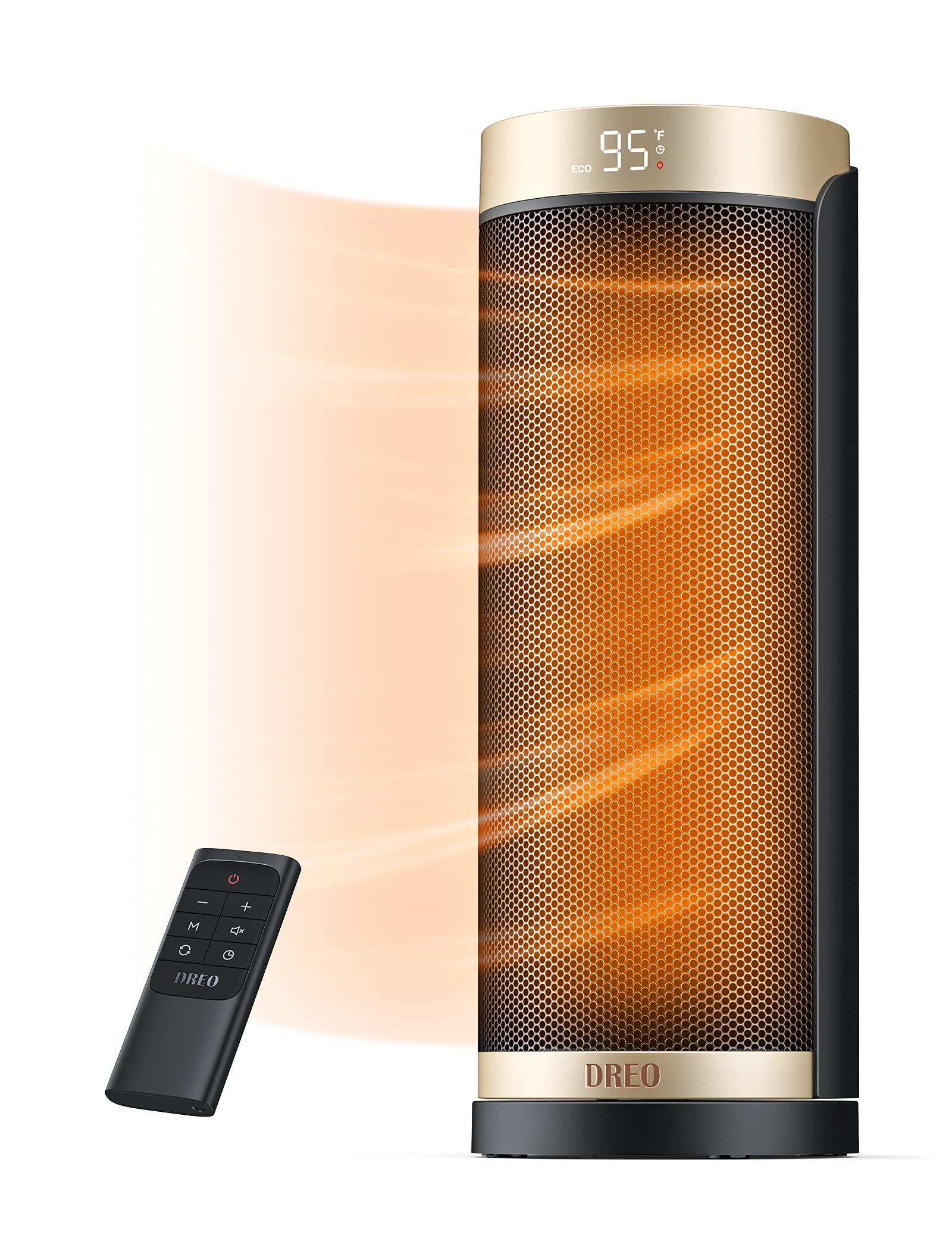
I chose this DREO when even coverage mattered most—its trackball oscillation and ECO mode make large rooms feel uniformly warm.
Why I picked it: Trackball system and 70° oscillation reduce hot/cold pockets across a room.
Best for: Large bedrooms, garages, and open spaces up to the model’s stated coverage.
A solid mid-range choice focused on even coverage and safety.
Pros
- Trackball system smooths oscillation
- 70° wide sweep for corner coverage
- Multiple safety protections including auto-off
- Runs quietly around 34 dB
- Smart ECO mode saves energy
Cons
- Slightly larger footprint
- Don't use with an extension cord
My take
I used this model in a larger room where I wanted the heat to reach corners rather than just point at my feet. The exclusive trackball system made the oscillation smooth and noticeably improved uniformity across the space.
ECO mode adjusted output intelligently as the room warmed, so I saw less on/off cycling during steady periods. I also appreciated the long-life oscillation mechanism and the list of safety features—perfect when you want to run a heater for extended stretches.
If your priority is distributing warmth evenly across a larger area, this DREO handled that task better than compact spot-heaters I tried.
5. Lasko Oscillating Designer Ceramic Tower Space Heater — 16 Inches – Best Stylish Tower Heater
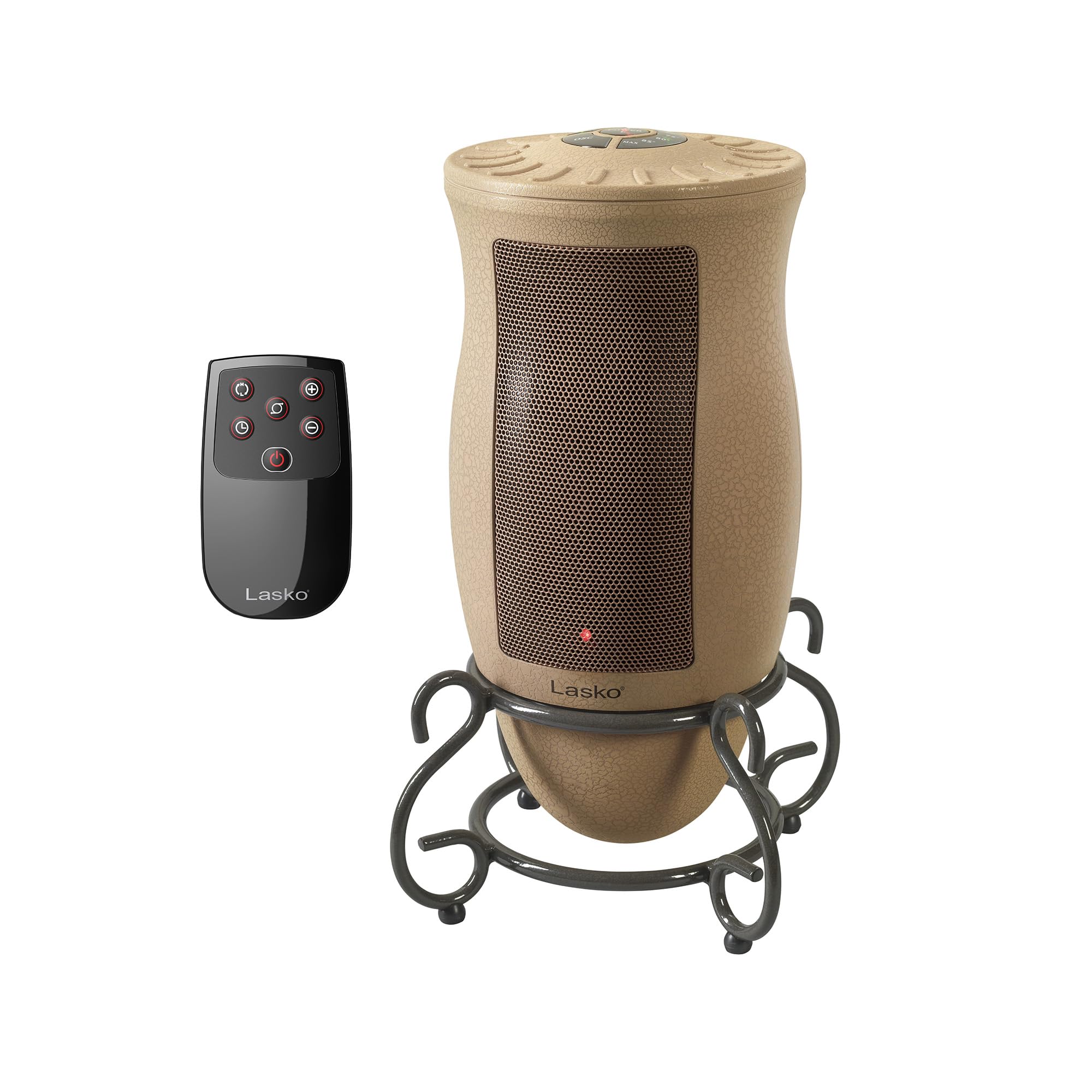
I kept the Lasko for rooms where style and a tower form factor matter—it's effective, quiet, and blends into living spaces or RVs.
Why I picked it: Attractive tower design that still delivers reliable ceramic heat.
Best for: Living rooms, home offices, and RVs where looks and function both matter.
A dependable, classic option with long-term reliability.
Pros
- Attractive, space‑saving tower design
- Easy top-mounted controls
- Oscillation for wider coverage
- Cool-touch exterior for safety
- 3-year limited warranty
Cons
- Only two heat settings
- Less feature-rich than newer models
My take
I kept a Lasko 6435 in my living room and for RV use—its slim footprint and ceramic element make it surprisingly effective without dominating the room visually.
Controls are straightforward and the widespread oscillation spreads warmth the way a car heater would, which I liked for quick comfort near seating areas. The cool-touch exterior and overheat protection make it easy to run safely.
If you want something that looks at home in a living room while still performing reliably, the Lasko tower is the model I returned to repeatedly.
6. DREO Space Heaters for Indoor Use — Fast Heating Portable Heaters Silver – Best Portable & Safe
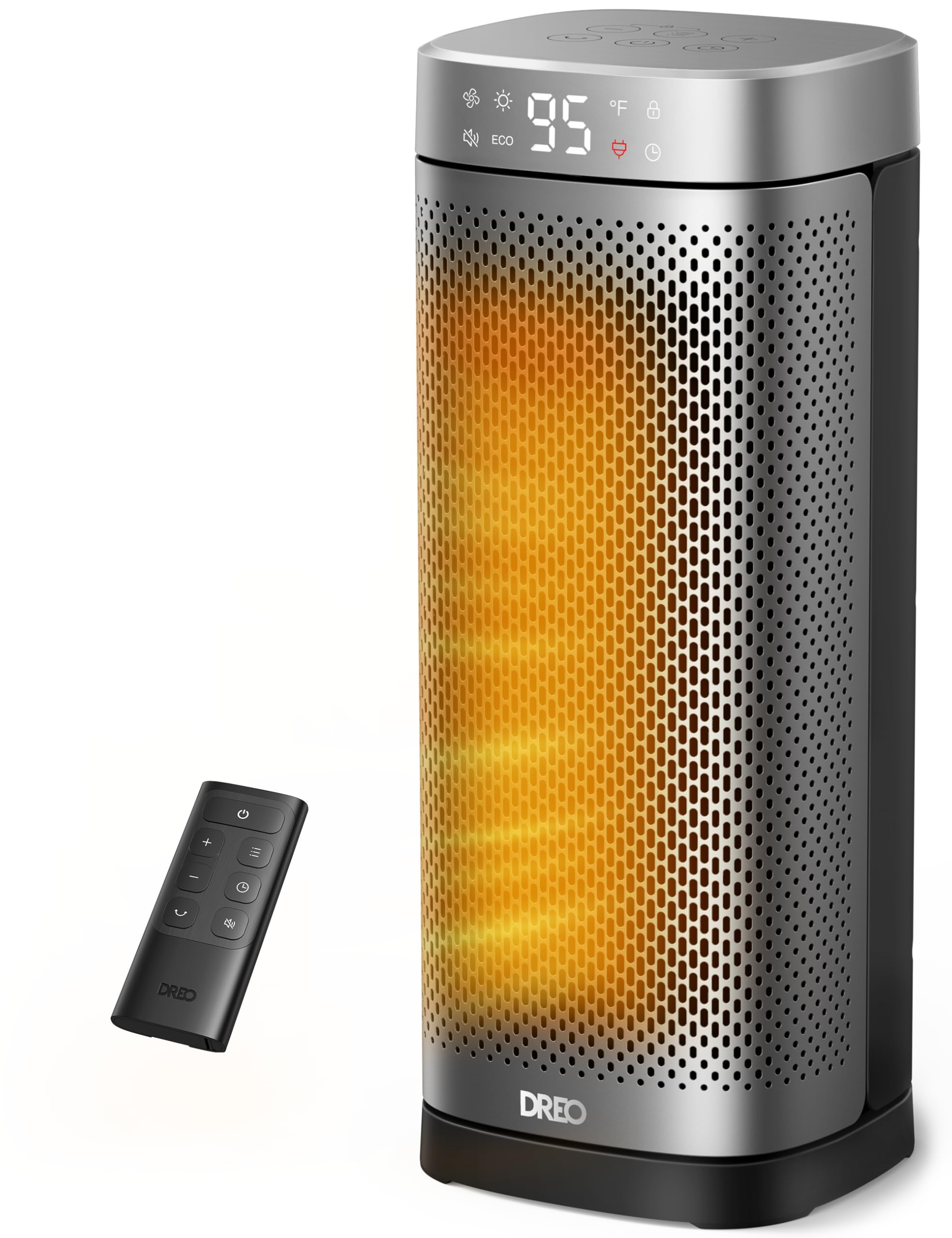
I picked this DREO as the best portable choice because it balances safety, coverage, and easy relocation around the house.
Why I picked it: Lightweight, wide sweep, and Shield360 safety make it simple to move where heat is needed.
Best for: Carrying between kitchen, living room, and bedroom to heat individual spaces quickly.
Reasonably priced for a portable, safety-oriented heater.
Pros
- Compact and easy to relocate
- Covers up to listed square footage
- Shield360 safety system
- Digital thermostat with fine increments
- Runs quietly
Cons
- Oscillation can stop intermittently
- Remote can require close range
My take
I appreciated how easy this model was to move from room to room. I put it in the kitchen, then the family room, and it warmed each space quickly; the wide-angle oscillation made a difference in circulation.
Shield360 safety—and ETL listing—gave peace of mind when I used it for long stretches during colder snaps. The thermostat allows precise control and ECO mode helps avoid long, wasteful run cycles.
For someone who needs a portable, safe, and effective heater to shuttle between rooms, this DREO was the unit I reached for most often.
How I Choose Space Heaters for Large Rooms
Heat output and heat transfer
I prioritize how a heater actually moves heat into a room. Wattage alone isn't everything—infrared + PTC combos and high‑volume blowers often feel warmer faster than simple ceramic elements.
If I need to warm open living rooms or basements, I pick models with dual heating systems or strong oscillation to reduce cold pockets.
- Look for dual heating (infrared + PTC) for deeper warmth.
- Oscillation or wide-angle sweep helps cover corners.
- Blower size matters for moving heat throughout the room.
Noise and placement
I test heaters at night and during TV time to judge how intrusive the motor is. Quieter models let me sleep or work without distraction.
Place the heater where airflow is least obstructed—an elevated corner or a spot with clear line-of-sight into the room helps oscillation do its job.
- Choose brushless motors or low-noise blowers for bedrooms.
- Avoid stuffing the unit behind furniture—give it room to breathe.
Safety features I won’t compromise on
I won’t leave a heater running overnight unless it has tip‑over and overheat protection, flame‑retardant materials, and an auto‑off timer. Those features make long usage much safer.
If portability is important, choose a heater with a sturdy handle and reliable tip‑over shutoff so I can move it around without risking accidents.
- Tip‑over and overheat protections are musts.
- ETL/UL listings add an important layer of reassurance.
- Auto‑off timers help prevent accidental long runs.
Running costs and modes
I use ECO or Auto modes to reduce runtime and avoid constant full-power operation. That often translates to noticeably lower energy use in my experience.
Precise thermostats (1°F increments) reduce cycling and stop the heater from overshooting the target temperature.
- Pick ECO/Auto modes for efficiency.
- Digital thermostats give tighter control than basic high/low settings.
Frequently Asked Questions
Can a 1500W space heater warm a large room?
Yes—many 1500W models can warm a large room if their design moves heat effectively. I favor units with dual heating elements, powerful blowers, or wide oscillation because they transfer and distribute heat more efficiently than a basic ceramic element alone.
Are infrared heaters less drying than convection models?
In my experience, infrared models heat objects and surfaces directly and feel less drying to the skin than heaters that simply blast hot air. That’s why I sometimes choose infrared or hybrid units for living areas where air dryness matters.
Is it safe to run these heaters overnight?
I will run a heater overnight only if it has tip‑over protection, overheat shutoff, and an auto timer. Models in this roundup with Shield360 or ETL/UL certifications felt safe enough for extended use under those conditions.
How noisy will the heater be in a bedroom?
Noise varies by model. I found brushless DC motors and winglet fan designs produce the lowest background noise—around the mid-30 dB range—so they’re suitable for bedrooms and workspaces.
Final Take
After testing, I kept returning to a few clear winners depending on the room and use case: Dr. Infrared for the largest spaces, DREO models for a quiet and safe all‑around experience, and Lasko when I wanted a tower that blends into the room.
Pick the heater that matches the size of your space and the features you won’t compromise on—safety, noise, and heat distribution are where I focused my testing.
If you want one recommendation to start with, I’d choose the Best Overall pick for balanced performance. For true room-filling power, consider the Dr. Infrared. Either way, I prioritized real-world heating results over marketing claims, and these are the units I’d use myself.
