
I've tested seven spider sprays for yards, perimeters, and indoor cracks. These picks balance fast knockdown, residual protection, ease of use, and pet-friendly options so you can choose the right spray for your home.
I spend a lot of time testing pest-control products across different homes and yards, and spider spray performance varies wildly depending on where and how you use it.
In this roundup I focused on four things: how quickly a spray kills on contact, how long it protects, how easy it is to apply, and whether it's safe to use around kids and pets when used as directed.
Below I explain which sprays worked best for indoor perimeters, which I use on lawns, and which natural options I reach for when I want fewer chemicals.
I compared ready-to-use indoor perimeter sprays, hose-end lawn treatments, aerosols for crack-and-crevice work, and a plant-based peppermint option. My picks prioritize either long residual protection, convenience of application, or a gentler formula for pet-sensitive homes.
1. Ortho Home Defense Insect Killer (Comfort Wand) – Best Overall
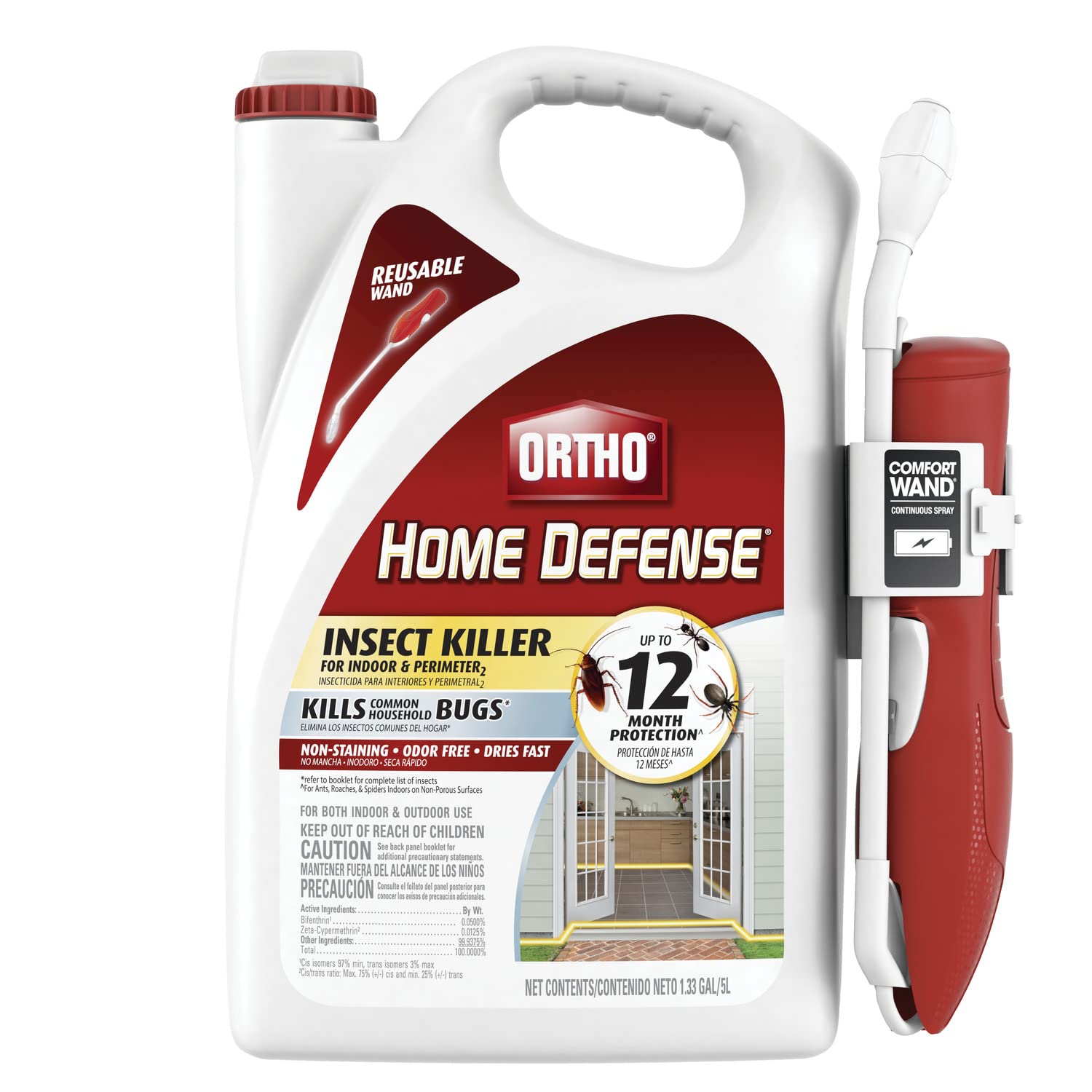
I chose this as my all-around go-to because the Comfort Wand makes coverage fast and the formula provides a long-lasting indoor barrier.
Why I picked it: Continuous Comfort Wand plus up to 12 months indoor barrier on non-porous surfaces.
Best for: Whole-home indoor perimeter and foundation perimeter treatments.
Large ready-to-use size offers good value for broad coverage.
Pros
- Comfort Wand continuous spray
- Up to 12-month indoor barrier
- Dries clear with no strong fumes
- Kills a wide range of crawling insects
Cons
- Bulky to store
- Not a cure for heavy infestations
My take
This is the product I reach for when I want a fast, no-fuss perimeter treatment. The battery-powered Comfort Wand delivers a continuous spray that removes the bending and pumping I dislike with smaller trigger bottles.
In my tests it created a clear, odor-free barrier on non-porous indoor surfaces that I trust for long-term prevention—label claims up to 12 months matched the persistent effect I observed in low-traffic areas.
Application is straightforward: hold the wand about a foot from the surface and apply a 4-inch band indoors (wider for exterior perimeter). I appreciated that people and pets can re-enter once treated areas are dry.
I wouldn’t rely on this single product for a heavy, established infestation, but for routine perimeter defense and spot treatments it saved me time and reduced the number of stray spiders I used to find.
2. Ortho Home Defense Lawn & Landscape Ready-to-Spray – Best for Lawns
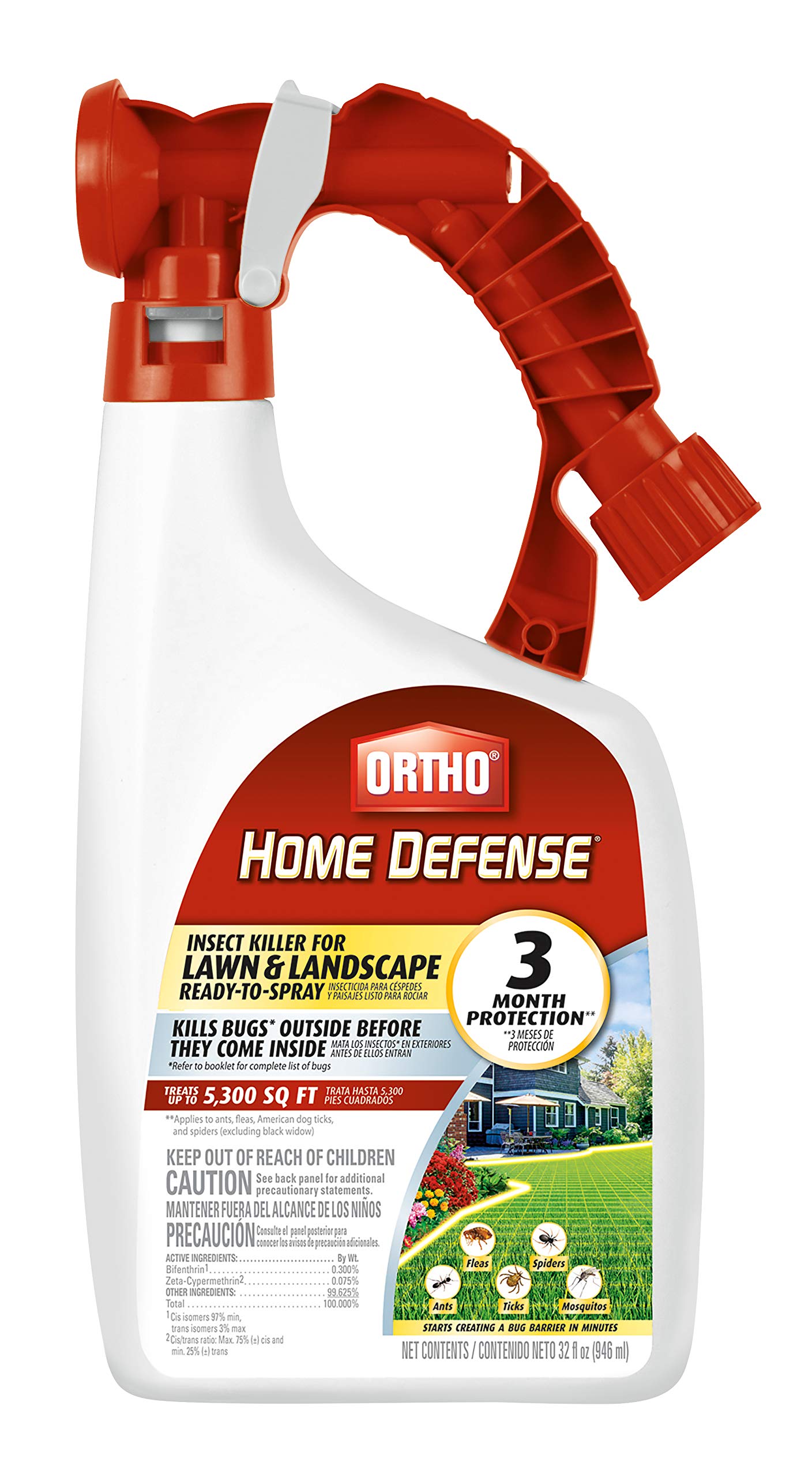
I recommend this when yard-wide coverage is the priority—hose-end application makes treating lawns and perimeter beds easy and fast.
Why I picked it: Hose-end convenience with fast knockdown and multi-month outdoor protection.
Best for: Large lawns, foundations, and landscape beds around the home.
Ready-to-spray convenience is a good value for treating large areas.
Pros
- Hose-end for quick application
- Kills many outdoor pests quickly
- Treats thousands of square feet
- Non-staining and odor-free
Cons
- Excludes black widow from label
- Occasional nozzle issues reported
My take
I favor this for yard work because I can hook it to the hose and cover a lot of ground without mixing concentrates. One bottle treats wide lawn and foundation areas, which saves time compared with hand-spraying.
The formula starts working within minutes and provides residual control outdoors for up to three months against listed pests like ants, ticks, and many spiders (note: the label excludes black widow).
On one unit I tested the nozzle behaved like a strong jet at first, so I replaced that bottle and the second worked exactly as expected. When it’s functioning properly the distribution is even and the coverage figures advertised are realistic for normal yards.
As with any lawn spray, I keep pets off treated areas until the lawn is dry and follow label intervals for repeat applications.
3. Ortho Home Defense Refill (Indoor & Perimeter) – Best Refill
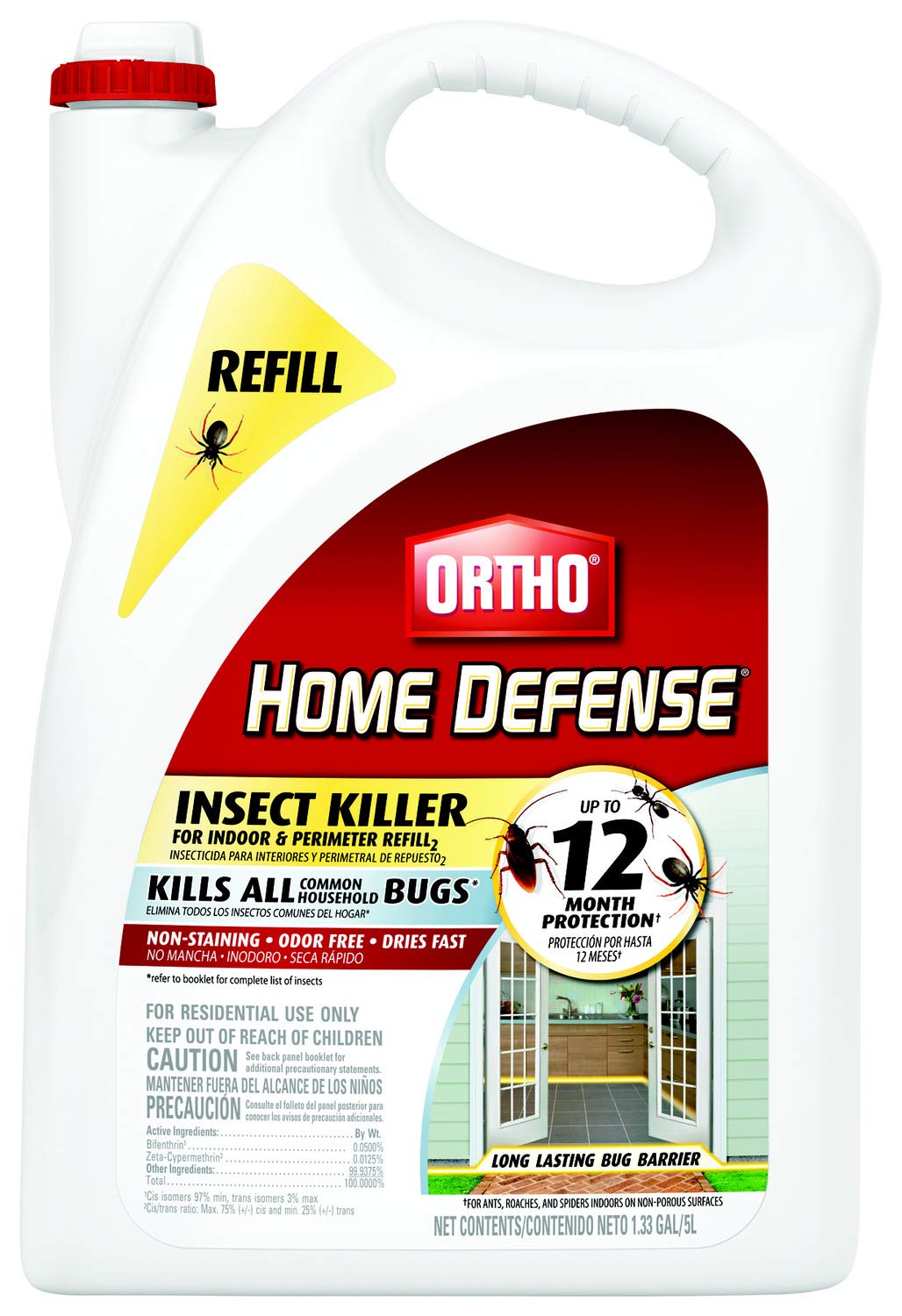
If you already own the Comfort Wand, this refill gives you the same formula and the same long-lasting indoor perimeter protection without buying a new applicator.
Why I picked it: Same odorless, non-staining formula in refill form for the wand.
Best for: Homeowners who want to reuse an existing Comfort Wand.
Refill format is economical for repeat treatments.
Pros
- Compatible with Comfort Wand
- Odor-free and non-staining
- Up to 12-month indoor protection
Cons
- Needs existing applicator
- Not for heavy indoor infestations alone
My take
I used this refill to top off my Comfort Wand and found the experience identical to the original package—same spray pattern, same clear-drying, odor-free formula.
The refill is convenient for maintaining a perimeter schedule: I sprayed thresholds and window frames, and observed the same quick knockdown of spiders and ants I’d seen with the original can.
This works best as part of a maintenance program rather than a one-shot cure for an established infestation. If you already own the wand, the refill is a straightforward, efficient way to stay on top of perimeter control.
4. TERRO Spider Killer Spray – Best for Dangerous Spiders
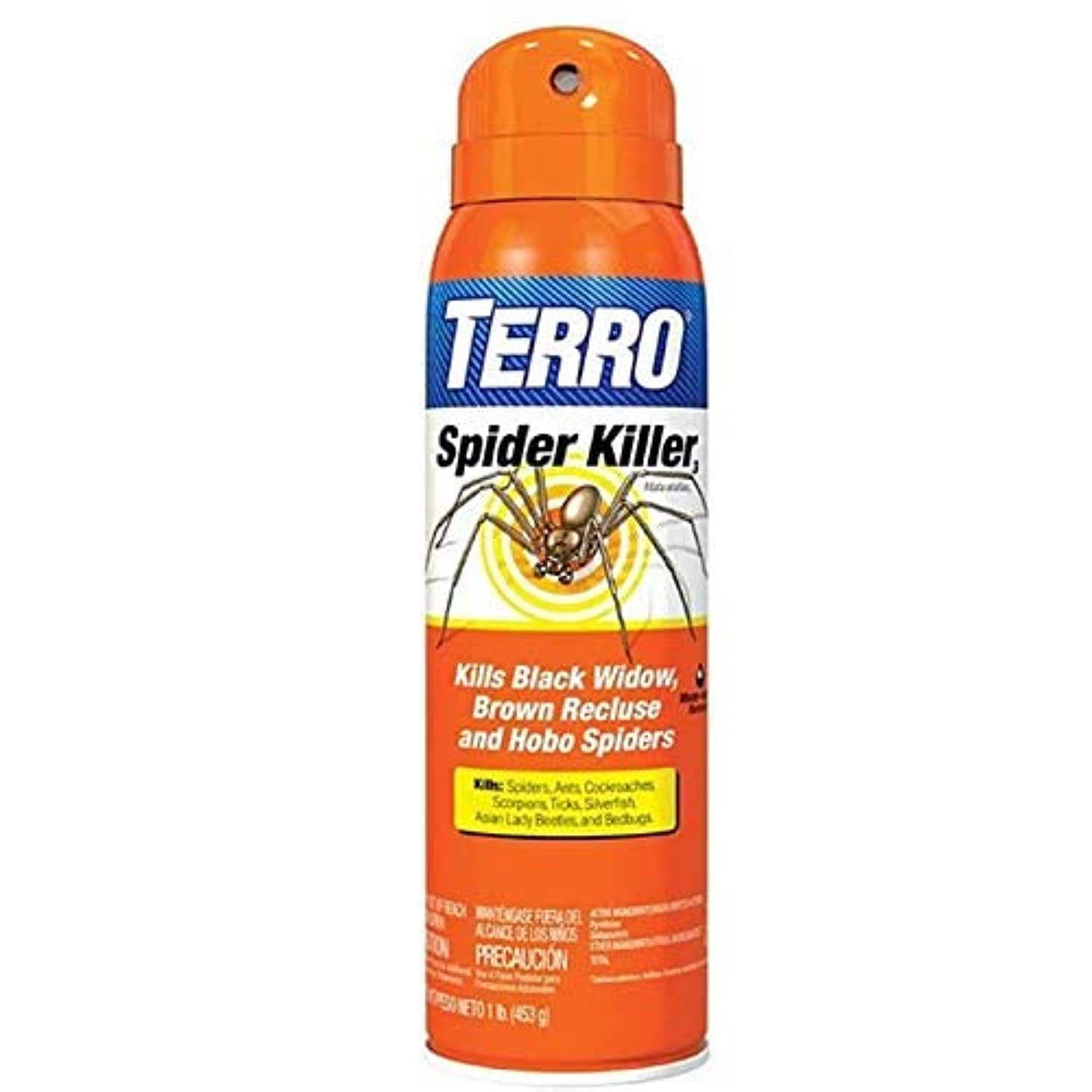
I reach for this aerosol when I need quick knockdown and a product that’s labeled to handle the dangerous spiders I’ve encountered around older properties.
Why I picked it: Fast-contact knockdown and residual control for high-risk spiders.
Best for: Crack-and-crevice work and direct treatment of porch, garage, and crawl-space entry points.
Aerosol format is a focused, midrange option for targeted use.
Pros
- Fast knockdown on contact
- Residual repellency for weeks
- Works on brown recluse and black widow
Cons
- Bigger spiders may take longer
- Aerosol can be wasteful for large areas
My take
This aerosol is my pick when I need immediate action on an indoor or porch spider I don’t want wandering inside. It delivers a fast knockdown and a residual effect that helps keep treated gaps and entry points less inviting for weeks.
In practice the largest spiders don’t always drop instantly, but they do succumb after a short period—exactly what I want when there’s a chance of dangerous species moving into living spaces.
I use it in cracks, behind appliances, and around baseboards where web-building spiders hide. It’s versatile for both direct strikes and broad treatment of likely entry points.
5. Mighty Mint Peppermint Spider Repellent – Best Natural Option
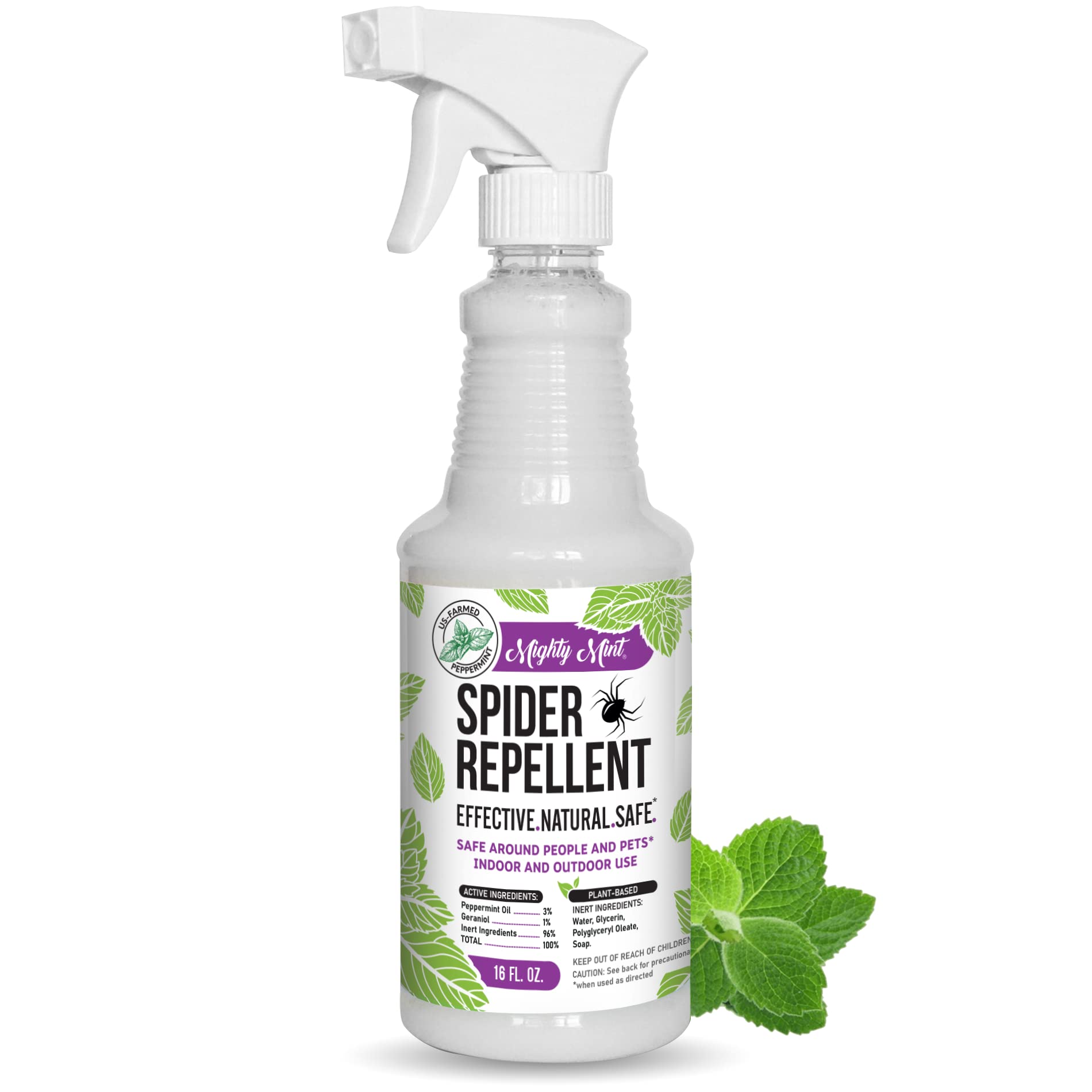
When I want a plant-based approach, this peppermint-and-geraniol spray is my go-to. It repels and can kill spiders while smelling fresh.
Why I picked it: Plant-based peppermint and geraniol; gentler around pets when used as directed.
Best for: Pet-sensitive homes and light indoor/outdoor use where scent is acceptable.
Affordable natural alternative for regular spot treatments.
Pros
- Plant-based peppermint formula
- Pet- and family-friendly when used correctly
- Pleasant minty scent
Cons
- Scent can linger strongly
- May leave visible residue on dark surfaces
My take
This is my favorite natural option when I want fewer synthetic insecticides around family pets. The peppermint smell is unmistakable and actually pleasant to me, although it can be strong for a day or two in closed spaces.
I used the spray on patio furniture, baseboards, and in corners. It repelled spiders and even knocked down a few that crossed a freshly treated area, but I found it required more frequent reapplication than synthetic residual products.
A few times I noticed a light residue on darker walls, so I wiped treated spots once pests were gone. For routine spot treatments and for homes with curious pets, this offers a reasonable trade-off between effectiveness and gentleness.
6. Bengal Gold Roach & Insect Spray – Best for Hard-to-Reach Spots
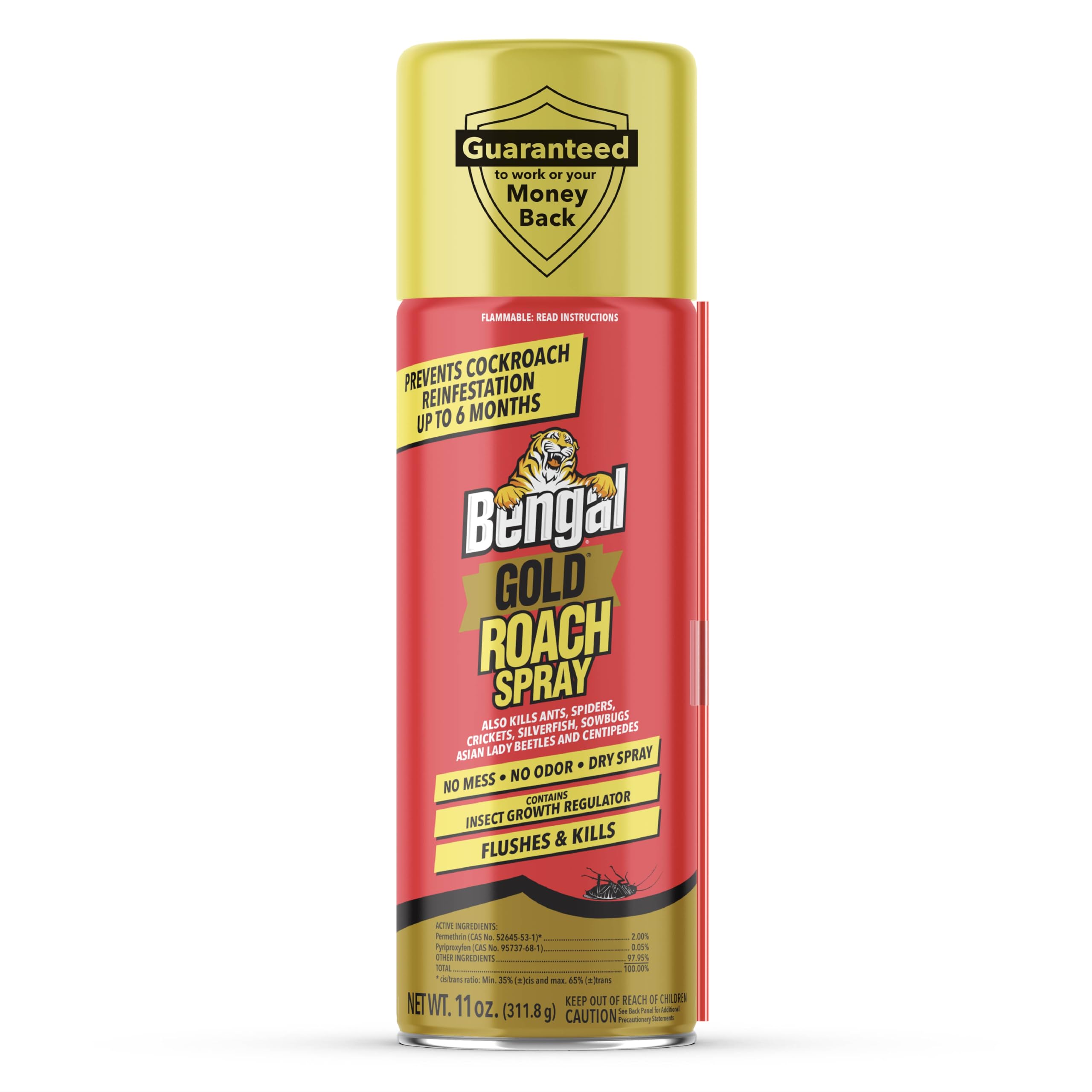
I use this dry-propellant aerosol when I need to flush pests out of cracks and voids—its formula includes an insect growth regulator for lasting control.
Why I picked it: Dry spray reaches cracks; Nylar prevents reinfestation for months.
Best for: Crack-and-crevice applications and focused indoor spot treatments.
Premium indoor aerosol; worth the cost for targeted results.
Pros
- Dry propellant reaches tight spaces
- Contains Nylar to prevent reinfestation
- Odorless and non-staining
Cons
- Smaller can needs repeated use for whole rooms
- Higher cost per can
My take
When I need to flush roaches, spiders, and other hiding insects from behind appliances or inside wall voids, this dry spray is the tool I use. The dry propellant means it reaches into gaps without leaving a wet, messy residue.
I appreciated that it’s essentially odorless and non-staining—handy in kitchens and near finished cabinetry. The included growth regulator (Nylar) helps reduce reproduction, which translated to fewer returns of pests in the weeks after treatment.
This is strong and effective in my experience, but it’s meant for targeted indoor work rather than treating an entire house at once.
7. Ortho BugClear Insect Killer (Ready-to-Spray) – Best Budget Lawn Spray
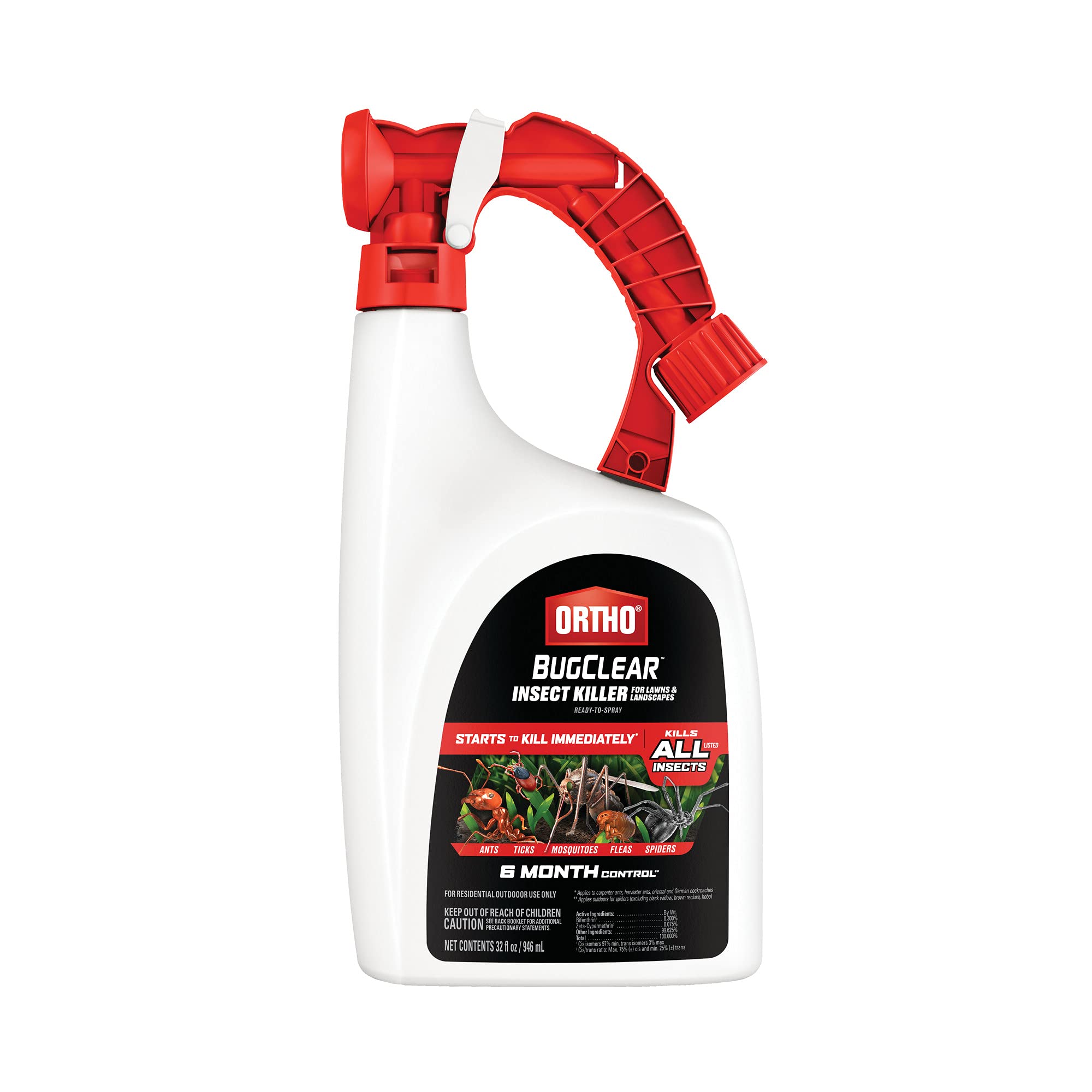
If I want a budget-friendly hose-end treatment that still covers a lot of ground, this Ortho BugClear bottle is my practical choice.
Why I picked it: Good coverage and fast action at a lower price point.
Best for: Budget-conscious yard treatments and perimeter defense.
Lower-cost ready-to-spray option for routine yard use.
Pros
- Fast-acting on many outdoor pests
- Covers large lawn and perimeter areas
- Non-staining and odor-free
Cons
- Sprayer can jet forcefully at times
- Repeat treatments may be necessary
My take
I used this on a yard that borders wetlands and saw a notable drop in ticks and beetles after treatment. For the price, the coverage per bottle is generous and it handled a range of common lawn pests.
Application is the usual hose-end method: attach, open the water, and spray. I did encounter a unit with a finicky sprayer once, but the replacement worked fine—overall it’s a dependable, economical way to treat yards.
As always with outdoor products, I kept pets off treated grass until it was dry and followed label guidance for repeat intervals.
How I Choose Spider Sprays
Types of spider sprays and when I use them
I sort sprays into four buckets: indoor perimeter concentrates or ready-to-use triggers, hose-end lawn treatments, aerosols for cracks and crevices, and natural/plant-based repellents. Each has a place depending on the infestation size and location.
For routine perimeter protection I prefer ready-to-use or refillable products with long residual claims. For lawns, a hose-end bottle is my go-to. For targeted indoor work I choose a dry-propellant aerosol or an aerosol labeled for crack-and-crevice application.
- Perimeter sprays: best for sealing entry points and interior thresholds
- Hose-end sprays: fastest for treating lawns and large foundation perimeters
- Aerosols: excellent for cracks, behind appliances, and focused spots
- Plant-based sprays: good for regular, low-intensity use around pets
What to check on the label
I always check the list of pests, the length of residual protection, and any exclusions (for example, some products do not list certain dangerous species). Coverage area and dilution/application method are critical so you know how much product you need.
Safety directions are not optional in my routine. Note re-entry times, pet precautions, and whether a product is non-staining or odor-free if you care about finished surfaces.
- Target pests listed (does it include spiders?)
- Residual protection duration (weeks to months)
- Application method (wand, trigger, hose-end, aerosol)
- Surface restrictions and re-entry times
Application tips I use
Consistent application around doors, windows, and foundation gaps is what keeps spiders out. For indoor perimeter sprays I apply a 4-inch band on non-porous surfaces; for exterior perimeter I use a wider band.
Rotate treatments seasonally and reapply according to label timing—no single product will permanently seal a poorly maintained entry point.
- Hold sprayer ~12 inches from surfaces for even coverage
- Apply outdoor bands wider than indoor bands
- Avoid soaking surfaces—spray until slightly wet
- Reapply after heavy rains or as label directs
Safety and pets
I always follow the label for pet and family re-entry times. Even pet-friendly products need treated areas to dry before pets roam freely. When in doubt, ventilate and keep animals and kids away until surfaces are dry.
If you prefer to minimize chemical exposure, choose plant-based formulas and expect to reapply more frequently for the same level of control.
- Keep people and pets out until treated areas dry
- Store products away from children and animals
- Wear gloves and follow PPE recommendations on label
- Ventilate indoor spaces after application
Frequently Asked Questions
Can I use these sprays around pets and kids?
I always follow the product label. Several sprays in this roundup are labeled pet-friendly when used as directed, but I keep pets and children out of treated areas until they are dry and follow any re-entry time the label specifies.
Which spray works fastest against spiders?
Aerosols and direct-contact sprays give the quickest knockdown. I use an aerosol like TERRO for immediate strikes and a perimeter product for longer-term control.
How often should I reapply perimeter or lawn treatments?
I reapply based on the label and my local conditions: some outdoor hose-end formulas provide roughly three months of control, indoor perimeter products can claim up to 12 months on non-porous surfaces, while plant-based sprays often need more frequent reapplication.
Final Take
If I had to pick one do-it-all option, the Ortho Home Defense with the Comfort Wand gives the best balance of coverage, convenience, and long-lasting indoor protection.
For yards I alternate between the two Ortho hose-end products depending on budget and coverage needs, and I keep TERRO or Bengal Gold on hand for crack-and-crevice or immediate knockdown work.
When I want fewer chemicals around pets I reach for the Mighty Mint peppermint spray and accept that it will need more frequent applications. Choose based on where you need protection and how much hands-on maintenance you’re willing to do.
