
I tested a range of spray nozzles — from precision irrigation heads to heavy-duty brass hose tips — and picked the ones that delivered consistent coverage, durable construction, and real-world usefulness in yards, beds,和
I spent time installing and using a variety of spray nozzles in beds, lawns, and around patios so I could judge how they actually perform under pressure, wind, and everyday wear.
In this roundup I focus on nozzles that solved specific problems for me: conserving water on small zones, delivering a gentle mist for delicate plants, or blasting away grime from driveways.
Read on to find the nozzle that matched my need — whether I wanted precise strip coverage, a foggy cooling mist, or a heavy-duty cleaning jet.
I grouped these nozzles by what they do best: Rain Bird heads for matched-precipitation irrigation and precise arcs; brass and solid-metal hose tips for power and durability; and specialty misting or micro-drip heads for delicate plants and water conservation.
1. Rain Bird HEVAN10 High-Efficiency Nozzle – Best Overall
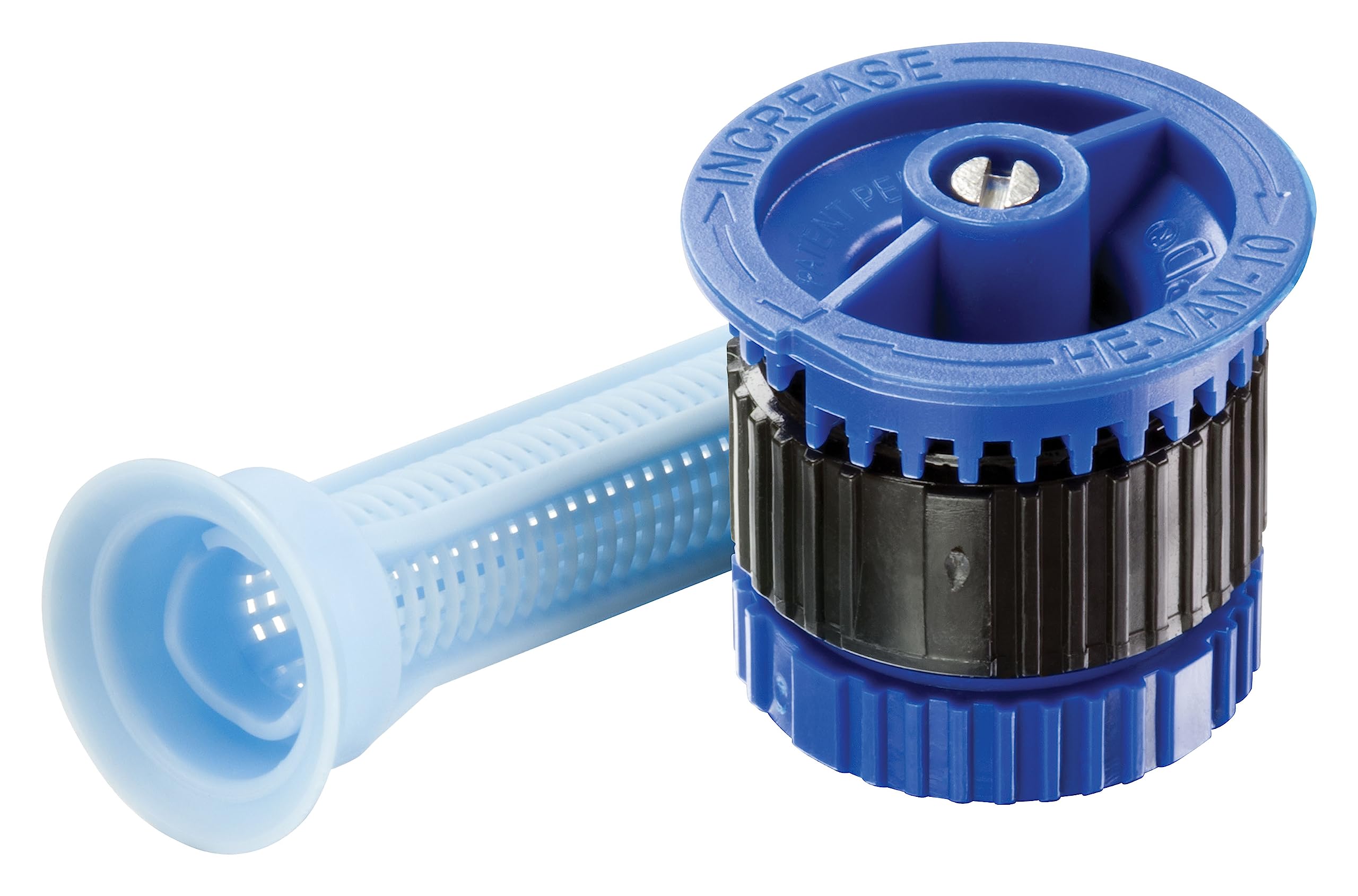
An adjustable 0–360° pop-up spray nozzle with Flow Control Technology for uniform coverage and reduced overspray at an 8–10' radius.
Why I picked it: Precise arc adjustment plus water-saving HEVAN tech for consistent turf coverage.
Best for: Odd-shaped corners, small turf areas, and close-in watering around sidewalks and driveways.
Affordable, water-saving option for pop-up spray zones.
Pros
- Adjustable 0–360° pattern
- Flow control for close-in watering
- Reduced wind-driven overspray
- Textured collar for easy grip
- Matched-precipitation compatibility
Cons
- Small filter can be fragile
- Limited radius (8–10')
My take
I used the HEVAN10 on several pop-up heads and appreciated how easy the textured collar made fine pattern adjustments, even when the collar was wet.
The Flow Control Technology noticeably tightened the close-in coverage for my lawn edges — I saw thicker streams that resisted wind and kept water on grass instead of sidewalks.
Because Rain Bird’s MPR approach lets me mix different arcs in one zone, I could tailor coverage across odd-shaped areas without creating dry spots.
Installation was simple: screw on, set the left-edge indicator, and dial in the trajectory. The stainless-steel screw felt durable, though I keep extra filters on hand since one of mine did crack.
2. Heavy-Duty Brass Twist Hose Nozzle – Best for Power Cleaning
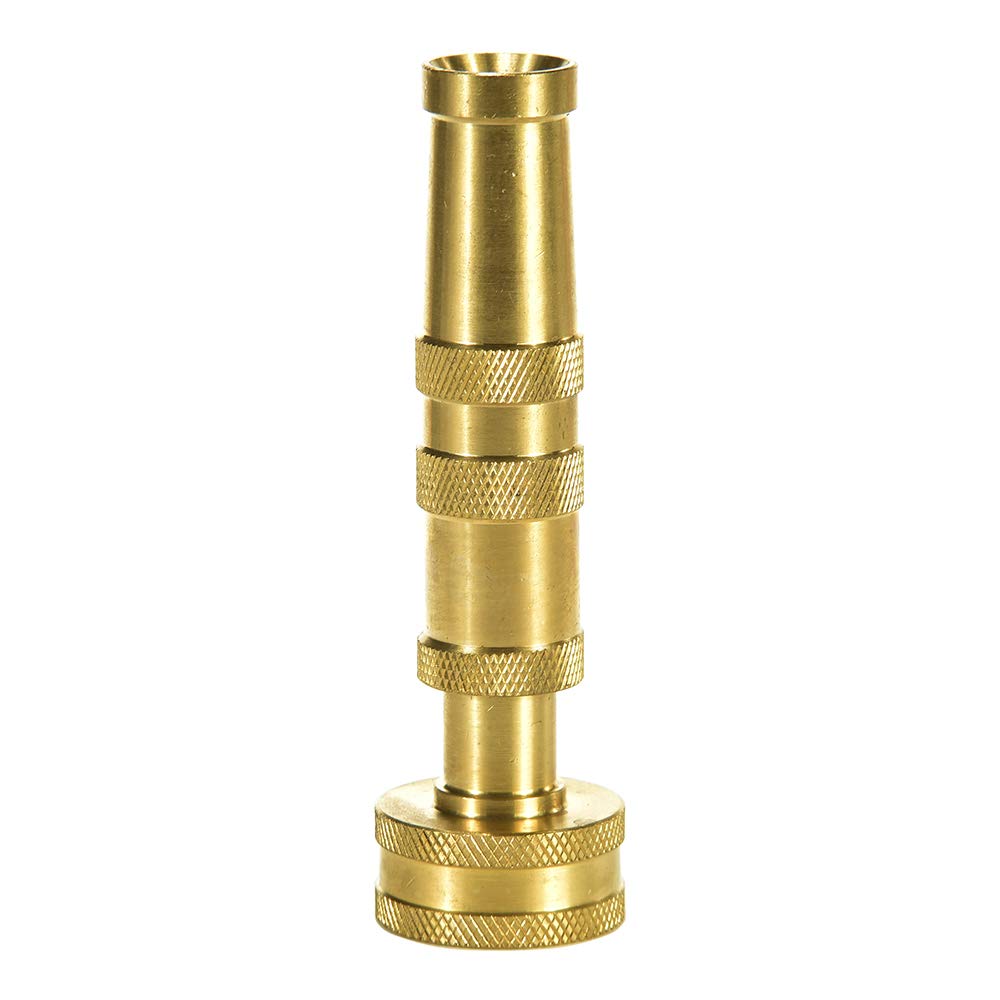
Solid brass twist nozzle with multiple tip holes, O-ring seals, and a 3/4" connection that turns a garden hose into a strong cleaning jet or a fine mist.
Why I picked it: Brass construction and seals deliver the pressure and durability I needed for heavy-duty cleaning.
Best for: Driveway and siding cleaning, car washing, and situations where pressure matters.
Budget-friendly heavy-duty option that outlasts plastic tips.
Pros
- Solid brass build
- Adjustable from mist to jet
- O-ring seals reduce leaks
- Feels heavy-duty and durable
Cons
- Weighty in the hand
- Gaskets may need replacement over years
My take
I kept one of these on my hose for months and was impressed that it turned the hose into a mini pressure washer while still providing a gentle mist when I needed it.
The included rubber gaskets and tight brass fit stopped the leaking I used to get from cheaper plastic nozzles, though I have used Teflon tape on older thread fittings on occasion.
Because it’s fairly heavy, I store it on a hook rather than letting it dangle from the hose, but its rugged feel gave me confidence when I tackled grime on concrete and car wheels.
3. Orbit Aluminum Fan Spray Nozzle – Best for Gentle Watering
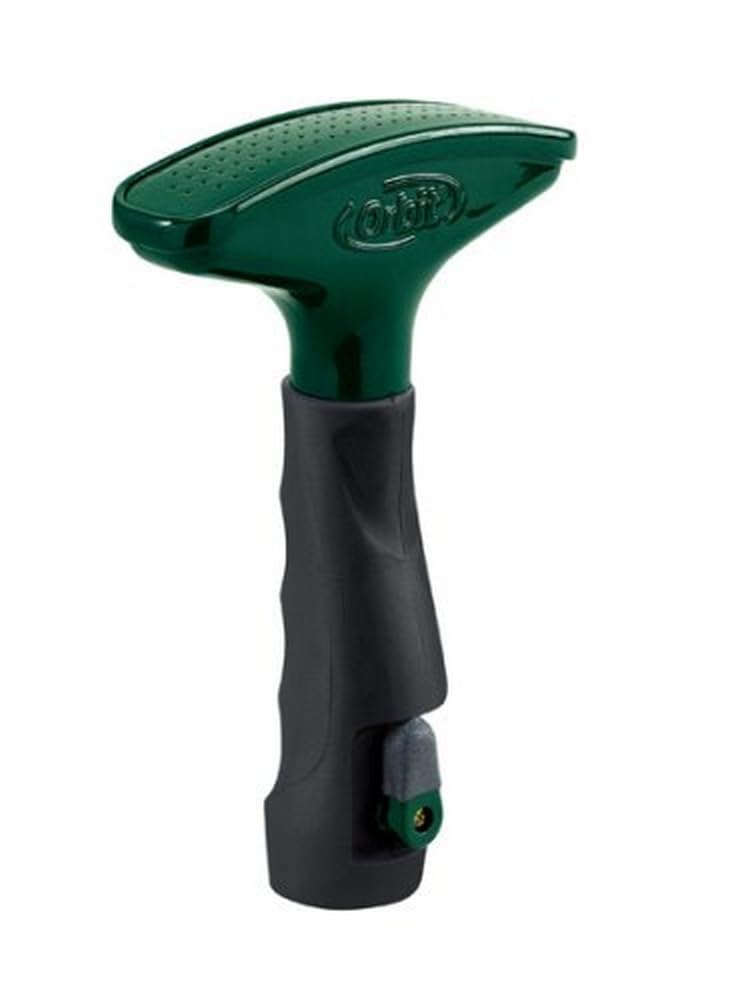
A non-corrosive aluminum fan nozzle that creates a rain-like shower, with a rubberized comfort grip and an easy shut-off lever.
Why I picked it: Provides a soft, wide fan spray that’s perfect for delicate plantings and planters.
Best for: Flowers, shrubs, newly seeded beds, and deck planters.
A mid-range choice that balances comfort and durability.
Pros
- Rain-like wide spray
- Comfort rubberized grip
- Built-in shut-off lever
- Durable metal construction
Cons
- Single spray pattern
- Paint may wear over time
My take
For my deck planters and newly seeded areas I reached for this fan spray because the distribution is soft and natural — almost like gentle rain.
The flow control lets me go from a light shower to a firmer stream without fiddling with multiple settings, and the shut-off lever saves trips back to the faucet.
If you need lots of pattern choices or overhead hanging-basket work, this isn’t the multipattern tool, but for gentle, wide coverage it was exactly what I wanted.
4. Rain Bird 15CSTC1 Center Strip Nozzle – Best for Strip Irrigation
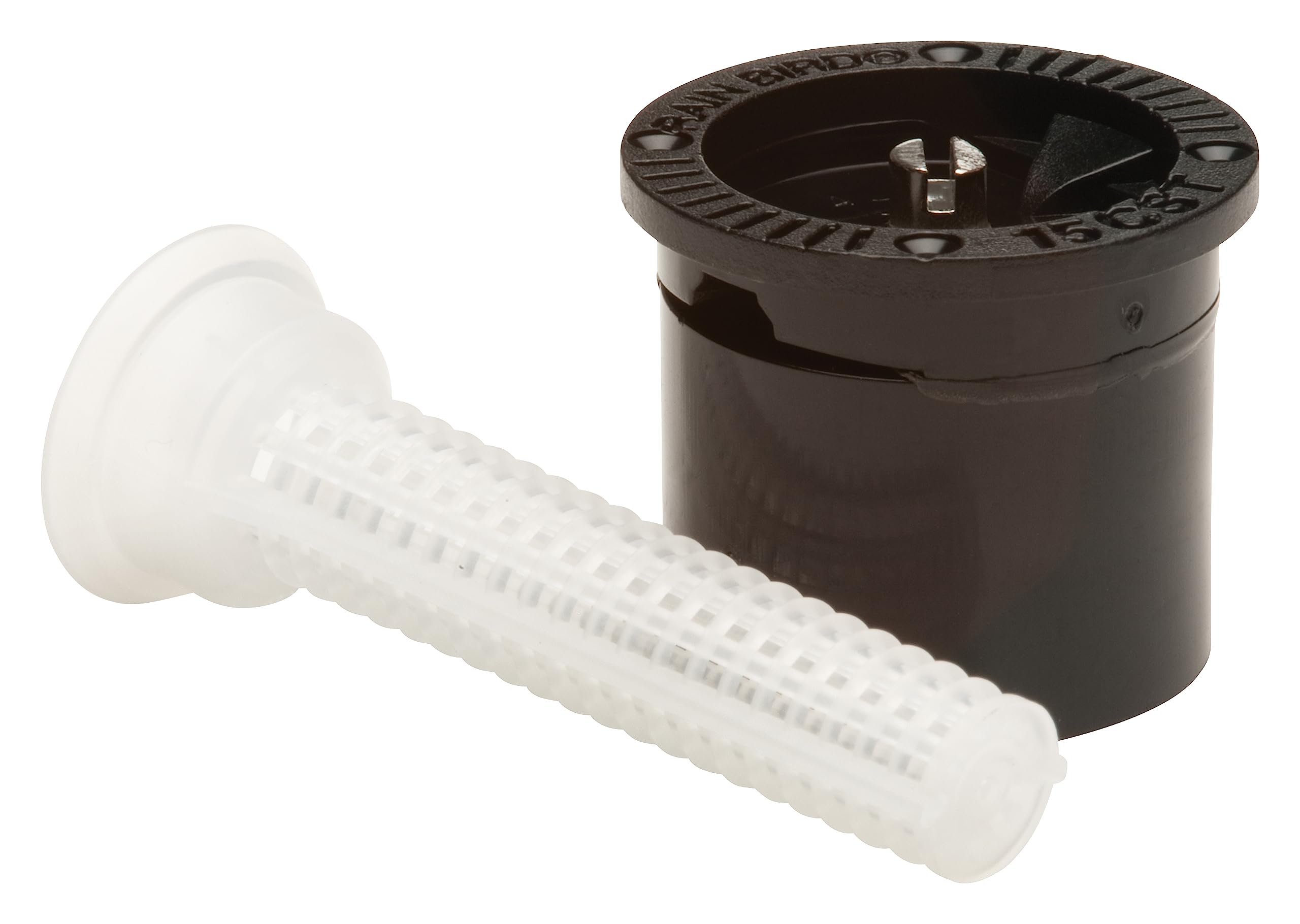
Center-strip MPR nozzle that adjusts from roughly 3'×20' to 4'×30', built for matched precipitation and uniform coverage in mixed-pattern zones.
Why I picked it: Matched-precipitation output and a center-strip arc made it ideal for narrow strips and edges.
Best for: Strips along sidewalks, driveways, and narrow planted borders.
Economical—easy to keep as replacement spares.
Pros
- Matched precipitation rate
- Center-strip pattern
- Adjustable stainless screw
- Filter prevents clogging
Cons
- Plastic components in body
- Shorter throw for large lawns
My take
I installed these on low risers next to a walkway and liked that the center-strip pattern delivered water to the lawn without wasting it on the pavement.
The stainless adjustment screw and captured slot made tuning flow straightforward, and the small filter helped keep sand and grit from changing the radius.
They’re compact and inexpensive enough that I keep extras in my shed for quick swaps when heads pop off or go missing.
5. Fogg-It Superfine Misting Nozzle (3-Pack) – Best for Misting & Cooling
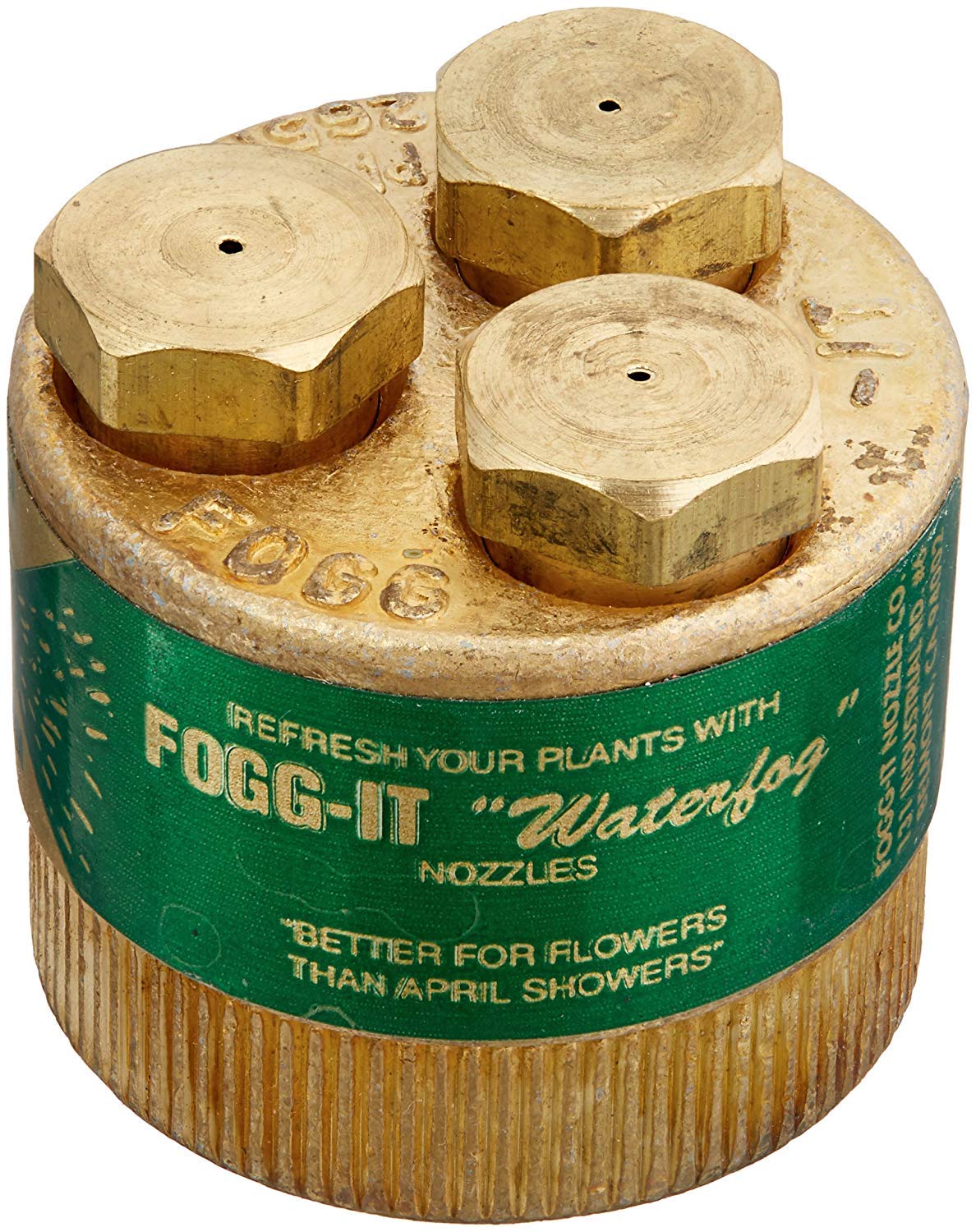
Solid brass misting head with three jets producing a fine conical fog at low flow, designed for delicate plants and cooling patios.
Why I picked it: Produces a very fine, steady fog with extremely low water use — perfect for humidity and cooling.
Best for: Orchids, seedlings, patio cooling, and livestock cooling stations.
A specialized, low-flow option that saves water while cooling effectively.
Pros
- Very fine mist
- Solid brass construction
- Low water usage
- Works well for cooling
Cons
- Susceptible to mineral clogging
- Needs periodic cleaning
My take
I used these misting heads to cool a small patio and to raise humidity for orchids; the fog is impressively fine while using very little water.
Because they’re brass they’re sturdy, but hard water will clog them over time — soaking in vinegar for a short period cleared mineral deposits for me.
I also ran one as a cooling station for animals on hot days and it noticeably dropped ambient temperature without soaking the area.
6. Gilmour Solid Metal Hose Nozzle 573TF – Best for Heavy Use
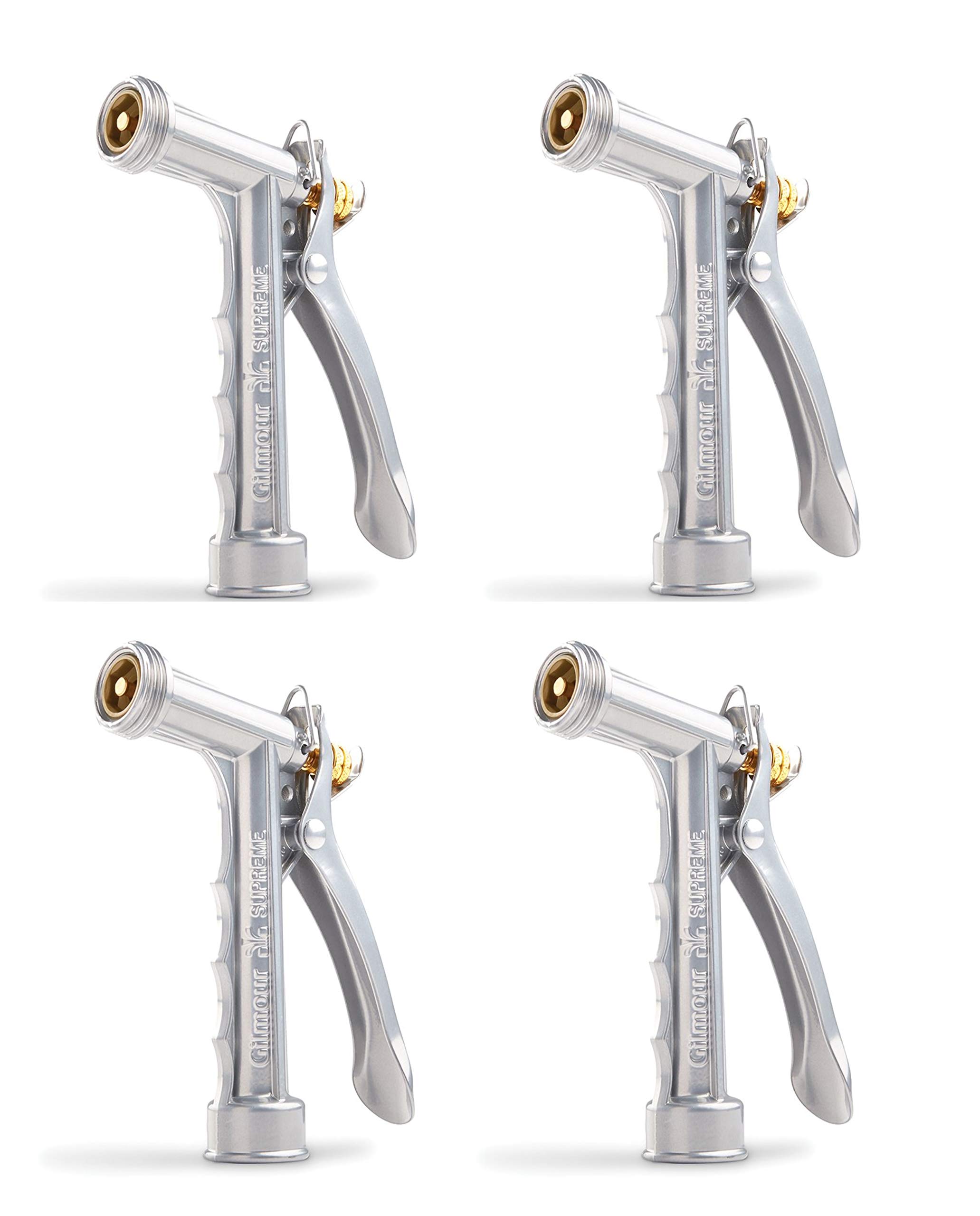
All-metal spray nozzle with a threaded front for attachments, flow-control dial, hold-open clip, and a build aimed at frequent, heavy use.
Why I picked it: Sturdy metal construction and useful controls made it my go-to for daily watering chores.
Best for: Frequent watering, car washing, and jobs that demand a reliable metal nozzle.
Built for longevity — good long-term value.
Pros
- All-metal construction
- Threaded front for attachments
- Flow-control dial
- Hold-open clip for continuous spray
Cons
- Can dent or bend if dropped
- Some units show wear over long use
My take
This nozzle changed routine watering for me: the metal body feels solid and the hold-open clip lets me water without hand fatigue.
I hooked up attachments to the threaded front and appreciated the flow dial’s fine control when switching from delicate plants to stubborn dirt.
While it held up through a season of heavy use, I treat metal nozzles with care — a hard knock can dent them — but overall it became my everyday tool.
7. GARDENA 180° Micro-Drip Spray Nozzle – Best for Micro-Drip Systems
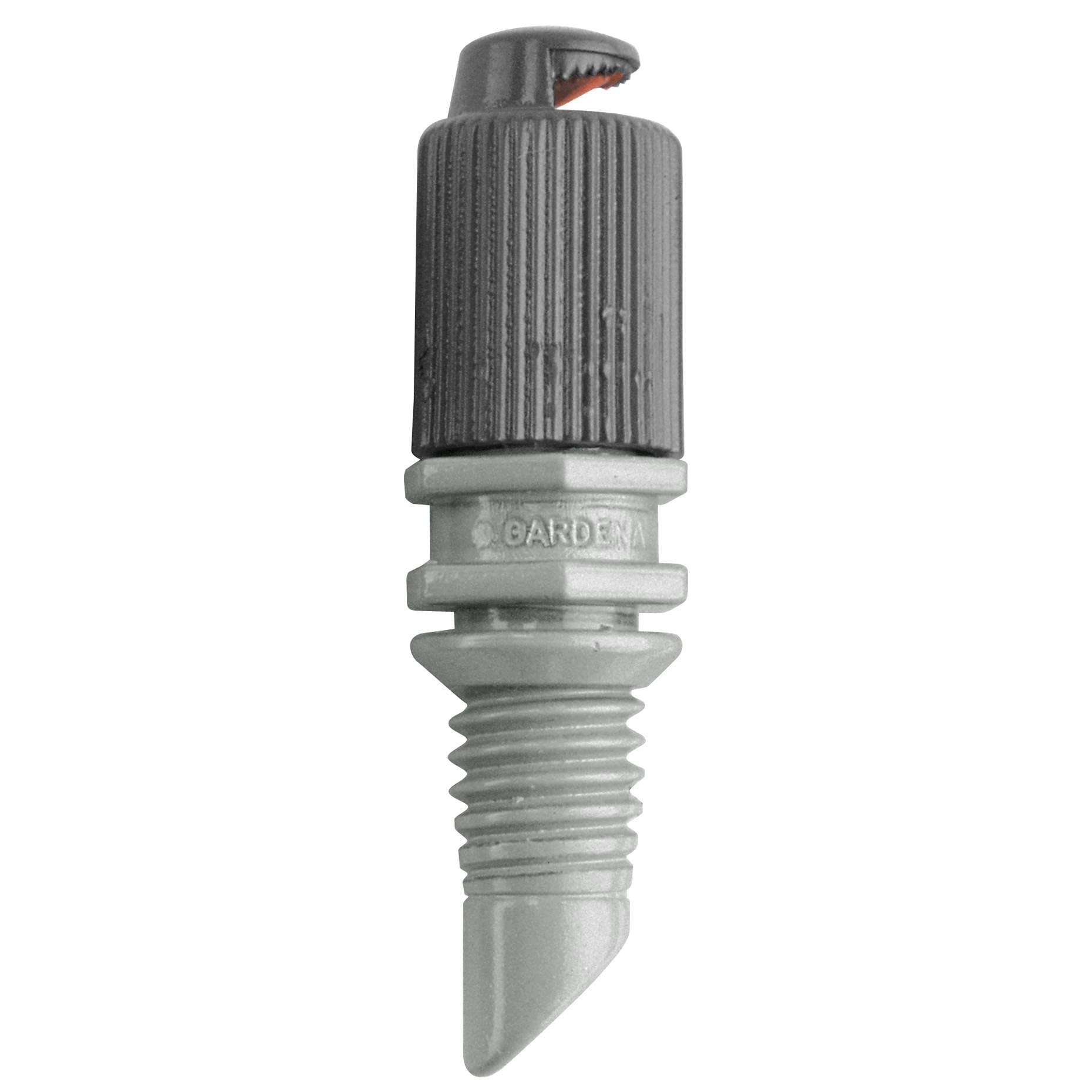
A 180° micro-spray nozzle designed for GARDENA Micro-Drip-System layouts, offering precise, metered coverage across beds and borders.
Why I picked it: I wanted metered, water-conserving coverage for narrow beds and the Gardena micro-drip components delivered predictable output.
Best for: Micro-drip beds, targeted irrigation, and water-conscious landscapes.
A more premium micro-drip component worth the investment for precision.
Pros
- Precise metered irrigation
- Water-conserving micro-drip fit
- Easy to reposition
- Consistent spray coverage
Cons
- More expensive than basic heads
- Can clog without maintenance
My take
I used these as part of a micro-drip layout and liked how accurately they covered rows with a controlled spray, roughly a 3–5 ft spread in my setup.
If you need less range for narrow rows, adding the Gardena control valve tightens the output; otherwise the unit is perfectly suited to beds that need gentle, even watering.
Quality is good and the system feels durable, though I treat the nozzles as replaceable wear items — they deliver consistent results if you accept the occasional cleaning or spare part.
How I Choose the Right Spray Nozzle
Key Factors I Look For
I decide on a nozzle by matching its spray pattern and flow to the task. A misting head for seedlings isn’t interchangeable with a brass jet for driveway cleaning.
Material and build quality matter — metal and brass outlast plastic for high-use jobs, while plastic MPR irrigation nozzles work well for pop-up heads and matched precipitation systems.
- Spray pattern: full-circle, strip, fan, 180°, or mist — pick by area shape.
- Flow control: adjustable flow or dedicated GPM suited to plants and run time.
- Material: brass/metal for heavy-duty, plastic/Stainless for irrigation heads.
- Connection size: ensure a 3/4" or standard thread match to your hose.
- Filters and anti-clog screens: essential for sandy or mineral-rich water supplies.
Maintenance Tips I Use
I clean fine misting nozzles periodically in vinegar to remove mineral deposits and keep jets working.
For hose-threaded nozzles I keep spare O-rings and occasionally use Teflon tape on older threads to prevent leaks.
- Soak clogged mist tips briefly in vinegar; don’t overdo it on brass.
- Keep spare filters and O-rings on hand for quick field repairs.
- Store metal nozzles off the ground to avoid dents and freezing damage.
Frequently Asked Questions
How do I select a nozzle for mixed-pattern irrigation zones?
I match nozzles using matched-precipitation (MPR) heads when I mix arc types. That ensures different arc shapes still deliver the same water volume across the zone and prevents dry or overly wet patches.
Can brass hose nozzles replace a pressure washer?
In my experience a heavy-duty brass twist nozzle can deliver near-pressure-washer force for surface cleaning, but it won’t replace a true pressure washer for deep-seated grime.
What’s the best way I’ve found to prevent nozzle clogging?
I use inline filters on irrigation lines and soak fine mist tips briefly in vinegar for mineral buildup. Regular flushing and a small mesh screen on pop-up heads cut most clog problems.
Final Take
I picked these nozzles because each solved a clear need in my yard: precision irrigation, robust pressure, comfortable gentle watering, or a cooling mist.
If I had to choose one all-purpose head for lawns and small beds it would be the Rain Bird HEVAN10 for its combination of adjustability and water-saving tech; for cleaning and heavy use I keep a solid brass or metal nozzle on hand.
Whichever nozzle you choose, matching pattern, flow, and material to your tasks has made the biggest difference in my results.
