
I tested several rotor sprinkler heads and picked the ones that gave the most reliable coverage, easiest adjustments, and best value for different yard needs.
I spend a lot of time tuning irrigation systems, so I compared several popular rotor heads to see which ones actually make maintaining a lawn easier. My focus was on even coverage, durability, adjustability, and real-world installability.
In this roundup I cover a heavy-duty Rain Bird rotor, two configurations of Hunter's proven PGP-ADJ, and Orbit's Voyager—each earned a spot for distinct reasons. I note where each shines and when I'd pick one over another.
I prioritized coverage uniformity, top-adjust convenience, and robustness in gritty water; the Rain Bird and Hunters are my go-tos for long runs, while the Orbit is a solid budget choice for low-runoff needs.
1. Rain Bird 5000 Rotor Sprinkler – Best Overall
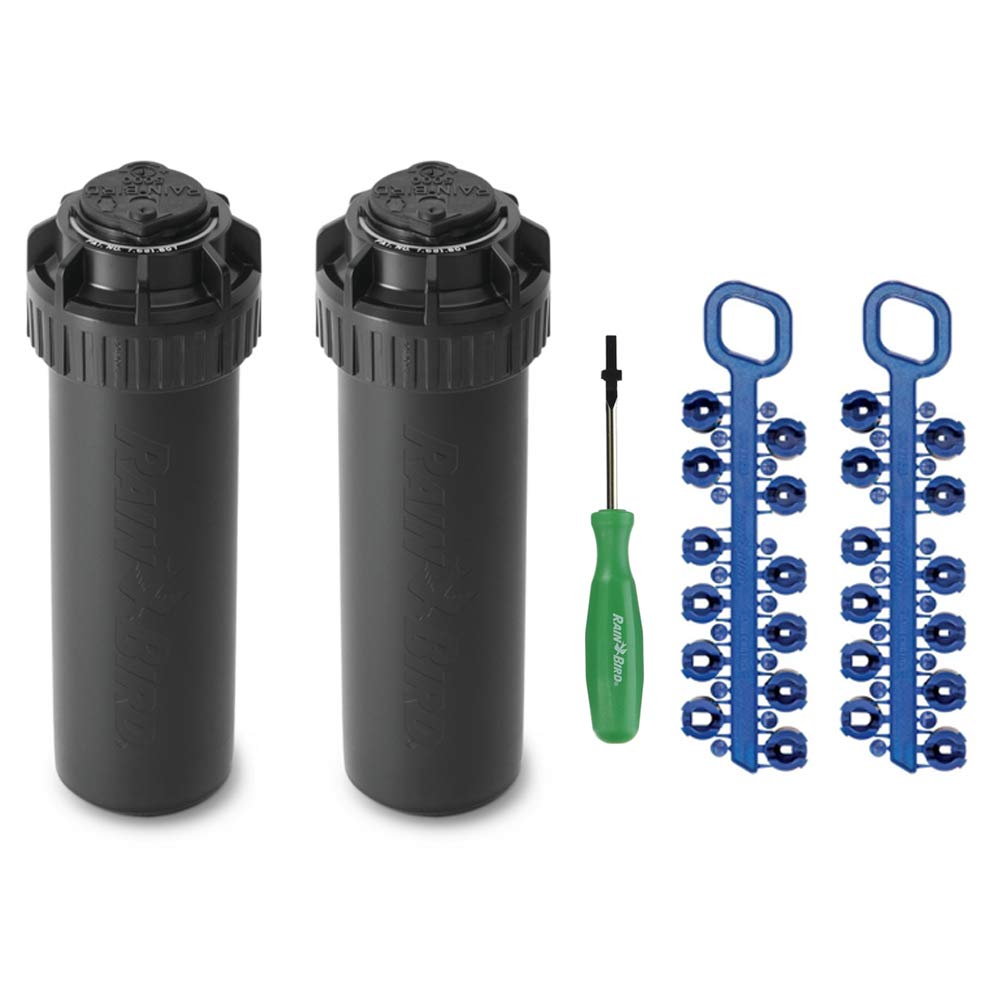
Pop-up rotor with Rain Curtain nozzles, adjustable 40–360° arc, and 25–50 ft throw for medium to large lawns.
Why I picked it: I picked it for its Rain Curtain nozzle uniformity and simple top-adjust maintenance.
Best for: Medium to large lawns that need even coverage and long throw.
A solid mid-range purchase for durable rotor performance.
Pros
- Very even rain-curtain spray
- Top-adjust arc and radius
- Self-cleaning arc port
- Durable construction
Cons
- Bulk packaging in some sets
- May be overkill for tiny yards
My take
I installed the Rain Bird 5000 on a couple of long runs where coverage overlap mattered. The Rain Curtain nozzles produce large droplets that resist wind and deliver consistent wetting across the radius, so I saw fewer dry spots near the rotor compared with other rotors I’ve tried.
Adjustments are fast from the top with a flat screwdriver — I could change arc and reduce radius up to 25% without swapping nozzles. The slip-clutch made alignment on installation quick, and the pressure-activated wiper seal kept debris out during a few gritty-water tests.
Construction felt heavy-duty and reliable. I appreciated the extra O-rings and reinforced flow path for side-load strength; after a season of use the heads still retracted positively and showed no leakage. For anyone replacing single nozzles or upgrading large zones, this is the unit I reach for first.
2. Hunter PGP-ADJ Rotor Sprinkler – Best for Reliability
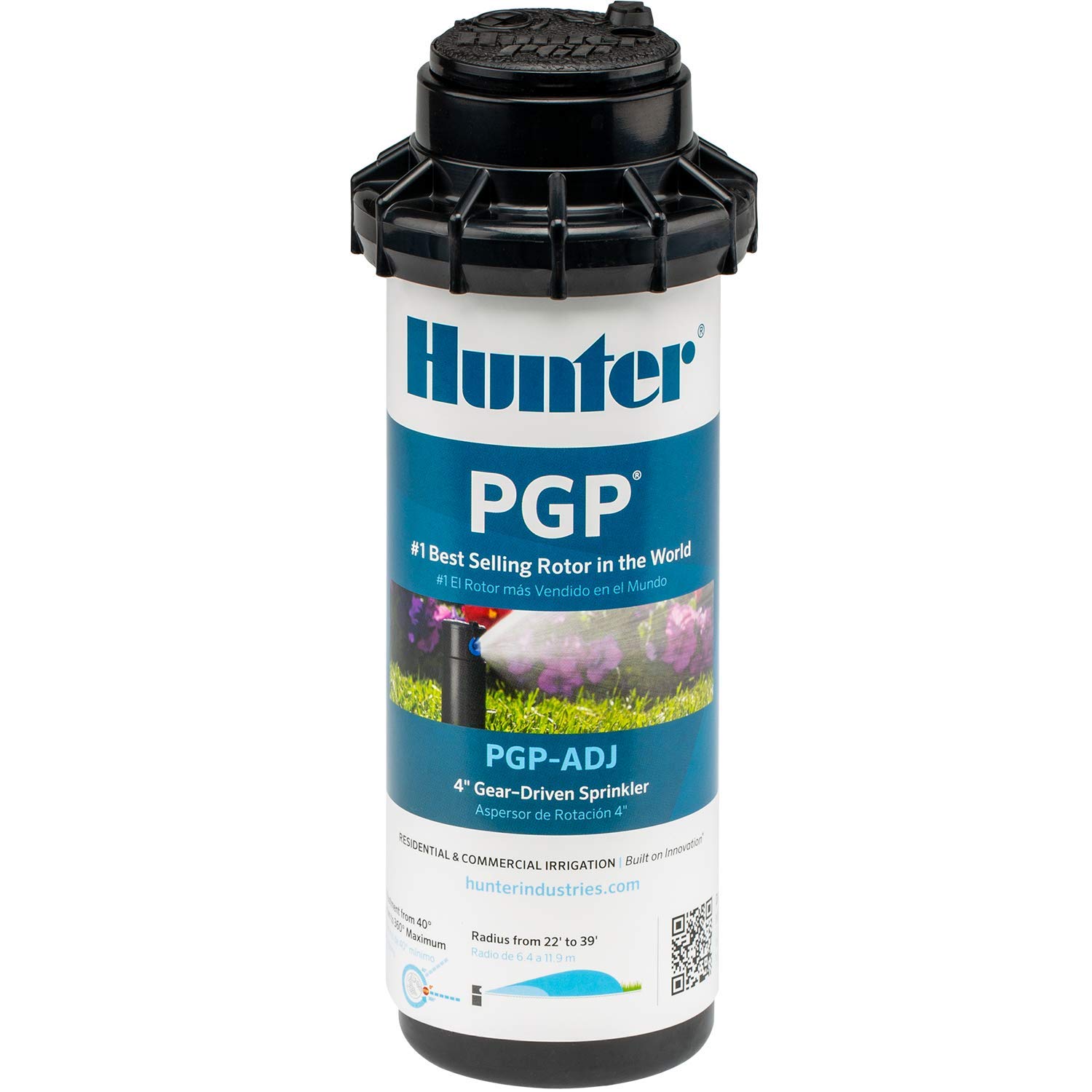
Gear-driven 4" pop-up rotor with adjustable 40–360° arc and a long 22–52 ft spray distance; built for quiet, durable operation.
Why I picked it: I picked it for its proven gear-drive reliability and wide operating pressure range.
Best for: Long spacing and professional-style installations where durability matters.
A professional-grade choice worth the investment for long-term reliability.
Pros
- Smooth, quiet gear drive
- Wide pressure tolerance
- Large spray radius
- Standard 3/4" inlet compatibility
Cons
- A bit fiddly to remove in tight digs
- Larger body diameter requires more excavation
My take
The Hunter PGP-ADJ is the unit I reach for when I need quiet, predictable rotation across a wide radius. The water-lubricated gears give an even sweep and resist clogging better than many other rotors I've worked on.
Installation was straightforward on my systems; the 3/4" inlet fit standard risers and the 4" pop-up cleared turf well. I found the recommended pressure window gives the best consistency, and the preinstalled nozzle worked fine for most of my runs.
If I have one caution, it’s that the larger exposed diameter means I dig a little more clearance when replacing an older, smaller head. Once installed, though, these heads have been the most trouble-free for multi-year use in my experience.
3. Hunter PGP-ADJ Rotor Sprinkler (2-Pack) – Best Value Pack
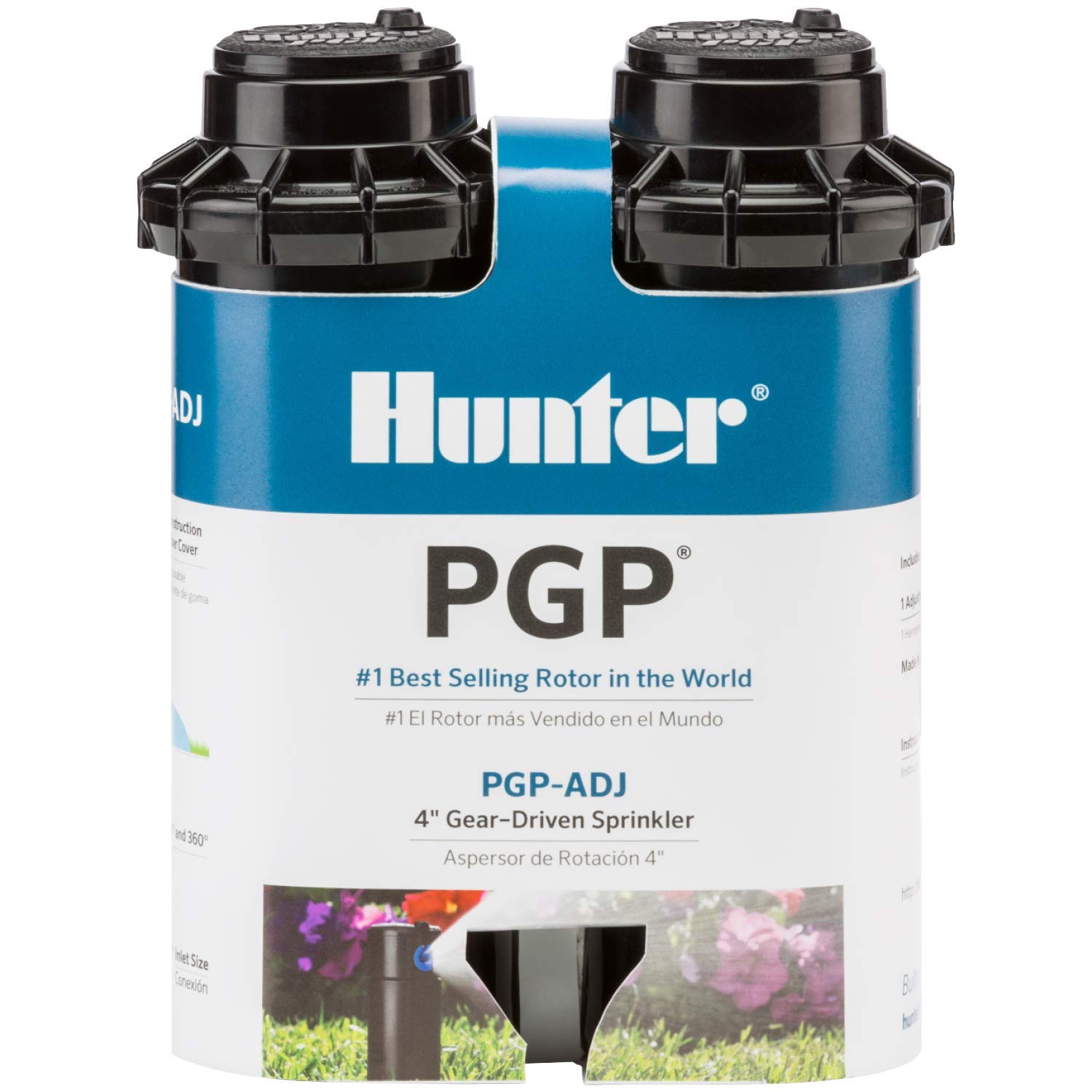
Two PGP-ADJ rotors with the same gear-driven performance as the single, packaged for multiple replacements or new zones.
Why I picked it: I picked the 2-pack when I needed multiple reliable rotors and the included adjustment tool saved time.
Best for: Replacing clusters of heads or outfitting a small zone with consistent parts.
Better per-head value when I needed more than one at a time.
Pros
- Same proven performance in a two-pack
- Adjustment tool included
- Easy to standardize zones
Cons
- You still need spare nozzles for some flows
- Occasional challenge swapping in tight holes
My take
Buying the Hunter PGP-ADJ as a two-pack made sense the day I had to replace multiple busted heads after some trench work. Having two identical rotors plus the adjustment wrench let me get the whole zone aligned in one session.
The tool makes fine-tuning the arc and radius painless; I used the fast-forward feature to verify stop points and dialed in overlap quickly. The two heads behaved identically in operation, which simplified my head spacing calculations.
For anyone managing several zones or wanting spare parts on hand, the 2-pack reduced trips back to the supply store and kept the system consistent—exactly what I want when I tune an irrigation run.
4. Orbit Voyager Gear-Drive Rotor – Best Budget
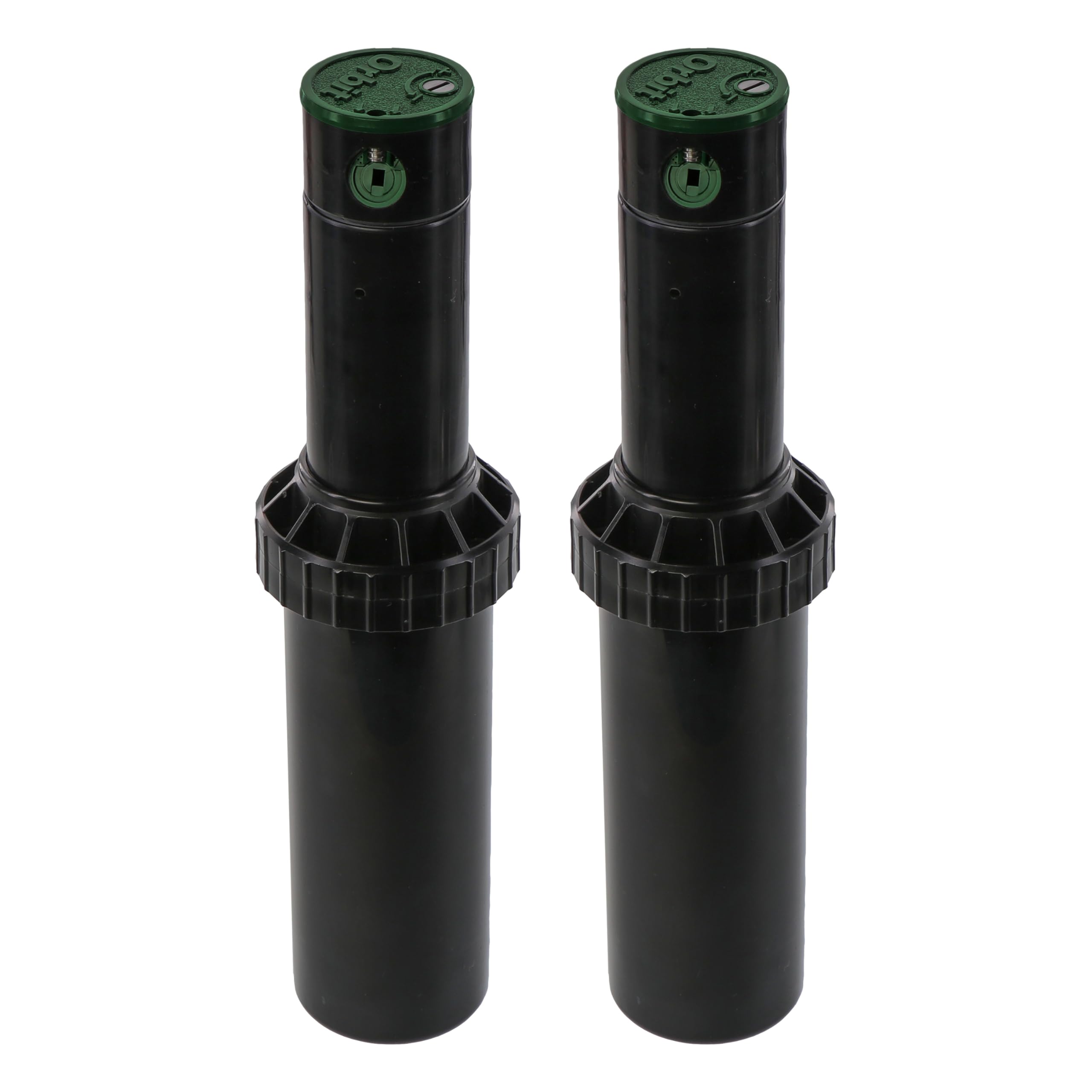
2-pack gear-drive rotor with 4" pop-up, adjustable 40–360° arc, up to ~35 ft radius, and a low precipitation rate to reduce runoff.
Why I picked it: I picked it for its low precipitation rate and budget-friendly two-pack configuration.
Best for: Sloped or clay soils where runoff risk matters and for budget-conscious installs.
An affordable two-pack that performs well on slopes and tighter budgets.
Pros
- Low precipitation rate reduces runoff
- Built-in inlet filter
- Adjustable with a standard screwdriver
- Value two-pack
Cons
- Top plate lacks easy lift cutout
- May need adapter for some pipes
My take
I used the Orbit Voyager on a slope and immediately noticed less puddling thanks to its lower precipitation rate; the gentler output helps prevent runoff on clay and sloped beds.
The gear drive runs quietly and the ABS body felt robust for the price. I appreciated the accessible filter that kept debris out during a couple of gritty-water runs.
A couple of practical notes from my installs: the top plate doesn’t include the typical key cutout so adjustments are a bit less ergonomic, and on one system I needed a pipe adapter to fit the inlet. Those are minor trade-offs for the value and low-runoff performance I needed.
How I Choose Rotor Sprinkler Heads
Key features I look for
When I pick a rotor head I prioritize coverage uniformity, ease of top adjustment, and durability in the local water quality.
I also balance throw distance with precipitation rate—longer throws are great for spacing but increase pressure needs and overlap planning.
- Arc and radius adjustment: I prefer top-adjust tools for quick tuning.
- Precipitation rate: lower rates reduce runoff on slopes and clay soils.
- Construction: reinforced flow paths and quality seals protect internals in gritty water.
- Nozzle options: the ability to change nozzles or reduce radius without swapping parts saves time.
Match the head to your system
I always check inlet size and recommended operating pressure before I buy. A mismatch adds adapters or poor performance.
For tight spaces or shallow trenches I pick compact bodies; for long runs and fewer heads I choose rotors with larger throw and stable gear drives.
- Inlet compatibility: make sure the head fits your riser or pipe thread.
- Pressure range: pick a rotor rated for your system pressure to avoid misting or reduced range.
- Pop-up height: taller pop-ups clear heavy turf and ground cover for more even distribution.
Installation and maintenance tips I use
I set arcs and radii before final installation when possible, then verify overlap after the heads are on and the turf is dry.
I clean filters and check seals seasonally, and I keep a small stock of common nozzles and O-rings for quick roadside repairs.
- Set arc before planting or final backfill to avoid digging twice.
- Carry an extra adjustment key and a selection of nozzles.
- Flush lines before installing new heads to reduce debris-related failures.
Frequently Asked Questions
How do I adjust the arc and radius on these rotor heads?
I adjust arc and radius from the top on the Rain Bird and Hunters with a flat screwdriver or the supplied wrench; I typically set the arc, then use the radius screw to trim throw up to about 25% without swapping nozzles.
What operating pressure should I use for best performance?
I aim to run rotors in their recommended pressure window—many perform best around 25–70 PSI. Running too low reduces throw and uniformity; too high can mist and waste water.
Can I mix brands in the same zone?
I prefer consistent heads in a zone, but I will mix brands if I match nozzle trajectories and precipitation rates so coverage remains uniform; otherwise I standardize to simplify maintenance.
Final Take
After testing, I keep Rain Bird and Hunter rotors on my short list for most long-run and high-demand zones because of their adjustability and durability.
If I’m on a budget or tackling slopes where runoff matters, I reach for the Orbit Voyager two-pack. In every case I match precipitation rate, nozzle trajectory, and pressure for the cleanest results.
Use the buying guide checklist I provided to match a head to your system, and stock a few spare nozzles and O-rings for fast field fixes.
