
I tested a range of pop-up sprays and gear-driven rotors to find reliable, adjustable sprinkler heads for everything from tight flower beds to large turf zones.
I installed and ran each of these sprinkler heads across different zones on my property so I could compare coverage, durability, and ease of adjustment.
My goal was practical: pick heads that water efficiently, survive routine use, and are simple to service without specialized tools.
Below I explain where each model shines and which one I’d use for specific landscape needs.
I compared spray pop-ups and gear-drive rotors for coverage radius, adjustability, durability, and how easy each unit is to service in-field.
1. Rain Bird 1806AP Professional Pop-Up Sprinkler (6″ Pop-Up, 0°–360°, 8’–15′) – Best for Tight & Irregular Areas

A commercial-grade 6" pop-up spray head with fine pattern control and a durable stainless-steel spring for reliable retraction.
Why I picked it: Precise 0°–360° pattern control and robust commercial-grade construction.
Best for: Odd-shaped corners, sidewalks, flower beds, and tighter turf areas.
Professional-grade feel at a practical price point.
Pros
- Precisely adjustable 0°–360° pattern
- Stainless-steel spring for positive retraction
- 8–15 ft adjustable spray distance
- Matched precipitation for mixed-head zones
Cons
- Not sold into several states—check compliance model
- Can be damaged by careless mowers
- May arrive without retail packaging
My take
I’ve run the 1806AP in tight corners and small beds where fine control matters. The textured adjustment collar and left-edge indicator let me set a precise pattern without guesswork.
The captured top screw and white mesh filter made nozzle adjustments straightforward, and the stainless-steel spring consistently retracted the riser flush with the turf.
Because it operates well at lower pressure and offers a matched precipitation rate, I mix these heads with other Rain Bird sprays without uneven watering. My only real caveat: this specific model isn’t sold into some states, so I use the approved 1806APPRS where required.
2. Rain Bird 5000 Series Rotor Head (5004 PC, 25’–50′ Radius) – Best Rotor for Medium–Large Lawns
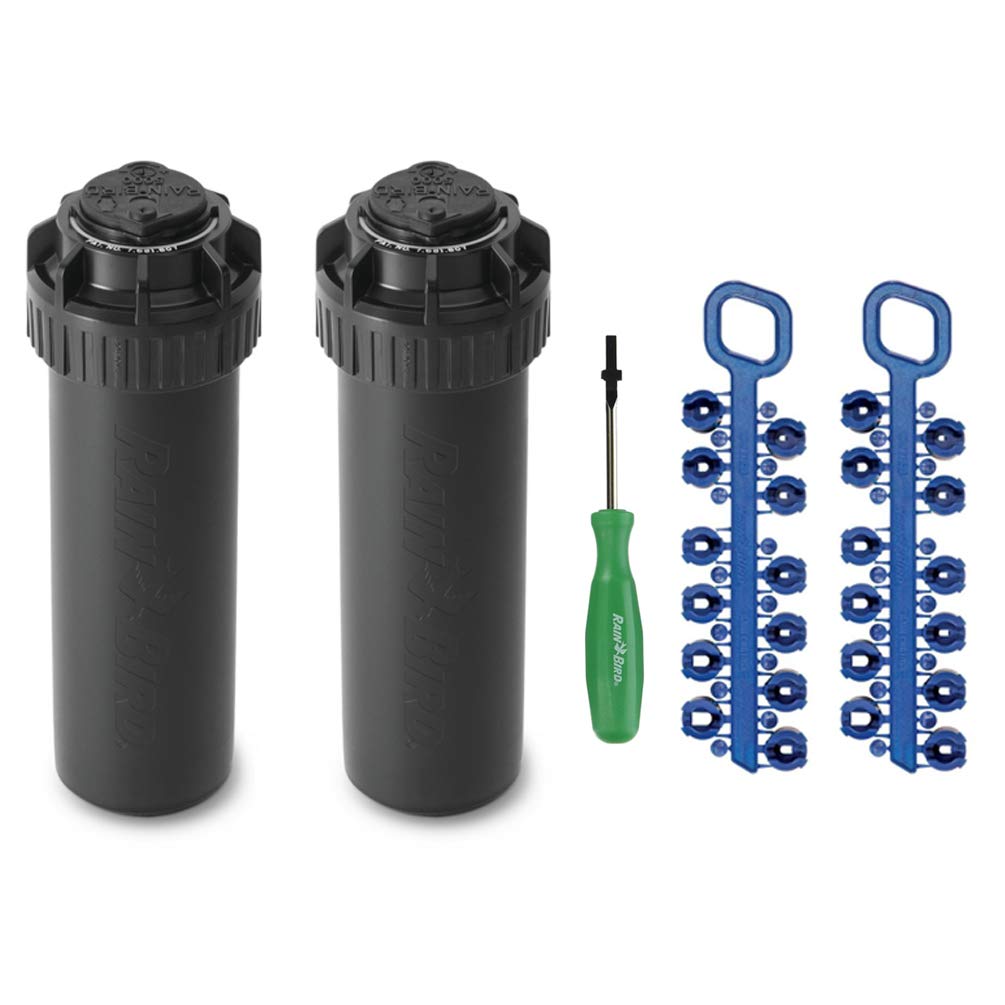
A part-circle rotor built around Rain Curtain nozzle tech to deliver large-droplet, even coverage across 25–50 feet.
Why I picked it: Long reach and Rain Curtain nozzle for uniform, wind-resistant coverage.
Best for: Medium to large turf areas and corner zones needing long throw.
A serious rotor option for homeowners and landscape pros alike.
Pros
- 25–50 ft long throw
- Rain Curtain nozzles reduce wind drift
- Top-adjust arc with slip-clutch
- Radius reduction without swapping nozzles
Cons
- Packaging can be messy on arrival
- May require nozzle selection for ideal coverage
My take
I installed the 5004 PC across a larger back lawn and immediately noticed fewer dry spots. The Rain Curtain nozzle produces larger droplets that resist wind and evaporation better than fine sprays.
Arc and radius adjustments are easy from the top—only a flat screwdriver—so I could dial each head without digging them up.
The unit is built heavy-duty and includes features like a slip-clutch and reinforced flow paths; I left one zone running for several cycles to test reliability and the heads stayed consistent.
3. Hunter PGP-ADJ Gear-Drive Rotor (¾” Inlet, 22’–52′ Radius) – Best for Long-Range Professional Coverage
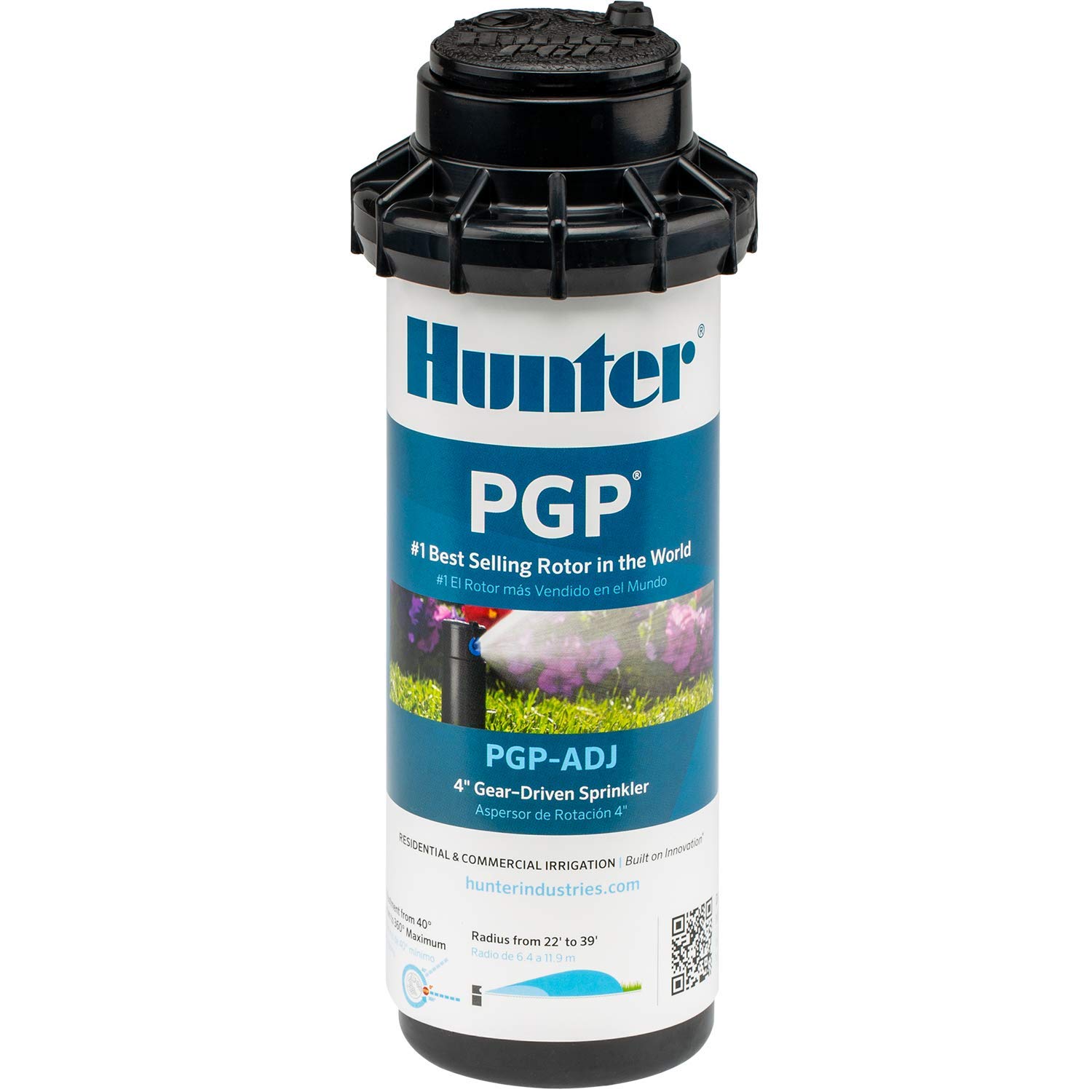
The original gear-driven rotor with smooth, quiet rotation and a wide throw of up to roughly 52 feet for fewer heads per zone.
Why I picked it: Longest throw and a proven, smooth gear-driven mechanism for big zones.
Best for: Large properties, commercial-style zones, and areas needing wide spacing.
A professional-grade rotor with long-term reliability.
Pros
- 22–52 ft throw covers large areas
- Water-lubricated gear drive is quiet
- Wide operating pressure range
- Robust ¾" inlet compatibility
Cons
- Larger body needs a bigger dig for replacement
- Nozzles often sold separately
My take
I rely on the PGP-ADJ when I need long, even coverage with minimal heads. The gear-driven rotation is noticeably smoother and quieter than cheaper rotors.
Because it handles a broad pressure range and has optional nozzle trajectories, I used it on both flat turf and a sloped zone with strong results.
One practical point: the PGP’s wider diameter means I dig a slightly larger access hole during replacement. Once installed, though, its durability and even output make that small extra effort worth it.
4. Rain Bird 5000 Rotor Heads — 4-Pack (Top-Adjust, Nozzles Installed) – Best Value Pack
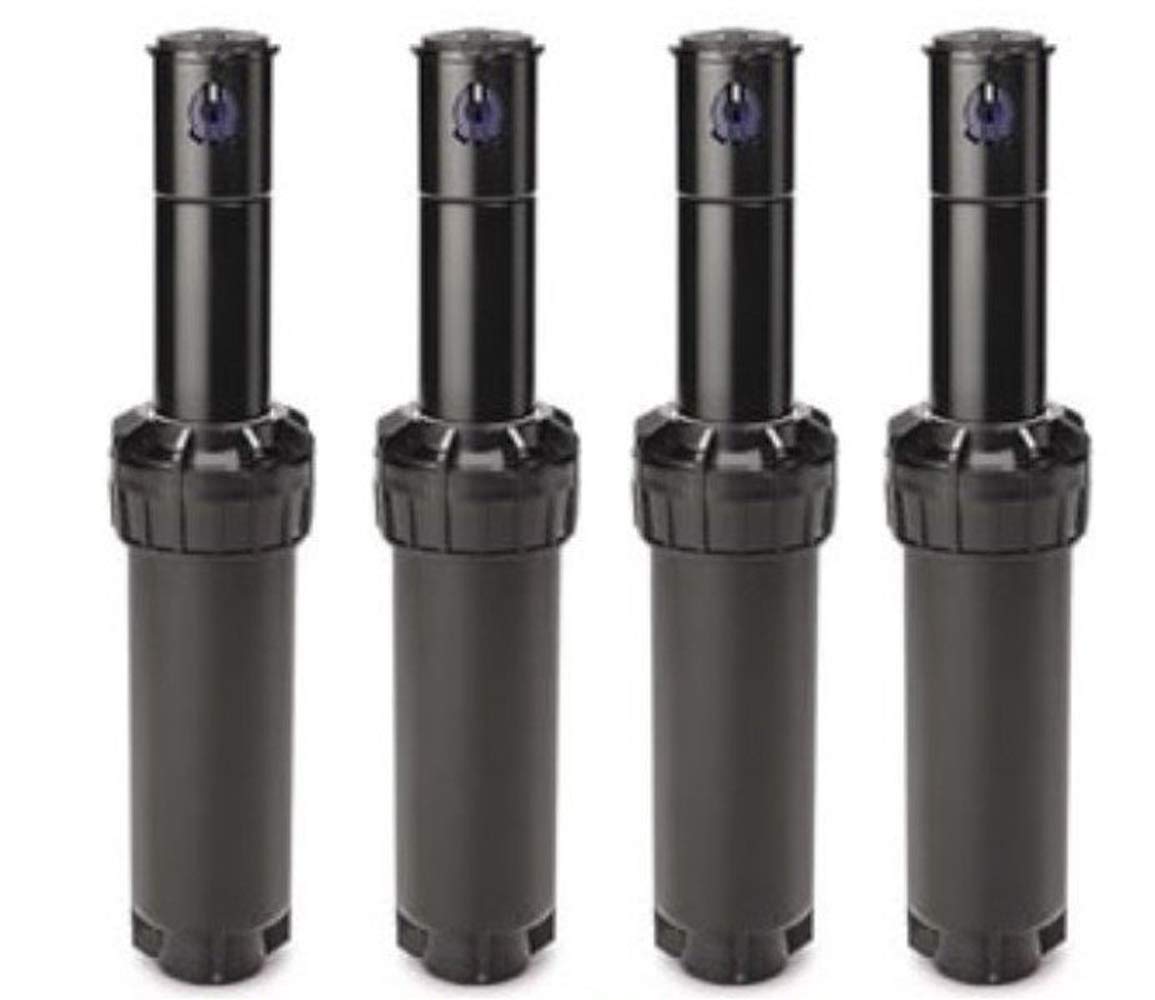
A convenient 4-pack of Rain Bird 5000 rotors with nozzles preinstalled and top-adjust arc control for quick upgrades.
Why I picked it: Bulk convenience with the same Rain Curtain coverage in each head.
Best for: Replacing multiple old heads or upgrading several zones at once.
Good value when you need several replacements at once.
Pros
- Four heads included for bulk replacement
- Nozzles preinstalled—ready to use
- Top-adjust for quick tuning
- Even rain curtain distribution
Cons
- Delivery timing has varied
- Radius limited compared to larger rotors
My take
I bought multiple packs to update an older system and appreciated that the nozzles came installed—less time swapping parts and more time watering.
Installation was straightforward and the heads matched coverage across zones, making system balancing far quicker than swapping single units.
For someone upgrading several heads at once, this pack saved me time and kept watering consistent across the yard.
5. Orbit Voyager Gear-Drive Rotor (4″ Pop-Up, Up To 35′ Radius) – Best Budget Rotor
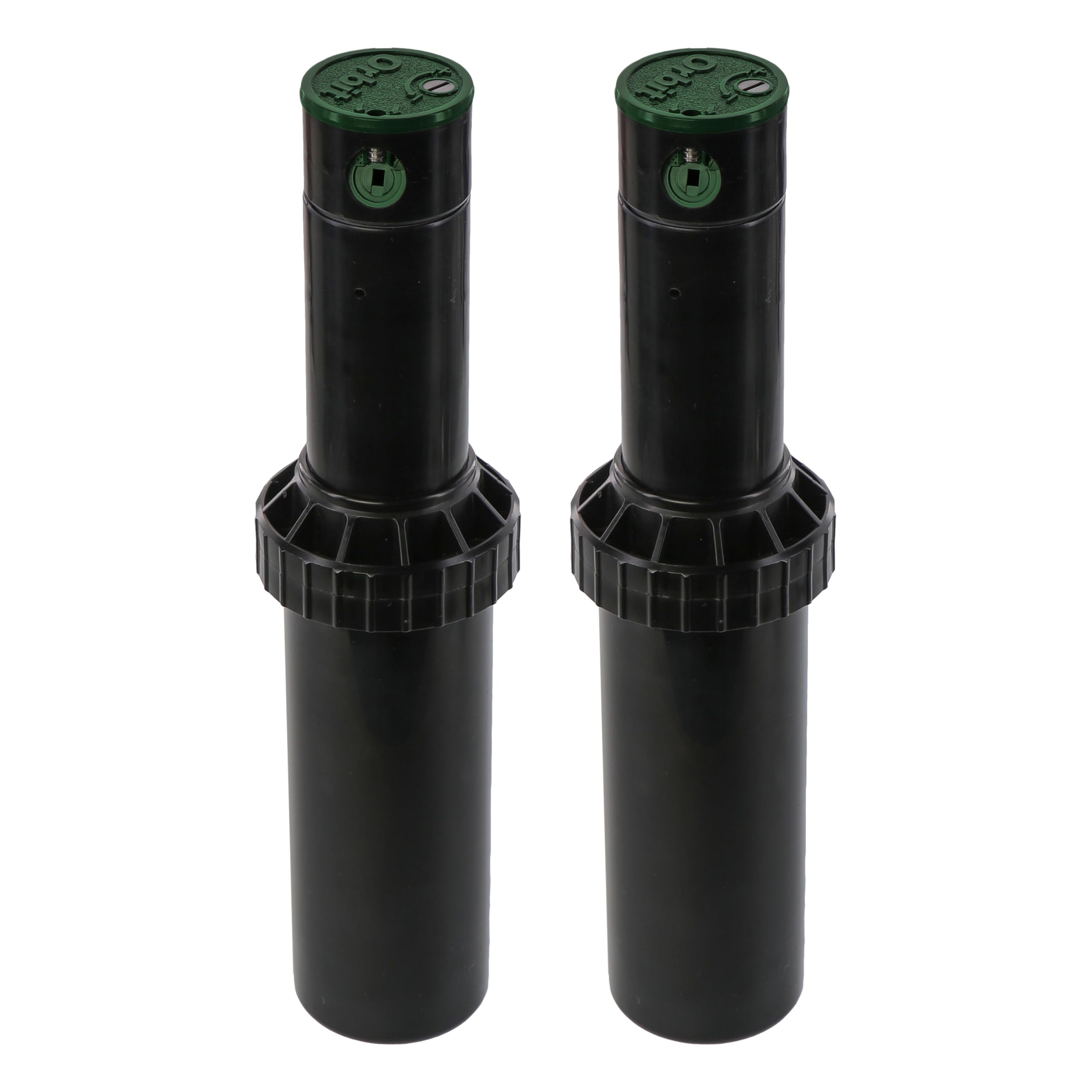
A budget-friendly gear-drive rotor with a low precipitation rate and simple screwdriver adjustments for DIYers.
Why I picked it: Affordable, durable rotor with low-runoff precipitation rate.
Best for: DIY replacements and medium-sized lawns where runoff is a concern.
An economical rotor that still offers solid features.
Pros
- Low precipitation rate reduces runoff
- Adjustable 40°–360° arc
- Durable ABS body and stainless internals
- Screwdriver adjustments—no special key needed
Cons
- 3/4" inlet may need adapters
- Top plate lacks a lift cutout for some keys
My take
I fitted the Voyager units into two corner zones and liked how the low precipitation rate prevented runoff on a clay slope.
Adjusting arc and radius required only a flat-head screwdriver, which made my installs quick. My one on-site hiccup was that the inlet size differs from certain risers so I kept an adapter handy.
For a budget rotor, the build felt solid and the performance matched more expensive heads in the same spacing.
6. Hunter Pro 4″ Pop-Up Sprinkler (0°–360°, 8’–15′) – Best for Small Lawns & Beds
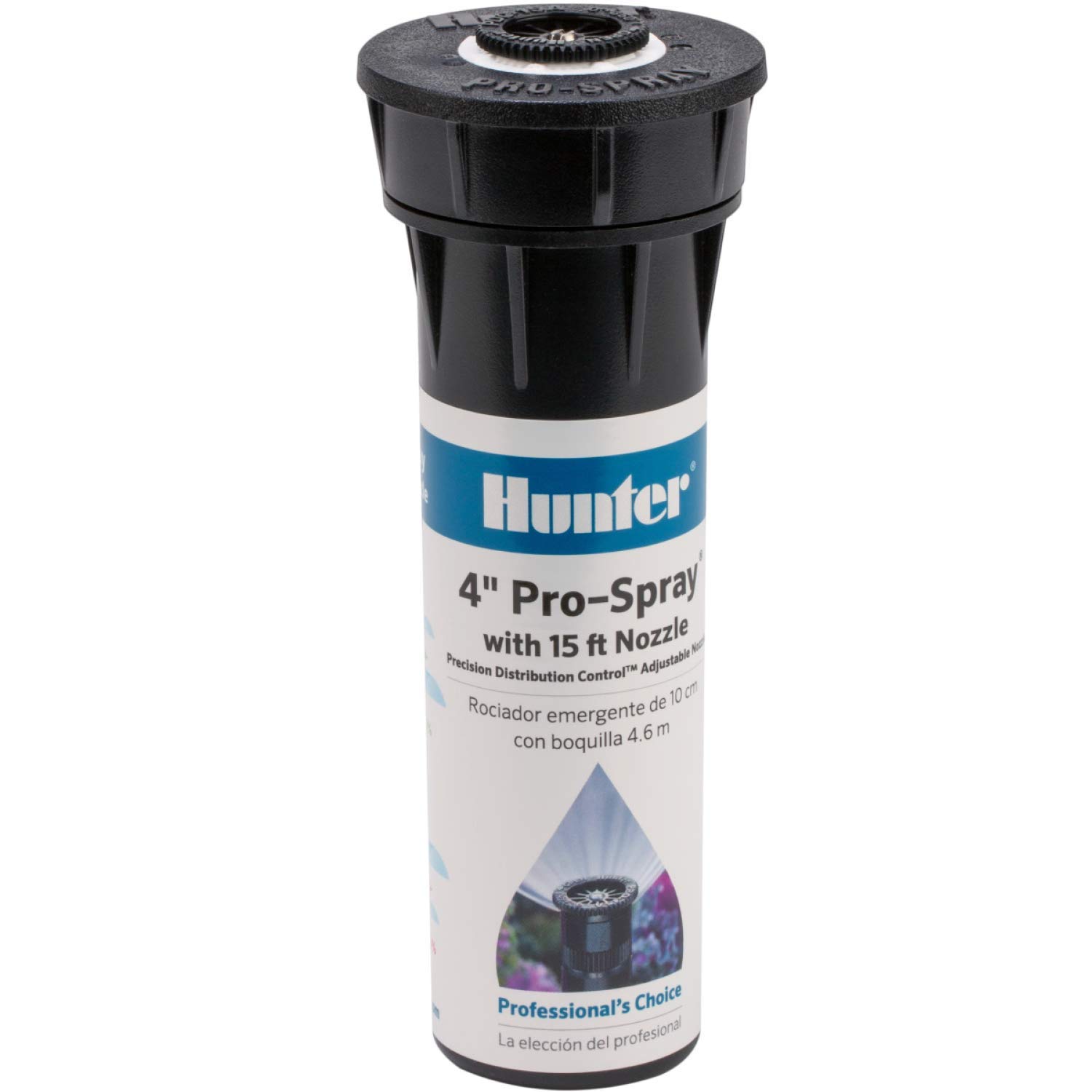
A compact 4" Hunter spray head with smooth pop-up action, leak-resistant construction, and compatibility with Hunter nozzles.
Why I picked it: Reliable pop-up action and broad nozzle compatibility for fine-tuning.
Best for: Flower beds, small lawns, and mixed-head watering zones.
Compact, durable option for smaller coverage needs.
Pros
- Compatible with wide range of Hunter nozzles
- Smooth pop-up and full retraction
- Durable, leak-resistant construction
- Hand-adjustable—no tools often required
Cons
- 8–15 ft limited radius for larger areas
- Specialty nozzles sold separately
My take
I replaced several aging heads with the Hunter Pro 4" units and noticed immediate improvement in retraction and consistent spray patterns.
The ribbed body made handling and installation easier in loose soil, and the flush cap kept debris out while providing a pull-ring for service.
Because these accept Hunter MP rotators and other specialty nozzles, I mixed a few in my drip and rotors zones to achieve an even precipitation rate across the system.
How I Choose Sprinkler Heads
Match the head to the zone size
I start by measuring the distance the zone needs to cover and choose sprays for short radii (8–15 ft) and rotors for long throws (25 ft+).
Using the correct throw reduces the number of heads per zone and helps maintain consistent precipitation rates.
- Small beds and narrow strips = spray pop-ups (4" or 6" pop-up)
- Large turf and long runs = gear-drive or rotary heads
- Overlap throws slightly to avoid dry patches
Consider adjustability and serviceability
I prefer heads with top-adjust arc and radius controls so I can tweak settings without digging.
Removable internals and captured adjustment screws make seasonal servicing much faster.
- Top-adjust arcs save time
- Captured screws prevent tool slippage
- Replaceable nozzles reduce long-term cost
Think about water efficiency
I look for matched precipitation or nozzles that create large droplets to reduce wind drift and evaporation.
Low precipitation options help on slopes and compacted soils where runoff is a problem.
- Matched precipitation when mixing head types
- Low precipitation rates for slopes/clay soils
- Larger droplets beat wind-driven misting
Durability and local compliance
I choose stainless springs, quality seals, and bodies that tolerate grit—those parts determine how long a head lasts.
Check federal or state restrictions; some models require compliant variants in certain states.
- Stainless springs resist corrosion
- Sealed wipers protect internals from grit
- Confirm model availability in your state
Frequently Asked Questions
Can I mix spray heads and rotors on the same zone?
I avoid mixing spray heads and rotors on the same zone unless I match precipitation rates; otherwise watering will be uneven and some areas will get too much water.
How often should I service pop-up heads?
I check pop-ups at the start and end of the season and after heavy debris events; quick top-access cleaning and nozzle checks keep performance consistent.
What pressure do rotors like the Rain Bird 5000 or Hunter PGP prefer?
I target the manufacturer’s recommended range—many rotors work best around 25–70 PSI—because pressure outside that range affects throw and gear performance.
Final Take
After hands-on installs and zone runs, I found each of these heads fills a specific role: compact sprays for tight beds, rotors for wide coverage, and value packs for bulk upgrades.
If you want an all-rounder for small spaces, go with the Rain Bird 1806AP or Hunter Pro 4"; for long throw and fewer heads, I reach for the Hunter PGP-ADJ or Rain Bird 5000 series.
Pick the head that matches your zone size, install access, and local compliance, and you’ll noticeably reduce dry spots and maintenance time.
