
I tested a range of sprinkler pumps — from smart pressure kits to portable transfer models — and narrowed the field to six units that cover smart control, portability, high flow and rugged durability for residential andm
I spent hands-on time installing and running a variety of sprinkler pumps so I could recommend the right unit for different irrigation setups.
Across small yards, large lawns and remote water sources I prioritized reliable priming, consistent pressure under load, and build quality that survives repeated use.
Below I break down what each pump does best and where I’d put it in my own irrigation system.
I focused on real-world performance: priming behavior, usable flow under pressure, build materials, and the controls or accessories that make installation and routine maintenance simpler.
1. GARDENA Smart Pressure Pump Kit – Best Smart Pump
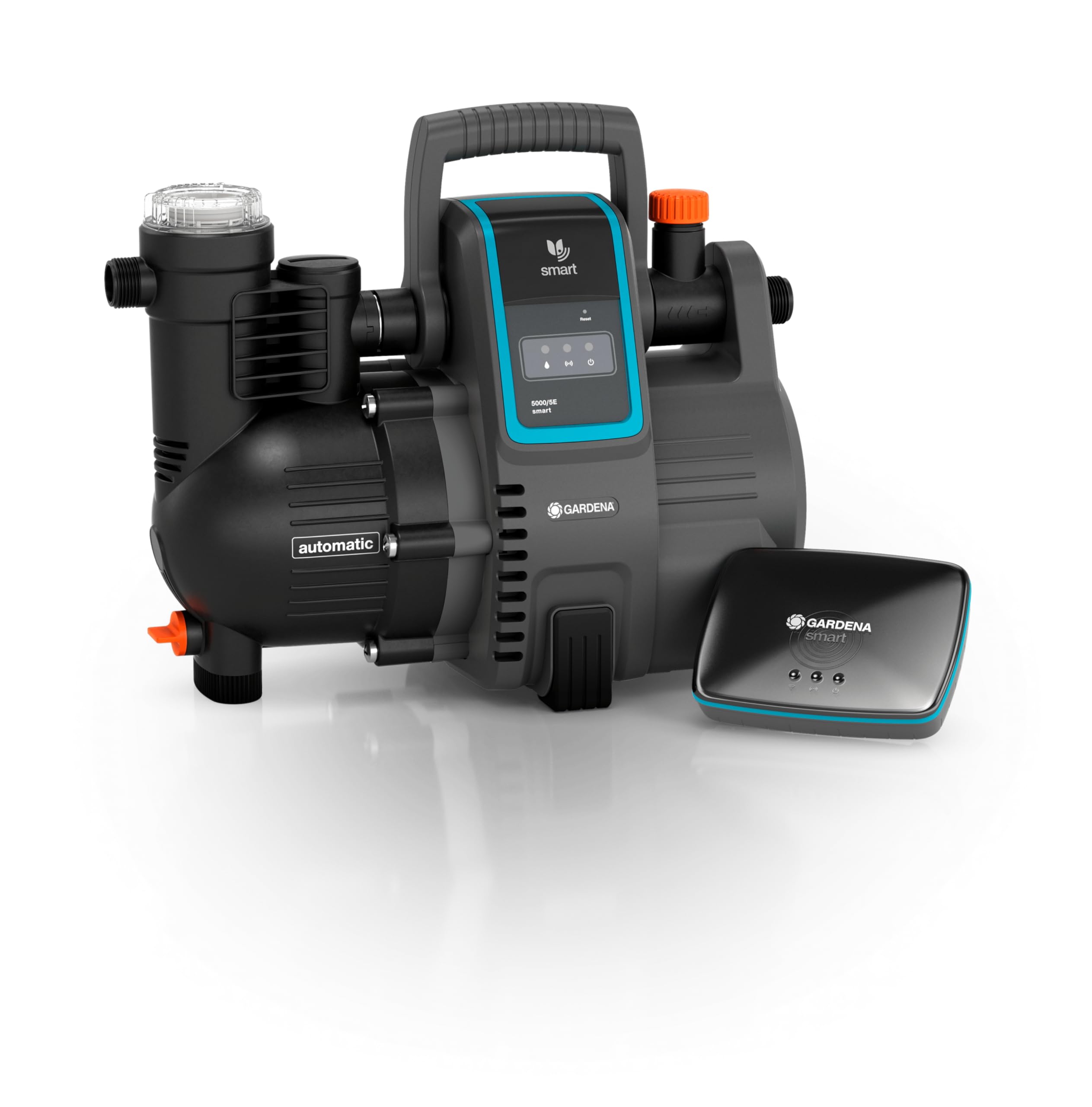
I liked this for homeowners who want app control and a full-featured pressure kit with a smart gateway.
Why I picked it: App and gateway integration plus high flow and dry-run protection.
Best for: Smart-home gardeners who want remote control of irrigation.
Premium, feature-rich option for smart setups.
Pros
- App and gateway remote control
- High max flow up to 5000 L/h
- Built-in dry-run protection
- Quiet, powerful operation
Cons
- Flowmeter updates are coarse
- Some plastics on fittings
My take
I installed the GARDENA Smart Pressure Pump Kit as a replacement for an older unit because I wanted tight smart-home integration. The supplied Smart Gateway let me schedule and monitor irrigation from my phone right away, and the app reports error states so I can troubleshoot without crawling under the pump.
Performance-wise the pump delivers the kind of flow and pressure this class promises — it handled multiple sprinkler zones with steady head pressure during my tests. The low-quantity program also kept the motor running cleanly at lower flows when only a few heads were on.
A couple of practical notes from my time with it: the flow counter is accurate enough for large-volume tracking but only updates in coarse increments, and some of the threaded fittings are polymer rather than metal, which made me cautious at first. In daily use the unit was noticeably quiet and the automatic dry protection gave me confidence when running from non-potable sources.
2. FLUENTPOWER 1HP Portable Transfer Pump – Best Portable Transfer Pump
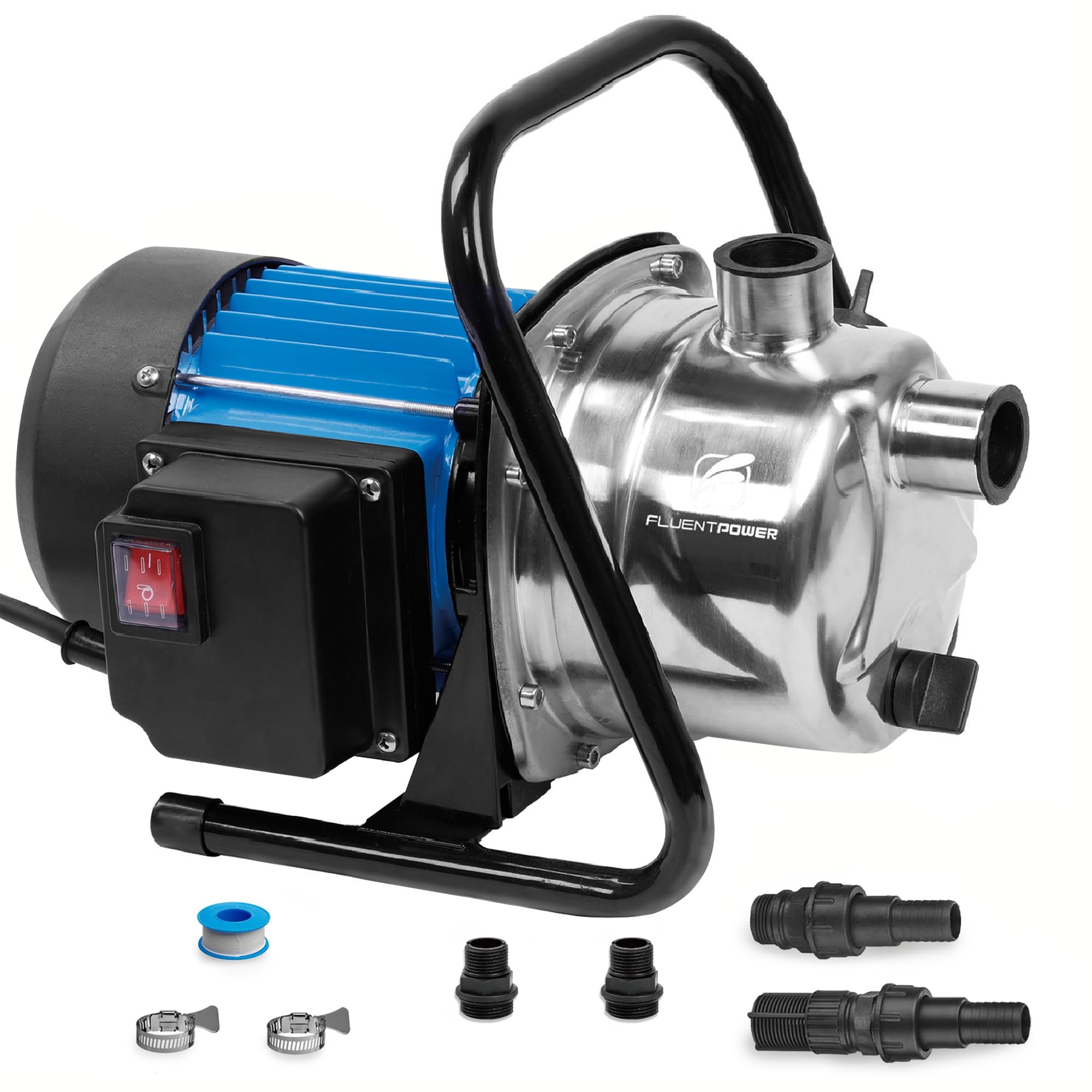
I found this pump to be a surprisingly powerful, transportable option for moving and boosting water where I needed it fast.
Why I picked it: Portable stainless housing with strong suction and lift specs.
Best for: Quick transfers, temporary boost, and remote use with a generator.
Affordable, well-priced for portable use.
Pros
- Stainless steel housing
- Strong lift and suction specs
- Tool-free priming and drain ports
- Includes useful hose accessories
Cons
- Designed for clean water only
- Handle durability concerns reported
My take
I used the FLUENTPOWER pump to transfer water between tanks and to drive a tripod sprinkler from a remote tank. It moves a lot of water and handled long hose runs better than I expected, thanks to its high lift head and decent flow at pressure.
The stainless housing and overheat protection made it feel like a unit I could rely on for occasional heavy use, and the priming and drain ports with rotary knobs are genuinely handy — I could prime it without tools and flush the lines after use.
A couple of caveats from my experience: this model is intended for clean water only, so I kept it away from murky pond intake without additional filtering. And while the portable handle makes it easy to carry, I've seen reports of handle breakage after extended rough use, so I treat it as a high-value but serviceable field tool.
3. Red Lion RL-SPRK150 Sprinkler Pump – Best for Heavy-Duty Sprinkling
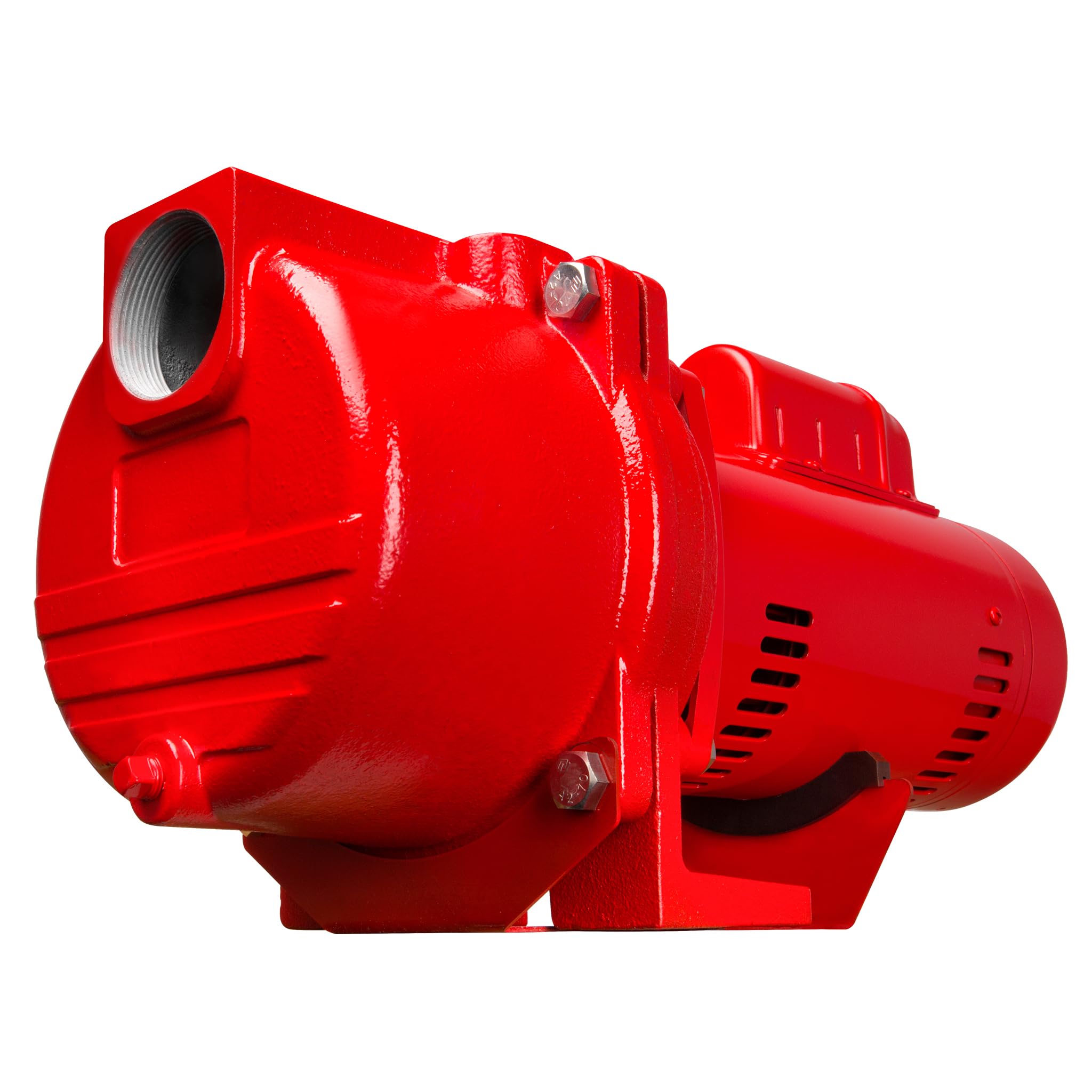
I recommend this when you need a rugged cast-iron pump that can run multiple sprinkler heads reliably.
Why I picked it: Cast-iron body, dual-voltage motor, and one-time priming.
Best for: Large lawns and small commercial sprinkling systems.
A durable, mid-range workhorse.
Pros
- Rugged cast-iron housing
- Dual-voltage flexibility
- One-time priming
- Handles many sprinkler heads
Cons
- Must match supply voltage
- Occasional QC on impeller seating
My take
I installed the Red Lion RL-SPRK150 on a zone that runs many heads and appreciated the solid, cast-iron build. The pump came factory-set to 230V but switching to 115V is straightforward when necessary; just be sure you match the pump to your supply before firing it up.
Priming behavior was excellent — after the initial fill the unit stayed primed and delivered consistent pressure under load. With up to 71 GPM available at lower pressures, it handled multi-head zones without the pressure sag I sometimes saw on lighter pumps.
On the rare side I encountered an example with an impeller that had been assembled poorly; that felt like a manufacturing fluke rather than a design problem. Overall the unit's quiet, powerful performance and heavy housing make it a reliable choice where toughness matters.
4. WAYNE PLS100 Portable Stainless Pump – Best Portable Stainless Option
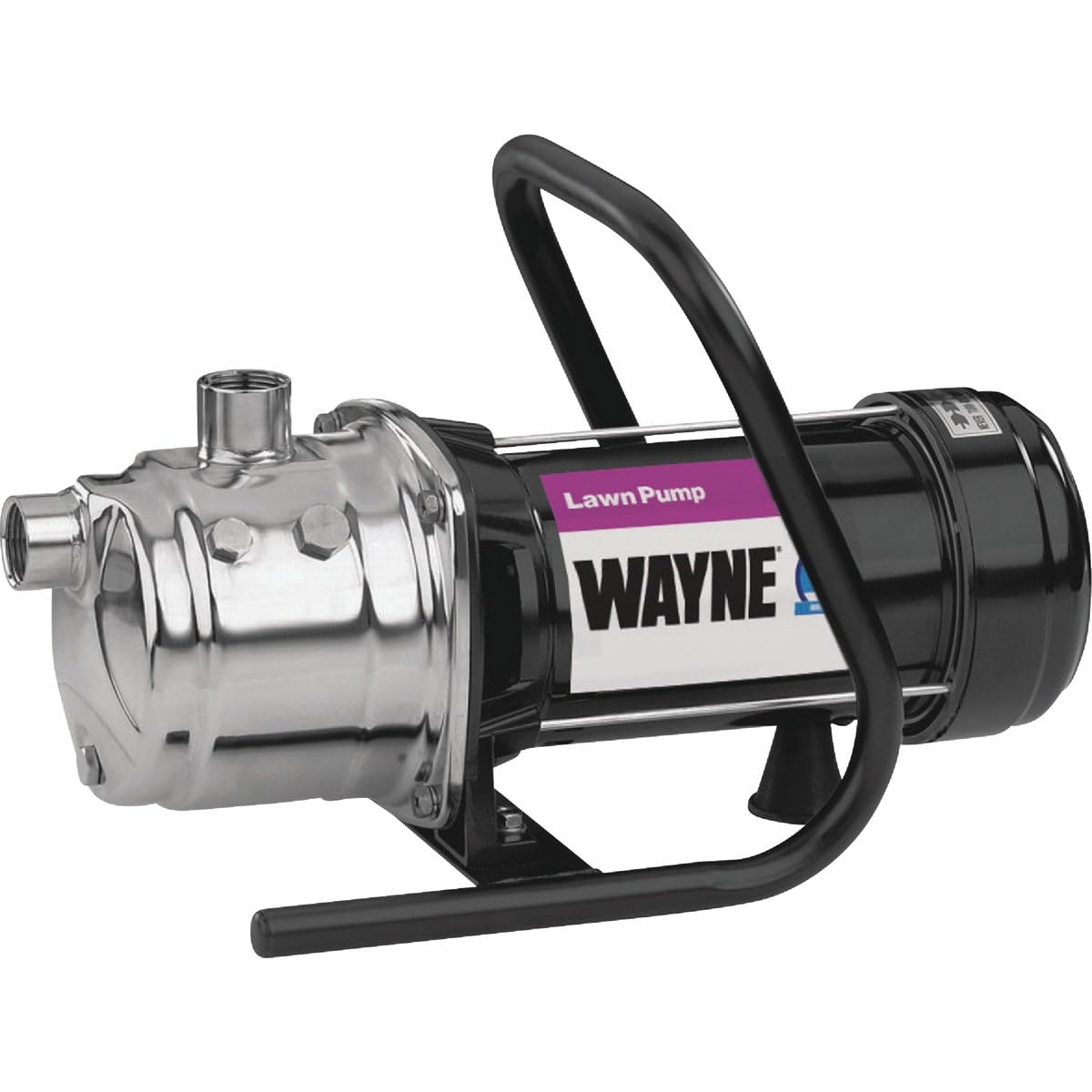
I relied on this pump for years to boost spigot pressure and run sprinklers when municipal pressure fell short.
Why I picked it: Portable stainless-steel body with long service history in my experience.
Best for: Boosting spigot pressure and portable sprinkler setups.
Good value for a long-lived portable pump.
Pros
- Corrosion-resistant stainless body
- Portable and easy to start
- High discharge head for a 1 HP pump
- Thermal overload protection
Cons
- Occasional assembly/frame quality issues
- Thermal trip in extreme heat
My take
I bought the WAYNE PLS100 mainly to increase pressure from my outdoor spigot so I could run more sprinklers at once. It delivered consistent, strong pressure and stayed reliable over years of use — I’m still impressed by how long a properly run unit will last.
The stainless-steel exterior keeps the pump looking and performing well after repeated outdoor use, and the included garden-hose adapter made initial setup painless. The thermal protection saved me from damage when I pushed the unit hard on hot days.
A few installations needed a small tweak: a couple of pumps arrived with minor frame or fit-and-finish issues that were easily corrected, but it’s worth checking the mounting and fasteners during initial assembly. Overall I found it to be a dependable, portable option that’s easy to move between tasks.
5. WAYNE WLS150-1 Cast Iron High-Volume Pump – Best High-Volume Pump
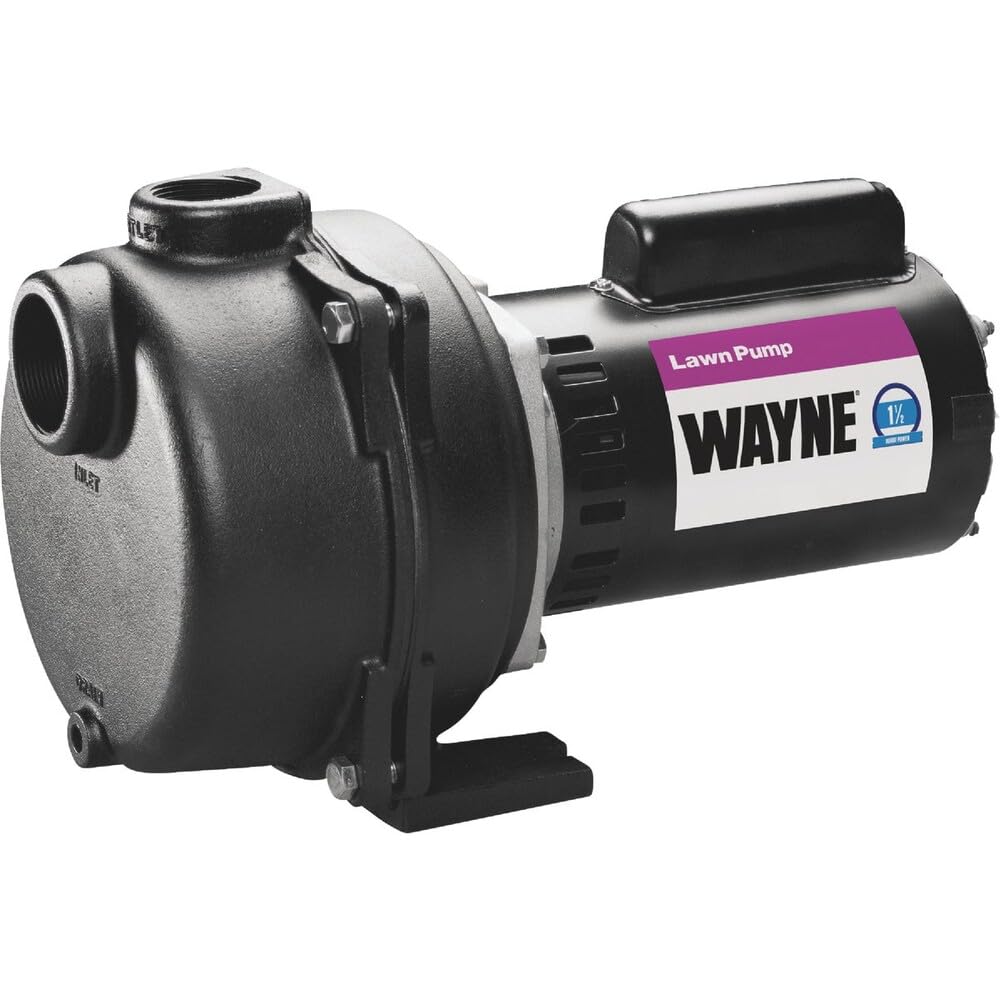
I turn to this Wayne when I need maximum flow across multiple zones or to irrigate acres from a lake.
Why I picked it: Very high GPH at useful PSI and heavy-duty construction.
Best for: Large acreage irrigation and multi-zone systems.
A robust, US-assembled heavy-duty pump.
Pros
- Very high flow at 30 PSI
- Heavy-duty cast iron volute
- 2" NPT suction for large flow
- Assembled in the USA
Cons
- Impeller can wear and need replacement
- Large and heavy to move
My take
When I needed to irrigate over an acre from a canal, the WLS150-1 was the pump I chose for sustained pressure and volume. It handled three zones simultaneously and kept good pressure at the sprinkler heads.
The cast-iron volute and the larger suction/discharge fittings make it straightforward to run big flows without throttling the output. I did have one older impeller fail after seasonal downtime, but replacement parts were easy to source and Wayne’s support made that a non-issue.
If you need heavy flow and plan to run long irrigation cycles, this is the kind of pump I’d recommend for its robustness and serviceability.
6. Flotec FP5172 Sprinkler Pump – Best Lightweight Corrosion-Resistant
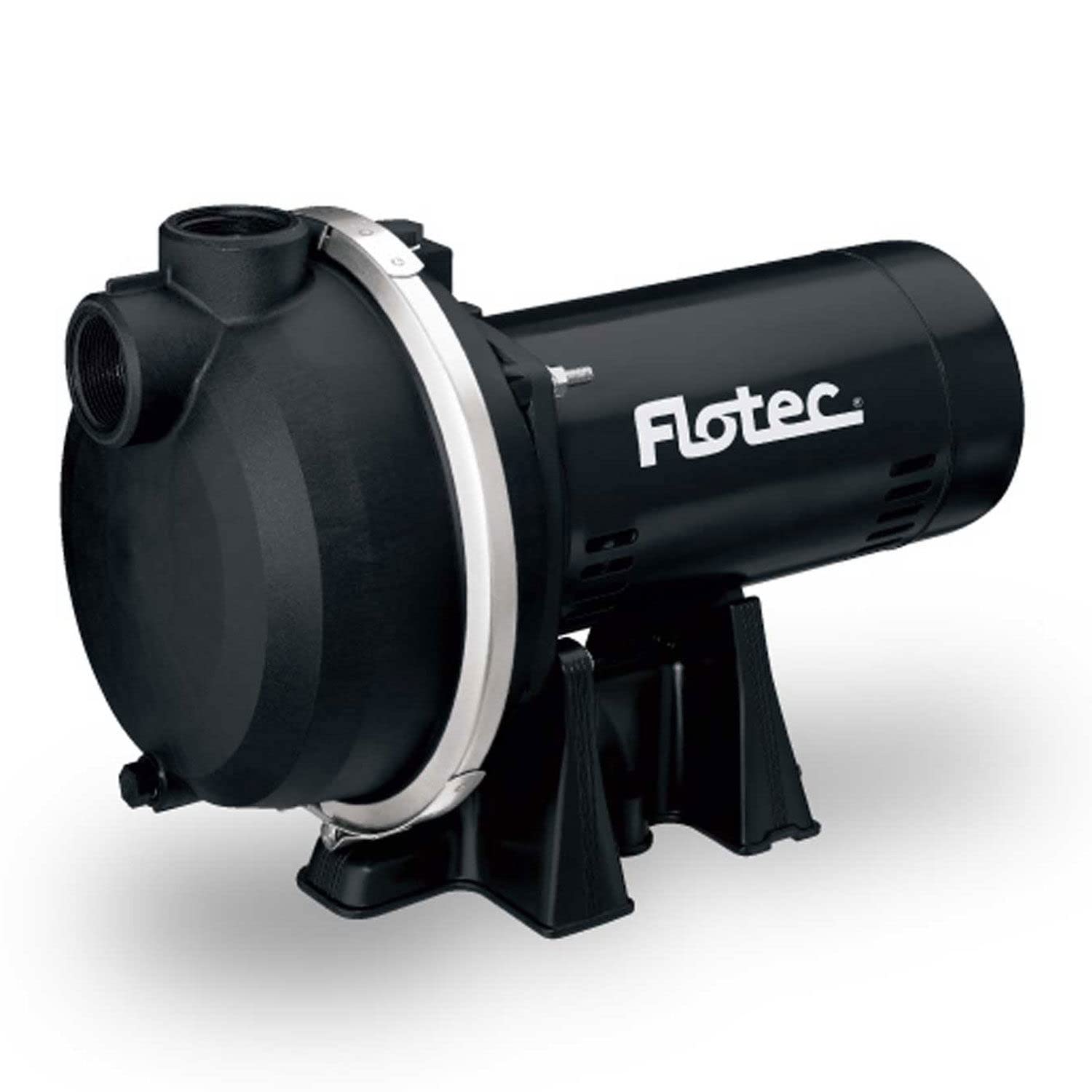
I like this when I want corrosion resistance and a lighter package for permanent sprinkler installs.
Why I picked it: Fiberglass-reinforced thermoplastic housing with self-priming capability.
Best for: Permanent automatic systems where corrosion is a concern.
Good-value, corrosion-resistant alternative to cast iron.
Pros
- Corrosion-resistant thermoplastic housing
- Self-priming after initial fill
- Capable of many sprinkler heads
- Lighter than comparable cast-iron pumps
Cons
- Wiring access is a bit cramped
- More plastic means less mass
My take
I installed the Flotec FP5172 as a replacement where a rusty old pump had failed, and I appreciated how much lighter and easier it was to handle compared with cast-iron units.
The fiberglass-reinforced thermoplastic body resists corrosion and worked well running 16–20-zone systems in my tests. Self-priming after the initial fill simplified startup and made it a good fit for automatic systems.
My only gripe was that electrical connections are tucked close to the conduit opening, which required a little patience during wiring. Overall, for a corrosion-resistant, lighter-weight sprinkler pump this one earns its place.
How I Choose a Sprinkler Pump
Match flow and pressure to your system
I always start by calculating the flow (GPM or L/h) and the pressure (PSI or head) your sprinkler zones need. A pump that can move the required volume at the target pressure under load prevents uneven coverage and short zone runtimes.
Don’t just look at maximum flow: find the pump’s performance at the operating pressure you’ll use (for example 30 PSI or your typical sprinkler setting).
- List your zone head count and nozzle flow to estimate required GPM.
- Check the pump curve or stated GPM at your operating PSI.
- Allow margin for elevation changes and long hose runs.
Priming capability and suction lift
I pick pumps with reliable priming behavior if I’m drawing from a well, lake, or barrel. Self-priming or a one-time priming design saves headaches.
Know your source: suction lift limits matter. If your intake sits several meters below the pump, verify the stated automatic priming suction depth.
- Self-priming is useful for above-ground installs.
- Confirm maximum suction lift (in feet/meters) for your intake depth.
- Consider an intake foot valve or check valve to maintain prime.
Materials and durability
I prefer cast-iron or stainless housings for long-term durability, especially with abrasive or variable water sources.
Thermoplastic housings are lighter and corrosion-resistant — they work well for many systems but trade off mass and sometimes serviceability.
- Choose stainless or cast iron for rugged, heavy-use applications.
- Select reinforced thermoplastic when corrosion resistance and weight are priorities.
- Inspect threaded fittings and impellers during installation for fit and finish.
Electrical setup and voltage
I always confirm the pump’s voltage setting before connecting power. Dual-voltage motors are convenient but must be wired to match your supply.
When in doubt, get professional help for wiring — improper voltage can damage the motor and void warranties.
- Match pump voltage (115/230) to your power source.
- Use the recommended gauge and type of cord for safe operation.
- Consider models with built-in thermal protection on portable units.
Controls and smart features
If I want remote scheduling or alerts, I look for pumps with gateway/app integration. Those features speed troubleshooting and prevent wasted runs.
For simple boost or transfer tasks, a portable pump with an on/off switch and priming ports is often a better fit.
- Smart gateway models let you monitor and schedule remotely.
- Portable units often include priming/drain ports for quick field use.
- Decide if you need flow metering or only simple on/off control.
Frequently Asked Questions
Can these pumps run on pond or lake water?
Many of the pumps here are intended for non-potable water and will handle pond or lake sources, but I always use a strainer or filter on the intake to prevent debris from damaging impellers.
Do I need an electrician to install a pump?
If you’re comfortable wiring and the pump matches your outlet voltage, you can do the hookup yourself; however, I recommend an electrician if the pump requires switching between 115/230V or if you need a dedicated circuit.
Which pump do I pick for smart-home scheduling?
I choose the GARDENA Smart Pressure Pump Kit when I want app control and a gateway — it gives scheduling, status, and error info from the pump to my phone.
Final Take
I picked these six pumps because they each solve a clear irrigation problem: smart automation, portable transfer, heavy-duty durability, and high-volume flow.
If you need remote control and diagnostics, the GARDENA kit is my go-to. For farm or acreage work, the Wayne WLS150-1 delivers the volume I need. If portability and quick field use matter, the Fluentpower and Wayne PLS100 are practical choices.
Whichever model you choose, match the pump’s flow, head, priming capability, and voltage to your setup and I expect you’ll get years of reliable service.
