
I tested jar lids, trays, and complete kits to find reliable sprouters that drain well, resist rot, and are easy to clean. Here are the options I keep coming back to for quick sprouts, large batches, and stainless-steel耐
I grow sprouts regularly in my kitchen and have tried lids, trays, and full kits to see what actually works day-to-day. My priorities were reliable drainage, good airflow, easy cleaning, and materials that won’t taint the flavor.
Below I compare five products I used long enough to judge germination speed, maintenance, and durability. I explain when each makes sense so you can pick the right sprouting setup for your routine.
I generally prefer jar lids for small, frequent batches and trays for larger or continuous harvests; stainless parts last longer but plastic trays can be more convenient for big yields.
1. Masontops Bean Screen Mason Jar Sprouting Lids – Best Mason Jar Lid
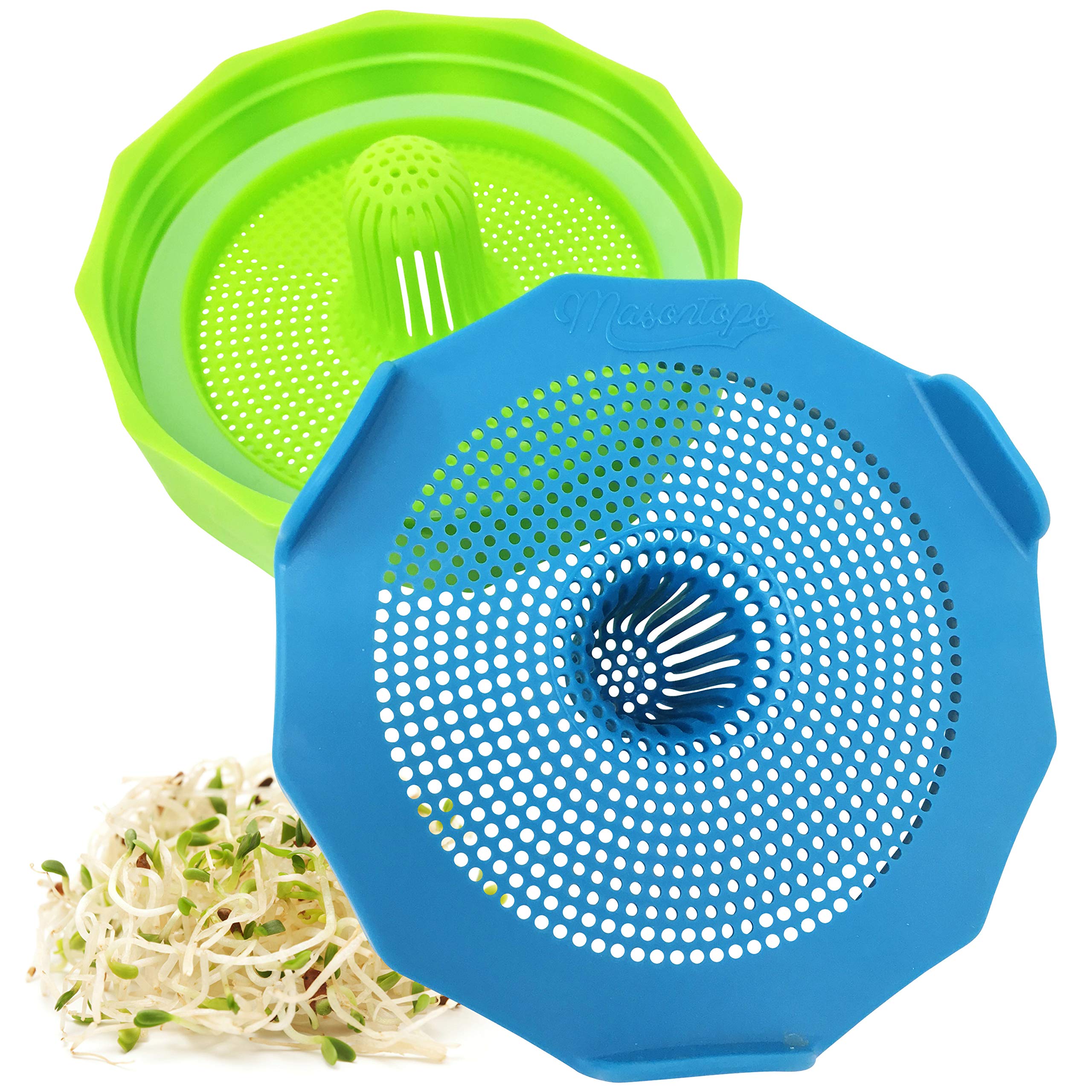
Simple wide-mouth sprouting lids that make rinsing and drainage painless while keeping seeds contained.
Why I picked it: Built-in inverted spout, standing pegs, and solid drainage in a compact lid.
Best for: Single-jar sprouters who want an easy, no-fuss lid for broccoli, alfalfa, and mung beans.
Very affordable single-purpose lid set.
Pros
- Fits wide-mouth jars
- Inverted spout for clean rinsing
- Pegs allow upright drainage
- BPA-free plastic and silicone
- Keeps tiny seeds inside
Cons
- Plastic construction vs stainless
- Not for narrow-mouth jars
My take
I used these on quart wide-mouth jars and the Bean Screen nails the basics: rinsing is tidy thanks to the inverted spout and the pegs keep the jar tilted up so water drains completely. That cut down on soggy batches and the faceted sides stopped jars from rolling when I set them on the counter.
Small seeds stayed put during rinses, and cleanup is straightforward — I run them under hot water and they come clean quickly. The BPA-free plastic felt sturdy and I liked that I never had to remove the lid to rinse, which keeps the process fast and low-mess.
If you want an inexpensive, focused solution for jar sprouting, this is what I reach for. I’ll note that if you prefer metal hardware or plan to sprout in narrow-mouth jars, this particular design won’t be ideal.
2. LeJoy Garden Seed Sprouter Tray – Best Tray for Big Batches
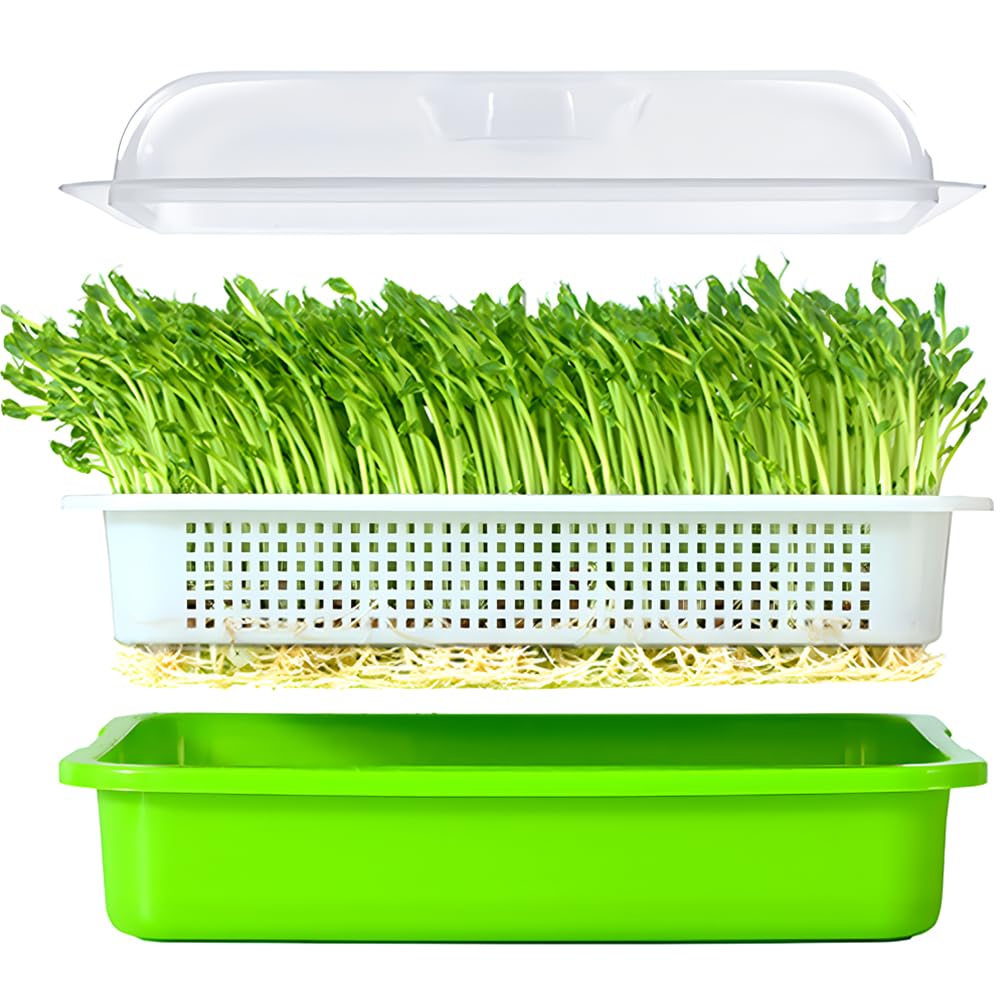
A large covered tray that retains humidity and handles generous seed volumes for fast germination.
Why I picked it: Big capacity plus a cover that accelerates sprouting when I need larger yields.
Best for: Anyone who wants to sprout batches of mung beans, pea shoots, wheatgrass, or feed multiple people.
Affordable large-capacity tray.
Pros
- Generous growing area
- Clear lid for humidity control
- Food-grade PP material
- Easy for children to use
- Multi-seed compatible
Cons
- Small seeds can fall through
- Can develop odor if sealed continuously
My take
I put a bag of mung beans into this tray and watched them pop within a couple of days. The lid traps warmth and moisture, which sped germination for me and reduced how often I needed to mist.
For very small seeds like alfalfa or radish I lined the mesh with a single sheet of unbleached paper towel or a coffee filter to prevent loss — that’s a tiny extra step but it solved the issue. When I left the lid closed all the time it occasionally developed a funky smell, so now I keep it covered at night and open during the day.
This tray feels durable and is easy to handle when I want a larger harvest at once. If you’re after continuous small jars of sprouts, a tray might be overkill, but for batch sprouting it’s what I use when I need volume.
3. SUNPRO Seed Sprouter Tray (2-Pack) – Best Two-Pack Tray
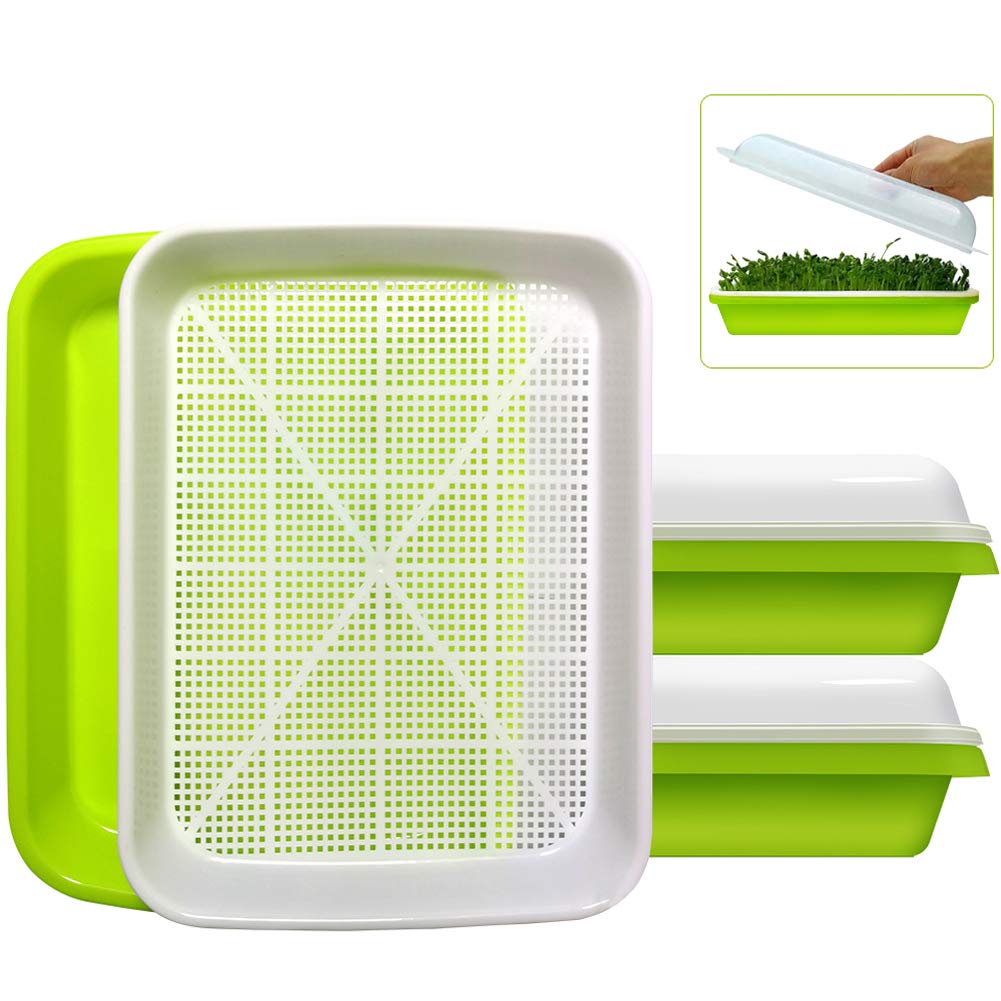
A two-tray microgreens station with a humidity cover and a mesh design that reduces root rot and improves airflow.
Why I picked it: Dual trays with concave-convex mesh and lids give me reliable germination and flexibility.
Best for: People growing wheatgrass, microgreens, or cat grass and those who want a spare tray ready.
Reasonably priced two-pack for repeated batches.
Pros
- Two trays with lids
- Scientific mesh design for airflow
- Beginner-friendly guide included
- Sturdy, food-grade PP
- Works for cat grass
Cons
- Tiny seeds may need a liner
- Cover can trap excess moisture
My take
I used one tray for cat grass and the other for mixed sprouts; both performed well. The inner mesh’s concave-convex pattern helps air circulate while keeping seeds separated from standing water, which noticeably cut down on root rot compared to simpler trays I’ve used.
The included step-by-step guide was useful for dialing in soak times and when to move trays into light. I still line the mesh for very fine seeds, but for peas, wheatgrass, and mung beans the trays worked without fuss.
Because you get two trays and lids, I can stagger batches and have a ready-to-harvest tray while a second batch germinates. That flexibility is why this two-pack lives on my counter.
4. Mason Jar Sprouting Kit with Stand & Sleeves – Best Complete Jar Kit
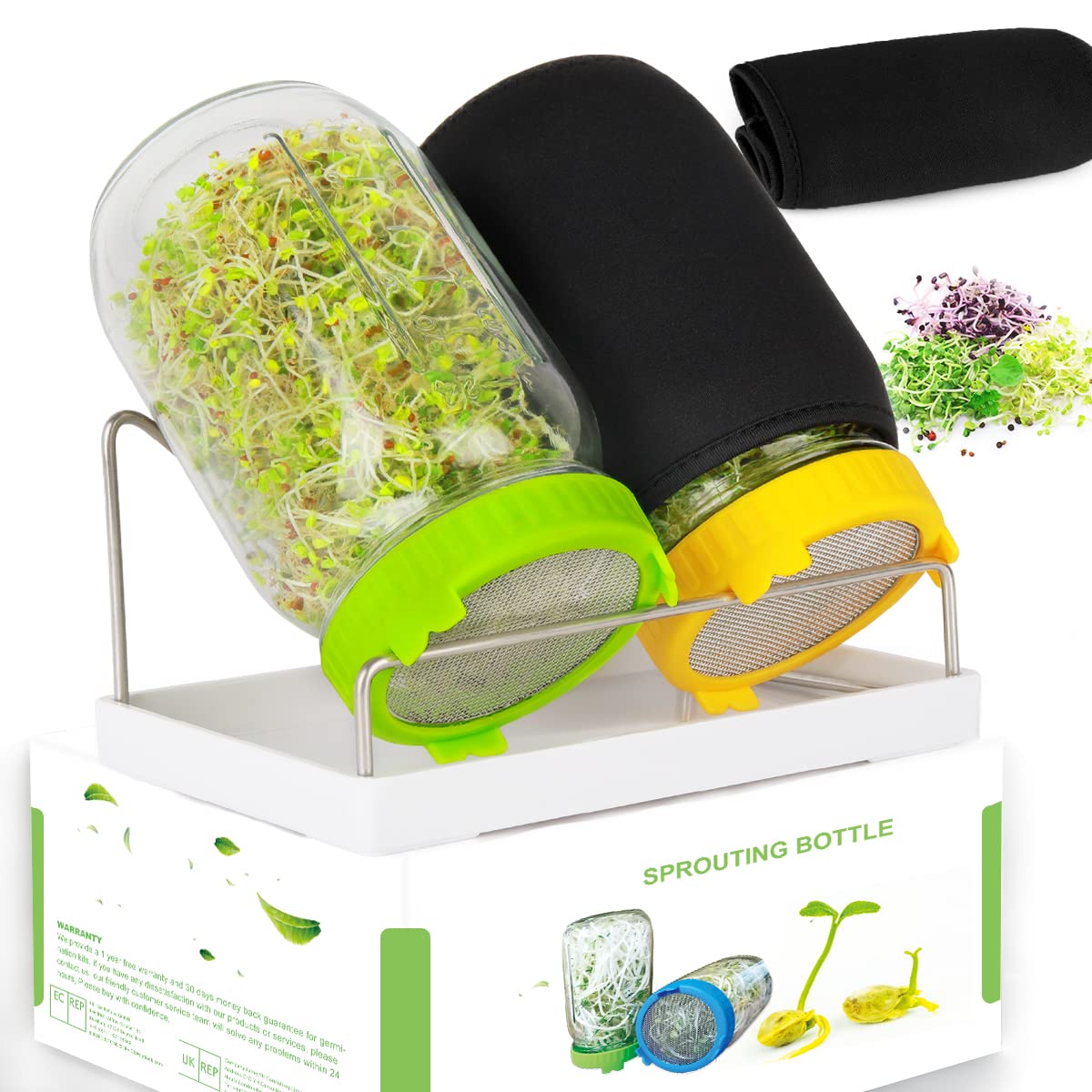
A full mason-jar kit that includes jars, stainless screens, a draining stand, drip tray, and blackout sleeves for controlled sprouting.
Why I picked it: Everything I need for jar sprouting in one durable package with blackout sleeves for soybean sprouts.
Best for: Home cooks who want a tidy, all-in-one countertop sprouting system.
Mid-range complete kit with premium materials.
Pros
- Complete kit included
- 316 stainless mesh lids
- Blackout sleeves for dark sprouting
- 304 stainless stand
- Integrated drip tray
Cons
- Instructions can be vague
- Not ideal for sunflower seeds
My take
I appreciated the thoughtful kit layout: two wide-mouth jars, stainless screens, a sturdy stand, and blackout sleeves that help me control light for longer, straighter soybean sprouts. The drip tray catches runoff neatly so the kit can sit anywhere without leaving a mess.
The metal components feel substantial and rust-resistant. After a few batches I found the sleeves and stand made it easy to maintain two jars on alternating schedules so I always have fresh sprouts on hand.
The one snag was the instruction sheet — it didn’t lay out timelines clearly for every seed type, so I leaned on experience and a simple schedule to get consistent results. Overall, this is the most complete kit I use when I want a polished setup on the counter.
5. Sprouting Jar Kit with Stainless Steel Lids & Stand – Best Stainless Lids Kit
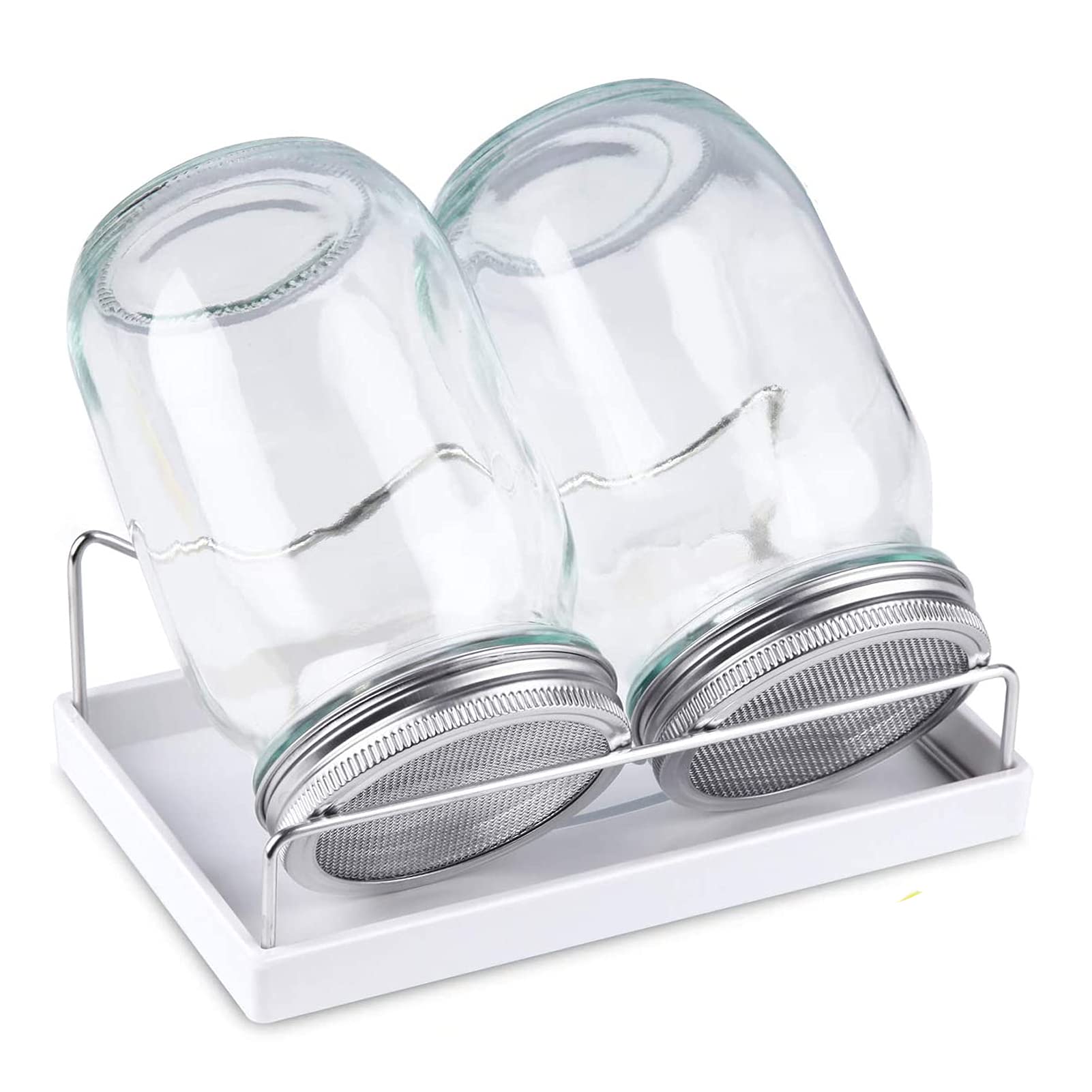
Wide-mouth jars paired with 316 stainless steel sprouting lids and a stable stand for easy harvests and long-lasting hardware.
Why I picked it: Stainless 316 lids and wide mouths make harvesting and cleaning effortless.
Best for: Users who value rust-proof hardware and straightforward maintenance.
Higher-end feel from stainless components.
Pros
- 316 stainless sprout lids
- Wide-mouth jars for easy removal
- Dishwasher-safe tray
- Stable stainless stand
- Good airflow and drainage
Cons
- Lids can feel slightly loose
- Avoid overfilling jars
My take
I grow broccoli sprouts in these wide-mouth jars and appreciate how the stainless lids hold up to repeated cleaning without rust. The wide mouths make harvesting simple — I can slip my hand in and pull out bundles without mangling the sprouts.
The stand and drip tray keep the counter tidy and provide consistent tilt for drainage. One minor annoyance: a couple of lids arrived a touch loose and I tightened them by squeezing the rim slightly to improve the fit. That was a quick fix and didn’t affect performance.
If you want a durable jar setup that feels like it will last, this kit leans toward longevity and ease of use — I reach for it when I want stainless reliability.
How I Choose a Sprouting Kit
What I look for first
Drainage and airflow are non-negotiable for me — standing water ruins batches faster than anything else. I prioritize lids or trays that let water escape and air circulate.
Material matters: stainless-steel screens and food-grade plastics resist odors and last longer with frequent use.
- Good drainage prevents root rot and sour smells
- Wide-mouth jars make harvests easier
- Humidity covers speed germination but don’t leave them sealed indefinitely
- Stainless parts resist rust; BPA-free plastics are lighter and cheaper
Choosing between jars and trays
I use jar lids for small, frequent batches and trays when I want bigger yields or continuous harvests. Jars are compact and tidy; trays give scale.
Think about countertop space and how often you want to harvest when picking form factor.
- Jars: best for single servings and small households
- Trays: best for families or regular salad/microgreen use
- Two-tray kits let you stagger batches for a steady supply
Seed types and prep
Large seeds like mung beans and peas do fine in most systems. Very fine seeds such as alfalfa or radish may fall through some meshes — line the tray or use a thin paper towel when needed.
Soak times and rinse frequency vary by seed. I keep a simple schedule: soak, rinse, drain three times a day for most beans, and shorter cycles for tiny seeds.
- Soak large seeds 8–12 hours
- Rinse and drain at least twice daily
- Use liners for very small seeds
Frequently Asked Questions
Can I use these kits for all kinds of seeds?
I use jars and trays for most seeds, but I line mesh trays for very fine seeds like alfalfa or radish to stop them falling through. Sunflower seeds often do better in soil or deeper media rather than jar sprouting.
How often should I rinse my sprouts?
In my routine I rinse most bean sprouts twice to three times a day. For trays with lids that preserve humidity, I reduce misting but still check moisture daily to avoid stagnant water.
Are the materials safe and easy to clean?
Yes — I prefer 316 stainless lids and food-grade PP or BPA-free plastics. I wash trays and lids with warm soapy water and run plastic trays or removable parts in the dishwasher when allowed; stainless holds up to repeated cleaning.
Final Take
I keep a Mason-lid set for quick single-jar batches and a two-tray system for when I want larger harvests or staggered planting. If longevity matters to you, pick a kit with 316 stainless parts; if you want volume and ease, a covered tray wins.
Whichever option you choose, focus on drainage, appropriate mesh for your seed type, and a cleaning routine — that combination is what produced the most consistent, tasty sprouts in my experience.
