
I tested a range of square and extendable dining tables for small spaces, family dinners, and occasional hosting. Below are the options I kept using and recommending depending on whether I needed compact everyday seating
I live and work around tables—eating, working, hosting—so I focused on pieces that balance footprint, durability, and flexibility.
In this roundup I cover compact square options and several extendable models that let you shift between everyday use and larger gatherings without a separate storage chore.
If you want a compact everyday table pick the Winsome Groveland; if you host often, the Mobili Fiver extendables give the most flexible seating and hidden-leaf convenience.
1. Mobili Fiver First Extendable Table – Best Overall
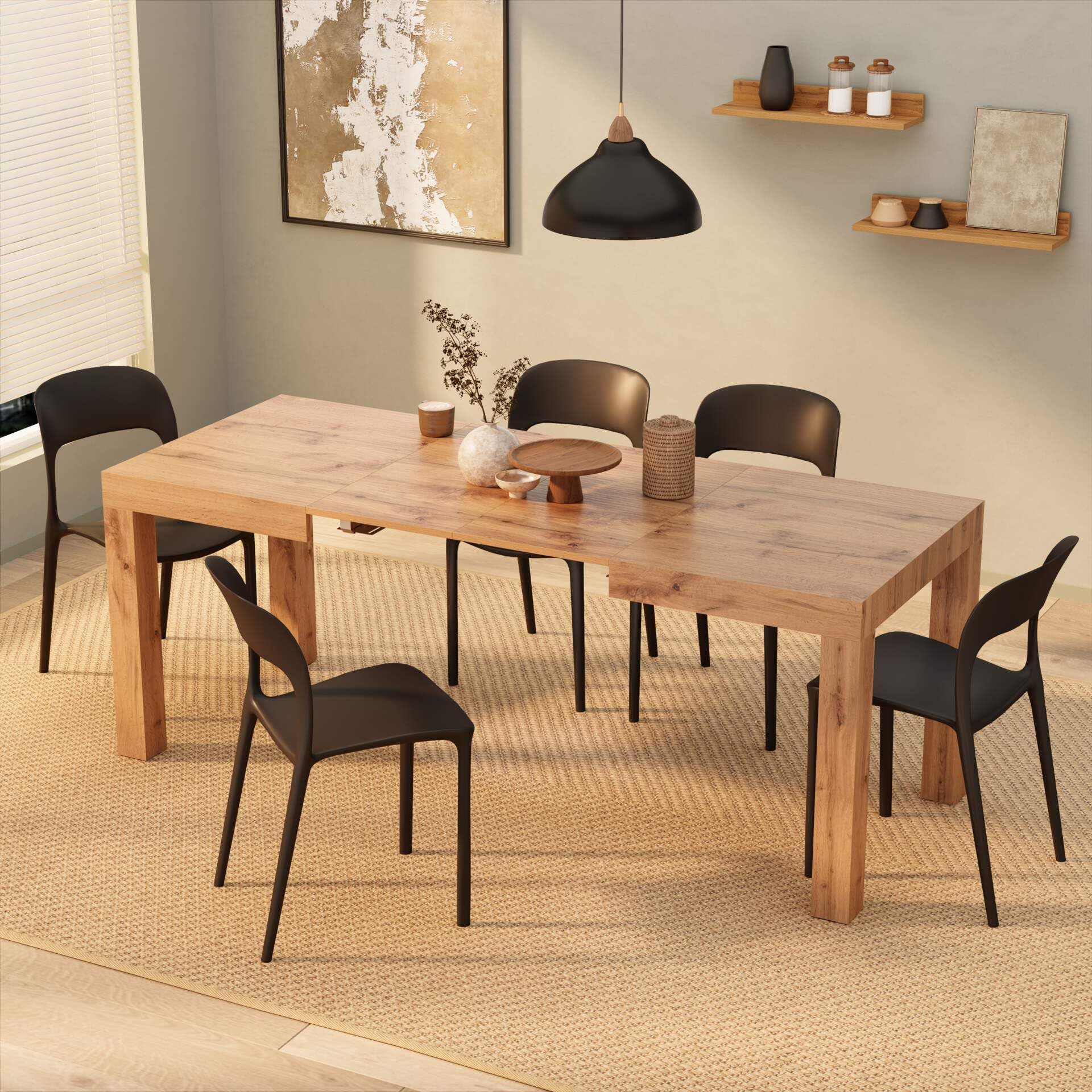
A heavy, Italian-designed extendable table that tucks its leaves inside and stretches from a cozy everyday size to a full table for eight.
Why I picked it: I picked it for its smooth extension mechanism and built-in leaf storage.
Best for: Families who need a compact table most days and full seating for guests.
More expensive option with solid construction and Italian design.
Pros
- Hidden internal leaf storage
- Smooth, easy extension mechanism
- Scratch- and water-resistant top
- Feels very sturdy when assembled
Cons
- Heavier to move
- Finish can read warmer than photos
- Corner damage possible in transit
My take
This is the table I reach for when I need flexible seating. Closed it’s a manageable footprint for everyday meals; extended it transforms into a true dining table for up to eight. The extension action is smooth and the way the leaves stow inside keeps my dining area tidy—no separate storage required.
The melamine laminate top has held up well against spills and the occasional hot pan; I find it forgiving with kids and pets. Assembly was straightforward, and having a drill made the screw work much faster.
One downside: the tone reads a bit warmer in person than I expected, so I recommend checking samples against your floors if matching is critical. I also had a small shipping hiccup on the first top, but the maker responded quickly and sent a replacement, which I appreciated.
2. Winsome Groveland Square Dining Table – Best Budget
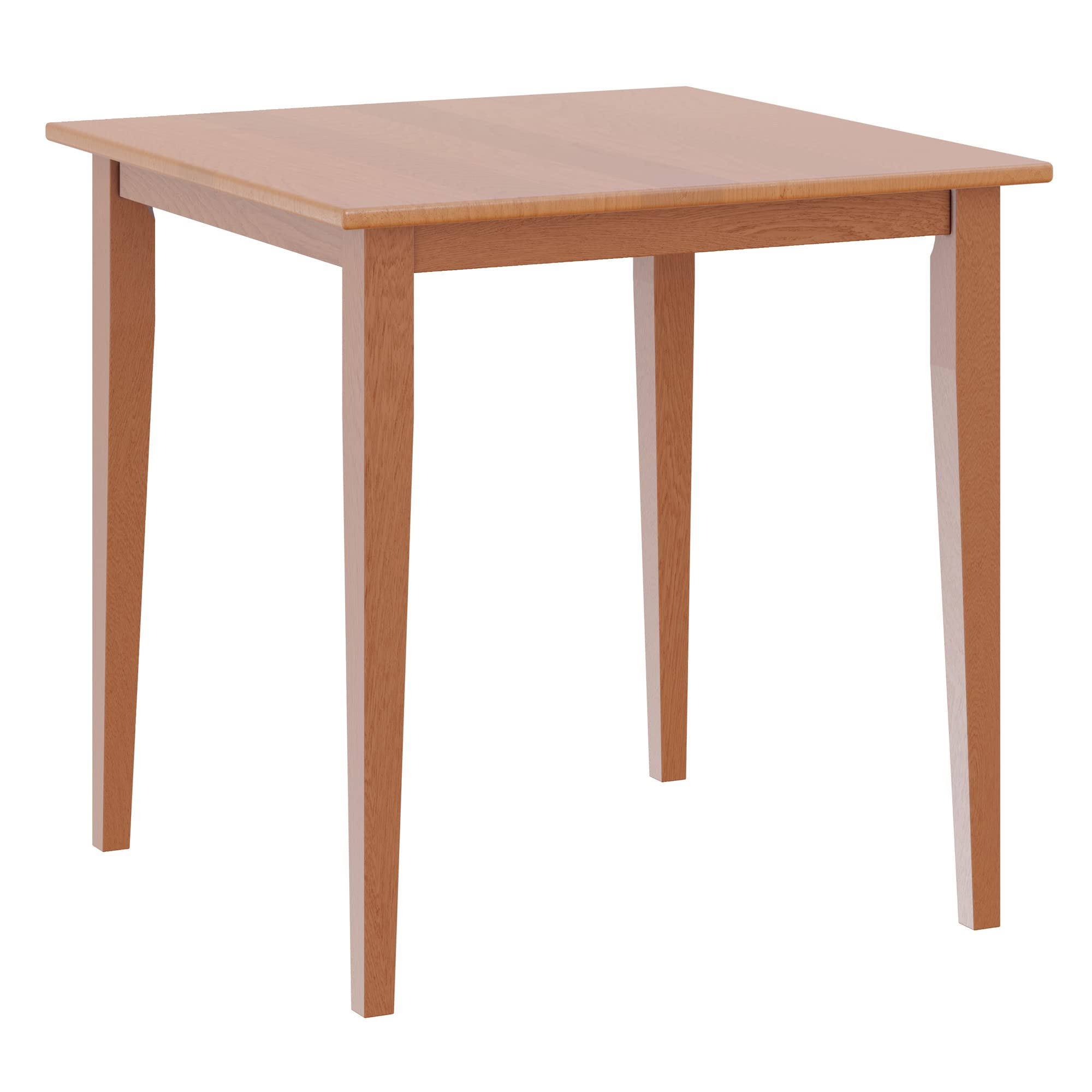
A simple, solid-wood square table that’s perfectly sized for small kitchens, nooks, or studio apartments.
Why I picked it: I chose it for its honest solid-wood build and compact footprint.
Best for: Couples, small spaces, or anyone needing a tidy square table for two to four.
Budget-friendly and solid wood for the price.
Pros
- Solid wood construction
- Classic shaker styling
- Easy assembly
- Lightweight to reposition
Cons
- Too small to tuck four chairs fully
- Not fine furniture heirloom quality
My take
When I needed a compact square table the Winsome Groveland was the obvious choice. The oak finish looks warm and the tapered legs give the table more personality than its price suggests. It feels sturdy, and the packaged parts were easy to assemble.
The table is fairly small—perfect for two and cozy for four. I couldn’t push all chairs fully under the apron, so I treat it as an intimate table rather than a full-family dining centerpiece.
If you want an honest, attractive wood table for a tight footprint, this one delivers without fuss.
3. Mobili Fiver Easy Extendable Table – Best for Flexibility
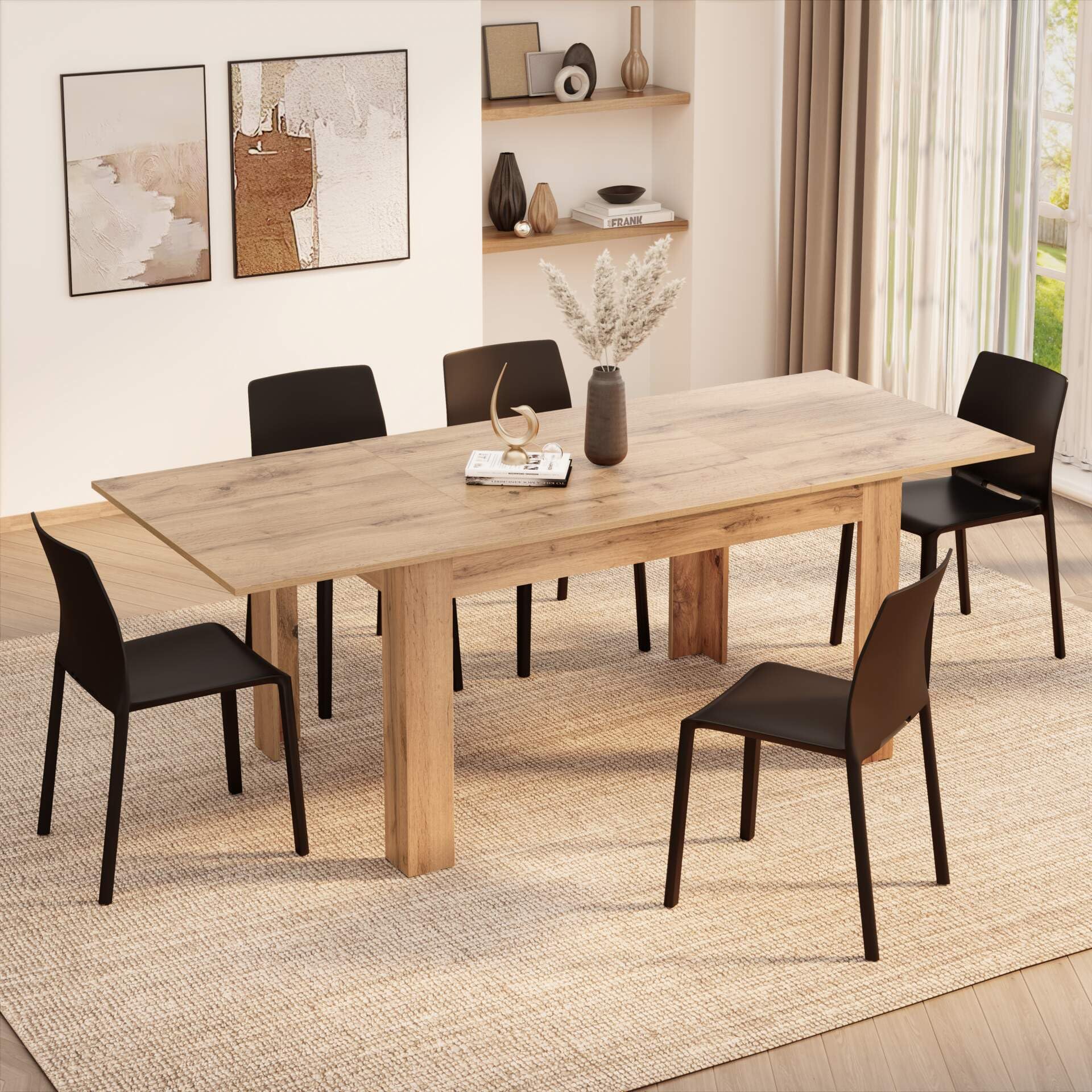
A versatile extendable table with two leaves that lets me choose three sizes and store the leaves inside when not in use.
Why I picked it: I picked it for the two-leaf system and the L-shaped leg detail.
Best for: Households that often switch between everyday seating and larger gatherings.
Mid-range option with multiple extension configurations.
Pros
- Two internal leaves for three sizes
- Stable fixed-structure design
- Easy to clean laminate top
- Distinctive L-shaped legs
Cons
- Wood-grain continuity varies
- Takes time to fully assemble
- Crossbar may reduce knee space
My take
The Easy model won me over with its three-size flexibility: I keep one leaf in most of the time and add the second for holidays. Having the leaves stored inside is as convenient as advertised—no hunt for extra panels in the garage.
Build quality feels robust for a laminate tabletop. The finish hides fingerprints better than other laminate tops I’ve used, and cleanup is as simple as a damp cloth and mild detergent.
Assembly required patience and an extra pair of hands for flipping the assembled frame upright, but once it was together the table felt very secure. Be aware that the continuity of the wood grain between leaves and top isn’t guaranteed, which is cosmetic rather than structural.
4. Ashley Valebeck Farmhouse Extension Table – Best Farmhouse Look
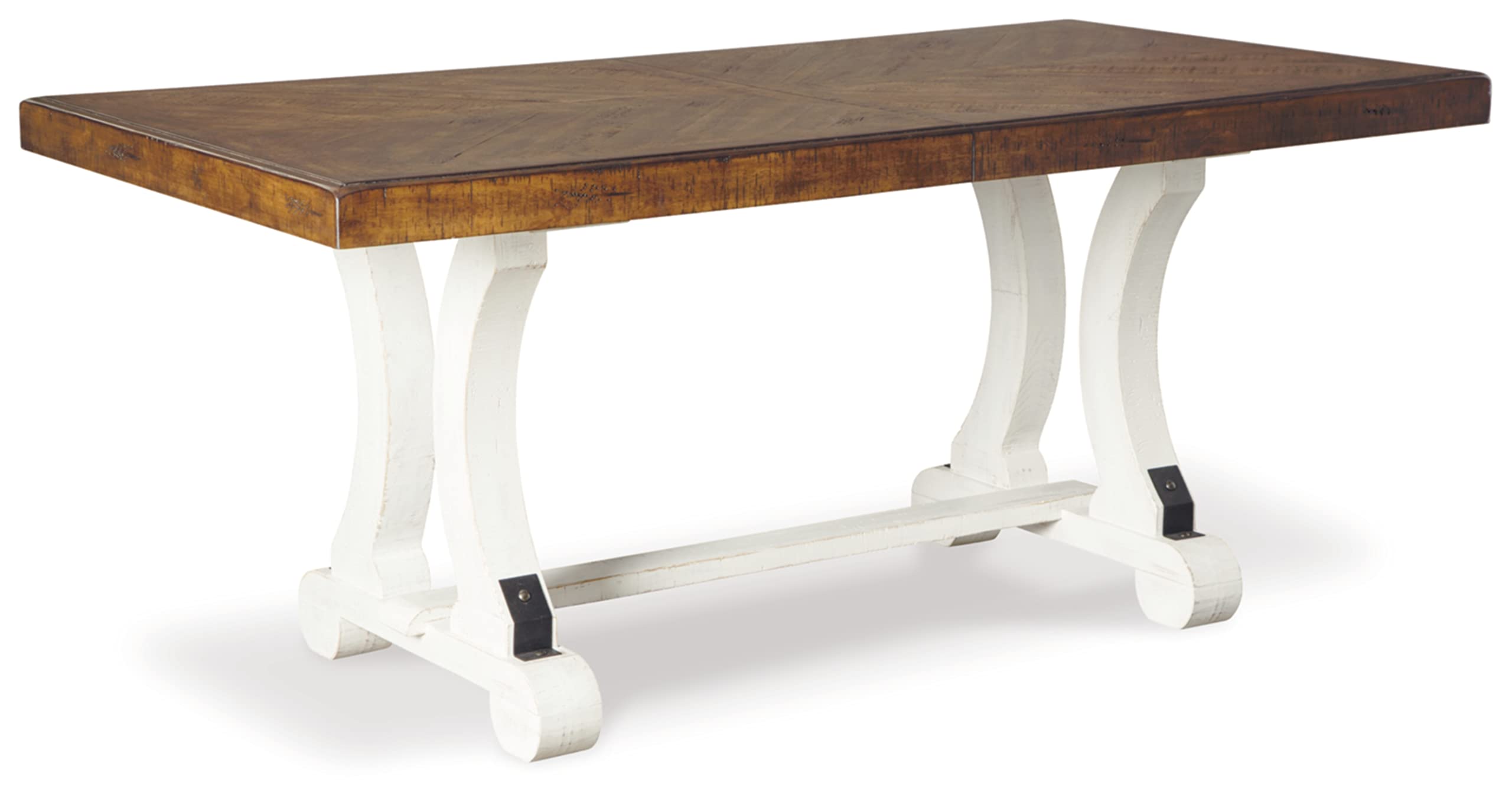
A two-tone farmhouse-style extension table that extends by pulling both ends and dropping in a leaf—classic looks with practical assembly.
Why I picked it: I picked it for its classic farmhouse aesthetic and straightforward extension.
Best for: Owners who want a farmhouse look with the ability to seat a crowd.
Mid-range, style-forward option with solid construction elements.
Pros
- Warm two-tone farmhouse style
- Seats up to eight when extended
- Solid-feeling despite lighter weight
- Foot rest bars add comfort
Cons
- Made of pine, veneer, and engineered wood
- Rare screw alignment issues reported
My take
I gravitated toward the Valebeck for its farmhouse charm—the two-tone finish and black metal accents make it a dependable focal point. The pull-apart extension and drop-in leaf are intuitive and feel durable in use.
Assembly was straightforward in my experience; the parts were well packaged and I managed the build without drama. The table is lighter to move than some solid-wood options, which is useful when rearranging for guests.
If you prefer all-solid-wood construction, note this model uses pine, veneer, and engineered components. That said, the piece reads sturdier than those materials might suggest and has become one of my go-to styling pieces.
5. East West Norfolk Butterfly Leaf Table – Best Solid-Wood Butterfly Leaf
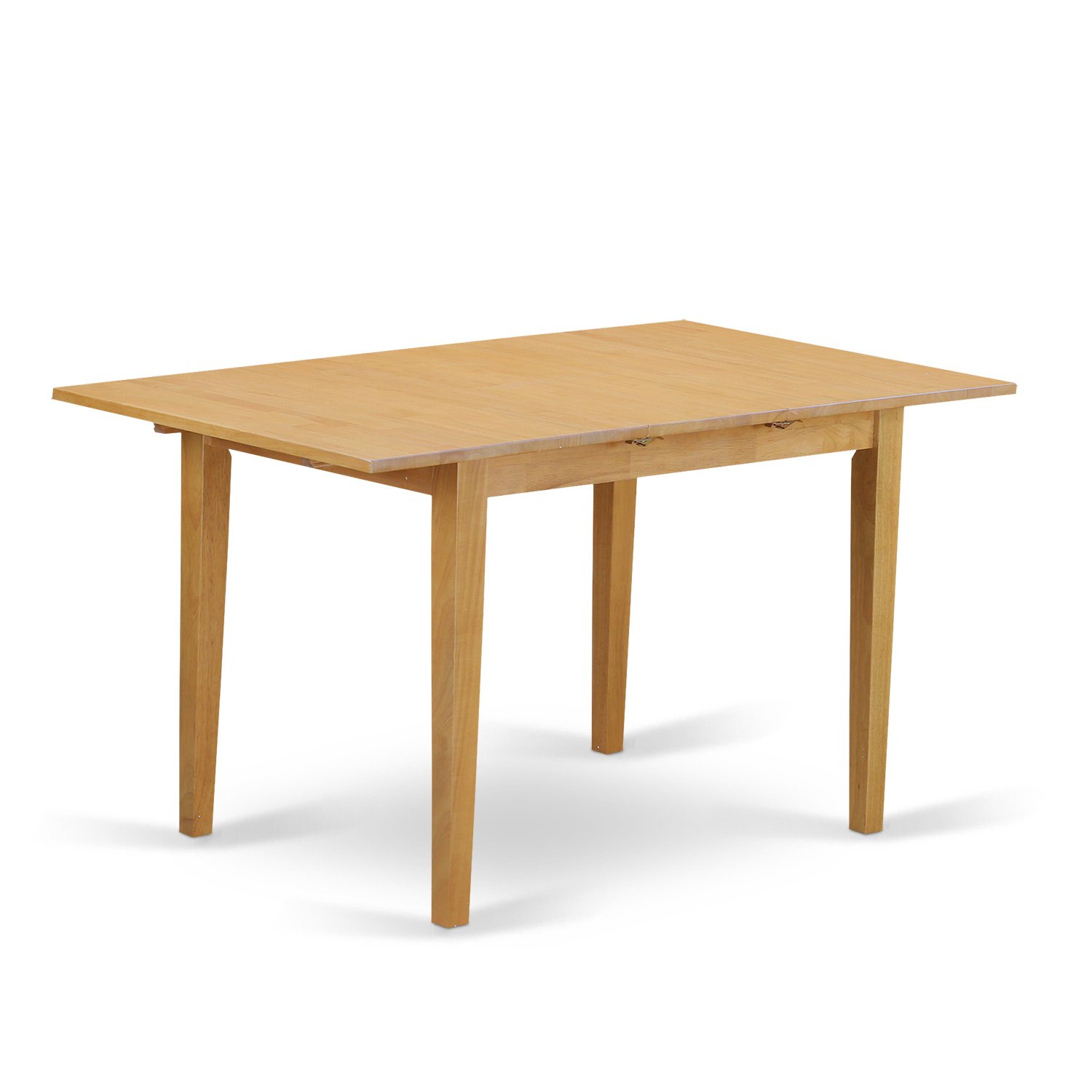
A solid Asian hardwood table with a built-in butterfly leaf that folds into the top—very sturdy and straightforward to assemble.
Why I picked it: I picked it for the solid hardwood top and the self-storing butterfly leaf.
Best for: Anyone who wants a heavy-duty, all-wood table with simple butterfly extension.
Affordable solid-wood option with classic construction.
Pros
- Solid Asian hardwood construction
- Integrated butterfly leaf
- Well-packaged for delivery
- Easy, mostly one-person assembly
Cons
- Heavy to move or deliver
- Occasional threaded-hole or bolt hiccups
My take
This Norfolk table impressed me right out of the box. The oak finish and solid hardwood feel are immediate—this is heavy, well-made furniture and the butterfly leaf tucks neatly away without extra parts to store.
Assembly was a one-person job aside from tipping it upright; the legs thread in quickly and the included hardware is straightforward. Packaging protected the finish well during shipping.
Do watch the leg bolt holes: in one case I had to clear paint from the thread area to get the bolt started. That’s a minor fix and shouldn’t deter anyone looking for a true wood table that ages well.
How I Pick Square and Extendable Dining Tables
Sizing & Layout
I measure the room first and plan traffic flow around the table; allow at least 36 inches from the table edge to walls or other furniture.
Square tables are ideal for compact spaces and conversation; extendable tables let me keep a small footprint daily and expand when guests arrive.
- Measure clearances: 36 inches recommended around the table
- Decide if you need internal leaf storage to avoid extra panels
- Check final extended length against your largest gathering
Materials & Finish
I prefer solid-wood tops for longevity, but melamine laminate can be a practical, low-maintenance alternative for busy households.
Pay attention to grain continuity and color tone—laminate and veneer finishes can read differently in person.
- Solid wood = long-lasting, heavier delivery
- Laminate = scratch and water resistance, easier care
- Veneer/engineered wood = good looks at lower cost
Mechanics & Assembly
I test how extension mechanisms operate—sliders, drop-in leaves, and butterfly leaves each have trade-offs in ease and storage.
Plan for assembly time and an extra pair of hands for heavier tops or flipping the table upright.
- Hidden internal leaves reduce clutter
- Butterfly leaves fold into the top for simple storage
- Bring a drill to speed assembly
Durability & Practical Use
I look for tops that tolerate daily wear—kids, pets, and hot pans—and prefer finishes that hide fingerprints if upkeep is a concern.
Consider weight and delivery: heavier solid-wood tables are durable but harder to move or return.
- Melamine hides marks and cleans easily
- Solid hardwood will take refinishing over time
- Check for crossbars or aprons that may limit knee room
Frequently Asked Questions
Can the extension leaves be stored inside the table?
Yes for the Mobili Fiver models and the Norfolk butterfly design—both store leaves inside the apron, which is what I love about them when I don’t want extra panels cluttering my storage.
Will four chairs fit around a small square table?
It depends on the table. The Winsome Groveland works well for two and is cozy for four; I treat it as intimate seating rather than roomy four-person dining.
How difficult is assembly?
Most of these tables assemble with basic tools. I recommend an electric drill and an extra set of hands for flipping or aligning larger tops; some models need more time but nothing specialized.
Final Take
I chose these tables because each solves a common trade-off between footprint and guest-ready capacity.
If you want compact everyday use, go with the Winsome Groveland; if hosting is a priority, the Mobili Fiver extendables give the most practical flexibility.
The East West Norfolk is my pick when solid wood and a traditional butterfly leaf are priorities, and the Ashley Valebeck offers great farmhouse styling with sensible function.
