
I tested a range of stainless and hybrid skillets so you can pick the right pan for everyday frying, induction cooking, or easy cleanup.
I spent time cooking with each skillet in this roundup so I could recommend clear winners for different needs. I looked at heat distribution, handling, durability, and how forgiving each pan is in real kitchens.
Across these options you’ll find classic all-stainless sets, stainless with reinforced nonstick, induction-friendly models, a ceramic nonstick skillet, and a chainmail cleaner that keeps seasoned pans in top shape.
I compared full stainless skillets and stainless/nonstick hybrids side-by-side to highlight where each style makes sense—durability and browning vs. easy release and cleanup.
1. Farberware Classic Stainless Steel 8.25″ & 10″ Frying Pan Set – Best Value Classic Set
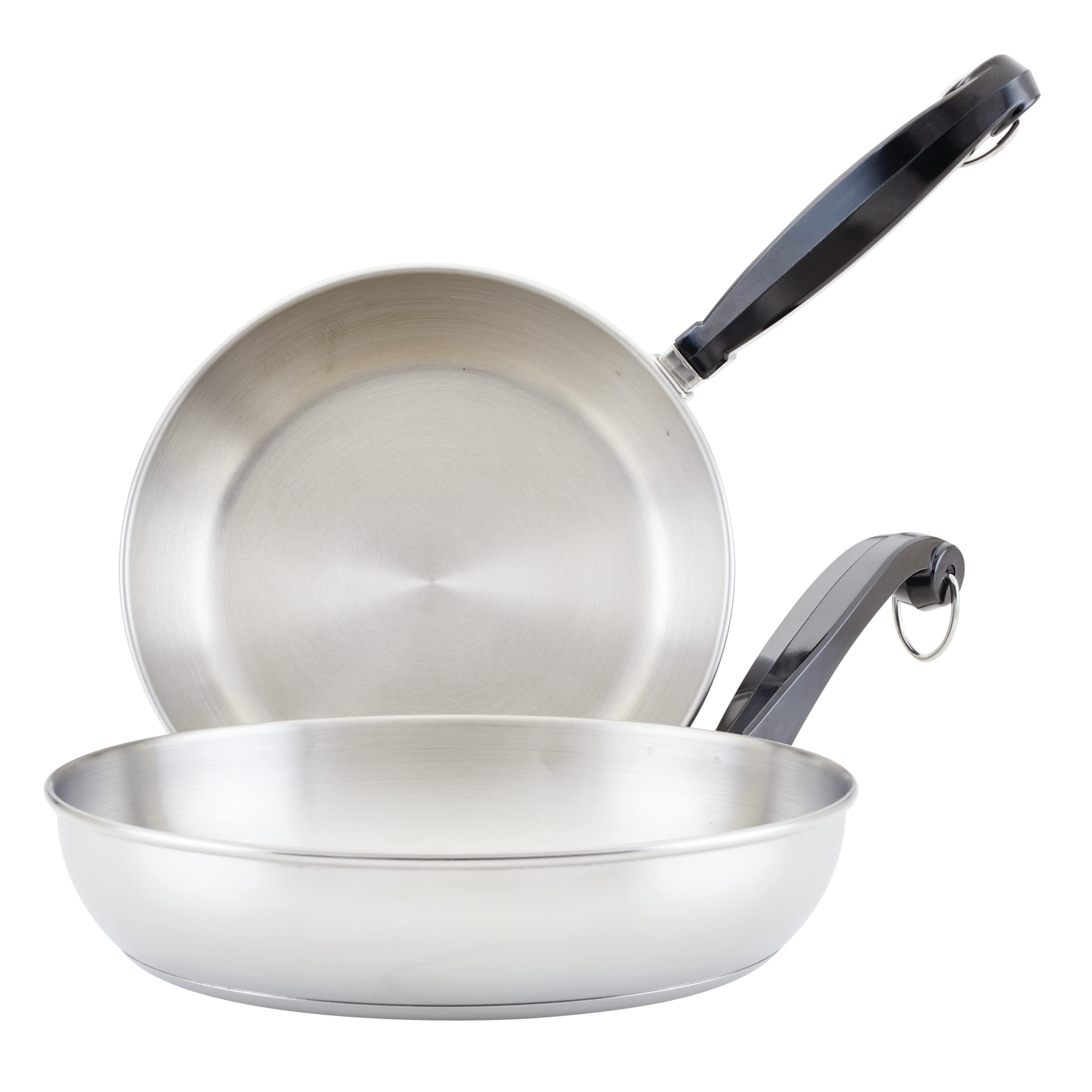
A dependable two-pan stainless set with full-cap bases for fast, even heating and comfortable handles.
Why I picked it: I appreciate the mirrored finish, aluminum-core bases for quick even heating, and two sizes that cover everyday jobs.
Best for: Everyday frying, searing, and browning for small to medium households.
An affordable, no-frills skillet set.
Pros
- Even heating from thick aluminum core
- Two versatile sizes included
- Comfortable, classic handles
- Dishwasher and oven safe
Cons
- Not ideal for very high heat
- Can stick without proper technique
My take
I reached for the smaller pan for eggs and the larger for weeknight sautés. Both heat up quickly thanks to the full-cap base that sandwiches an aluminum core. That translates to predictable, even browning across the surface.
The handles feel balanced and give me a confident grip when I flip or transfer the pans to the oven (safe to moderate oven temperatures). I also like that these pans survive a cycle in the dishwasher when I’m short on time.
If you push them to screaming high heat they won’t perform like heavy-duty professional pans, and sticking can happen if you underuse fat or suddenly increase temperature. For everyday home cooking, though, this pair is a convenient, reliable foundation.
2. T-fal Jamie Oliver Stainless Steel Nonstick Frying Pan Set (3-Piece) – Best Hybrid Nonstick
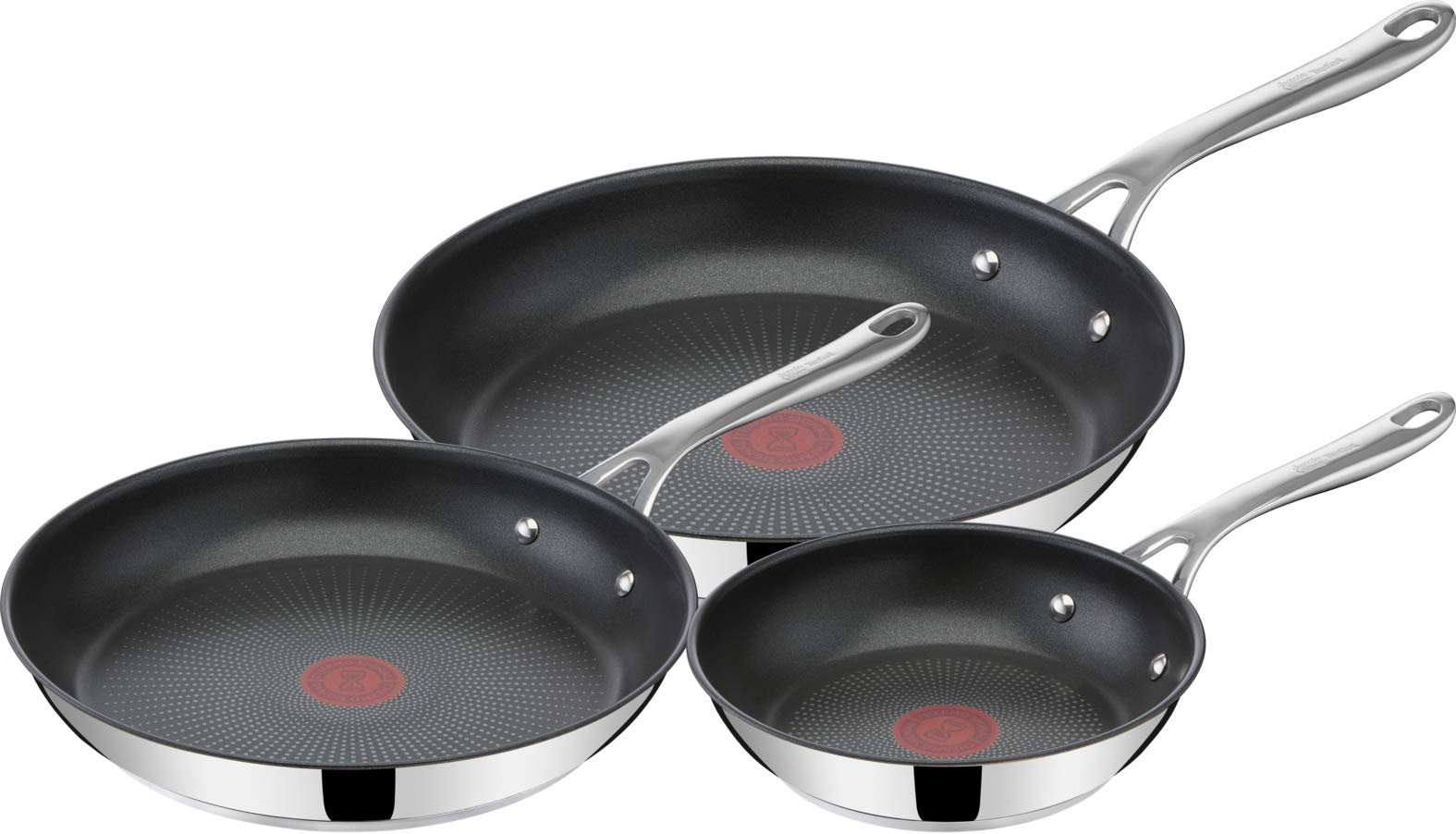
Stainless-steel bodies with a reinforced nonstick interior, Thermo-Signal indicator, and induction-ready base.
Why I picked it: I liked the combination of serious stainless construction with a durable nonstick surface and the handy heat indicator.
Best for: Eggs, pancakes, delicate fish, and quick weeknight cooking where release matters.
A mid-range set that favors convenience and longevity.
Pros
- Long-lasting nonstick coating
- Thermo-Signal heat indicator
- Induction-compatible base
- Oven safe to high temperatures
Cons
- Nonstick needs gentle utensils
- More care than plain stainless
My take
I used this trio for everything from omelets to seared scallops. The nonstick releases food easily and the Thermo-Signal dot is genuinely useful — when it changes I know the pan is evenly preheated and ready to get a good sauté without tearing food.
Heat distribution from the Thermo-Fusion induction base is fast and even, so I didn’t see hot spots when searing. The riveted handles feel secure when moving pans between hob and oven.
Because these are hybrid pans, I treat them with a little more care than raw stainless: softer utensils, avoid overheating, and gentle cleaning preserves the coating. For cooks who want stainless durability plus near-stick performance, this set makes weekday cooking simpler.
3. WMF Devil 24cm & 28cm Nonstick Frying Pans (Cromargan Stainless) – Best for Induction & Precision
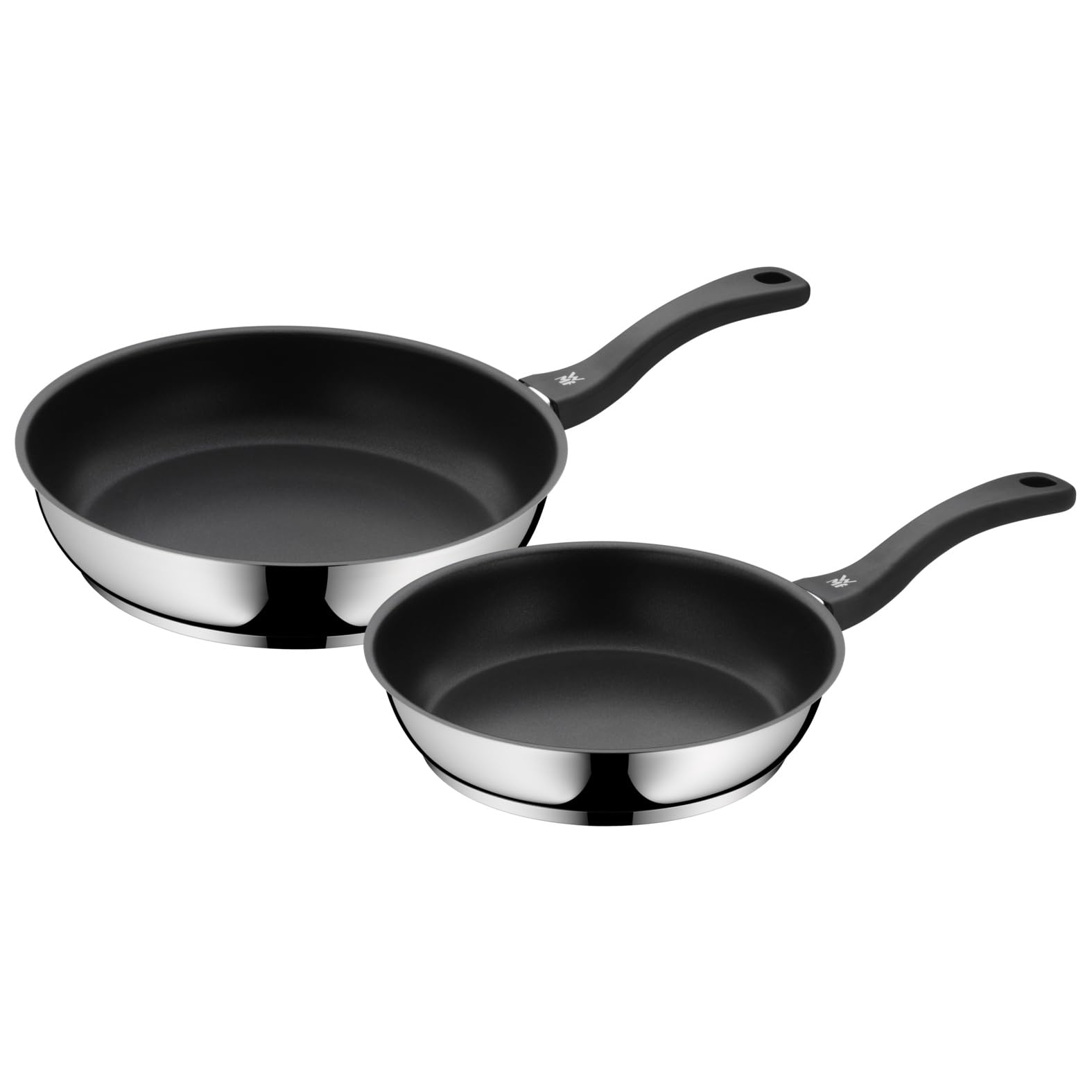
Cromargan 18/10 stainless with PermaDur nonstick, TransTherm base for induction, and taller sides for larger batches.
Why I picked it: I valued the solid Cromargan build, induction-ready base, and deep sides that keep splatter down when I cook larger portions.
Best for: Induction hobs and low-fat frying where nonstick performance matters.
A premium, durable option for induction kitchens.
Pros
- High-quality Cromargan stainless steel
- Robust PermaDur nonstick coating
- Great for induction cooking
- Higher sides reduce splatter
Cons
- Hand-wash recommended
- Higher price point
My take
I relied on these pans for crispier results with reduced oil. The TransTherm base holds heat long and distributes it evenly, which is essential on induction stoves where I want consistent contact and browning.
The taller rims make stirring and tossing larger quantities much easier, and the ergonomic handles stay comfortable even during longer jobs. I do hand-wash them to preserve the nonstick surface and have avoided abrasive cleaners.
For someone cooking frequently on induction and needing reliable nonstick performance with a premium feel, these pans justify a higher investment.
4. Stainless Steel Chainmail Scrubber (8 x 6 inches) for Cast Iron & Skillets – Best Cleaning Tool
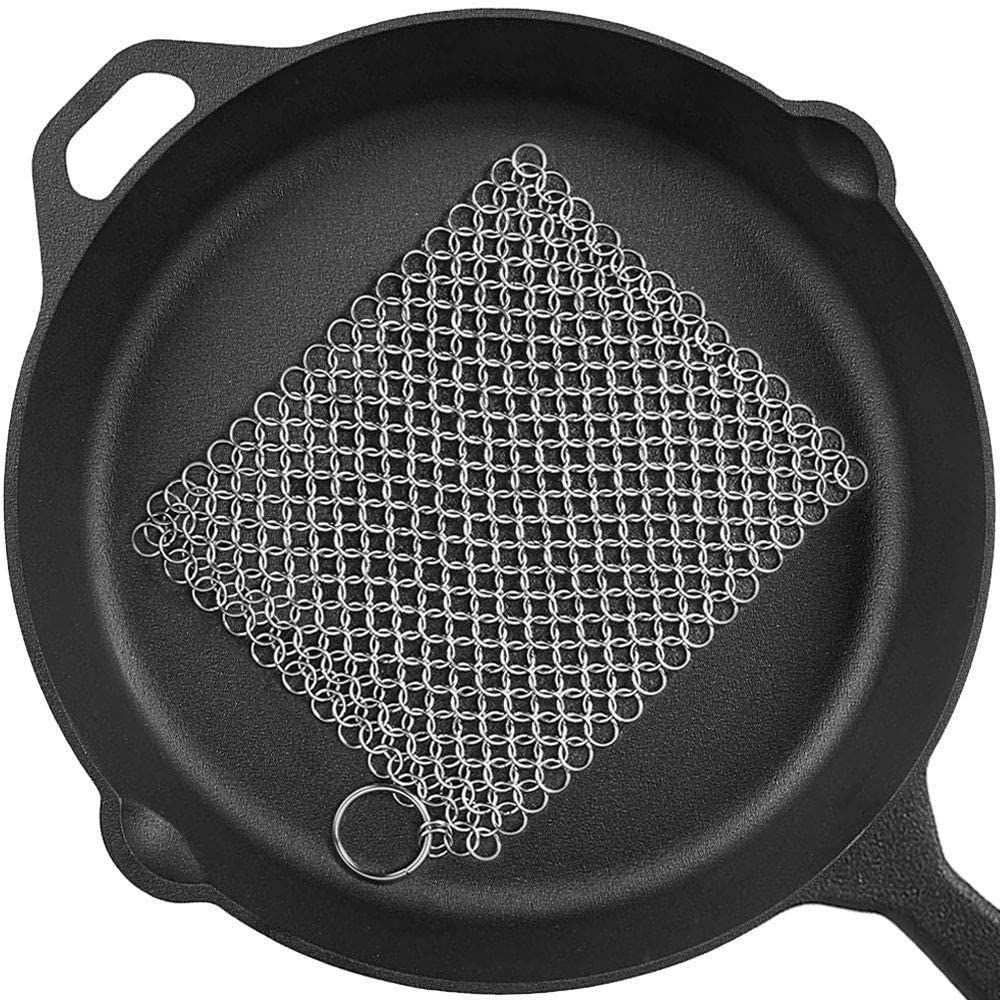
A compact stainless chainmail scrubber that removes stuck-on food without stripping seasoning or scratching stainless surfaces.
Why I picked it: I include this because keeping skillets clean without damage is as important as the pan itself.
Best for: Restoring and maintaining cast iron and stainless cookware.
A very affordable and practical accessory.
Pros
- Removes baked-on residue
- Gentle on seasoning
- Durable stainless construction
- Easy to store and hang
Cons
- Requires elbow grease
- Not for nonstick surfaces
My take
I used the chainmail on several well-seasoned cast iron pans and it cleared stuck food effortlessly without stripping the seasoning. Under hot water the rings scrub away carbonized bits while leaving the patina intact.
It’s small and easy to hang by the sink, so it’s become my go-to after heavy sears or grill work. After use I rinse, soap lightly, and air-dry to prevent any moisture buildup.
This isn’t a replacement for delicate nonstick care — I don’t use it on coated pans — but for cast iron and stainless it’s a tool I now rely on routinely.
5. MsMk 11″ Ceramic & Titanium Nonstick Skillet with Lid – Best Ceramic Nonstick Skillet
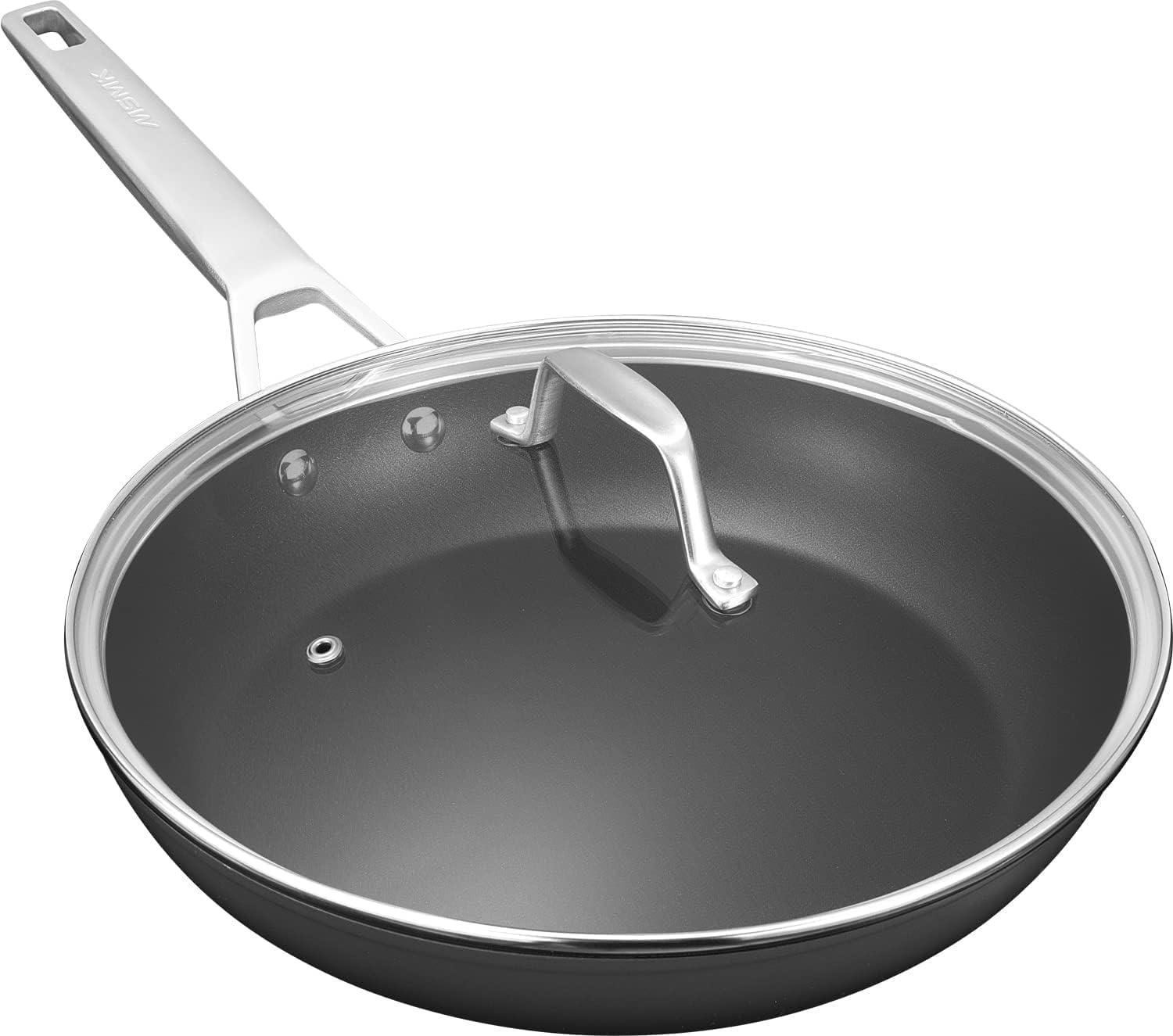
An 11-inch ceramic nonstick skillet with a thick stainless-steel base, induction compatibility, and a fitted glass lid.
Why I picked it: I liked the ceramic, PFOA-free surface and the heavy 4mm bottom that heats evenly for stir-fries and eggs.
Best for: Healthy nonstick cooking, stir-fry, and large single-pan meals.
A sensible mid-priced ceramic nonstick option.
Pros
- PFOA-free ceramic nonstick
- Thick stainless bottom for even heat
- Fits a large cooking surface
- Comes with a glass lid
Cons
- Avoid metal utensils
- Lid handle can get hot
My take
I cooked stir-fries and multiple fried eggs in this skillet and appreciated the even heat from the heavy base — no obvious hot spots and consistent results across the surface.
The ceramic coating released food cleanly for pancakes and fish, and cleanup was usually a quick wipe or gentle wash. The glass lid is useful for simmering and monitoring without lifting.
I treat this as a nonstick-first pan: softer utensils and moderate heat keep the coating performing well. Overall, it’s a solid choice for cooks prioritizing a chemical-free nonstick surface.
6. Tefal Jamie Oliver Cook’s Direct 20cm Stainless Steel Frying Pan – Best Compact Everyday Pan
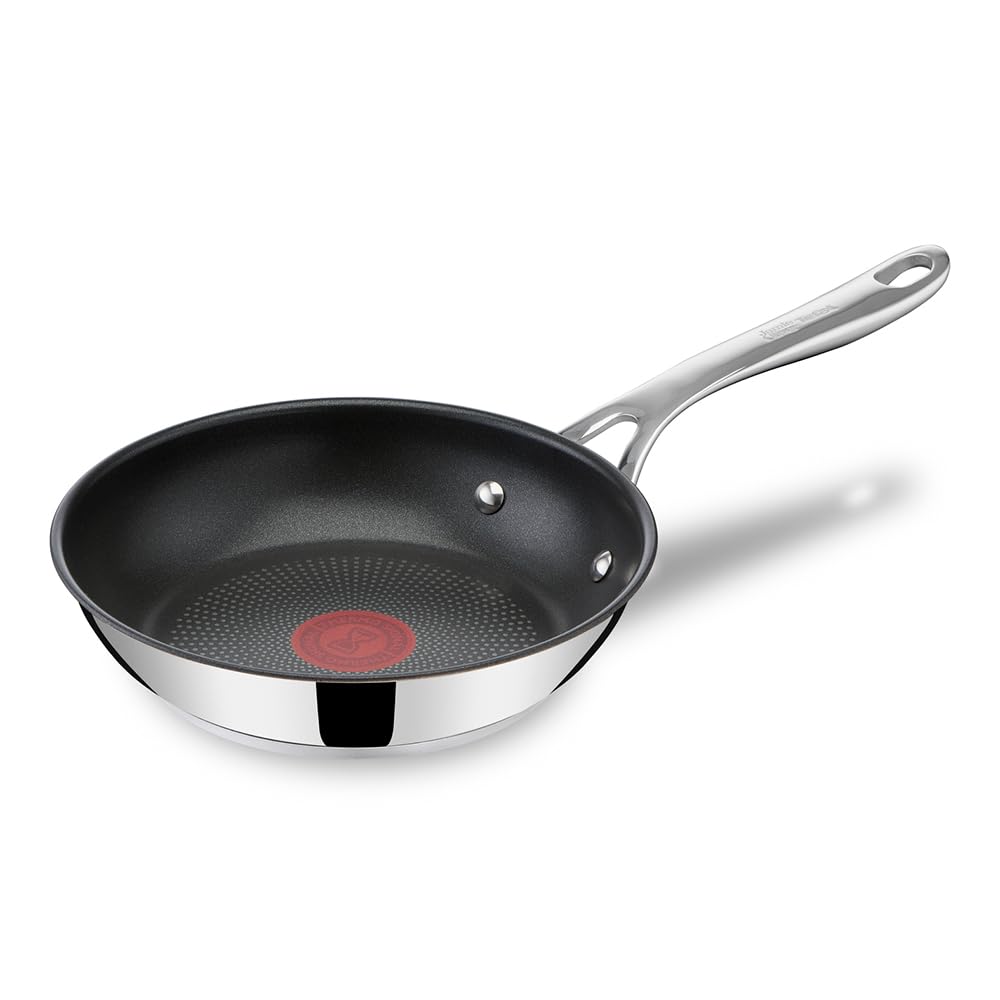
A mirror-polished compact pan with titanium-reinforced nonstick, Thermo-Signal indicator, and a long warranty.
Why I picked it: I value the heat indicator and compact size that’s perfect for single servings and precision cooking.
Best for: Single-person meals, eggs, and quick stovetop tasks.
A long-term investment for daily use.
Pros
- Thermo-Signal for perfect preheat
- Durable titanium-reinforced coating
- Fast, even heating
- 10-year guarantee
Cons
- A bit heavier than small pans
- Coating needs gentle care
My take
I reach for this 20cm pan when I want a quick dinner for one or when I’m scrambling eggs. The Thermo-Signal takes the guesswork out of preheating and has helped me avoid under- or overheating delicate items.
The extra-thick bonded base gives efficient heat transfer and the polished stainless exterior looks good on the table. It’s dishwasher-safe but I usually hand-wash to preserve the reinforced nonstick.
For compact daily use I appreciate the balance of performance and durability — the build feels like something that will last for years with reasonable care.
How I Choose a Stainless Steel Skillet
Key features I evaluate
I look first at base construction — a bonded aluminum core or heavy-gauge stainless improves heat distribution and prevents hot spots.
Next I decide whether I want pure stainless for browning or a stainless-bodied pan with a reinforced nonstick interior for easy release and cleanup.
- Base: multilayer or aluminum-core for even heat
- Coating: none for searing, reinforced nonstick for easy release
- Handles: secure, comfortable, and oven-safe if you’ll finish in the oven
- Compatibility: confirm induction-capable base if you use induction
Care and longevity
I treat all pans thoughtfully: don’t overheat empty pans, use suitable utensils for nonstick surfaces, and avoid abrasive cleaners that can damage coatings.
For cast iron and stainless pans I use a chainmail scrubber or coarse sponge to remove stuck-on bits without harming the metal; for coated pans I use soft sponges and gentle detergents.
- Hand-wash coated pans to extend coating life
- Dry thoroughly to prevent water spots
- Season cast iron regularly; avoid chainmail on nonstick
Choosing size and set composition
I pick sizes based on household and cooking habits: an 8–10 inch pair covers most tasks for two, while an 11–12 inch skillet handles family meals or larger proteins.
Sets are convenient and wallet-friendly, but single premium pans can be a better long-term investment if you cook frequently.
- 8–10 inch: versatile daily use
- 11–12 inch: bigger batches and proteins
- Sets: good starter option; single pots: upgrade to premium
Frequently Asked Questions
Can I use metal utensils on stainless steel skillets?
I use metal utensils on bare stainless skillets for searing and deglazing because the surface is robust, but I avoid metal on nonstick or ceramic coatings to prevent scratches.
Do stainless steel pans need to be seasoned like cast iron?
I don’t season stainless in the same way as cast iron; instead I preheat the pan and add oil before food so browning is consistent and sticking is minimized.
How do I restore a pan with stuck-on food?
I soak the pan briefly with hot water and a little soap, then use a chainmail scrubber or a non-abrasive scrubber for stainless. For coated pans I soak longer and use a soft sponge.
Final Take
After cooking across these pans, I’ve settled on options depending on priorities: choose all-stainless for searing and durability, hybrid stainless/nonstick for everyday convenience, and a good chainmail scrubber for maintenance.
Match pan construction to how you cook most often, treat coatings with care, and a single well-built skillet can become the backbone of the kitchen for years.
