
I tested six popular tower and standing fans to find the ones that actually deliver on airflow, noise control, and real-world convenience. Here are the models I would buy and why.
I live in a place where summer heat forces solid decisions about cooling gear, so I spent time with six different standing and tower fans to find what actually works.
My testing focused on airflow, noise performance, ease of cleaning, control options (remote, touch, and app), and how well each unit handled real rooms—not just demo setups.
Below I walk through the model I’d pick for different needs: quiet bedrooms, large rooms, smart-home setups, and long-term reliability.
In my experience tower fans trade a slimmer footprint for less raw directional power than box or pedestal fans; I prioritized noise, oscillation, and practical features when choosing the winners.
1. DREO Tower Fan (2026 Upgraded DC Motor) — Black – Best Overall
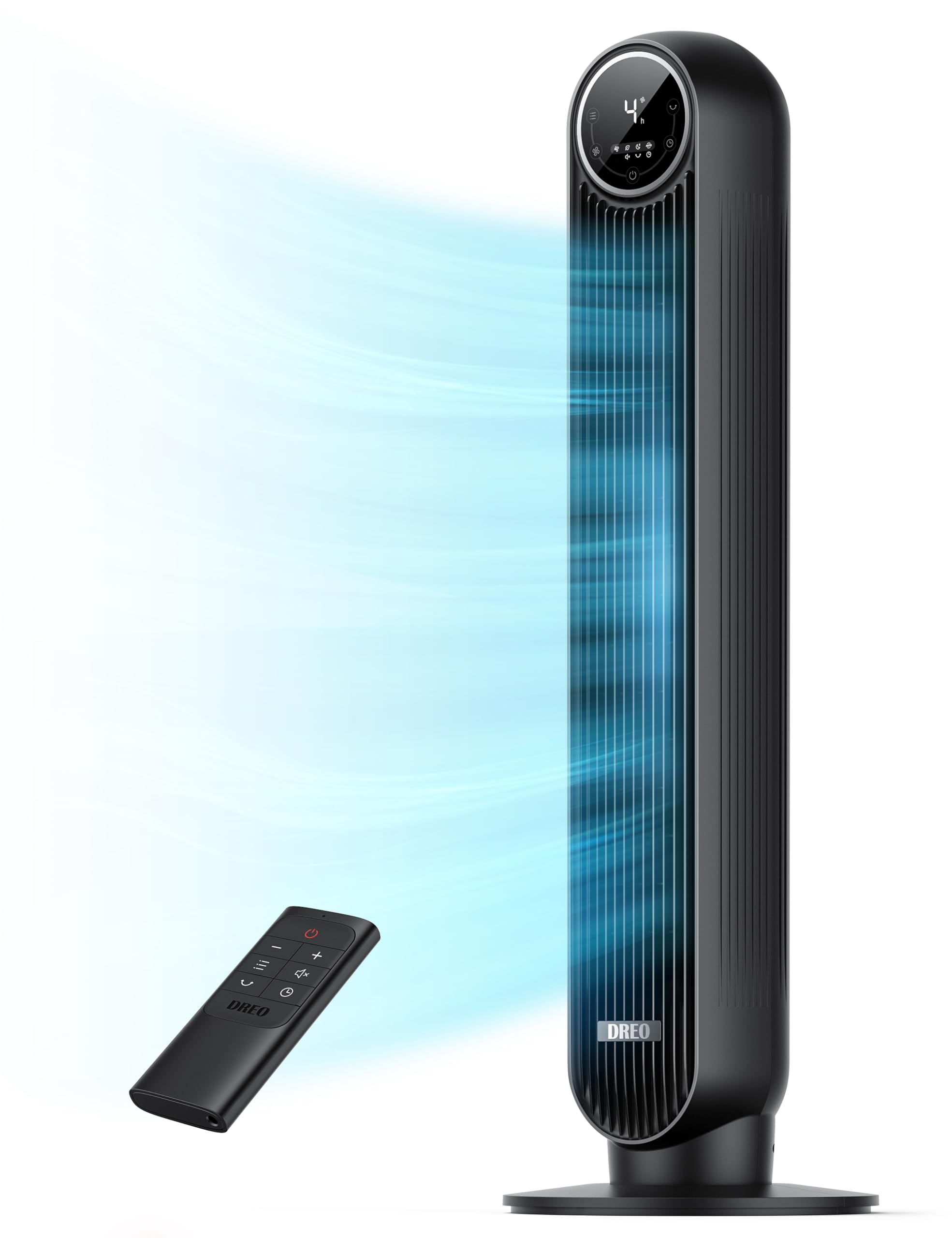
A well-rounded tower fan with a brushless DC motor, eight speeds, and extremely quiet operation that works in bedrooms and living rooms.
Why I picked it: Powerful DC motor, 8 speeds, ultra-quiet operation, easy-to-clean rear grille.
Best for: Bedrooms and living rooms needing steady airflow without noise disruption.
Solid midrange value for the features it packs.
Pros
- Very quiet operation (as low as 20 dB)
- Eight distinct speed settings
- Strong projected airflow for its size
- Remote and touch controls included
- Snap-off rear grille for cleaning
Cons
- Gets louder on top speeds
- Not as design-forward as pricier towers
My take
I brought this DREO into both my bedroom and a large living room to judge how well it balanced power and quiet. The upgraded brushless DC motor is immediately noticeable—the fan moves air with authority while staying whisper-quiet on the lower settings.
The 8-speed range and four operating modes let me dial everything from a gentle sleep breeze to a stronger daytime push. I liked the way the tuned airflow and 90° oscillation distributed air across a room when paired with my air conditioner; it helped me keep the thermostat a few degrees higher without losing comfort.
Assembly was simple and the remote plus touch controls made nighttime adjustments painless. I initially struggled to figure out how to clean it, then realized the rear grille snaps off—an obvious time-saver once I discovered it.
Safety features like the pinch-proof grille and ETL listing give me confidence that this will be a low-drama addition to family spaces. If you want a quiet but capable tower fan that’s easy to live with, this one sits at the sweet spot for me.
2. PELONIS 40-inch Bladeless Tower Fan — Black – Best for Wide Coverage
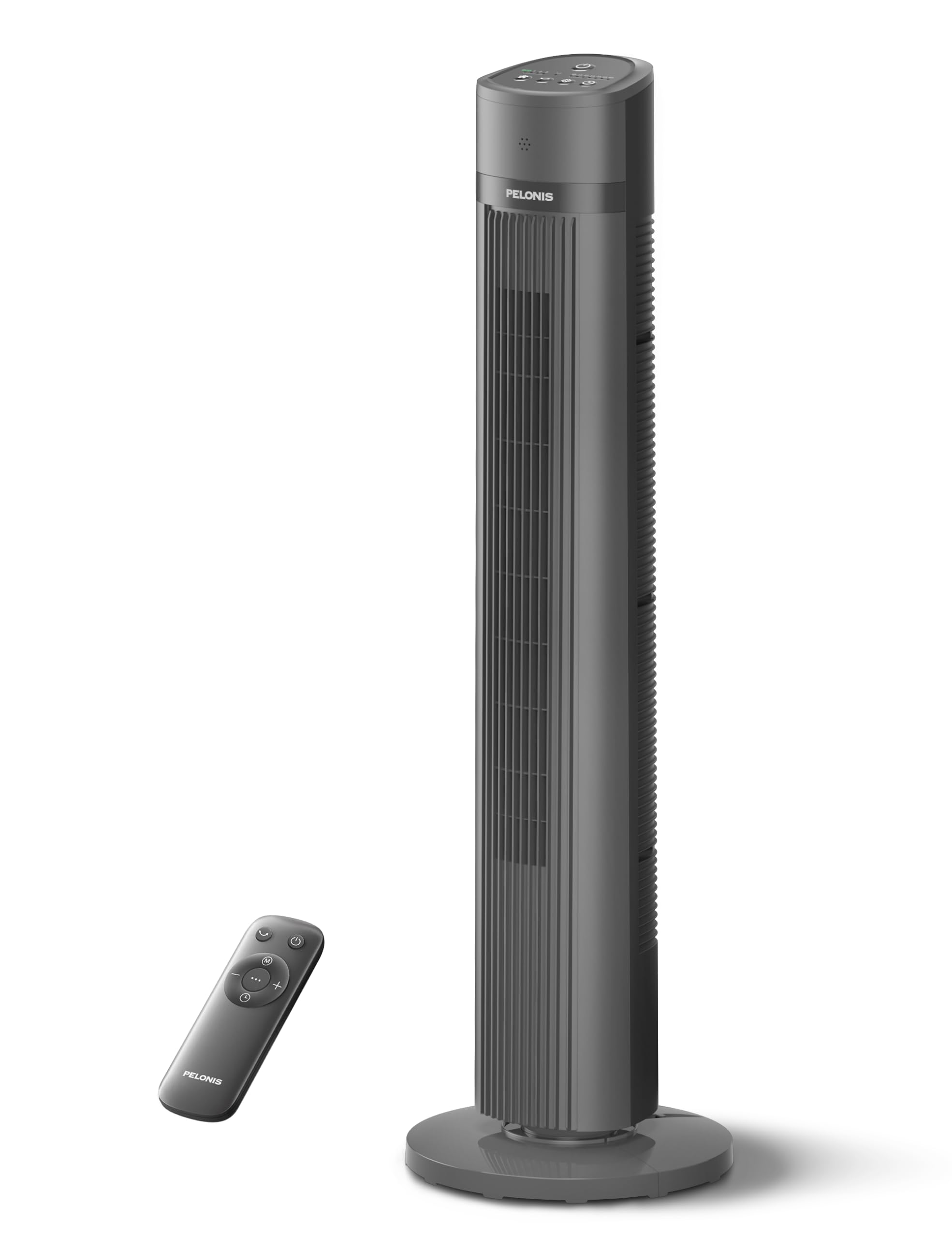
Tall, wide-oscillating tower that prioritizes broad airflow and simple controls, with a programmable timer and energy-saving mode.
Why I picked it: Wide 93° oscillation and strong airflow spread cool air evenly.
Best for: Larger rooms and anyone who needs wide-area air circulation.
A budget-friendly choice for broad coverage.
Pros
- Very wide 93° oscillation
- Strong airflow for its height
- Remote with storage slot
- Programmable timer
- Top-mounted LED display
Cons
- Fewer speed increments than some rivals
- Slightly louder on top setting
My take
I used the Pelonis primarily in my living room and home office because its ultra-wide sweep actually moved air across a larger footprint than many tower fans of similar size.
The motor delivers a noticeable push—26 ft/s is meaningful in practice—and the 93° oscillation evenly spreads that airflow so corners stop feeling stagnant. On hotter days I relied on the timer and the Sensi Cool auto feature to keep the room comfortable without babysitting the controls.
The top LED panel is bright and easy to operate, and the remote stores neatly in a slot at the top of the unit so I never lost it. It’s not the quietest fan in the lineup at full blast, but for the coverage it provides I was willing to accept a bit more noise.
If you want a simple, effective tower that cools a big room without fuss, this Pelonis is the model I reached for repeatedly.
3. DREO Tower Fan (TurboSilent) — 40-inch Black – Best for Quiet Sleep
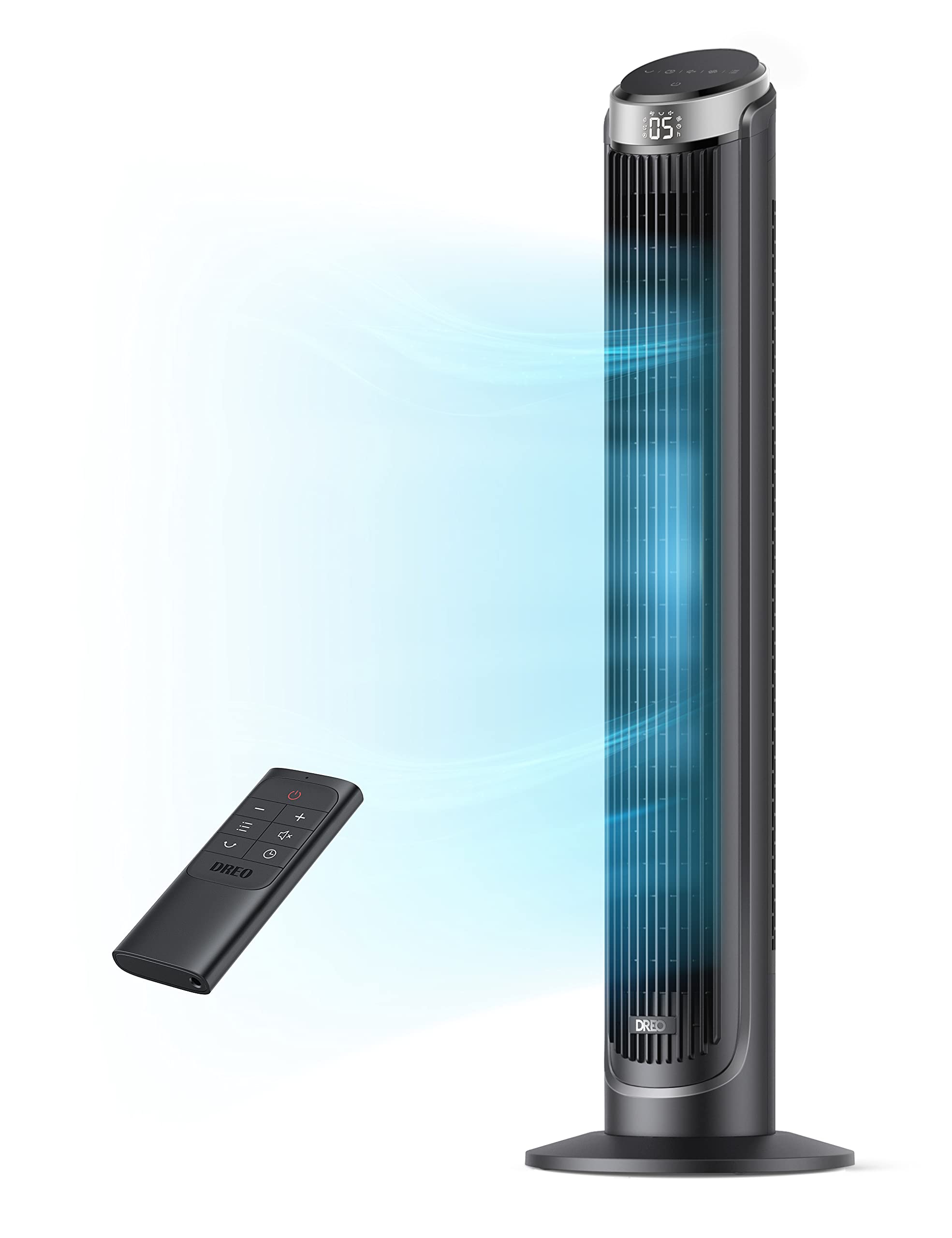
A compact, sleep-friendly tower fan that emphasizes near-silent operation and easy portability for bedrooms and offices.
Why I picked it: TurboSilent tech yields very low noise and a useful 12-hour timer.
Best for: Light sleepers and home offices that need a quiet breeze.
A reliable, affordable pick for silent operation.
Pros
- Delightfully quiet (around 28 dB)
- Convenient remote control
- Compact, easy to move
- Easy-wash grille and impeller
Cons
- Actual airflow area is concentrated
- Only five speed choices
My take
I put this DREO in my bedroom and immediately appreciated how unobtrusive it is. The TurboSilent technology keeps noise down to a level that doesn’t disturb sleep while still moving a decent amount of air.
Five speeds and four modes are plenty for nightly use—I often left it on the lower sleep settings and used the 12-hour timer to cut power after I fell asleep. The narrow grille feels safer around pets and kids, and the stable base resisted tipping in my small apartment layout.
It’s compact enough to carry between rooms and the washable grille made maintenance straightforward. If silence and portability are your top priorities, this model is the one I reach for when bedtime matters.
4. DREO Tower Fan (42-inch, 9 Speeds) — Black – Best for Large Rooms
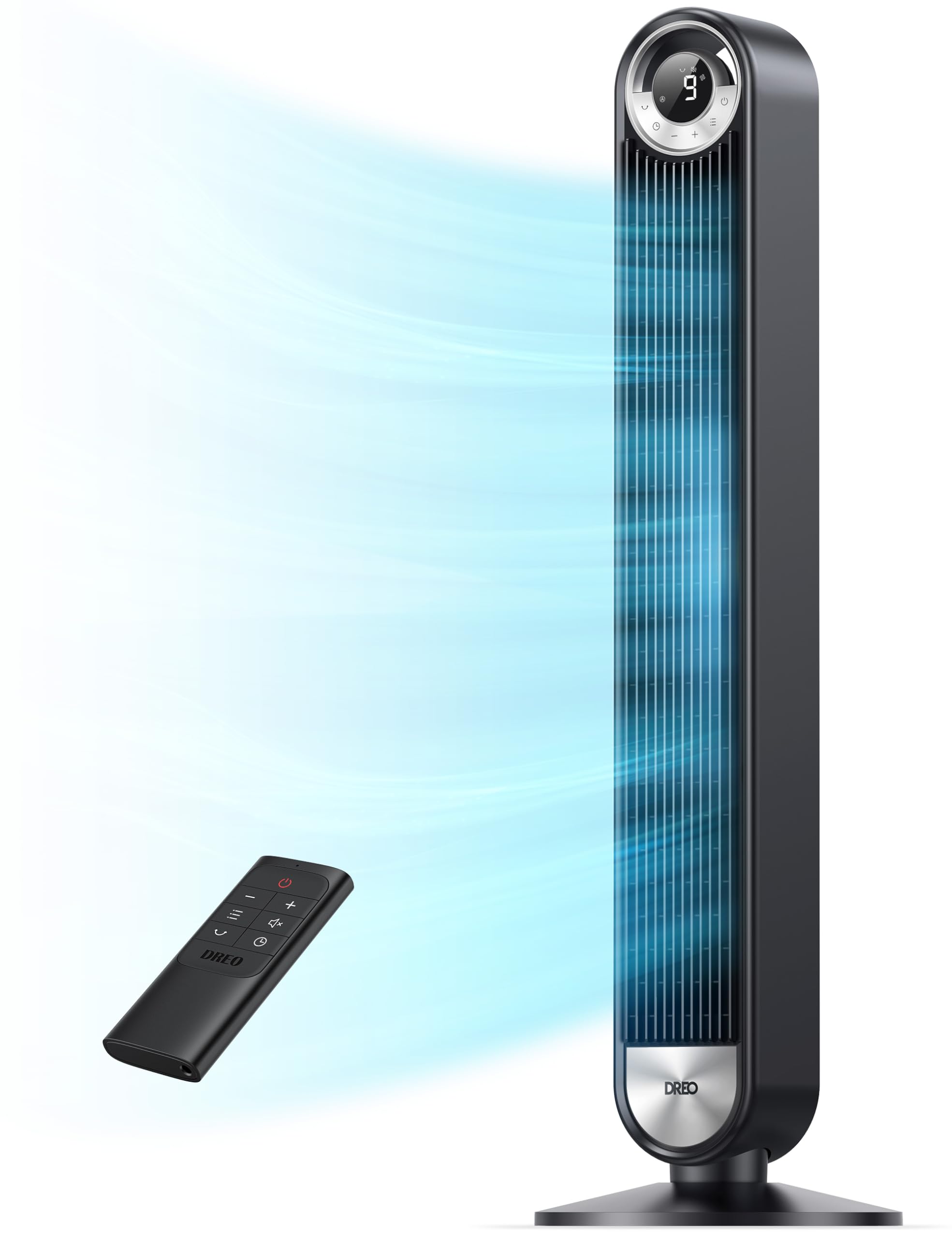
A 42-inch tower designed for heavy-duty performance with nine speeds, smart temperature sensing, and a high airflow rating.
Why I picked it: Large 42-inch body, 9 speeds, and adaptive temperature sensing for big spaces.
Best for: Big rooms and users who want granular control over airflow.
A higher-end DREO with more features and stronger airflow.
Pros
- Powerful airflow for large rooms
- Nine speed settings for precision
- Adaptive temperature sensing
- Tool-free installation and easy cleaning
Cons
- Larger footprint than compact towers
- Price can fluctuate
My take
When I needed a unit that could actually affect the temperature across a large living area, this 42-inch DREO was the fan I turned to. The fan’s bigger body and impressive CFM made a real difference compared with smaller towers.
Nine speed settings gave me fine-grained control—something I appreciate when trying to balance comfort and noise. The smart algorithm and temp sensors were useful: in auto mode the fan adjusted itself so I didn’t have to babysit it during changing afternoon heat.
I also liked the practical touches: the display can be dimmed for nighttime, the annoying button beep can be turned off, and setup required no tools. If you want a heavy-duty tower that behaves like a proper room fan, this is the DREO I recommended to friends who needed wide-reaching airflow.
5. Rowenta Fresh 180° Oscillating Tower Fan — Black – Best Build Quality
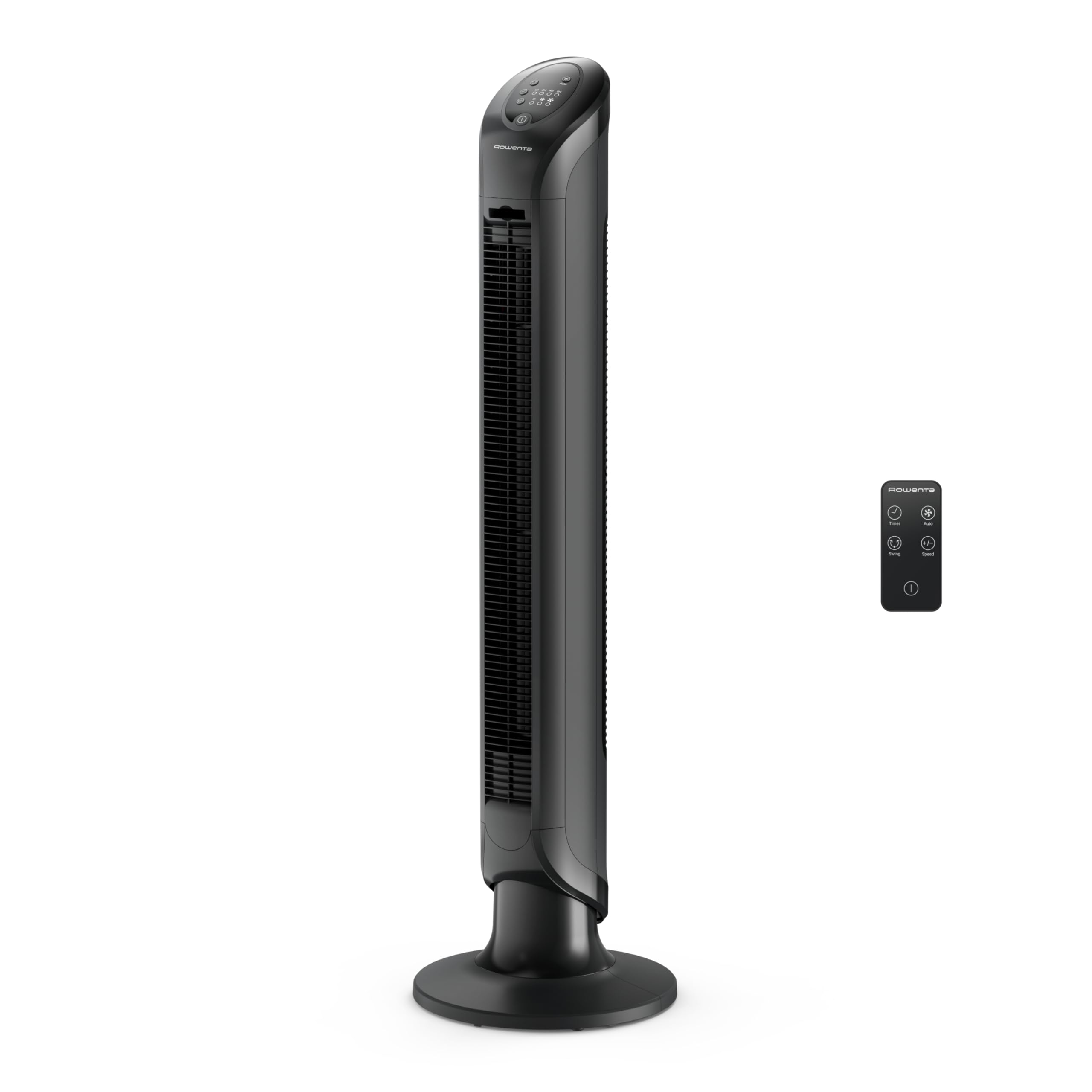
A premium-feeling tower with 180° sweep, turbo airflow, and an emphasis on durable construction and long-term reliability.
Why I picked it: Robust construction and a true 180° oscillation for comprehensive coverage.
Best for: People who value durability and long-term performance.
A premium option built to last.
Pros
- Very durable construction
- 180° oscillation for wide coverage
- Integrated carrying handle
- Remote control with storage
- Easy-to-clean rear grid
Cons
- Some units may ship without a remote
- Can make blade noise at high speeds
My take
I’ve used Rowenta fans for years, and this tower continues that trend of solid engineering. The 180° sweep is genuinely helpful—when placed centrally the fan moves air across a large area more effectively than many slim towers.
Assembly was straightforward and the build quality feels premium. After long-term use I can say the fan holds up: motors and controls stayed consistent even after multiple seasons of heavy use.
The sound profile leans toward blade noise rather than motor whining; for me that was acceptable because the fan’s airflow and durability made it a dependable workhorse. If longevity and a wide oscillation angle are priorities, this Rowenta is the model I’d buy again.
6. DREO Smart Tower Fan (Wi‑Fi & Voice Control) — White – Best Smart Fan
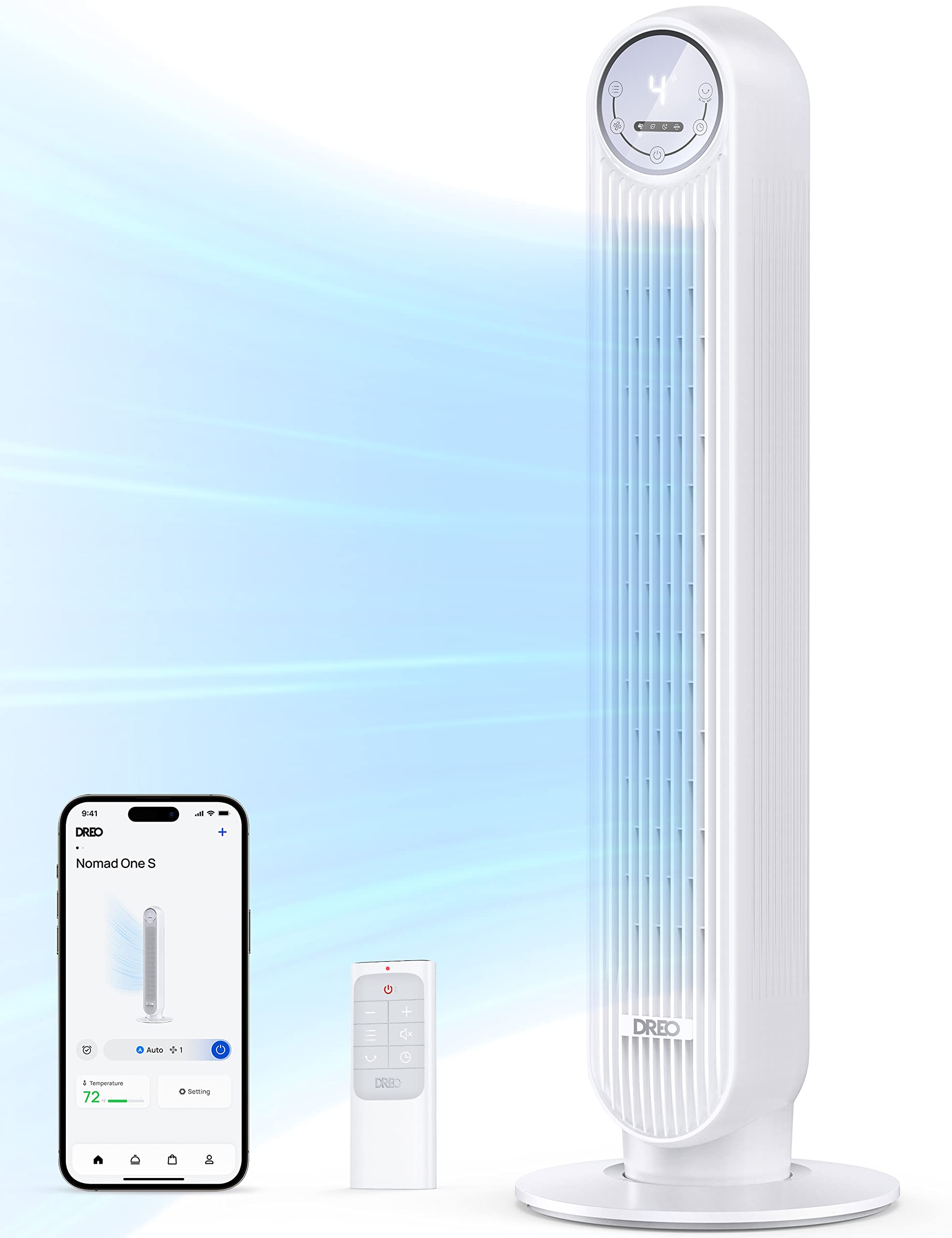
A compact smart tower with Wi‑Fi, voice control, app integration, and automatic temperature-based adjustments.
Why I picked it: Works with voice assistants and an app, plus sensible auto modes.
Best for: Smart-home setups and users who want remote app control.
Smart features at a midrange fan price point.
Pros
- Wi‑Fi and voice assistant support
- Auto mode with temperature sensing
- Compact, easy to place
- Hidden remote storage
Cons
- Not the strongest at long range
- App setup takes a little patience
My take
I connected this DREO to my Wi‑Fi and set it up with my voice assistant; once it was linked I used it from the couch or via scheduled automations. App control gives you access to temperature readouts, timers, and Auto Mode—which adjusts speeds based on ambient conditions.
Physically the fan is compact and easy to move; it’s a great fit for bedrooms and smaller living spaces. The quiet operation on low made it suitable for night use, and the removable rear grille keeps maintenance simple.
The one caveat: I found it less capable at pushing air across a large room from a distance, so I tended to place it closer to where I wanted airflow. For anyone who wants smart controls and voice integration in a slim tower, this was my go-to choice.
How I Picked These Standing Fans
Airflow vs. Coverage
I look for both the peak airflow numbers and how the fan distributes that air. A taller fan with wide oscillation will cool a room more evenly than a compact tower with a narrow sweep.
If you need to cool a whole living room, prioritize wide oscillation and higher projected airflow; for bedside use, peak airflow matters less than a smooth, consistent breeze.
- Wide oscillation (90°+) helps avoid hot spots
- Projecting airflow distance matters for open layouts
- Smaller towers are better for focused cooling
Noise and Sleep Modes
I always test fans at their lowest settings—if a fan is labelled quiet but still hums loudly at night, it won’t make my shortlist.
Look for sleep modes, low decibel figures, and display-dimming options if you’ll run the fan overnight.
- 20–30 dB is ideal for bedrooms
- Sleep modes reduce both speed and display brightness
- Some fans provide more pleasant white-noise tones
Controls and Smart Features
I value a good remote and clear touch controls. If you want app or voice control, make sure the model’s app actually connects reliably to your network.
Auto or temperature-based modes are handy when you want the fan to manage itself during the day.
- Check remote storage on the unit
- Confirm voice assistant compatibility before buying
- Auto modes save you manual adjustments
Cleaning and Safety
I prefer fans with removable rear grilles or snap-off pieces so dust doesn’t accumulate in hard-to-reach crevices.
Pinch-proof grills and ETL/other safety certifications are important in homes with kids or pets.
- Removable grille simplifies periodic cleaning
- Fused plugs and circuit protection reduce electrical risk
- Stable base reduces tipping accidents
Size and Placement
Measure the space before you buy. Longer fans with larger bases need more footprint but often reward you with stronger airflow.
Compact towers are ideal for small bedrooms, while 40–42 inch units best serve open-plan or larger spaces.
- Choose compact models for tight corners
- Use taller models for open rooms
- Consider carrying handles for portability
Frequently Asked Questions
Will a tower fan cool my whole room?
I found that a tower fan with wide oscillation and higher projected airflow will cool a whole room best. Tall units with 90°+ sweep move air across a larger area; for very large or poorly insulated rooms I paired a tower with AC or multiple fans.
How loud are these fans at night?
When I tested them on low and sleep settings, the quietest models ran around the low 20s to high 20s decibel range, which I found unobtrusive for sleeping. Stronger settings can be noticeably louder—so I pick models with a true sleep mode for bedroom use.
Are smart fans worth it?
I like smart fans when they connect reliably to my home network and integrate with voice assistants—automation is genuinely useful. If you don’t plan to use voice or app controls, you’ll get the same core cooling from a non‑smart unit.
Final Take
After testing these models across bedrooms, living rooms, and home offices, I kept coming back to the DREO 2026 as the most balanced option for most situations.
If you need wide coverage, the Pelonis and the larger DREO 42-inch models performed best; for quiet sleep the smaller DREO and the smart DREO models delivered the least disruption.
For long-term durability and a broad oscillation, the Rowenta stood out. Pick the fan that matches your room size, noise tolerance, and whether you want smart features—those trade-offs determined which unit I’d place in each room of my home.
