
I tested popular standing shelves across garages, pantries, and living rooms to find the most useful, sturdy, and easy-to-assemble units. These are the ones I kept coming back to.
I tried a range of standing shelves in real rooms — garages, laundry spaces, kitchens, and living rooms — to see which built-in features actually matter. I focused on stability, load capacity, adjustability, mobility, and how easy each piece was to assemble and live with.
Below are six shelves I used extensively. I explain where each one performed best and the trade-offs I ran into so you can match a shelf to your space and needs.
In my testing, wire metal shelves were the go-to for heavy loads and garages, plastic shelves were best where moisture or rust is a concern, and wood/particle-board units won on style for living spaces.
1. Amazon Basics 4-Shelf Wire Rack (with Casters) – Best Overall
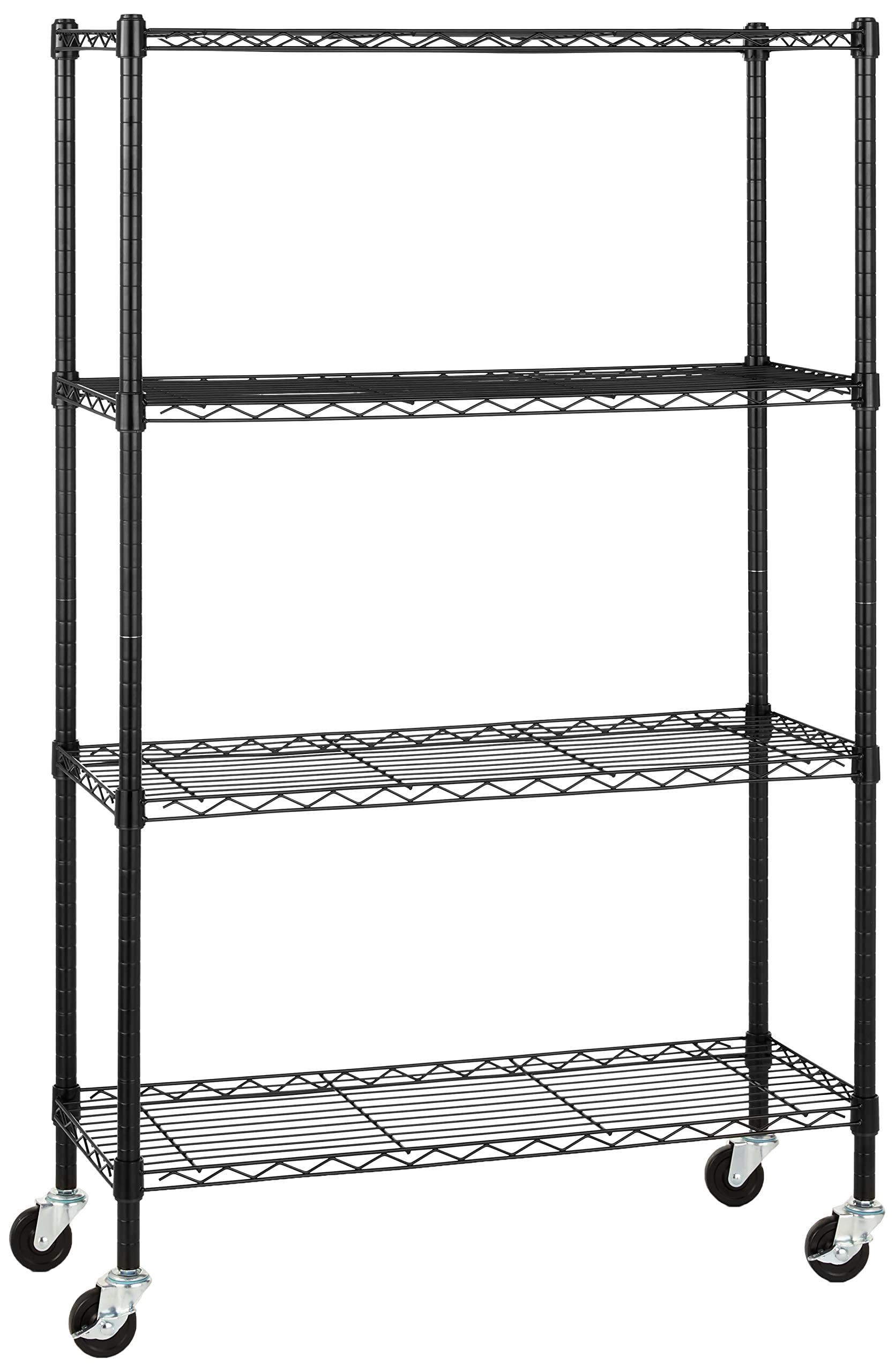
A heavy-duty, adjustable steel rack with removable casters that balances strength and mobility.
Why I picked it: I valued its strong steel build, adjustable shelf spacing, and the option to use leveling feet or casters.
Best for: Garage, utility rooms, and pantry overflow where you might need to move the shelf.
A solid midrange option for heavy-duty steel shelving.
Pros
- High per-shelf weight capacity
- Adjustable in 1-inch increments
- Option to swap casters for leveling feet
- Tool-free assembly
Cons
- Wire surface can let small items tip
- Reduced capacity when wheels are rolling
- Top shelf sits fairly high
My take
I put this Amazon Basics rack into my garage and appreciated the combination of heft and mobility. The metal feels robust, and swapping the included 3-inch casters for the leveling feet is straightforward when I want a stationary setup.
Assembly was quick and tool-free. I adjusted the shelves in one-inch steps to fit tall cases of water and smaller tool bins beneath my mounted cabinets. The unit’s rated load is very generous; I never came close to stressing it in normal use.
In daily use the wire shelves are great for airflow and easy cleaning, but I added thin shelf mats for small containers to prevent items from catching on the wires. When I roll the unit, I’m mindful that the usable weight drops compared with the stationary feet — worth noting if you plan to move heavy loads frequently.
2. Whitmor 5-Tier Supreme Shelving – Best for Organized Pantries
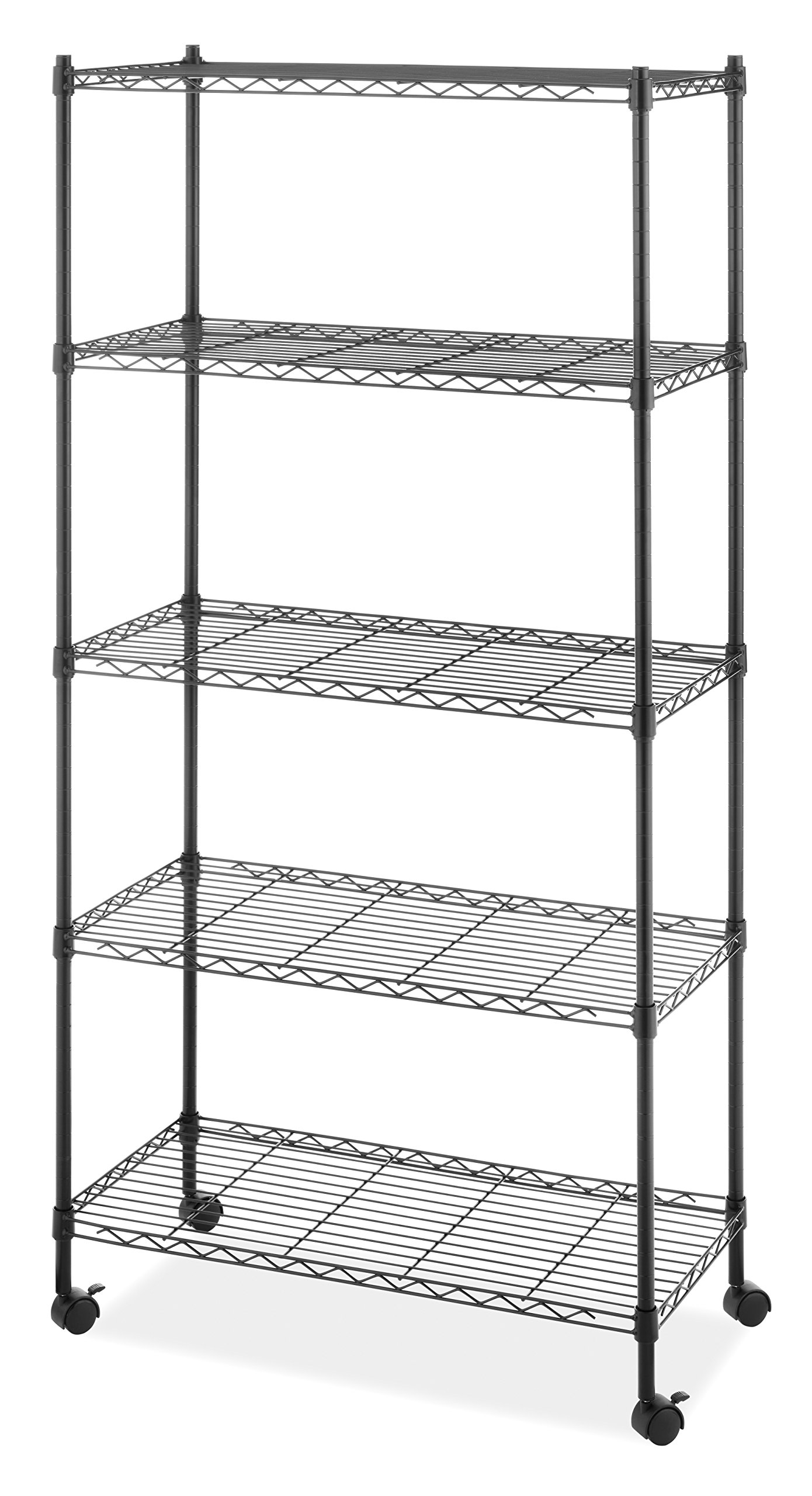
A five-shelf steel cart with lipped shelves and locking wheels that keeps items from sliding off.
Why I picked it: I liked the raised shelf edges for keeping jars and boxes secure and the two locking casters for stability.
Best for: Pantry, kitchen closets, or utility rooms where spilled items are a concern.
A cost-effective choice with practical shelf lips and mobility.
Pros
- Raised edges prevent falls
- Shelves adjustable in 1-inch increments
- Two locking wheels included
- Quick, tool-free setup
Cons
- Shelf lip orientation matters for stability
- Metal finish can show wear over time
My take
I used the Whitmor cart in a pantry and immediately appreciated the raised edges; jars and cans felt secure even when I nudged the unit. The chrome-like finish made it look tidy in a kitchen setting.
Setup was fast — everything snaps together and the shelves are easy to reposition. I installed the wheels for mobility and relied on the two locking casters to keep the unit from wandering when I loaded it up.
One caveat I learned is the shelf lip direction: assembling lip-down can make a shelf more prone to shifting if bumped. I set the shelves lip-up for extra stability and had no trouble keeping heavier boxes in place.
3. 4-Tier Metal Wire Shelving (Chrome) – Best for Heavy Loads
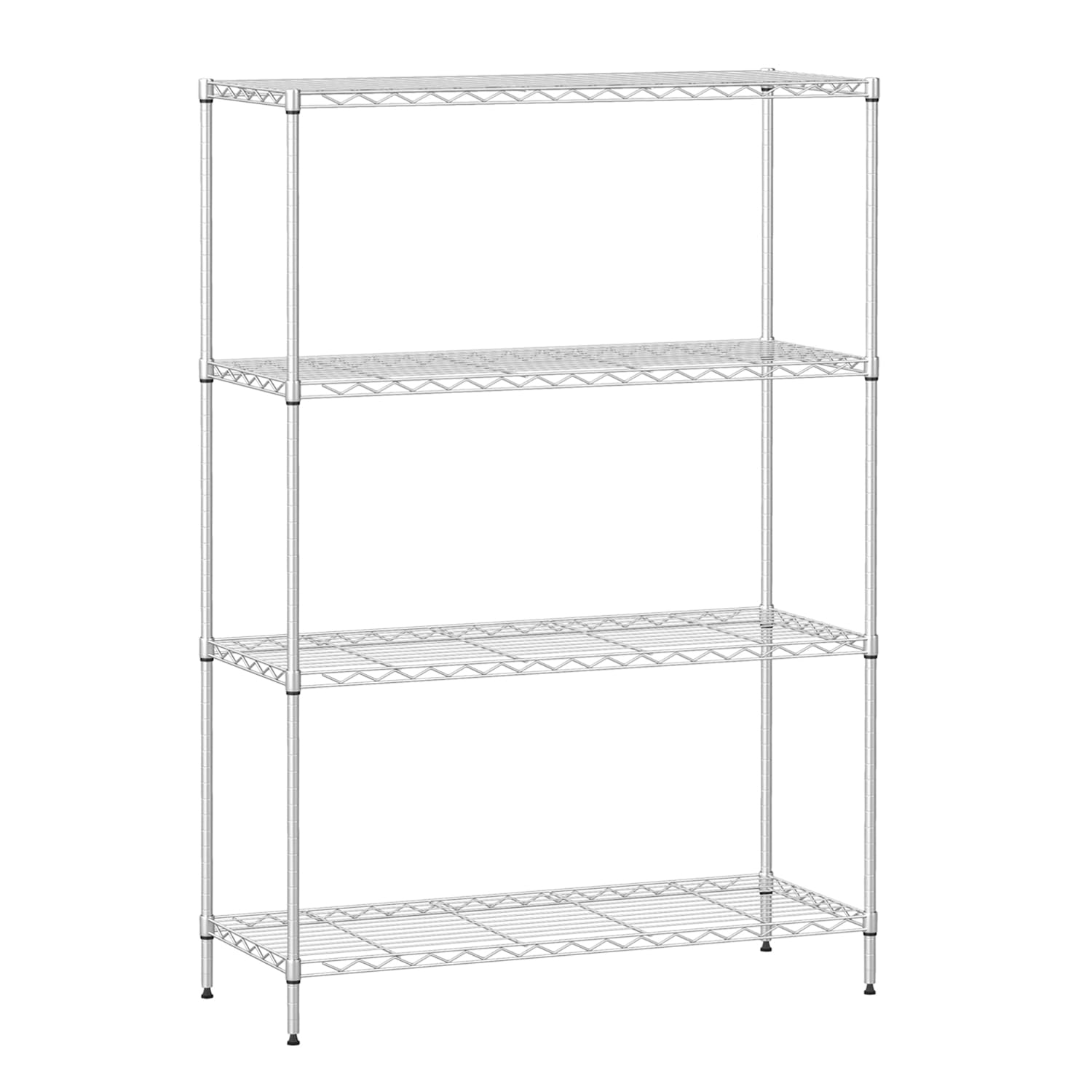
Slim, high-capacity wire shelving that fits tight spaces while supporting heavy loads.
Why I picked it: I chose it for its strong 200-pound-per-shelf rating and narrow footprint for tight spots.
Best for: Garages, basements, or commercial-like storage where shelf strength matters.
A budget-friendly heavy-duty option for compact spaces.
Pros
- 200 lb per-shelf capacity
- Slim footprint saves floor space
- Tool-free, quick assembly
- Good caster and leveler options
Cons
- Metal can dent if hammered too hard
- Wire gaps need mats for small items
My take
I put this chrome wire unit into a narrow utility closet where floor space is limited. It delivered on its promise of high load capacity while keeping a small footprint.
Assembly was straightforward; the plastic collars and pole markings made it easy to get consistent shelf heights. I installed shelf liners for small boxes and jars because the wire surface will catch uneven containers.
The unit does require a little attention when hammering collars into place – the metal is sturdy but not indestructible. Once tightened and level, the shelves felt very solid for heavy storage.
4. Sterilite 4-Shelf Plastic Organizer – Best for Moist Areas
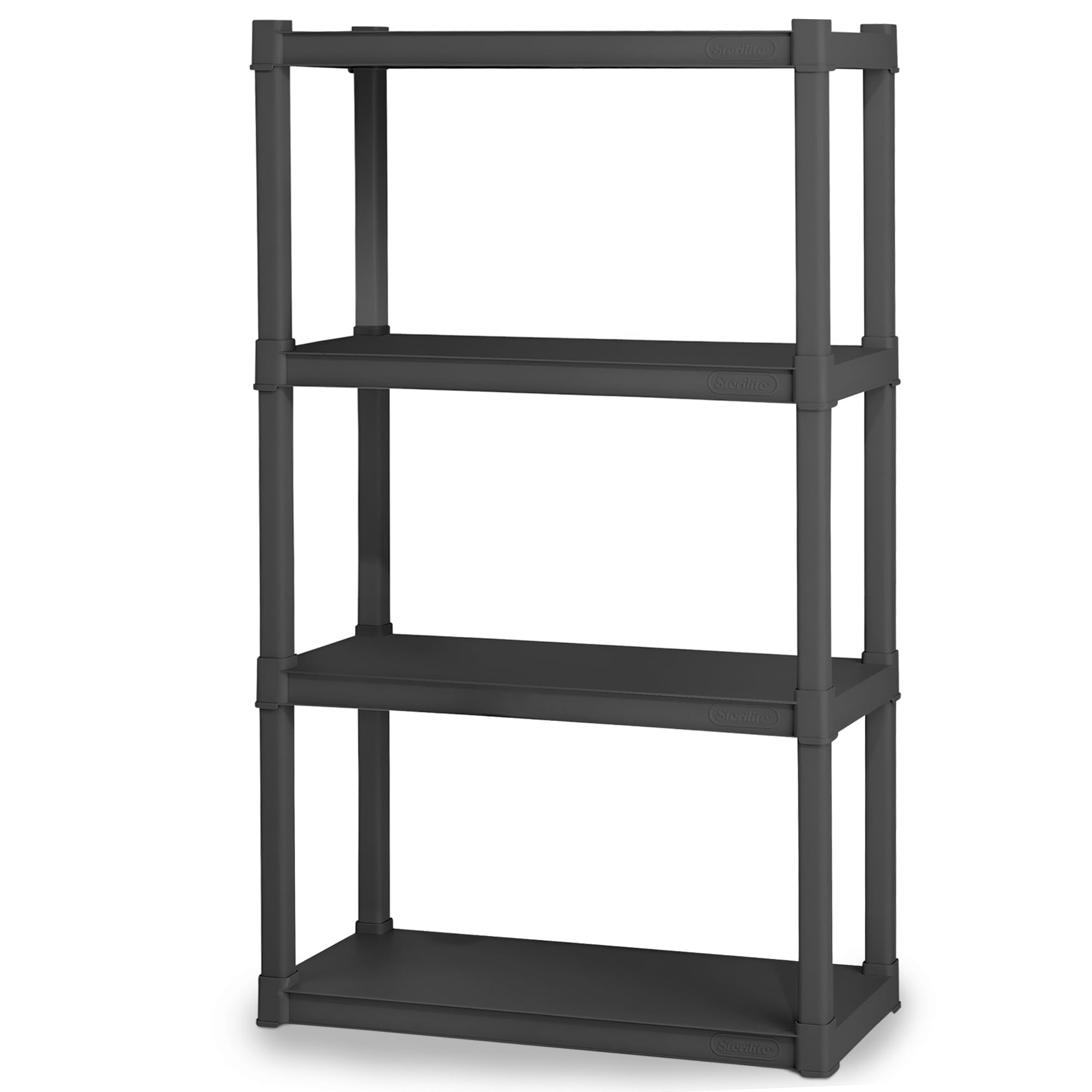
Rust-proof plastic shelves that snap together quickly and work well in damp spaces.
Why I picked it: I used it where moisture and rust were concerns and appreciated the lightweight, snap-together design.
Best for: Laundry rooms, basements, garages, and spaces where metal rust is a worry.
An economical, rust-free shelving option.
Pros
- Won't rust or chip
- Solid surface holds bins well
- Tool-free snap assembly
- Made in USA and BPA-free
Cons
- Lower per-shelf weight capacity
- Less polished look for living rooms
My take
I deployed this Sterilite unit around my laundry and in a workshop. It snapped together in minutes and was light enough for me to move on my own, but still stable under heavy bins of supplies.
The smooth plastic shelves are ideal for storing canning jars and cleaning supplies because they won’t dent or rust. For heavier items I kept weight toward the lower shelves, since each shelf is rated for modest loads compared with steel racks.
If you need something that resists moisture and is easy to reconfigure, this one made life easier in damp or messy areas where metal units would corrode.
5. Rolanstar 6-Tier Industrial Bookshelf – Best for Style
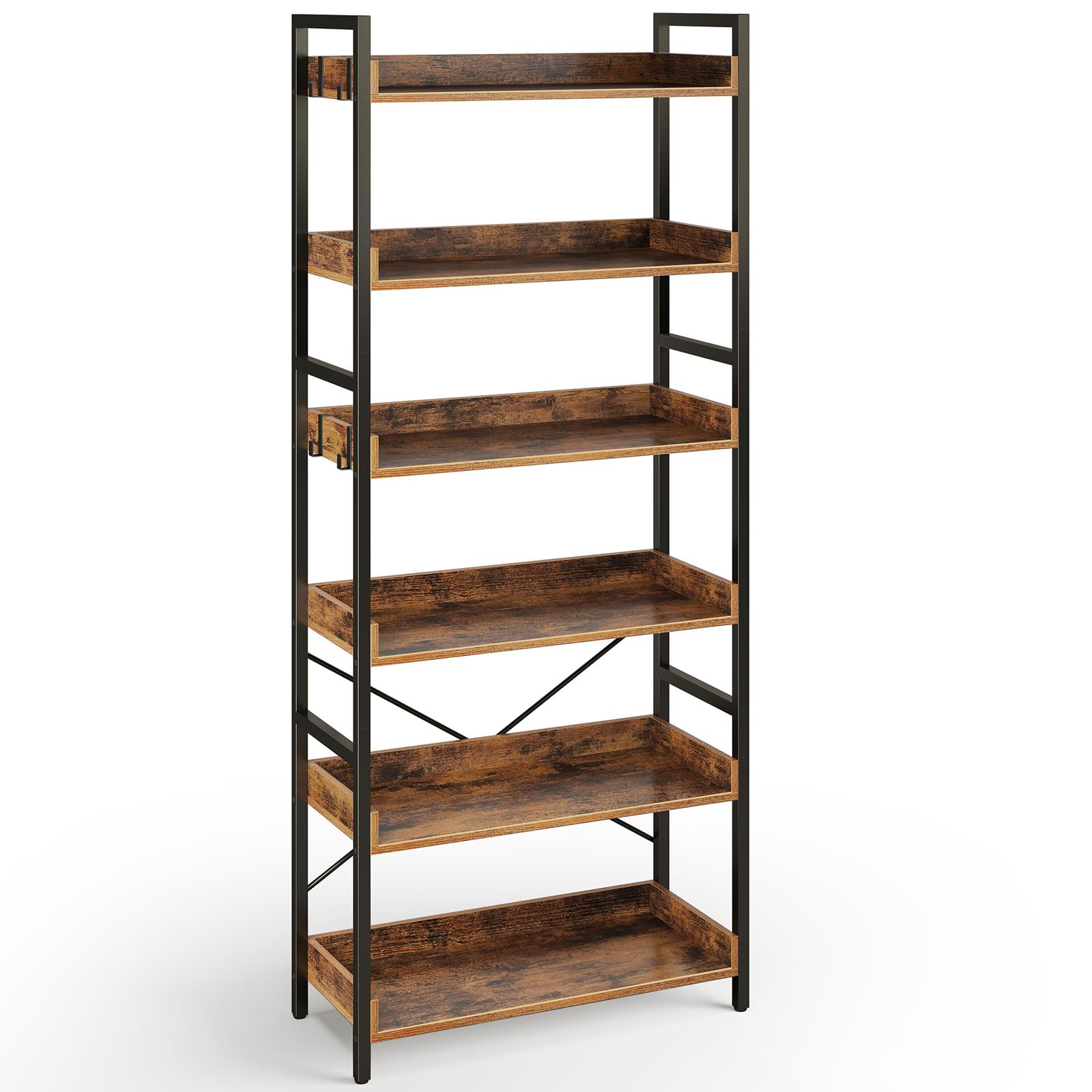
A rustic wood-and-metal shelving unit that brings an industrial look while handling everyday storage.
Why I picked it: I liked how it balances decorative appeal with practical shelving and includes hooks for extras.
Best for: Living rooms, bedrooms, and home offices where aesthetics matter as much as function.
A more decorative option that still offers solid utility.
Pros
- Attractive industrial aesthetic
- Includes four multipurpose hooks
- Adjustable feet for leveling
- Versatile shelf configurations
Cons
- Particle board isn't as durable as solid wood
- Some part labeling and stickers can be stubborn
My take
I used the Rolanstar unit on either side of a doorway and it gave the room a real industrial flair while providing plenty of shelf space for books and decor.
Assembly was straightforward thanks to numbered parts and the included Allen keys. I removed a couple of shelves on one unit to fit taller gear and the frame still felt stable.
The particle-board shelves clean up easily with a damp rag, and the metal frame keeps the whole piece balanced. If you want style plus storage, this was my go-to among the wood-frame options.
6. IRONCK 6-Tier Tall Bookcase – Best Tall Bookcase
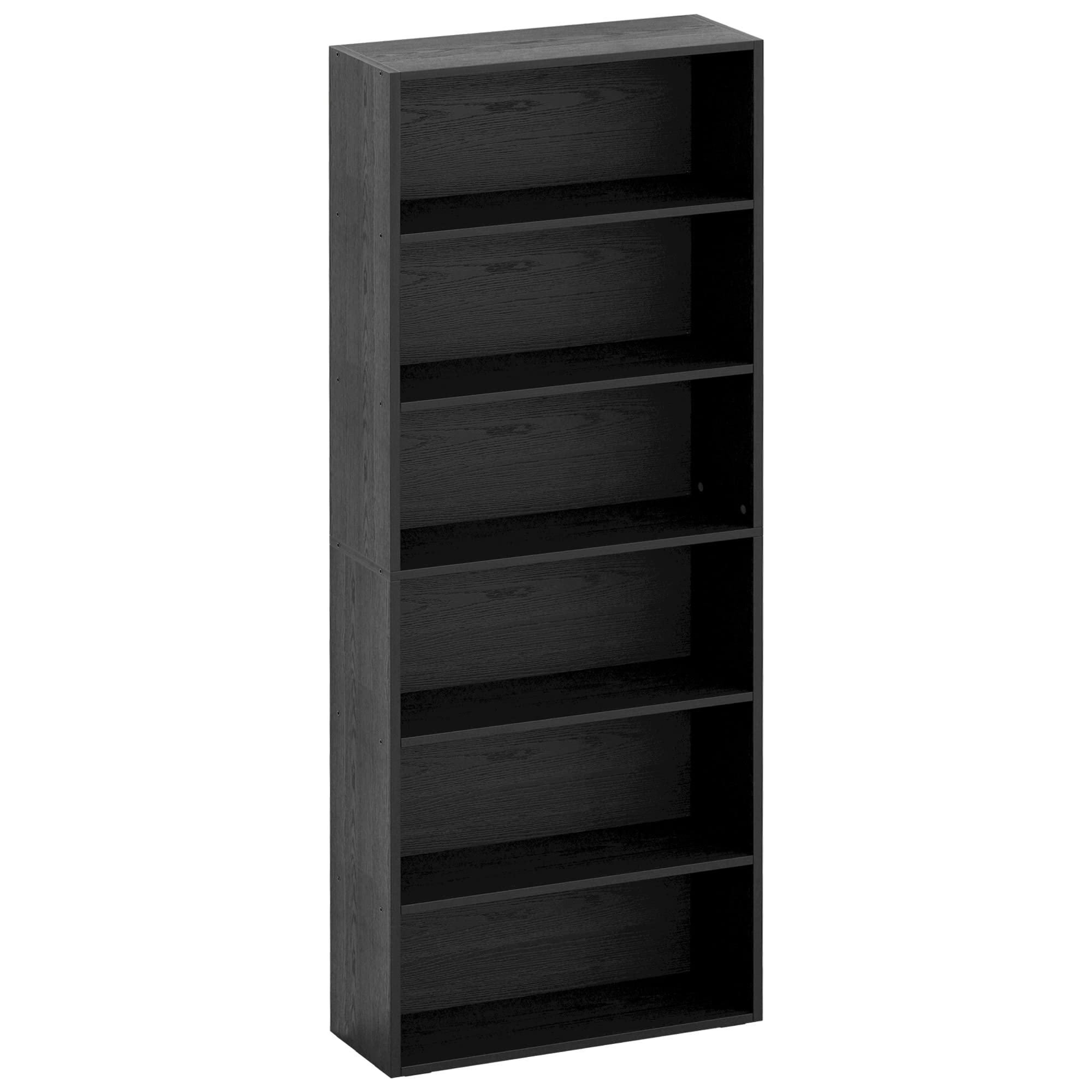
A tall, space-saving 6-tier bookcase with tip-over protection and a compact footprint.
Why I picked it: I reached for this when I needed vertical storage that looks neat and anchors to the wall for safety.
Best for: Narrow rooms, home offices, and bedrooms needing vertical book or decor storage.
A budget-friendly tall shelving solution with included safety hardware.
Pros
- Tall, space-efficient design
- Includes tip-over anchor
- Clear instructions and labeled parts
- Clean, simple finish
Cons
- Each shelf holds modest weight
- Finish can be darker than pictured
My take
I assembled the IRONCK bookcase in under an hour with the included hardware. It fit a tight wall between two doors and instantly added vertical storage without eating floor space.
The shelves are lighter-duty compared with metal racks — each shelf is best for books, photos, and lighter boxes — but the overall construction felt steady, especially once anchored to the wall.
If you need height and a narrow profile, this unit balances look and function well. Be aware the actual finish can be darker than photos, which suited my space but is worth checking against your decor.
How I Choose Standing Shelves
Weight Capacity
I always start with how much weight I need each shelf to hold. Metal wire and heavy-duty steel racks handle boxes and tools; plastic and particle-board shelves are better for lighter household items.
If you plan to move a loaded shelf, remember rolling casters usually reduce the safe moving capacity compared with stationary leveling feet.
- Match per-shelf capacity to your heaviest item, not the average.
- Prefer metal racks for repeating heavy loads.
- Use shelf liners or mats for small or uneven containers on wire shelves.
Material and Environment
I pick plastic shelves for damp basements or laundry rooms because they won’t rust. Metal with an epoxy or chrome finish is my choice for garages and pantries where load matters.
Wood or particle-board shelves win when aesthetics matter, but I position heavier items lower to protect the material.
- Choose plastic for moisture resistance.
- Choose metal for maximum strength.
- Choose wood/particle board for living-room style.
Mobility and Adjustability
I look for adjustable shelves in one-inch increments so I can tailor spacing to tall bottles, boxes, or tools. Casters are great for flexible spaces, but I weigh the trade-off in rated capacity.
Leveling feet are indispensable if your floor isn’t perfectly flat — I use them to eliminate wobble.
- Get locking casters if you need mobility and stability.
- Choose units with clear height markings for repeatable shelf placement.
Assembly and Footprint
Quick, tool-free assembly saves time. I still check that the collars and poles seat tightly — a little extra attention during build pays dividends in long-term stability.
Measure your available wall and door clearances before you buy. A slim footprint with more vertical tiers often gives the best storage-per-square-foot.
- Measure doorways and ceiling height beforehand.
- Assemble on a flat surface and install stabilizers when provided.
Frequently Asked Questions
Can I use metal wire shelves in a damp basement?
I avoid bare metal in consistently damp spaces unless it has a rust-resistant finish. For basements that see moisture, I prefer plastic shelving or metal with a proven epoxy or chrome coating and occasional inspection.
Are casters a good idea for heavy shelving?
I use casters for mobility, but I don’t keep very heavy loads on wheels while moving them frequently. Locking casters are a must, and swapping to leveling feet for permanent placement preserves the highest load capacity.
How do I prevent tall shelves from tipping?
I always fasten tall units to the wall with the included tip-over anchor or a bracket. I also keep heavier items low and distribute weight evenly across shelves to reduce tipping risk.
Final Take
After testing metal, plastic, and wood shelving, I found no one-size-fits-all winner — each material has clear advantages depending on environment and load.
For heavy tools and garage storage I reach for steel wire racks; Sterilite plastic is my choice where moisture is an issue; and the wood-and-metal bookcases get top marks when style matters.
Decide first on load and location, then pick the shelf that balances capacity, footprint, and look — that approach made my storage projects simple and reliable.
