
I tested eight compact stereo cabinets and AV stands to find the ones that balance stability, storage, and style for turntables, receivers, and game consoles.
I live with a lot of gear—turntable, receiver, consoles, and a small vinyl collection—so I chose eight compact stereo cabinets and media stands to see which actually work day to day.
In this roundup I focus on things that matter to me: a stable top for a turntable, accessible vinyl storage, cable management, and shelves that can handle heavy components without wobble.
I compared these units by footprint, shelf adjustability, cable and power integration, and perceived build quality so you can pick the right balance of storage, stability, and style for your space.
1. 3-Tier Record Player Stand with Vinyl Storage – Best for Vinyl Display
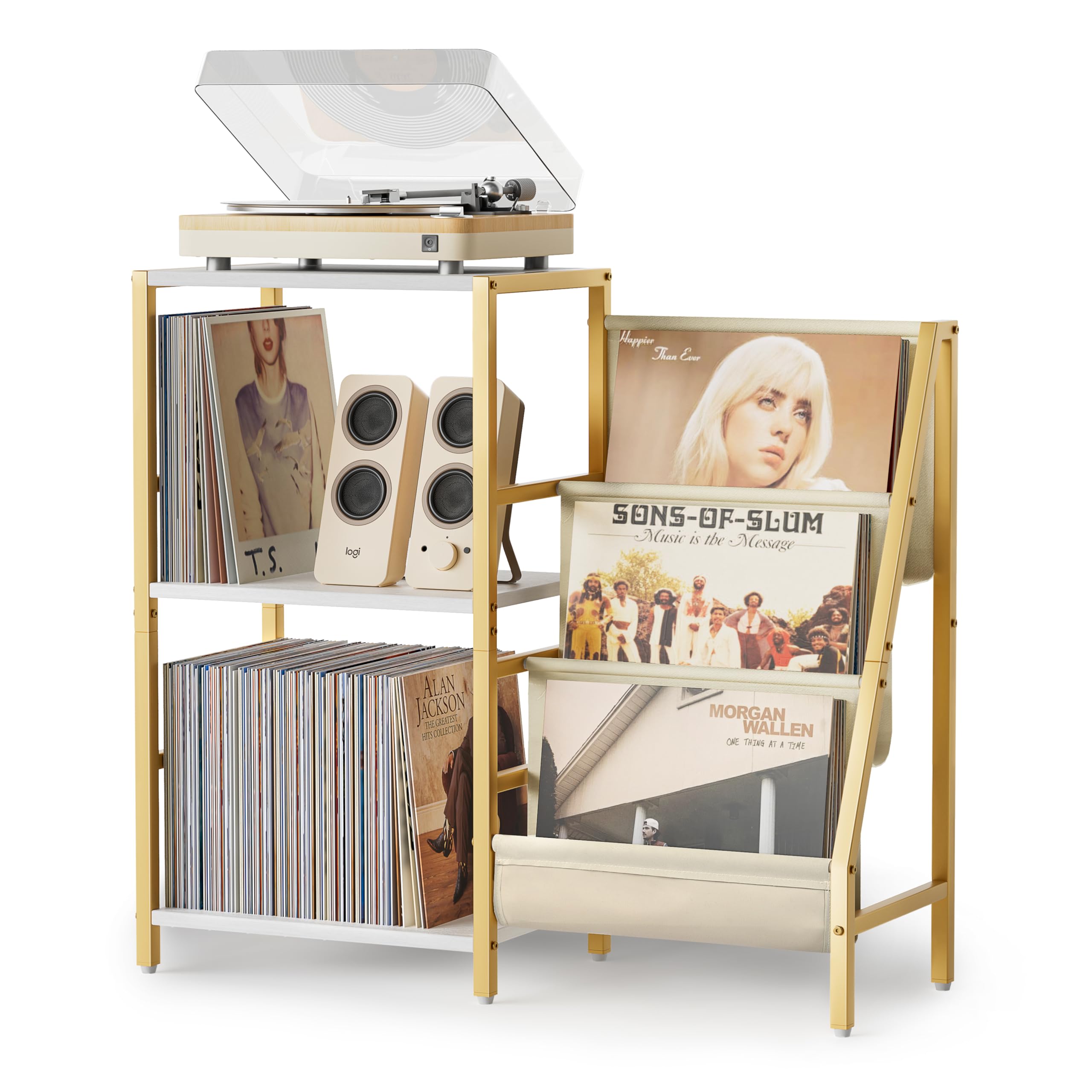
I liked this stand for its side-facing vinyl display, compact footprint, and multi-use shelves that double as an end table.
Why I picked it: Unique side display for quick browsing and a dedicated top shelf sized for turntables.
Best for: Collectors who want visible vinyl and a compact turntable surface.
Affordable option for vinyl-first setups.
Pros
- Side-facing display for featured records
- Compact footprint fits small rooms
- Top shelf sized for many turntables
- Lightweight but sturdy when assembled
Cons
- Not ideal for very heavy components
- Wood finish options are limited
My take
I used this as my entry-point vinyl station because the side display makes it easy to show and grab records. The top holds a typical mid-size turntable without overhang, and the middle and bottom tiers fit the rest of my collection.
Assembly was straightforward with labeled parts and clear steps; once tightened it felt stable. The combination of wood boards and fabric-covered storage gives it a mid-century-meets-modern look that works as an end table in a living room.
If you have very heavy amplifiers I’d look at a heavier-duty rack, but for a turntable, a couple of bookshelf speakers, and a modest vinyl stash this stand hits the sweet spot between style and function.
2. FITUEYES 4-Tier AV Media Stand – Best Corner Fit
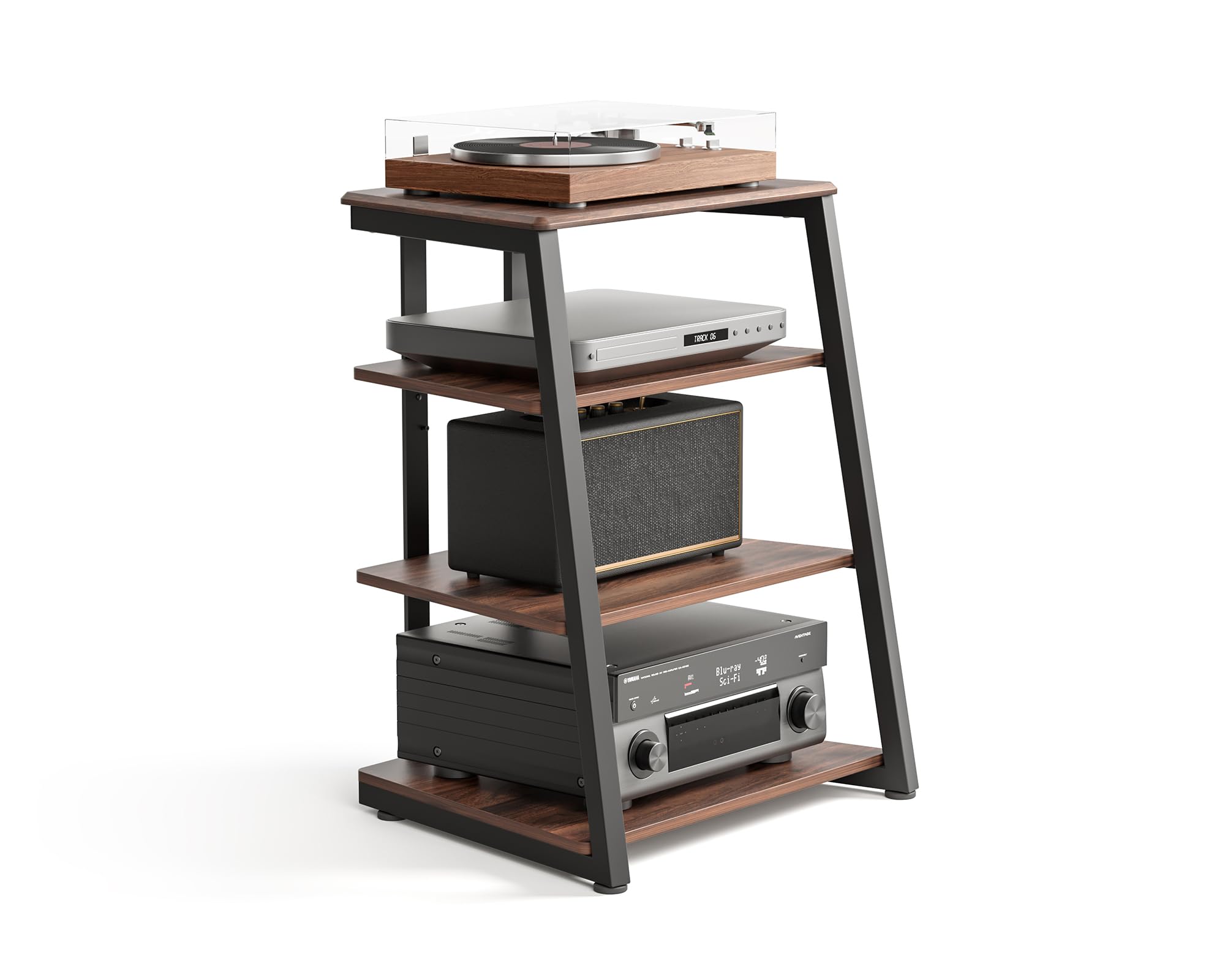
I appreciated this one for corner installations, adjustable shelves, and a robust steel frame that handled heavier receivers.
Why I picked it: Trapezoidal frame and adjustable shelves make it ideal for corner placement with heavy gear.
Best for: People who need a sturdy corner rack for receivers and consoles.
Midrange value for large-capacity needs.
Pros
- Designed to fit into corners
- Adjustable shelves for tall components
- Heavy-duty steel frame
- Includes cable management
Cons
- Larger footprint than slim stands
- Veneer can dent during rough handling
My take
I positioned this stand in a tight corner and it made the most of the space—top shelf is roomy enough for a turntable or small TV while lower shelves handled a full-size vintage receiver and several players.
The frame feels solid and the adjustable shelf positions allowed me to fit a tall amp without blocking ventilation. The hollow rear panel and cable bracket made tidying power and signal runs simple.
Assembly took a little time but the result is a heavy-duty unit that doesn’t flex when I load it up. If you need a corner-first solution that won’t buckle under a heavy receiver, this is one of the sturdiest options I tried.
3. FITUEYES Tempered Glass 4-Tier AV Cabinet – Best for Component Weight
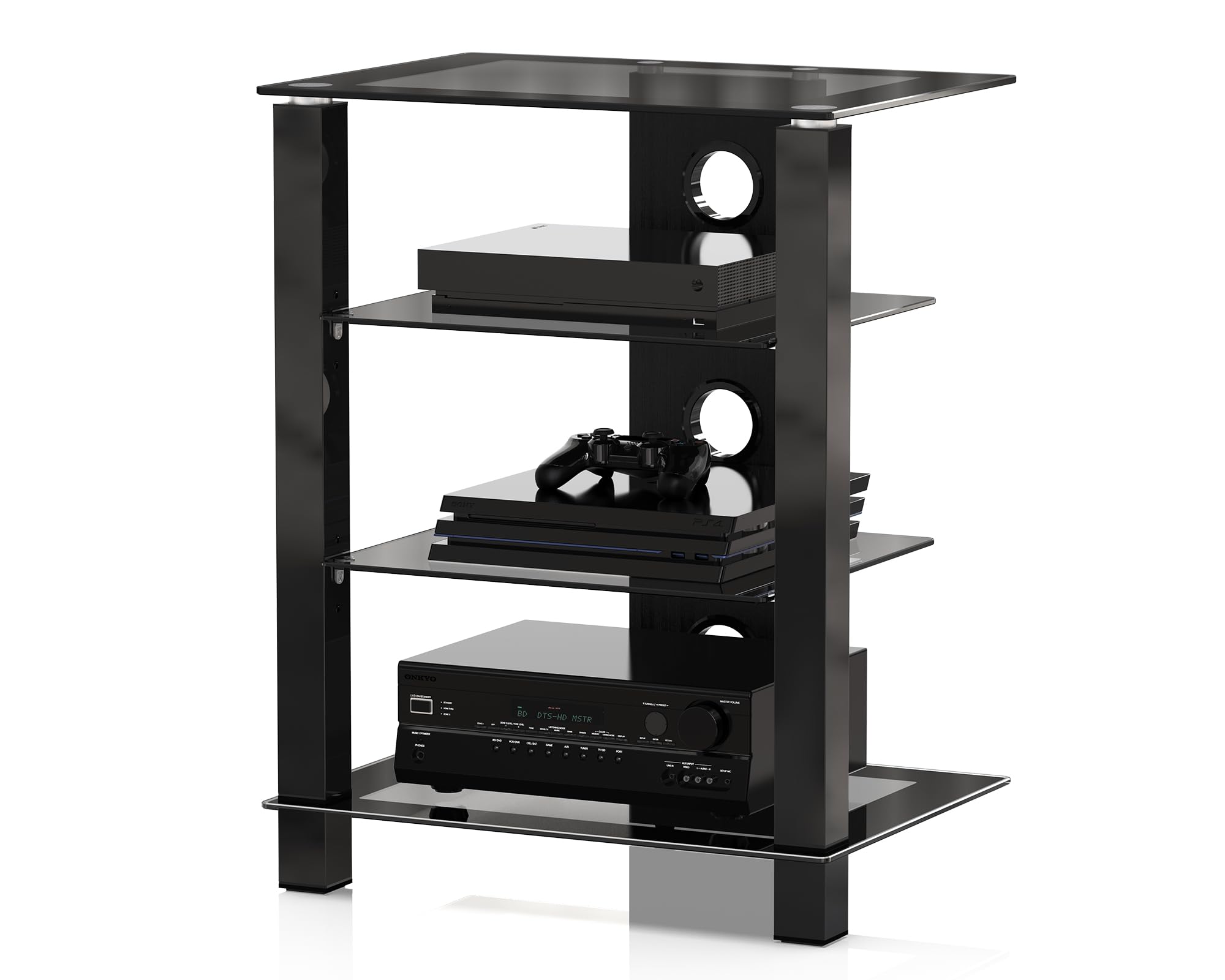
I trusted the tempered glass shelves when stacking heavier components because the manufacturer lists clear per-shelf weight limits and the design felt balanced.
Why I picked it: Tempered glass shelving with stated per-shelf weight limits and adjustable spacing.
Best for: Heavier receivers and separates that need solid, level support.
Good value for glass-shelf builds.
Pros
- Tempered glass shelves look modern
- Adjustable shelf heights
- Clear cable management ports
- Solid load capacity on lower shelves
Cons
- Back panel can block deep connections
- Requires care with very deep equipment
My take
I put a heavy A/V receiver on the second shelf and a gaming console on top; the glass held firm and the rack stayed level. The per-shelf capacity is useful when planning placement of heavy boxes.
Cable management holes keep the back tidy, though I had to modify the rear panel to route bulky connectors on a few deeper devices. The overall visual is clean—glass shelves keep the setup from feeling bulky.
Assembly is quick and mostly hand-tightening. If you run very deep professional gear, check clearance to avoid a cramped back panel, but for most home components the glass tower worked reliably.
4. X-cosrack 4-Tier Game Console Shelf with Outlet – Best Value with Power
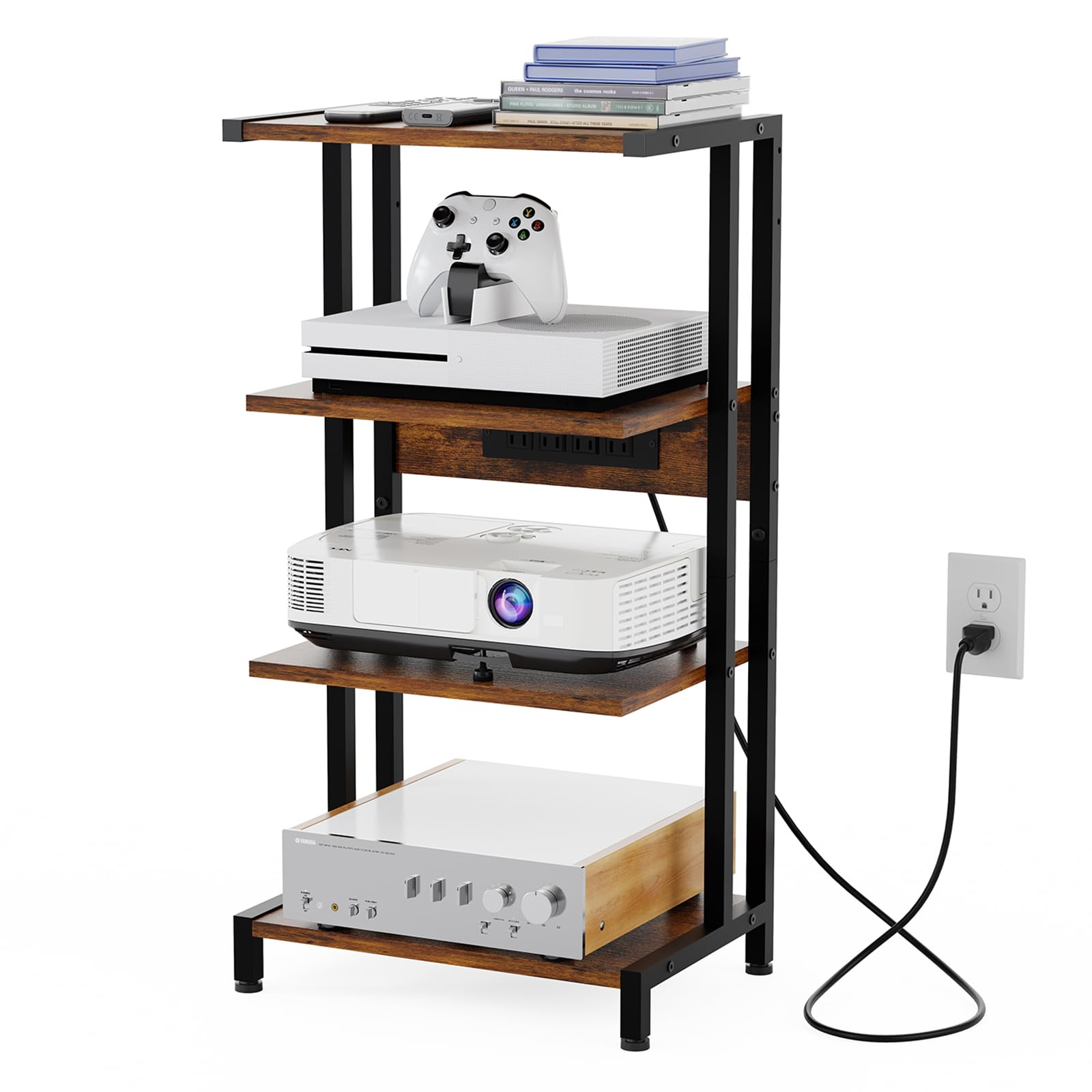
I liked the built-in power strip and narrow footprint—handy for consoles and small components in tight spaces.
Why I picked it: Built-in outlet strip and compact footprint makes setup quick and neat.
Best for: Gamers and small setups that need integrated power.
Budget-friendly and functional.
Pros
- Built-in power outlets included
- Narrow footprint fits tight spots
- Heavy-duty R-shaped frame
- Quick, easy assembly
Cons
- Not ideal for heavy turntables
- Top shelf stability varies by floor
My take
I dropped two consoles, a router, and a small subwoofer onto this stand; the integrated power strip made cable runs tidy and eliminated the need for extra extension cords.
The steel frame felt sturdy and shelves don’t sag under typical console loads. Because the unit is narrow, it’s perfect next to a desk or in a small living area.
I wouldn’t use this with a large, vibration-prone turntable—if you plan to spin records regularly, pick a heavier, wider-top stand. For consoles and streaming boxes this is a compact, inexpensive organizer that I found very useful.
5. HOMCOM 4-Tier Media Cabinet with Glass Doors – Best Enclosed Storage
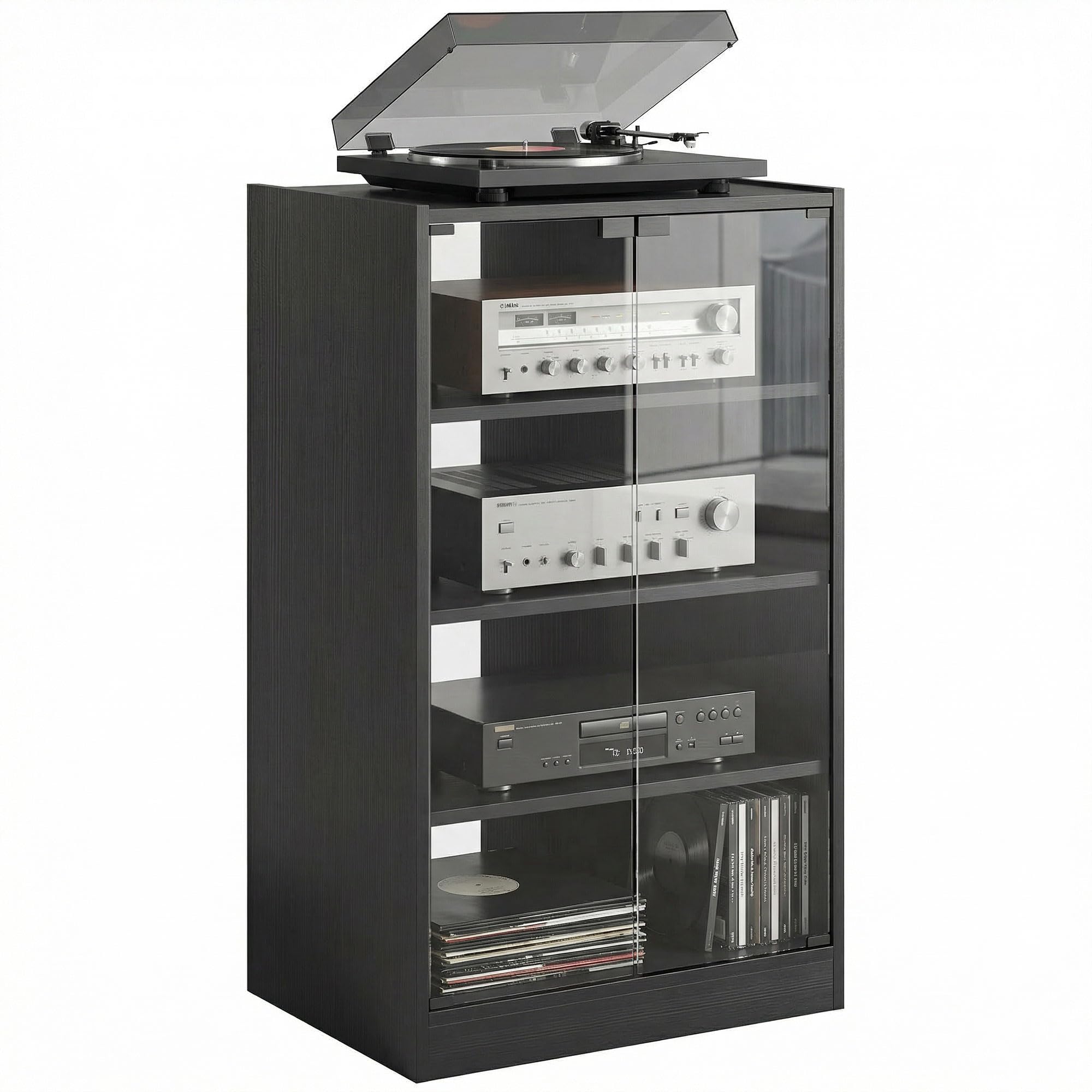
I chose this when I needed dust protection and a cleaner look—tempered glass doors let remotes pass through while hiding cables.
Why I picked it: Tempered glass doors for dust protection and remote pass-through.
Best for: Homes that want a neat, enclosed media cabinet.
Solid midrange cabinet with protective doors.
Pros
- Tempered glass doors keep dust out
- Adjustable shelves for flexibility
- Rear cable ports for tidy wiring
- Anti-tip hardware included
Cons
- Assembly can be fiddly
- Magnetic latches may need replacement
My take
I used this cabinet to protect components from dust and curious pets—remote signals pass through the glass so I didn’t lose functionality when doors were closed.
The adjustable shelves made it easy to set up a turntable above smaller boxes, and the rear cable ports kept the back tidy. It’s heavier and feels substantial once assembled.
Assembly took more patience than some open racks, and I swapped a faulty latch quickly with an inexpensive part, but the finished piece looks refined and will work well in a living room where a tidy appearance matters.
6. AV Media Stand with Built-In Outlets and LED – Best with Extras
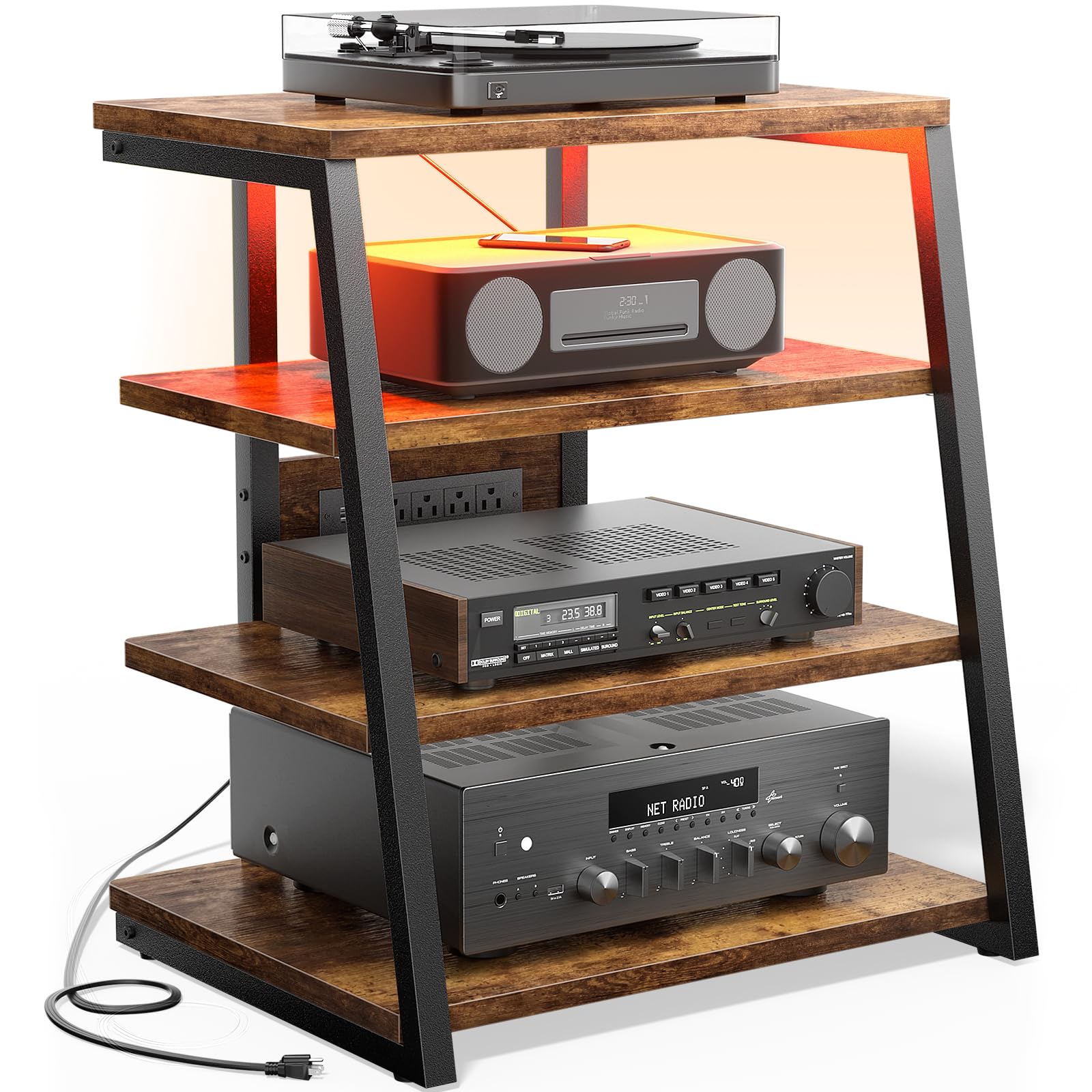
I appreciated the integrated USB ports and LED lighting, plus adjustable feet that help level a turntable on imperfect floors.
Why I picked it: Power hub, USB ports, and LED lighting add convenience and atmosphere.
Best for: Users who want power integration and ambient lighting.
Feature-rich without being expensive.
Pros
- Integrated power strip with USB
- LED strip adds ambiance
- Adjustable feet for leveling
- Large, adjustable shelves
Cons
- LED remote can be finicky
- Finish shows wear with heavy use
My take
I loved that this unit included both AC outlets and USB ports—setting up my turntable and streaming player required fewer adapters and the cables looked much neater.
The LED strip under the top shelf is an enjoyable bonus; it sets a mood when listening to records or gaming. Adjustable feet made it possible to dial out a slight wobble on my uneven floor, which matters for turntable stability.
Build felt sturdy for most home setups. The lights and integrated power make this one of the most convenient pieces in my apartment when I want both function and a little flair.
7. Aquzee 4-Tier Media Stand – Best Compact Workhorse
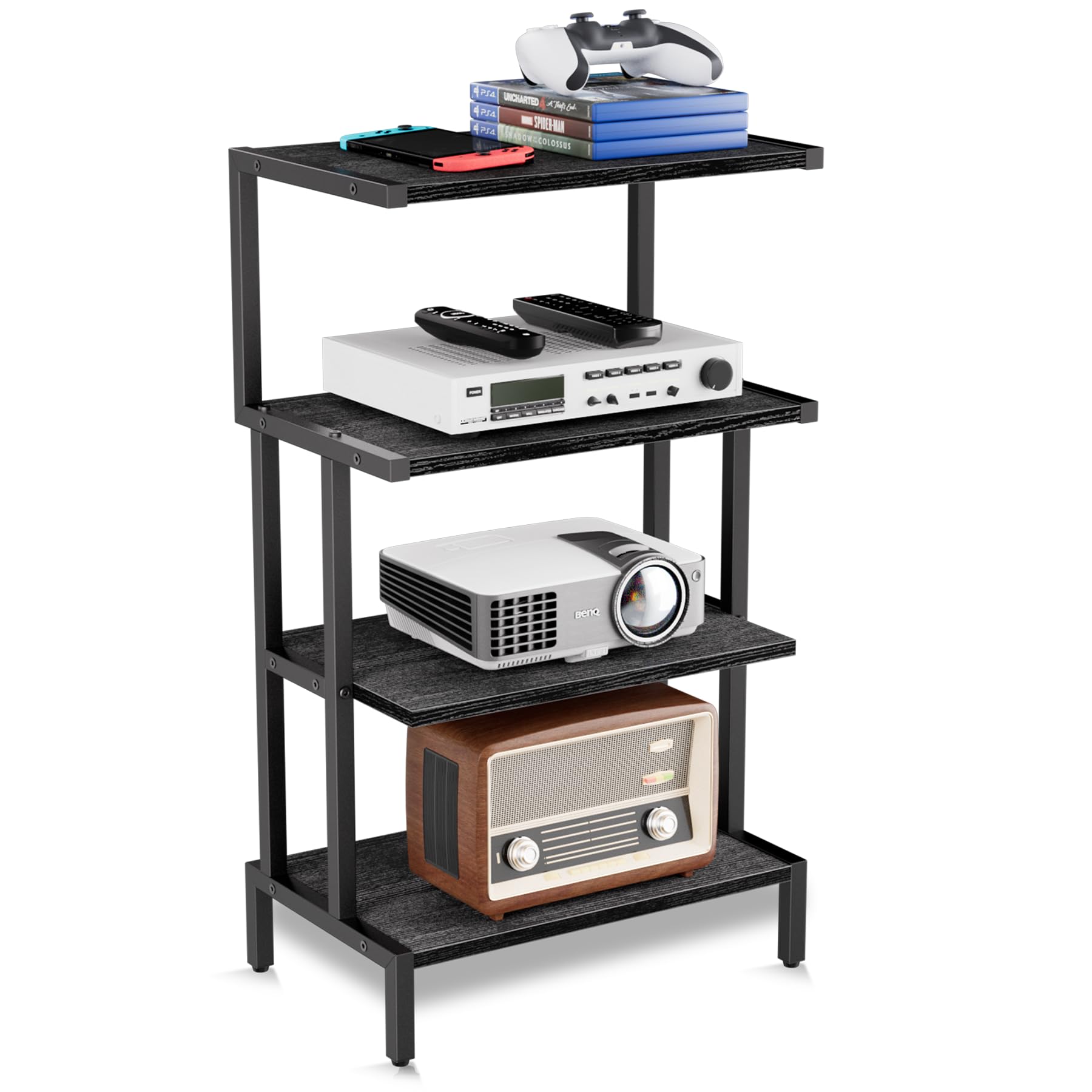
I recommend this small, heavy-duty stand when you need a compact, no-fuss organizer that feels solid for its size.
Why I picked it: FSC-certified wood boards and a tight footprint made it an ideal compact option.
Best for: Small rooms and bedrooms needing a sturdy, compact shelf.
Great budget-to-performance ratio.
Pros
- Compact and sturdy construction
- Pre-drilled holes speed assembly
- Includes installation video
- Good per-shelf load for size
Cons
- Small shelves limit very wide components
- Basic finish options only
My take
I set this up in a small bedroom and it performed exactly as described: sturdy, quick to assemble, and a great way to keep consoles and chargers off the floor.
The included tools and excellent instructions made assembly painless. Despite the compact size, each shelf handled heavier boxes without sag.
If you need a low-profile media organizer that won’t dominate a room, this compact Aquzee stand is an affordable, reliable choice.
8. HOOBRO 4-Tier Media Stand with Charging Station – Best with Charging Station
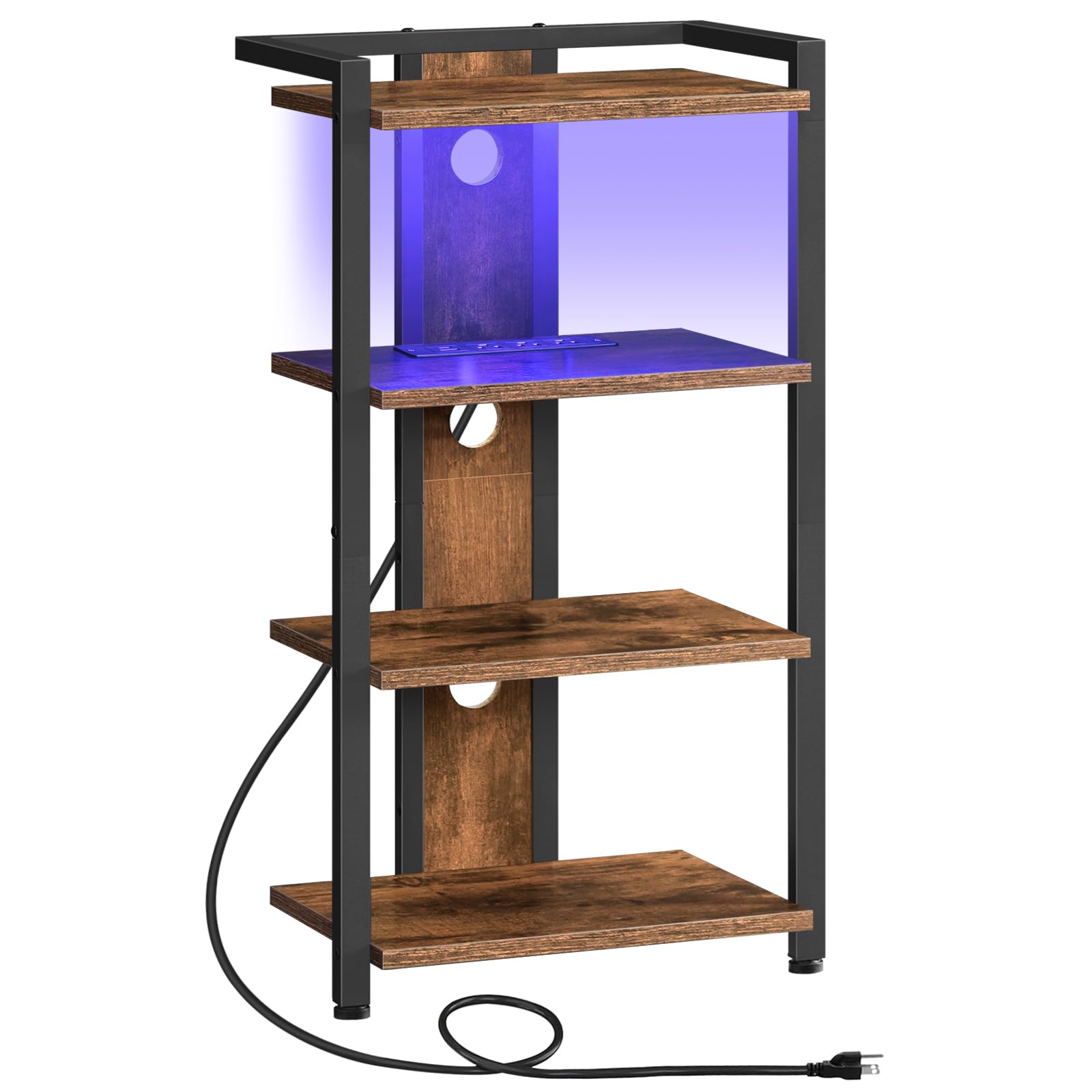
I liked the flexible mounting for the power hub and the built-in LED strip for a visual boost around my TV.
Why I picked it: Mountable power hub, LED lighting, and narrow profile for small spaces.
Best for: Small living areas that need built-in charging and mood lighting.
Affordable with nice extras.
Pros
- Flexible power hub mounting
- LED light strip included
- Good cable management holes
- Slim corner-friendly profile
Cons
- Shelves are a touch narrow
- Power strip location can block shelf space
My take
I liked how the power hub can be mounted where it suits your layout; that flexibility made it easy to place my consoles without sacrificing a usable shelf.
LED lighting is a fun touch that enhances game nights and movie sessions. The unit is lightweight but felt surprisingly solid once assembled.
Width is a limiting factor for very deep components, so measure front-to-back clearance if you plan to put large consoles or a subwoofer on the bottom shelf. For compact setups the HOOBRO stand is a well-rounded option.
How I Choose a Stereo Cabinet
Footprint and Fit
I always measure available floor space and the top shelf depth before buying. A slim tower looks neat but may not accept larger turntables or deep receivers.
Corners can be prime real estate—some racks are trapezoidal or corner-specific and make much better use of tight rooms.
- Measure height, width, and depth of your largest component
- Allow clearance behind for cable access and ventilation
Stability and Load Capacity
If I plan to put a heavy receiver or tube amp on a shelf I check per-shelf weight capacity or choose tempered glass/steel-frame designs.
Turntable users should look for wide, stable tops and adjustable feet to level the deck.
- Prefer steel frames or thicker boards for heavy gear
- Adjustable feet can correct uneven floors
Power and Cable Management
I value built-in outlets and cable routing holes because they reduce clutter and simplify setups. Built-in USB ports are a welcome convenience for modern devices.
Think about where the power brick will sit and whether the outlet placement will block shelf space.
- Look for integrated power strips to minimize adapters
- Check rear access for large AC plugs and connectors
Shelving Flexibility and Ventilation
Adjustable shelves let me accommodate tall components later. Open designs or ventilation holes prevent heat buildup under heavy loads.
Glass shelves look tidy but check depth and rear clearance for connections before committing.
- Choose adjustable shelves for future-proofing
- Keep ventilation in mind for amplifiers and consoles
Aesthetics and Durability
I balance looks with longevity—veneers and tempered glass can look upscale, but steel frames and thicker boards usually last longer in daily use.
If you need dust protection, a cabinet with glass doors makes sense, especially in homes with pets.
- Pick a finish that fits your room
- Glass doors protect equipment but add assembly complexity
Frequently Asked Questions
Can these stands handle a heavy A/V receiver?
I recommend checking per-shelf weight specs; the FITUEYES corner model lists a high overall capacity and the tempered glass FITUEYES model specifies per-shelf limits—choose those if you plan to put large receivers on a lower shelf.
Are built-in outlets safe and useful?
I found built-in outlets very convenient for consoles and small amps, but I check placement first since an outlet mounted on a shelf can make that shelf less usable if it physically blocks space.
Will a turntable vibrate on these stands?
A heavy, wide-top stand or one with adjustable feet is better for turntables. Some slim racks are fine for lightweight players, but I avoid narrow or wobbly tops with belt-drive decks.
Do glass shelves limit what I can place?
Glass shelves look clean but have specific weight limits and sometimes limited depth. I use them for medium-weight components and verify depth and clearance for rear connectors before placing very deep equipment.
Final Take
After testing multiple formats, I keep an open rack for heavy receivers, a display-style stand for vinyl-first setups, and a compact powered unit for consoles and small spaces.
Pick the stand that matches your largest component and the way you use the gear—stability, cable access, and sensible shelf spacing matter more to daily use than any one finish.
If you want a single recommendation: choose a corner-capable, steel-framed rack for heavy gear, or a powered compact stand if neat cable runs and charging are your priority.
