
I tested five versatile stir fry pans—nonstick, stainless, and hard-anodized—to find tools that heat evenly, release food cleanly, and handle daily use.
I cook a lot of stir fries, one-pot meals, and family-sized dishes, so I chose pans that balance heat, durability, and cleanup.
In this roundup I spent time on induction and gas ranges, checked oven performance, and used each pan for real weeknight dinners.
My picks cover nonstick convenience, stainless steel performance, and lightweight budget options so you can match the pan to how you cook.
I focused on build (hard-anodized or multi-ply), surface (nonstick vs stainless), handle comfort, oven compatibility, and how each pan behaved under high-heat stirring.
1. Circulon Symmetry Hard-Anodized Stir Fry Wok – Best Overall
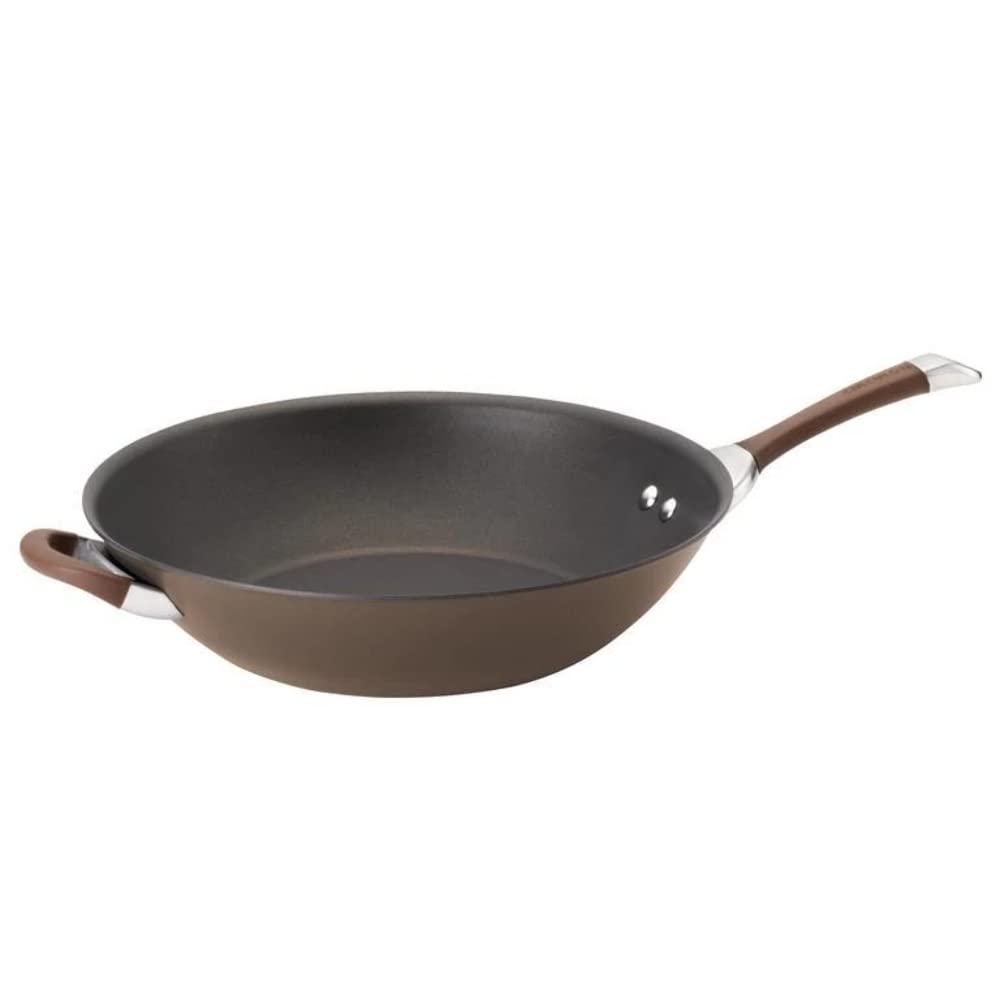
A durable, induction-compatible hard-anodized wok with a triple-layer nonstick interior and a helpful secondary handle for easy maneuvering.
Why I picked it: Long-lasting nonstick, induction-ready, and easy to move with its helper handle.
Best for: Everyday nonstick stir-frying and oven-finished dishes up to 400°F.
Solid midrange choice for lasting nonstick performance.
Pros
- Durable hard-anodized construction
- TOTAL nonstick system for easy release
- Induction compatible
- Comfortable rubberized handles
- Oven safe to 400°F
Cons
- Can run hotter in the center
- A bit heavier than thin aluminum woks
My take
This Circulon wok quickly became my go-to when I want nonstick convenience without sacrificing durability.
The hard-anodized body feels solid under the spatula and the raised-circle TOTAL nonstick really helps when I’m cooking eggs, shrimp, or sticky sauces—food slides out and cleanup is fast.
I appreciated the rubberized stainless handle and the helper handle; moving a loaded wok from burner to counter is much easier and more secure.
I used it on induction and gas; heat distribution is generally even, though I noticed the center can run hotter when the pan is empty or on very high heat—adjusting burner size and preheating solves that for most dishes.
2. Cuisinart Chef’s Classic Stainless Stir-Fry Pan – Best Stainless Steel
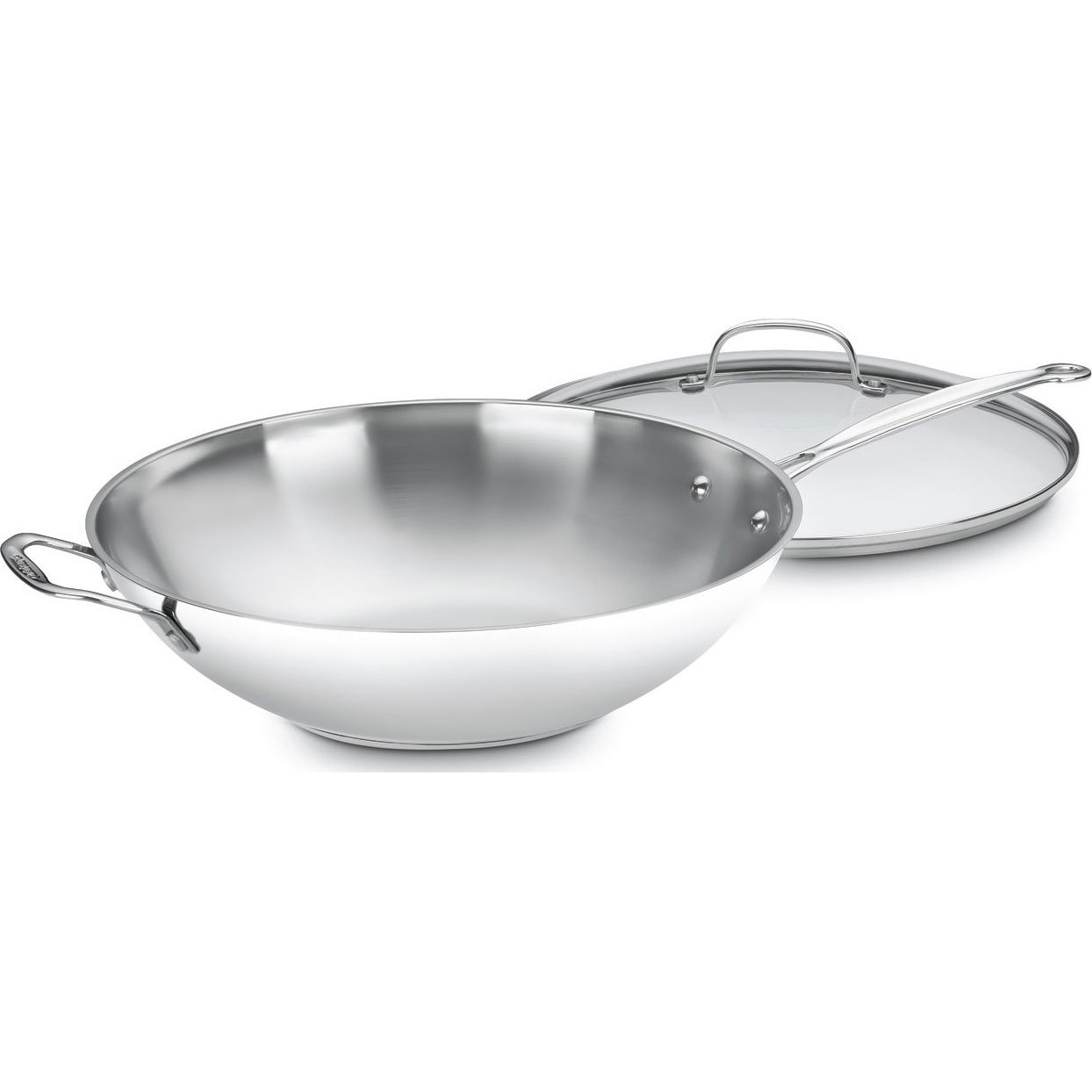
A flat-bottom stainless steel wok with an aluminum-encapsulated base, tight-fitting lid, and cool-grip riveted handles for serious searing and large-batch cooking.
Why I picked it: Reliable stainless performance with an aluminum core for even heating and a tight 'flavor-lock' lid.
Best for: High-heat searing, large family meals, and cooks who want stainless durability.
A practical value for a full stainless wok with a lid.
Pros
- Even heat from encapsulated aluminum base
- Stainless surface won’t react with food
- Tight-fitting flavor-lock lid
- Cool-grip riveted handles
- Dishwasher safe
Cons
- Large and heavy for tossing
- Not nonstick — needs oil for stir-fry
My take
I reach for this Cuisinart when I need serious searing or a big batch for the table.
The flat bottom sits solid on any cooktop and the aluminum-encapsulated base spreads heat so I don’t chase hot spots while stirring vegetables and protein.
The glass flavor-lock lid is actually useful for steaming and braising, and measurement markings help when I’m finishing sauces.
Because it’s stainless, I accept that it needs a little more oil and attention than a nonstick pan, but the browning and oven-to-table practicality make it a workhorse in my kitchen.
3. Willow & Everett 3-Ply Stainless Steel Wok – Best for Durability
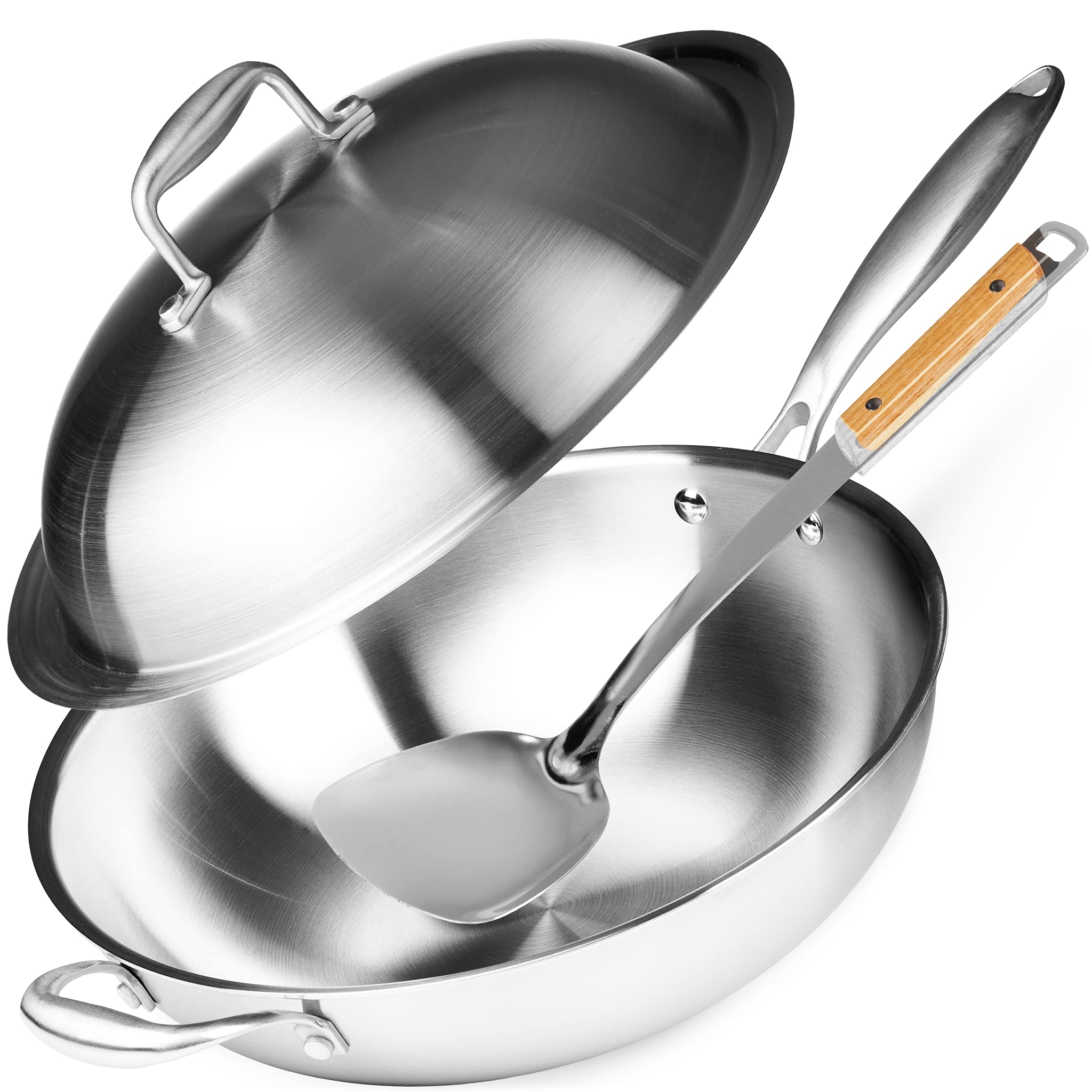
A 3-layer, flat-bottom stainless wok with a large 13-inch cooking surface, lightweight feel, and a dome lid—built for multi-use performance.
Why I picked it: Three-ply build for quick, consistent heating and a roomy surface for family meals.
Best for: Cooks who want stainless performance, multi-purpose use, and less upkeep than carbon steel.
A premium stainless option for cooks focused on longevity.
Pros
- 3-ply construction for steady heat
- Large 13-inch cooking surface
- Lightweight for its class
- Stands up to metal utensils
- Dome lid included
Cons
- Not a nonstick surface
- Minor scratching visible with metal spatulas
My take
I’ve used this Willow & Everett wok for everything from stir-fries to one-pot pasta and it outperformed my heavier pans in day-to-day versatility.
The three-ply body heats quickly and holds temperature when I add cold ingredients, which is crucial for good wok technique.
It’s surprisingly light for a multi-ply pan, so I can move it full of food without hassle, and the dome lid is heavy-duty and useful for steaming.
Expect stainless behavior—not slick nonstick—so I adapt technique (higher heat, a bit more oil, and proper preheat) to get the best results.
4. KitchenAid Hard-Anodized Nonstick Stir Fry Pan – Best for Heat Control
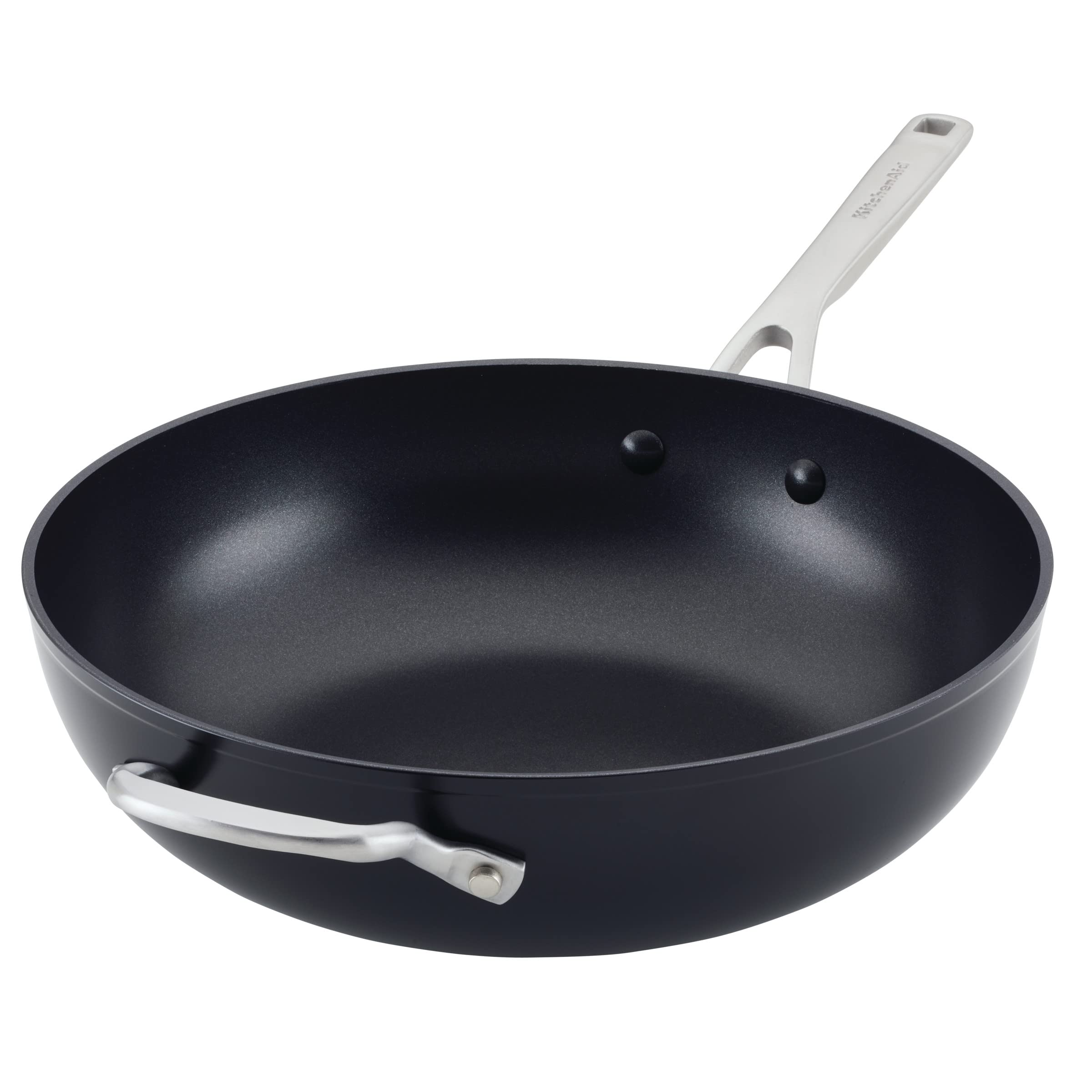
A thick, forged-base hard-anodized wok with triple-layer nonstick, designed for even heat and oven use up to 500°F.
Why I picked it: Thick forged base for very even heat and a durable triple-layer nonstick interior.
Best for: Cooks who want dependable nonstick results and oven finishing at higher temps.
A slightly higher midrange pick for even heating and oven flexibility.
Pros
- Thick forged base for even heating
- Triple-layer nonstick interior
- Handle rivets covered for full nonstick
- Dishwasher safe
- Oven safe to 500°F
Cons
- Lid can scratch with use
- Nonstick requires gentle utensils
My take
This KitchenAid wok impressed me with how evenly it cooks—searing and browning look consistent across the surface.
The triple-layer nonstick made eggs, stir-fries, and saucy dishes slide right out, and finishing in the oven up to 500°F gives me flexibility with baked finishes.
Cleaning is simple, and the pan held up under regular weekly use, but I did notice cosmetic wear on the lid more quickly than I expected, so I baby the lid and avoid harsh scrubbing.
If you want nonstick performance that tolerates higher oven temps, this is the pan I turn to first.
5. T-fal Specialty Nonstick 14-Inch Wok – Best Budget
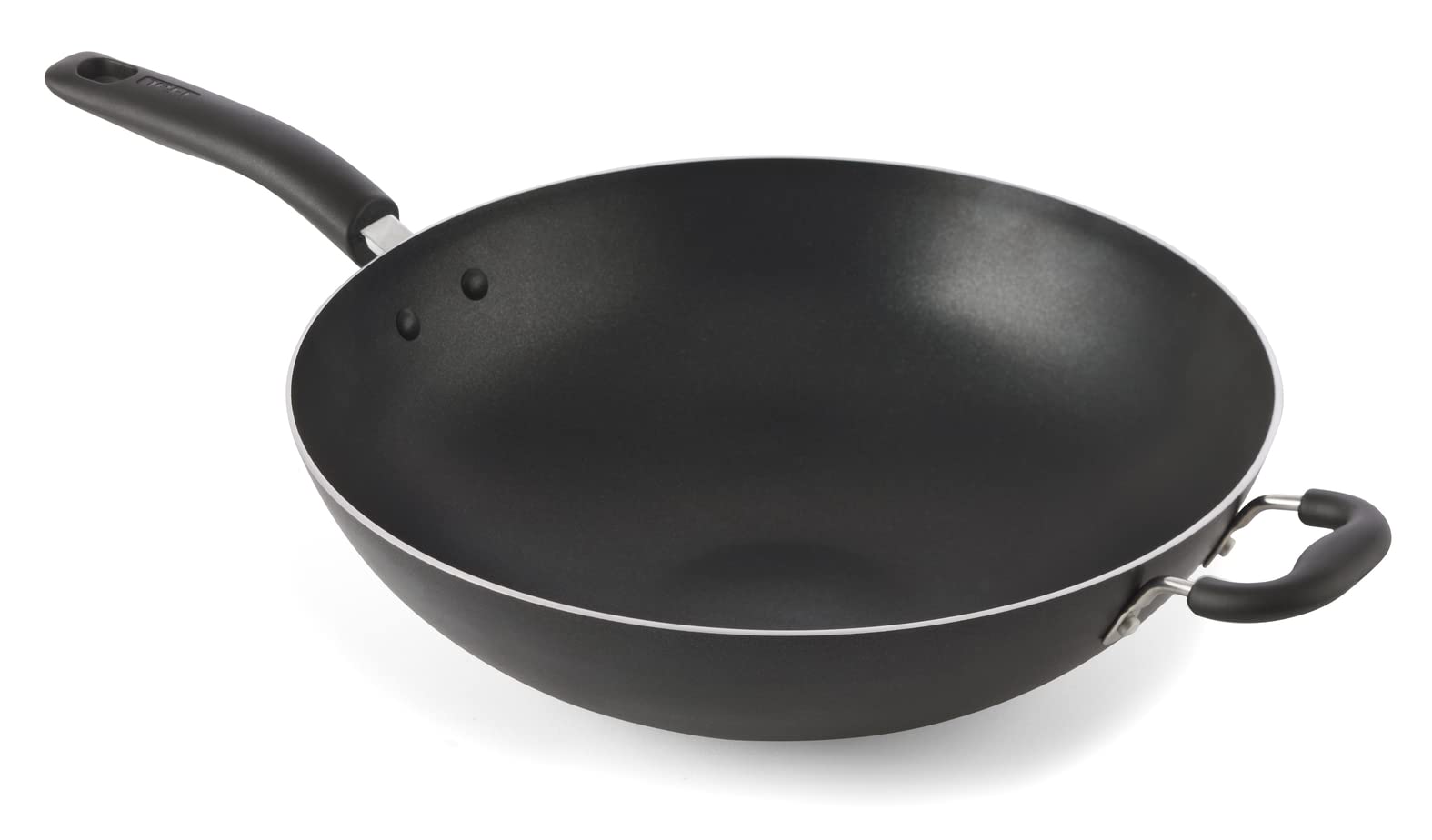
A lightweight 14-inch nonstick wok with ProGlide coating, rapid heating, and a long stay-cool handle—built for big family meals and easy cleanup.
Why I picked it: Large, very lightweight, and excellent nonstick release for everyday cooking.
Best for: Budget-conscious cooks who want a roomy nonstick wok for family-sized meals.
Budget-friendly and great value for frequent home use.
Pros
- Large 14-inch cooking area
- Very lightweight and easy to handle
- ProGlide nonstick interior
- Long stay-cool handle
- Dishwasher safe
Cons
- No dedicated lid included
- Avoid metal utensils to protect coating
My take
I’ve used the T-fal daily for a year and it’s been surprising in how well it handles a lot of different jobs—fried rice, veggies, quick deep frying, and even soups.
Its lightweight feel makes frequent stirring and transferring effortless, and the ProGlide nonstick means I use less oil and the pan cleans up in minutes with a soft sponge.
The only real compromise is the lack of a dedicated lid—I've adapted by using a universal lid from another pan—and I’m careful to use wood or silicone utensils to keep the coating healthy.
For the price and performance, it’s a dependable workhorse for busy weeknights.
How I Choose a Stir Fry Pan
Material Matters
I pick material based on how I cook: hard-anodized and multi-ply stainless hold heat well and are durable, while nonstick lets me use less oil and cleans faster.
If I want high-heat searing or browning I go stainless; for quick, low-fat weeknight meals I prefer a reliable nonstick.
- Hard-anodized: durable, even heating, often nonstick
- 3-ply stainless: excellent heat control, oven-ready, metal-utensil friendly
- Nonstick: easiest cleanup, avoid very high direct heat
Size and Shape
I choose a 12–14 inch pan for family meals. A flat bottom is essential for electric and induction stoves.
A wider rim makes stirring and tossing easier; depth affects how much food you can comfortably stir without spills.
- 12–14 inches covers most home cooking needs
- Flat-bottom for stable contact on modern stoves
- Deeper sides help contain sauces and toss ingredients
Handles, Weight, and Comfort
I test how a pan feels when full: comfortable grips and a helper handle make lifting and pouring safe.
Weight is a balance—heavier pans hold heat better, but lighter pans are easier for frequent tossing.
- Look for a helper handle for large pans
- Ergonomic grips reduce wrist strain
- Consider weight versus heat retention
Oven Compatibility and Heat Limits
I check oven temperature limits—higher limits let me finish dishes in the oven or brown on high heat safely.
Nonstick pans generally have lower oven temps; hard-anodized and stainless often tolerate higher heat.
- Verify oven-safe temperature before using broil or high-temp finishes
- Nonstick: stay within manufacturer heat limits
- Stainless/hard-anodized: usually higher oven tolerance
Care and Longevity
I match care routines to the surface: stainless can take metal utensils and stronger cleaners, nonstick benefits from wood or silicone and gentle washing.
Dishwasher-safe is convenient, but hand washing extends a nonstick coating’s life.
- Use wood or silicone utensils on nonstick
- Hand-wash to prolong nonstick life
- For stainless, a gentle abrasive like Bar Keeper's Friend restores shine
Frequently Asked Questions
Which material is best for high-heat stir-frying?
I prefer stainless steel or a heavy three-ply pan for true high-heat stir-frying because they tolerate high temperatures and give the best browning. Hard-anodized pans work well too if you want some nonstick convenience.
Do I need a lid for a wok or stir fry pan?
I find a lid useful for steaming and braising, but not essential for high-heat tossing. If you plan to steam dumplings or finish dishes with covered braises, pick a model with a tight-fitting lid.
Are flat-bottom woks okay for induction stoves?
Yes—flat-bottom woks with induction-compatible construction (stainless or an iron-containing base) work best on induction because they make full contact with the element and heat evenly.
How do I care for nonstick compared with stainless?
I use wooden or silicone utensils and hand wash nonstick when possible to extend its life. For stainless, I’m comfortable using metal utensils and occasional deglazing or an abrasive cleaner to remove discoloration.
Final Take
After testing these pans across burners and ovens, I have clear favorites for different kitchens: Circulon for everyday nonstick reliability, Cuisinart or Willow & Everett for stainless performance, KitchenAid when I want even heating plus nonstick, and T-fal for budget, large-capacity cooking.
Pick the pan that matches how you cook—if you want low-maintenance nonstick, choose a trusted hard-anodized model; if you chase high-heat sear and longevity, opt for a multi-ply stainless.
Whatever you choose, the right stir fry pan will speed dinner prep and give more consistent, flavorful results.
