
I tested a range of resin sheds, compact vertical cabinets, and a heavy-duty tool rack so you can pick the right storage solution for your outdoor space.
I spent time assembling and living with every product in this roundup so I could compare real-world performance, durability, and usability.
My focus was on footprint, weather resistance, access, and how easy each unit was to customize with shelves or racks.
Below I’ve highlighted the best options for different needs—from tight patios to full-size backyard storage—plus practical assembly and placement tips I used myself.
Across these models I found that multi-wall resin sheds offer the best balance of low maintenance and weather resistance, while horizontal boxes and wall-mounted organizers are the smarter choice when you need quick access or to protect heavy equipment. I prioritized floor strength, access (doors vs. top lid), and how much interior organization you can add.
1. Keter Store It Out Nova Shed – Best for Versatile Access
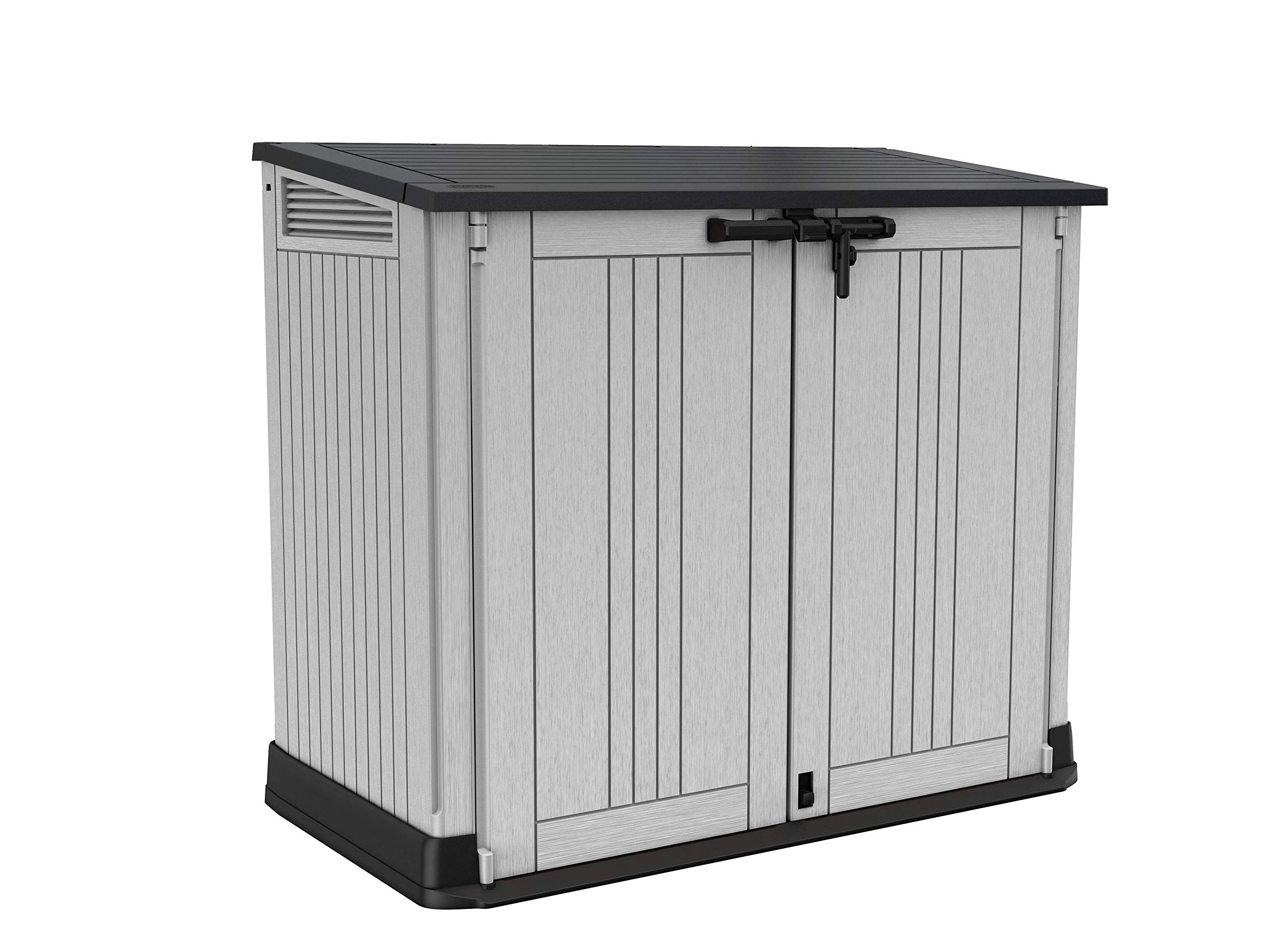
I relied on this 880L unit when I needed a roomy, weather-resistant container that opens from the top and the front for flexible access.
Why I picked it: Top-and-front access with a heavy-duty floor made it simple to store bulky items and create a custom shelf layout.
Best for: Storing barbecue gear, wheelie bins, fire pits, and other bulky outdoor items.
Generous capacity at a sensible value for backyard storage.
Pros
- Dual access: lid and front doors
- Wood-effect finish looks nicer than plain plastic
- Heavy-duty floor supports heavy items
- Large 880L internal capacity
Cons
- Shelf not included
- Top can flex under heavy rain
- Assembly takes time
My take
I used the Nova to store a fire pit, starter fuel, and stacked patio supplies and liked having both top and front access—it made loading and unloading awkward items much easier.
The built-in floor felt solid and let me set a shelf support to keep the fire pit off the base, which is how I tailored the interior for my setup.
Assembly was straightforward but the top needed weight at first to settle flat; if you expect heavy standing water on the roof I secured it with a couple of bricks until the lid settled.
2. Keter Manor Gable Shed – Best for Large Equipment
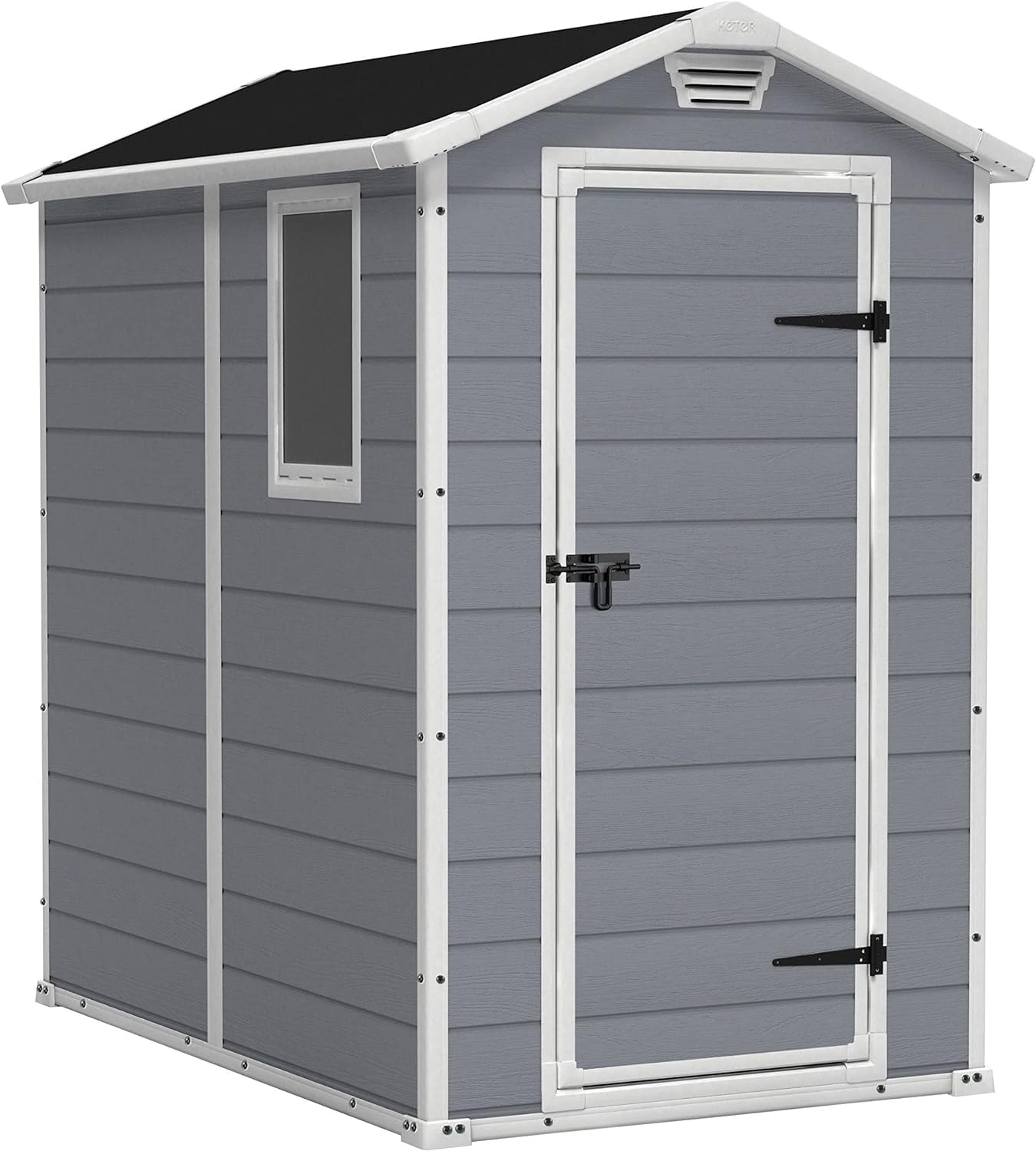
I found this gable-style shed useful when I needed a walk-in space for big tools, a washer/dryer setup, or upright storage for long items.
Why I picked it: Gable roof and wide double doors allow easy entry for large equipment and maintenance projects.
Best for: Storing garden tractors, large lawn tools, or using as a sheltered utility area.
A full-size, utility-focused choice for larger storage needs.
Pros
- Wide double doors for easy access
- Includes base plate for stability
- Good internal volume for big items
- Ventilation in the gable
Cons
- Large panels require careful alignment
- Some units can arrive warped
- Assembly is more demanding
My take
I installed this shed to free up indoor space and appreciated the walk-in height and the base plate that gives a level footprint for heavy items.
The panels lock together solidly when everything lines up; that said, I’ve seen others receive warped parts and had one delivery where a panel needed careful coaxing to fit.
Plan for a multi-hour assembly and a second set of hands for the roof and door alignment—once built it felt like a proper garage alternative.
3. Rubbermaid Compact Vertical Shed – Best Small Footprint
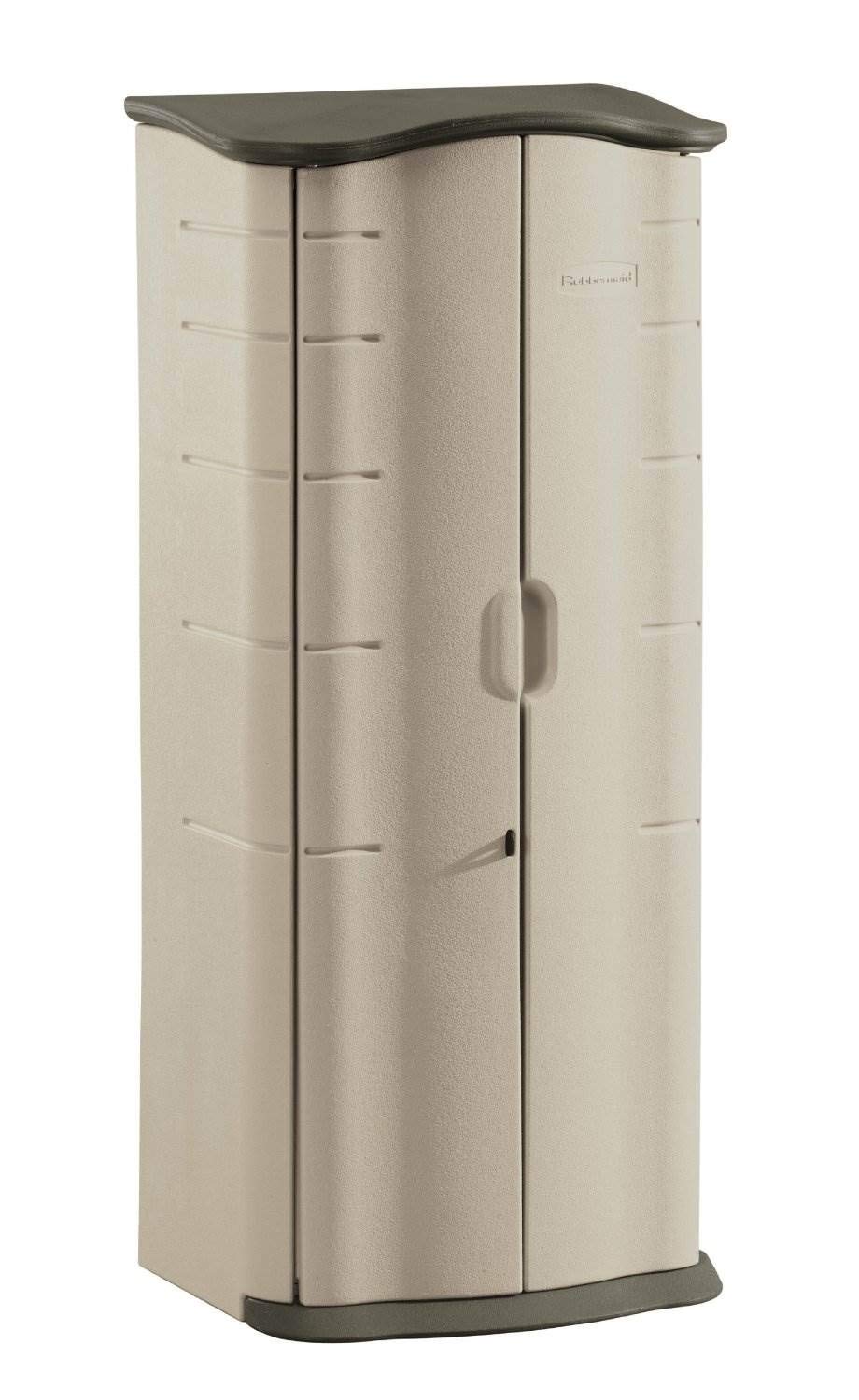
When my priority was saving deck or patio space I used this compact vertical shed to keep cushions, long-handled tools, and a few shelves tidy.
Why I picked it: Very small footprint with double-wall construction that resists dents and keeps contents dry.
Best for: Narrow patios, deck corners, and storing cushions or brooms.
Compact, practical option for tight spaces.
Pros
- Small footprint saves valuable space
- Double-wall construction for strength
- Slanted roof sheds water effectively
- Tool-free basic assembly
Cons
- Shelves not included
- Interior smaller than exterior dimensions
- Limited capacity
My take
I snapped this together in minutes and used it to store seat cushions and pool supplies; the slanted roof does a good job directing water away.
The double-wall resin felt more rigid than competitors in the same size class, though you’ll lose a few inches inside because of the wall thickness.
I supplemented the interior with a separate shelving unit that fit the grooves, which turned the compact volume into an organized space for smaller items.
4. Suncast Outdoor Storage Cabinet – Best for Vertical Organization
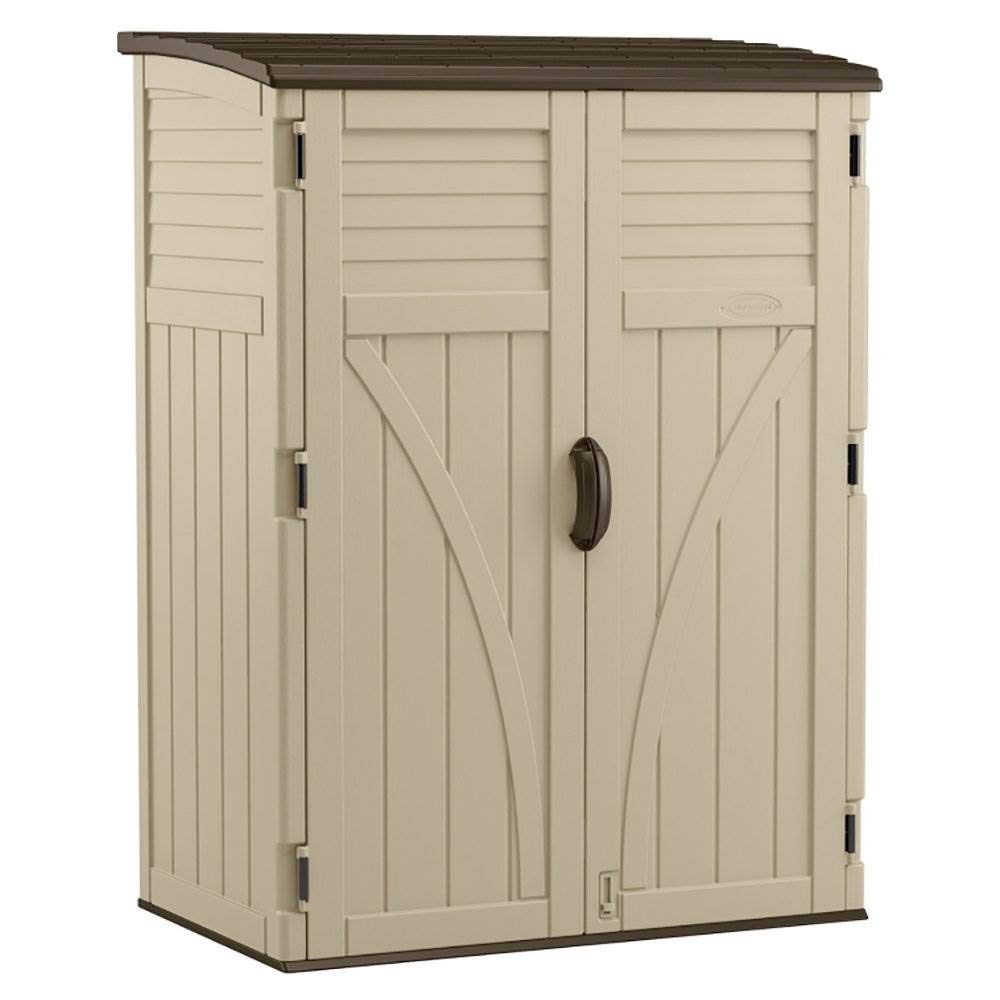
I used this tall, multi-wall resin cabinet when I needed a low-maintenance solution to store long-handled tools while keeping them dry and off the ground.
Why I picked it: Tall profile, built-in floor, and shelf-ready notches made it a flexible organizer for varied gear.
Best for: Brooms, shovels, patio umbrellas, and customizable shelving setups.
A dependable midrange option with useful shelf-ready features.
Pros
- Tall footprint fits long-handled tools
- Padlock-ready handles for security
- Multi-wall resin resists rot and rust
- Floor included for dry storage
Cons
- Shelves sold separately
- Two people recommended to assemble
- Some instructions require careful reading
My take
I set this cabinet on a patio and added a wire shelf; the combination of height and floor made it ideal for keeping garden tools tidy and elevated.
Assembly was manageable solo in good lighting, but I asked for help when aligning panels and doors—the pre-cut slots occasionally needed a little extra persuasion.
The unit is lightweight to position but feels solid once locked together, and I appreciated that I didn’t have to worry about rust or rot over a season of exposure.
5. Suncast Vertical Storage Shed – Best for Tight Patios
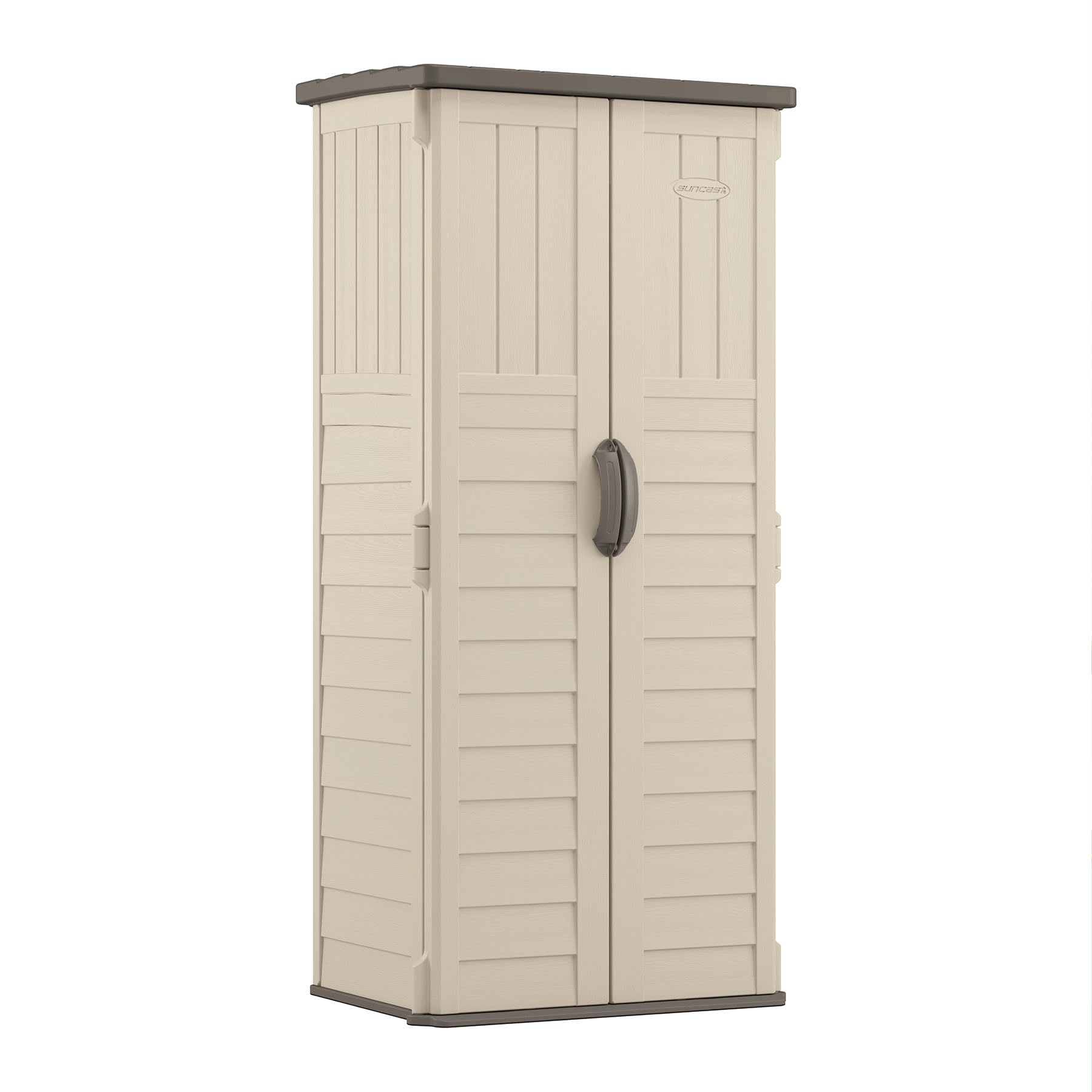
I turned to this sleek vertical shed when I needed tall, narrow storage that blends with outdoor décor and keeps gear secure behind lockable doors.
Why I picked it: Compact footprint with multi-wall resin makes it easy to tuck against a wall while protecting contents from weather.
Best for: Small patios or decks where space is at a premium.
A compact, value-oriented vertical storage solution.
Pros
- Tall but narrow for tight areas
- UV-resistant, all-weather resin
- Lockable double doors
- Integrated floor included
Cons
- Can feel smaller than listed dimensions
- May require two people to align panels
- Shelves optional, not included
My take
I used two of these on my patio—they’re tall enough for shovels and stacked planters while taking up minimal floor space.
Installation snaps together easily but it’s simpler with a helper to hold panels in place while you secure handles and latches.
It held up through rainstorms and kept everything dry inside; I did screw it down to my deck for added stability when opening and closing doors.
6. SUNALLY Power Tool Organizer – Best for Tool Organization
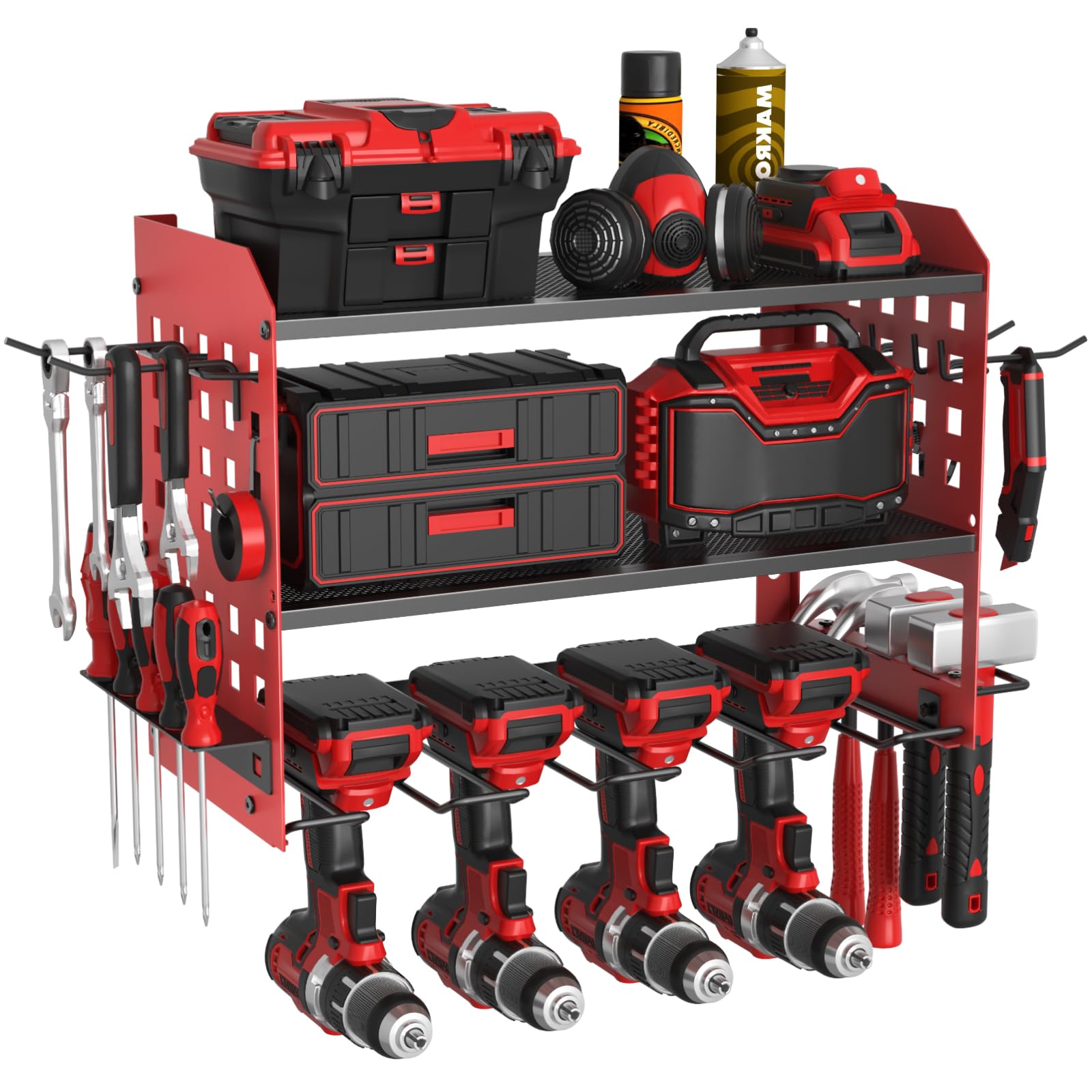
I mounted this heavy-duty wall organizer in my workshop to get drills, chargers, and hand tools off the bench and within reach.
Why I picked it: Holds multiple drills and chargers while freeing bench space with a high load rating and pegboard options.
Best for: Garage walls, shed interiors, or a mobile van storage setup.
An economical, pro-feel organizer for workshop setups.
Pros
- Holds up to 150 lbs
- Integrated drill holders and pegboards
- Three-layer heavy-duty steel
- Easy to assemble
Cons
- Requires wall mounting (studs ideal)
- Limited width for very large tools
- Some repositioning after mounting
My take
I installed this on my garage wall and cleared a lot of bench clutter; the drill holders fit my cordless drivers and the mesh shelf handles batteries well.
Mounting was quick—just watch for stud placement so the heavier side has solid anchor points.
For the price it feels robust; the finish resisted scratches during normal use and the included hardware made installation painless.
7. Mrosaa Large Horizontal Storage Cabinet – Best Heavy-Duty Horizontal
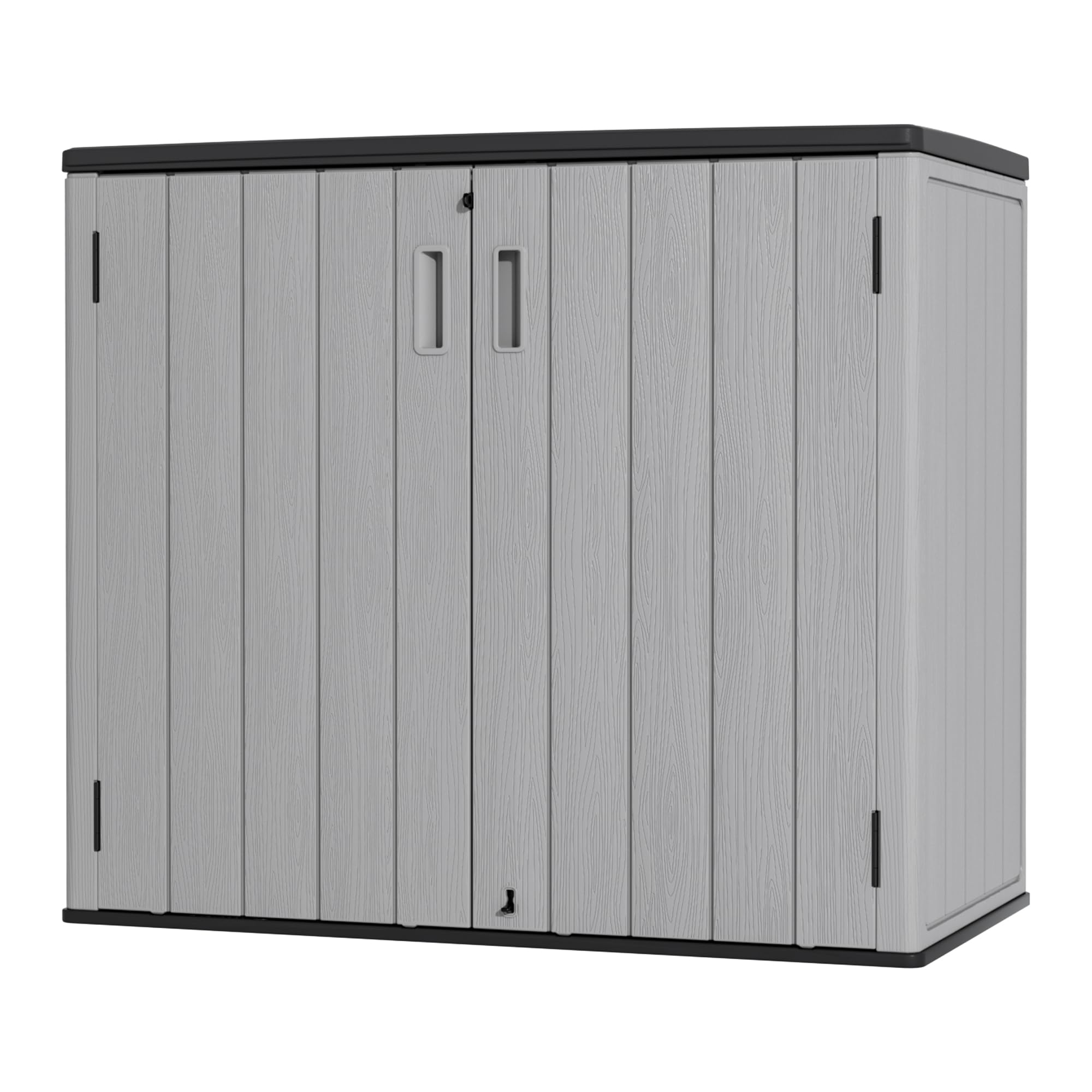
When I needed a sturdy horizontal option for a mower and oversized items, this 37 cu ft resin box gave me a waterproof, lockable place that’s easy to load from the top.
Why I picked it: Reinforced HDPE panels and a heavy-duty floor let me store heavier equipment safely with easy top access.
Best for: Lawnmowers, generators, and bulk garden supplies that need a low-to-the-ground home.
Roomy horizontal storage that balances capacity and durability.
Pros
- Generous internal depth for bulky items
- Reinforced floor supports heavy loads
- Waterproof, wood-like exterior
- Top groove aids drainage
Cons
- Two-package delivery may arrive separately
- Doors can need slight adjustment
- Shelves not included
My take
I placed a small generator and several large pots inside this cabinet; the depth and reinforced base made that practical without worrying about the weight damaging the floor.
Assembly was straightforward and the instructions were clear; I did build a level block base to give the box structural support for the generator.
The lock latch looks ready for a solid padlock and the top groove design helped rain drain away instead of pooling on the lid.
8. Suncast Everett Vertical Shed 6×3 – Best for Natural Light
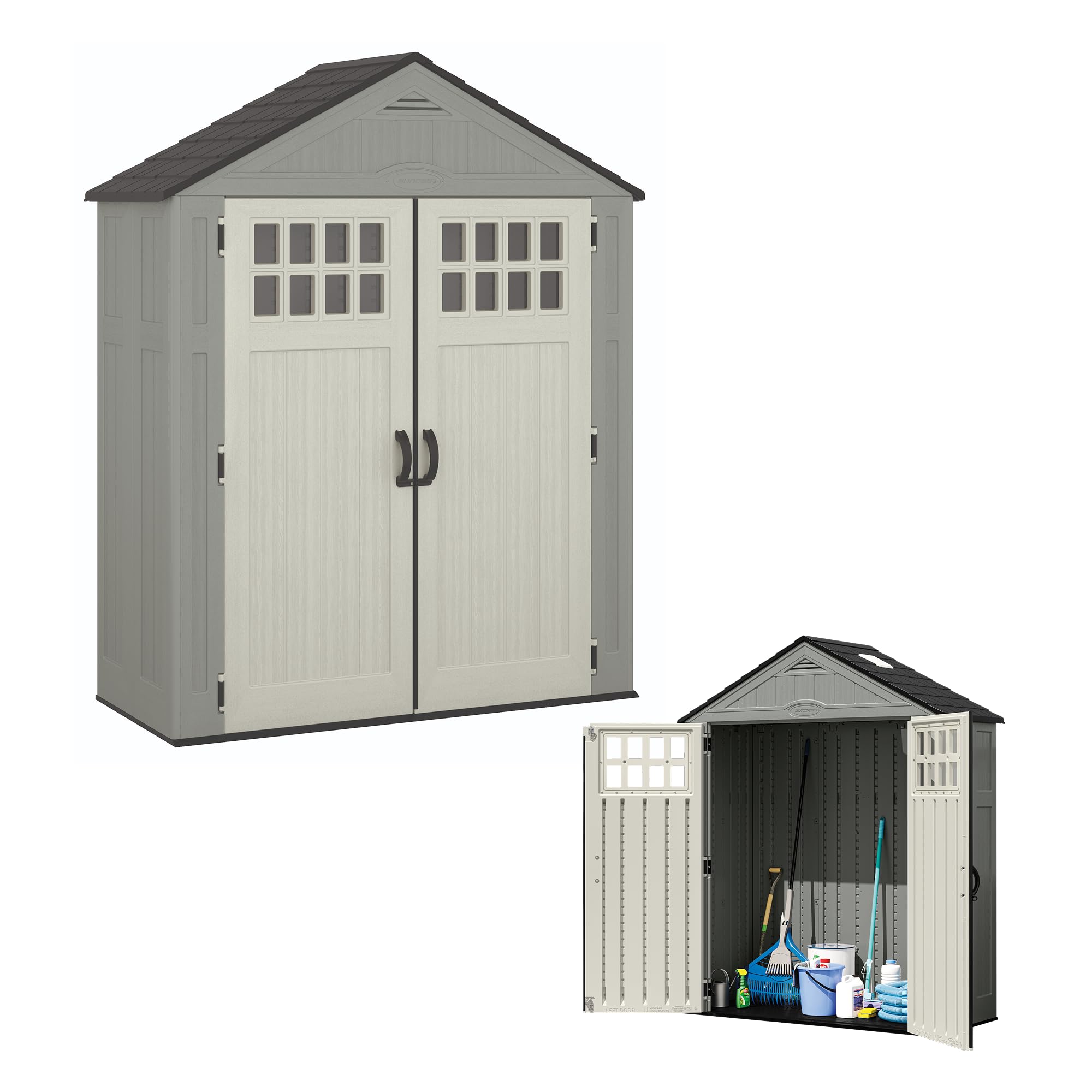
I picked this shed for a slim-yet-capacious solution that brings natural light inside via a skylight and windows while keeping tools dry on a reinforced floor.
Why I picked it: Slim footprint plus windows and skylight made it easier to find items without extra lighting in a tight side-yard spot.
Best for: Side-yard storage, pool equipment, and places where light inside the shed matters.
A premium small-footprint shed that prioritizes light and capacity.
Pros
- Slim footprint fits tight spaces
- Windows and skylight provide natural light
- Reinforced floor included
- Good internal volume for a narrow shed
Cons
- Some holes may need minor re-drilling
- Doors require careful alignment
- Building a level base takes extra time
My take
I built this on a porch and appreciated the extra natural light from the skylight when grabbing tools at dusk—no headlamp required.
A few plastic bolt holes needed a spade bit to clear, but once the panels were in place the reinforced floor made storing heavy items feel secure.
I recommend building a level wooden foundation first; it added a bit more time but the shed sat square and the doors lined up perfectly afterward.
How I Choose a Storage Shed
Size and footprint
I start by measuring the space where the shed will sit and the largest items I plan to store—length, width, and headroom all matter.
If space is tight I prefer a vertical cabinet or compact vertical shed; for lawnmowers or generators I choose horizontal or full-size options.
- Measure exterior space and compare to internal dimensions (walls reduce usable inside room).
- Account for door swing and clearance when placing the shed near fences or walls.
Material and durability
I opt for multi-wall resin or HDPE when I want low maintenance and rust/rot resistance.
For heavier duty needs, look for reinforced floors and thicker wall panels that will withstand weight and wind.
- Multi-wall resin resists UV, water, and rot better than untreated wood.
- Reinforced floors are essential if you plan to store mowers or generators.
Access, security, and ventilation
I choose top-lid access when I need quick loading of bulky items and double doors when I need walk-in access.
Lockable handles and padlock-ready hasps are a simple way I protect tools, and ventilation keeps stored items from developing moisture issues.
- Top lid + front doors = most flexibility for loading.
- Padlock-ready hardware increases security options.
- Built-in vents prevent moisture buildup around tools and cushions.
Assembly and placement
I read the instructions before ordering and plan for at least one helper on larger kits—roof and door alignment is where an extra pair of hands pays off.
A level base makes assembly and long-term performance much easier; I often build a simple wooden frame or use concrete pavers.
- Have tools and a helper ready for full-size sheds.
- Create a level foundation (timber, pavers, or concrete) for best results.
Interior organization
I treat shelving as an add-on—many units are shelf-ready but don’t include shelves—so plan for modular shelving or pegboard when customizing.
For garages and workshops, a wall-mounted organizer can complement a shed by keeping frequently used tools within reach.
- Buy shelves or add-on organizers if the unit lists 'shelf-ready' slots.
- Use pegboards or racks inside for cordless chargers and smaller gear.
Frequently Asked Questions
Do I need a foundation for a resin shed?
I always level the ground and recommend at least a simple foundation—pavers, timber frame, or concrete—to keep the floor supported and the doors aligned.
Can these sheds hold a lawnmower or generator?
Yes—pick a model with a reinforced floor and sufficient internal depth. I placed a small generator in a horizontal cabinet and used a level block base for extra support.
Are shelves included with these sheds?
Most of the units I tested are shelf-ready but don’t include shelves. I added wire shelving or standalone units to customize storage.
How long does assembly take?
Small vertical cabinets can be up in under an hour; larger gable or full-size sheds take several hours and are easier with two people.
Final Take
If you need maximum capacity and versatile access, I reach for units with both top and front openings.
For tight spaces, tall vertical sheds give me long-handled tool storage without sacrificing footprint.
And when workshop order is the priority, a heavy-duty wall organizer is the quickest way I clear bench space and keep tools handy.
