
I tested a range of surge protectors to find options that keep TVs and media gear safe, tidy, and powered. From compact USB hubs to high-joule power strips, here are the units I rely on for different TV setups.
I spent time matching surge protector features to real TV and media setups so I could recommend options that actually work behind entertainment centers. In this guide I focus on cord length and plug profile, outlet layout, joule rating for spike protection, and useful extras like USB-C ports and mounting holes.
Below I list the models I used, why each stood out for a specific use, and what to watch for when choosing a protector for your TV and peripherals.
I compared cord length, joule rating, outlet spacing, USB charging, and plug profile to decide which protector fits a particular TV setup.
1. GE 6-Outlet Surge Protector – Best Overall
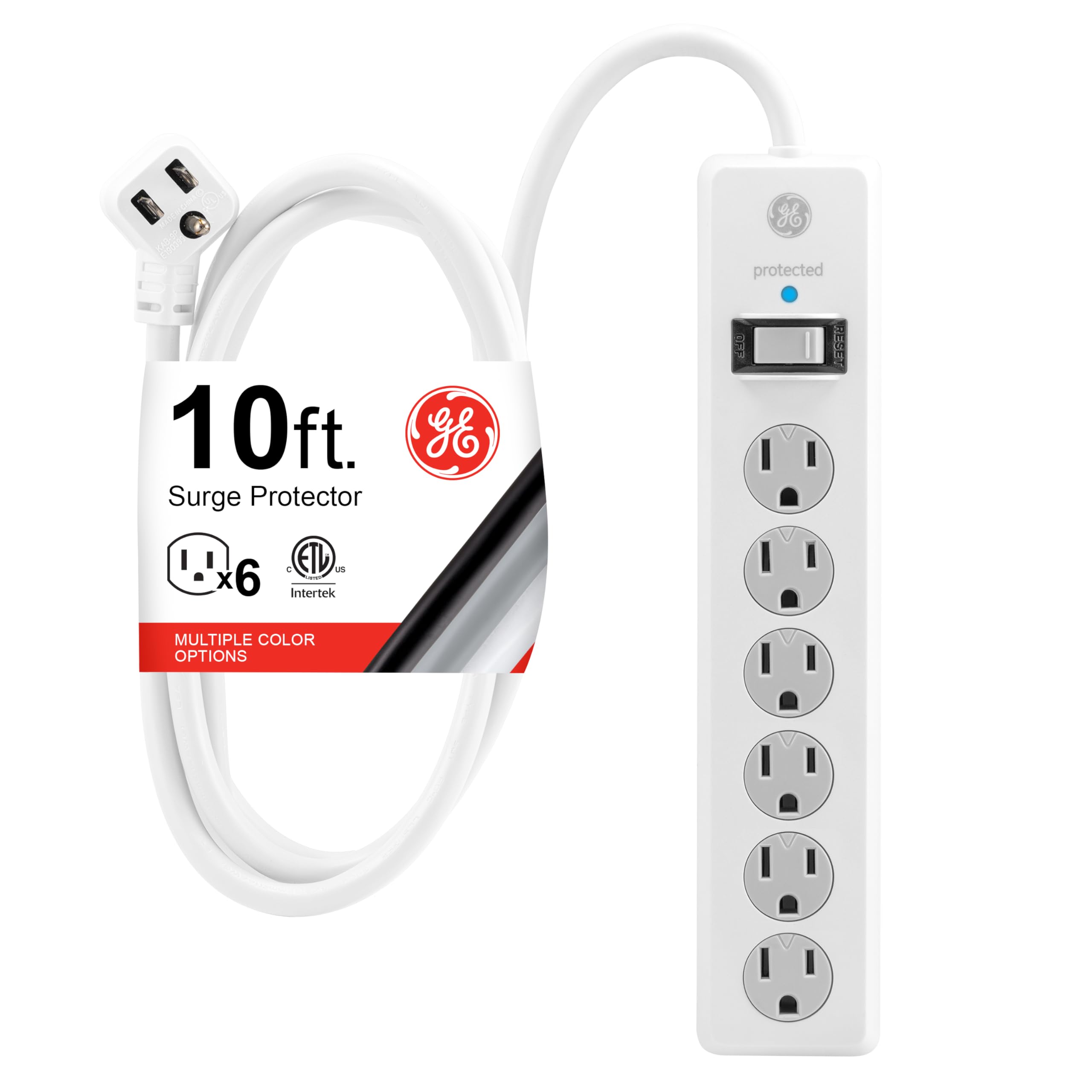
I like this GE strip for balanced protection and reach: six grounded outlets, 800 joules, a 10-foot cord, flat plug, twist-to-close safety covers, and mounting slots.
Why I picked it: Long cord, solid build, and handy safety features that suit most TV centers.
Best for: Living rooms and home offices where the TV and accessories need more reach.
Affordable, everyday option.
Pros
- 10-foot cord for flexible placement
- Six grounded three-prong outlets
- Twist-to-close outlet covers
- Space-saving flat plug
- Integrated circuit breaker
Cons
- 800 joules is modest protection
- Some plugs can feel loose
My take
I use this GE strip behind a large TV because the 10-foot cord gives me the reach I need without stretching cords across the room. The flat plug sits flush against the wall, which lets me keep the TV and console close to the furniture.
The twist-to-close safety covers and keyhole mounting slots are simple but useful: I mounted the strip to the back of my media cabinet and closed unused outlets to keep dust and fingers out. The protected indicator light makes it easy to confirm the unit is doing its job.
The 800-joule rating is adequate for everyday surge events and smaller electronics, and the built-in circuit breaker and automatic shutdown behavior add a sensible safety layer. I did notice a few plugs can feel a bit loose in the sockets; nothing catastrophic, but I taped one power brick in place for peace of mind.
2. HANYCONY 8-Outlet Power Strip with USB-C – Best Compact with USB
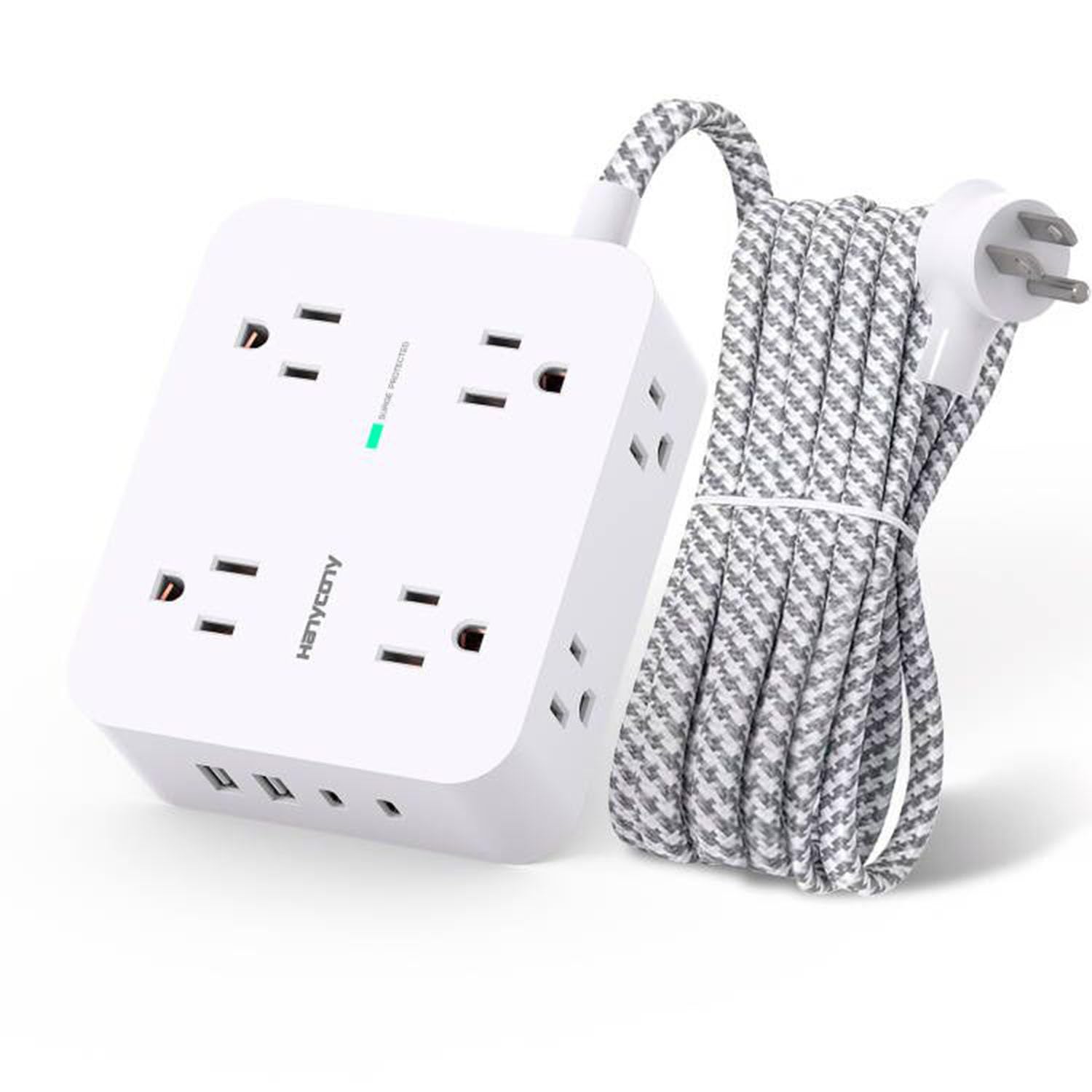
This compact unit packs eight AC outlets and four USB ports (including 2 USB-C) into a three-sided layout, with wide outlet spacing, a 5-foot braided cord, and overload protection rated to at least 1080 joules.
Why I picked it: Lots of USB-C charging and multi-sided outlets save space when plugs conflict.
Best for: Dorms, bedside setups, and tight TV spots where space and USB charging matter.
Budget-friendly with modern USB-C ports.
Pros
- Eight AC outlets in a small footprint
- Four USB ports, two USB-C
- Three-sided outlet layout
- Braided 5-foot cord
- Wide outlet spacing for big adapters
Cons
- Shorter 5-foot cord limits distant placement
- Indicator LED can be bright at night
My take
I keep this HANYCONY strip behind a smart TV and a streaming stick because the three-sided layout prevents large adapters from covering neighboring outlets. The wide 2.2-inch spacing works exactly as advertised for bulky power bricks.
The two USB-C ports and two USB-A ports let me charge phones and tablets directly, and the smart charging behavior reaches expected charging speeds for everyday devices. The braided cord feels durable and tangle-resistant, and the flat plug helps when wall space is tight.
My only nitpick is the 5-foot cord; it’s perfect for wall-mounted TVs close to an outlet, but too short if your receptacle sits farther away. The green LED is handy in the dark but can be distracting in very dim rooms.
3. ALESTOR 12-Outlet Surge Protector – Best for Power Users
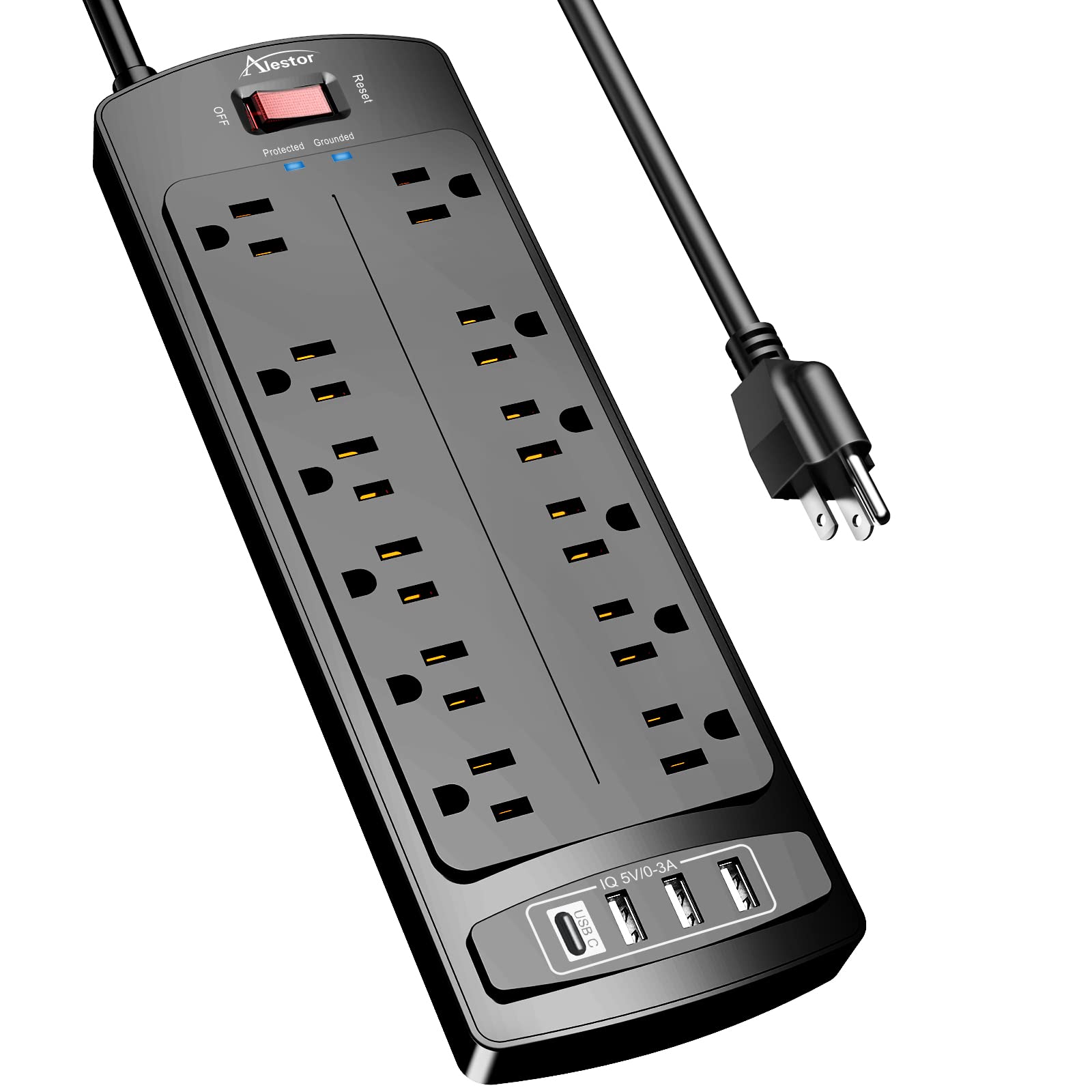
I rely on this unit when I need many outlets plus high surge protection: 12 AC outlets, 4 USB ports (including USB-C), a 6-foot heavy-duty cord, and a high 2700-joule rating with three-level protection.
Why I picked it: High joule rating and many outlets for dense media and workstation setups.
Best for: Home theaters, gaming rigs, and workstations with many low-to-medium-draw devices.
Higher-capacity choice for heavy connections.
Pros
- 2700 joules for strong surge protection
- Twelve AC outlets
- Four USB ports including USB-C
- Two widely spaced outlets
- ETL safety certification
Cons
- Bulky footprint
- Not for high-wattage appliances
My take
I put this ALESTOR strip at the core of a crowded entertainment cabinet where consoles, a streaming box, audio equipment, and chargers all run together. The 2700-joule rating and three-level protection (TVS, MOV, GDT) give me confidence for sensitive electronics.
Two widely spaced outlets handle large power bricks without blocking the row, and the USB ports do a reliable job charging smaller devices. The six-foot heavy-duty cord feels robust and the ETL listing aligns with my expectation for a safer, longer-lasting strip.
Because it supports up to 1875W/15A, I still avoid plugging in truly high-draw appliances. The unit’s size is the trade-off for that capacity, but for a power-hungry media center it’s exactly what I need.
4. Amazon Basics 6-Outlet Surge Protector – Best Value
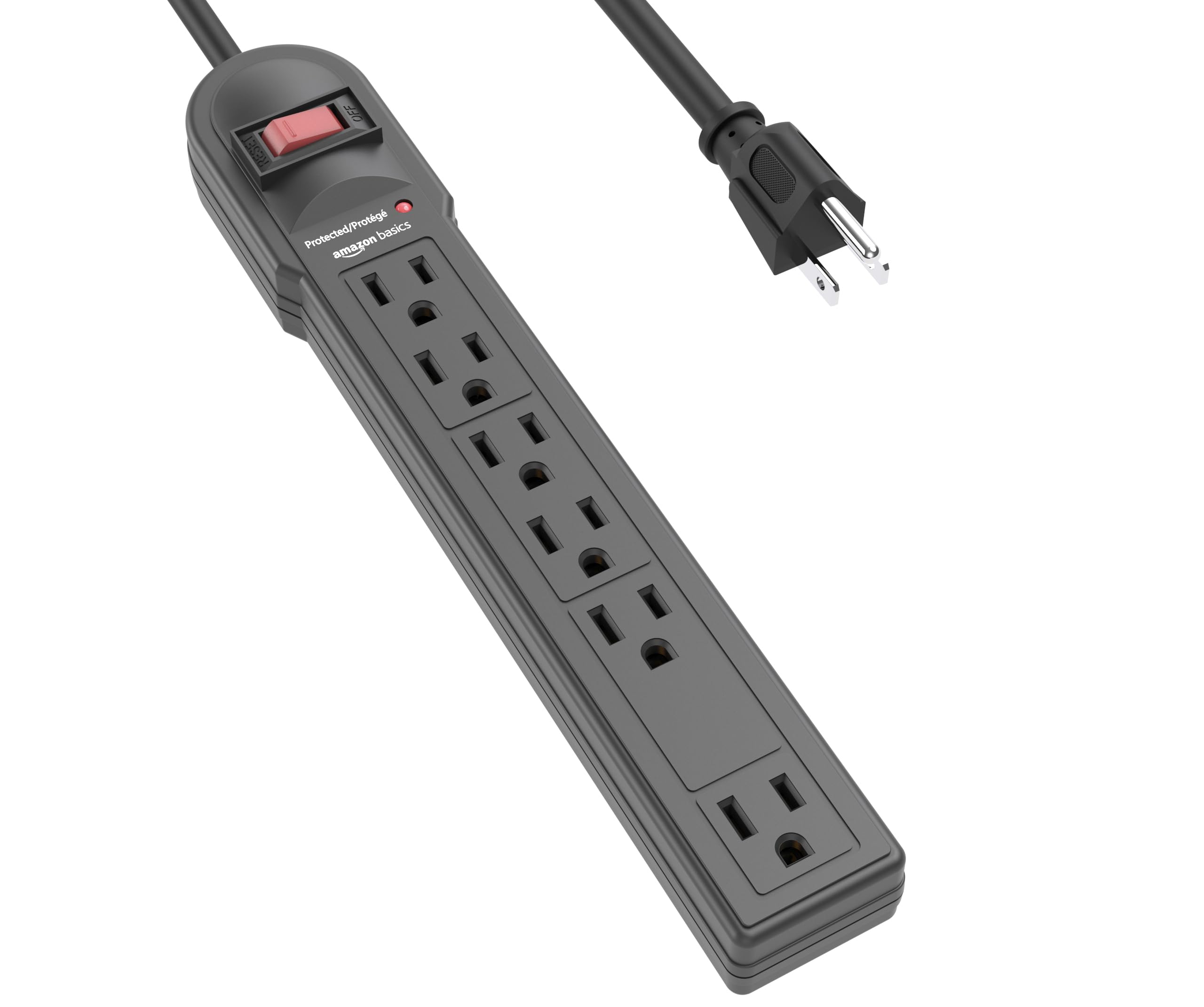
I recommend this Amazon Basics strip when you want straightforward protection: six outlets (one transformer outlet), a 790-joule rating, a 6-foot cord, and a 15A circuit breaker.
Why I picked it: Simple, dependable protection without extra bells for basic TV setups.
Best for: Small living rooms and bedroom TVs that need a compact, reliable strip.
Budget-friendly, no-frills choice.
Pros
- Compact and reliable
- Six outlets including transformer slot
- 15A circuit breaker
- 6-foot cord
- LED protection indicator
Cons
- Lower joule rating
- Basic feature set
My take
I use the Amazon Basics strip for a secondary TV and small media areas. It’s straightforward to install and the LED makes it easy to confirm surge protection is active.
For everyday devices—TVs, streaming boxes, lamps—its 790-joule protection and 15A breaker are sufficient. It’s compact enough to tuck into a cabinet or mount behind a stand and has been a dependable, low-fuss option in my setups.
5. GE 3-Outlet Braided Extension Cord – Best for Small Spaces
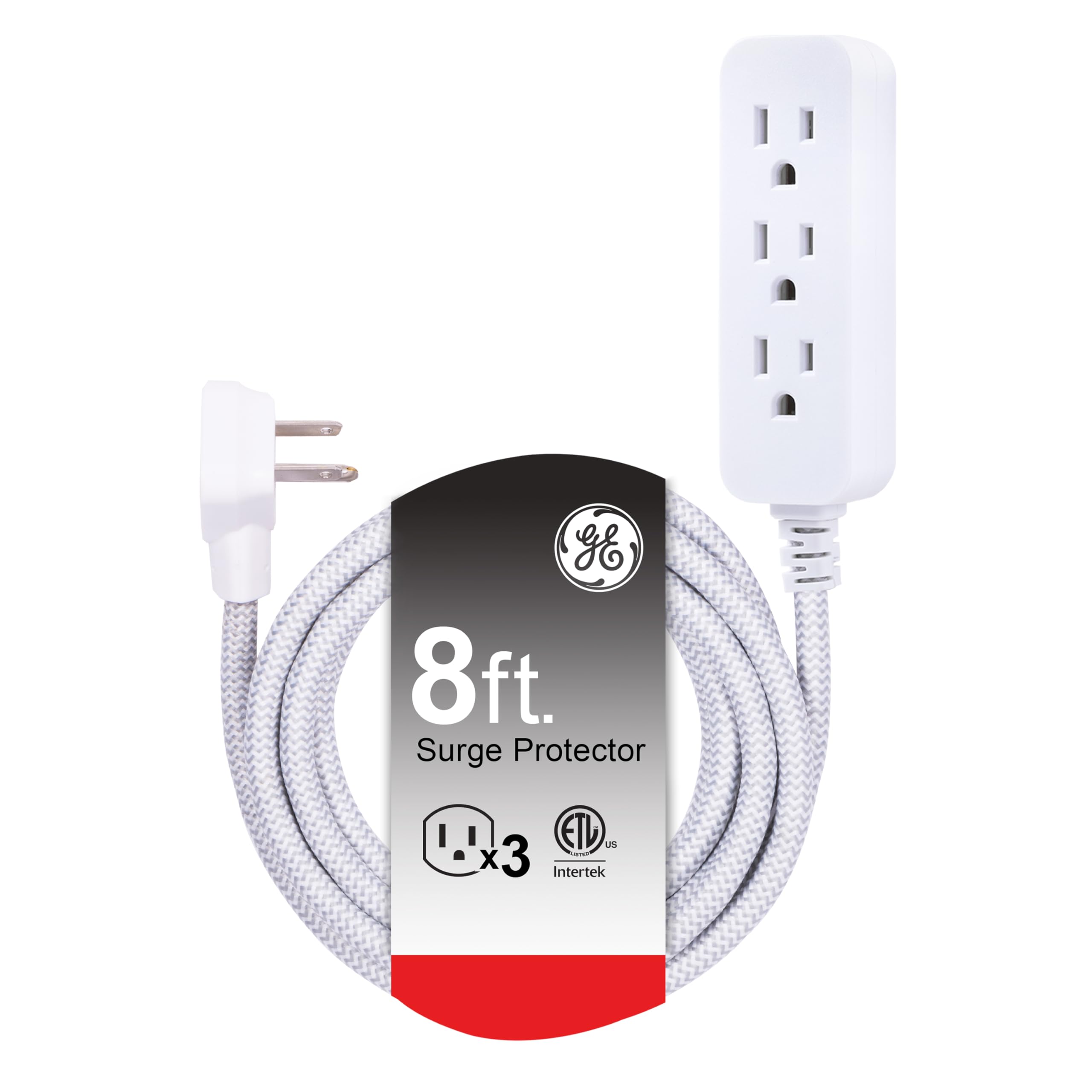
This GE designer extension cord gives three grounded outlets with 250 joules, an 8-foot braided cord, and a low-profile angled flat plug—useful when furniture sits tight against the wall.
Why I picked it: Low-profile flat plug and braided cord fit very tight locations.
Best for: Slim entertainment centers and tight spots behind furniture.
Decorative, space-saving option at a reasonable cost.
Pros
- Braided fabric cord
- Angled flat plug
- Compact three-outlet design
- 8-foot reach
- ETL-listed
Cons
- Low 250-joule protection
- Only three available outlets
My take
I use this GE braided extension to push a couch close to the wall while still powering a small streaming box and a lamp. The angled flat plug is the real advantage here; it keeps the setup tidy and unobtrusive.
The braided cable looks nicer than standard plastic jackets and resists tangles. The outlets grip firmly, and the build feels solid for casual use. Because it’s only 250 joules, I reserve it for lower-risk gear rather than critical or high-value electronics.
6. 18-Outlet Surge Protector with USB – Best for Lots of Devices
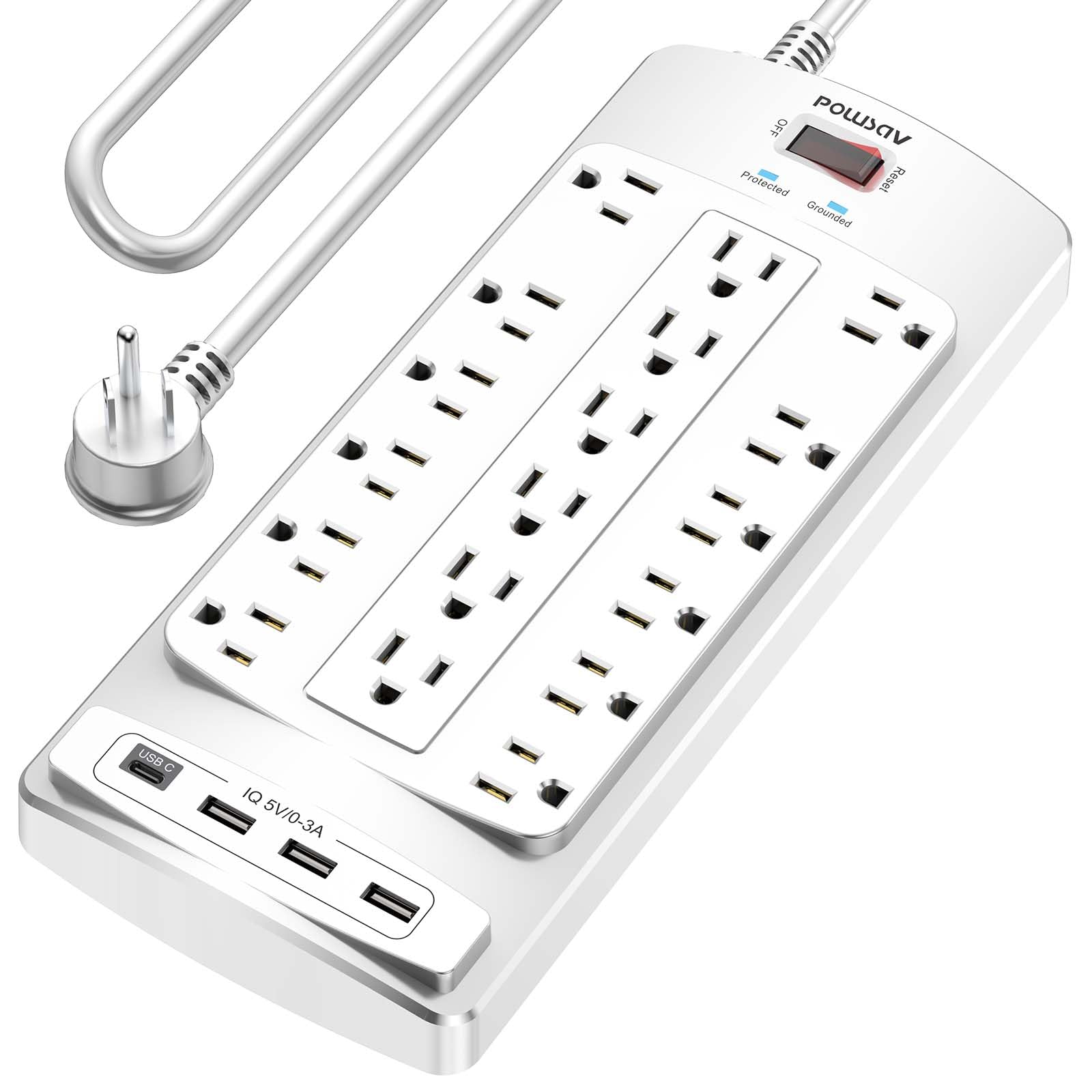
When I need to consolidate many plugs, this unit delivers: eighteen AC outlets, four USB ports, a 10-foot flat-plug cord, cable ties, and a 2100-joule surge rating.
Why I picked it: Massive outlet count and a long cord let me centralize large setups.
Best for: Large entertainment centers, streamer/gamer rigs, and multi-peripheral desks.
Great option for heavy connection needs.
Pros
- Eighteen AC outlets
- Four USB ports
- 10-foot long cord
- 2100 joules of protection
- Reusable cable ties included
Cons
- Center outlets can be crowded
- Large footprint
My take
I consolidated two smaller strips into this 18-outlet unit for a major media console and it cleaned up the wiring tremendously. The 10-foot cord gave me placement flexibility behind a large cabinet.
The four USB ports are handy, though they’re standard 5V output—not fast-charge standards—so I use them for watches, earbuds, and small accessories. The center line of outlets can feel cramped if many large adapters are plugged in simultaneously, so plan plug placement accordingly.
Overall, for anyone juggling a lot of devices this is a practical, no-nonsense way to centralize power while keeping surge protection in place.
How I Choose a Surge Protector for a TV
Joules and Protection
I focus first on the joule rating because it gives a quick sense of how much energy a strip can absorb during a spike.
For a standard TV and streaming devices, I prefer at least 1000 joules; for consoles, sound systems, or an AV receiver I target 2000+ joules when possible.
- 250–800 joules: fine for lamps and small gear, not ideal for expensive AV equipment.
- 1000–2000 joules: good balance for most TV setups.
- 2000+ joules: better for full home theater or many connected devices.
Outlet Layout and Spacing
I check how outlets are arranged and whether large transformer plugs will block neighbors. Three-sided or widely spaced designs prevent crowded plugs.
If your TV setup includes big power bricks, choose a strip with a few widely spaced outlets.
- Wide spacing matters for game console power bricks.
- Three-sided designs help avoid blocking adjacent sockets.
Cord Length and Plug Type
I always measure the distance from the outlet to where I want the strip; cords that are too short force awkward routing.
Flat or angled plugs let furniture sit flush against the wall and are my go-to for wall-mounted TVs.
- 5–6 ft: good for nearby outlets.
- 8–10 ft: better for distant outlets or flexible placement.
- Flat/angled plug: essential behind tight furniture.
USB Ports and Charging
USB-A and USB-C ports reduce the number of AC adapters you need. I use them for phones, remotes, and accessories.
Verify port output; a 5V/3A total output is fine for small devices but not a replacement for fast-charge bricks.
- USB-C adds future-proofing for newer phones and tablets.
- Check combined USB output to avoid slow charging with many devices.
Safety Certifications and Extra Features
I prefer ETL or UL listings and look for an integrated circuit breaker, protected indicator light, and mounting options.
Mounting slots, cable ties, and a durable jacket make installation and cable management easier in tight AV setups.
- Choose ETL/UL-listed units for consistent safety standards.
- Indicator lights help confirm active protection.
- Overload protection and circuit breakers are must-haves.
Frequently Asked Questions
How many joules does my TV need?
I aim for at least 1000 joules for a typical TV and streaming devices; for consoles and full AV systems I prefer 2000+ joules to add headroom against larger spikes.
Can I plug my TV and gaming console into the same surge protector?
I do this frequently. It works fine as long as the strip’s wattage/amp rating (usually 15A/1875W) isn’t exceeded and you avoid plugging in high-draw appliances like space heaters.
Is a flat plug important behind a TV?
Absolutely. I always choose a flat or angled plug when the TV or furniture sits close to the wall—the low profile prevents the outlet from forcing furniture away from the wall.
Final Take
If you want a straightforward, reliable all-rounder for most TV setups, the GE 6-Outlet Surge Protector gives the best mix of reach, outlets, and safety features for everyday use.
Choose a compact strip with USB ports when space and charging convenience matter, or pick a high-joule, high-outlet unit if you need to protect and power many devices at once.
Whichever option you go with, match cord length, plug profile, and joule rating to your specific TV arrangement so installation is tidy and your gear is protected.
