
I tested round, rectangular, mini, and oversized tart pans to find the ones that release cleanly, bake evenly, and survive regular use. Here are the pans I reach for depending on size, finish, and occasion.
I bake a lot of tarts and quiches, so I’ve collected and tested a wide range of tart pans. Over dozens of bakes I focused on three things: a reliable removable bottom, even browning across the crust, and a nonstick finish that actually lets the tart lift out intact.
In the list below I’m sharing the pans I’ve kept in my kitchen because they consistently make attractive, bakery-style tarts with minimal drama. I’ll also point out which one I grab for parties, which I use for tiny individual desserts, and which I trust for large showpiece tarts.
When I compare these pans I look at material thickness, the quality of the nonstick coating, how snug the removable bottom fits, and how the fluted edges hold up during unmolding. Lighter pans are easier to handle; thicker carbon steel gives more even heat and holds shape better. For minis, a sturdy removable base matters most to avoid broken edges.
1. Fox Run 9.5-Inch Tart Pan – Best Overall
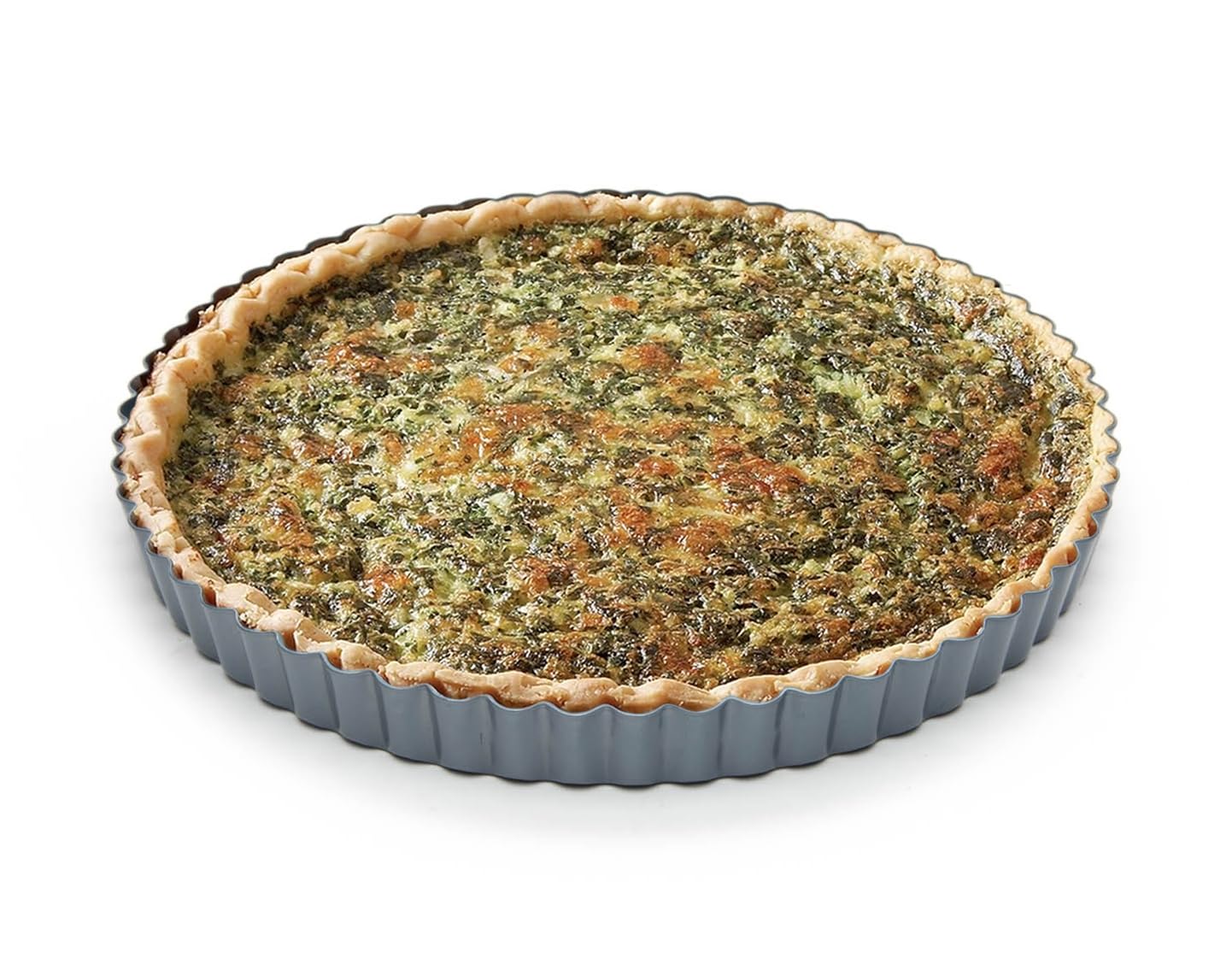
This is the pan I reach for when I want a dependable two-piece tart with even baking and a crisp fluted edge.
Why I picked it: Sturdy carbon-steel build, reliable nonstick release, and a snug removable bottom.
Best for: Everyday quiches and fruit tarts that need clean unmolding.
Affordable, solid performance for the price-conscious baker.
Pros
- Even heat distribution
- Snug removable bottom
- Lightweight and easy to handle
- Fluted edges that look professional
Cons
- Shallow depth for thicker fillings
- Small scallops on the fluting
My take
I like this Fox Run pan because it hits the essentials: carbon-steel construction, a dependable nonstick finish, and a removable bottom that actually lifts tarts without crumbling the edges.
I’ve used it for both savory quiches and fruit tarts. The crust browns evenly across the base and edges, and cleanup is usually just a quick wipe because the coating releases really well with only light greasing.
If you bake very deep quiches you’ll notice the 1-inch depth keeps finished pies on the thinner side, but for classic tarts and quiche portions this pan performs exactly as I want.
2. Wilton Excelle 9-Inch Tart Pan – Best for Everyday Use
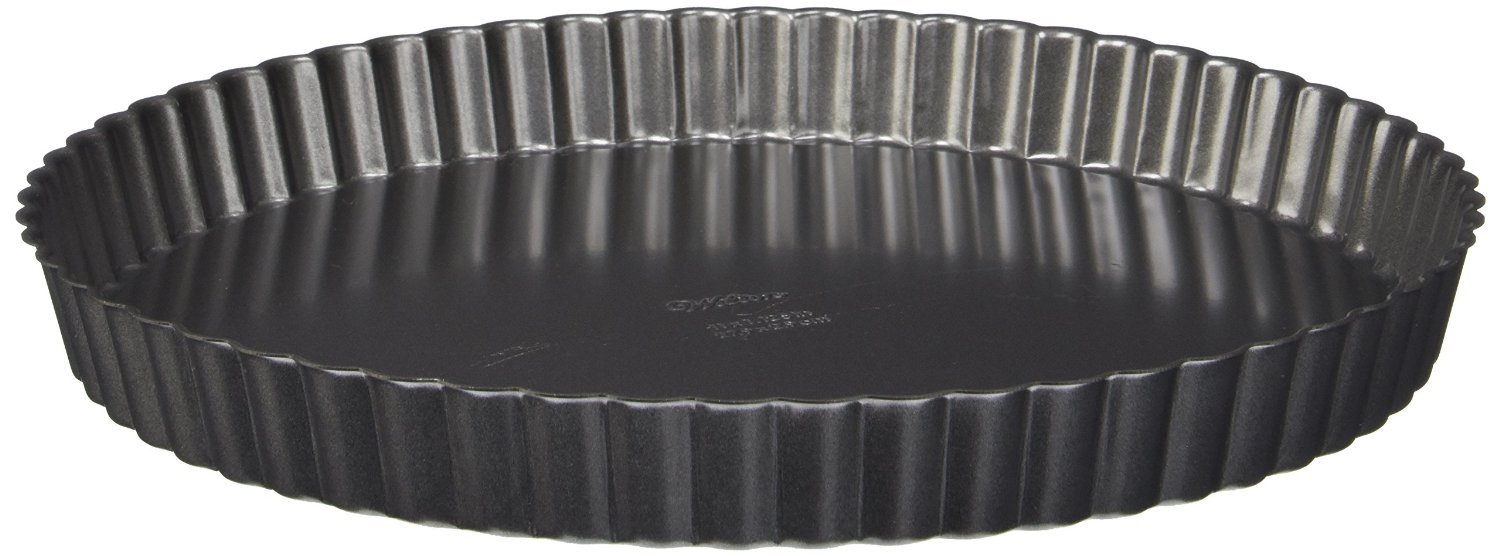
A dependable steel pan with a true nonstick surface and a removable base I use for quick fruit tarts and weekday quiches.
Why I picked it: Durable steel, reliable nonstick release, and classic 9-inch size.
Best for: Routine baking and serving straightforward tarts and quiches.
Midrange cost with everyday durability.
Pros
- Classic, lightweight design
- Very effective nonstick finish
- Easy to clean
- Good for standard recipes
Cons
- Thinner steel than premium tins
- Not ideal for very heavy fillings
My take
Wilton’s 9-inch pan sits in my regular rotation because it balances lightweight handling with a nonstick surface that really works.
It supports crusts while they bake, and the removable bottom makes presentation straightforward—I can lift the outer ring away cleanly and leave a neat tart on the serving platter.
I’ve found it’s best for recipes written for a 9-inch tart; it won’t provide the rigid heft of thicker steel but it’s reliable for quick, attractive results.
3. MasterClass 12-Inch Tart Tin – Best Large Tart Pan
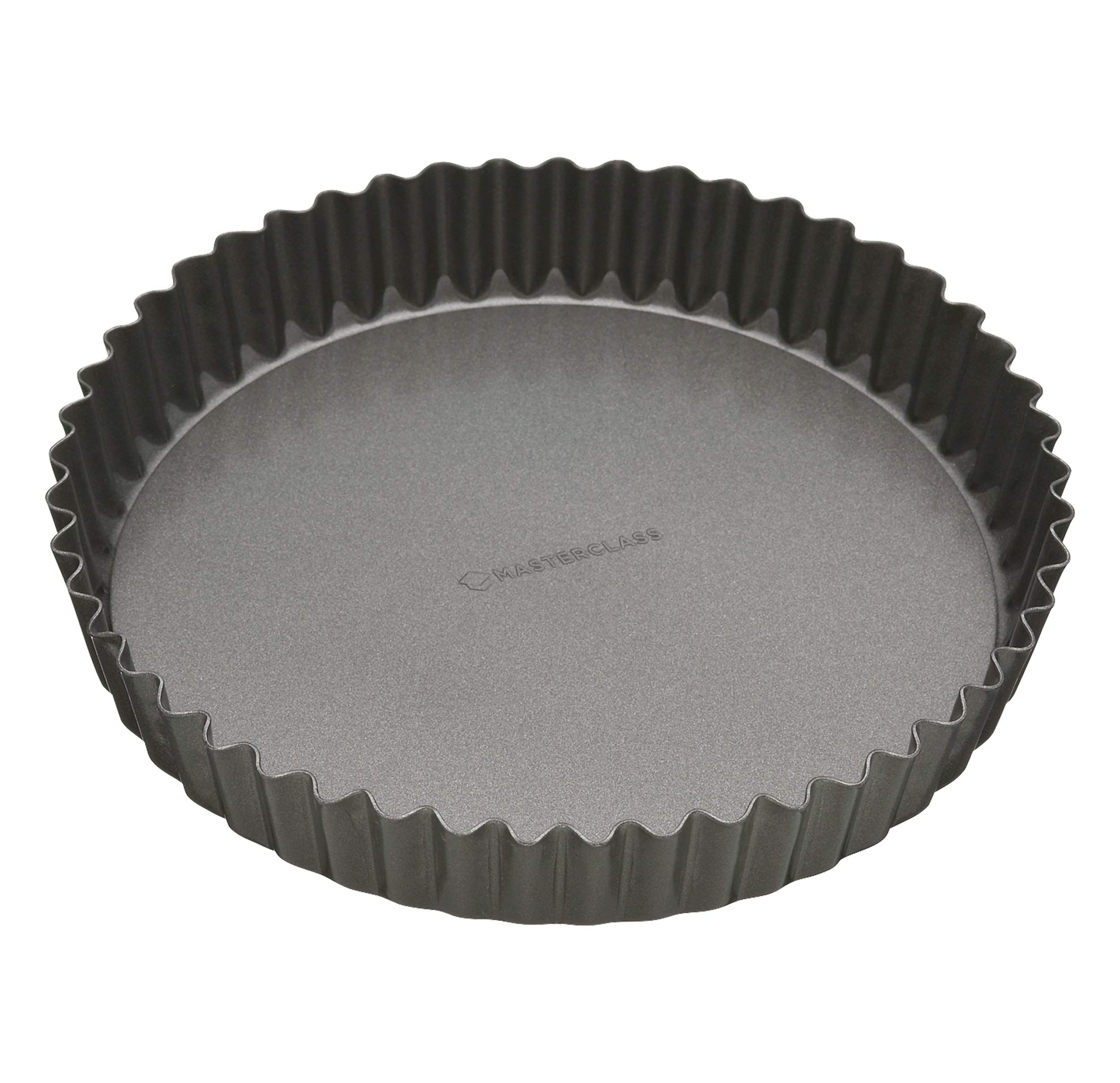
When I need a large, showpiece tart I reach for this 12-inch, 1 mm carbon-steel tin with a robust nonstick finish and loose base.
Why I picked it: Thicker carbon steel, double-layer nonstick, and a full-size loose base.
Best for: Large celebration tarts and bakery-style showpieces.
Higher-end option for serious bakers.
Pros
- Thicker 1 mm steel resists warping
- Double-layer nonstick coating
- Large size for showpiece tarts
- BPA/PTFE/PFOA-free coating
Cons
- Takes more storage space
- Heavier to handle when full
My take
This MasterClass tin is the one I pull out for celebrations because its heavier 1 mm carbon steel produces even browning and resists warping under long bakes.
The Quantum II double-layer coating gives excellent release, and the loose base is large enough to support big tarts without risking leaks or broken edges when unmolding.
It’s not a lightweight pan—handling a full 12-inch tart takes two hands—but the professional finish and durable build make it my go-to when appearance matters.
4. RICHSC-PAN 9-Inch Tart Pan – Best Value
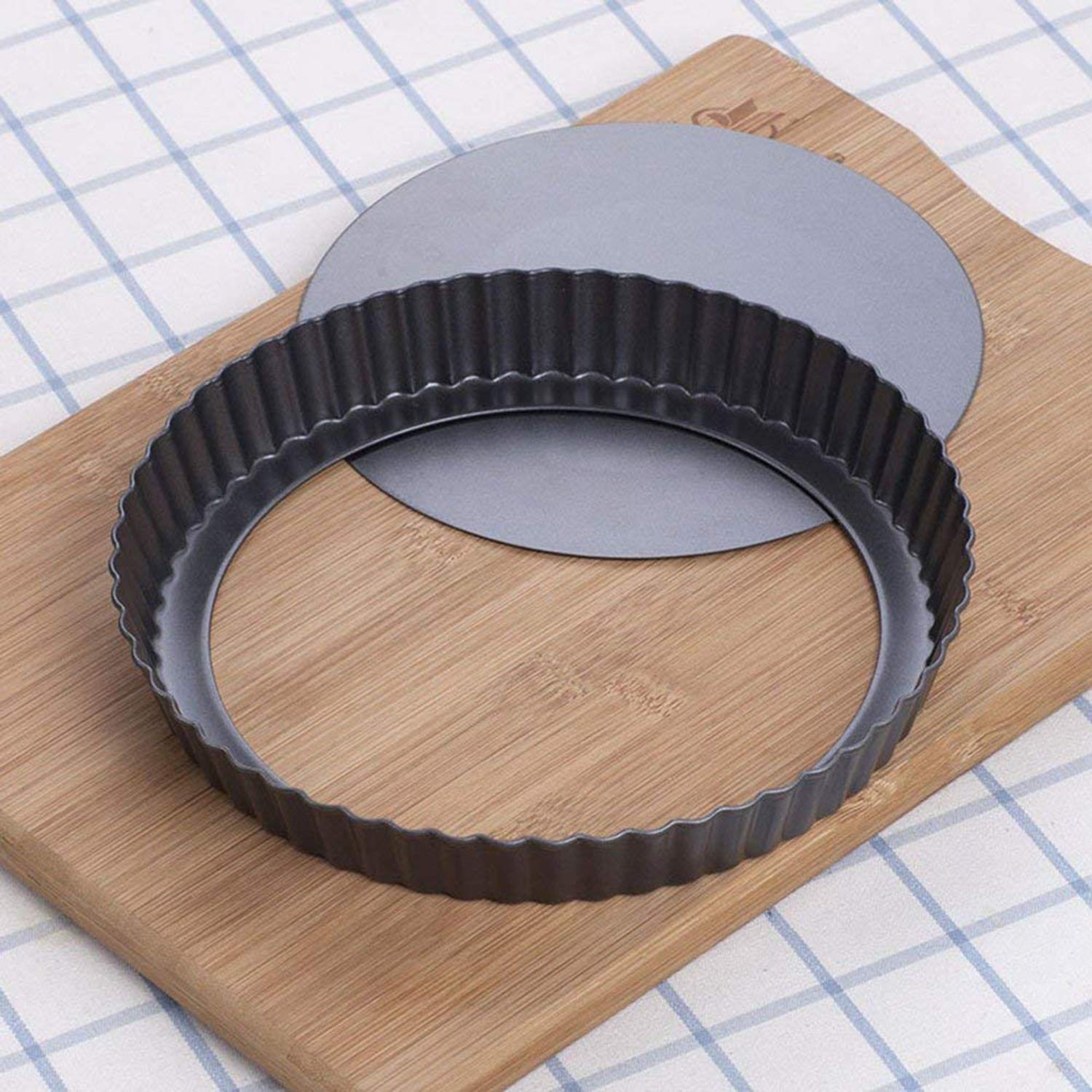
A budget-friendly 9-inch carbon-steel tart pan with a removable base that delivers good results when treated with basic care.
Why I picked it: Good construction and nonstick release at a budget price.
Best for: Home bakers looking for a capable, inexpensive tart pan.
Very budget-friendly without feeling cheap.
Pros
- Heavy-duty carbon steel
- Good nonstick release
- Dishwasher-safe claim
- Fluted edges for presentation
Cons
- Occasional sticking if ungreased
- Edge finish varies by piece
My take
This 9-inch pan surprised me for its price point: the carbon-steel build bakes an evenly browned crust and the removable bottom lifts tarts cleanly when I remember to oil it before the first use.
I’ve chilled and baked pastry in it and found it holds up well to ordinary home use. On the rare occasion I skipped greasing it, the base stuck—so I now always give it a light coat before the first bake.
For bakers who want a capable pan without a big investment, this one earns its keep in my kitchen.
5. Webake 4-Inch Mini Tart Pan Set (6) – Best for Mini Tarts
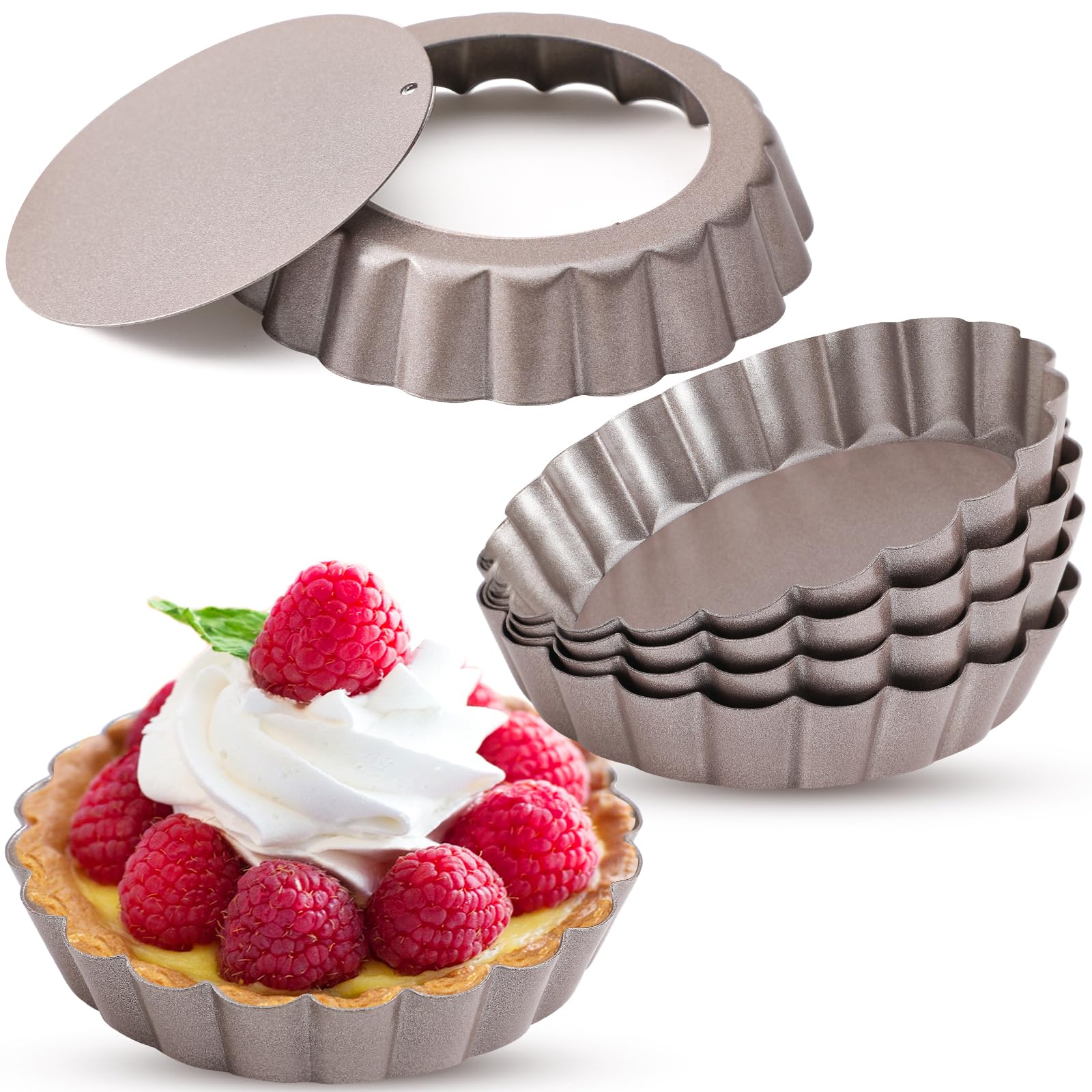
I keep these six mini tins for individual desserts and small make-ahead tartlets that freeze and reheat well.
Why I picked it: Thickened carbon steel, removable bases, and a handy six-pack.
Best for: Mini tarts, individual quiches, and portion-controlled desserts.
Affordable set for multi-serving baking.
Pros
- Sturdy 0.6mm steel
- Consistent even baking
- Removable bottoms for neat presentation
- Great for multiple servings
Cons
- Small depth limits tall fillings
- Can be fiddly to unmold without practice
My take
I love these mini pans for single-serve tarts and small cheesecakes; the removable bottoms make plating quick and the nonstick surface speeds cleaning.
They heat evenly across all six pieces, so I get consistent results batch after batch. They’re also compact to store and ideal when I want to prepare several different flavors at once.
If you plan taller fillings, bear in mind the 0.75-inch depth; these are optimized for short crusts and petite quiches.
6. CHEFMADE 9.5-Inch Tart Pan – Best Durable Nonstick
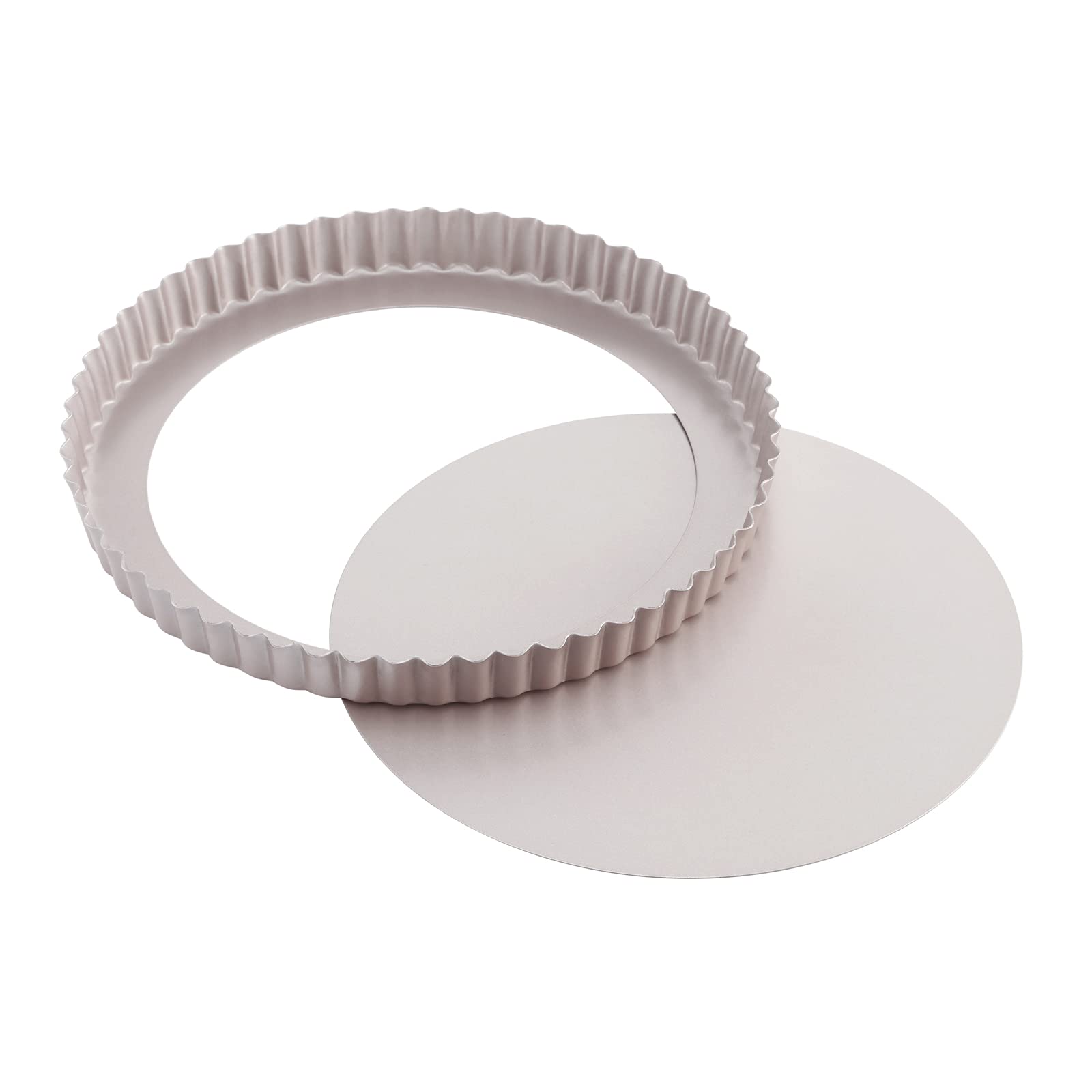
A 9.5-inch pan with a thicker 0.8mm carbon-steel body and a food-grade silicone coating that I rely on for reliable release and a professional finish.
Why I picked it: Thicker steel, PTFE/PFOA-free silicone coating, and strengthened edge to avoid warping.
Best for: Bakers who want a durable, attractive pan with excellent nonstick properties.
Moderately priced for a commercial-style finish.
Pros
- 0.8mm thick carbon steel
- Food-grade silicone nonstick
- Strengthened rim resists warping
- Easy to clean by hand
Cons
- Color may show wear over time
- Hole patterns can drip during blind-bakes
My take
I reach for the CHEFMADE pan when I want something that looks as good as it performs. The champagne-gold finish is attractive and the silicone-based coating releases eggs and fruit fillings effortlessly.
The thicker steel helps with even browning, and the reinforced rim keeps the tin square and true through repeated use. I hand-wash and dry it promptly and it has stayed rust-free in my experience.
When I blind-bake shell-only crusts I place a tray underneath to catch any drips from the perforations, but otherwise it’s a very dependable pan.
7. DATANYA Mini Tart Pans 4-Inch (8-Pack) – Best Party Pack
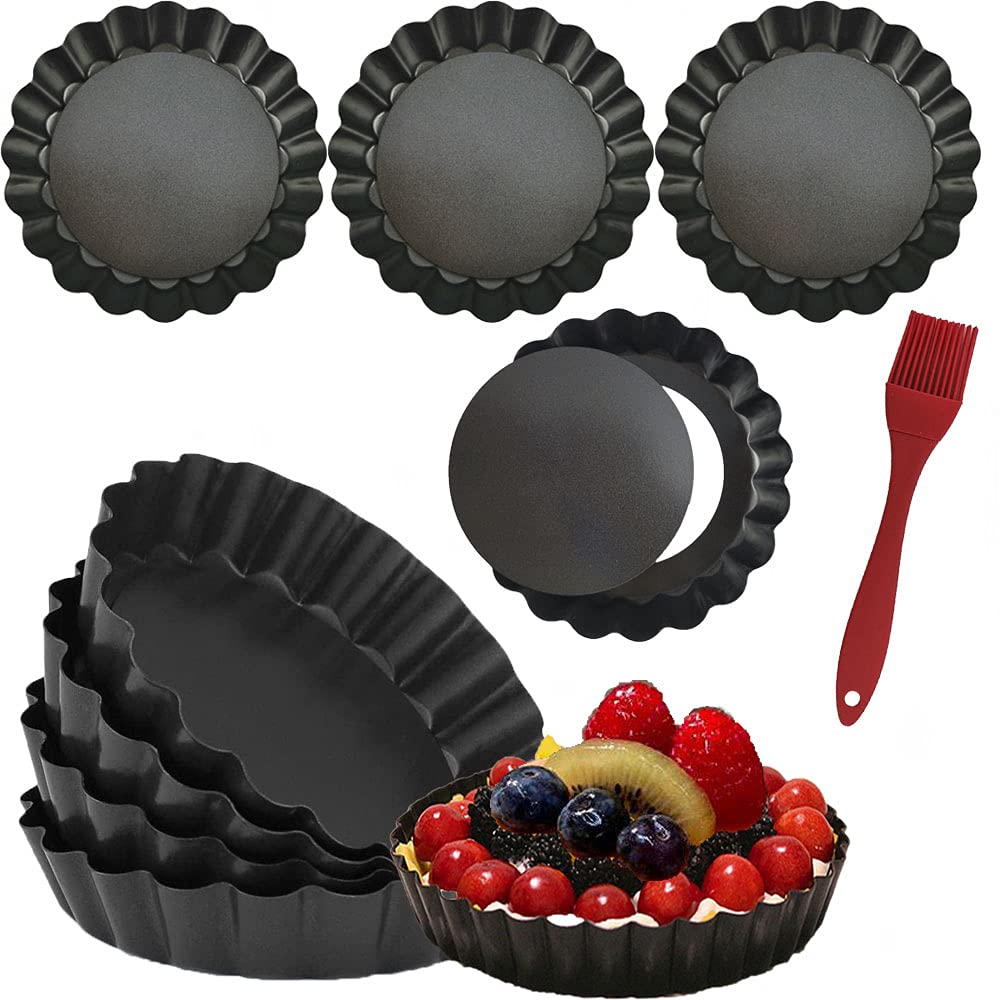
This eight-pack of mini tart pans is what I use when I’m producing a crowd of petite desserts for parties or catering prep.
Why I picked it: Large fluted edges, removable bottoms, and an eight-piece set for batch baking.
Best for: Entertaining, bake sales, and producing many single-serve tarts.
Great value for making many minis at once.
Pros
- Eight-piece set for batch baking
- Large fluted edges for presentation
- Sturdy carbon steel construction
- Simple unmolding with removable bottoms
Cons
- Handle with care when lifting full trays
- Recommend brushing with oil before first use
My take
When I need to produce a dozen or more small tarts quickly, the DATANYA eight-pack saves time and keeps results consistent across pans.
The removable bottoms pop out with a gentle push and the fluted rims hold their shape well. I brush them lightly with oil on first use and they’ve released cleanly every time since.
These are particularly handy for portion control and creating a visually appealing dessert spread without extra fiddling.
8. Wilton Extra Long Rectangular Tart Pan – Best for Entertaining
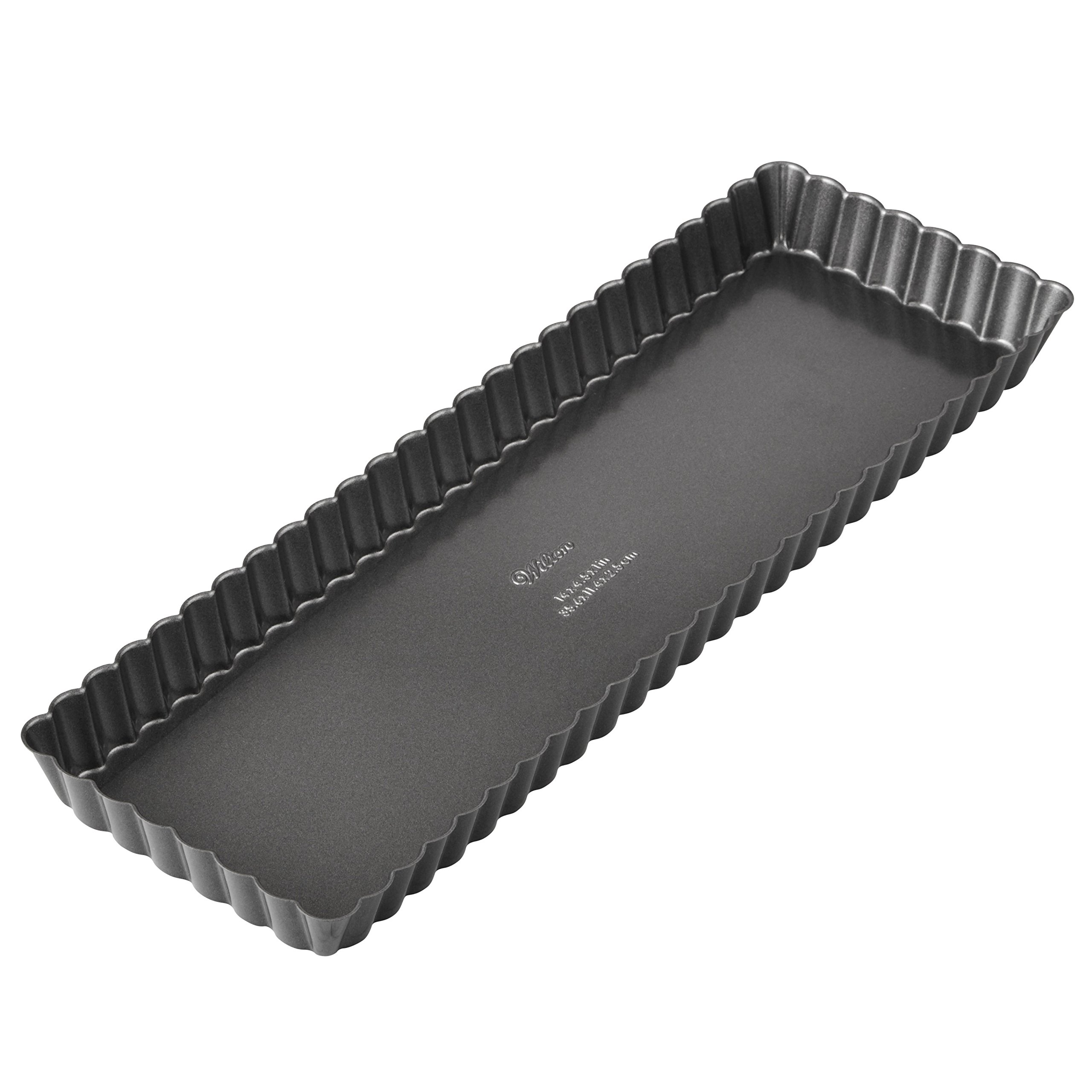
I use this extra-long rectangular pan for dinner-party tarts where slicing neat, uniform servings matters more than a round presentation.
Why I picked it: Unique rectangular format with removable bottom for party-sized servings.
Best for: Large gatherings where easy slicing and presentation matter.
Affordable choice for entertaining and special occasions.
Pros
- Unique rectangle shape for easy slicing
- Removable bottom for neat serving
- Fluted edges add visual flair
- Lightweight and easy to store
Cons
- Less rigid than thick steel tins
- Requires a serving platter that fits
My take
I bought this Wilton rectangle pan when I needed a tart that would slice into even, party-friendly pieces. It delivered—slicing is straightforward and the removable base makes presentation effortless.
The fluted edges look great and it bakes evenly across the longer surface. It’s lighter than some rounded, heavier tins, so I handle it with a steady hand when it comes out of the oven.
If you frequently host gatherings, this pan simplifies serving and gives a fresh shape to classic tart recipes.
How I Choose a Tart Pan
Material & Thickness
I prioritize carbon-steel tart pans for even heat transfer and resistance to warping. Thicker steel (around 0.8–1.0 mm) gives more even browning, while thinner steels are lighter and easier to handle.
Look for pans with rolled edges or reinforced rims—those details keep the pan square and make unmolding easier.
- Thicker steel = more even heat and less warping
- Lightweight pans are easier to handle but may heat less evenly
- Reinforced rims make unmolding and handling safer
Removable Bottoms
A removable or loose base is the single most useful feature in a tart pan to get intact edges and a clean presentation.
I check how snug the base fits: too loose and it can flex; too tight and it makes removal awkward.
- Ensure the bottom lifts smoothly without scraping crust edges
- Test fit before the first bake and oil lightly if it’s prone to sticking
Coating and Safety
Nonstick coatings save time during unmolding and cleanup, but they vary. I prefer pans with durable coatings and, when noted, PTFE/PFOA-free finishes.
If you plan to use metal tools, choose a tougher nonstick or be prepared to hand-wash and avoid harsh scouring.
- PTFE/PFOA-free coatings are preferable for peace of mind
- Avoid metal utensils on nonstick surfaces to extend life
Size & Depth
Match the pan size to your recipes: standard 9–9.5 inch pans fit most tart recipes, while 12-inch tins are great for showpieces. Mini pans (3.5–4 inch) are perfect for individual portions.
Depth matters: deeper pans are better for tall quiches; shallow pans suit thin fruit tarts.
- 9–9.5 in: versatile everyday size
- 12 in: showpieces and party centerpieces
- 4 in: individual servings and portion control
Care & Maintenance
I hand-wash most of my nonstick pans and dry them immediately to prevent rust. Some manufacturers advertise dishwasher-safe, but hand-washing prolongs the finish.
A light oiling before first use helps many nonstick pans release better.
- Hand-wash and dry promptly to extend life
- Lightly oil before first bake to improve release
- Store carefully to avoid scratching fluted edges
Frequently Asked Questions
Do I need to grease tart pans with nonstick coatings?
I usually give nonstick tart pans a light brush of oil before the first use and occasionally afterward. That simple step eliminates most sticking without defeating the coating.
Can I blind-bake in pans with holes or perforations?
Yes—perforated pans help steam escape and crisp the base. I place a tray underneath during blind-bakes to catch any butter or filling that might drip through.
Are removable-bottom pans prone to leaking?
In my experience a well-fitting removable bottom won’t leak if the crust is pressed firmly and the pan is level. If you see seepage, press the base into the shell more tightly or line the base with a thin disk of parchment.
Final Take
I keep several of these pans on hand because different jobs call for different tools: mini tins for individual servings, thicker carbon-steel tins for large showpieces, and lightweight 9-inch pans for everyday baking.
Pick a pan that matches the recipes you make most often, and treat the nonstick surface gently—light oiling and hand-washing will keep your pans performing their best.
With the right tart pan in hand, you’ll spend less time wrestling with crusts and more time enjoying beautiful, intact tarts on the table.
