
I tested a range of terracotta and terracotta‑colored planters — from classic fired clay to lightweight plastic — and picked options that balance drainage, durability, and style for indoor gardening.
I spend a lot of time repotting, staging, and photographing houseplants, so I look for planters that balance form and function. For this roundup I focused on drainage, material, fit for common houseplants, and how well each pot protects surfaces.
You’ll find true terracotta for breathability and classic looks, plastic replicas that keep weight down, and large multi‑packs for mass potting. I explain where each one does best and what tradeoffs to expect.
If you want authentic clay and moisture wicking, choose the fired terracotta pieces. If you need lightweight, unbreakable pots for a sunroom or lots of repotting, the plastic sets deliver the same look without the heft.
1. D’vine Dev Terracotta Pots (Set of 3) – Best Classic Terracotta
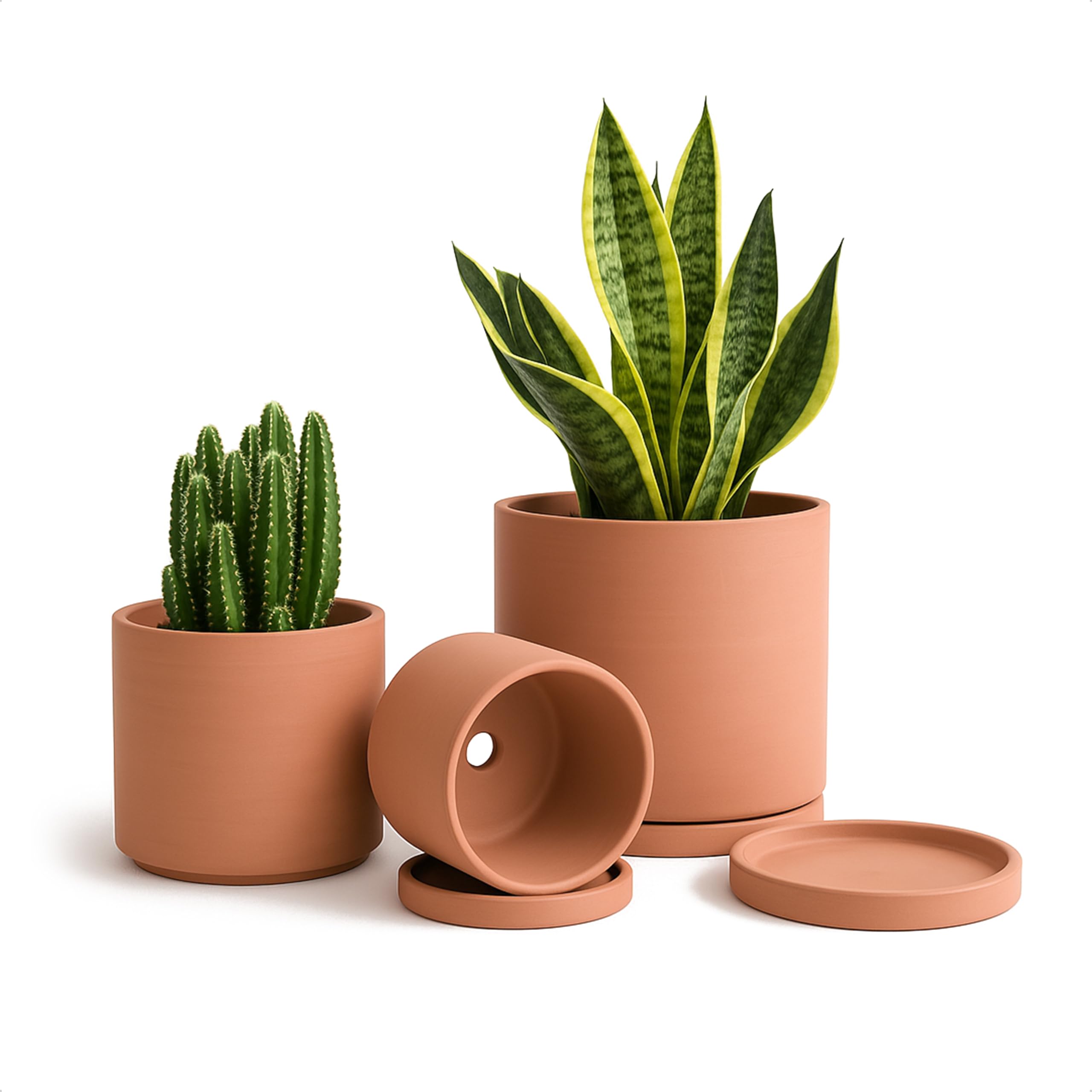
I lean on this three‑pack when I want the authentic terracotta look and porous clay that helps succulents and Mediterranean herbs thrive.
Why I picked it: True fired terracotta, included saucers and drainage mesh make these ready for display and healthy plants.
Best for: Succulents, small cacti, and herbs that need good drainage.
Affordable quality terracotta multi‑pack.
Pros
- Authentic porous terracotta
- Comes with saucers and drainage mesh
- Smooth matte finish
- Sturdy, well packed for shipping
Cons
- Heavier than plastic
- Can stain surfaces without pad
My take
These pots feel like the real thing — solid, well fired terracotta with a nicely smooth matte finish. I appreciated the included mesh for the drainage hole and the felt pads that protect surfaces.
The three sizes are practical for small plant collections: I use the largest for a rosemary cutting, the middle for a small aloe, and the smallest for a cactus pup. Each pot drained cleanly and sat well on its saucer without wobble.
Packaging was excellent when mine arrived; I’ve had ceramic pieces arrive cracked before, so that was a welcome detail. If you want the classic clay aesthetic and breathable pots that help prevent overwatering, these are my go‑to.
2. D’vine Dev Plastic Planter Pots (Set of 3) – Best Lightweight Alternative
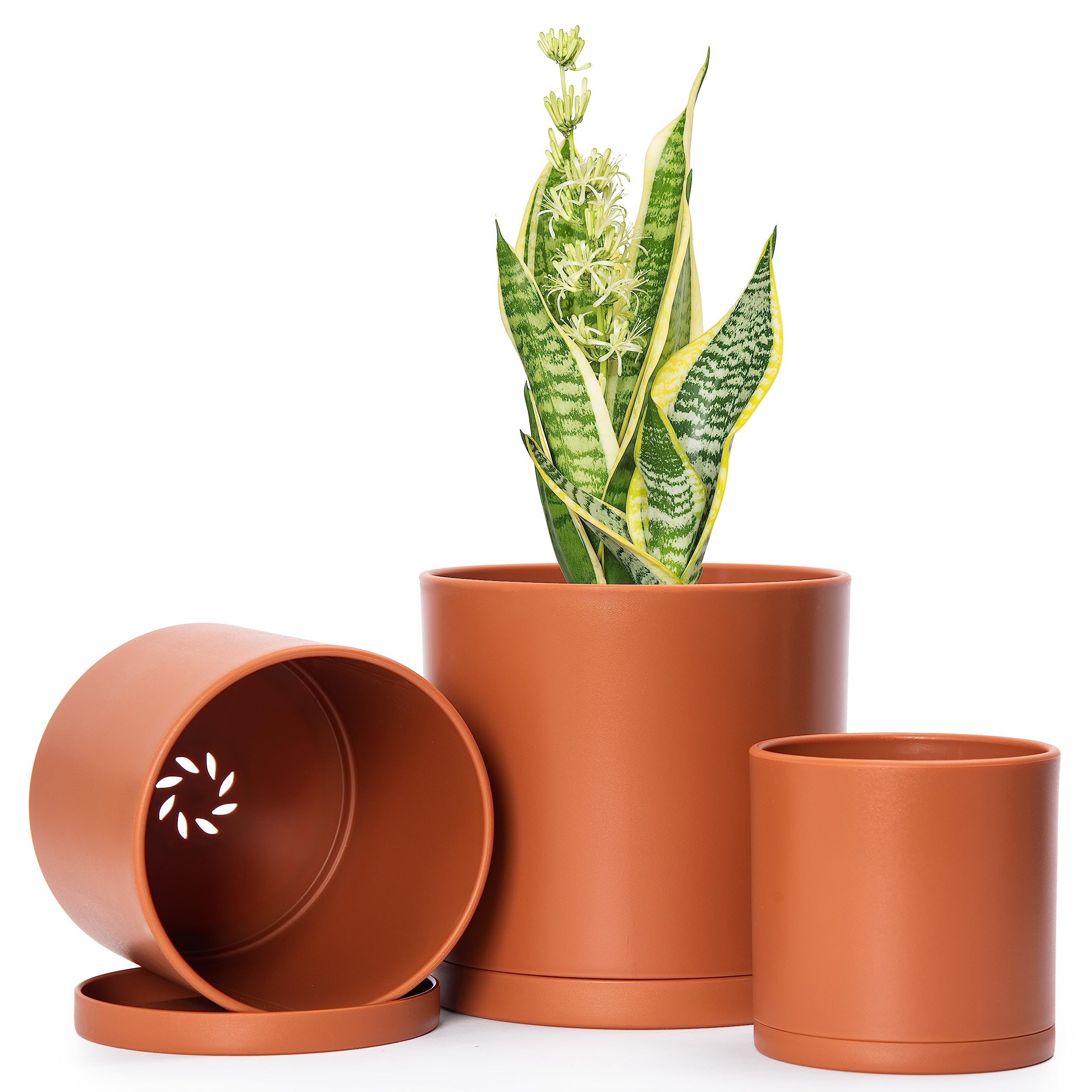
When I need the terracotta look without the weight, this matte plastic set gives the style with durable, unbreakable construction.
Why I picked it: Matte finish and thick walls mimic ceramic while staying light and fracture‑free.
Best for: Renters, high shelves, and anyone who moves plants often.
Budget‑friendly, lightweight option.
Pros
- Lightweight and durable
- Matte finish looks premium
- Detachable seamless saucers
- Includes drainage mesh
Cons
- Smaller drain hole on some colors
- Not breathable like clay
My take
I used these in a temporary studio where I didn’t want heavy pots on a flight of stairs. The matte surface reads like ceramic and the pots feel thick, not flimsy.
Each pot has a drainage hole and a perfectly fitting saucer, which kept my windowsill tidy during watering. I did notice one color had a smaller drain hole, so I avoid bottom‑watering that particular set unless I drill it out.
For anyone who wants the terracotta tone but needs portability and shatterproof durability, these hit the sweet spot.
3. WOUSIWER 6-Inch Plastic Planters (16-Pack) – Best Bulk Pack
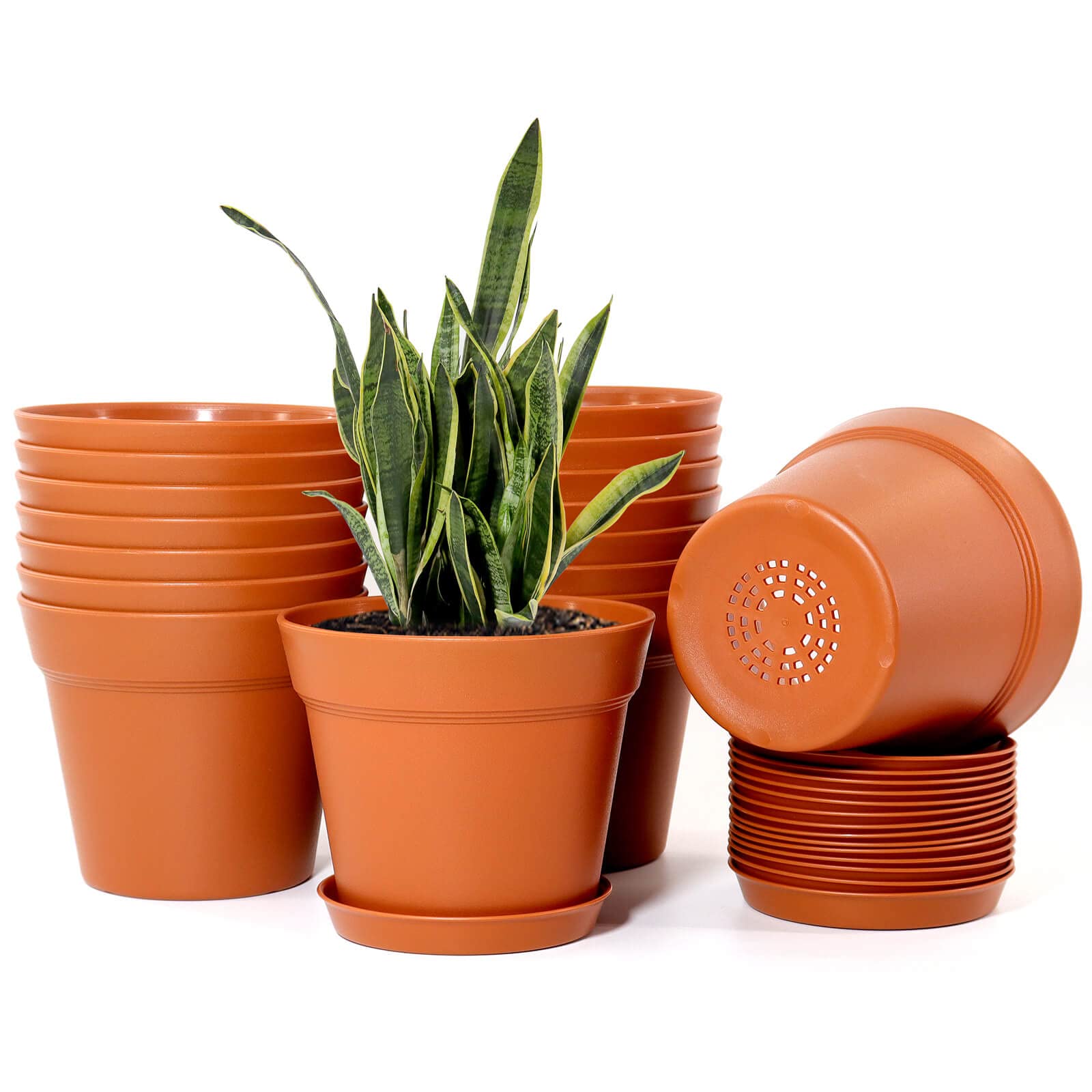
I reach for this 16‑pack whenever I’m repotting multiple plants or assembling event centerpieces — consistent size, matching trays, and sturdy plastic construction.
Why I picked it: Large quantity with matching saucers makes mass potting fast and consistent.
Best for: Repotting many plants, propagation, or events requiring uniform pots.
Good value for bulk repotting needs.
Pros
- Consistent 6" size
- 16 matching saucers included
- Thick durable plastic
- Matte modern finish
Cons
- May need extra drainage holes
- Saucers slightly small for heavy overwatering
My take
I used these to repot a batch of succulents for favors and appreciated how quickly I could work with the uniform size. The trays catch excess water and kept tabletops clean during staging.
The plastic is beefy — these aren’t the flimsy nursery pots. I did drill a few extra holes on some pots to improve bottom drainage for thirsty plants, but that’s a quick tweak.
If you need a coordinated look across many plants or just want to repot efficiently, this set makes the job painless.
4. D’vine Dev Terracotta Beaded Planter – Best Decorative Terracotta
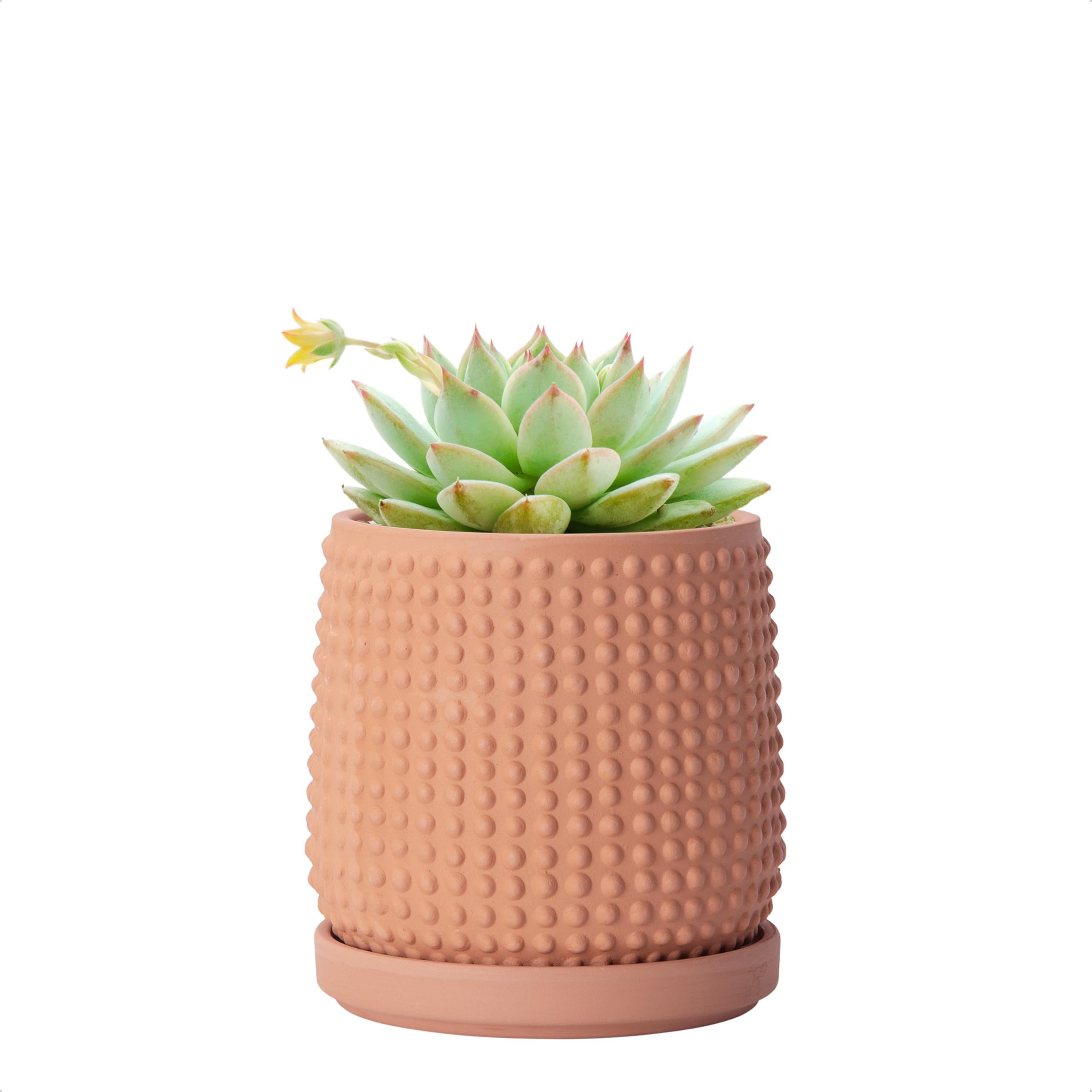
I choose this beaded terracotta when I want a more decorative pot that still brings the benefits of fired clay to a tabletop display.
Why I picked it: Handcrafted feel, beaded texture, and included saucer plus protective pad.
Best for: Side tables, shelves, and styled plant displays.
Stylish terracotta piece with finishing touches.
Pros
- Elegant beaded design
- True terracotta material
- Includes saucer and pad
- Thick, durable walls
Cons
- Smaller size for larger plants
- Heavier than plastic
My take
The beaded detail elevates a simple plant into a focal point. I used it for a baby fern and the finish complemented indoor wood surfaces nicely.
It arrived well packed and solid; the included mesh and felt pad saved me a step. The pot has a nice heft without feeling cumbersome.
For a decorative tabletop planter that still performs, this one stands out in my collection.
5. D’vine Dev Midnight Lace Planters (Set of 2) – Best Hand‑Painted Style
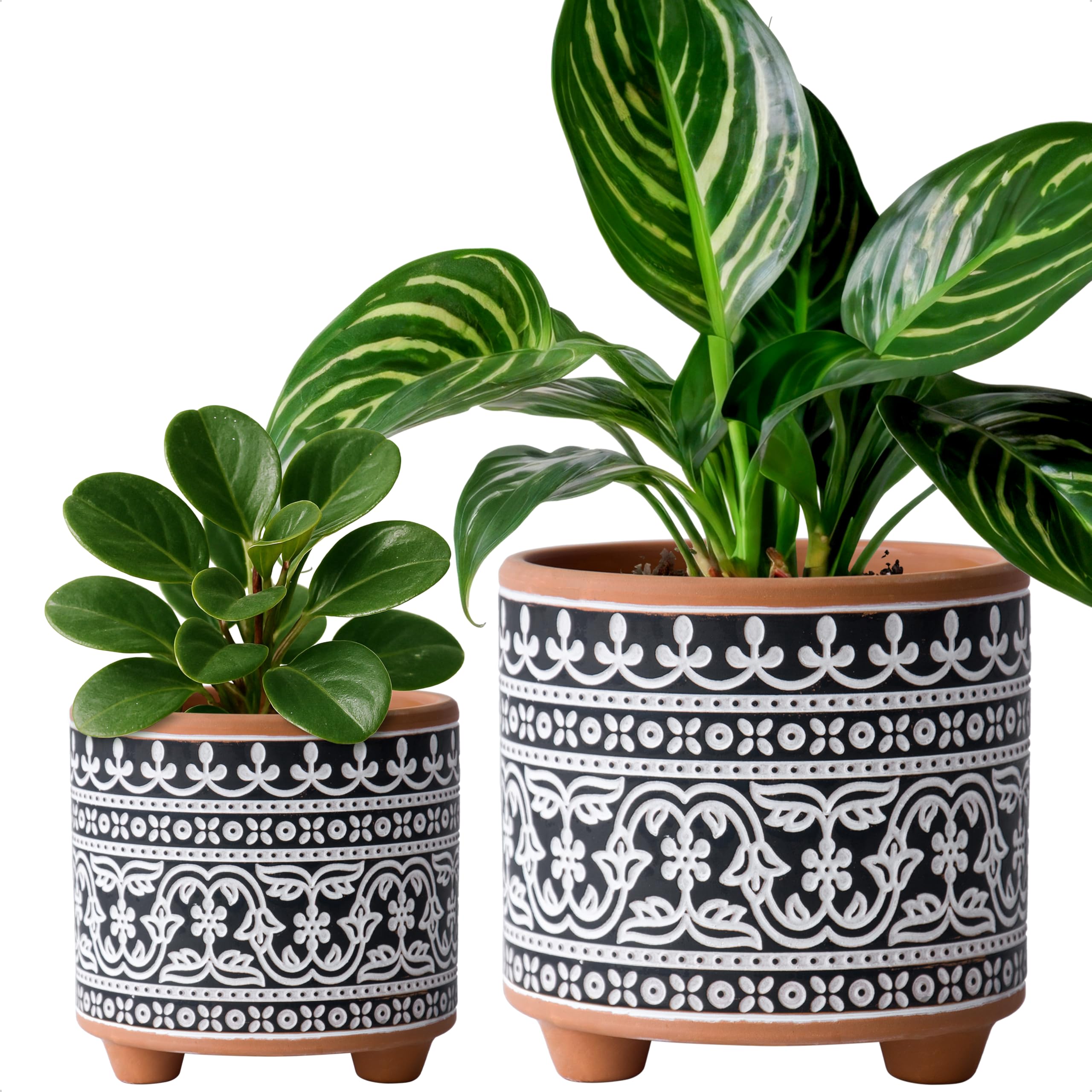
I pick this two‑pack when I want a statement planter — the hand‑painted lace motif and three‑leg base lift a shelf or desk arrangement.
Why I picked it: Hand‑painted pattern and raised base combine style with function.
Best for: Decor‑forward spaces where pots double as accents.
Decorative, design‑forward pair.
Pros
- Hand‑painted lace motif
- Stable three‑leg base
- Includes mesh and pads
- Two useful sizes
Cons
- Pattern may show wear with rough handling
- Not as breathable as plain terracotta glazes
My take
These pots feel curated — the black base and white lace paint add personality without overpowering a plant. I placed a pothos on a shelf and the elevated legs gave it more presence.
They shipped with protective inserts and pads which made immediate use simple. Functionally they drain well and the inner liners are handy if you prefer to water outside the pot.
If you want planted decor that reads like art, these deliver both looks and utility.
6. Small Plastic Plant Pots (28-Pack) – Best Starter Pack
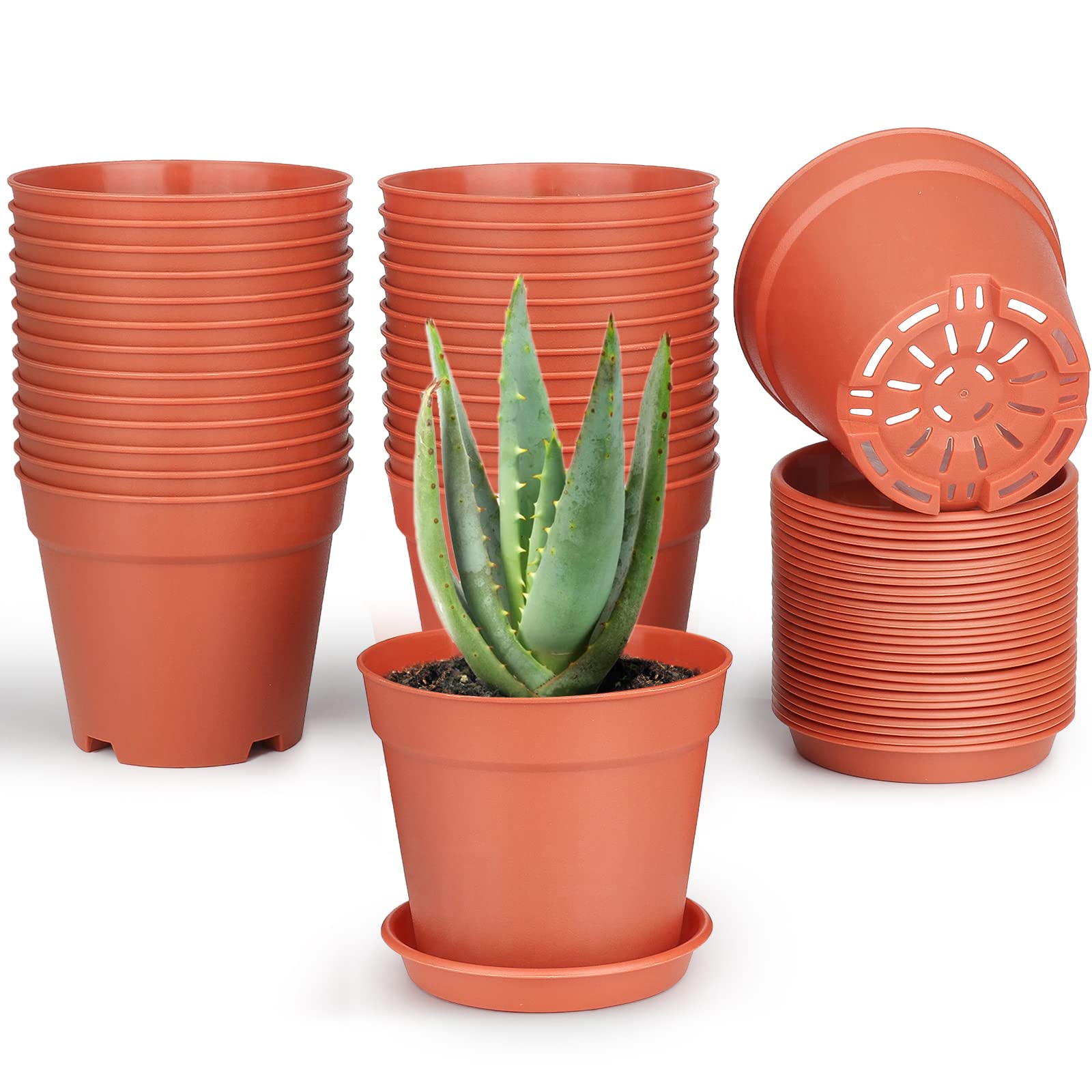
I rely on this 28‑pack for propagation, seed starting, and gifting rooted cuttings — the small pots have appropriate drainage and are very lightweight.
Why I picked it: High quantity of small pots with saucers — perfect for starts and cuttings.
Best for: Propagations, seedlings, and giveaways.
Great value for propagating and mass use.
Pros
- Large 28‑pack
- Improved drainage holes
- Matte finish variety
- Includes saucers
Cons
- Lightweight — can tip when dry
- Not breathable like clay
My take
These are my go‑to for starting plants from cuttings. The size is ideal for young roots and the drainage prevents sogginess while they establish.
They’re light, so I avoid placing very top‑heavy plants in them until the rootball fills in, but once watered they’re stable. The variety of colors helped me label different plant families quickly.
For anyone who does a lot of propagation, this pack saves time and keeps a consistent look.
How I Choose Terracotta and Terracotta‑Style Planters
Material tradeoffs
I choose fired terracotta when breathability matters — succulents and herbs benefit from clay that lets moisture evaporate. Plastic gets my vote when I need lightness, unbreakability, and easier cleaning.
- Terracotta: porous, helps prevent overwatering, classic look.
- Plastic: lightweight, unbreakable, often more cost‑effective in multi‑packs.
- If you want the look of clay with less weight, choose matte plastic pots.
Drainage and inserts
I always prioritize a drainage hole and a saucer. Mesh covers and inner liners in these sets make direct planting easy and keep soil from escaping while still allowing water to drain.
- Use the included mesh to stop soil from washing out.
- Inner liners let you bottom water without soaking the outer pot.
- Saucers protect wood surfaces from water stains.
Sizing and picking the right pot
I choose pot sizes based on root space and growth expectations. A pot that’s too big can hold excess moisture; a handful of the sizes in this roundup are optimized for succulents, herbs, or small indoor plants.
- Match pot size to current rootball, not leaf spread.
- For repotting many plants, bulk 6" options speed the process.
- Smaller starter pots are ideal for cuttings and seedlings.
Styling and placement
I coordinate pot texture and finish with the room. Beaded or hand‑painted terracotta reads decorative; plain clay and faux‑terracotta plastic read more neutral and scalable.
- Use elevated or legged pots to add presence to low shelves.
- Matte finishes hide water marks better than glossy glazes.
- Consider weight if placing on high shelves or moving often.
Frequently Asked Questions
Do I need to seal terracotta pots before planting?
I sometimes seal the outside if I want to prevent seepage onto furniture, but I avoid sealing the inside for plants that prefer breathability. A thin exterior seal protects surfaces without blocking clay’s moisture exchange.
Can I use the included mesh or liners permanently?
Yes — I often leave the mesh over the drain hole to keep soil contained, and I will use an inner liner if I need to keep the outer pot dry during heavy watering.
Which option is best for mass potting or events?
I use the 16‑pack or the 28‑pack for mass repotting and event centerpieces because they’re consistent in size, include trays, and let me work quickly without fragile materials.
How can I improve drainage if a pot’s hole is small?
I’ll carefully enlarge the hole with a masonry bit for clay or a regular drill bit for plastic. Adding a layer of coarse material at the bottom helps, but improving the drain opening gives the most reliable result.
Final Take
I recommend true terracotta when breathability and classic style matter, and terracotta‑colored plastic when you need lightness, bulk, or unbreakable pots.
Pick the piece that matches how you water, where you place plants, and how much potting you plan to do. Each option here performed well for the purposes I described, and I use them regularly across different projects.
