
I tested a range of tire sealants for lawn tractors, ATVs, e-bikes and small trailers. These are the products I rely on for emergency inflation, proactive puncture protection, and repeated repairs on tubeless off-highway
I keep tire sealant on hand for every small vehicle I maintain — from my riding mower to an e-bike and a small trailer. Over time I've learned which formulas work as temporary emergency inflators, which ones give ongoing puncture protection, and which are best avoided for severely damaged tires.
In the picks below I explain how I use each product, what it does well, and the practical limits you should expect when sealing lawn-tractor and similar off-highway tires.
I grouped options by how I actually use them: aerosol cans for emergency roadside inflation, 16 oz bottles for mixed tubed/tubeless applications, and 24 oz jugs for mower and ATV tubeless tires.
1. Fix-A-Flat Aerosol Tire Inflator – Best Emergency Aerosol
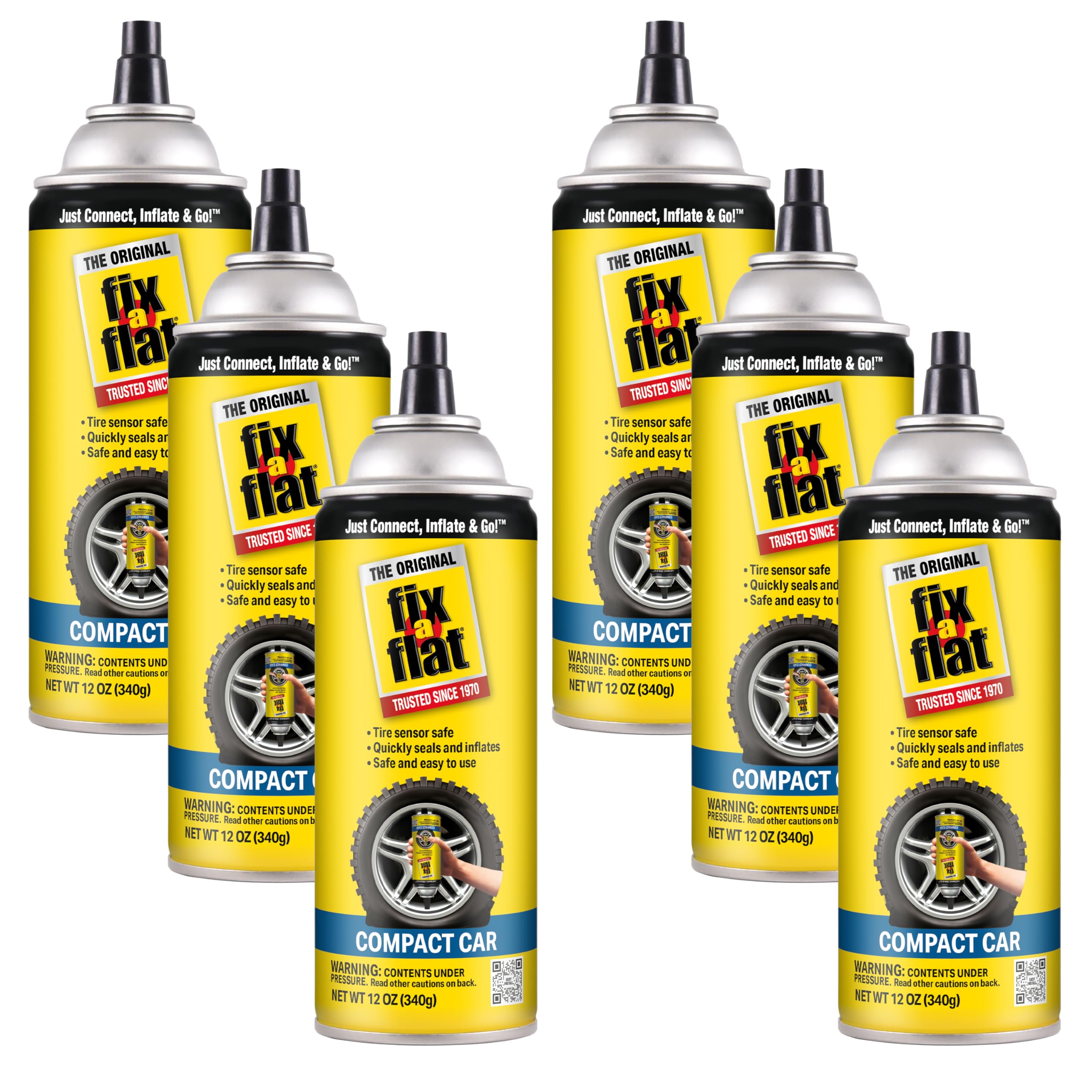
A fast, TPMS-safe aerosol that gets compact tires back on the job in minutes.
Why I picked it: Instant seal and inflation for compact tires when I need a quick roadside fix.
Best for: Emergency inflation and temporary sealing of compact and small off-highway tires.
An affordable, compact emergency option I store with my tools.
Pros
- Rapid inflation and sealing
- TPMS-safe formula
- Compact and easy to store
- No jack or tools required
Cons
- Temporary fix only
- Occasional dud cans exist
My take
When I need a fast get-me-going solution, I reach for this aerosol. It connects directly to the valve, injects sealing liquid and propellant, and in seconds provides enough pressure to get the rim off the ground and drive to a proper repair.
I used it on a puncture where a screw punctured a passenger tire and it brought the car back to a drivable state long enough to reach a service location. In that situation the convenience of not having to change a tire made all the difference.
Two practical caveats from my testing: the fix is temporary and you should plan a permanent repair or replacement after using it, and on rare occasions a can can arrive with no pressure. Because of that I keep a spare can and a small pump in my vehicle.
2. Slime 2-in-1 Tire & Tube Sealant 16oz – Best for Tubes & Tubeless
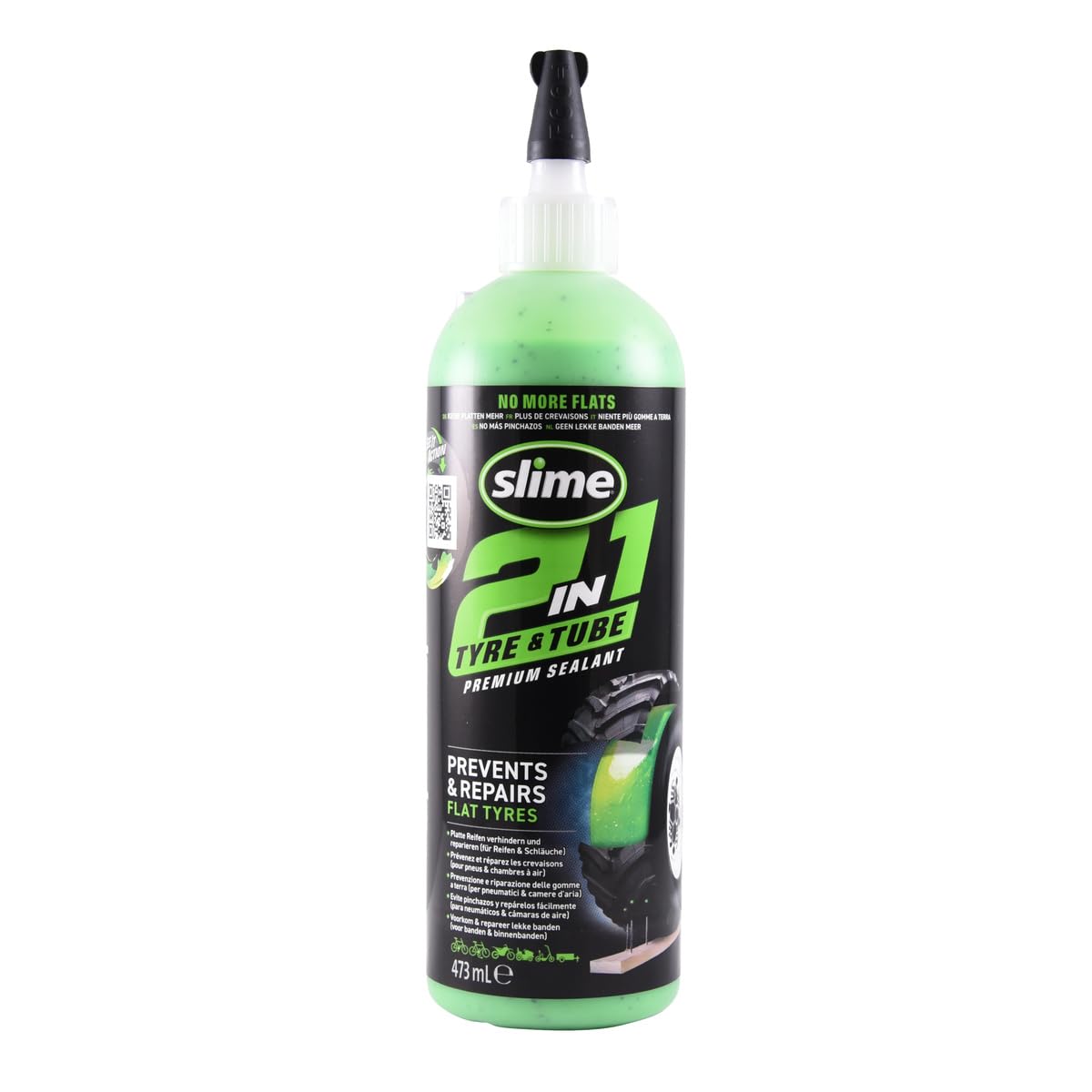
A versatile 2-in-1 formula I use for e-bikes, lawn equipment and small trailers.
Why I picked it: Works in both tubed and tubeless off-highway tires and provides proactive protection.
Best for: E-bikes, bicycles, lawn mowers, small trailers and other mixed tire types.
An inexpensive bottle that covers a couple of small tires or a single larger one.
Pros
- Works in tubes and tubeless tires
- Seals punctures up to 1/4" in tread
- Provides up to two years protection
- Non-toxic and water soluble
Cons
- Included valve tool is flimsy
- Can dry out over time
My take
I rely on this 2-in-1 Slime when I want ongoing protection rather than a one-off emergency fix. Installing it is straightforward: remove the valve core, add the recommended amount, reinstall the core, inflate and spin the wheel to distribute the sealant.
I use it on a fat-tire e-bike and on garden equipment. The sealant seeks out and plugs small tread punctures as air escapes, and in routine use it has stopped slow leaks and kept me rolling for months.
A couple of real-world notes from my experience: the little valve-core removal tool built into the cap is too soft for heavy use, so I keep a proper metal tool on hand. Also, over long periods some sealants thin or dry and may require topping up when I dismount a tire.
3. Slime 2-in-1 Tire & Tube Sealant 16oz (Spare) – Best Backup Bottle
The same versatile formula I keep as a spare for mid-season top-ups and unexpected flats.
Why I picked it: Identical protection and compatibility as the primary 16 oz bottle, good to have as backup.
Best for: People who maintain multiple small vehicles or want a spare bottle on-hand.
Low-cost backup that saves a trip to the parts store when needed.
Pros
- Same proven 2-in-1 formula
- Compact bottle for storage
- Easy to install
Cons
- Smells strong when tires removed
- May need reapplication over years
My take
I treat this duplicate bottle as a strategic spare — when I'm servicing an e-bike or a small trailer I bring the second bottle so I can reseal both tires quickly.
Performance mirrors the other 16 oz Slime offering: straightforward installation, reliable sealing of small punctures, and a tidy two-year protection window in my routine maintenance schedule.
If I ever need to take a tire off for replacement, I plan for a cleanup step because the cured goo can emit a mildew-like smell when the tire is opened.
4. Slime Tubeless Tire Sealant 24oz – Best for Lawn Tractors & ATVs
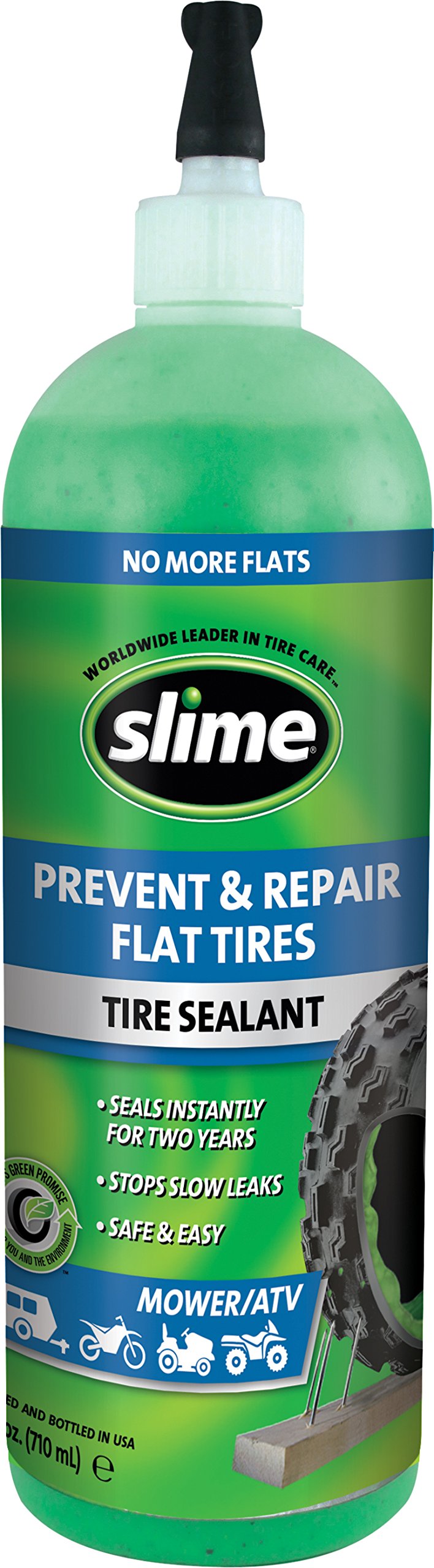
A larger jug formulated for tubeless off-highway tires like mowers and ATVs.
Why I picked it: Fibro-Seal formula and larger volume make it my go-to for tubeless tractor and ATV tires.
Best for: Riding lawn mowers, garden tractors, ATVs and other tubeless off-highway tires.
A mid-priced jug that covers multiple tubeless tires on equipment.
Pros
- Seals tubeless punctures up to 1/4"
- Designed for off-highway tires
- Long-lasting protection
- Includes valve-core tool
Cons
- Won't fix severely damaged tires
- Bulky jug can leak in transit
My take
When I service riding mowers and ATVs I use this 24 oz Slime jug because the Fibro-Seal technology is tuned for tubeless tread punctures that commonly plague that equipment.
I used it on a garden tractor with a slow front-tire leak and the process was quick: deflate, pull the valve core, add the sealant with the included hose, reinstall the core and inflate. After an initial leak period the sealant formed a reliable plug and the tire held for regular use.
A realistic limitation: this product won't save a tire that's badly dry-rotted, has large gashes, or a badly bent rim. For those cases I still plan on replacing the tire rather than relying on sealant as a permanent fix.
5. Slime Tubeless Tire Sealant 24oz (Extra) – Best Large Jug (Extra)
The same 24 oz formula I keep as a spare jug for a seasonal service kit.
Why I picked it: Extra capacity for multiple tires or repeat applications across a season.
Best for: Owners who maintain several pieces of off-highway equipment or prefer bulk storage.
Good value when you need to service several tubeless tires.
Pros
- Large capacity for multiple uses
- Tailored for tubeless mower/ATV tires
- Easy to apply with included hose
Cons
- Not a permanent fix for severe damage
- Requires cleanup if spilled
My take
I keep this extra jug in my shed for spring and fall service sessions. Having a second 24 oz bottle means I can refresh sealant in every mower and ATV without buying multiple small bottles.
In repeated use the product has proven dependable for slow leaks and typical tread punctures. Packaging sometimes shows minor leakage on arrival, so I wipe the jug and store it upright — a simple step that has prevented messes in my gear area.
For me the 24 oz size hits the sweet spot between single-use convenience and cost-effective maintenance for multiple off-highway tires.
How I Choose Tire Sealant for Lawn Tractors
Match the sealant to the tire type
I always start by identifying whether the tire is tubed or tubeless. Tubed tires benefit from a 2-in-1 product because it works inside the tube, while tubeless-specific formulas are better for mower and ATV wheels.
For mixed fleets I keep a 2-in-1 bottle for bikes and small trailers and a dedicated tubeless jug for tractors and ATVs.
- Use 2-in-1 sealant for tubes and tubeless small tires
- Use tubeless-specific sealant for riding mowers and ATVs
Decide between aerosol and bottle
I carry an aerosol can for emergencies because it inflates and seals in minutes without tools. For regular maintenance I prefer bottles or jugs that provide longer-lasting protection.
If I expect to be far from service, the aerosol is invaluable. For workshop use I rely on the larger bottles and jugs.
- Aerosol = emergency, temporary fix
- Bottles/jugs = preventive protection and longer-term repairs
Practical application tips I use
I always remove the valve core when adding sealant and use a metal valve-core tool rather than the soft plastic ones that sometimes come attached to caps.
After adding sealant I inflate the tire and rotate the wheel so the sealant coats the inside. Then I check for slow leaks over the next day before I declare the repair complete.
- Keep a spare can and a pump for redundancy
- Top up sealant annually or if you notice pressure loss
- Replace tires that are dry-rotted, gashed, or severely damaged
Frequently Asked Questions
Can I use one sealant for both tubed and tubeless mower tires?
I use a 2-in-1 product like Slime's 16 oz for mixed applications, but for larger tubeless mower and ATV tires I prefer the tubeless-specific 24 oz jug for better coverage and longevity.
Is an aerosol sealant safe for tire pressure sensors (TPMS)?
Yes — in my experience the aerosol formula I tested is TPMS-safe and is convenient for quick roadside use, but I still schedule a proper repair after using it.
How long does sealant last once installed?
I see effective protection for up to two years with the products I use, though some formulas can thin or partially dry over time, so I check pressure routinely and top up when needed.
Final Take
I keep at least two types of sealant on hand: an aerosol can for emergencies and bottled sealant for preventative maintenance. That combination has saved me time, expense and equipment downtime.
For lawn tractors and ATVs I lean on the larger tubeless jugs, and for e-bikes, trailers and mixed fleets I rely on the 2-in-1 bottles. When in doubt, replace seriously damaged tires rather than depending on sealant as a permanent solution.
