
I tested utility blades, a jab saw, an oscillating blade kit, bulk refills, and a Matrix trim-saw attachment to find the fastest, cleanest ways to cut drywall.
I spend a lot of time cutting drywall for repairs and remodels, so I focused on tools that make clean cuts, stay sharp, and reduce downtime. My picks include disposable utility blades for score-and-snap work, a foldable jab saw for keyholes, an oscillating blade kit for plunge cuts near nails, bulk refills for heavy users, and a compact trim-saw attachment when I need powered precision.
I tested each option in real-world scenarios: scoring and snapping sheetrock, cutting outlet and plumbing holes, trimming corner beads, and plunge-cutting into nailed studs. What follows are the tools I keep in my bag and why I reach for them first.
I chose these tools to cover the full range of drywall tasks — from quick box-cutting and scoring to precision plunge cuts and small powered trim work.
1. WORKPRO SK5 Utility Knife Blades (100-pack) – Best Value Blades
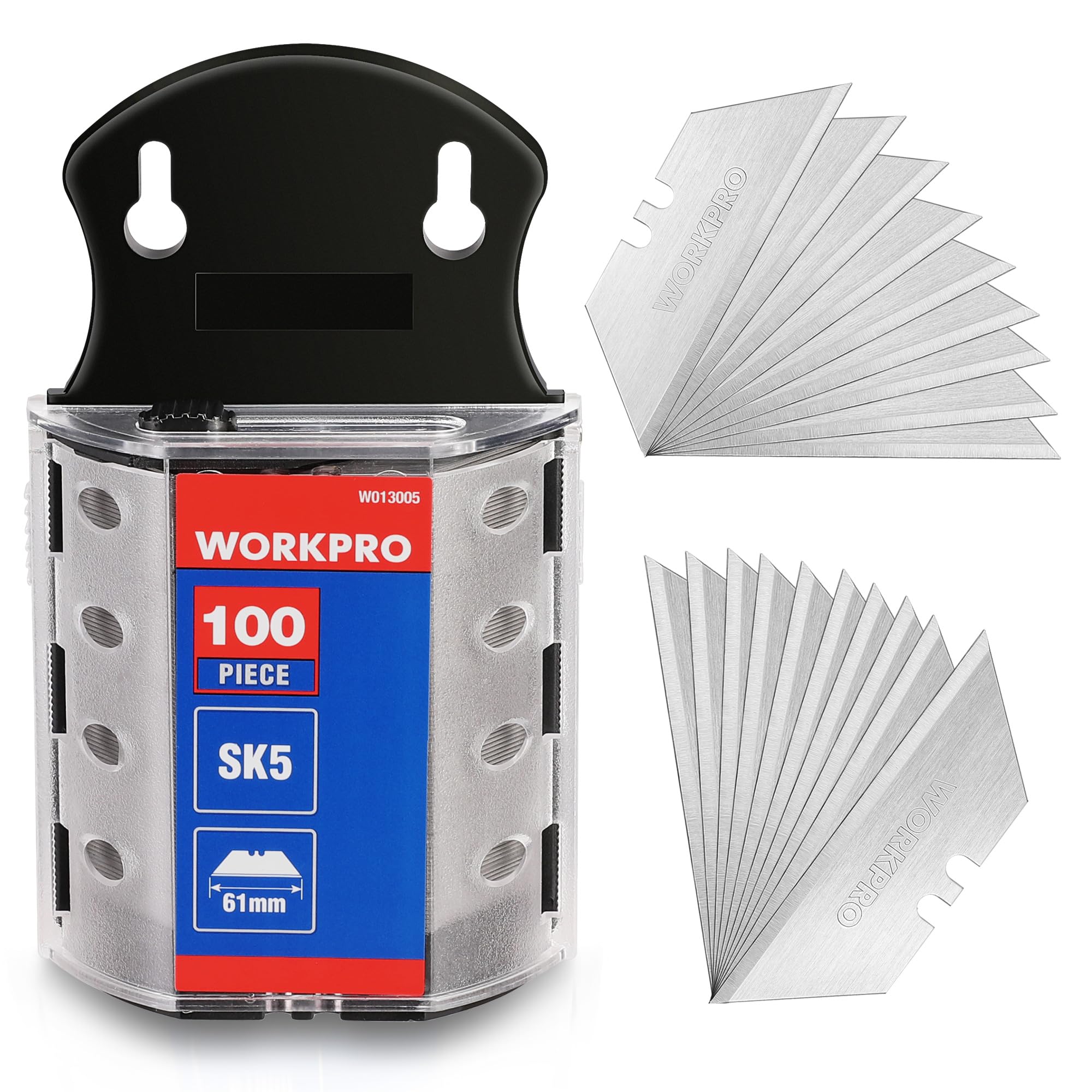
I keep a WORKPRO 100-pack on hand for everyday scoring, trimming, and edge work; the SK5 steel stays sharp and fits all my standard knives.
Why I picked it: Huge count of SK5 blades that fit every utility knife on my bench.
Best for: Frequent box-cutting, scoring drywall edges, and keeping a workshop stash.
Excellent value for high-volume use and frequent blade changes.
Pros
- Fits most standard utility knives
- SK5 steel edge holds well
- Large 100-pack supply
- Well-designed dispenser with storage
Cons
- Made in China
- Dispenser can be bulky on a packed shelf
My take
I rely on this 100-pack when I need a dependable blade supply for daily cutting tasks. The SK5 steel is noticeably sharp out of the box and holds an edge long enough for repeated drywall scoring and box work.
I like that these blades fit all the standard utility knives I own — I didn’t have compatibility problems switching between brands. The dispenser doubles as safe storage for used blades, and I’ve even mounted it to my bench for quick access.
In practice the blades make fast, clean score-and-snap cuts in sheetrock and glide through cardboard and tape without drama. For a busy shop or a contractor who goes through blades, this is the pack I grab first.
2. CRAFTSMAN Utility Knife Blades (100-pack) – Best All-Purpose Blades
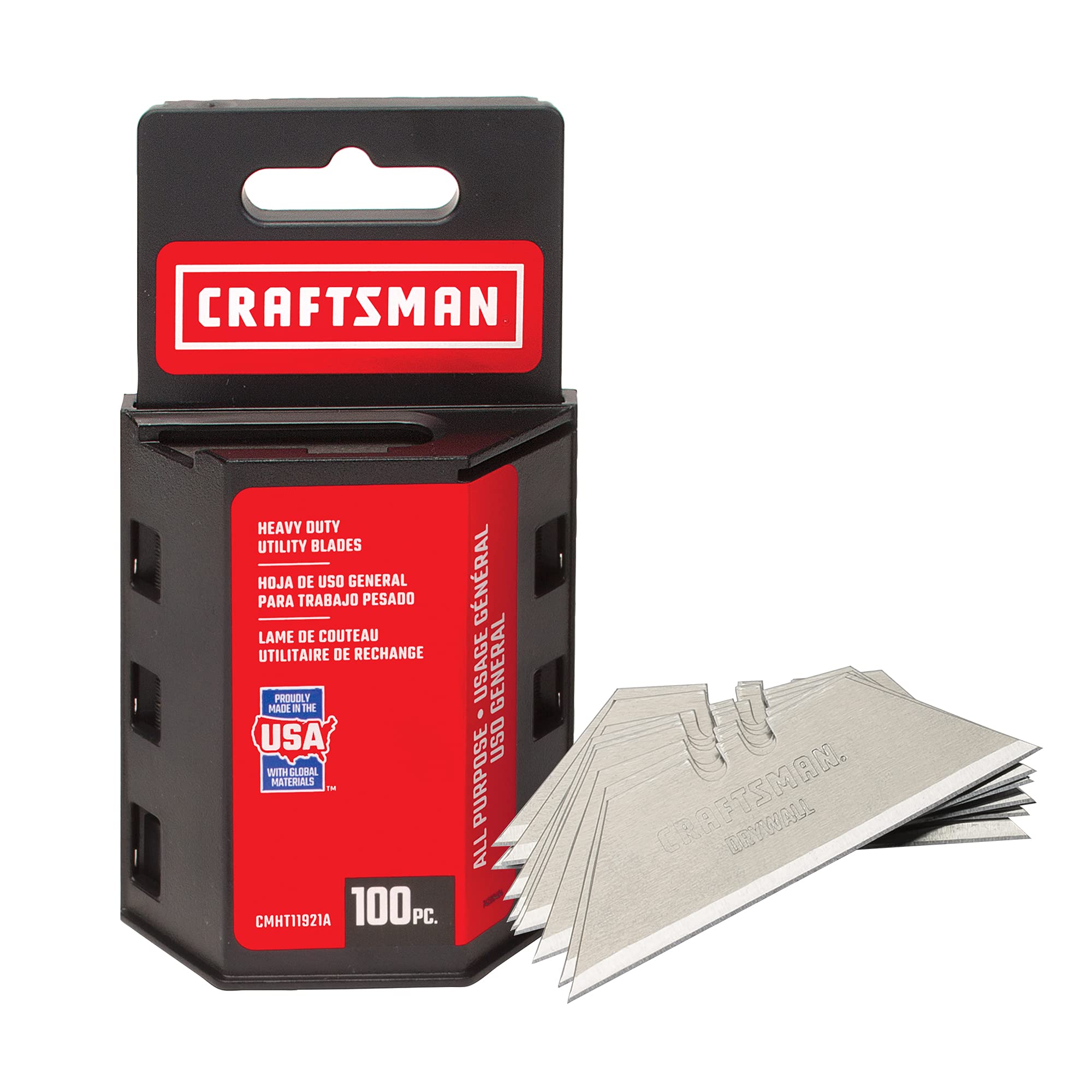
I reach for Craftsman blades when I want a precision-honed edge that stays consistent across drywall, leather, and rubber cutting tasks.
Why I picked it: Precision-honed edge for consistent cuts and longer edge life.
Best for: Drywall detail work, trimming, and tasks where a clean cut matters.
Balanced performance without breaking the bank.
Pros
- Precision-honed edge
- Good edge life
- Fits most utility knives
- Consistent cutting performance
Cons
- Dispenser can be slippery with oil
- Dispensing tricky with gloves
My take
I use these blades when I need a reliably sharp edge that produces clean lines on drywall cutouts. The precision honing makes a real difference for tidy outlet and switch openings.
The blades come oiled for corrosion protection, which keeps them ready to use. That same oil can make dispensing fiddly, especially if I’m wearing work gloves, but the trade-off is longer shelf life.
I’ve also extended usability by stropping the edge between swaps, which lets me get more cuts from each blade. For detail-focused drywall work, these strike a good balance between sharpness and durability.
3. DEWALT Oscillating Blade 5-Piece Kit – Best for Plunge Cuts
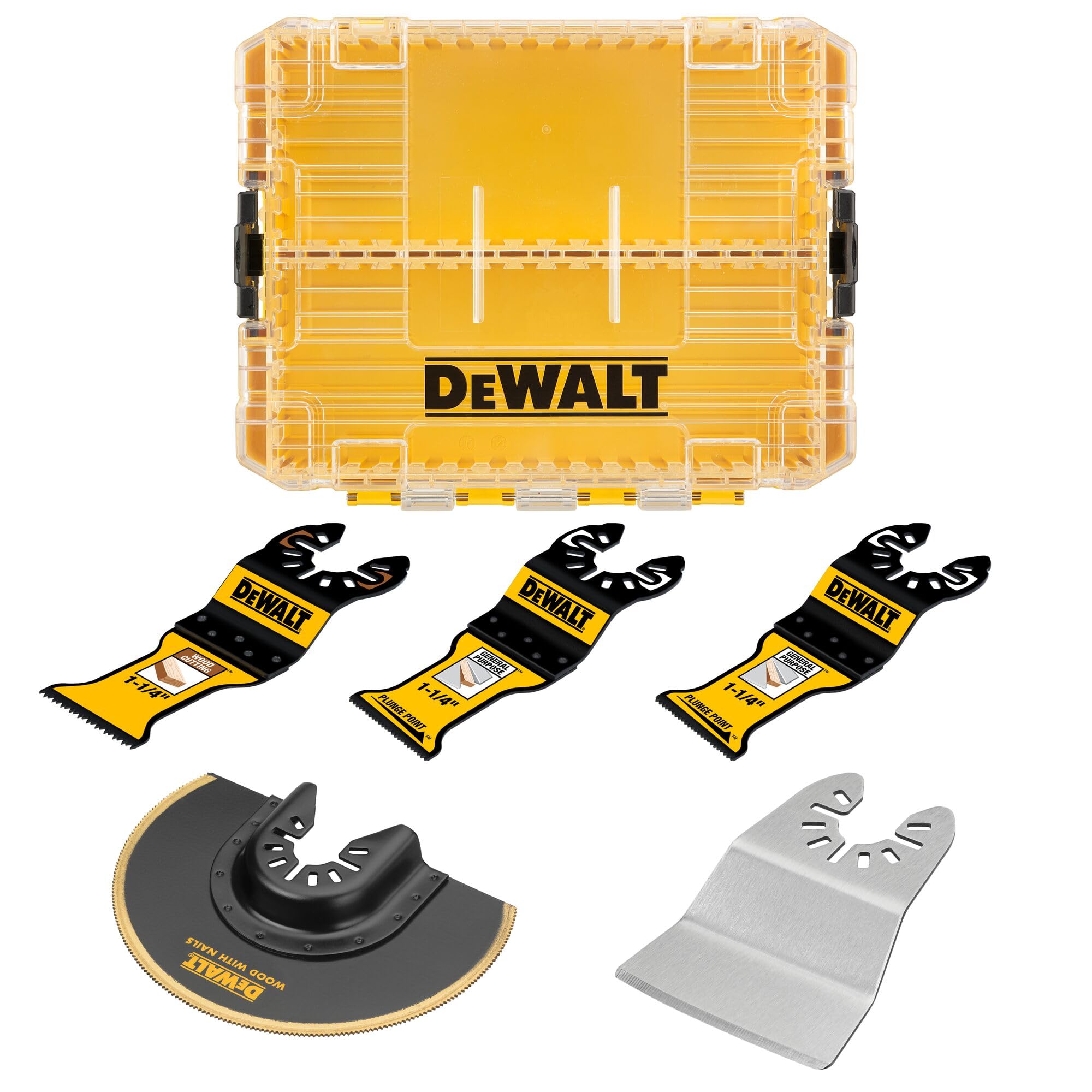
I rely on this DEWALT oscillating kit for plunge cuts near studs and when I hit nail-embedded materials — the bi-metal blades and PlungePoint tip make precise work fast.
Why I picked it: Durable bi-metal construction and a PlungePoint tip for precise, nail-resistant cuts.
Best for: Plunge cuts, nail-embedded wood, and precise openings in drywall and framing.
Higher upfront cost but built for durability and repeat use.
Pros
- PlungePoint tip for clean entries
- Durable bi-metal edge
- Designed to last against nails
- Tool-free blade changes
Cons
- Case lacks internal partitions
- A bit heavier than cheap blades
My take
I pull this DEWALT kit out when I need to plunge through drywall to reach studs or cut out around embedded nails. The PlungePoint tip lets me start a hole quickly and cleanly without fuss.
Cutting into nailed wood and framed areas stays efficient — the bi-metal edge handles nail strikes far better than standard blades, and I see less premature dulling on tough jobs.
Switching blades is quick thanks to the universal, tool-free fit, which keeps me moving on the job. My only gripe is the carrying case: it’s roomy but lacks partitions, so I added foam dividers to keep blades from rattling and dulling against each other.
4. Goldblatt Folding Drywall Jab Saw – Best Jab Saw
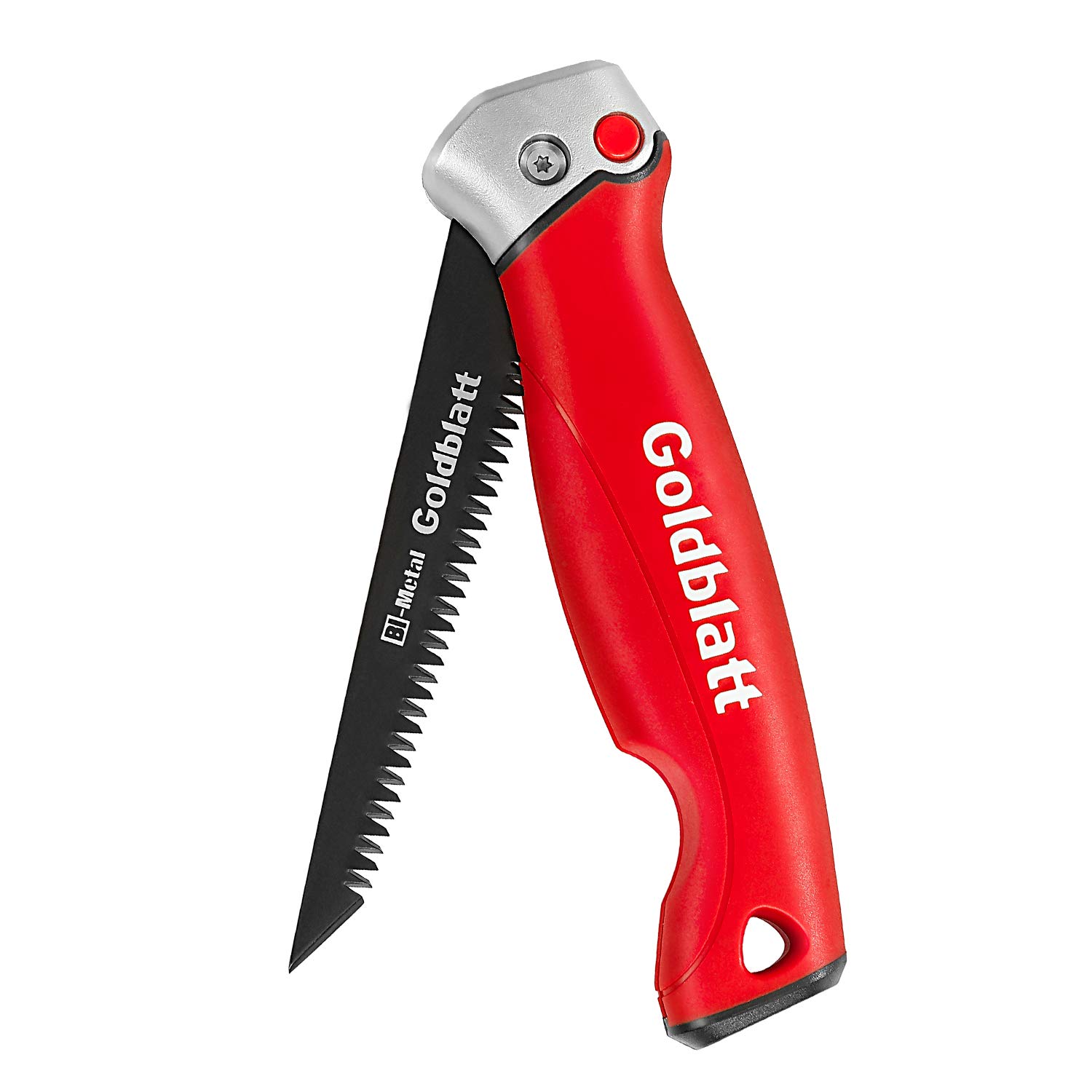
I use this folding jab saw for keyholes and manual plunge cuts; the triple-ground teeth and sharpened tip let me punch through drywall and cut cleanly in tight spots.
Why I picked it: Compact folding design with aggressive teeth for fast, controlled jab cuts.
Best for: Cutting keyholes, small openings, and portability in a tool pouch.
Affordable hand saw that’s handy for DIY and light professional use.
Pros
- Folds for safe storage
- Triple-ground teeth cut fast
- Sharpened tip for punching holes
- Comfortable soft-grip handle
Cons
- Not the most heavy-duty option
- Blade can flex under extreme force
My take
I keep this Goldblatt jab saw in my pouch when I know I’ll be cutting outlet boxes and odd-shaped holes. The folded design keeps the teeth from chewing up my bag, and the lock stays solid during cuts.
The triple-ground, bi-metal blade bites into drywall and sheetrock without tearing, and the sharpened tip makes starting a hole simple. I get controlled, clean cuts with minimal effort.
For heavy, production sheetrockers I’d reach for a more heavy-duty option, but for general remodeling and retrofit work this saw is fast, comfortable, and portable.
5. DIYSELF SK5 Utility Blades (300-pack) – Best Bulk Supply
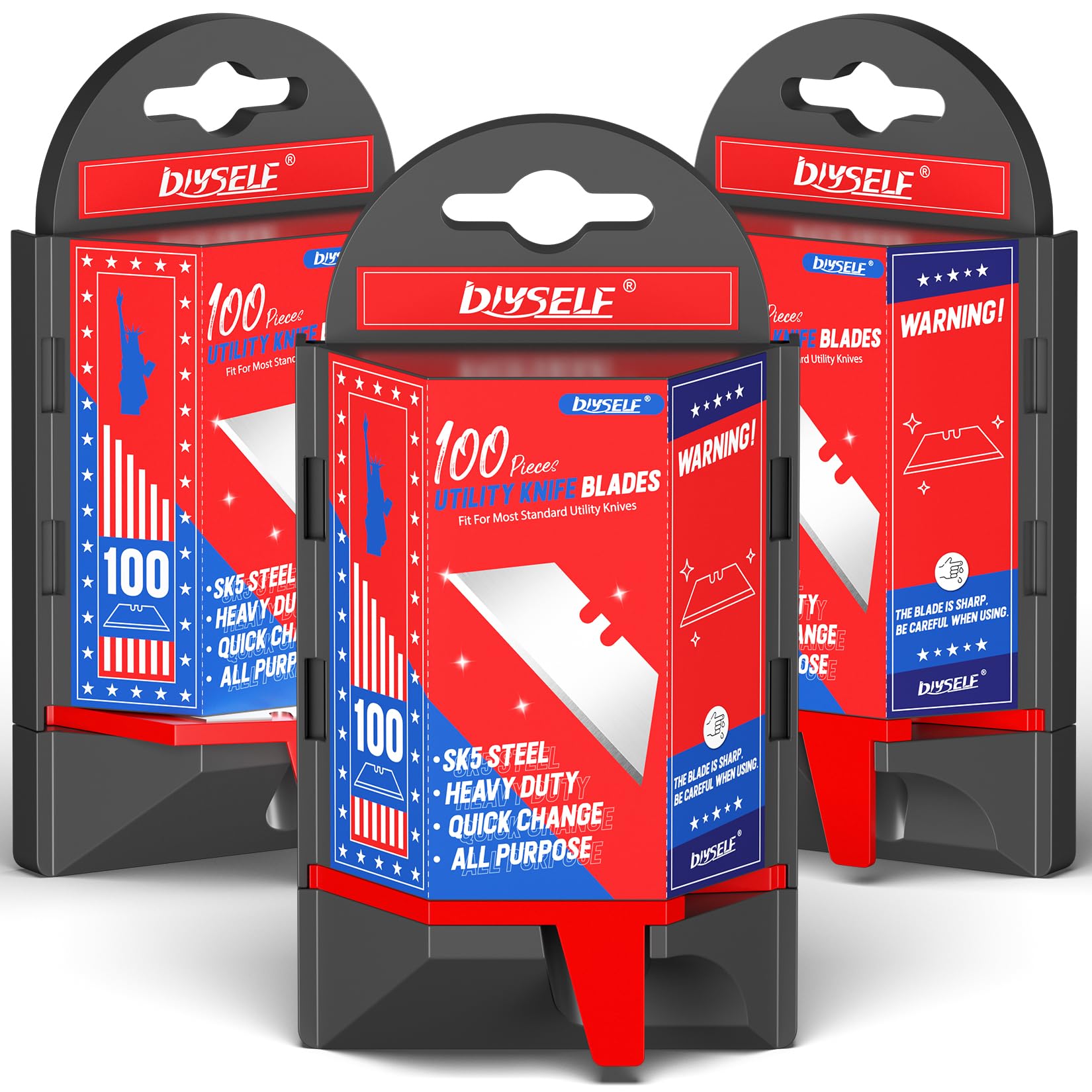
I stock the DIYSELF 300-pack when I want a long-term blade supply; SK5 steel and three dispensers keep my crew supplied through long projects.
Why I picked it: Massive 300-blade supply with multiple dispensers for extended projects.
Best for: Workshops, construction projects, and anyone who changes blades frequently.
Best option when long-term supply and low unit cost matter most.
Pros
- Huge 300-blade quantity
- SK5 steel edges
- Three dispensers included
- Dispenses one blade at a time
Cons
- Some dispensers feel flimsy
- Case durability varies
My take
I bought the 300-pack to reduce trips to refill blades during long projects. The SK5 blades are consistently sharp, and having three dispensers spread across my vans and bench keeps me ready.
The blades cut drywall, cardboard, and trim well; they behave like other SK5 blades I use. My only complaint is that the included dispensers aren’t always robust — I toss the flimsy case in favor of a magnetic tray in the shop, but the blades themselves remain high-value.
If you go through blades quickly, this bulk option saves me time and keeps projects moving without frequent reorders.
6. BLACK+DECKER Matrix Trim Saw Attachment – Best Trim-Saw Attachment
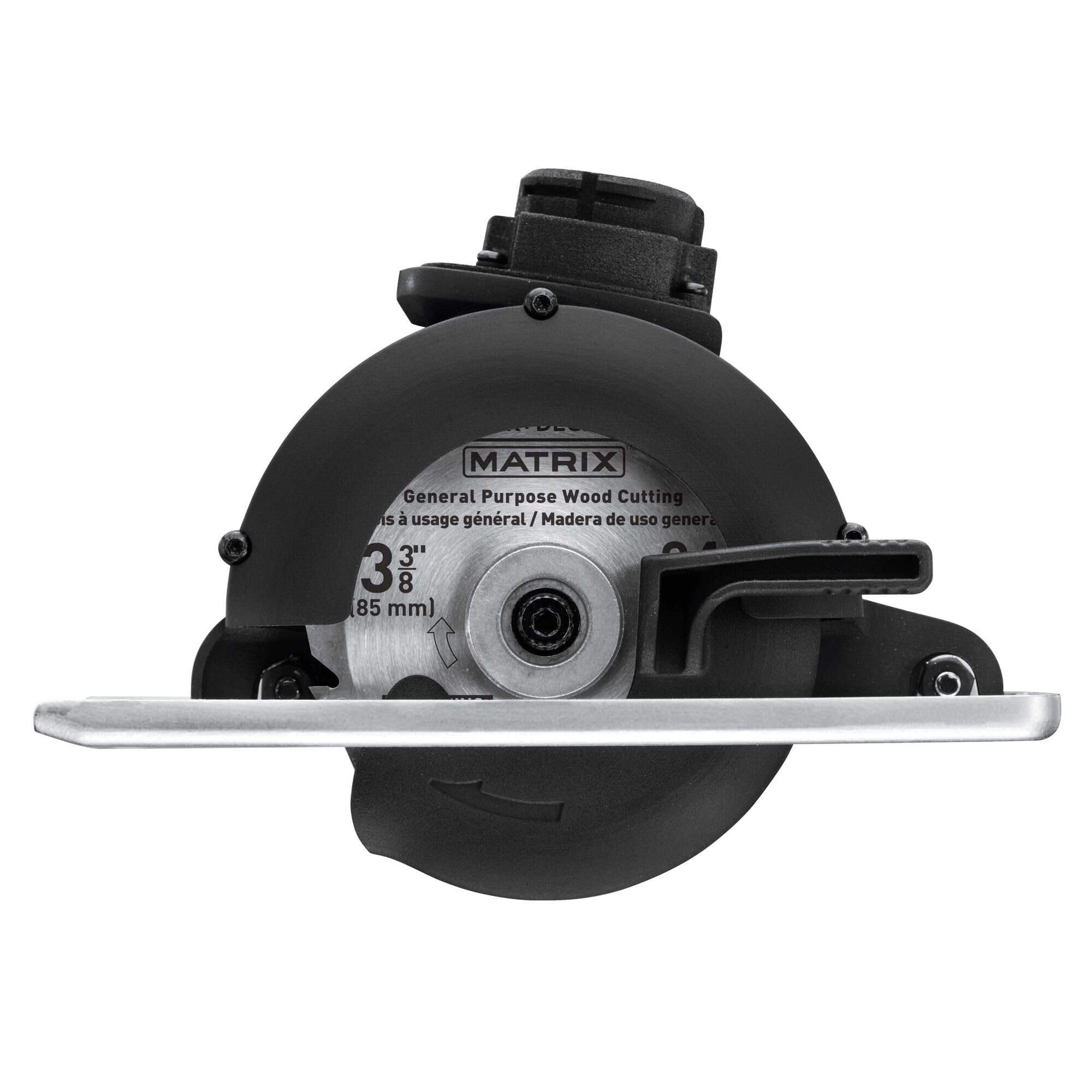
I use the Matrix trim-saw attachment when I need a compact powered option for trim, siding, and small plywood cuts that are awkward with a full-size saw.
Why I picked it: Single-handed powered trim saw that integrates with my Matrix tool system.
Best for: Small trim work, siding cuts, and precision cuts without a full circular saw.
Pricier than a basic blade, but it replaces a larger saw for small jobs.
Pros
- Compact and lightweight
- Integrates with Matrix tool drives
- Good for precise trim cuts
- Carbide blade included
Cons
- Not a replacement for full-size circular saws
- Motor bulk can be awkward in tight spots
My take
I rely on this BLACK+DECKER attachment for jobs where a full circular saw is overkill. Mounted to my Matrix drive it’s one-handed, precise, and great for cutting trim, thin plywood, and siding pieces on ladders.
The carbide blade cuts cleanly and the unit is stout — not flimsy — so I trust it for delicate cuts without worrying about tear-out. It won’t replace my 7-1/4" saw for heavy framing, but for small finish tasks it keeps things quick and tidy.
If you already own Matrix drives, this attachment saves space and adds versatility; if you don’t, factor in the need for the compatible power unit.
How I Choose a Drywall-Cutting Tool
Tool Type and Typical Use
I decide between a utility blade, jab saw, oscillating blade, or powered trim saw based on the cut. Score-and-snap and box-cutting get a utility blade. Keyholes and quick manual plunge cuts get a jab saw. If I need precise plunge cuts or must cut around nails, I grab an oscillating blade. For repeat small trim or siding cuts, I use a compact trim-saw attachment.
- Utility blades: fastest for scoring and snapping sheetrock.
- Jab saws: best for manual keyholes and confined spaces.
- Oscillating blades: ideal for plunge cuts and nail-embedded areas.
- Trim saw attachment: compact power for repetitive small cuts.
Blade Material and Edge
I prioritize SK5 steel for disposable utility blades because it balances sharpness and edge life. For powered oscillating work I prefer bi-metal blades that resist nail strikes and last longer on mixed materials.
- SK5: great balance of sharpness and cost for disposables.
- Bi-metal: better for oscillating blades and cutting through nails.
- Precision-honed edges deliver cleaner drywall cutouts.
Dispensers, Compatibility, and Convenience
I value a dispenser that dispenses one blade at a time and can be mounted on a bench. I also check that replacement blades fit the utility knives and tools I already own to avoid adapters or wasted purchases.
- Look for single-blade dispensing to reduce waste.
- Confirm blade fit with your knife or tool before buying bulk.
- Consider bulk packs if you change blades often.
Durability vs. Cost
I balance upfront cost and edge life: inexpensive blades are fine for light, one-off jobs, but bi-metal oscillating blades and branded kits pay off when I’m cutting through nailed material or running frequent cuts.
- Buy bulk SK5 packs for workshops and frequent blade swaps.
- Choose bi-metal or branded oscillating blades for heavy or mixed-material work.
Safety and Storage
I keep used blades in a dedicated disposal slot or a metal tin and store sharp spare blades in a dispenser to avoid accidental cuts. For foldable saws, I always lock the blade before tossing the tool in my bag.
- Use dispensers or blade bins for used blades.
- Lock folding saws before storage.
- Wear gloves and eye protection when plunge-cutting.
Frequently Asked Questions
Which blade type should I use for clean drywall cutouts?
I use a precision-honed utility blade for score-and-snap cuts and a jab saw for hand-cut keyholes; if I need a plunge cut near studs or nails I choose an oscillating bi-metal blade.
How often do I need to swap utility blades when cutting drywall?
I change blades as soon as cuts start to tear rather than slice; with SK5 blades that typically means swapping more often during heavy use but each blade is inexpensive to replace.
Is a trim-saw attachment worth it for occasional drywall work?
I find the attachment worthwhile if I already own the compatible Matrix drive or if I do lots of trim and siding cuts; it’s handy and precise but not a substitute for a full-size circular saw on big framing cuts.
Final Take
I use a combination of these tools depending on the task: SK5 utility blades for fast score-and-snap work, the Goldblatt jab saw for keyholes, the DEWALT oscillating kit for nail-resistant plunge cuts, and the Black+Decker Matrix attachment for compact powered trim.
I keep bulk blades in my van and a few specialist blades in my bag so I can switch from quick manual cuts to precise powered work without losing time. Pick the tool that matches the job and you’ll finish cleaner, faster, and with less wasted material.
