
I tested a range of toy organizers — bins, chests, fabric cubes and wall shelves — and picked durable, kid-friendly options that actually make cleanup easier.
I’ve spent time setting up each of these organizers in real playspaces so I know which styles actually help with everyday cleanup. My picks cover low-profile shelves, stackable novelty bins, foldable chests and multi-bin towers, so you can match storage to your room and habits.
Across these options I focused on stability, kid accessibility, safety of materials, and how easy each unit makes putting toys away. Below I explain why I picked each one and how I use them at home.
I grouped organizers by function — open bin towers for quick sorting, chests for large-volume storage, fabric cubes for shelves/closets, and wall shelves for floor-free display.
1. HoneyCanDo Kids Toy Storage Organizer – Best for Teaching Cleanup
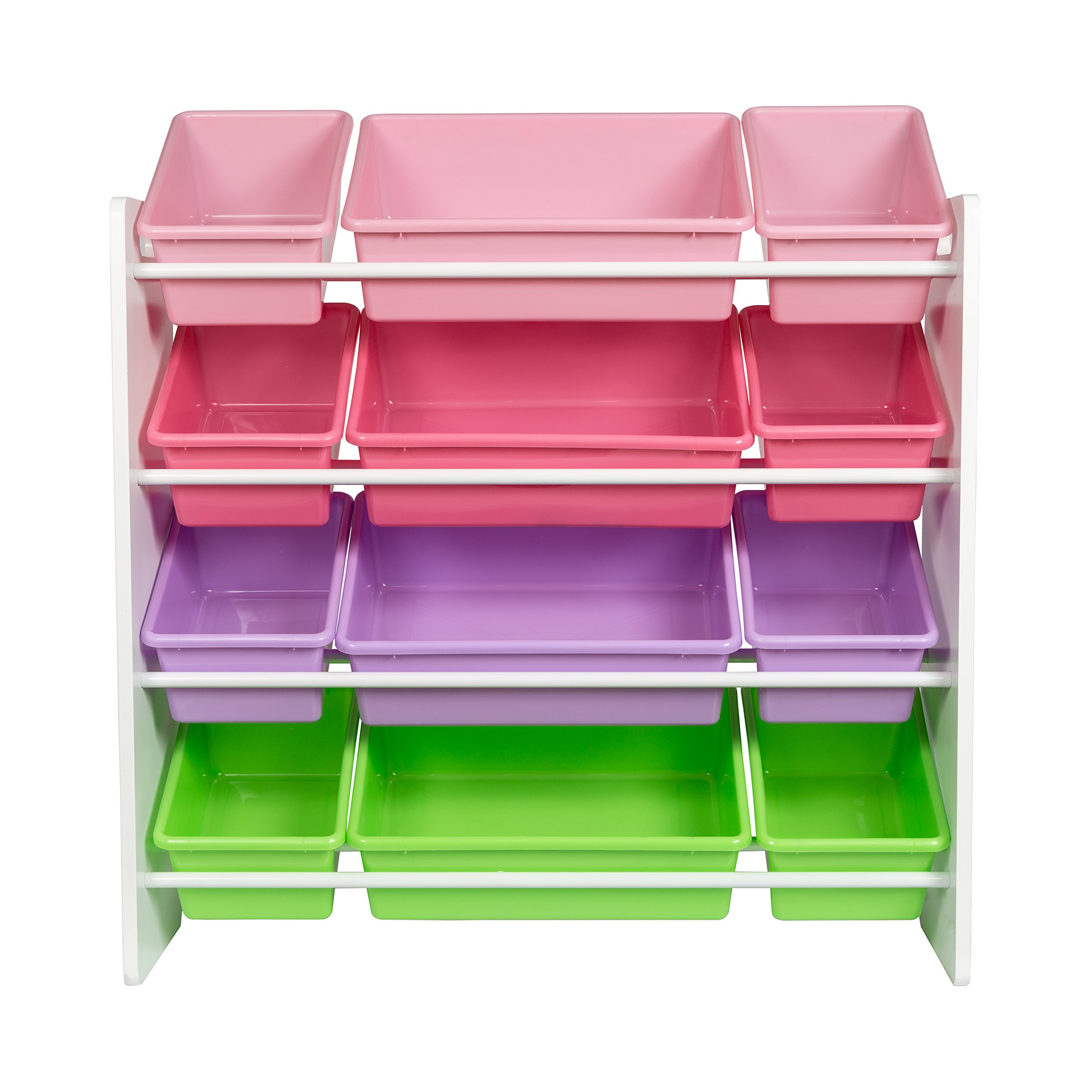
A four-tier organizer with 12 plastic bins in two sizes and four colors that’s wall-mountable and sized for toddlers.
Why I picked it: I liked the dozen bins and wall-mount option that help make sorting intuitive for little hands.
Best for: Toddlers learning to sort toys and small play areas that need compact vertical storage.
Moderately priced and excellent value for a 12-bin system.
Pros
- Twelve removable plastic bins
- Wall-mountable for safety
- Bins free of BPA and PVC
- Sturdy wood frame
- Perfect kid-height
Cons
- Not for very large toys
- A bit top-heavy without anchoring
My take
I set this organizer in my toddler’s play corner and liked that the bins come in two sizes and four colors — it makes assigning categories fast. The unit stands about three feet tall and sits slimly against the wall, which is great when floor space is tight.
Assembly was straightforward and quick. Once anchored to the wall it felt stable even when my child reached for the top bins. The plastic trays are deep enough for blocks, small figures, and craft supplies, and I appreciate that they’re free of BPA, lead, phthalates, and PVC.
In practice I use the large bins for bulky toys and the small ones for dress-up pieces and puzzle parts. The only caveat: if you skip the wall anchor it can feel a little top-heavy when emptied or heavily loaded on one side, so I always secure it.
2. Step2 2-in-1 Toy Box & Art Easel – Best for Creative Play
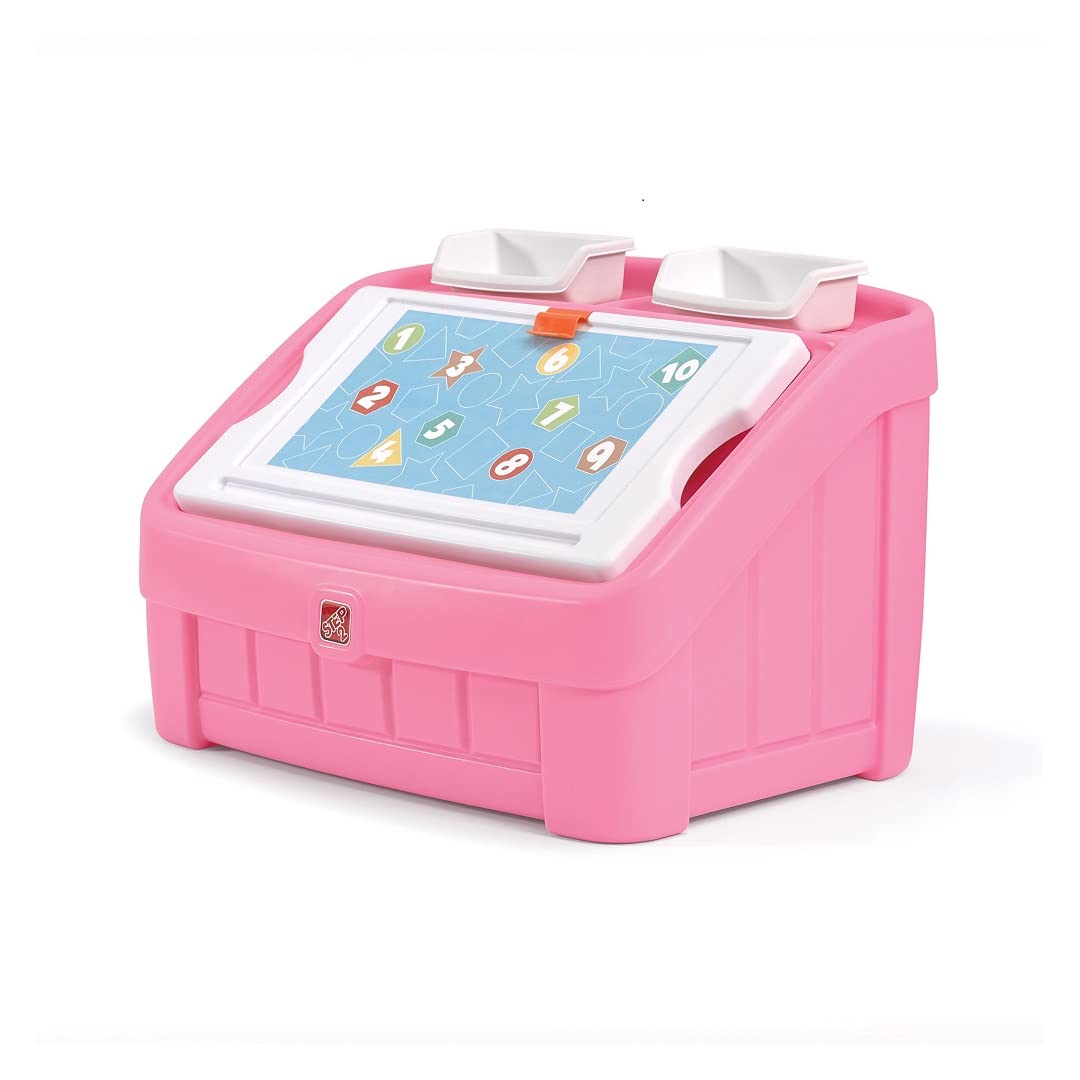
A molded plastic toy chest whose removable top doubles as an easel with a clip, offering interior storage plus a creative surface.
Why I picked it: I wanted a storage solution that doubles as a play surface, and the easel lid makes art time and cleanup one place.
Best for: Homes that need combined toy storage and a kid-height art station.
A practical mid-range choice that lasts through toddler years.
Pros
- Easel lid with paper clip
- Large interior capacity
- Removable top bins
- Durable molded plastic
- Easy to clean
Cons
- Not ideal for very large toys
- Kids may climb inside
My take
When I put this in our family room I immediately liked that the lid doubles as an easel with a clip to hold paper. That makes art and display simple — finished drawings hang up, and the lid stores away when not in use.
The interior holds a surprising amount; the box provides a deep cavity for stuffed animals, blocks and art supplies. Ours arrived fully assembled, which made bringing it into the house effortless, and the molded plastic cleans up with a quick wipe.
It’s sturdy enough to take daily play, but I treat the lid as a work surface rather than a seat. For families who want both storage and a kid-sized creative station, this one combines them cleanly.
3. LEGO Storage Head (Mini) – Girl – Best for Small Parts
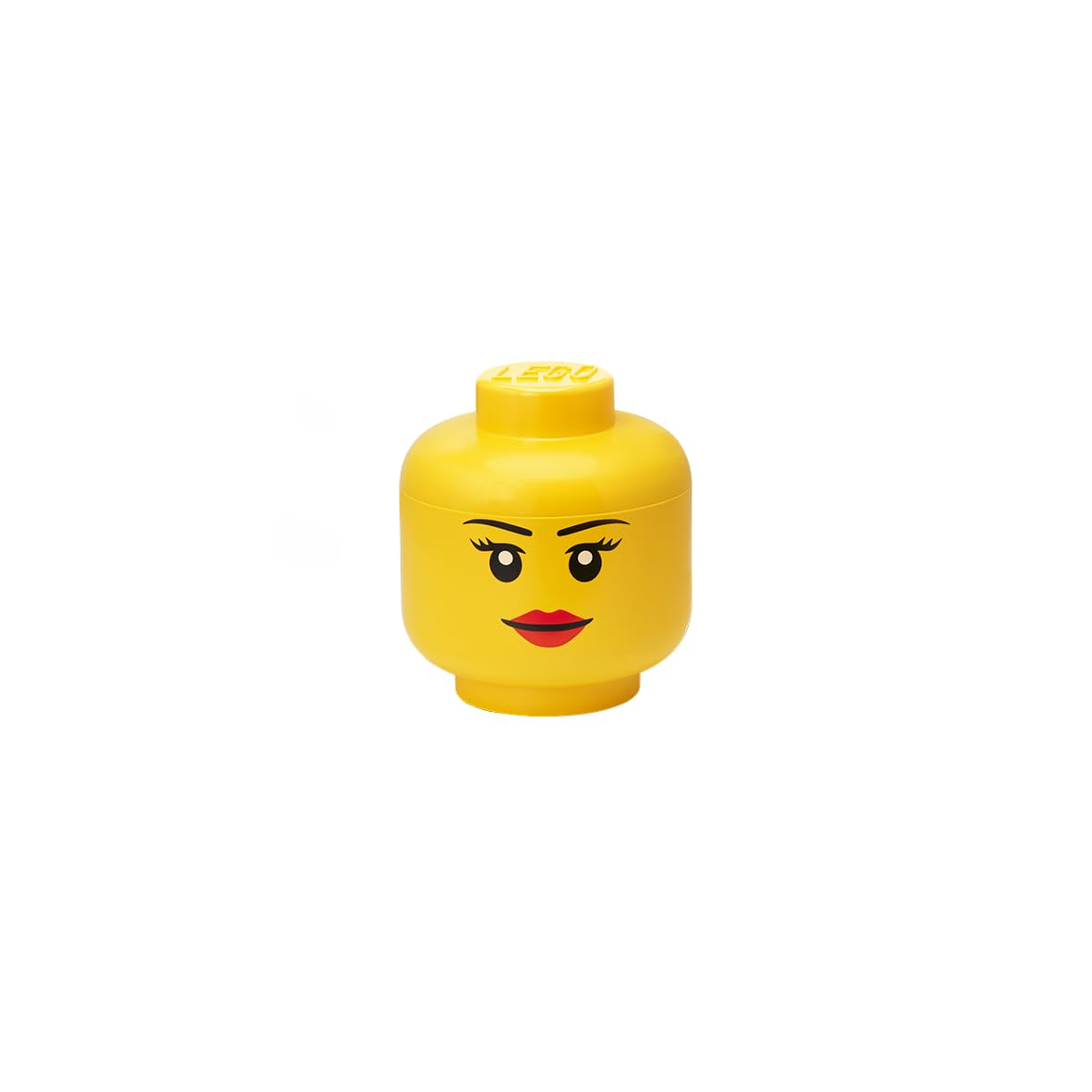
A stackable, officially licensed mini LEGO head that makes storing bricks and tiny parts playful and visual.
Why I picked it: I gravitated to the stackable novelty — it turns cleanup into play while keeping minifigures and small pieces contained.
Best for: Separating LEGO projects, minifigures, and other small parts on shelves or in cubbies.
An inexpensive way to add character storage to a playroom.
Pros
- Stackable lids
- Official LEGO design
- BPA-free plastic
- Cute decorative piece
Cons
- Mini size holds limited pieces
- Lid can be tight for young hands
My take
I use these mini heads to corral loose bricks and tiny accessories; they make sorting fun and look like decor on a shelf. The lids stack securely, so you can build a small tower of storage when space is limited.
They’re hand-sized, so don’t expect them to swallow large projects, but they’re ideal for minifigures and small builds. One thing I learned: leave them inside away from direct sun to avoid color fading over time.
If you want playful, stackable containers that double as room accent pieces, these heads are a quick and cheerful solution.
4. 3 Sprouts Large Toy Chest – Best Collapsible Chest
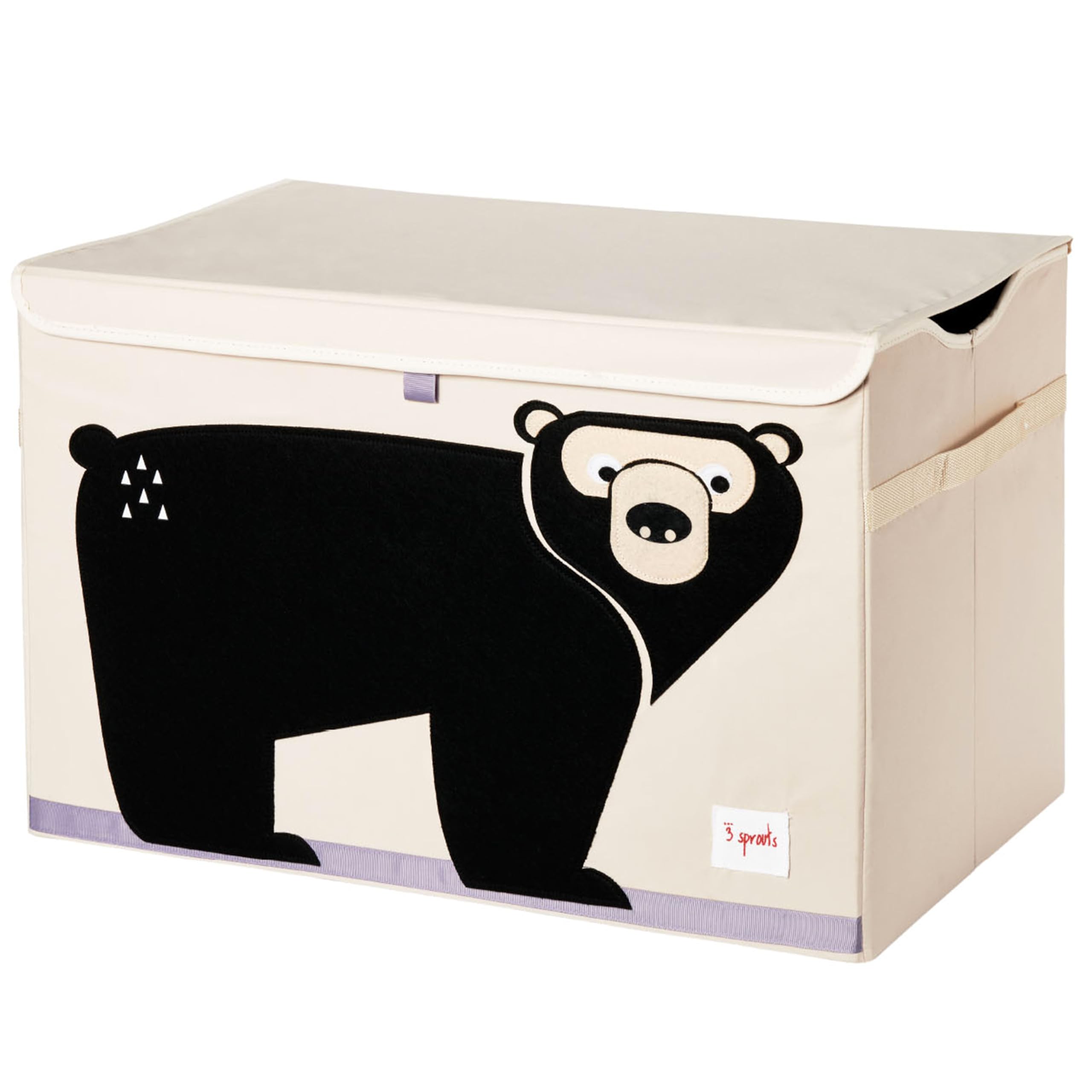
A foldable fabric toy chest with reinforced sides, a lid, and carrying handles — lightweight and decorative for nursery spaces.
Why I picked it: I picked this for its collapsible convenience and charming patterns that fit a nursery without bulky furniture.
Best for: Soft toys, books and seasonal storage where portability and a cute look matter.
An affordable, stylish storage option that’s easy to tuck away.
Pros
- Collapsible for storage
- Adorable animal designs
- Reinforced sides when filled
- No assembly required
Cons
- Lid can fall inward if empty
- Not for heavy climbing or large toys
My take
I put this fabric chest in our nursery and appreciated that it needs no assembly — it’s ready to use right out of the box. The reinforced cardboard sides hold shape when the chest is reasonably filled, and the lid keeps toys out of sight.
It’s lightweight and easy to move by the side handles, which I use when rotating toys between rooms. Be mindful to avoid letting kids climb on it or overfilling it continuously; the fabric/cardboard construction will lose form under sustained heavy pressure.
For anyone wanting a cute, fold-flat chest that’s gentle on space, this does the job well for soft items and books.
5. TMNT Mutant Mayhem Storage Cubes (Set of 2) – Best Character Bins
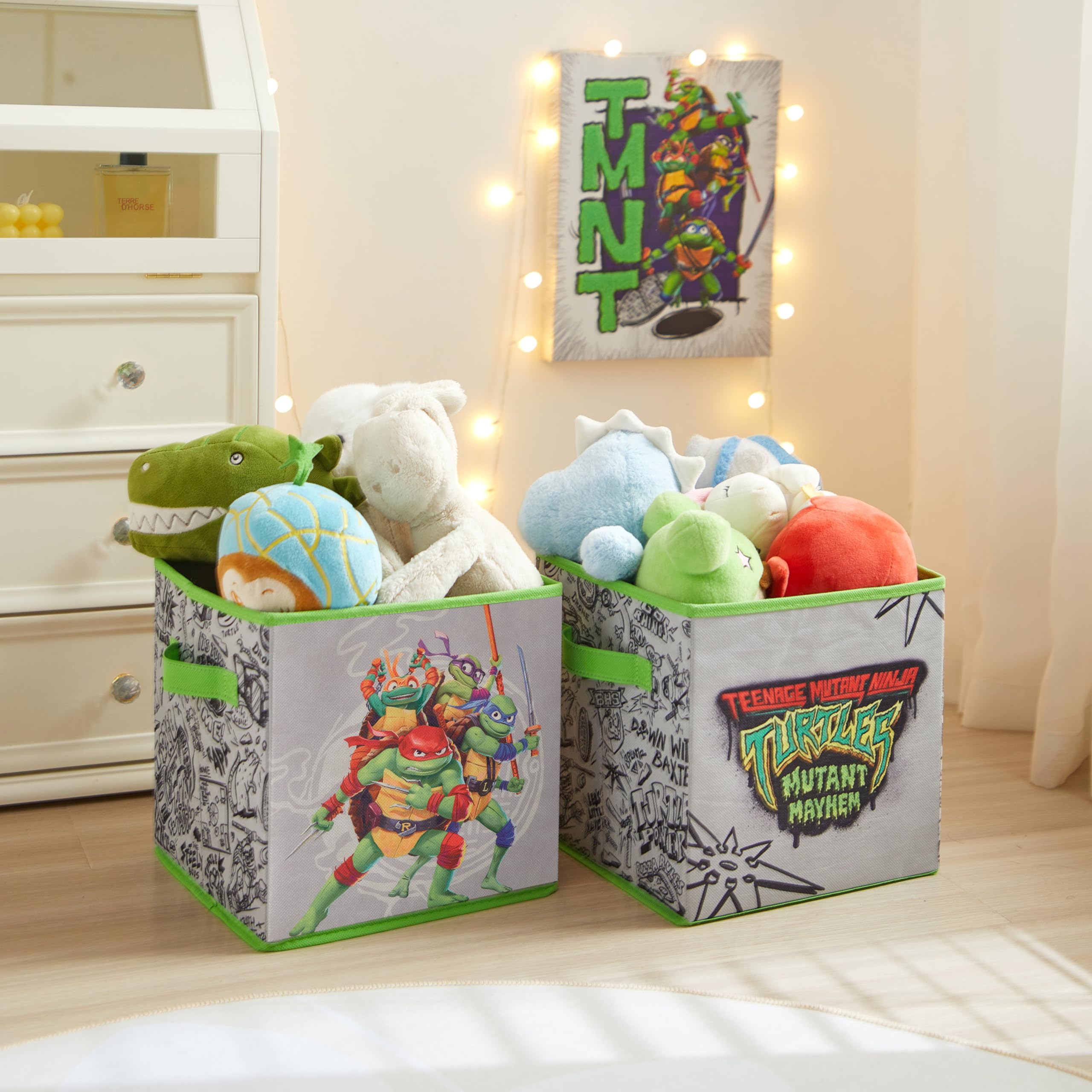
Two 10×10 collapsible fabric cubes with Teenage Mutant Ninja Turtles graphics, reinforced handles and shelf-friendly sizing.
Why I picked it: I picked these for themed rooms where character appeal encourages kids to put things away.
Best for: Closets, cubby systems and shelves where you need lightweight, foldable bins.
Low-cost, decorative storage that tucks away when not needed.
Pros
- Bright character graphics
- Collapsible for storage
- Reinforced carry handles
- Fits most cubby shelves
Cons
- Not rigid — for light items
- Not intended as a toy
My take
I shelved these cubes in my child’s closet and they instantly made soft toys and books easier to organize. The 10-inch cubes fit standard cubby units and the reinforced handles make pulling them out simple.
They’re made from a non-woven fabric that cleans easily with a damp cloth and folds flat when I need to stash them. They’re not a rigid solution — they’re best for lightweight toys, clothing, or as an accent to a themed room.
If you want cute, space-efficient bins that kids recognize and respond to, these character cubes deliver.
6. Delta Children 12-Bin Toy Organizer – Best Durable Option
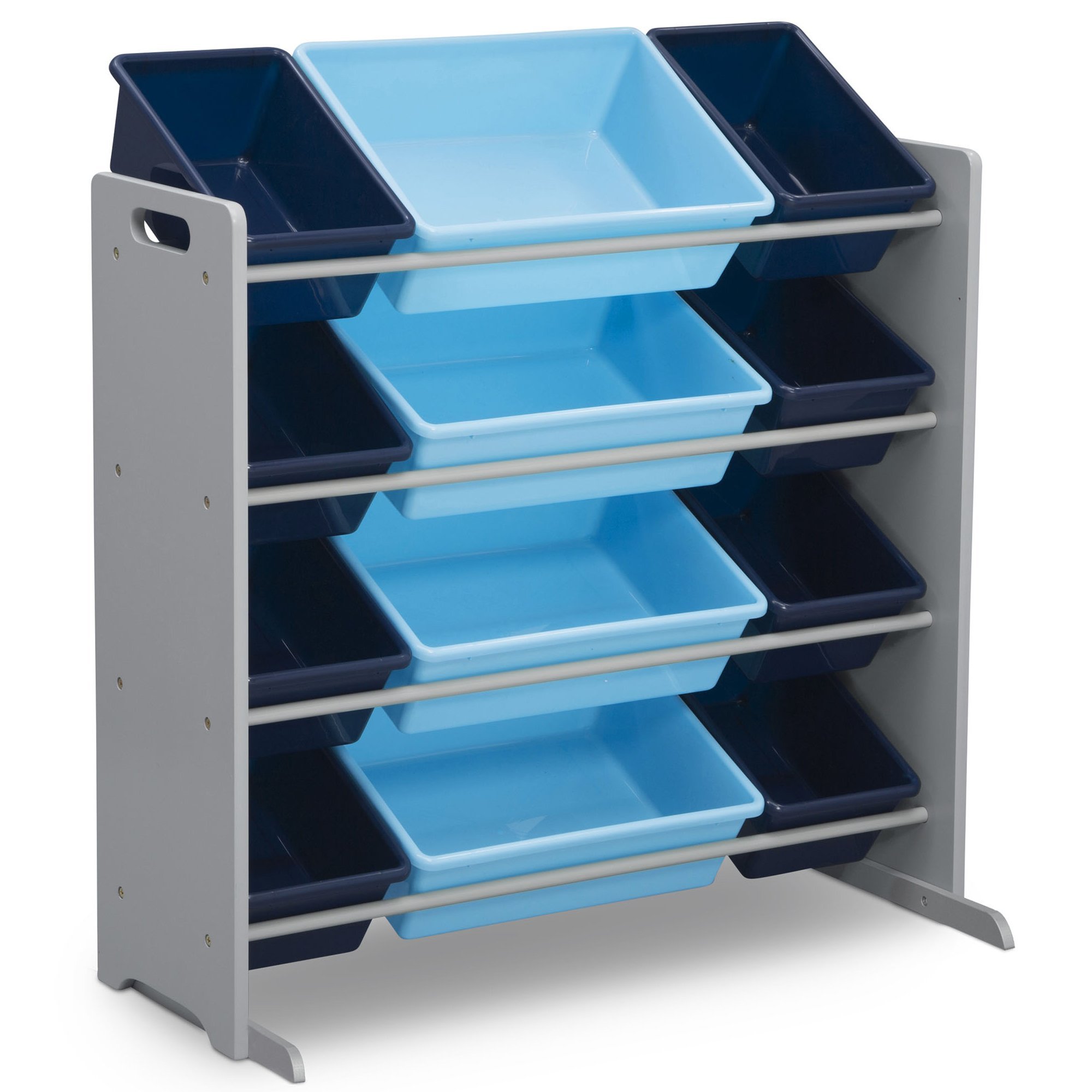
A Greenguard Gold–certified wood-frame organizer with twelve heavy-duty plastic bins in two sizes, sized for easy kid access.
Why I picked it: I trusted the solid wood frame and non-toxic finish for a high-traffic playroom.
Best for: Families who want a sturdy, kid-height organizer that coordinates with other furniture.
A strong-value choice that balances durability and safety certifications.
Pros
- Greenguard Gold certified finish
- Sturdy wooden frame
- Two bin sizes included
- Kid-height, easy access
Cons
- Bins are lightweight plastic
- Check for shipping damage on arrival
My take
I assembled this organizer in about twenty minutes with a Phillips head; the build is straightforward and the final unit feels solid. The four rows are set at a kid-friendly height so children can see and reach toys without help.
The bins rearrange easily, which I use to separate books from games and stuffed animals. The non-toxic, multi-step painting process and certification gave me extra peace of mind for a unit that sees a lot of daily use.
Overall I find it to be a practical, durable option that fits playrooms and coordinates with other kid furniture in the same color families.
7. CLCROBD Foldable Toy Chest (Lion) – Best for Nursery Decor
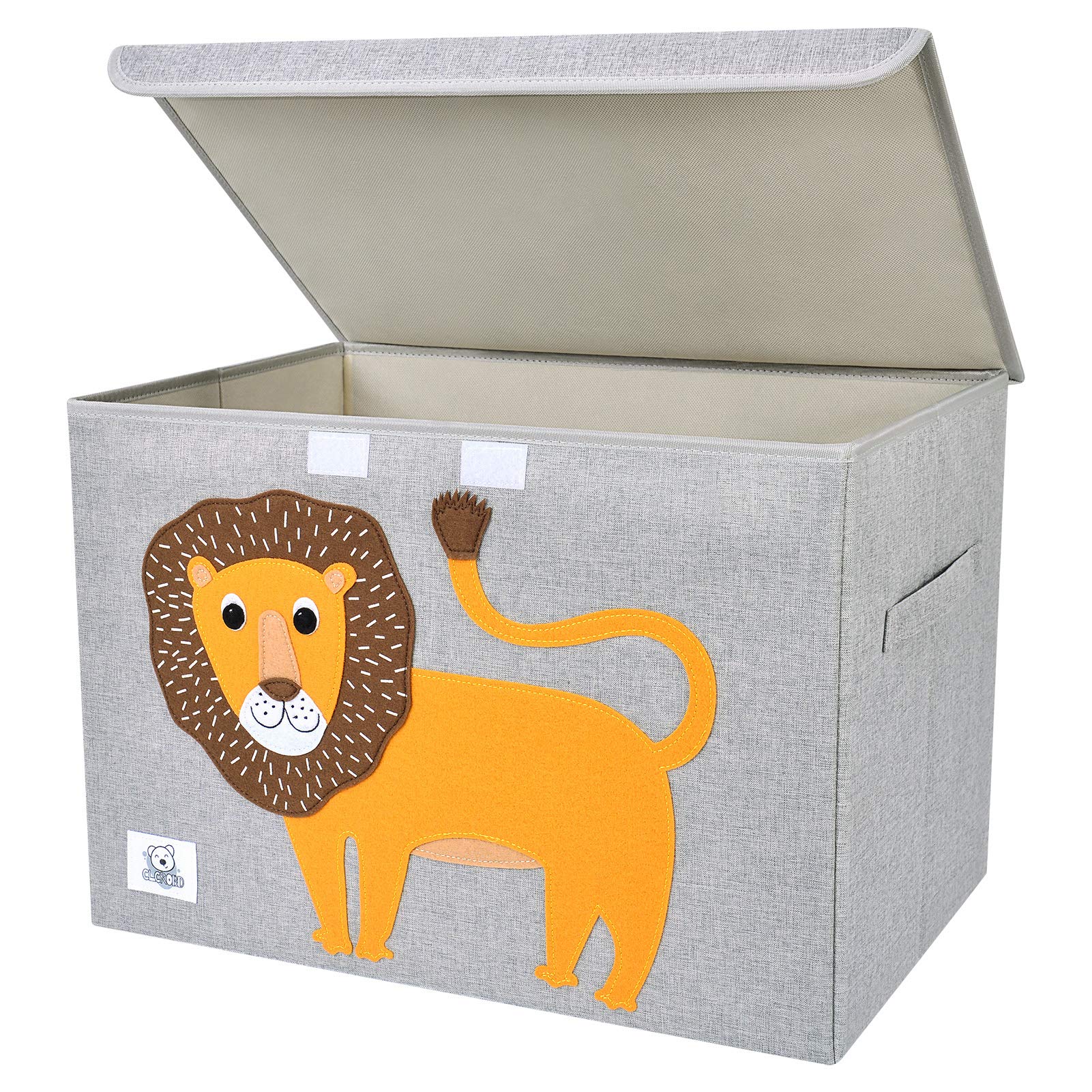
A 100% polyester, collapsible toy chest with animal applique, reinforced cardboard panels and side handles — sized for nursery use.
Why I picked it: I chose this for its friendly look and portability in a nursery setting.
Best for: Nurseries and toddler rooms that need cute, lightweight storage.
Budget-friendly and easy to replace if needs change.
Pros
- Playful animal applique
- Collapsible for storage
- Sturdy reinforced panels
- Easy to wipe clean
Cons
- May misshape under heavy weight
- Not for rough climbing play
My take
I placed this chest in my toddler’s room and found it surprisingly roomy for its soft construction. The reinforced cardboard keeps the sides upright when filled, and the handles make it easy to move between rooms.
Assembly is minimal and it folds flat for storage or travel. I would avoid storing very heavy items or letting a child stand on the lid, since that will deform the internal panels over time.
If you want a decorative, lightweight trunk that’s gentle on small spaces, this one fits well.
8. Forbena Floating Shelves (Set of 4) – Best for Wall Storage
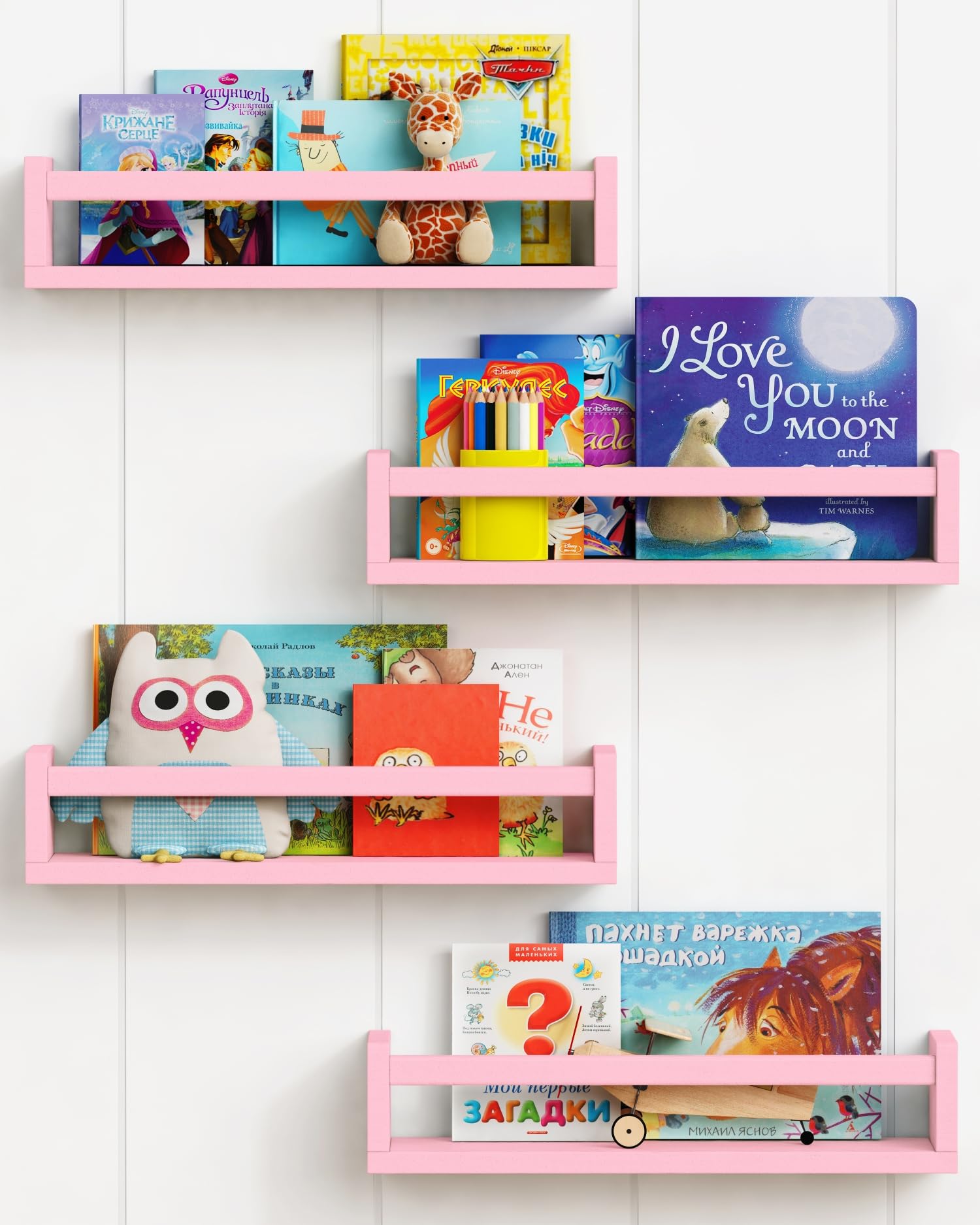
A set of four pine wood floating shelves designed for displaying books, toys and decor while freeing up floor space.
Why I picked it: I value floor-free storage for small rooms and these shelves create a front-facing book display that encourages independent grabbing.
Best for: Nurseries, kids’ bedrooms and small rooms where floor space is at a premium.
Affordable multi-shelf kit that adds a decorative touch.
Pros
- Saves floor space
- Front-facing book display
- Solid pine construction
- Set of four shelves
Cons
- Requires wall installation
- Some off-gassing possible initially
My take
I installed the four shelves to create a book wall above a crib and found the included template and hardware made alignment simple. The front-facing design makes books easy for kids to choose on their own, which I’ve seen encourage more independent reading.
They’re solid pine and hold a good number of board books and small toys. One precaution: I noticed a strong off-gassing smell at first, so I left them in a ventilated room for a few days before putting them in the nursery.
If you want to reclaim floor space and create an organized, attractive display, these floating shelves are a smart pick.
How I Picked and Use Toy Organizers
Match storage style to the room
I choose an organizer based on whether I need floor-free display, quick-access bins, or bulk containment. Wall shelves are great for books; bin towers make sorting immediate; chests hide clutter and handle large stuffed toys.
- Use floating shelves to save floor space and display books front-facing.
- Pick multi-bin towers when you want kids to sort by color or toy type.
- Choose chests for overnight cleanup and bulky items.
Size, capacity and placement
I always measure the intended spot and consider the unit’s height as kid access matters more than overall volume. A child-sized height encourages independent clean-up.
- Measure doorway and placement before ordering.
- Look for kid-height tiers so children can reach without climbing.
- Consider depth: narrow units save space but limit large toys.
Materials and safety I watch for
I pick materials that are easy to clean and non-toxic. For freestanding units, wall anchors add important stability, and soft fabric chests should be used for light items rather than as seats.
- Prefer BPA-/phthalate-free plastics and certified finishes.
- Anchor tall units to the wall to prevent tipping.
- Avoid fabric chests for heavy or climbing-prone use.
Practical setup and maintenance tips
I keep a label system or color code for quick sorting and rotate toys seasonally to avoid overfilling. For wall shelves, ventilate new wood products to reduce off-gassing before putting them in a nursery.
- Label bins or use color-coding for categories.
- Rotate toys to keep interest and reduce clutter.
- Wipe plastic and fabric bins regularly to prevent buildup.
Frequently Asked Questions
What organizer type helps toddlers learn to clean up?
I recommend open bin towers at child height because they make sorting visible and immediate, which encourages kids to participate in cleanup.
Are fabric toy chests durable enough for daily use?
Fabric chests work well for soft toys and light items; I avoid them for heavy toys or as seating because reinforced panels can lose shape with constant heavy pressure.
Do I need to anchor taller organizers?
Yes — I always anchor tall or narrow units to the wall for stability, especially in homes with curious toddlers who like to pull or climb.
Final Take
After using each option in real rooms, I picked organizers that balance accessibility, safety, and style. Whether you want a playful character bin, a sturdy multi-bin tower, or wall-mounted shelves to save floor space, there’s a practical choice here.
I keep a mix of these solutions on hand: open bins for everyday sorting, cubes for shelves and themed rooms, a chest for quick hide-and-seek cleanup, and wall shelves to encourage independent book selection.
