
I've tested a range of kid trampolines—from tiny indoor rebounders to full backyard rigs—and I kept things simple: safety features, build quality, and real-world bounce. Here are the ones I recommend for toddlers through
I evaluated trampolines that parents actually use: small indoor models for toddlers, foldable rebounders for apartments, and full-size backyard frames that stand up to serious jumping. I focused on safety design, durability, ease of assembly, and how the bounce feels for kids of different ages.
Below I break down which trampoline I’d pick depending on the child, the yard, and the type of play we want—plus quick pros and cons so you can scan fast.
I prioritized safety-first features (no-gap nets, secure handles, ASTM/CPSIA mentions) and realistic setup times. For big trampolines I watched for reinforced frames and multi-year warranties; for small trampolines I focused on quiet, joint-friendly bounce and stability.
1. Little Tikes 3′ Trampoline – (Amazon Exclusive) – Best for Toddlers (Indoor)
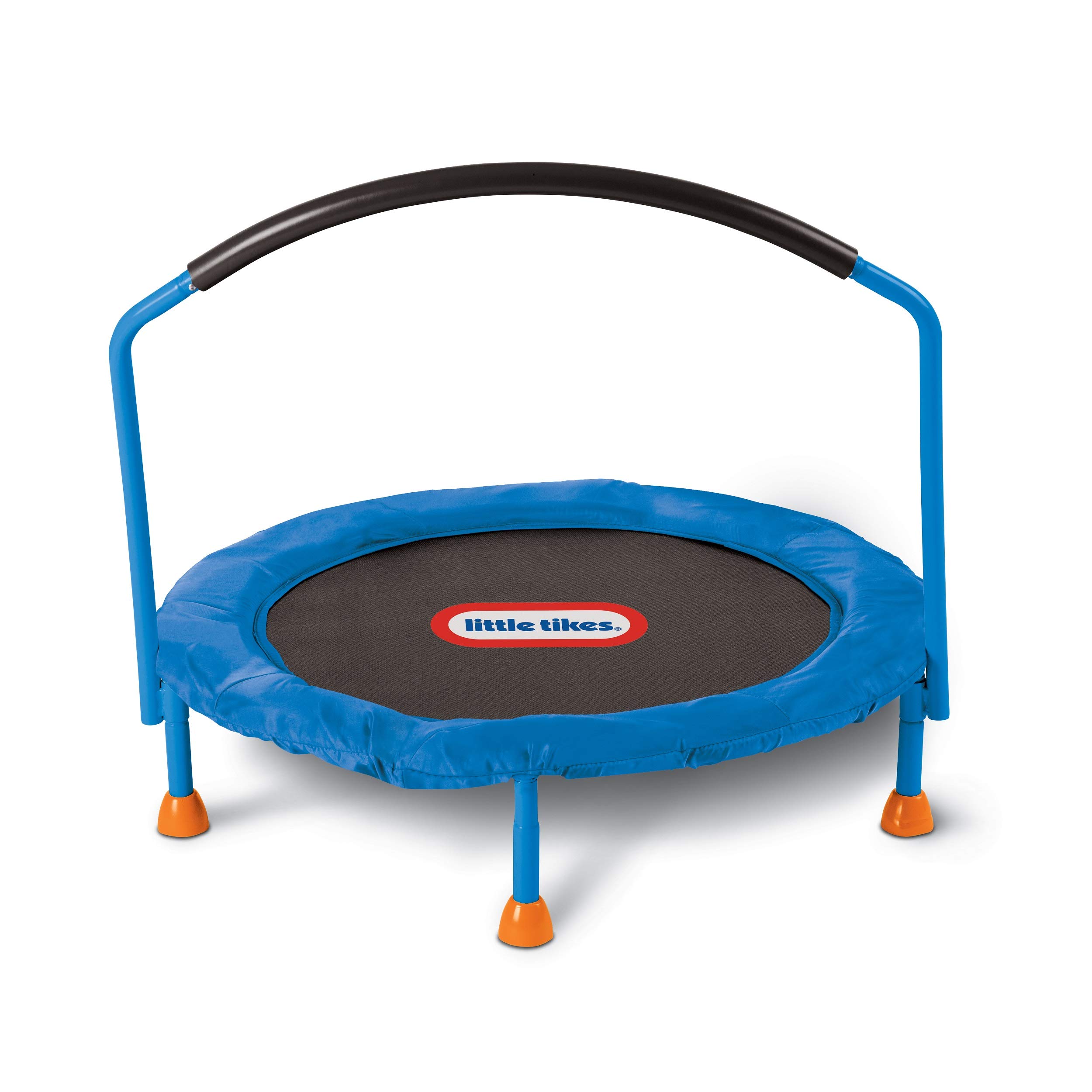
A compact indoor trampoline built for toddlers with a full-width handlebar and elastic webbing that trades harsh springs for a safer, controlled bounce.
Why I picked it: Perfect toddler footprint and a wide handlebar that helps little ones build balance safely.
Best for: Toddlers learning to bounce and families needing an indoor energy burner.
Affordable, entry-level indoor option.
Pros
- Easy to assemble
- Full-width stability handle
- Safer elastic webbing instead of springs
- Compact size for small rooms
Cons
- Indoor use only
- 55 lb weight limit
- Handle foam can wear or tear
My take
I put this in our playroom for nap-time prep and it’s become my go-to for quick energy release. The 3-foot diameter keeps jumping contained, and the handlebar spans the mat so toddlers can hold on while they learn to bounce.
The trampoline uses elastic webbing rather than metal springs, and I noticed the bounce feels firmer at first and softens with use—exactly what I want for a little one learning control. Assembly is straightforward: legs and handle attach in minutes.
Be aware this is strictly an indoor product with a 55-pound limit. I also wrapped the handle foam after a few weeks because my toddler chewed a small patch, so plan for light upkeep if your child mouths toys.
2. Zupapa 16FT Trampoline with Safety Enclosure (No-Gap Design) – Best Backyard Powerhouse
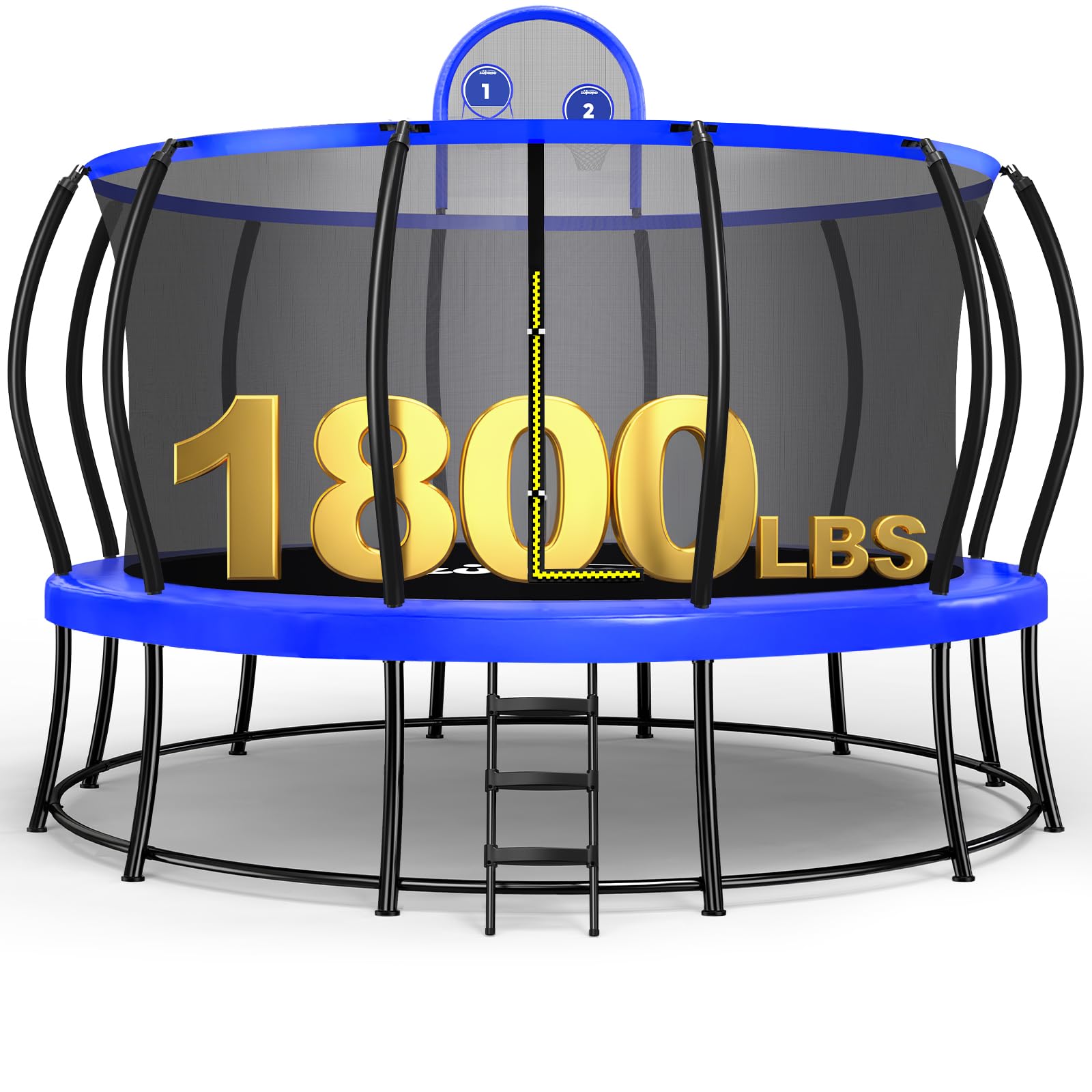
A heavy-duty round trampoline that emphasizes stability and safety: dual-frame design, no-gap enclosure, curved poles, and adjustable hoops for long-term backyard use.
Why I picked it: Dual-frame stability and patented no-gap safety make it a backyard centerpiece I trusted for active kids.
Best for: Large yards and families who want high-capacity, safe outdoor jumping.
More expensive, investment-level backyard trampoline.
Pros
- Dual-frame lowers tipping risk
- No-gap safety connection
- High weight capacity
- Adjustable basketball hoops
Cons
- Large footprint
- Assembly can be time-consuming
- Net pole sleeves are tedious
My take
I installed the 16-foot model in my backyard and immediately noticed the frame feels heavier and more rigid than typical consumer trampolines. The dual-frame design lowers the center of gravity and gives a reassuringly solid bounce.
The no-gap net connection is the feature I appreciated most—there’s no separation between the mat and netting, so kids stay away from springs during energetic play. The curved poles also keep the enclosure away from the jumping area, which reduces collisions.
Assembly isn’t instant; with two people I finished in a few hours. The manufacturer’s snap-button parts and pre-attached mat speed things up, but sliding the foam sleeves into the net poles is the slow part. Once built, it’s a durable, bouncy backyard platform that handled multiple kids without sagging.
3. SKOK Trampoline for Kids, 8FT – ASTM Approved (Pink) – Best Small Outdoor Trampoline
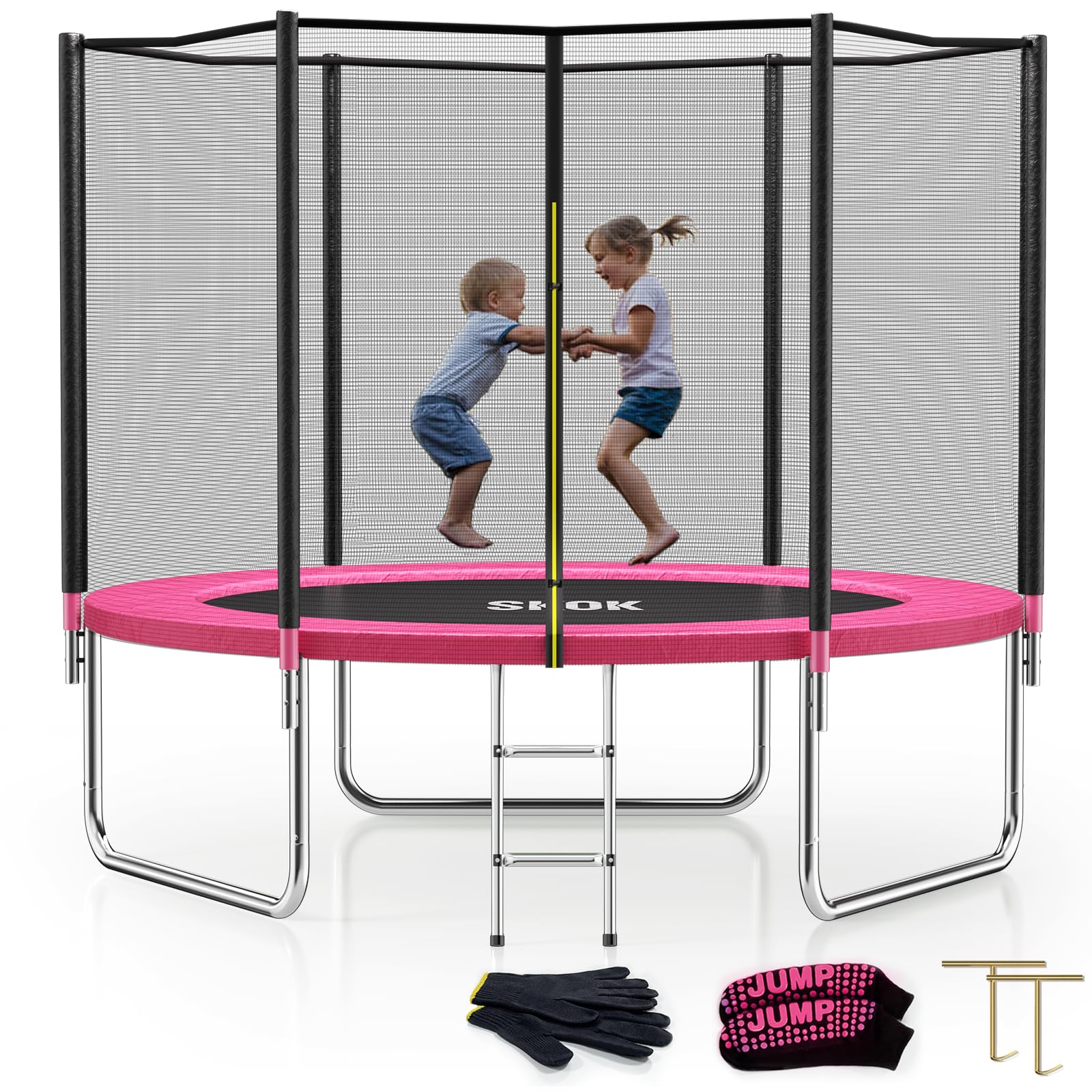
An ASTM-compliant 8-foot trampoline with solid hardware, 360-degree enclosure, and heavy-gauge springs that deliver lively bounce in a compact footprint.
Why I picked it: ASTM safety details plus a tall, fully enclosed net made it my pick for safe backyard bounce in small yards.
Best for: Families who need an ASTM-standard small trampoline with excellent enclosure safety.
Mid-range compact outdoor option.
Pros
- ASTM safety compliance
- Full-height safety enclosure
- Heavy galvanized springs
- Includes ladder
Cons
- Some hooks can stretch
- No included ground stakes sometimes
- Assembly tools feel basic
My take
I bought the 8-foot SKOK for my smaller yard and liked how high the enclosure is—59 inches gives plenty of buffer for active kids. The double zippers and safety buckles add confidence when checking that the entry is secure.
The 42 galvanized springs give a lively, responsive bounce that my older child enjoyed, while the thick foam around the frame leaves no dangerous gap. Assembly took about an hour for me when I followed the hook-attaching sequence they suggest; the supplied spring tool is helpful but I still used a stronger wrench for bolts.
Minor downsides: I didn’t get staking hardware in my shipment, so I used sandbags and concrete stakes in windier conditions. I also noticed one consumer note about hooks stretching over time—something I’ll watch during seasonal inspections.
4. ATIVAFIT 36-Inch Toddler Trampoline with Foam Handle (Foldable) – Best for Small Spaces
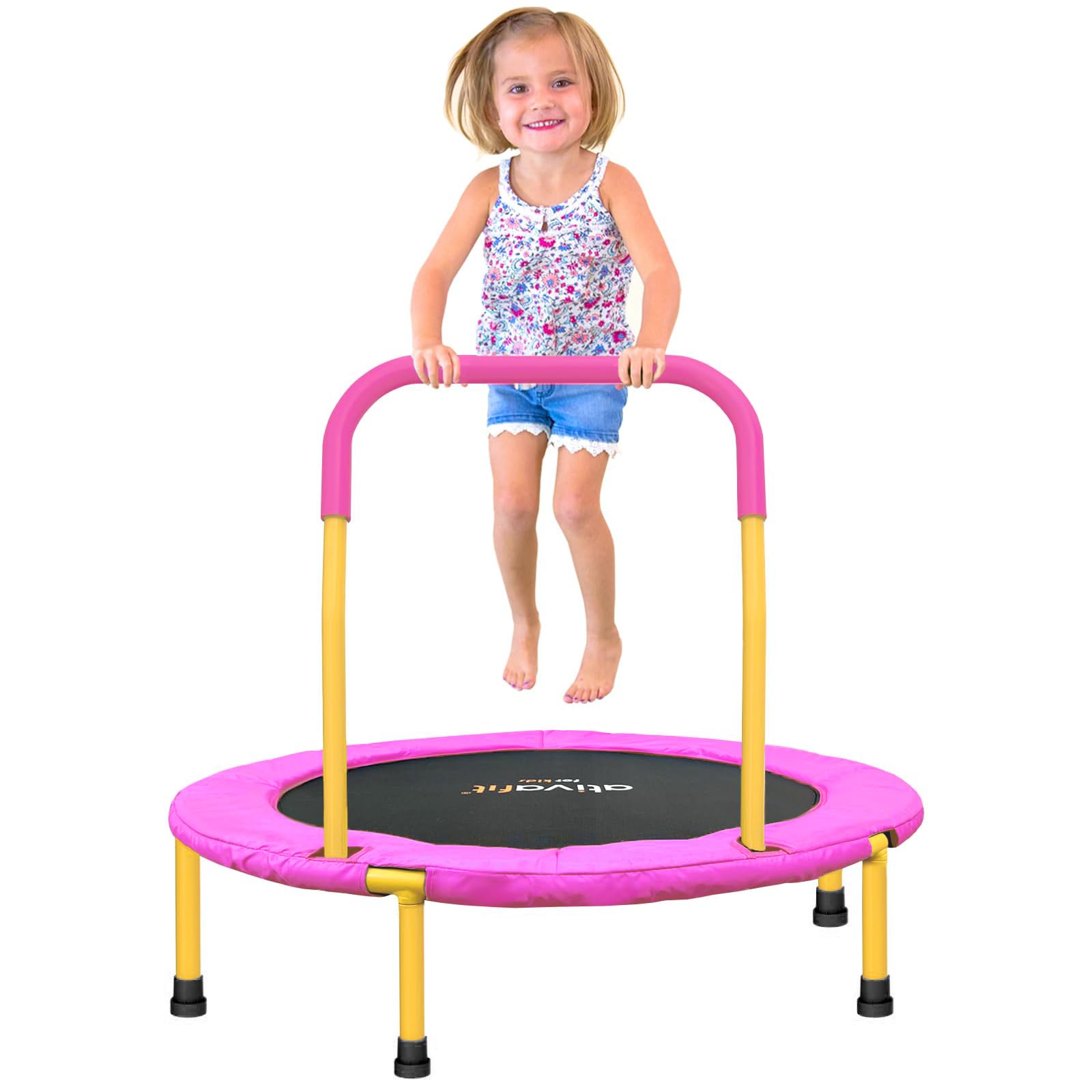
A foldable mini rebounder with a soft-handle and elastic band system that delivers a quiet, joint-friendly bounce—great for apartments and small playrooms.
Why I picked it: Foldable design and quiet elastic bounce make it ideal where space and noise are concerns.
Best for: Indoor use, apartments, and toddlers building balance and coordination.
Budget-friendly, space-saving pick.
Pros
- Quiet, low-impact bounce
- Folds flat for storage
- Stable 6-leg base
- Soft foam handle
Cons
- Folding is awkward
- Not for older/heavier kids
- No safety enclosure
My take
I keep this one in our closet and bring it out when rainy days hit. The elastic band system is noticeably quieter than springed rebounders, so it works well in apartments and baseline noise-sensitive homes.
The six-leg frame and safety locks feel stable for toddlers learning to balance, and the foam handle gives them confidence as they bounce. Assembly required no tools at all, and folding it for storage is useful—though not as effortless as the listing suggests.
This is not a substitute for a full outdoor trampoline; it’s best for ages 1–6 and lighter children who need safe, indoor activity.
5. Radio Flyer Kids’ Trampoline 2-in-1 with Racetrack Play Mat – Best for Play Value
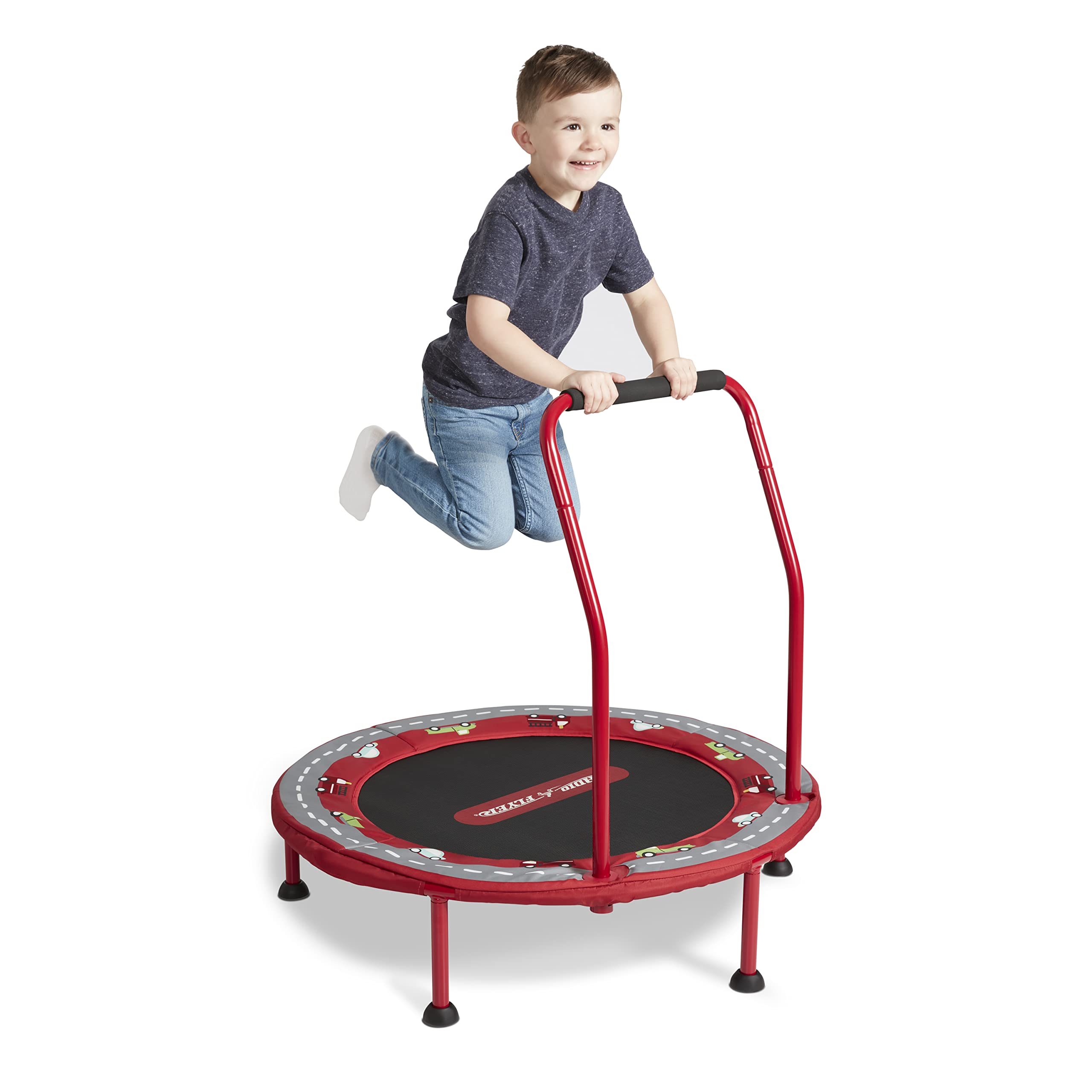
A 3-foot trampoline that doubles as a racetrack play mat—excellent when you want bounce plus imaginative play in one compact toy.
Why I picked it: The racetrack mat adds an instant second layer of play beyond bouncing.
Best for: Toddlers who like pretend play and active movement combined.
Budget-friendly with added play features.
Pros
- Two-in-one play mat design
- Durable 3' bounce area
- Comfort-grip handle
- Handle folds flat
Cons
- Small jumping surface
- Best for younger toddlers
- Can be noisy with prolonged use
My take
I picked this when I wanted a trampoline that would engage both my toddler’s need to move and their love of pretend-play. The racetrack printed around the edge turned snack and story time into extra play moments.
The bounce surface is durable and just the right scale for little legs. The handle folds flat for storage, which I used frequently when clearing a playroom for other activities.
If you want a trampoline strictly for big jumps, this isn’t it—but as an all-around activity piece for small children it delivers solid value and daily use.
6. Zupapa Rectangular Trampoline 10x17FT with Basketball Hoops (No-Gap Design) – Best for Gymnastics & Tricks
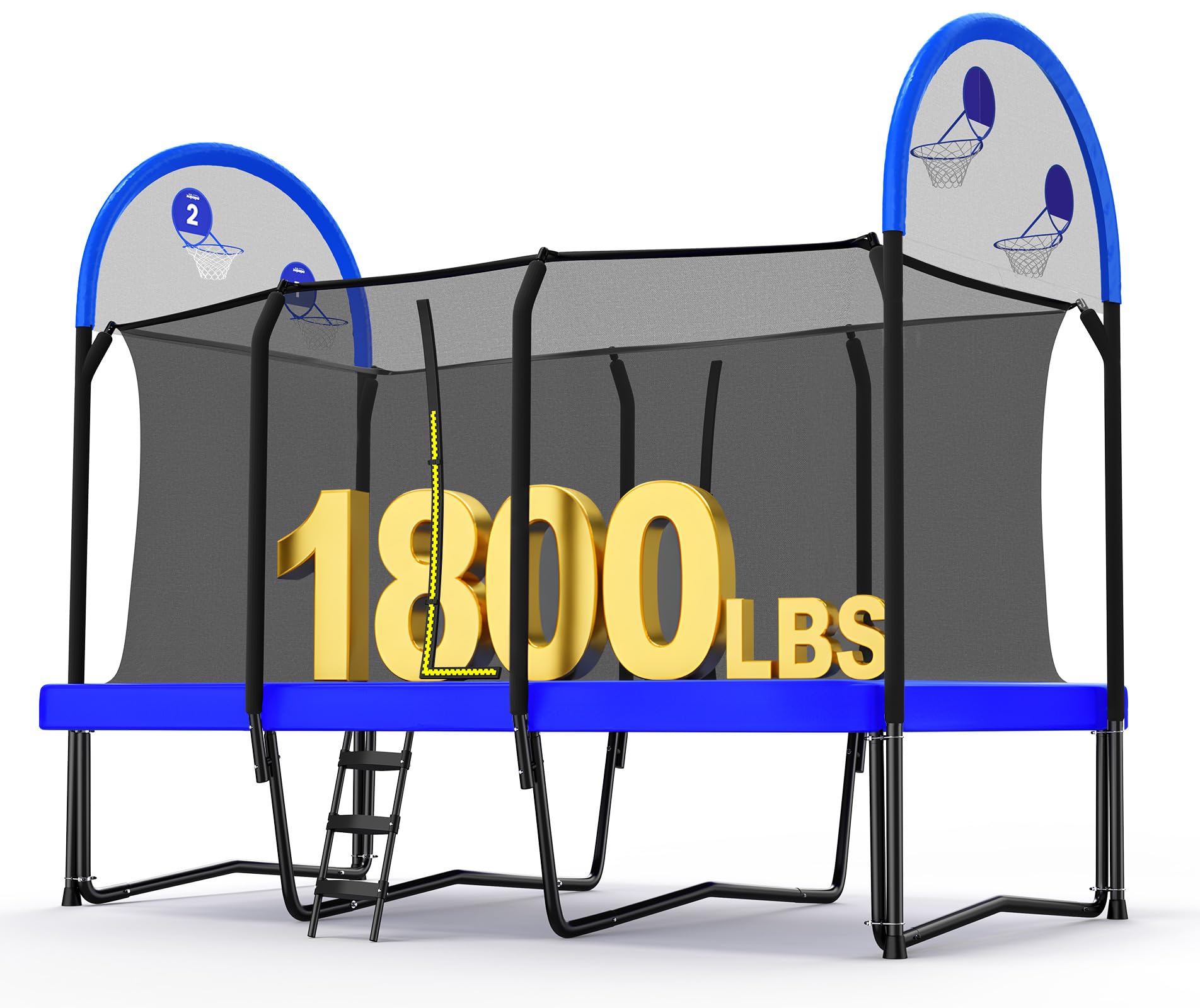
A professional-feeling rectangular trampoline with patented no-gap tech, massive weight capacity, and a long frame warranty—built for serious backyard practice and larger households.
Why I picked it: Rectangular shape, reinforced frame, and no-gap enclosure make it ideal for flips, tumbling, and sustained family use.
Best for: Gymnastics practice, older kids, and large families who want a high-capacity backyard platform.
Premium, long-term backyard investment.
Pros
- Patented no-gap safety seam
- Very high static capacity
- 10-year frame guarantee
- Extra-stable rectangular design
Cons
- Very large footprint
- Assembly instructions could improve
- Makes standard trampoline noises
My take
I installed the 10×17 rectangle and immediately appreciated how the one-piece surface and sewn-in net remove the dangerous gap you see on older models. That no-gap seam is the reason I recommend it to families practicing flips or more advanced moves.
The frame is noticeably thicker than typical consumer models, and the warranty gives me confidence this is built to last. My kids described the jump as roomy and predictable—perfect for practicing tumbling lines.
Putting it together took time and a careful read of the instructions; I re-did a step once but finished with a solid, wobble-free frame. For a family wanting a gymnastics-ready surface, this is the most robust option in my testing.
How I Choose the Right Trampoline for Your Family
Size & Age Recommendations
I match trampoline size to the kid’s age and space. Small 3–4 foot rebounders are ideal for toddlers or indoor use. An 8–10 foot trampoline suits small yards and elementary-age kids. For older kids or adult use, I recommend 12 feet and up or a rectangular model.
Consider ceiling height for indoor units and clearance (at least 6–8 feet overhead) for backyard frames.
- Toddlers: 3'–4' indoor rebounders
- Small yards: 8'–10' round trampolines
- Backyards/gymnastics: 12'–16' round or rectangular
Safety Features I Prioritize
I look first for no-gap or sewn-in net connections, full-height enclosures, and foam-covered frame sections. These features reduce the chance of fingers or feet meeting springs.
Certified standards (ASTM, CPSIA) and double-entry closures (zippers + buckles) are red flags I want to see on product pages.
- No-gap enclosure where possible
- Full-height net with double closure
- Padding over frame and springs
- Stable leg/frame design to prevent tipping
Construction & Weight Capacity
I check frame tube diameter and wall thickness on larger models; thicker steel and dual-frame layouts mean less sag over time. For family use, higher static and dynamic weight ratings matter.
Springs vs. elastic webbing: springs give livelier bounce for older kids, while elastic bands offer quieter, gentler bounce for toddlers and indoor settings.
- Look for reinforced frames on large models
- Choose springs for performance, bands for quiet bounce
- Confirm weight limits include adults if needed
Assembly & Maintenance
I always plan on needing at least two people for larger trampolines and a couple of hours for assembly; many brands include helpful tools but bringing your own ratchet set speeds things up.
Regularly inspect nets, springs, and padding for wear. In windy areas, plan to stake the frame or add sandbags.
- Expect 30 minutes to several hours to assemble
- Keep a spring tool and proper wrenches handy
- Seasonal inspection of springs and padding recommended
Frequently Asked Questions
Which trampoline size is best for a toddler?
I choose a 3–4 foot indoor trampoline with a full-width handle for toddlers—compact, stable, and gentle on joints.
Are no-gap nets worth the extra cost?
Yes. I find no-gap or sewn-in nets reduce the risk of contact with springs and give me more confidence during active play or flips.
How difficult is assembly for full-size trampolines?
With two people and the right tools, most full-size trampolines take a few hours. Pre-attached mats and snap-button designs can shorten setup time.
Final Take
I’ve recommended options that match different needs: small quiet rebounders for indoor play, mid-size backyard models for families, and heavy-duty frames for gymnastics and large yards.
If you want my short picks: go compact and banded for toddlers, choose ASTM/no-gap enclosures for safety, and invest in a reinforced frame if you need longevity and performance.
Whichever trampoline you pick, I recommend planning your assembly time, securing the frame in windy areas, and inspecting padding and nets periodically to keep jumping safe and fun.
