
I tested a range of manual loppers so you can pick the tool that makes pruning faster, cleaner, and less tiring. These are the ones I keep reaching for.
I spent time using a mix of bypass and anvil loppers across typical yard jobs so I could recommend tools that actually perform. In this roundup I focus on cutting power, handle comfort, blade quality, and how each lopper felt during sustained use.
I prioritized tools that gave clean cuts without crushing wood, reduced arm strain, and held an edge. Below are my picks, why I chose each, and when I reach for them in my own yard.
When I compare these loppers head-to-head I look for cut capacity, leverage system (power-lever or PowerGear), and whether the head is bypass or anvil. Those differences determine whether a tool is best for live growth, dry wood, or heavy-duty chopping.
1. Fiskars 28″ Bypass Lopper – Best Overall
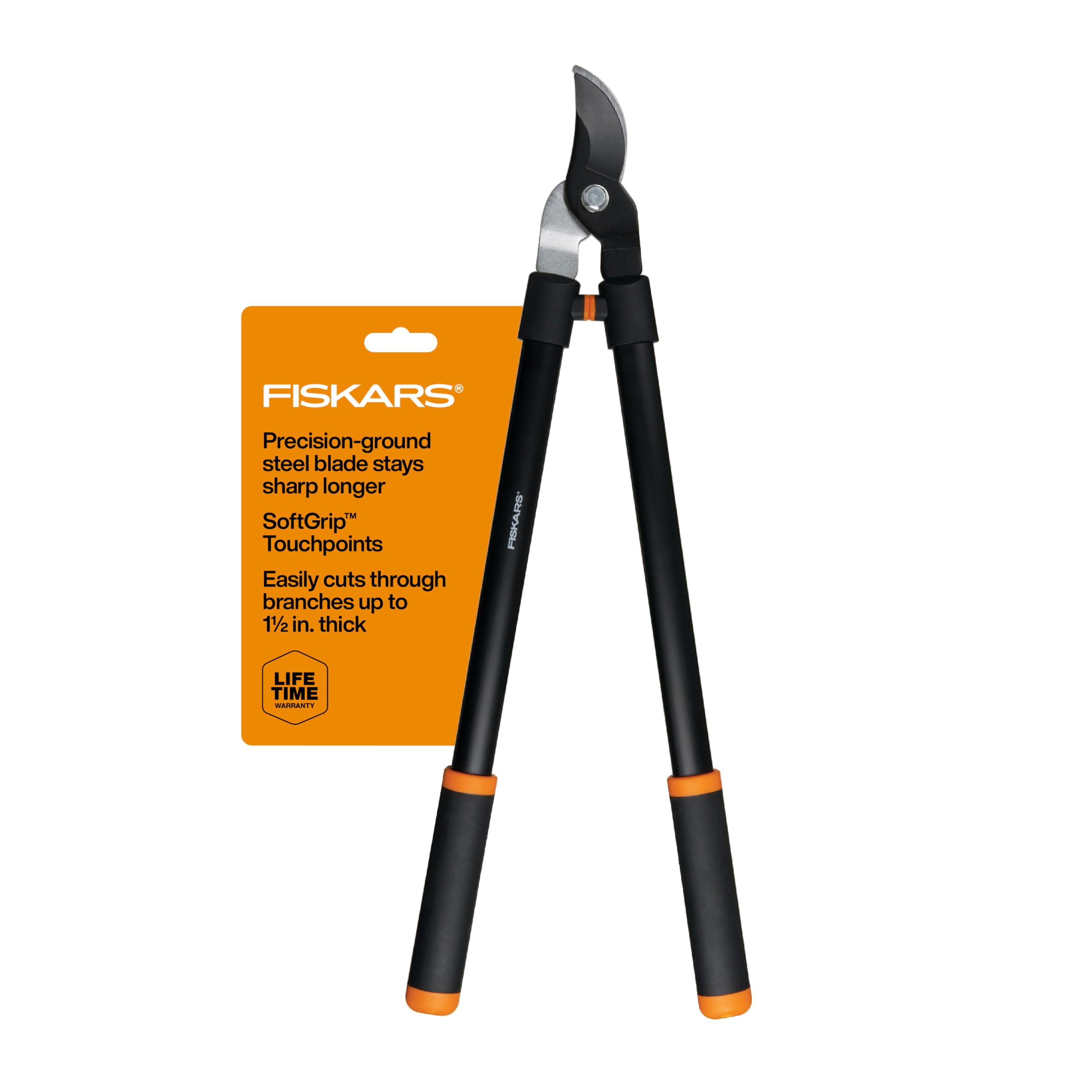
A dependable bypass lopper that balances cutting power, comfort, and durability for regular yard maintenance.
Why I picked it: I picked it for clean cuts on living branches and comfortable, all-day use.
Best for: Routine tree and shrub trimming up to medium branches.
An affordable, long-lasting option for most homeowners.
Pros
- Clean bypass cuts on live wood
- Replaceable hardened steel blades
- Comfortable shock-absorbing grips
- Non-stick blade coating
Cons
- Limited to about 1.5-inch cuts
- Not ideal for very dry, dead wood
My take
I rely on this Fiskars 28" when I need clean, precise cuts on living branches. The fully hardened stainless blades slice instead of crushing, which keeps pruning wounds healthier.
The non-stick coating really helps when sap builds up; cuts stayed smooth during long sessions without gumming. I also appreciated the cushioned grips and shock-absorbing bumper — they kept my hands comfortable even after trimming a lot of small branches.
Build quality felt solid out of the box and the replaceable blades give me confidence this tool will last. For everyday pruning where I care about plant health, this is the one I reach for most.
2. Fiskars PowerGear2 32″ Lopper – Best for Big Cuts
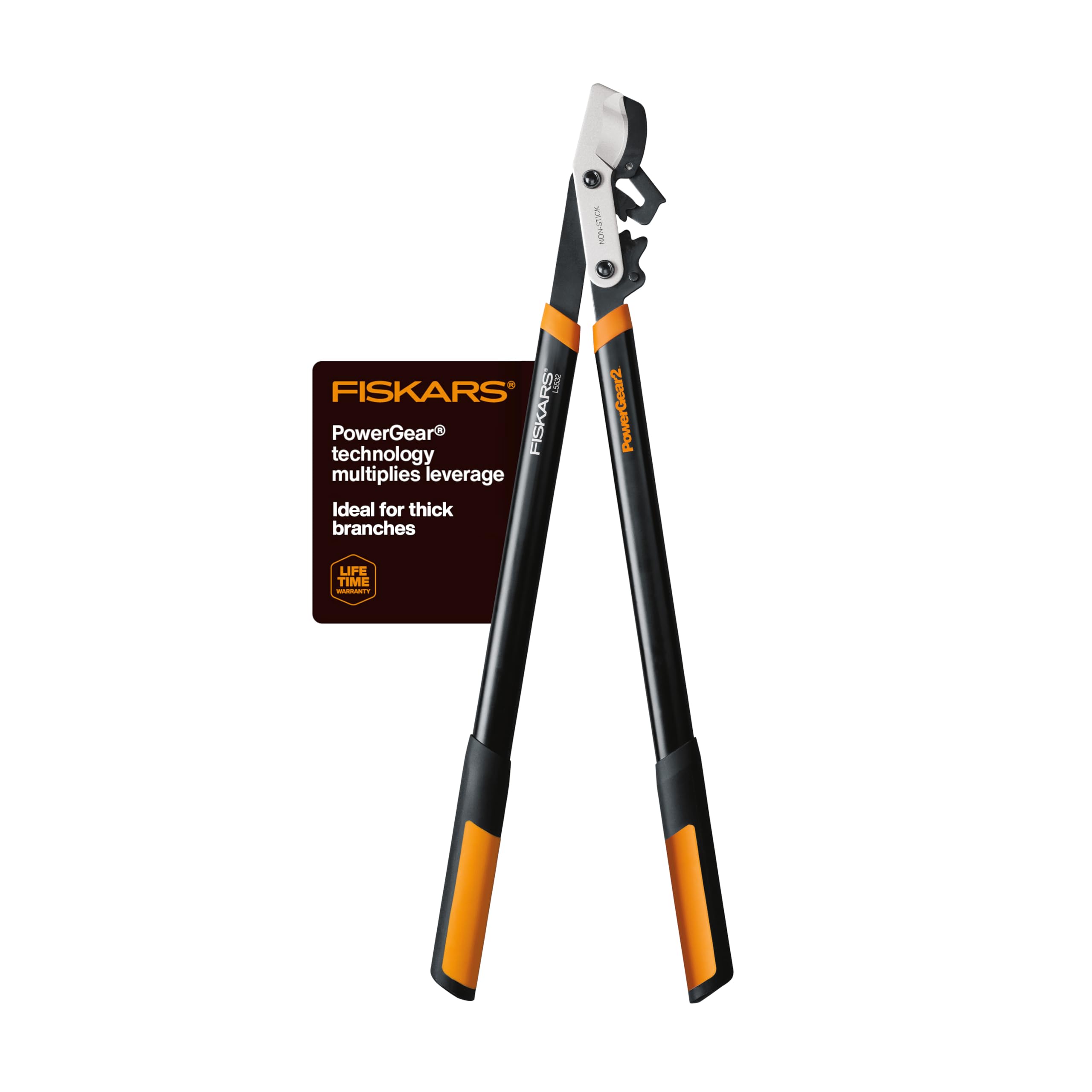
A long-handled lopper with PowerGear2 gearing that multiplies leverage for thick branches.
Why I picked it: PowerGear2 makes hard cuts feel effortless on branches up to 2 inches.
Best for: Heavier pruning and branches that challenge standard loppers.
A midrange option for homeowners who need extra leverage.
Pros
- PowerGear2 multiplies cutting force
- Handles reach and leverage
- Low-friction blade coating
- Cuts up to 2 inches
Cons
- A bit larger for confined spaces
- Slightly heavier than short-handled loppers
My take
When I tackle thicker limbs, the PowerGear2 gearing is the feature that stands out — I can cut through branches near 2" diameter with far less effort than a conventional lopper.
The long handles give me extra reach and leverage for higher or tougher limbs, and the low-friction blade keeps cuts smooth without frequent cleaning.
I noticed comfortable rounded handles with SoftGrip that reduced hand fatigue during longer jobs. For anyone doing heavier pruning but not wanting a saw, this Fiskars delivers reliable power.
3. Fiskars PowerGear2 32″ Lopper (Alternate) – Best for Ease of Use
The same PowerGear2 mechanics, highlighted for ergonomics and accessibility.
Why I picked it: I value how accessible the leverage is for older or less-strong users.
Best for: Users who need mechanical advantage without extra strain.
Worth the investment if leverage and comfort matter to you.
Pros
- Mechanical advantage for less effort
- Comfortable grips for extended use
- Handles add reach
- Durable blade finish
Cons
- Not the lightest option
- Large for tight pruning spots
My take
I've handed these to family members who struggle with strength, and PowerGear2 made cutting feel significantly easier — almost like the tool is doing the work for you.
The overall ergonomics are thoughtful: cushioned grips and rounded handles keep my hands from tiring even when I’m cutting a lot of branches.
Because it handles up to 2" neatly, I often grab this when I expect a mix of medium and heavy branches.
4. Fiskars 28″ Power-Lever Lopper – Best Power-Lever
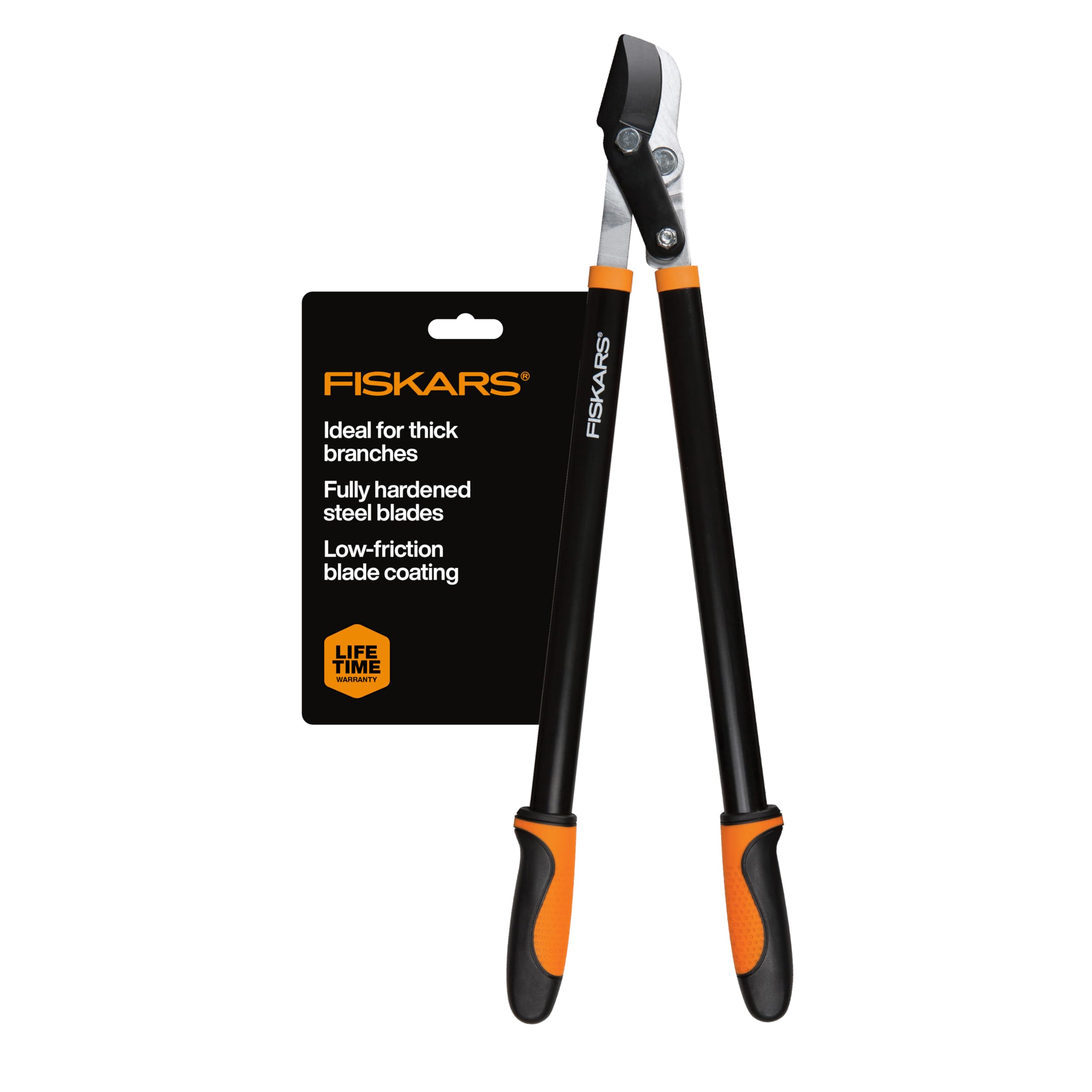
A compact compound-lever design that gives extra cutting strength in a manageable length.
Why I picked it: Power-Lever compounds force so I can cut thicker limbs without a long pole.
Best for: Reach and power where a 28" tool is preferable to longer loppers.
A solid value for added mechanical advantage.
Pros
- Compound lever boosts cutting power
- SoftGrip handles reduce hand strain
- 1.75-inch cutting capacity
- Low-friction blade coating
Cons
- Shorter reach than 32-inch models
- Can feel bulky for small hands
My take
I liked how the power-lever design lets me cut thicker branches without the long reach of a 32" tool. It’s a good compromise between length and force.
The blade coating and precision-ground edges produced clean cuts around 1.5–1.75" in my experience, and the rounded handles were comfortable during multi-hour trimming sessions.
This is the lopper I grab when I need more muscle but don't want to manage a longer, heavier tool.
5. GARDENA EasyCut Anvil Lopper 27″ – Best Anvil
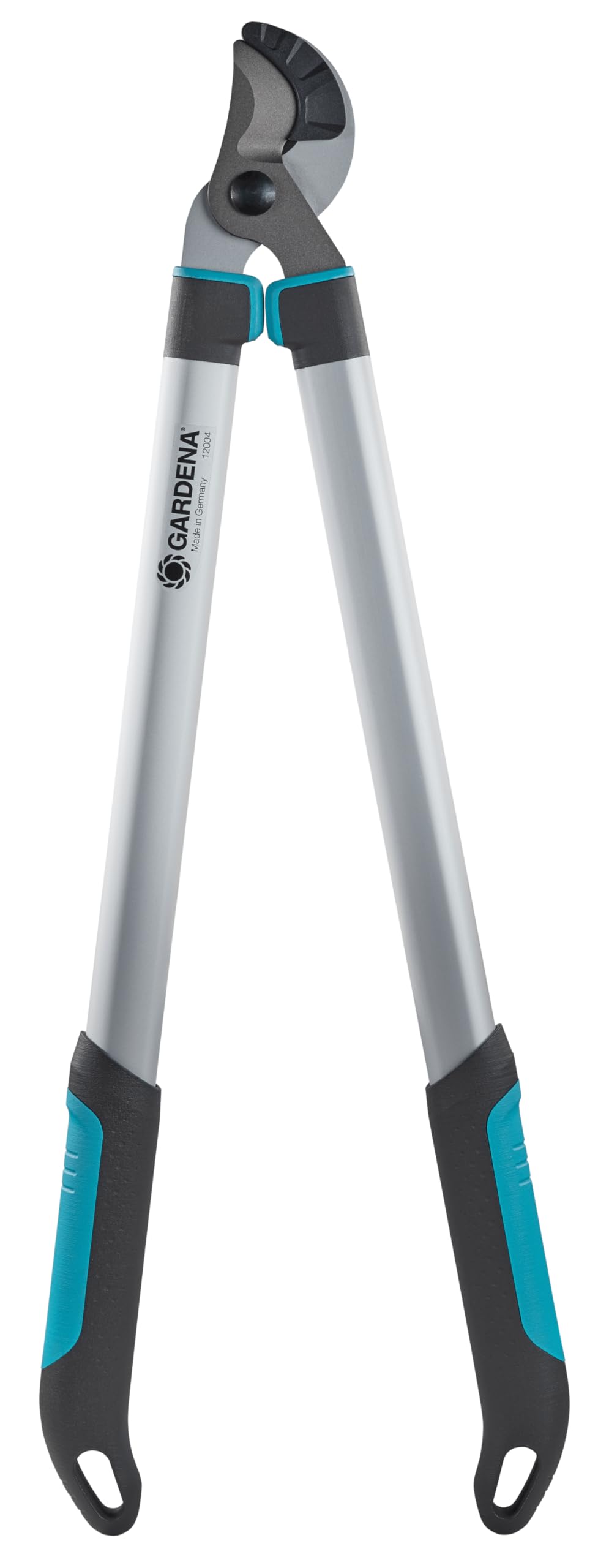
Anvil-style lopper built for dry, dead, and hardwood cutting with low weight and good lever action.
Why I picked it: I chose it for clean, powerful cuts on hard or dry wood where bypass tools struggle.
Best for: Dead branches, tough woody material, and one-handed control when extra force helps.
A midrange, quality-made German option with long warranty coverage.
Pros
- Excellent for dry, dead wood
- Lightweight aluminum handles
- Non-stick coated blade
- Ergonomic ErgoTec grips
Cons
- Anvil can crush live wood
- Max leverage needs wide opening
My take
For cutting dry or dead branches, I reach for this GARDENA anvil because the single upper blade rests solidly against the anvil and powers through tough wood.
I appreciated the light overall weight and ergonomic handles — they reduced fatigue during longer sessions. The precision-ground blade and non-stick coating kept cuts clean and made maintenance easy.
The German build quality felt reassuring, and the long warranty reflects the tool’s durability. I wouldn’t use this for live growth where a bypass is better, but for deadwood jobs it’s one of my favorites.
6. Corona ComfortGEL 30″ Bypass Lopper – Best Comfort
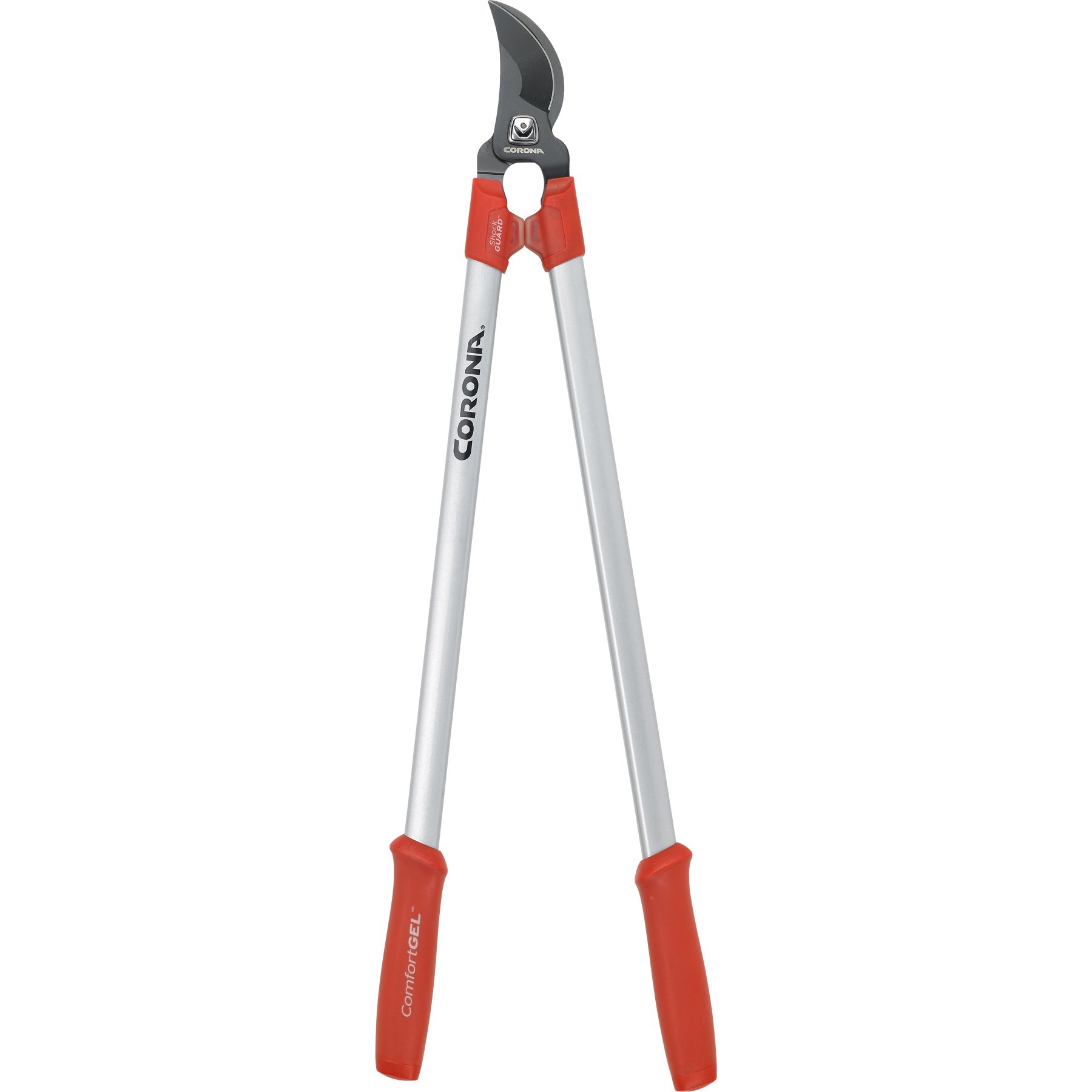
A comfortable bypass lopper with gel grips and integrated shock guards that keep hand strain to a minimum.
Why I picked it: The gel grips and shock-guard bumpers make cutting more comfortable, especially on tougher snaps.
Best for: Users who prioritize comfort and reduced shock during repetitive pruning.
A budget-friendly, comfort-focused choice.
Pros
- ComfortGEL grips reduce hand jolt
- Dual-arc blade for better bite
- Integrated shock bumpers
- 1.5-inch cutting capacity
Cons
- Not as powerful as gearing systems
- May require sharpening over time
My take
The first thing I noticed was how much gentler the ComfortGEL handles felt when a branch snapped — the shock absorption saved my wrists during sustained work.
Dual-arc blades provided reliable cutting performance up to about 1.5", and the handles felt sturdy without being heavy.
If comfort is your priority — especially if you feel that jolt up your arm on other loppers — this Corona is a practical, down-to-earth option.
7. Corona Compound Action Anvil Lopper 32″ – Best Heavy-Duty Anvil
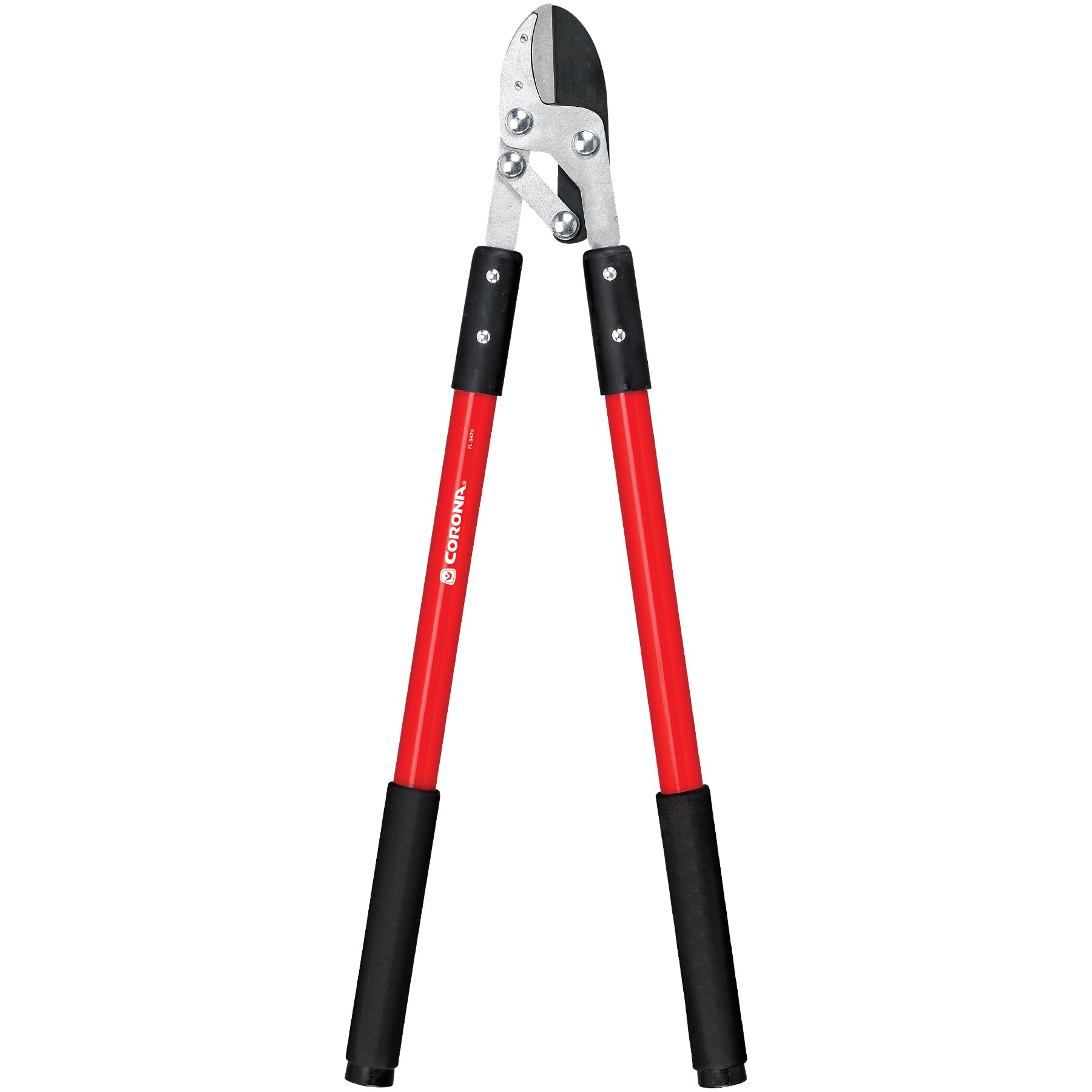
A rugged compound-action anvil lopper built for big, dry limbs with extended reach and extra leverage.
Why I picked it: Compound action and long handles let me tackle very tough, dead branches with confidence.
Best for: Heavy pruning, large dead limbs, and jobs that need maximum leverage.
A more robust, professional-feel option for demanding jobs.
Pros
- Compound action multiplies leverage
- Ideal for large dead wood
- 32-inch handles for reach
- Heavy-duty construction
Cons
- Heavier than simpler models
- Awkward in tight spaces
My take
When I need maximum cutting force for dead or woody limbs, the compound-action Corona anvil delivers predictable power — it feels like it multiplies my effort.
The long handles give me reach for higher branches and the robust construction took real abuse during larger cleanup jobs without complaint.
This is the tool I pick for backbone pruning and removing thick, dry limbs where a standard bypass just won’t do.
How I Choose a Lopper
Bypass vs Anvil
I always start by deciding whether I'll be cutting live growth or dry wood. For living branches I prefer bypass loppers because they make clean scissors-like cuts that help plants heal.
For dead, dry, or very hard wood I go with an anvil design — the single sharp blade compresses the branch against a flat surface and delivers raw cutting force.
- Bypass: best for live wood and cleaner cuts
- Anvil: best for dead wood and tough, woody stems
Handle Length and Leverage
I match handle length to the job. Shorter loppers (around 28") are more maneuverable; longer handles (30–32") give much more leverage and reach.
If I expect to cut branches near 2" I choose a tool with gearing or compound-lever systems so I don't overexert myself.
- 28" tools: better control, good for lower branches
- 30–32" tools: extra reach and leverage
- PowerGear or compound levers reduce user effort
Blade Quality and Coatings
I look for hardened, replaceable blades and low-friction coatings. Those features keep cuts smooth and reduce sap buildup.
A precision-ground edge holds sharpness longer and gives cleaner cuts, which I value for plant health.
- Hardened steel holds an edge
- Non-stick coatings reduce gumming
- Replaceable blades extend tool life
Comfort and Maintenance
I test grips and shock absorption before committing; gel or cushioned grips and bumpers make long sessions much easier on my hands and arms.
I keep loppers performing by wiping blades after use, applying a light oil, and sharpening as needed — that routine saves me from buying replacements.
- Look for SoftGrip or gel handles
- Clean and oil blades after each use
- Sharpen or replace blades when cutting degrades
Frequently Asked Questions
Which lopper type should I choose for live branches?
I choose a bypass lopper for live branches because it makes clean, shearing cuts that are gentler on living wood.
How do I keep lopper blades working well?
I wipe blades after use, apply a light oil to prevent rust, and sharpen or replace blades when they begin to tear instead of slice.
Do longer handles always mean better cutting?
Longer handles give me more leverage and reach, but they can be heavier and harder to maneuver in tight spaces; I balance length with the job at hand.
Final Take
After testing these loppers across deadwood, live pruning, and extended sessions, I keep a mix of bypass and anvil types in my shed so I can pick the right tool for the job.
If I had to recommend a single starting point, the Fiskars 28" bypass is the most versatile. For heavier cutting choose a 32" PowerGear or a compound-action anvil, and if comfort matters most choose the Corona with ComfortGEL.
Whichever tool you choose, I recommend regular blade care and matching the lopper type to the wood you’re cutting — that combination gives the cleanest cuts and longest tool life.
