
I tested six popular ukulele pick options so you can pick the right material, thickness, and storage solution for your playing style.
I spent time playing with each of these pick packs on ukulele and other stringed instruments so I could compare how material, thickness, and shape affect tone and playability.
In this roundup I cover celluloid multi-packs, felt picks made specifically for ukulele, thin classroom-style sets, organized kits, and a tuner-plus-picks combo that I carry on the road.
Whether I’m chasing a mellow strum, clearer single-note attack, or just a stash of spares, I explain which pick worked for which situation and why.
I compared picks by material (celluloid vs felt), thickness range, storage convenience, and any extras like tuners. I paid special attention to how each pick felt on ukulele strings and how much tone control it offered.
1. Donner Celluloid Pick Tin (Assorted Gauges) – Best Variety Pack
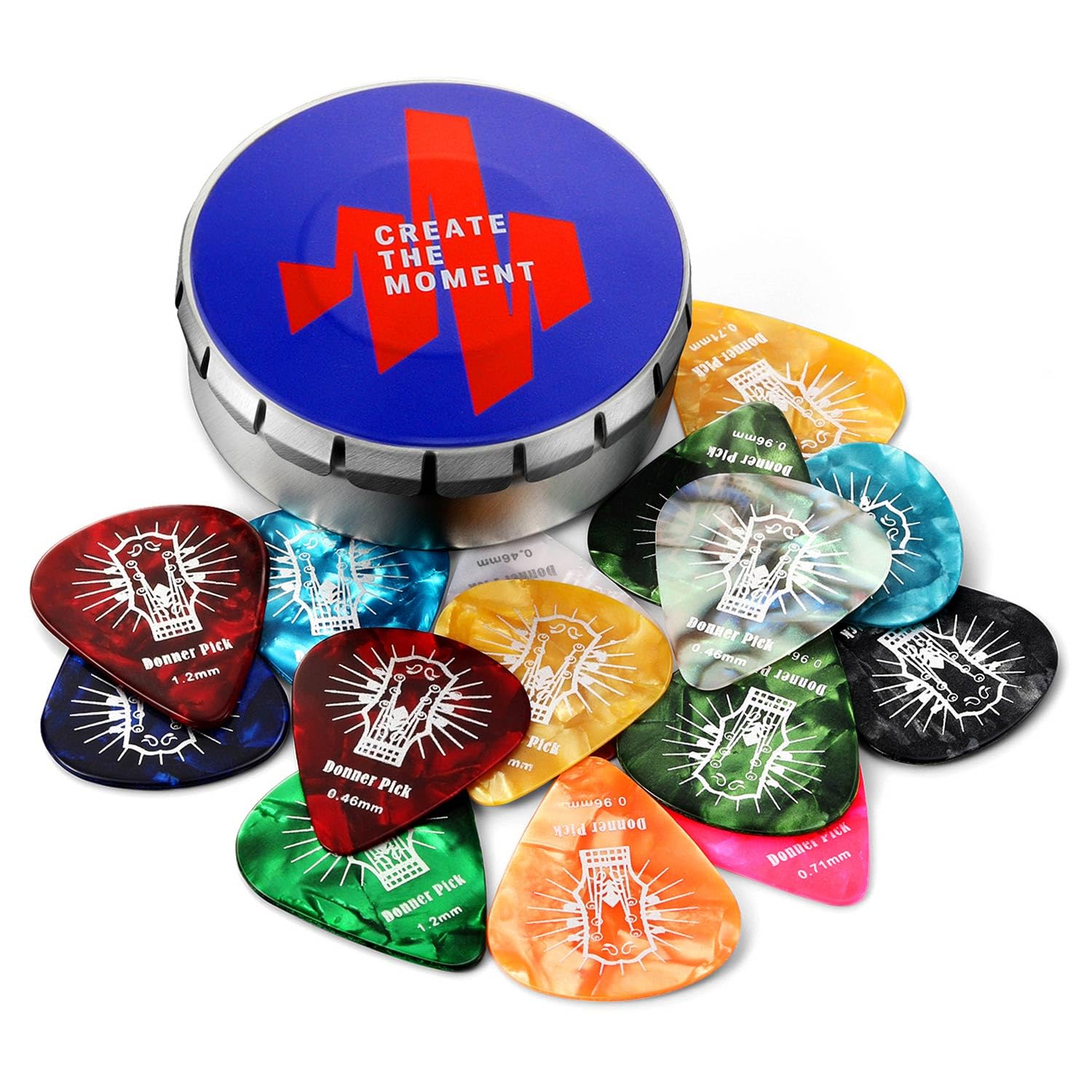
A colorful 16‑pick tin with thin to extra‑heavy celluloid gauges for exploring tone and feel.
Why I picked it: I valued the range of gauges and the metal tin for everyday portability and experimentation.
Best for: Players who want to try multiple gauges and keep picks organized on the go.
An affordable way to sample several thicknesses without committing to one gauge.
Pros
- Assorted gauges from thin to extra heavy
- Warm, classic celluloid tone
- Smooth edges for comfortable grip
- Handy metal tin for storage
- Attractive, varied color patterns
Cons
- Single picks can rattle or sit loose in the tin
- Tin design may vary between batches
My take
I appreciated that this Donner set gave me four distinct gauges (thin, medium, heavy, extra heavy) so I could test how each one changed attack and tone on my ukulele.
The celluloid material delivered a familiar, warm sound and the smooth edges made strumming feel comfortable for long practice sessions.
The tin is compact and slips into a gig bag easily, though I noticed a single pick will sometimes move around—storing two or more at once keeps them secure.
Because the colors and patterns are lively, I enjoyed grabbing different picks depending on the mood of the song; the set is a practical, affordable way to explore what gauge I prefer.
2. 60-Pack Celluloid Picks with Organizer – Best for Bulk Supply
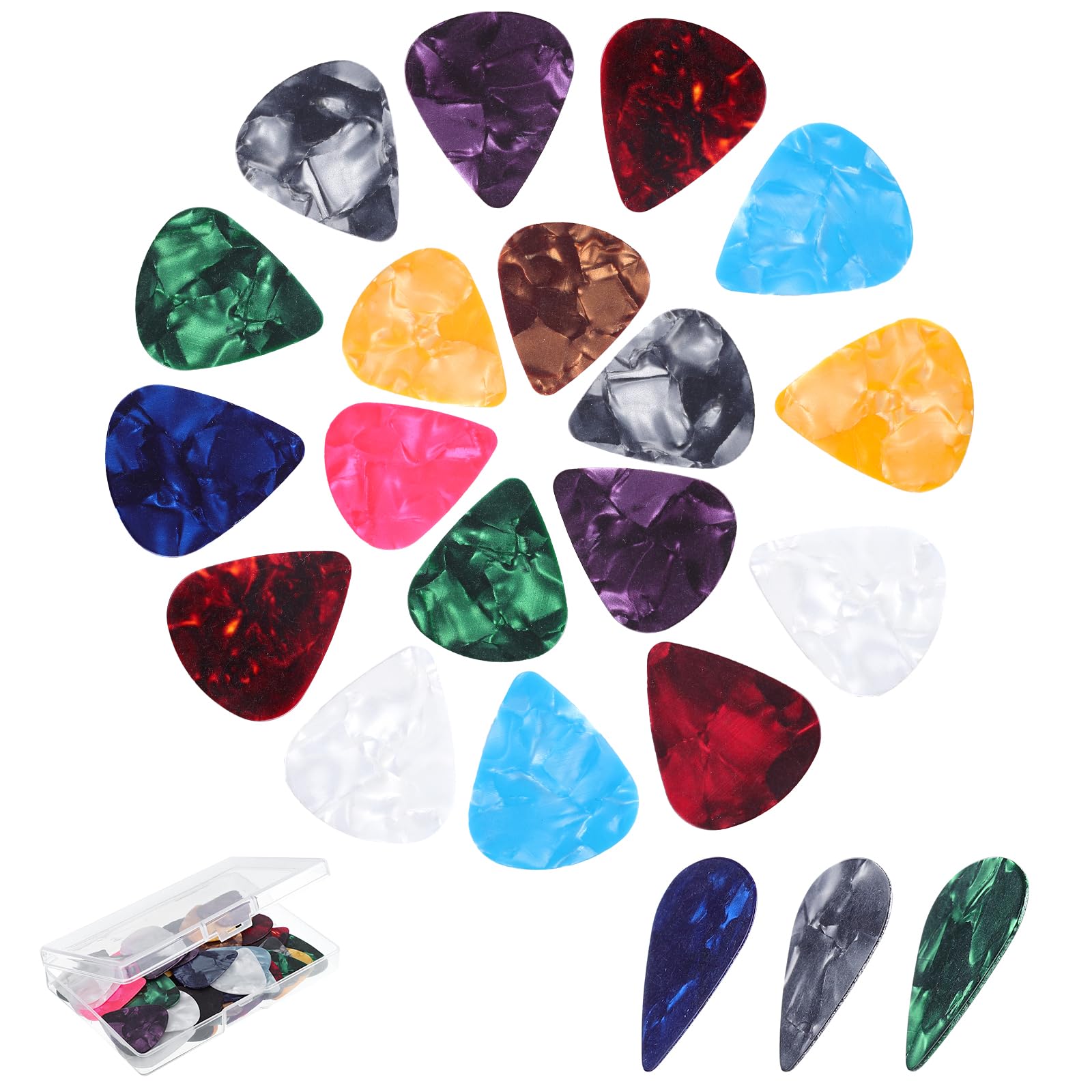
A huge 60‑pick pack in three common gauges with a clear storage box for quick access.
Why I picked it: I picked this for sheer quantity and the convenience of a storage box when I need lots of spares.
Best for: Teachers, group sessions, and anyone who wants a long-lasting supply of picks.
A very budget-friendly bulk option that keeps replacements handy.
Pros
- Large 60‑pick supply
- Three useful thicknesses
- Wide body with rounded tip
- Smooth, glossy finish
- Clear storage container included
Cons
- Random color distribution
- Thinner gauges feel flimsy for heavy strumming
My take
When I needed a stash of picks that wouldn’t run out quickly, this 60‑pack delivered—plenty of thin, medium, and thick options to spread between cases and practice spaces.
The picks have a glossy finish that makes them easy to grip, and the rounded tip produces a warm, round tone that suits ukulele strumming.
I did find the thinnest picks are a little too flexible for aggressive strumming, but they’re perfect for gentle rhythm and teaching beginners.
The clear organizer keeps everything visible and portable, and I liked having so many spares for rehearsals and giveaways.
3. BoloPick Felt Ukulele Picks – Best Felt Picks for Ukulele
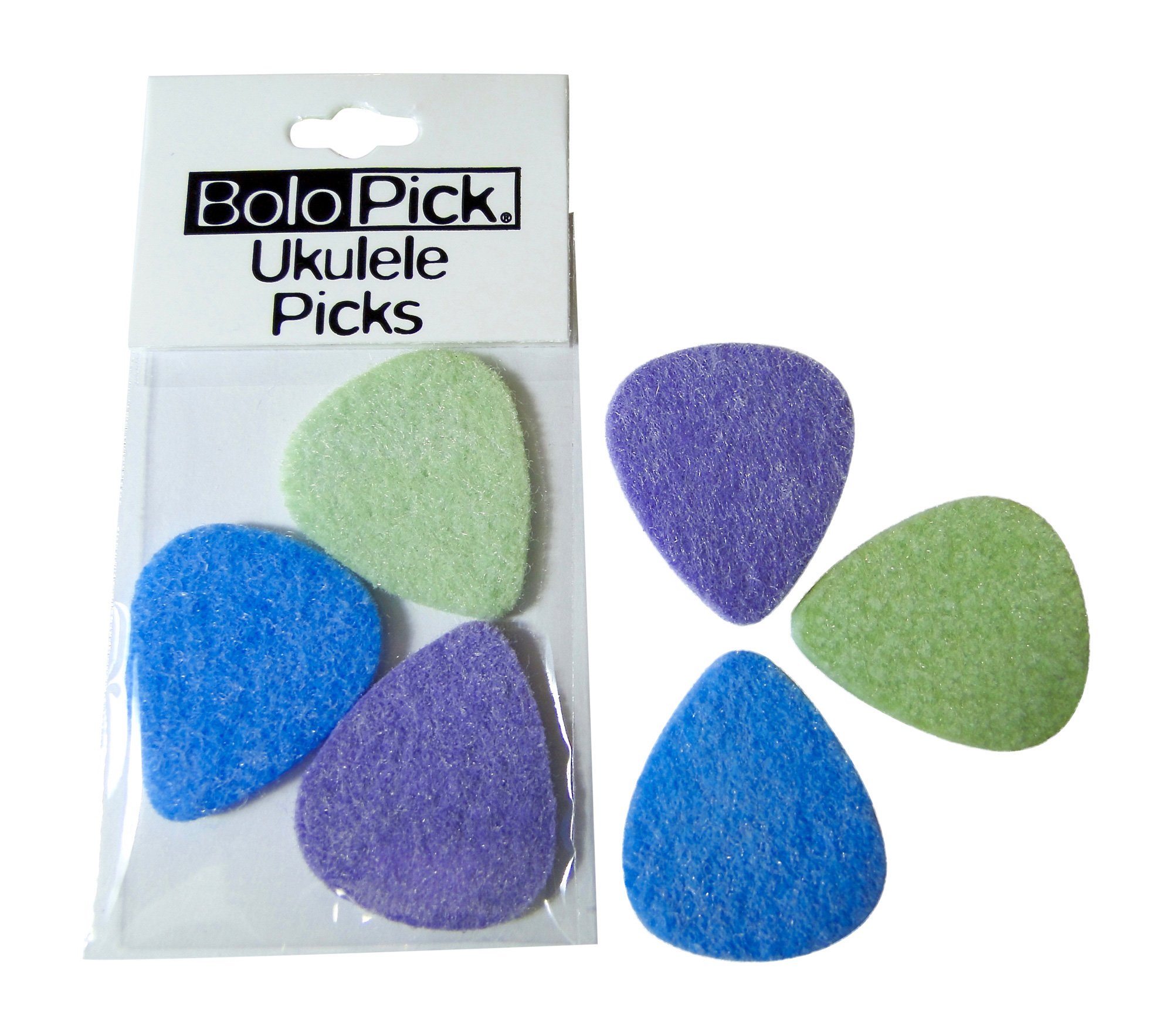
Felt picks made for a soft, mellow strum—washable, firm yet flexible, and sized like a standard 351 pick.
Why I picked it: I chose these for their soft attack and the ability to wash and reuse them, which suits ukulele strumming.
Best for: Players who want a gentler, warmer strum and reduced pick noise.
A specialized felt option that’s affordable for ukulele players.
Pros
- Soft, mellow tone
- Firm enough for precise picking
- Washable and reusable
- Standard 351 profile
- Good for reducing pick noise
Cons
- Can feel slippery in hand
- May soften over extended use
My take
I reached for the BoloPick felt picks when I wanted a softer, less percussive ukulele sound and they delivered a pleasantly muted, warm strum.
The picks are thicker than many plastic options but retain enough firmness for clear single‑note work if I hold them slightly firmer.
I appreciated that they’re washable—after a few sweaty sessions I washed and air‑dried them without damage—but I did notice they can become more flexible after heavy use.
A minor snag: they can feel a bit slick in my fingers, so I sometimes use a small tack or rosin to improve grip during longer sets.
4. I‑MART Celluloid Thin Picks (.46mm) – Best Thin Picks
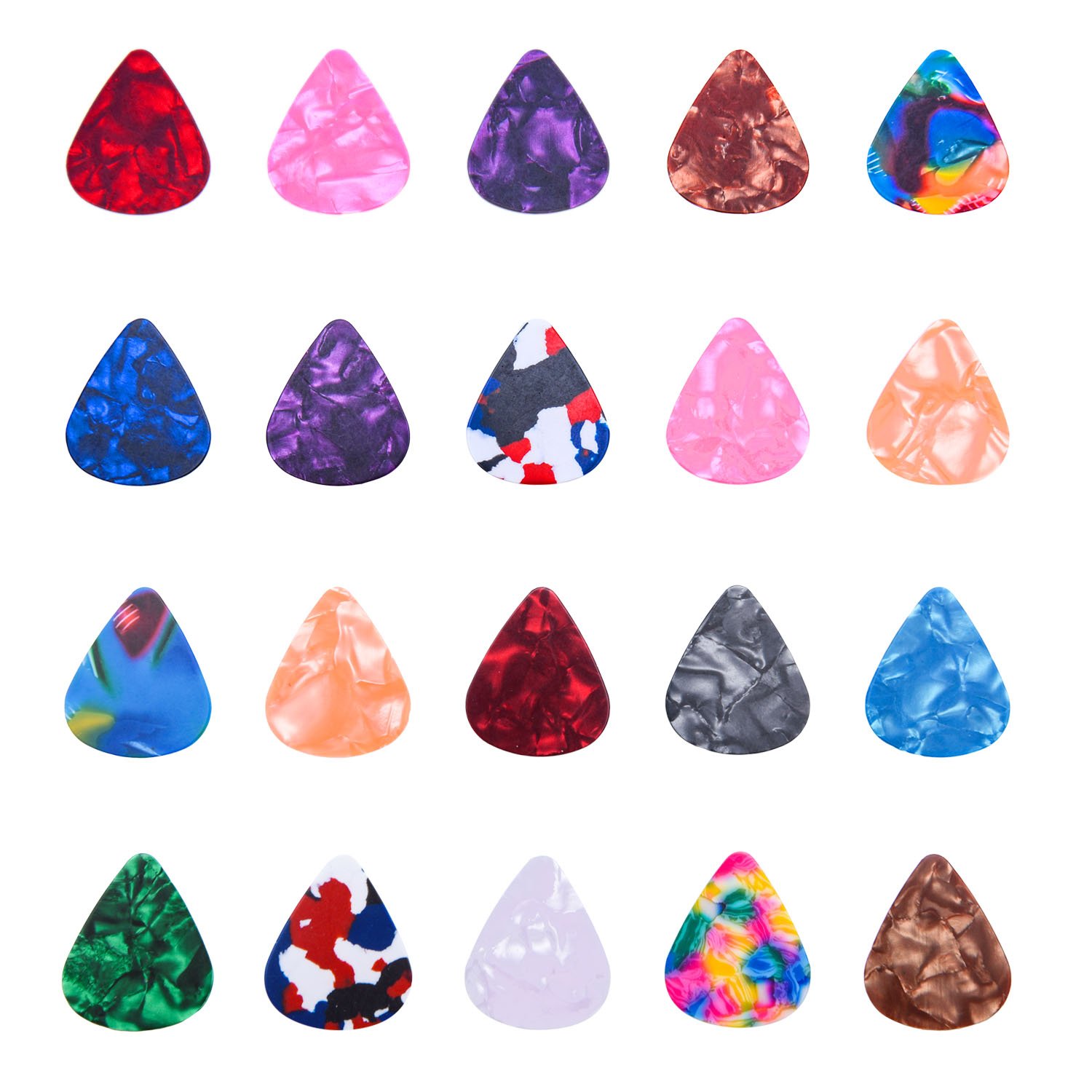
A pack of consistent .46mm celluloid picks made for light touch and volume control.
Why I picked it: I picked this when I wanted a uniform thin gauge for volume control and classroom use.
Best for: Light strummers, children, and anyone needing consistent thin picks for gentle playing.
A very affordable single‑gauge option for consistent results.
Pros
- Consistent thin gauge
- Classic shape for familiar feel
- Warm, round tone
- Good for volume control
- Low cost per pick
Cons
- Only available in one thickness
- Colors arrive at random
My take
I relied on these .46mm picks when I wanted predictable, quiet strumming—especially useful for lessons and practice around others.
They produce a warm, round tone and give me finer control over volume than heavier picks do.
Since every pick is the same thin gauge, I didn’t need to second‑guess which pick to use; that consistency is exactly why I keep a stack in my teaching bag.
If you want more attack or tonal variety, though, you’ll need a different set—these are focused on light, controlled playing.
5. 15‑Pack Celluloid Picks with Organizer Box – Best Organized Set
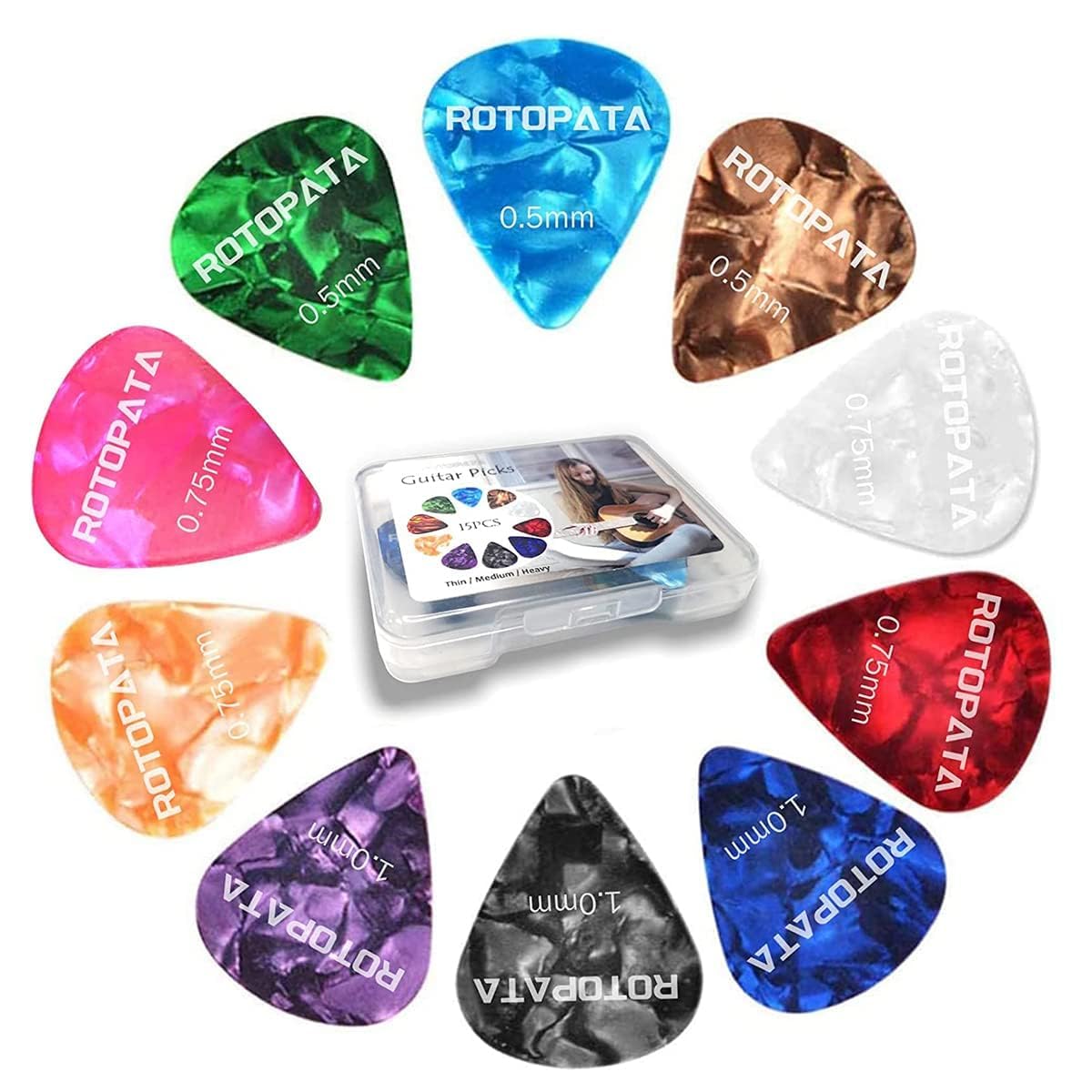
A curated 15‑pick set with three common thicknesses and a clear organizer for neat storage.
Why I picked it: I liked the balance of a multi‑gauge selection with a tidy storage box for everyday carry.
Best for: Players who want a compact, organized assortment with immediate access to thin, medium, and heavy picks.
Good value for a compact, organized assortment.
Pros
- Three practical thicknesses
- Clear organizer box
- Vibrant colors and patterns
- Durable celluloid material
- Good balance for different techniques
Cons
- Smaller count than bulk packs
- Some designs are basic
My take
I find this 15‑pack to be a handy everyday kit—three thicknesses cover most techniques I use on ukulele and the clear box keeps everything where I can grab it quickly.
The picks feel solid and give a pleasing tone across chord strums and single‑note runs, and I liked that each thickness was represented clearly.
The organizer is the feature I used most: it reduces rummaging and lets me stage picks for a gig or practice.
For players who want a middle ground between a huge bulk pack and a single tin, this set is a sensible pick.
6. MOREYES Picks and Clip‑On Chromatic Tuner Kit – Best Combo (Tuner + Picks)
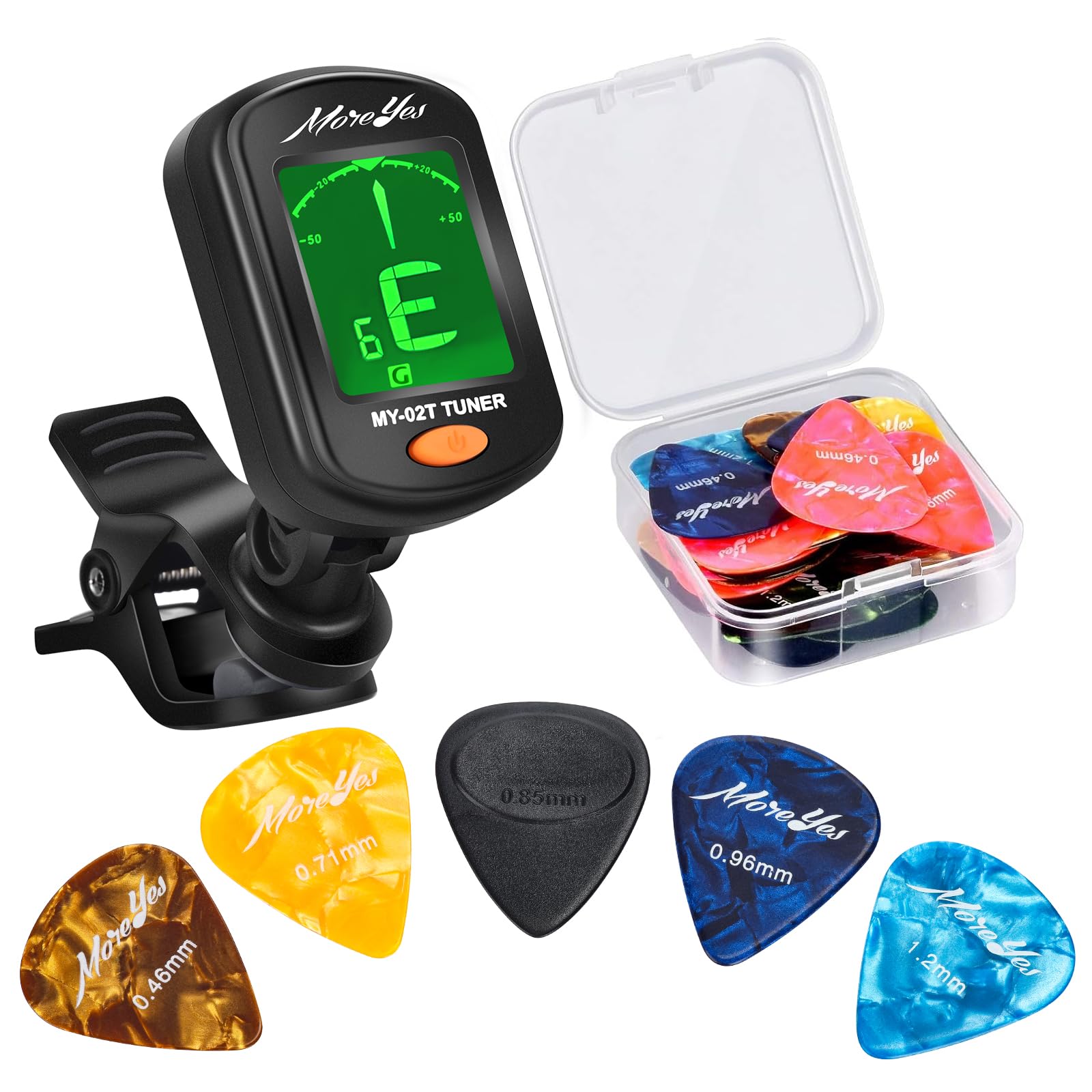
A practical kit that pairs a chromatic clip‑on tuner with a labeled set of 28 celluloid picks in five gauges.
Why I picked it: I valued the convenience of having a reliable tuner plus a variety of labeled picks in one kit.
Best for: Travellers, beginners, and anyone who wants a tuner plus an assortment of picks.
Slightly higher cost because it includes a digital tuner, but strong value for a two‑in‑one kit.
Pros
- Includes chromatic clip‑on tuner
- Tuner has ukulele mode
- Picks labeled with thickness
- 360° rotating clip
- Soft silicone pad protects instruments
Cons
- Tuner not studio‑grade
- Picks are basic celluloid variety
My take
I kept this MOREYES kit in my travel bag because the clip‑on tuner is quick to set up and the display is easy to read in low light thanks to its backlight.
The tuner’s ukulele mode and 360° rotating clip make it a practical tool for on‑the‑fly tuning, and the silicone pad felt gentle against the instrument finish.
The included picks cover five thicknesses and are marked so I can grab the gauge I want without guessing—handy for switching techniques mid‑set.
While I wouldn’t use the tuner for studio tuning, it’s accurate enough for practice and gigs, and the combined convenience makes this kit one of my go‑to travel solutions.
How I Choose Ukulele Picks
Material Matters
I decide between celluloid and felt based on the sound I want: celluloid gives a brighter attack and more definition, while felt softens the attack and reduces pick noise.
If I want a mellow background strum I use felt; for sharper single‑note lines or more percussive rhythm I reach for celluloid.
- Celluloid: brighter tone, more attack, durable.
- Felt: warmer, softer, reduces scraping noise.
- Experiment to find the material that complements your ukulele and style.
Gauge and Control
I treat thickness as the most important variable: thinner picks bend more and offer volume control, thicker picks give stronger attack and definition.
When I’m unsure, I keep a pack with a range of gauges so I can switch mid‑session and hear what each gauge brings to the music.
- Thin (≈0.4–0.6mm): great for gentle strumming and beginners.
- Medium (≈0.7–1.0mm): versatile for rhythm and light lead.
- Heavy (≈0.96–1.2mm+): best for punch and articulation.
Shape and Grip
I pay attention to pick shape and finish—rounded tips and smooth edges reduce string wear and feel comfortable under my fingers.
Gloss finishes provide easy pick release, while textured or thicker picks help with grip during long sets.
- Rounded tip = rounder tone; pointed tip = more attack.
- Gloss vs textured finish affects grip—try both.
Storage and Extras
I value a small tin or clear organizer for keeping picks accessible and preventing loss.
If I travel, I prefer kits that include a tuner or labeled picks so I don’t have to hunt for matching gauges.
- Small tin for pocket carry.
- Clear organizer for home/teaching use.
- Tuner combos save space in a travel rig.
Frequently Asked Questions
Which pick thickness should I start with on ukulele?
I usually start with a thin or light‑gauge pick if I’m learning; it helps control volume and reduces string wear. Once I’m comfortable, I experiment with medium and heavy picks to find the best balance between attack and tone.
Are felt picks better than plastic for ukulele?
I reach for felt when I want a softer, gentler strum—felt reduces pick noise and gives a warm tone. For brighter attack or more defined single notes, I prefer plastic or celluloid.
How should I store picks to avoid losing them?
I keep usable picks in a small tin or clear organizer box so they’re visible and protected. For gigs I stash a few in a pocket and put extras in my case’s accessory compartment.
Final Take
After testing these options, I keep at least one kit of celluloid picks and a small pack of felt picks in my gig bag—each has a distinct role in my playing.
If you want to explore tone and feel, choose a variety pack; if you want a soft ukulele vibe, try felt; and if you travel, consider a kit that includes a tuner for added convenience.
Whichever you choose, I recommend keeping multiple gauges on hand so you can tailor your pick to the song and the moment.
