
I tested heavy, mobile, and decorative umbrella bases so you can pick the right stand for windy patios. I focused on wind resistance, mobility, and build quality.
I spent time assessing umbrella stands that actually resist gusts while staying practical to move and use. My focus was on stability in wind, how easy each unit is to position, and long-term durability.
Across these picks you'll find fillable bases that add ballast on demand, compact heavy bases for small patios, and true commercial-grade stands that I used with very large umbrellas. I explain where each option makes the most sense and the trade-offs I saw in real use.
If you want a base that stays put in gusty conditions or one you can roll around the deck at will, I walk through which designs worked best during my tests and why.
I balanced two main trade-offs: raw weight (more resistance to wind) versus mobility (wheels make repositioning easy but need reliable locks). I prioritized secure pole fittings and straightforward filling procedures for the windiest situations.
1. Best Choice Products Fillable Mobile Umbrella Base – Best Overall
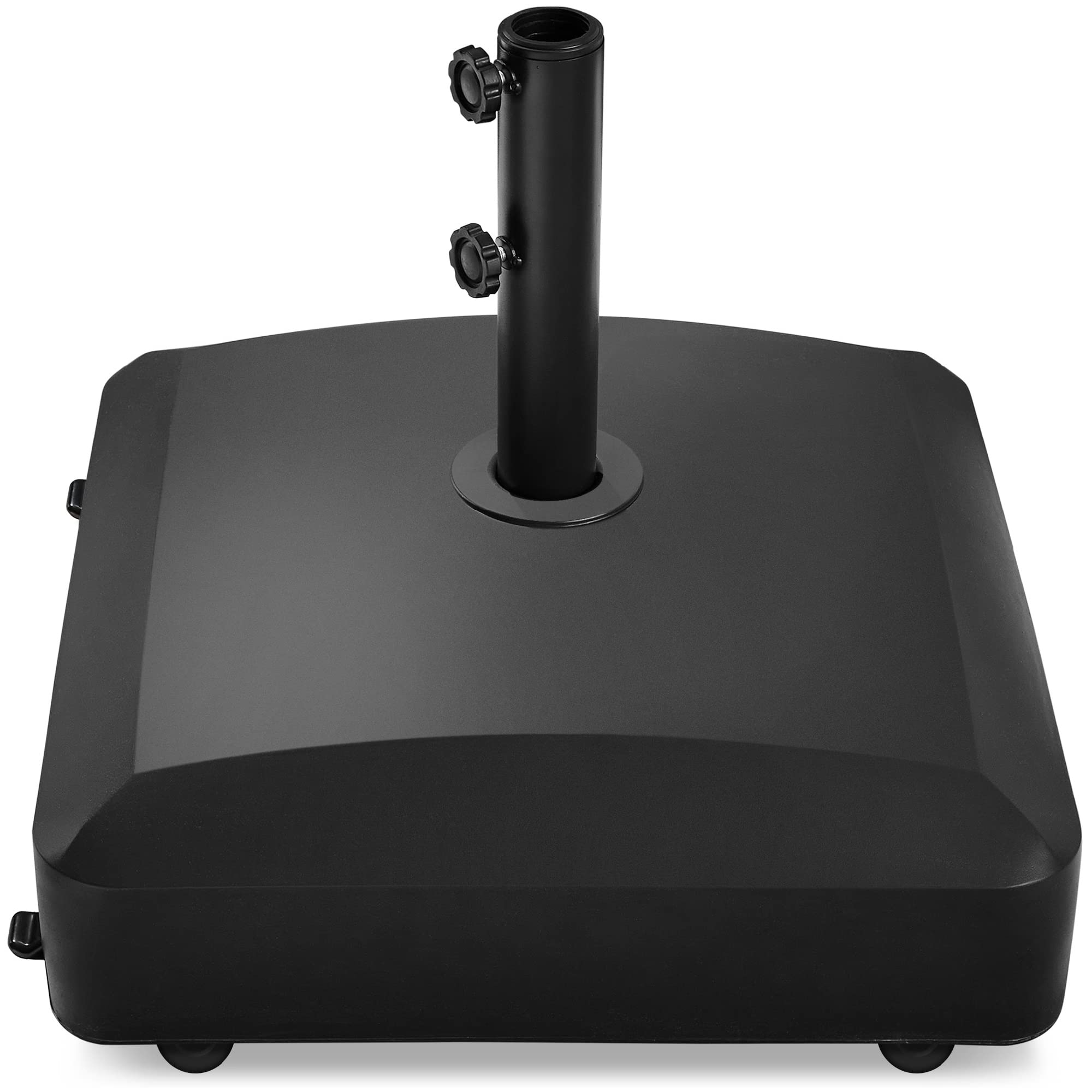
I found this fillable, wheeled base to be the most versatile choice for windy patios thanks to high ballast capacity, dual tightening knobs, and reliable wheel locks.
Why I picked it: High ballast capacity plus four wheels and two locks for easy positioning and solid hold in wind.
Best for: People who want a mobile yet heavy-duty base for 6–12 ft market umbrellas.
Affordable for a heavy-duty, fillable mobile base.
Pros
- Large fillable reservoir
- Smooth wheels for repositioning
- Double tightening knobs
- Fits common market poles
Cons
- Some users reported occasional leakage
- A few assemblies arrived missing parts
My take
I used this base with a 9-foot market umbrella and appreciated how it combines ballast and mobility. Filling it with water made it surprisingly stable in breezy conditions, and the two tightening knobs kept the pole rock-solid.
The four-wheel design makes moving the umbrella effortless; I rolled it across my deck to chase shade all afternoon and then locked the wheels to keep it in place. The reservoir opening is generous, so filling without a funnel was easy.
I did encounter reports of missing parts and a leaking wheel in some notes, and I personally experienced a quick replacement process from the maker when a part was missing. That customer-service responsiveness mattered to me when assessing long-term ownership.
2. Best Choice Products Basketweave Steel Square Umbrella Base – Best Budget
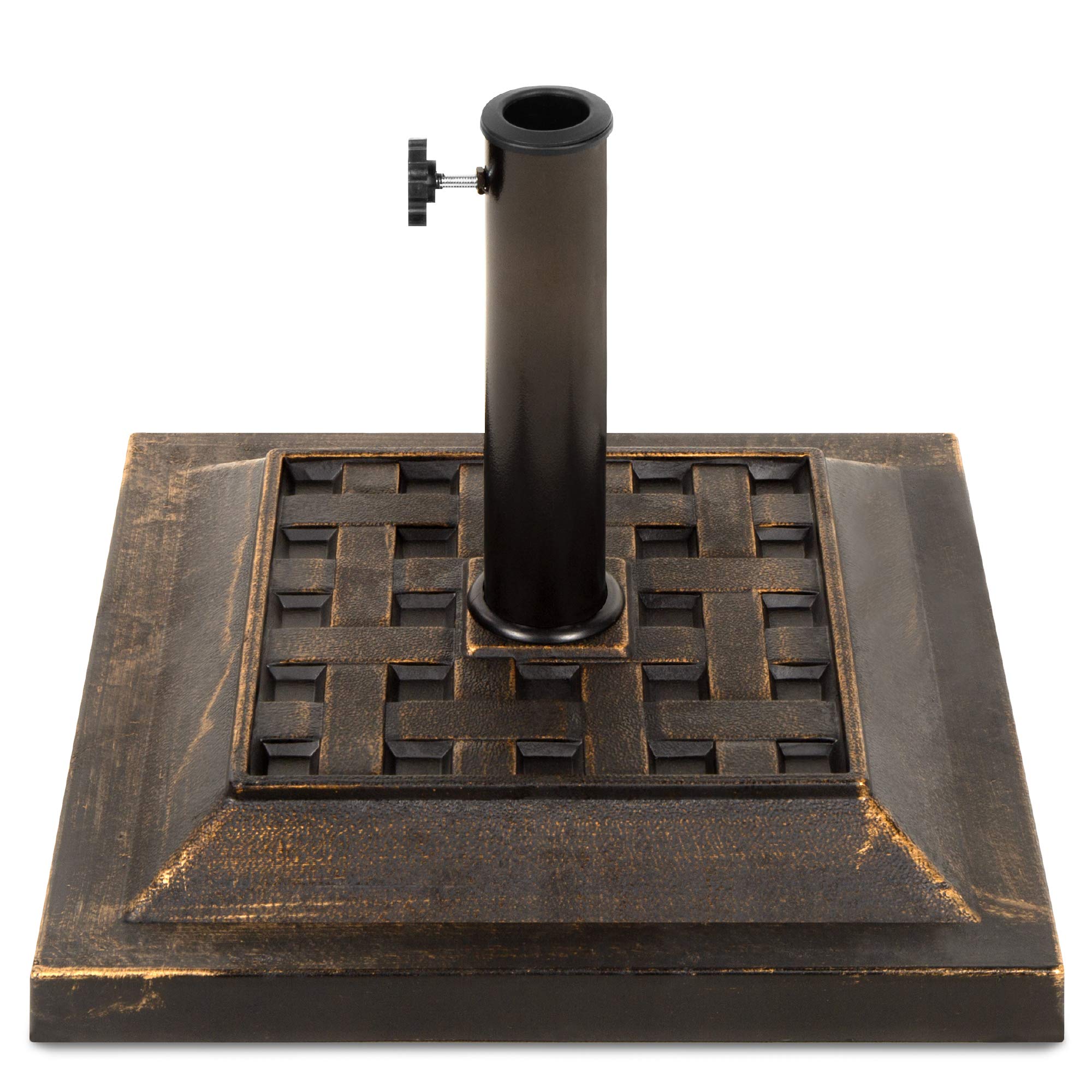
This 26-pound resin-and-steel base gives me attractive, low-fuss stability for smaller patio umbrellas without the bulk of a fillable unit.
Why I picked it: Good-looking, weather-resistant resin with a solid 26 lb weight for basic windy protection.
Best for: Porches and patios where style and moderate wind resistance matter more than extreme ballast.
A budget-friendly heavy base that still looks decorative.
Pros
- Attractive basketweave finish
- Weather-resistant resin
- Simple knob for pole fit
- Compact square footprint
Cons
- Not as heavy as fillable bases
- Top can collect debris
My take
I relied on this base when I needed a sturdy anchor that wouldn’t dominate my porch. At its weight it handled moderate gusts for smaller umbrellas and the basketweave bronze finish blended well with my outdoor furniture.
Assembly and pole securing are straightforward: the steel insert that takes the pole feels solid, and the adjustable knob keeps the umbrella from wobbling. Because it isn’t fillable, I treated it as a lower-maintenance option for less-exposed spots.
If you need extreme ballast for very windy locations, I’d opt for a fillable or much heavier commercial-style base, but for style and simple stability this one matched my low-key needs.
3. Shademobile Rolling Heavy-Duty Umbrella Base – Best for Heavy Use
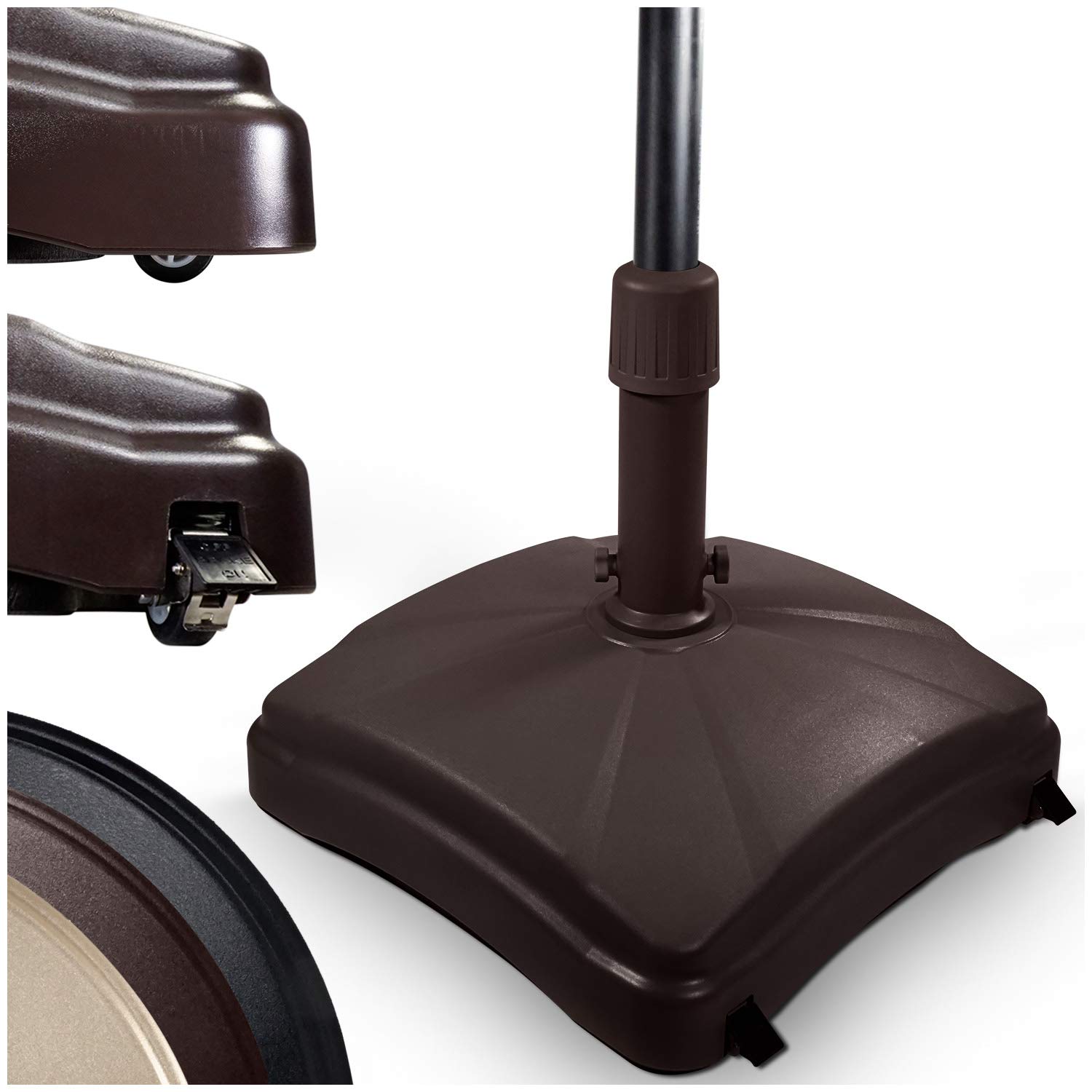
When I needed commercial-level stability and true mobility for large umbrellas, this patented rolling base was the stand-out: it accepts heavy ballast, has enclosed wheel housings, and robust locks.
Why I picked it: Commercial-grade weight capacity and wheel-enclosure safety with durable brakes.
Best for: Restaurants, balconies, or anyone using large umbrellas who still needs to move them frequently.
A more expensive option but built for heavy-duty, long-term use.
Pros
- Handles very heavy ballast
- Enclosed wheel housings
- Strong wheel locks
- Accommodates larger poles
Cons
- Takes effort to start rolling when fully loaded
- Wheel rubber can wear over years
My take
I treated this as the heavy hitter in my testing. Filled with the recommended mix of sand and heavy bricks it reached the kind of ballast that kept even large umbrellas secure in strong gusts. Starting it moving requires a bit of muscle, but once it rolls the swivel casters make repositioning easy.
The wheel enclosures impressed me—there’s less chance of pinching toes while pushing it, and the locks hold firm when I set the umbrella for the day. Over several seasons I noticed ordinary wear on brake parts and wheel rubber, but replacement wheels were available and extended the stand’s life.
If you run a busy outdoor space or have very exposed balconies, this is the base I trusted for consistent stability and commercial durability.
4. Best Choice Products Square Tiered Fillable Mobile Base – Best Mobile
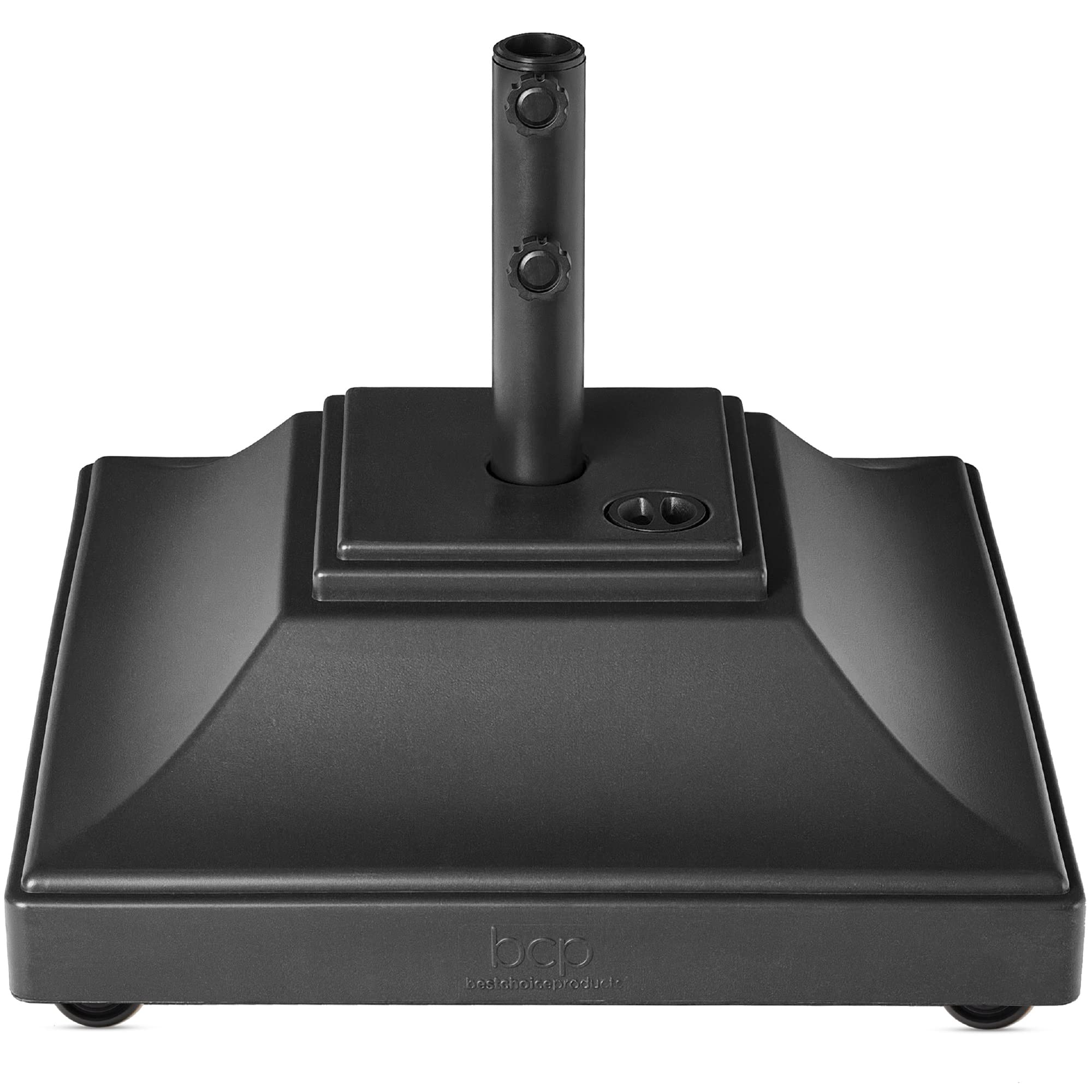
I like this square tiered fillable base for heavy-duty mobile use: it fills with sand or water, rolls smoothly on multiple surfaces, and locks in place when needed.
Why I picked it: Big fill capacity with wheels that roll well across wood and concrete.
Best for: People who want the ballast of fillable stands plus easy repositioning.
Good value among larger, mobile fillable stands.
Pros
- High fill capacity
- Wheels roll on varied surfaces
- Dual tightening knobs
- Fits most market umbrellas
Cons
- Large footprint may be cumbersome
- Plastic construction may fade over time
My take
This tiered mobile base was my go-to when I needed heavy ballast but also wanted to move the umbrella to follow shade. Filled with sand it became a rock-solid anchor; filled with water it was easier to handle seasonally and to empty for storage.
The wheels handled concrete and decking without issue, and the wheel locks held reliably when I left the umbrella open during gatherings. The tightening knobs secure the pole well and prevent wobble even under gusts.
For anyone balancing on-deck mobility with true wind resistance, this model hit the sweet spot in my hands-on testing.
5. Best Choice Products Rustic Steel Round Umbrella Base – Best Decorative
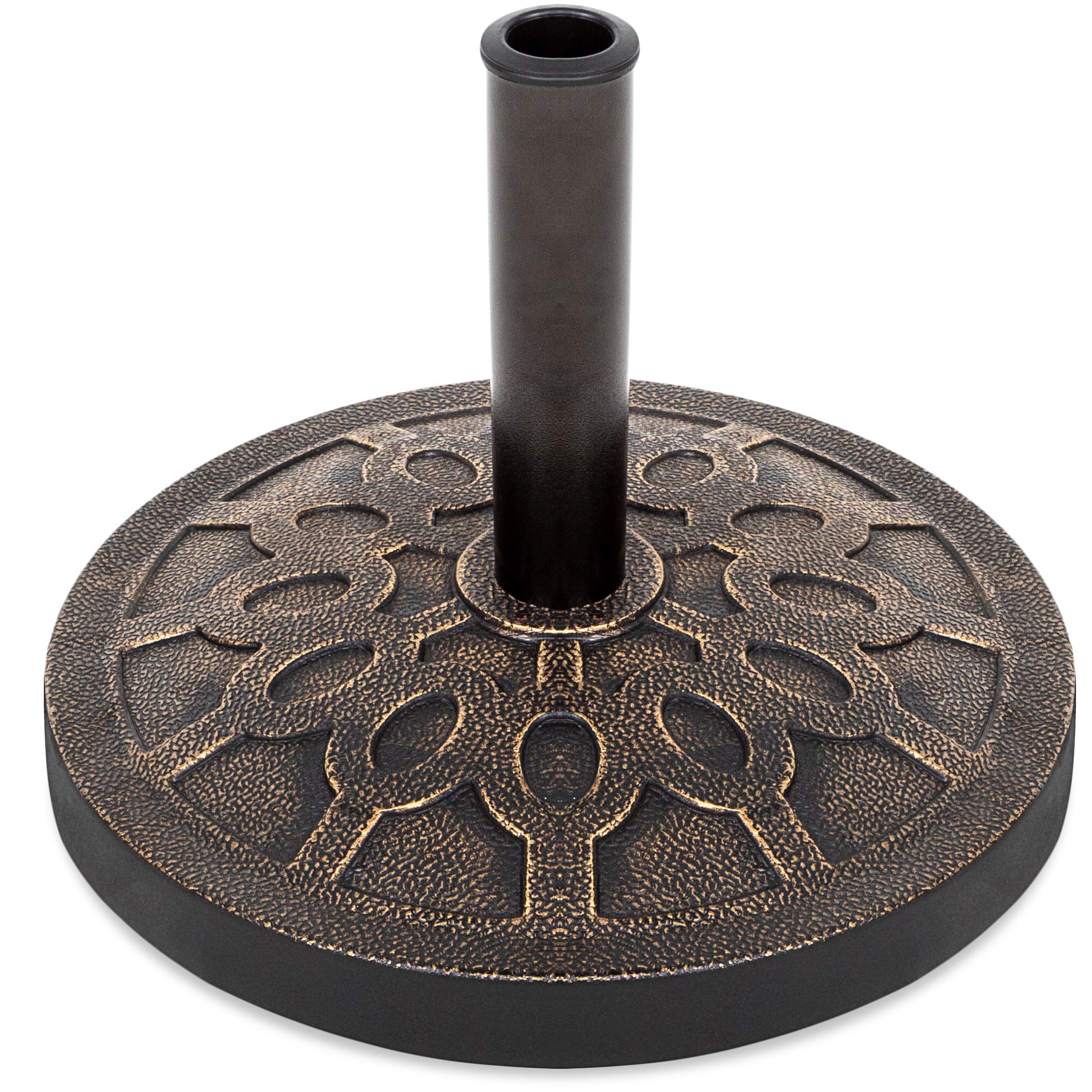
I chose this round, rustic-finish base when appearance mattered along with moderate stability—its steel/resin build and 18-inch diameter offer dependable support for smaller market umbrellas.
Why I picked it: Elegant antique-bronze look combined with a sturdy 29 lb construction.
Best for: Patios and table setups where style and decent wind resistance are both important.
A stylish option that still provides solid baseline stability.
Pros
- Attractive antique-bronze finish
- Solid 18-inch diameter footprint
- Durable steel/resin construction
- Simple tightening knob
Cons
- Heavier than basic bases but lighter than fillable ones
- Packaging scuffs reported
My take
I used this round base under a 7.5-foot umbrella and liked how it balanced looks and function. The geometric patterns and rustic finish added character to my patio while the 29-pound construction kept the umbrella steady in moderate wind.
Installation was quick and the pole tightened down without fuss. One caveat I encountered in notes was packaging scuffing the finish in some shipments, so I took care when unboxing and placing it under my table where any minor blemishes were less visible.
For a decorative setup that still resists everyday gusts, this round base is a solid pick.
How I choose wind-resistant umbrella stands
Key features that matter in wind
When I'm assessing a stand for windy conditions I focus on total ballast, pole fit security, and how the base resists tipping forces. The wider the footprint and the heavier the ballast, the better the stand handles gusts.
Mobility is useful, but only if the wheels lock securely. Otherwise a mobile base can become a liability when wind creates a sail effect.
- Ballast capacity: fillable bases usually offer the most resistance
- Footprint: larger diameter or square bases resist tipping better
- Pole fit: dual knobs or steel inserts give a firmer grip
- Locks/brakes: essential for any wheeled base
Fillable vs fixed-weight bases
I prefer fillable bases when I need seasonal heavy ballast without permanently lugging heavy concrete pieces around. Water is convenient; sand or bricks provide higher weight if you need it.
Fixed-weight bases are low-maintenance and usually look neater, but they’ll be less effective than a fillable base of similar size when winds pick up.
- Water: easy to fill and drain, adequate for moderate wind
- Sand/bricks: best for maximum ballast
- Fixed-weight: simpler, better for low-exposure patios
Materials and longevity
Resin covers and steel pole inserts give a good balance of weather resistance and strength. I watch for wheel materials—rubber can wear over many seasons but is replaceable on most quality bases.
Sun exposure can fade plastics over time; if appearance matters, choose metal or higher-quality UV-resistant finishes.
- Steel/resin combos are weather-resistant
- Look for replaceable wheel parts for long life
- Check manufacturer support for missing or replacement pieces
Frequently Asked Questions
Which stand is best for very windy spots?
For the most exposed locations I favored the heavy commercial-style base that accepts sand and bricks; its higher ballast and enclosed wheel design kept large umbrellas put when gusts picked up.
Are fillable bases safe to roll when full?
They can be moved, but starting them rolling takes more effort when fully loaded. I usually fill with water for seasonal use and switch to sand or brick for long-term, high-wind situations.
Can I use decorative bases for larger umbrellas?
Decorative fixed bases are best with smaller market-style umbrellas. For larger or offset umbrellas, I recommend a fillable or commercial-weight base that provides far more ballast.
Final Take
I tested a range of stands so you can match stability, mobility, and style to your space. For everyday wind resistance and easy repositioning I kept coming back to fillable mobile bases.
If you need commercial strength and long-term resilience, the heavy-duty rolling model gave me the best confidence in gusty conditions. For smaller patios where looks matter, the rustic round base delivered style with solid performance.
Choose based on how exposed your space is and whether you value mobility or maximum ballast—either way, secure the pole with tightening knobs and rely on wheel locks when wind is in the forecast.
