
I tested a range of under-bed storage options — low-profile bins, heavy-duty moving bags, rigid folding boxes, stackable fabric crates, and clear vinyl bags — and I explain which works best for different needs and spaces
I spent time stashing bedding, out-of-season clothes, and odds-and-ends under different beds and dressers so I could judge fit, durability, and ease of access.
In this roundup I focus on what actually makes under-bed storage useful: clearance fit, build quality, how easy items are to reach, and whether a solution stays tidy over time.
Below I break down the best options I used and how I would use each one in my home.
If you need the lowest profile to slide under platform beds, I prefer the storageLAB low-profile container. For moving or stuffing bulky bedding, the VENO 10-pack gives the biggest capacity and handles. If you want structured, stackable boxes that look neat on a shelf, Sorbus’s metal-frame bins are my pick. The iwill folding box is the best lidded, rigid underbed box for occasional heavier items, while Lifewit’s clear vinyl bags are unbeatable when I want instant visibility and wipe-clean convenience.
1. storageLAB Low-Profile Underbed Storage – Best Overall
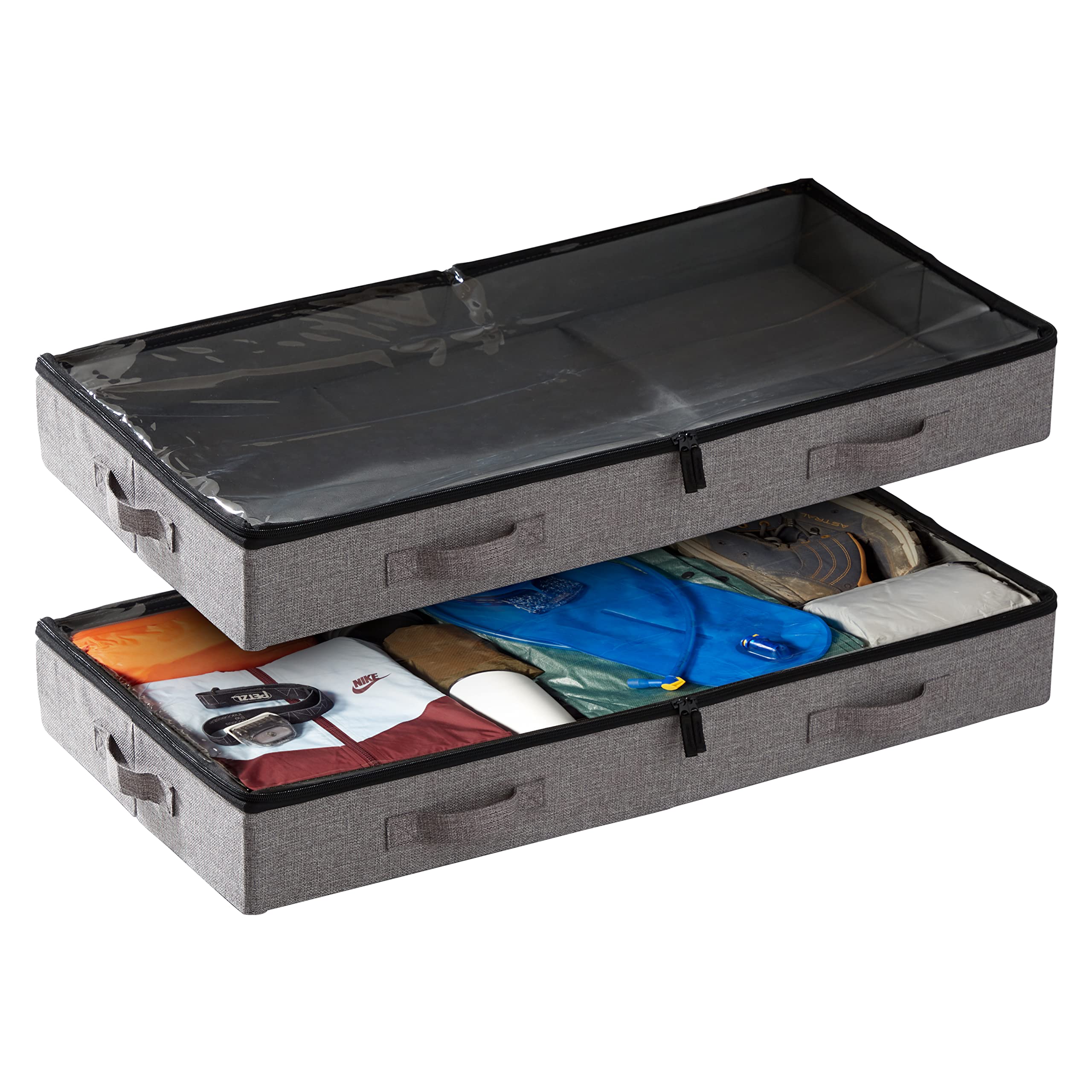
I relied on these low-profile containers when I needed a dust-resistant, easy-glide solution that actually fits shallow clearance beds.
Why I picked it: Low height, sturdy sides, clear top, and reinforced handles make it the most versatile under-bed option I used.
Best for: Low-clearance beds and storing bulkier clothing or blankets without squashing them.
An affordable, value-focused option for everyday under-bed storage.
Pros
- Very low profile fits shallow clearances
- Clear top for quick visibility
- Reinforced handles for easy pull-out
- Rigid enough to hold shape when filled
Cons
- Not ideal for heavy stacking
- Fabric can show wear if dragged on rough surfaces
My take
I kept multiple winter sweaters and a thick comforter in one container and found the 45-liter capacity generous without bulging. The container slides under my bed with only a small scrape if the clearance is tight — the low-friction bottom really helps.
The clear top made it simple to find what I needed without opening everything, and the chunky zippers held up after repeated access. The woven fabric with a plastic backing felt sturdy and kept dust out during long-term storage.
I also liked the handles on all sides; they make it easy to pull the unit out from either direction. For my primary bedroom and guest room storage, this was the most practical all-around solution.
2. VENO Extra-Large Moving & Storage Bags (10-Pack) – Best for Moving & Bulk
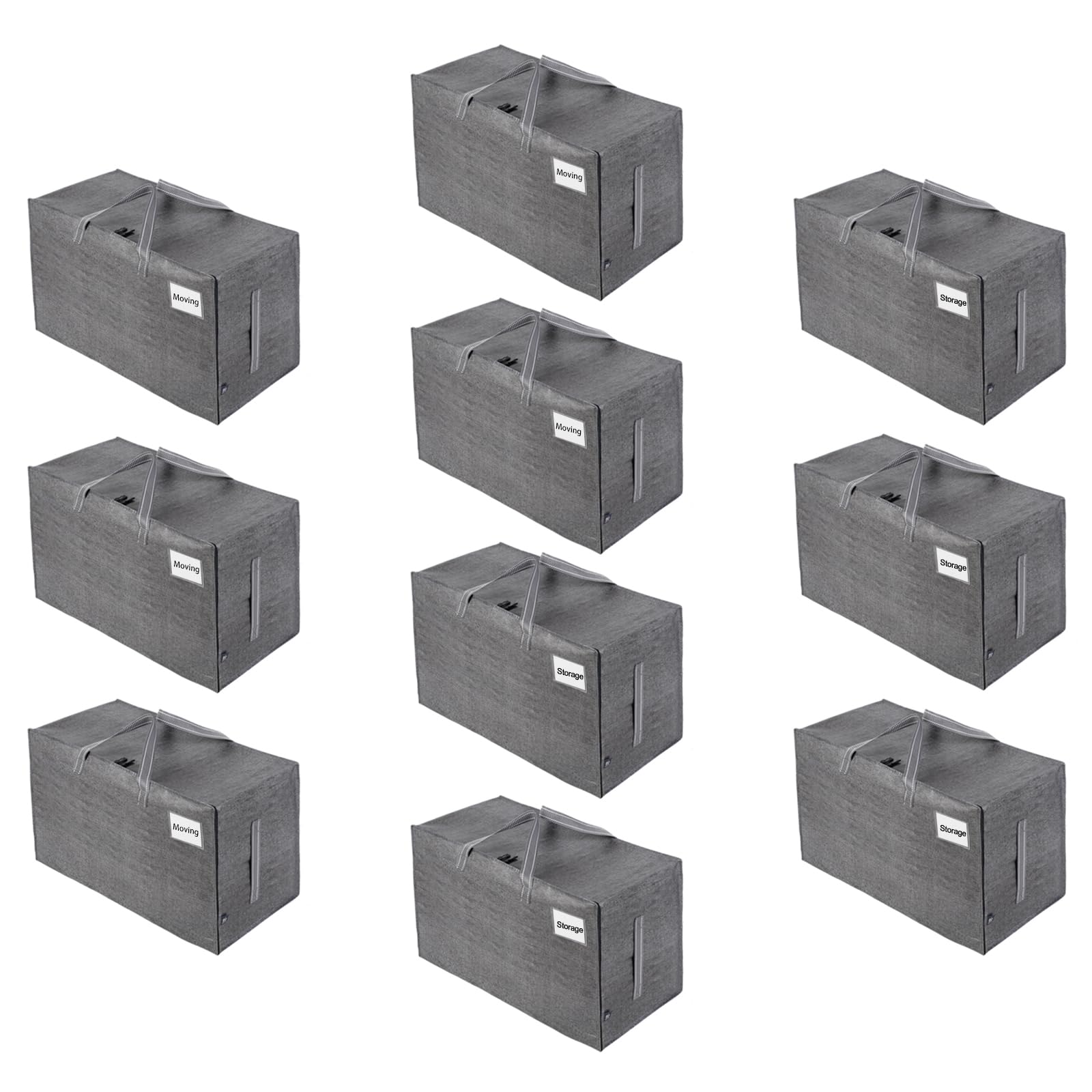
When I needed to pack a lot fast — bedding, bulky blankets, or a dorm haul — these oversized, heavy-duty bags were my go-to.
Why I picked it: Huge capacity, wide 3-sided zipper opening, and reinforced handles make loading and transporting bulky items straightforward.
Best for: Moving, dorm storage, or any situation where flexible, high-capacity bags beat rigid bins.
A cost-effective bulk option for moves and seasonal storage.
Pros
- Very roomy for bulky items
- Wide opening for easy packing
- Reinforced handles for carrying
- Folds flat when not in use
Cons
- Awkward to carry when overfilled
- Not stackable like rigid bins
My take
I used these for a move and for storing several queen-size comforters; the wide three-sided zipper made packing and unloading much faster than standard tote bags.
The fabric felt noticeably stronger than disposable moving bags and the reinforced handles survived heavy loads without tearing. I did take care when closing the zipper around corners — leaving a little slack prevents stress at the stitch points.
Because they fold flat, I stash extras in a closet when they’re not in use. For anyone who moves frequently or needs to haul bedding between places, these provided the easiest combination of capacity and durability.
3. iwill CREATE PRO Folding Underbed Storage Box – Best Lidded Option
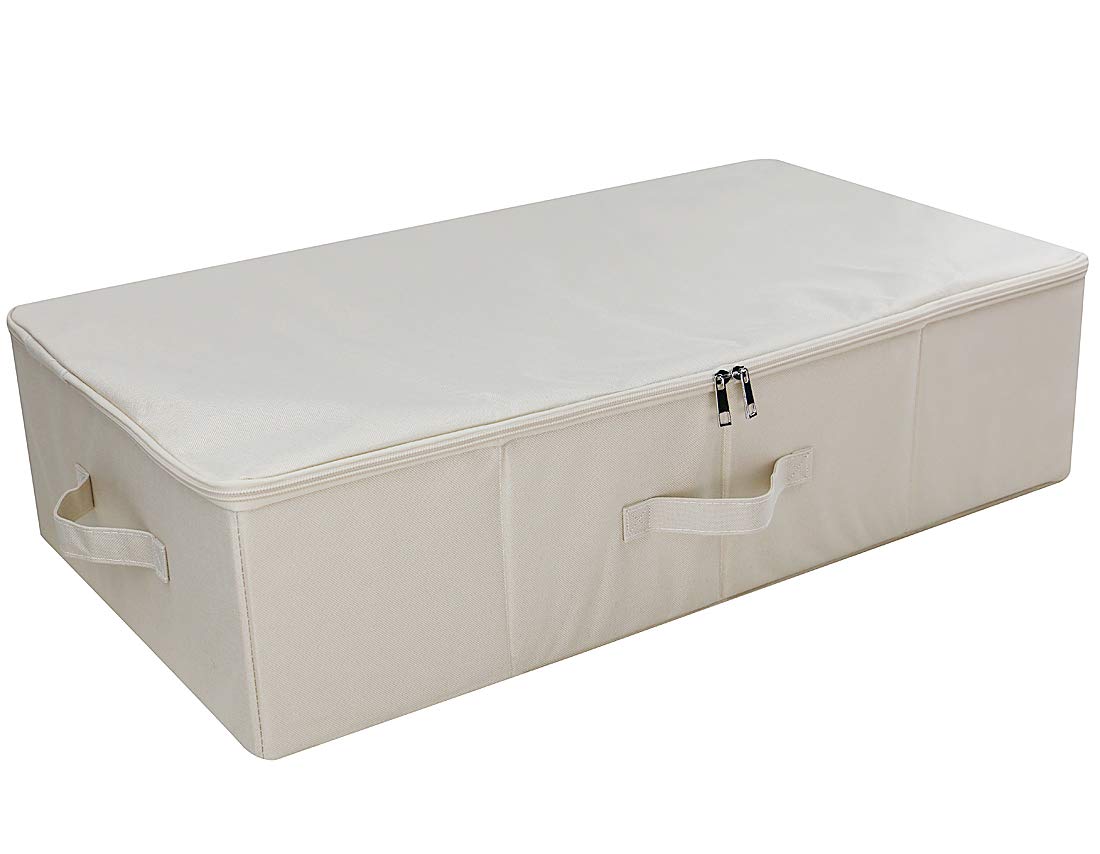
I reached for this folding, lidded box when I wanted structure, dust protection, and a tidy appearance under my bed or on a shelf.
Why I picked it: Rigid walls, removable bottom board, and a full lid keep contents protected and the box looking neat.
Best for: Storing shoes, photos, or small collections that need a rigid container and lid.
A budget-friendly rigid box that balances protection and collapsibility.
Pros
- Rigid walls prevent collapse
- Lid keeps dust out
- Collapses flat for storage
- Multiple handles for easy handling
Cons
- Lid is soft; not fully crush-proof
- Avoid overloading with very heavy items
My take
I used this box for shoes and archived photos; the rigid PP boards inside kept the shape even when partially filled, which made sliding it under a low bed effortless.
The three-side zip opening and the removable bottom board make loading straightforward, and I appreciated that it folds flat when not needed. The beige fabric blends in under most beds and looks tidier than a loose bag.
If you plan to store very heavy items, I’d pick a more industrial option, but for regular bedroom organization this box struck a good balance of protection and convenience.
4. Sorbus Stackable Fabric Storage Bins (4-Pack) – Best for Stacking
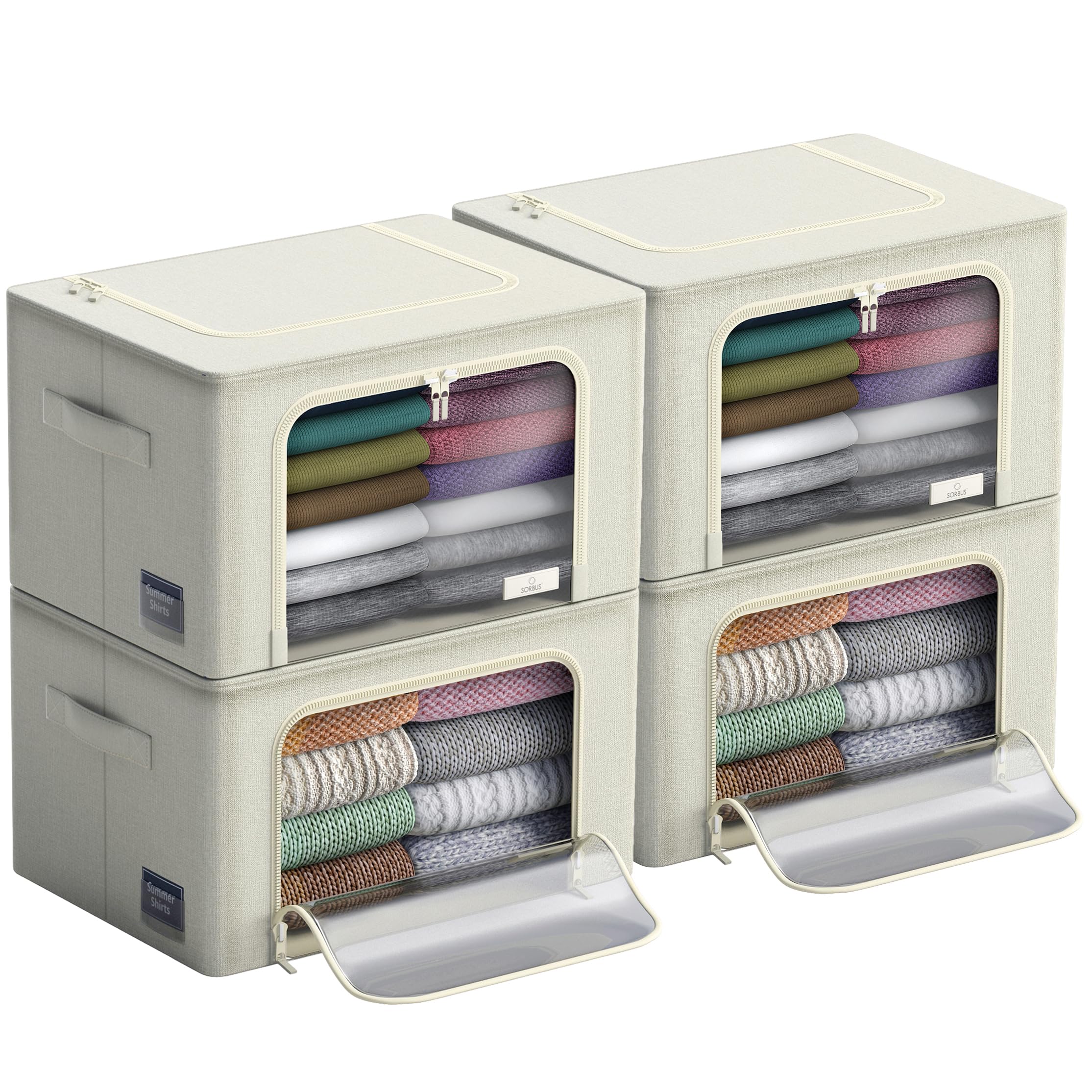
I chose these when I wanted stackable, box-style storage that holds its shape and gives front access to contents.
Why I picked it: Metal wire frame and dual openings (top and front) let me stack units and reach items without unstacking everything.
Best for: Closets, shelves, and organized storage where stackability and visibility matter.
A bit pricier, but worth it for structured, stackable storage.
Pros
- Internal wire frame keeps shape
- Top and front zipper access
- Clear window for quick ID
- Stacks securely when assembled
Cons
- Bulky when collapsed
- Heavier than fabric-only options
My take
I stored comforters and multiple sheet sets in a single bin and found the metal wire frame essential — the box stayed rigid and stacked cleanly with another on top.
Opening from the front was a real time-saver when an item near the bottom was needed; I didn’t have to unstack anything. The clear window helped me identify contents at a glance.
Assembly pops open quickly and the zippered flap protects against dust. For organizing seasonal textiles in a visible, stackable way, these are among my favorites.
5. Lifewit Clear Vinyl Storage Bags (40L) – Best Clear Bags
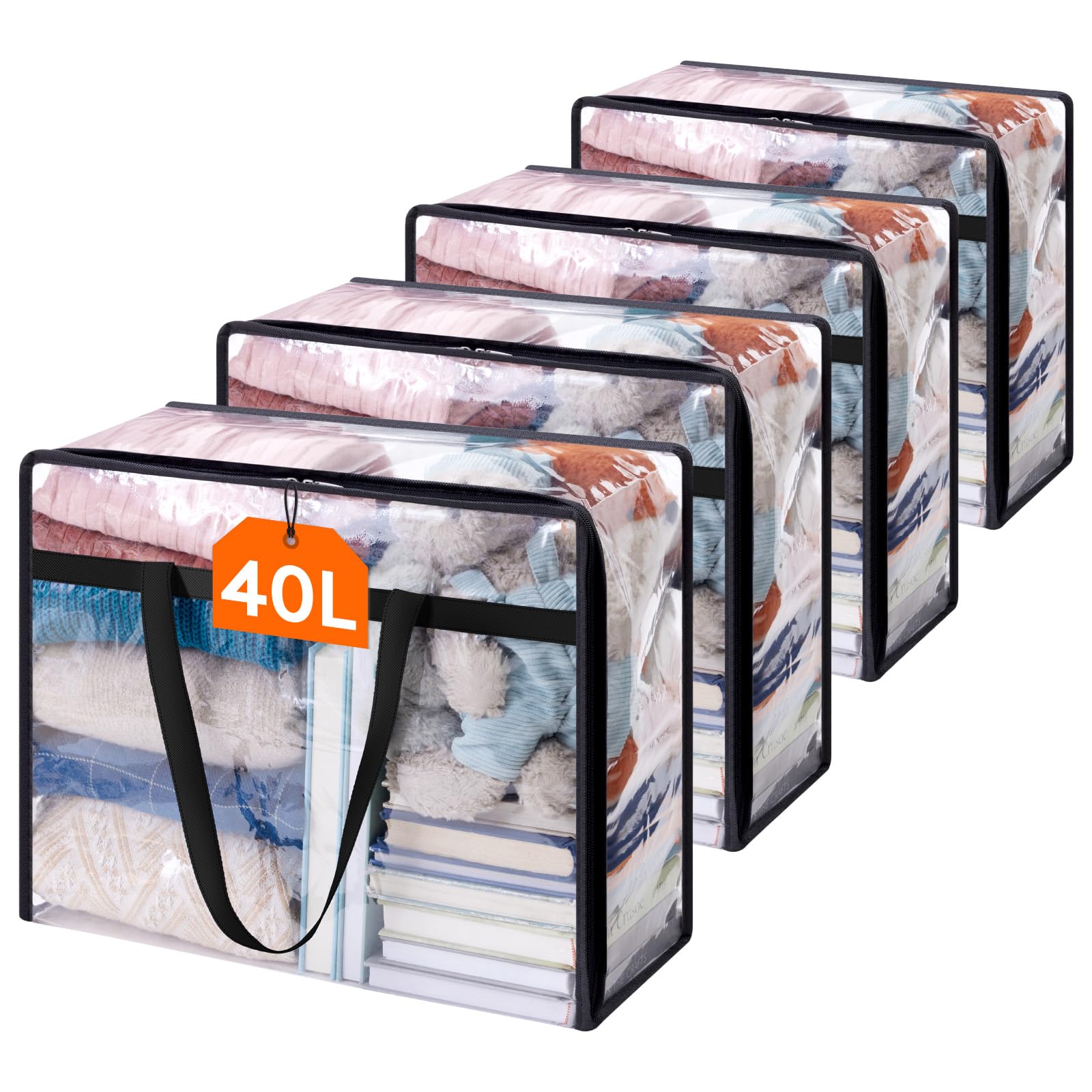
When I wanted to see contents and wipe things clean easily, these clear vinyl bags were my fastest solution.
Why I picked it: Heavy-duty PVC clarity, sturdy zippers, and reinforced handles make these ideal for visible, moisture-resistant storage.
Best for: Closet visibility, storing pillows and throws, and items I need to spot-check often.
Great value for durable, transparent storage that stacks and folds.
Pros
- Crystal-clear visibility
- Thick vinyl resists punctures
- Reinforced handles for carrying
- Wipes clean easily
Cons
- Can be bulky when full
- Less breathable than fabric options
My take
I packed these with blankets and decorative pillows and appreciated being able to see exactly what was inside without opening multiple bags.
The vinyl felt thick and durable; after handling full bags the zippers stayed smooth and the handles held up. For a lake house and kids’ rooms where spill-cleaning matters, the wipe-clean surface was invaluable.
Because they’re transparent, I also used them to group seasonal clothing for consignment; labeling was simple and the bags stack neatly in closets.
How I Choose Under-Bed Storage
Measure Clearance First
I always measure the height from the floor to the underside of the bed frame before buying anything. Low-profile containers that list a 4–5 inch height are the only reliable fit under shallow beds.
Length and width matter too — measure the usable opening so you don’t end up with a container that won’t slide in straight.
- Measure both height and the entry gap to the bed frame
- Account for carpet pile which can reduce clearance
Material & Protection
I pick fabric-backed containers for breathability and vinyl or plastic for moisture resistance. Thick PVC is best when I need wipeable, clear storage.
For long-term textile storage I add cedar or silica packets inside rigid or zippered containers to guard against pests and moisture.
- Vinyl: clear and wipeable
- Fabric: breathable and attractive
- Rigid frames: protect delicate items
Access and Handling
If I access items frequently, I prioritize wide openings, front zips, or clear tops so I don’t have to pull out every container.
Reinforced handles and low-friction bottoms make sliding units in and out much easier — especially on carpet.
- Choose front/top access for frequent use
- Look for reinforced handles for heavy loads
Stackability vs Flexibility
I decide whether I want stackable structure or flexible capacity. Metal-framed boxes stack neatly but take more storage space when collapsed.
Soft-sided bags fold completely flat when not in use and excel when mobility or volume is the priority.
- Metal/rigid: stackable and structured
- Soft/flexible: collapsible and high-capacity
Frequently Asked Questions
How do I know which height will fit under my bed?
I measure from the floor to the underside of the bed frame and compare it to the product’s listed height. If the clearance is tight, I allow a small margin for carpet pile and ease of sliding.
Can I stack these under-bed containers?
I stack only products with internal frames or rigid panels — like the Sorbus bins — and avoid stacking soft bags that can crush lower items.
Will clear vinyl bags protect items from moisture?
I find thick vinyl offers good splash and dust protection, but for long-term moisture protection I add desiccant packs and avoid placing bags on damp surfaces.
How should I clean and maintain these storage options?
I wipe vinyl up with a damp cloth, spot-clean fabric containers, and store empty boxes flat in a dry place. I also check zippers and handle stitches occasionally and avoid overfilling.
Final Take
I keep a mix of these under-bed solutions in my home: a low-profile storageLAB for the tightest spaces, VENO bags for moving and bulky bedding, Sorbus bins where I need stackable structure, iwill boxes for lidded protection, and Lifewit clear bags when visibility matters.
Pick the style that matches the clearance you measured, how often you’ll access items, and whether you value structure or fold-flat convenience. In my experience, that trade-off determines which option works best long term.
