
I've tested rotating trays, heavy-duty mats, silicone liners and sliding baskets—these are the under-sink organizers that actually kept my cabinets dry and usable.
I spend a lot of time organizing tight spaces, and under-sink areas are where clutter and leaks do the most damage. Over the years I’ve tried revolving trays, rubber and silicone drip pans, and small sliding drawers to see which solutions actually work in real kitchens and bathrooms.
This roundup reflects hands-on use: I looked at fit, durability, ease of cleaning, and how each product handled real leaks and everyday storage. Below I explain which options I reach for depending on the problem I want to solve—accessibility, leak protection, or maximizing vertical space.
I grouped products by how they solve under-sink problems: lazy Susans for access, silicone/TPE mats for leak protection, and metal baskets for organization. Pick the category that matches your biggest pain point.
1. Copco 18″ Revolving Under-Sink Organizer – Best Overall
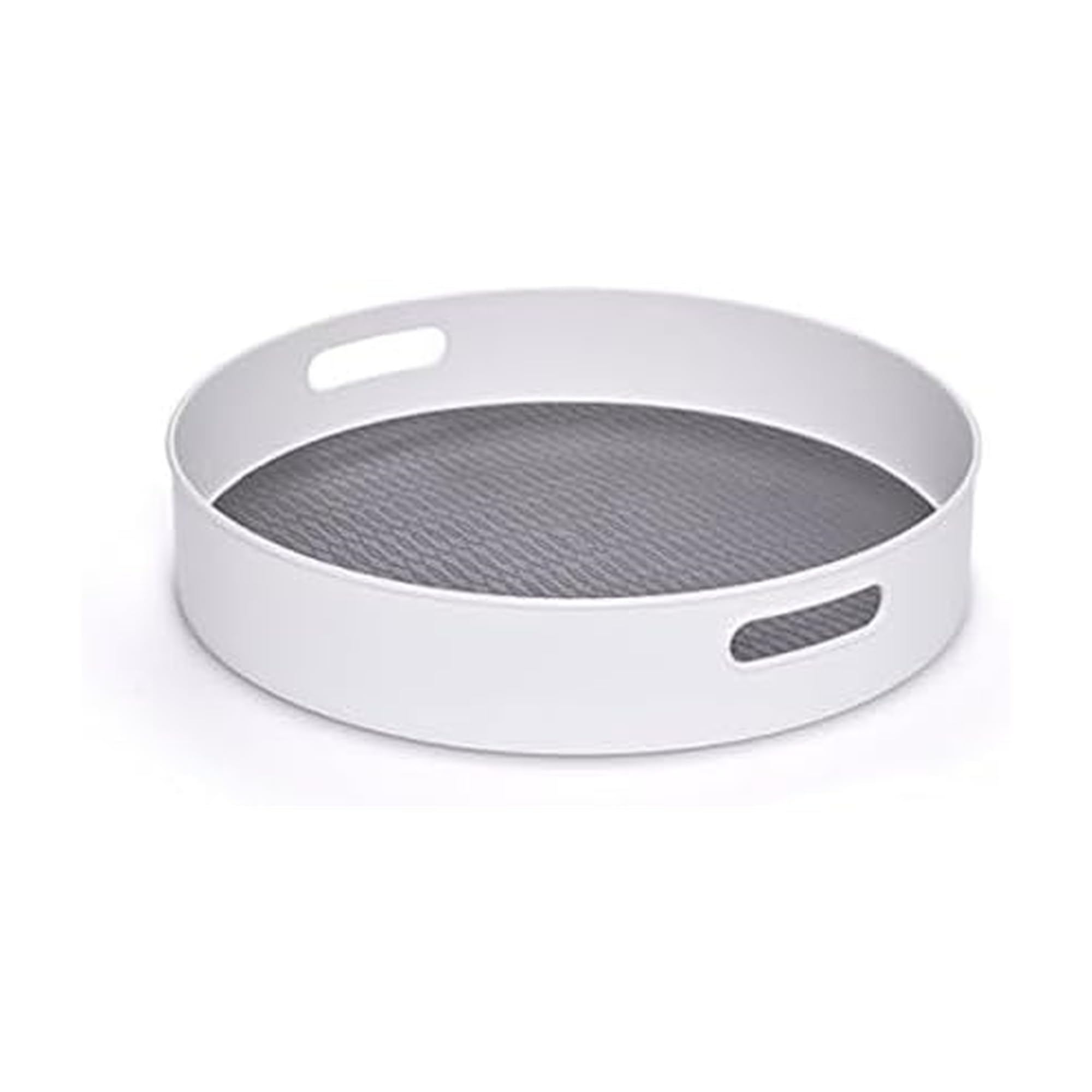
I use this 18-inch lazy Susan when I want instant access to bottles and jars under the sink—the high rim and non-skid surface keep things steady while it spins.
Why I picked it: Smooth rotation, high rim walls, and roomy 18-inch surface made daily access effortless.
Best for: Anyone who needs quick access to cleaning bottles, oils, or condiments.
Affordable and high-value for a no-assembly organizer.
Pros
- Large 18-inch turning surface
- High rim prevents spills
- Molded non-skid surface
- No assembly required
- Smooth ball-bearing spin
Cons
- Takes significant cabinet floor space
- Not ideal for shallow cabinets
My take
I put the Copco Lazy Susan under my kitchen sink and it transformed how I reach frequently used cleaners and detergents. The 18-inch diameter holds big bottles and several smaller items without crowding.
The turntable spins easily thanks to ball-bearing construction, and the molded non-skid surface really keeps tall jugs and spray bottles from sliding when I rotate it. There was zero assembly and the white/gray finish blends with my cabinet interior.
If you want to stop digging through piles of bottles, this organizer makes everything accessible. I also keep a second one in a deep pantry cabinet for oils and vinegars—same benefit: smooth access and a tidy footprint.
2. WeatherTech SinkMat Cabinet Liner – Best for Leak Protection
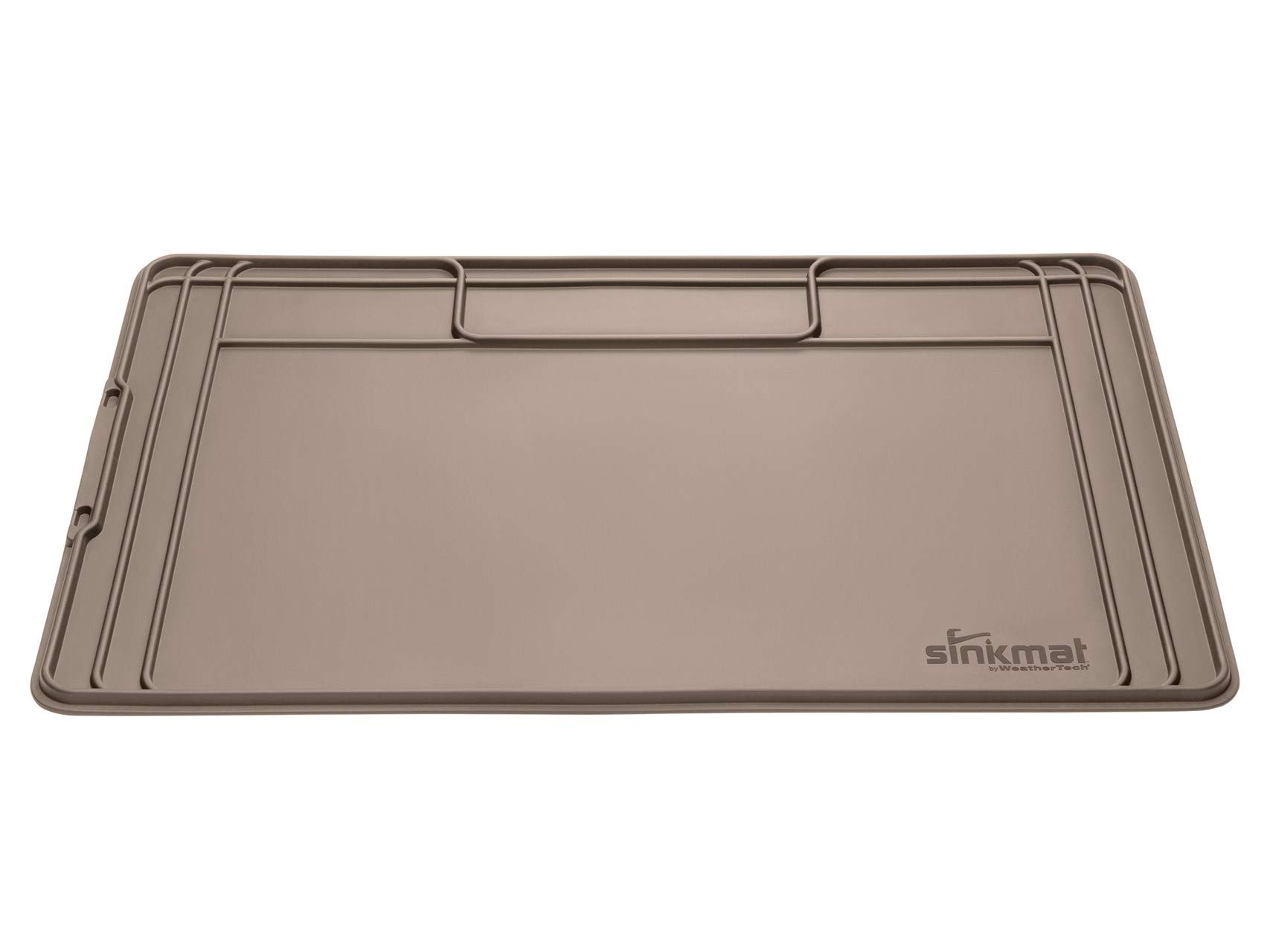
When I wanted maximum protection for new cabinets, I chose this heavy-duty TPE mat for its high lip, rigidity, and trimmable design.
Why I picked it: Raised lip, thick thermoplastic elastomer, and trim lines for a custom fit—great for guarding cabinets.
Best for: People prioritizing robust protection for expensive cabinetry.
A premium, long-term protection choice.
Pros
- Raised lip traps leaks
- Thick, durable TPE material
- Trimmable for custom fit
- Easy to wipe clean
- Lifetime limited warranty
Cons
- Heavier and less flexible to maneuver
- May require trimming around pipes
My take
I installed the WeatherTech SinkMat under a newly remodeled sink because I did not want any chance of water damaging the cabinets. The mat’s raised lip and substantial thickness gave me confidence during a test leak scenario.
It was heavier and less floppy than cheaper liners I’ve tried, which made it straightforward to lay flat and trim to fit the cabinet opening. Cleanup is effortless—wiping away splashes takes seconds.
This is the mat I reach for when I want a near-failproof barrier between plumbing and cabinetry. It’s a premium option if protecting finishes is a top priority.
3. XTREME MATS Waterproof Under-Sink Mat – Best Heavy-Duty Mat
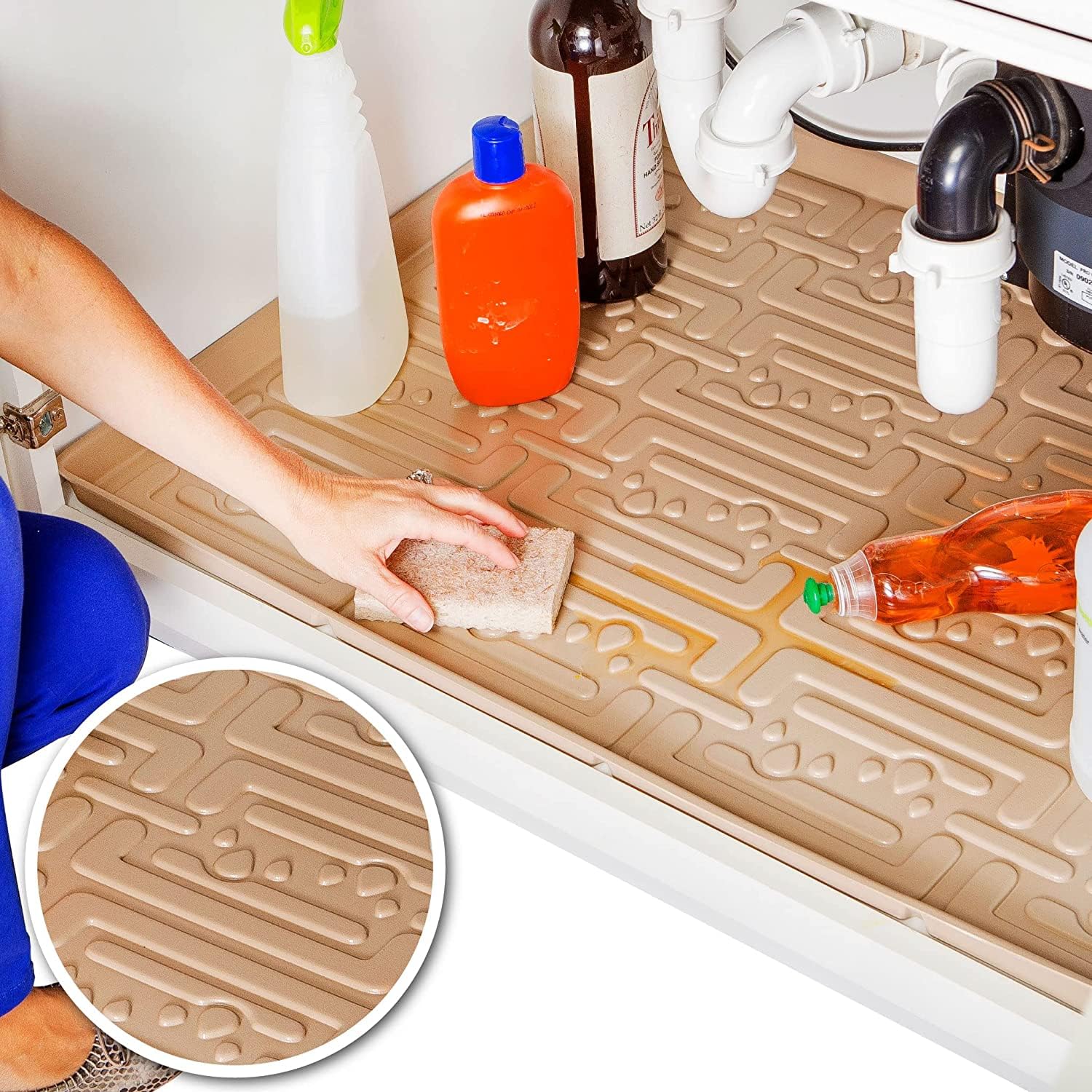
I picked this mat where capacity and ruggedness matter—it’s strong, flexible, and claims a large liquid-holding capacity if a leak occurs.
Why I picked it: Sturdy low-density polyethylene construction with high side walls and high liquid capacity.
Best for: Kitchens or rental units where leak containment and durability matter.
Midrange to heavy-duty option with robust capacity.
Pros
- Holds several gallons of liquid
- Flexible yet sturdy material
- Designed to fit common cabinet sizes
- Easy to clean and reinstall
- US-based manufacturer support
Cons
- May need modification for floor-mounted plumbing
- Less pliable for very tight openings
My take
After a minor cabinet water incident, I replaced a flimsy tray with the Xtreme Mat and immediately noticed the thicker material and raised, angled walls. In my test, it contained pooled water without leaking onto the cabinet floor.
Installation was simple; the mat flexes to get through tight openings and then returns to shape once inside. I did trim it around supply lines in one cabinet and sealed the cut edges with silicone—worked fine.
This is the one I recommend when you want a heavy-duty, purpose-built drip tray that can actually hold gallons and survive regular use.
4. SIKADEER Silicone Under-Sink Mat – Best Silicone Option
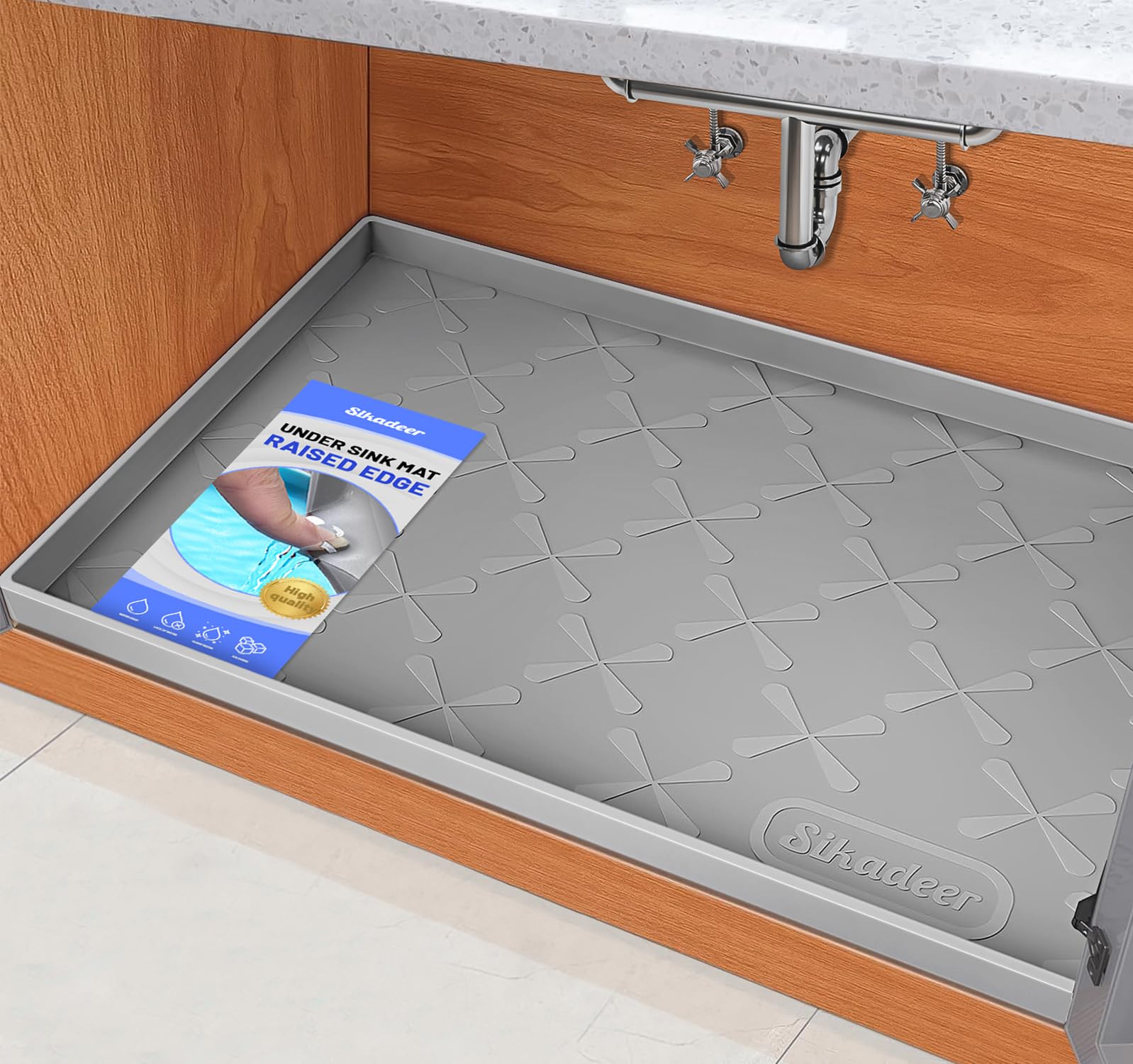
I reach for this silicone mat when I want a food-safe, flexible liner that’s easy to clean and won’t absorb odors.
Why I picked it: Food-grade silicone, anti-slip texture, and convenient raised edge for everyday protection.
Best for: Cabinets where odorless, easy-to-clean protection and flexibility are priorities.
Budget-friendly silicone with lots of size options.
Pros
- Food-grade, odorless silicone
- Raised edge contains spills
- Anti-slip texture
- Dishwasher-safe and easy to clean
- Multiple sizes to choose from
Cons
- 3mm thickness feels softer than rubber
- Edge is pliable, less rigid protection
My take
I put the SIKADEER mat in a bathroom cabinet where I store toiletries. The food-grade silicone felt odorless straight out of the box and lay flat without curling.
The anti-slip texture kept bottles from sliding when I reached for items, and the raised edge made spotting pooled water immediate. It’s thin compared with some premium mats but its flexibility makes it easy to roll and reposition.
For everyday spill protection and simple cleanup, this silicone mat is the lightweight, practical choice I use when I don’t need the absolute rigidity of a TPE tray.
5. Simple Houseware Stackable Sliding Basket – Best for Organization
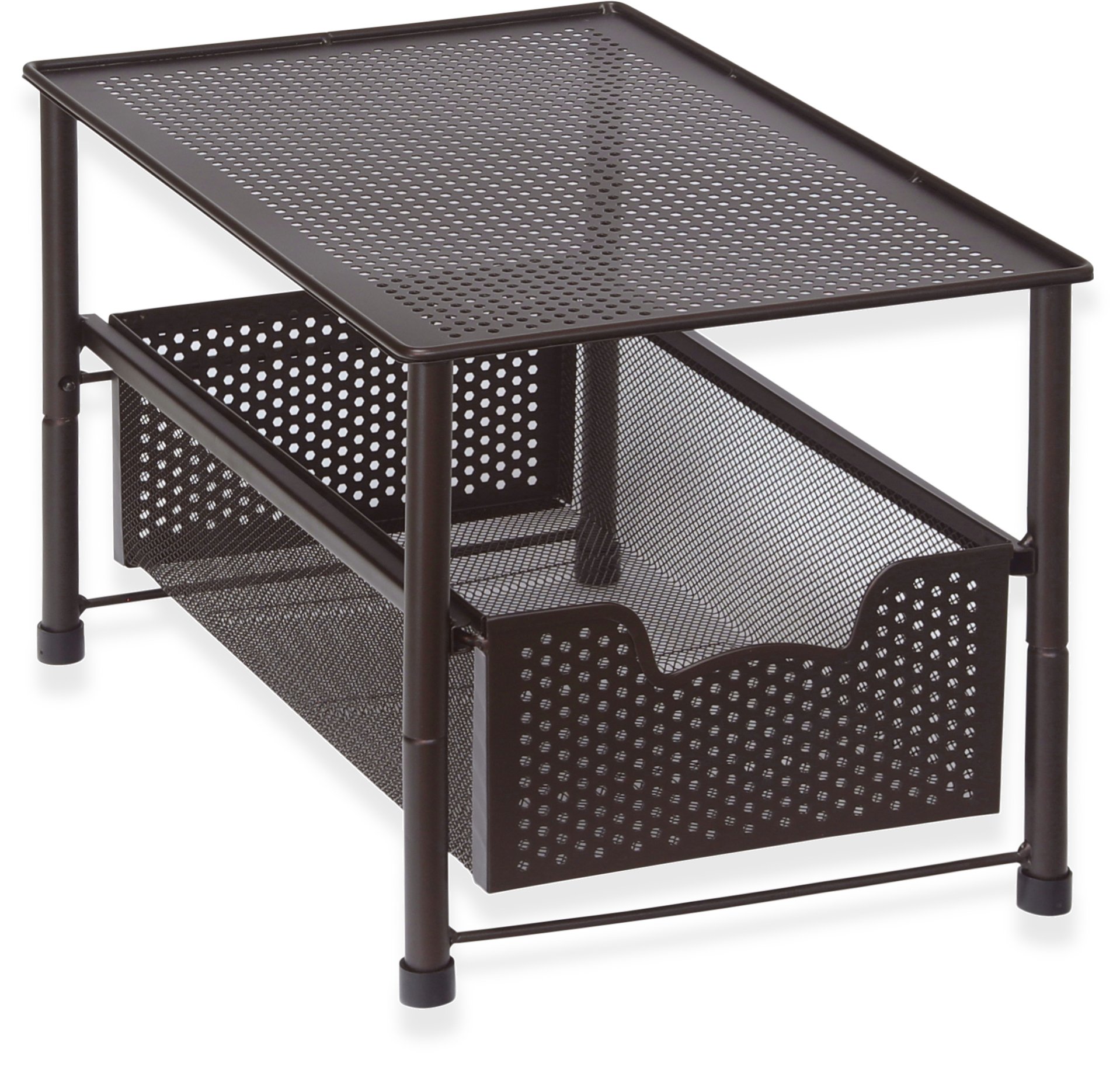
I rely on this metal sliding basket when I need to create drawer-like access inside shallower cabinets—assembly is quick and the slide makes reach effortless.
Why I picked it: Sliding drawer action and stackable design for making the most of vertical space.
Best for: Small bathroom cabinets and awkward under-sink spaces needing drawer access.
Mid-priced metal organizer that outlasts plastic alternatives.
Pros
- Smooth sliding drawer
- Stackable to gain vertical storage
- Sturdy metal construction
- Tool-free assembly
- Top shelf for extra storage
Cons
- Smaller internal capacity than full shelves
- One unit's slide may feel tighter than another
My take
I use three of these sliding baskets across bathrooms and the kitchen. Assembly is straightforward and the bronze finish hides scuffs better than plastic versions.
The drawer slides easily in most of my installations and gives the under-sink area a true drawer feel so I’m not reaching blind into the back. Stacking two units creates usable tiers without drilling.
If you need modular, drawer-like access inside a cramped cabinet, this is the organizer I go to first.
6. WINISOK Silicone Under-Sink Mat – Best Value Silicone Mat
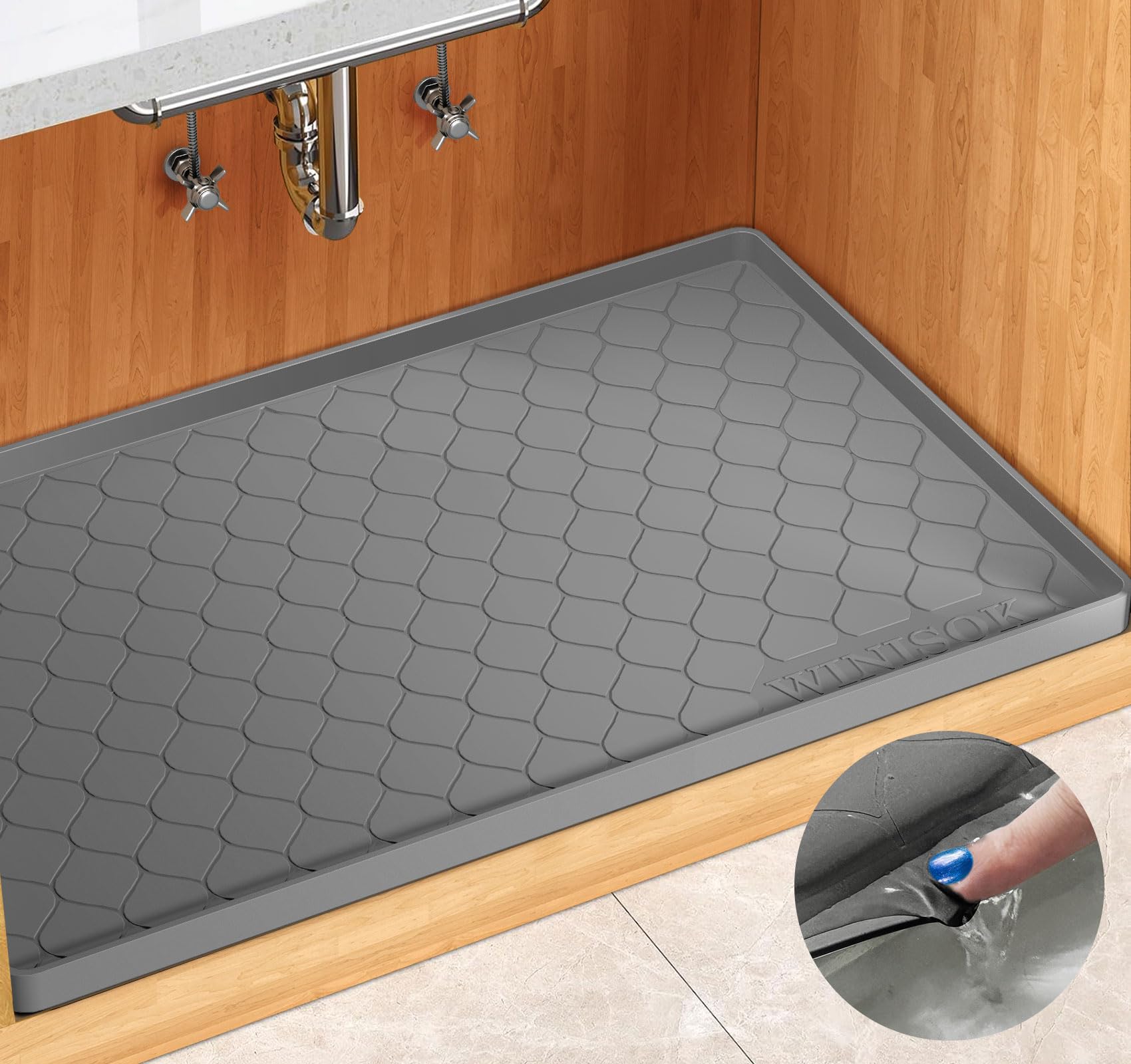
I picked this mat when I wanted a food-grade silicone option that feels like a sensible alternative to pricier brand mats.
Why I picked it: Food-grade silicone with raised edge and multiple sizes gives solid protection at a value.
Best for: Buyers who want silicone protection without premium-brand pricing.
Good value compared with premium competitors.
Pros
- Food-grade silicone
- Raised edge for spill containment
- Multiple sizes available
- Easy to clean and reposition
- Flexible for tight access
Cons
- Lip can be less rigid over time
- Softer than thicker rubber alternatives
My take
I swapped in the WINISOK mat when a more expensive American-made mat felt out of reach. The silicone is softer and more flexible, but it still lays flat and captures small leaks effectively.
Cleaning is effortless—wiping or removing the mat to rinse in the sink works well. Because it’s flexible, I could slide it under a cabinet with limited access where a stiffer mat wouldn’t fit.
For the price-conscious shopper who still wants the benefits of a food-grade silicone liner, this is the mat I recommend as a practical compromise.
How I Choose an Under-Sink Organizer
What problem are you solving?
Start by deciding whether you need better access, leak protection, or vertical organization. I pick a lazy Susan when I want quick access to many bottles, a rigid TPE mat when protecting new cabinetry, and sliding baskets when I want drawer-style access in awkward spaces.
- Access: Revolving trays make frequently used items reachable.
- Leak containment: Thick mats with raised lips trap water.
- Organization: Stackable baskets create usable tiers.
Sizing and fit
Measure inside the cabinet—front to back and side to side—before ordering. I always account for supply lines, drains, and garbage disposals. Many mats are trimmable or available in several sizes; choose slightly smaller if you must avoid pipes.
- Measure cabinet interior, not door opening.
- Check for floor-mounted plumbing that may require cutting.
- Allow clearance for doors and drawers to close.
Material and maintenance
I prefer food-grade silicone or TPE for odorless, non-toxic protection. Silicone is flexible and easy to roll up; TPE and low-density polyethylene are stiffer and better at holding larger volumes of leaked liquid. Wipe, rinse, or remove the mat for cleaning—choose what matches your cleaning routine.
- Silicone: flexible, odorless, dishwasher-safe in many cases.
- TPE/LDPE: thicker, holds more liquid, more rigid.
- Look for raised edges and textured surfaces to prevent sliding.
Installation and extras
Consider installation friction: heavy mats can be harder to maneuver into tight cabinets, while flexible silicone rolls in. For organizers, check assembly requirements and stacking compatibility. If you own expensive cabinetry, prioritize a mat with higher walls and thicker material.
- Trim lines simplify custom fitting.
- Metal organizers often require simple snapping or bolting.
- Think through future changes—modular pieces are more adaptable.
Frequently Asked Questions
Can I trim these mats to fit around pipes?
Yes—many mats have designated trim lines or are flexible enough to cut. I always measure and trim away from the lip, then dry-fit the mat before finishing. For floor-mounted plumbing you may need to cut and seal the edges.
Will a silicone mat hold a large leak?
Silicone mats will contain small to moderate leaks and make pooled water obvious, but they’re generally thinner than purpose-built heavy-duty trays. For multi-gallon containment I opt for a thicker TPE or polyethylene mat that lists higher fluid capacity.
How do I clean these organizers and mats?
I wipe most mats with a damp cloth and mild detergent, or remove and rinse in the sink. Silicone mats can go in the dishwasher in many cases; rigid TPE trays simply wipe clean. For metal organizers, wipe with a damp cloth and dry to avoid rust in humid environments.
Will a lazy Susan work under every sink?
Not always—lazy Susans need enough flat floor space and clearance to spin, so they’re best for wider, unobstructed cabinet bases. If your cabinet is shallow or packed around plumbing, a slim sliding basket or custom mat may be a better fit.
Final Take
Under-sink organization is about matching the solution to the problem. For day-to-day access I reach for the Copco Lazy Susan; for the best leak containment I prefer a WeatherTech or XTREME mat; and for drawer-like convenience the Simple Houseware sliding basket is my go-to.
Measure carefully, think about plumbing, and choose materials that fit your maintenance habits. I’ve relied on these options in real cabinets—pick the one that addresses the pain point you care about most and your under-sink area will serve you better.
