
I tested a range of under-sink and inline filters — from full reverse osmosis systems to compact direct-connect units — and picked options that balance performance, installation, and long-term costs.
I spent time installing and using several under-sink and inline filters so I could tell you which models actually improve taste, remove contaminants, and fit real kitchens.
In this roundup I focused on filtration performance, certifications, installation friction, and what ongoing maintenance looks like in everyday use.
When comparing these systems I prioritized verified certifications (NSF/IAPMO), contaminant coverage (including PFAS where stated), ease of installation, water flow, and the real-world convenience of filter changes.
1. iSpring RCC7AK — 6-Stage Reverse Osmosis System with Alkaline Remineralization – Best Overall
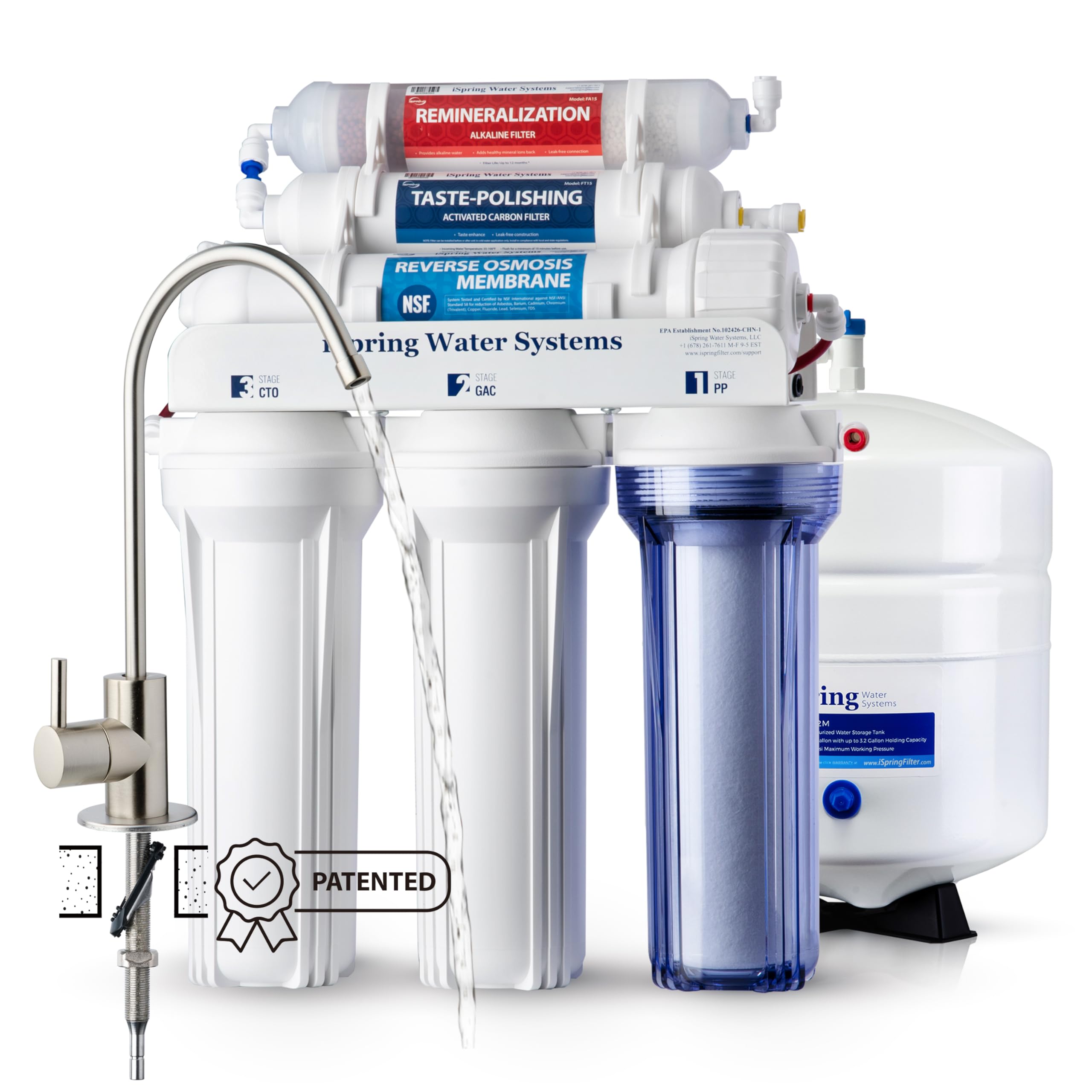
A full reverse osmosis system with NSF/ANSI 58 full-system certification, a mineral boost stage, and an unusually user-friendly top-mounted faucet design.
Why I picked it: NSF/ANSI 58 full-system certification plus a remineralization stage that noticeably improves taste.
Best for: Households wanting bottled-water quality and thorough contaminant removal.
A premium, long-term investment rather than a budget buy.
Pros
- Full-system NSF/ANSI 58 certification
- Alkaline remineralization for better taste
- Top-mounted faucet simplifies installation
- Transparent prefilter housing for quick checks
Cons
- Higher upfront cost
- Produces RO wastewater
- Requires under-sink space
My take
I installed the RCC7AK because I wanted more than just a carbon filter — I wanted a true RO system that also puts minerals back into the water. The difference in taste was immediate: water came out noticeably smoother and more pleasant than my previous bottled-water habit.
Its patented top-mounted faucet fastener made the faucet install less fiddly than typical RO kits; I could tighten from above without crawling under the sink. The clear first-stage housing is genuinely useful — I could see sediment buildup and time my prefilter changes without guesswork.
What sold me on this unit was the combination of full-system NSF/ANSI 58 certification and the AK remineralization stage. Between the certification and the remineralizer, I felt confident the system was both effective and produced water with a natural mouthfeel.
I also relied on the documentation and online setup videos for a straightforward DIY install. Expect RO-style operational details — periodic filter swaps and the usual RO wastewater — but the filter replacements have been easy to manage and reasonably priced over time.
2. Waterdrop 10UA — Compact Twist-and-Lock Under-Sink Filter, Direct Connect – Best Value
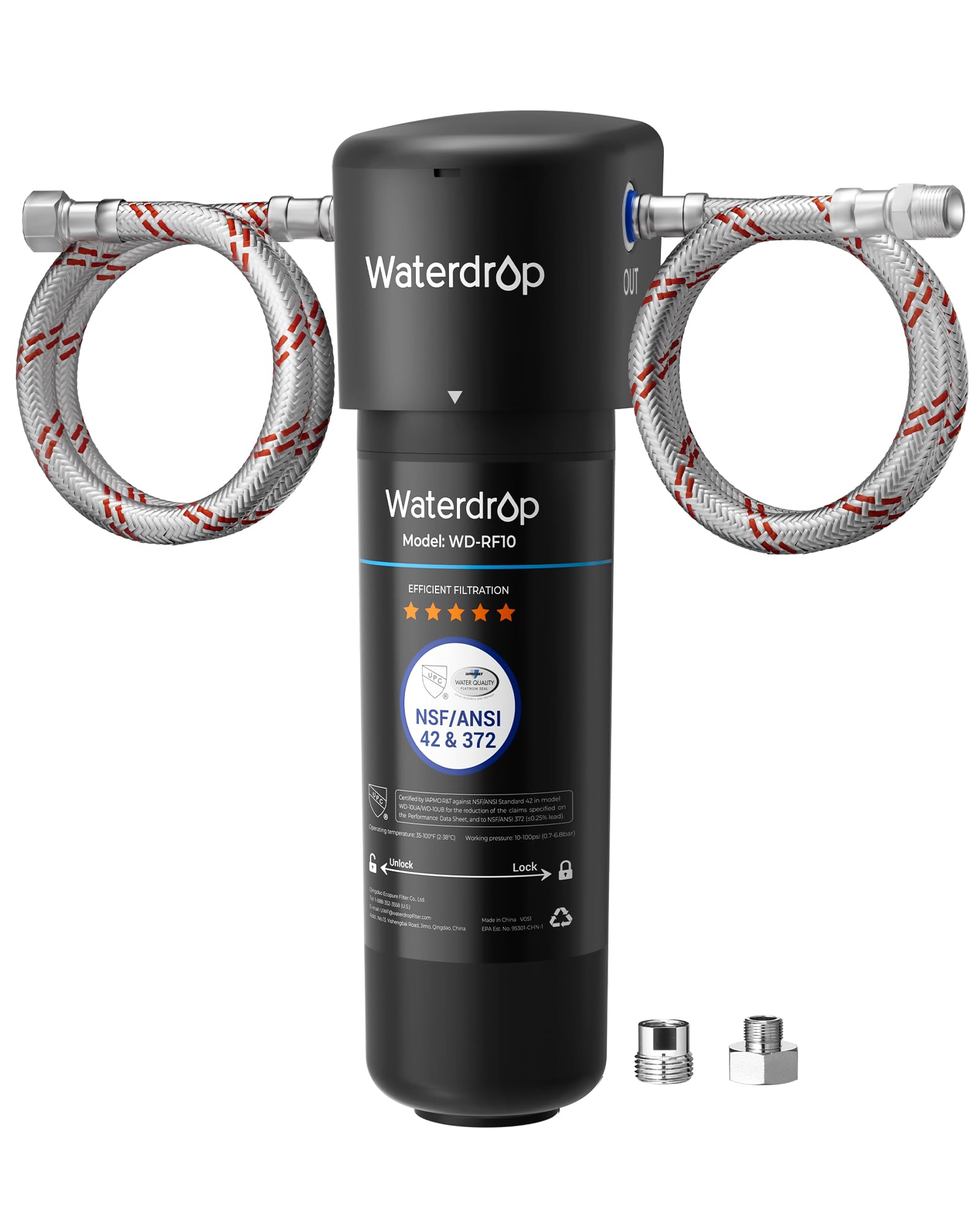
A compact, low-maintenance under-sink filter that connects directly to the cold-water feed and is built for quick installs and low replacement cost.
Why I picked it: Tiny footprint, twist-and-lock cartridge, and very affordable replacement filters.
Best for: Renters, apartments, and kitchens where space and simplicity matter.
An affordable option with low ongoing cartridge costs.
Pros
- Quick twist-and-lock cartridge changes
- Direct-connect to standard sink feed
- Targets PFAS, lead, chlorine, and odor
- Low replacement filter cost
Cons
- Cold-water use only
- Not suitable for well water
- Limited to municipal water scenarios
My take
I put the 10UA in an apartment kitchen where I wanted fast installation and better tasting tap water. The twist-and-lock design really does make cartridge swaps painless — I replaced the cartridge in seconds without tools.
Taste and odor improved right away in my setup. In one quick TDS check I didn’t see a big change in dissolved solids, but the water tasted cleaner and the chlorine smell was gone — which mattered more in daily use.
Installation was a few minutes with the included fittings; the unit’s compact size fit neatly on the cabinet wall. Given the low cost of replacement cartridges, this has been the easiest, most budget-friendly way I’ve found to stop refilling pitchers.
3. Waterdrop 10UB — Under-Sink Filter with Dedicated Faucet and 11K-Gallon Capacity – Best for PFAS & Flow
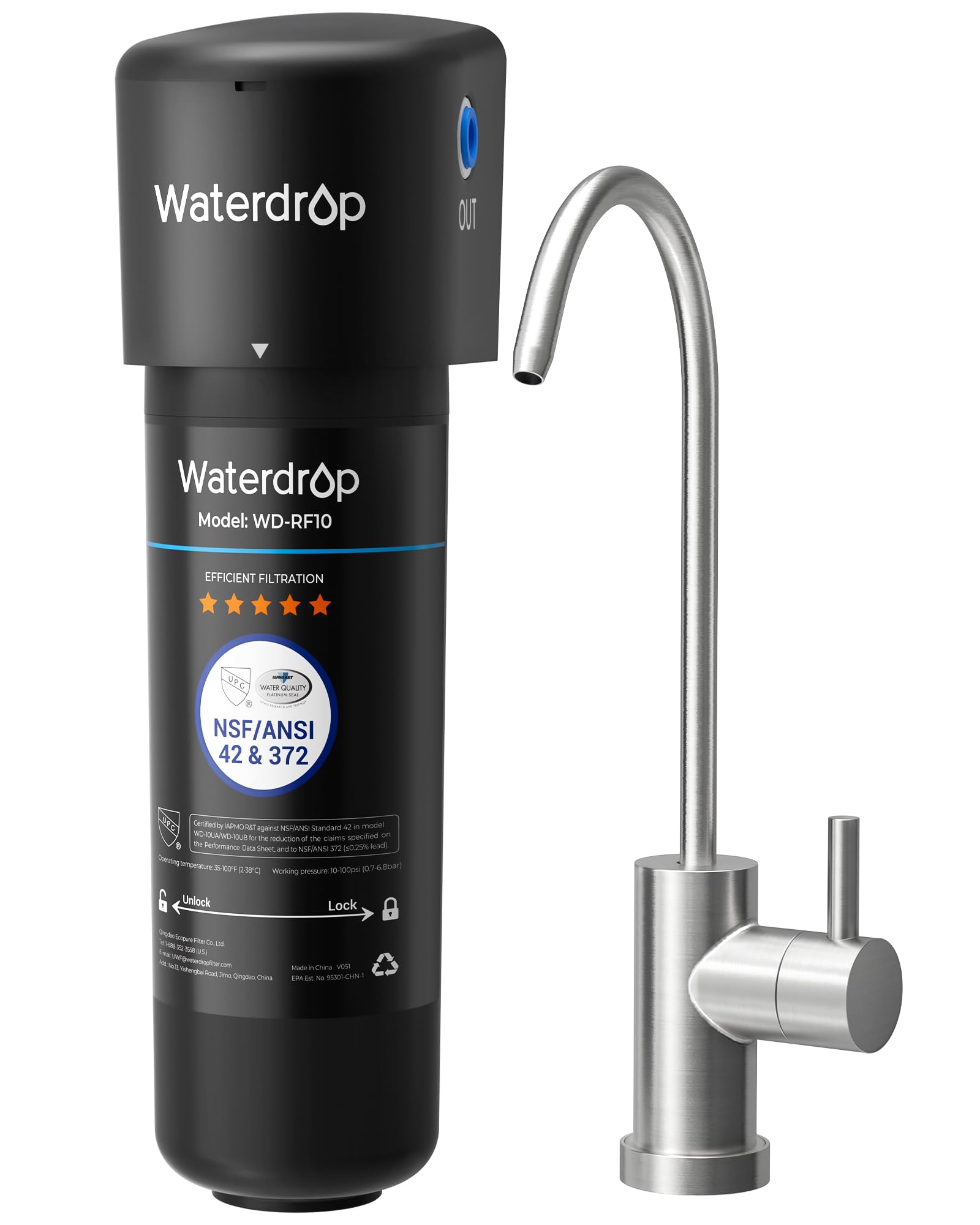
A certified under-sink filtration system that balances PFAS/lead reduction with strong flow and a dedicated stainless faucet.
Why I picked it: IAPMO/NSF certifications and a high-capacity cartridge that preserves good flow.
Best for: Homes with chlorine or PFAS concerns that still want strong faucet flow.
Affordable while offering advanced contaminant targeting.
Pros
- IAPMO/NSF-certified filtration
- 11,000-gallon cartridge capacity
- Dedicated brushed stainless faucet included
- Strong water pressure and flow
Cons
- Cold-water only
- Occasional quality-control hiccup possible
- Not designed for well water
My take
I chose the 10UB because I wanted certified reduction of chlorine, lead, and PFAS without sacrificing faucet flow. In daily use the stream felt robust — better than many countertop or pitcher alternatives.
Taste and odor improvements were immediate; the dedicated stainless faucet looked and felt like a permanent kitchen addition. Cartridge life measured in gallons (11K) translated into long service between changes for my household.
During my testing one filter housing arrived defective, and the manufacturer sent a replacement. That experience reinforced that good customer support matters for a product you rely on under the sink.
Overall, this is the best pick when you want a compact under-sink system that specifically targets PFAS and keeps a strong flow for drinking and cooking.
4. Filtrete Standard Capacity Whole House Grooved Filter — 5 Micron Sump Cartridges – Best Whole-House Sediment
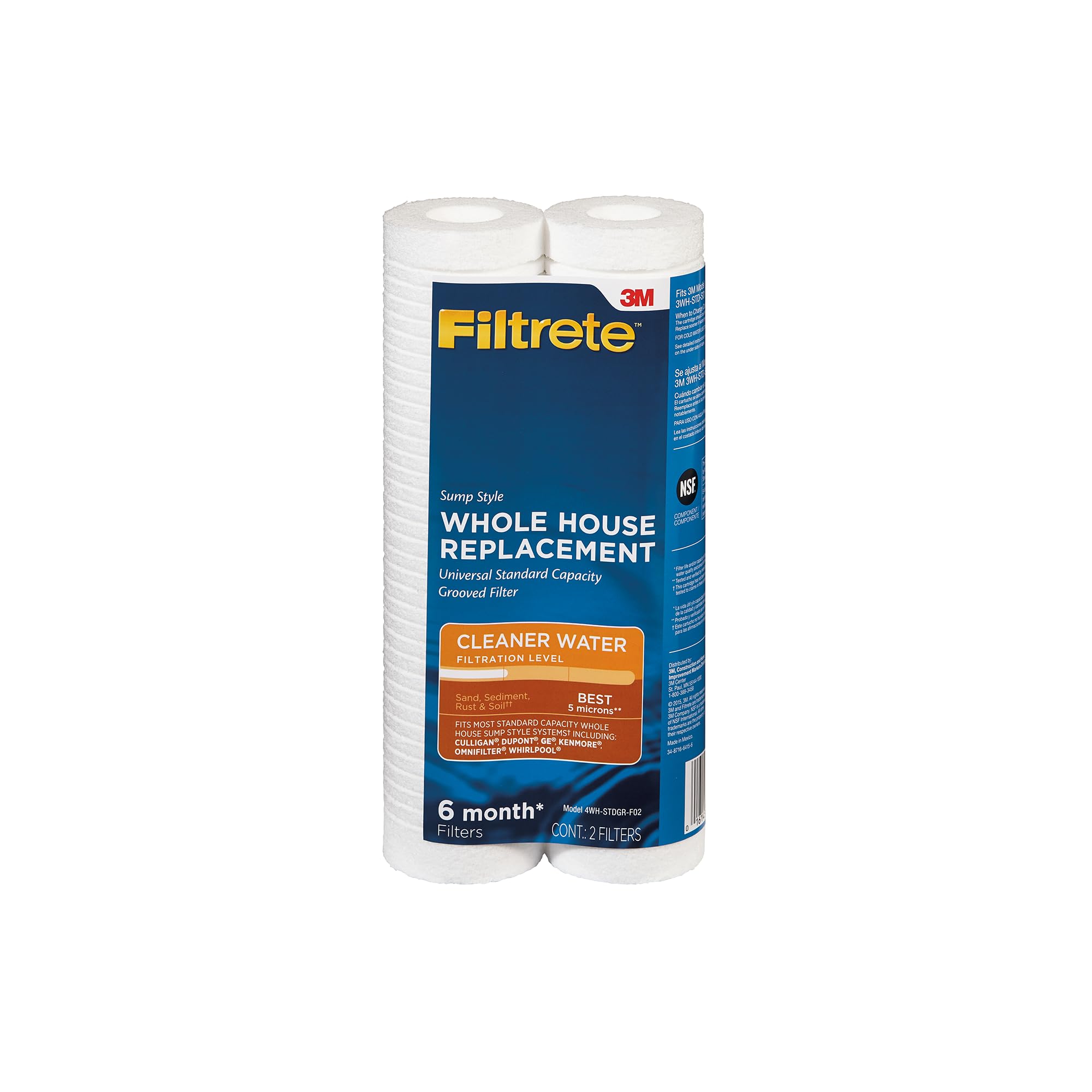
Economical drop-in sump filters that remove sand, silt, rust, and protect plumbing and appliances throughout the house.
Why I picked it: Cost-effective way to protect plumbing and appliances from sediment and rust.
Best for: Two-bathroom homes or anyone wanting a basic whole-house sediment defense.
Very affordable replacement cost for whole-house protection.
Pros
- Removes sand, sediment, and rust
- Fits standard sump-style housings
- NSF Standard 42 certified
- Six-month recommended filter life
Cons
- Doesn’t remove chlorine or chemicals
- Needs correct housing and prefiltration
- Requires routine replacement schedule
My take
I added these cartridges to a whole-house sump to stop visible sediment from damaging fixtures and appliances. The difference was obvious: less grit in hose water and cleaner appliance inlets.
For my hydroponics and fish setups this filter provided a needed first line of defense. I paired it with a pressure regulator and a finer pre-sediment stage to avoid pushing particles into downstream filters.
These aren’t designed to remove chlorine or PFAS — they’re a mechanical sediment solution. If you want odor or chemical removal, you’ll need a carbon stage downstream. For the price, though, these cartridges are an efficient way to protect your plumbing and appliances.
5. iSpring RCC7 — 5-Stage Reverse Osmosis System, NSF/ANSI 58 Certified – Best RO Value
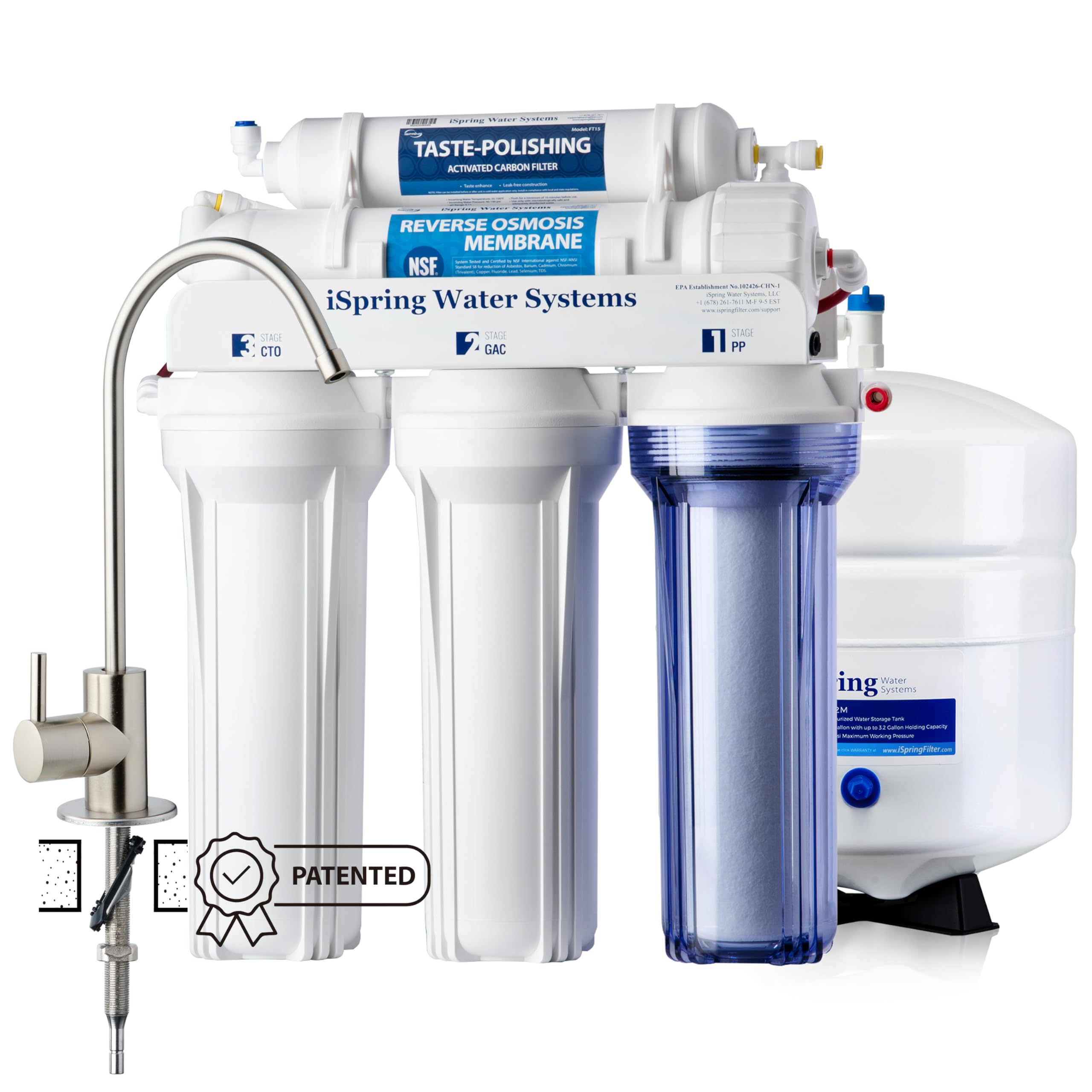
A proven 5-stage RO system that delivers bottled-quality water, certified to NSF/ANSI 58, with transparent housings and durable components.
Why I picked it: NSF/ANSI 58-certified RO performance with durable construction at a lower entry price than remineralizing units.
Best for: People who want full RO performance without the mineral stage.
A strong value among full reverse osmosis systems.
Pros
- Removes over 1,000 contaminants
- NSF/ANSI 58 certified
- Transparent prefilter housing
- Lead-free designer faucet included
Cons
- RO wastewater produced
- Initial setup takes time
- Possible long-term leak risk
My take
I ran the RCC7 for months and appreciated how crisp and clean the water tasted after the multi-stage filtration. It dramatically improved ice, coffee, and kettle scale compared with unfiltered tap water.
Installation is doable for a competent DIYer but requires patience: initial filter rinses, tank fills, and a couple of flush cycles before drinking. Expect that for every gallon of finished water you’ll see several gallons used to flush the membrane during normal operation.
Over years of use the system proved reliable, though I did encounter a slow leak after very long service life in one unit. With reasonable maintenance and timely filter swaps I found the RCC7 to be a durable, high-performance RO for the price.
6. Watts Premier 20,000-Gallon Inline Filter — KDF Media for Chlorine & Odor Reduction – Best for Fridges & Ice Makers
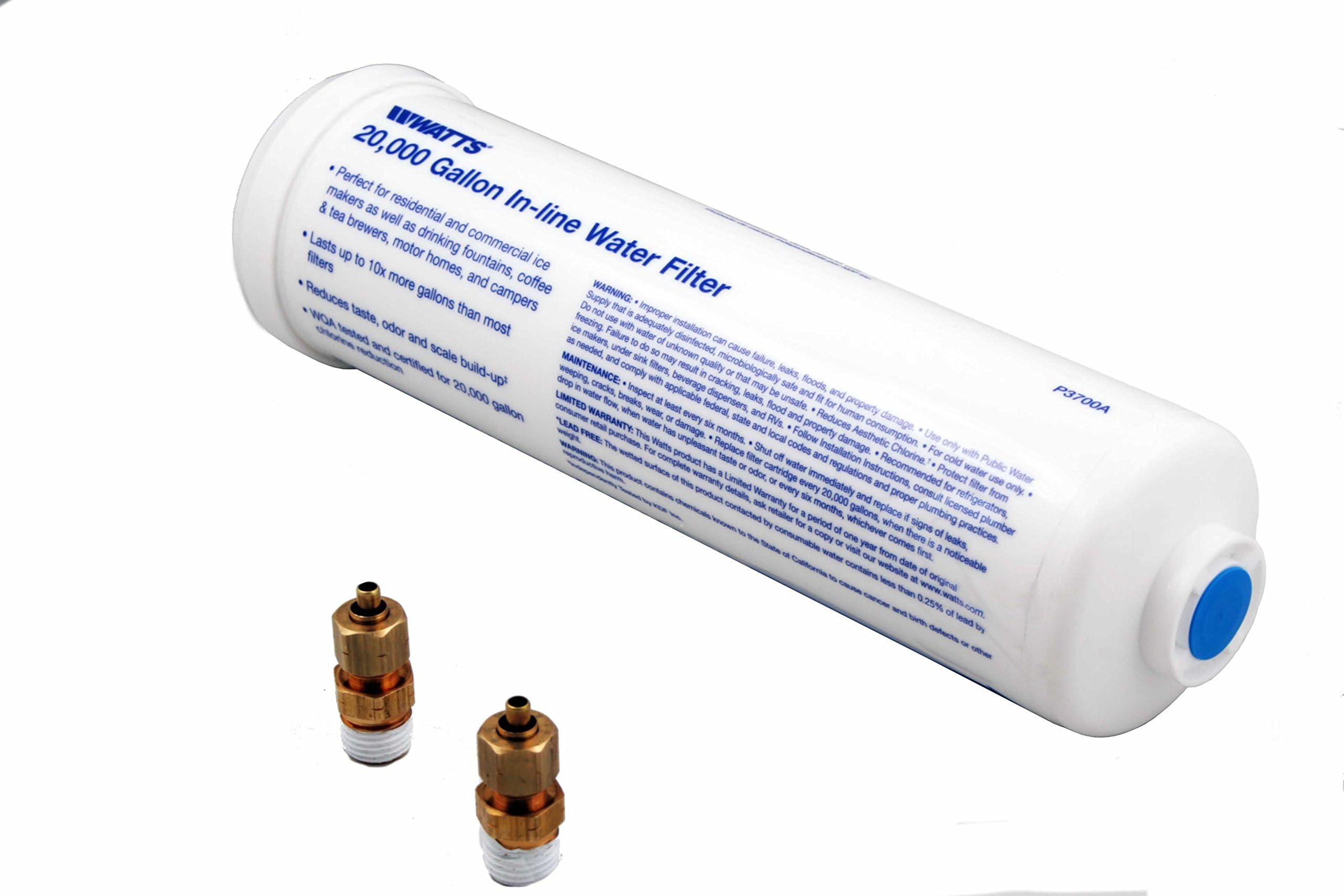
A high-capacity inline filter ideal for refrigerators, ice makers, and small appliances that need long-lasting chlorine and odor reduction.
Why I picked it: Long life and KDF media make it perfect for inline appliance protection.
Best for: Fridges, ice makers, RVs, and point-of-use appliances.
A cost-effective, long-life inline filter for appliances.
Pros
- High 20,000-gallon capacity
- KDF media reduces chlorine and odors
- Brass 1/4" connectors included
- Easy inline fridge installation
Cons
- Not a whole under-sink solution
- Media mix varies between units
- Replacement interval depends on usage
My take
I installed the Watts Premier inline unit on my refrigerator and immediately noticed clearer-tasting ice and water from the dispenser. The inline brass connectors made the installation quick and tidy behind the fridge.
The quoted high gallon capacity translates to long service life for low-flow uses like fridges and ice makers. In my less-frequent ice usage the filter lasted far longer than annual replacements, though heavy use will require shorter intervals.
This is not a full under-sink drinking-water system, but as a targeted appliance filter it does its job well: better tasting ice, reduced chlorine aroma, and a simple, long-lasting solution for secondary water points.
How I Choose an Under-Sink Filter
Filter type matters
I start by deciding whether I need reverse osmosis, carbon/activated block, or an inline appliance filter. RO removes the widest range of contaminants; carbon is great for taste and chlorine; inline filters are perfect for fridges and ice makers.
- Reverse osmosis: best for PFAS, fluoride, heavy metals, and very clean taste
- Carbon block: best for chlorine, taste, and odor
- Inline/KDF: ideal for appliances and long service life
Check certifications
I always prefer systems with NSF or IAPMO certifications that match the contaminants I care about. Certification verifies independent testing and gives me confidence in claims.
- NSF/ANSI 58 — RO systems and contaminant reduction
- NSF/ANSI 42/53 — taste/odor and specific contaminant reduction
- IAPMO listings confirm material safety and performance
Installation and space
I evaluate how much under-sink space I have and whether I’m comfortable doing a DIY install. Many compact units use push-to-connect fittings; RO systems need more space for tank and tubing and some drilling for a faucet hole.
- Push-to-connect and twist-lock designs for fast installs
- RO systems require a tank and more cabinet space
- Measure before buying — faucet or adapter fittings can vary
Maintenance and lifetime cost
I factor in cartridge life, ease of replacement, and ongoing costs. Long-capacity cartridges can be cheaper over time, but RO membranes and multiple pre-filters mean a predictable replacement schedule.
- Carbon cartridges: change every 6–12 months typically
- RO membranes: replace every 2–3 years depending on water
- Inline filters: often rated for thousands of gallons
Know your water source
I always consider whether my water is municipal or well. Many compact under-sink units are designed for municipal cold water only and aren’t intended for untreated well water.
- Municipal water: choose taste/chemical reduction or RO
- Well water: consider sediment prefiltering and systems rated for biological contaminants
- If in doubt, test your water before choosing a system
Frequently Asked Questions
Do under-sink filters remove PFAS?
I rely on certified systems for PFAS reduction. Reverse osmosis and certain certified carbon-block filters specifically tested for PFAS are effective — I check NSF/IAPMO documentation before trusting a claim.
Can I install these myself?
In many cases I installed units myself. Push-to-connect and twist-lock designs are very DIY-friendly; full RO systems require more time and a bit of patience but are still within reach for most handy homeowners.
How often do I need to replace cartridges?
From my experience: carbon cartridges typically need changing every 6–12 months, compact under-sink cartridges often last about a year, and RO membranes last a few years depending on use and water quality.
Do RO systems waste water?
Yes — I observed the usual RO tradeoff: for every gallon of purified water you’ll commonly see multiple gallons used to flush the membrane. Newer units and booster pumps can improve ratios, but expect some wastewater.
Are these filters safe for well water?
I avoid using compact municipal-only filters on well water. Several models explicitly state they are for municipal cold water only. For well water I add sediment prefilters and choose systems rated for biological or high-sediment sources.
Final Take
I picked these six options because they cover the real choices people face: full RO for maximum contaminant removal, compact certified under-sink units for convenience and PFAS targeting, whole-house sediment protection, and inline filters for appliances.
If you want the cleanest water and don’t mind the extra space and maintenance, go with a certified RO system. If you rent, have limited space, or want a quick install, the compact Waterdrop units give the best balance of performance and simplicity.
Whichever route you take, focus on certification, filter replacement cadence, and whether the unit fits your water source and installation constraints — that’s what’s mattered most in my testing.
