
I tested a range of ventless and portable dryers — from spin-only units that strip water to compact electric tumblers. Here are the models I reached for most often, and why each one earned a spot in my lineup for condos,
I spent hands-on time with both spinner-style and compact electric dryers to see what actually works in apartments, RVs, and dorms. My goal was practical: get laundry dry faster without a full-size hookup.
Across the machines I tested I focused on real-world chores—swimsuits and delicates, small bedding, everyday tees and towels—and I paid attention to setup, noise, runtime, and how dry items came out.
If you want to remove as much water as possible before hanging, choose a spin dryer. If you need a no-fuss tumble experience that finishes clothes ready-to-wear, pick a compact electric tumbler. I compare capacity, wattage, heat range, and installation quirks in each section so you can match a model to your space and routine.
1. Panda Portable Spin Dryer – Best for Speedy Water Extraction
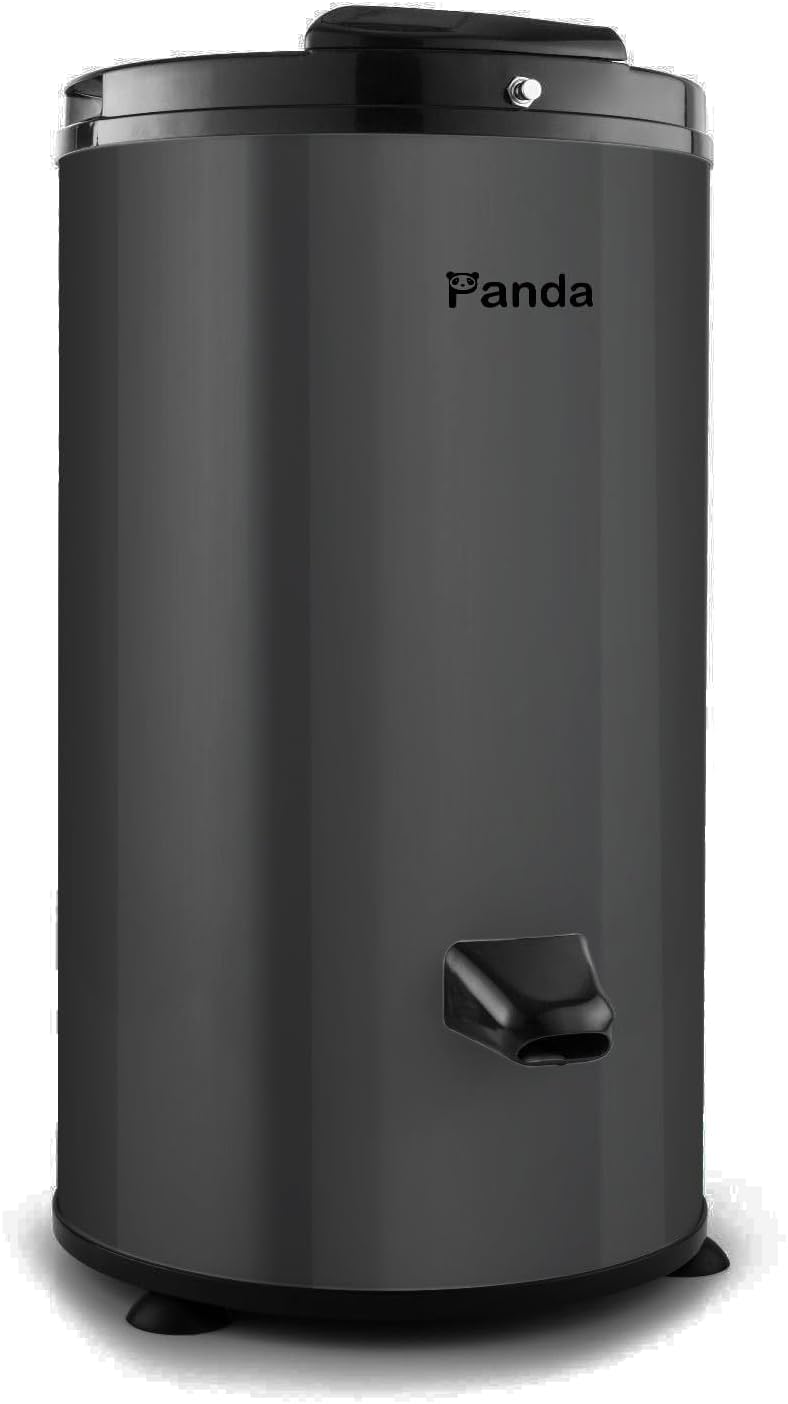
A high-speed spin-only dryer that strips out water quickly so clothes hang dry in far less time.
Why I picked it: I relied on this whenever I wanted hand-washed items nearly dry within minutes rather than hours.
Best for: People who hang-dry most laundry but want far less dripping and faster drying times.
Solid value for a heavy-duty metal spin dryer.
Pros
- Very high spin speed
- Durable stainless steel drum
- Compact footprint
- Quiet when balanced
Cons
- Not a heated tumbler
- Requires a container for drainage
- Can wobble if unevenly loaded
My take
I used the Panda spinner as my go-to when I needed to remove water from swimsuits, towels, and hand-washed shirts. The stainless drum feels sturdy and the 3200 RPM spin leaves clothes only slightly damp—perfect for hanging to finish drying quickly.
Setup is simple: I place the unit on any flat surface and put a bucket under the outlet to catch the water because this model drains by gravity rather than with a hose. That means no plumbing hookup, but you do need a receptacle sized for the load I spin.
Balance matters. When I load items evenly it spins quietly; when I overpacked or distributed garments unevenly it vibrated. After a bit of practice the loading became second nature and the results were consistently impressive for removing water fast.
2. ROVSUN 850W Portable Tumble Dryer – Best Compact Electric (Classic Controls)
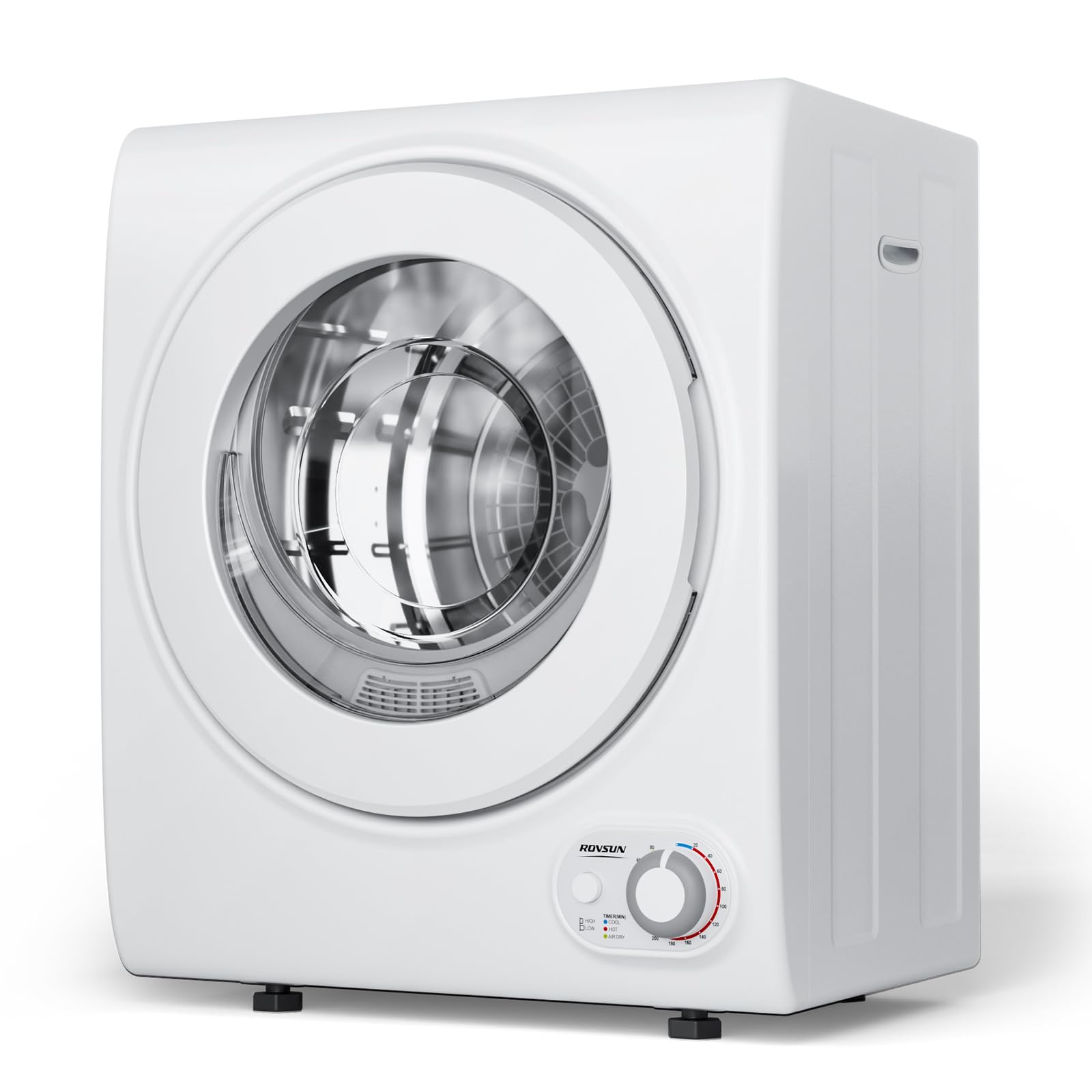
A small, simple front-load electric dryer with a stainless tub—great when you need a countertop-capable electric tumbler.
Why I picked it: I turned to this unit when I wanted a straight-forward electric dryer that fits small spaces.
Best for: Small loads and apartment setups where portability and a compact footprint matter.
Affordable choice for a basic electric tumbling dryer.
Pros
- Compact footprint for small spaces
- Stainless steel tub
- Simple knob controls
- See-through door window
Cons
- Longer dry times for heavy items
- Exhaust hose may be required
- Limited recommended quick-load weight
My take
I appreciated how this Rovsun slides into a closet or under a counter. The 850W heater and stainless tub make it feel like a scaled-down conventional dryer.
Drying performance depends on the load. For well-spin-dried garments and small loads I found it worked reliably, though denser items took longer than a full-size machine. If your apartment lacks a vent, plan for an exhaust solution because I needed to add a hose to manage airflow.
Operation is plug-and-play. I liked the simplicity of the knob controls and the safety cut-off that stops the drum when the door opens.
3. ROVSUN LCD Portable Tumble Dryer – Best for Settings and Reverse Tumble
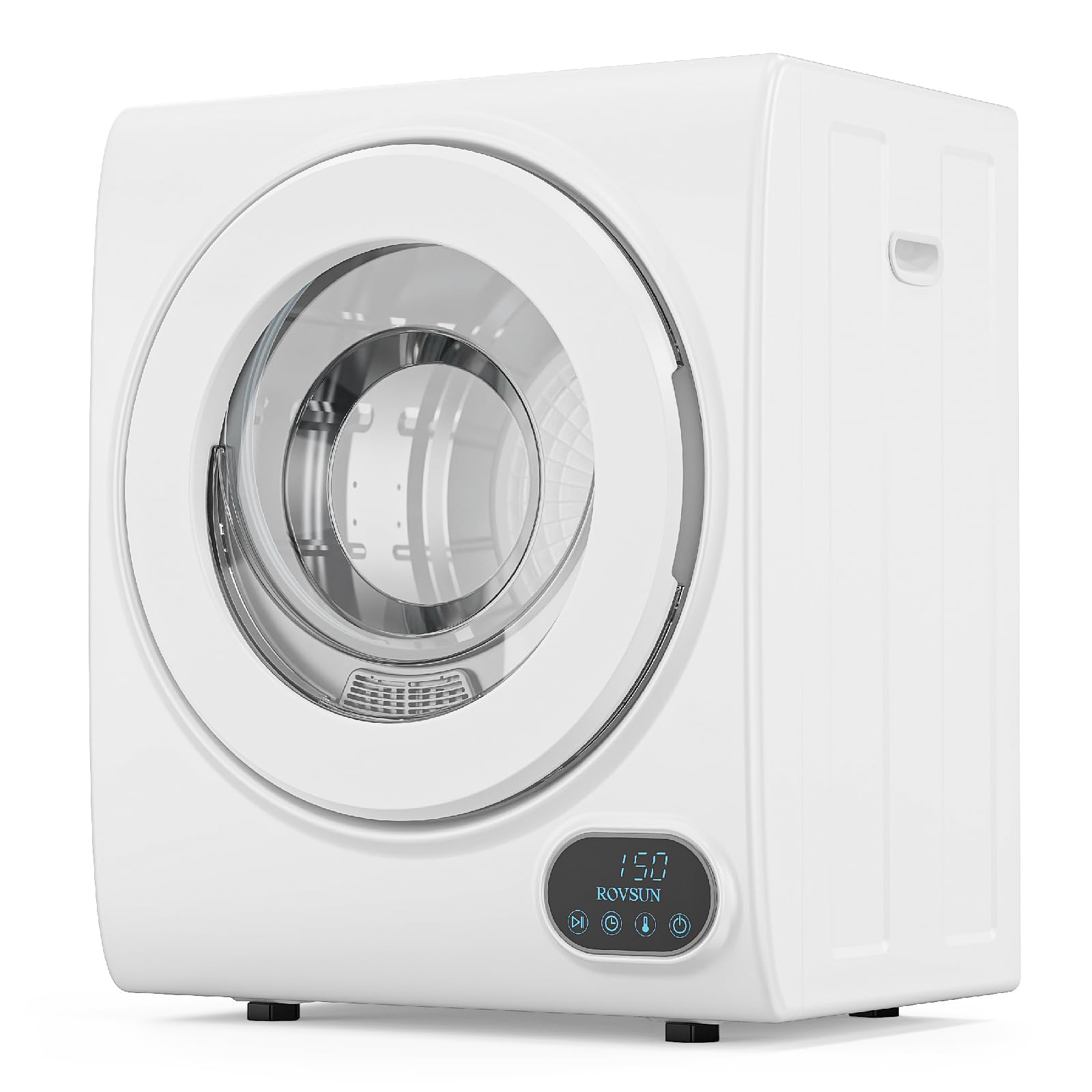
An 850W front-load dryer with forward/reverse tumble, more modes, and an LCD touch panel for finer control.
Why I picked it: I chose this when I wanted more control over dampness, anti-tangle tumble, and easy-to-read settings.
Best for: Those who want an electric tumbler with multiple modes and reverse tumble to reduce tangling.
A midrange, feature-forward portable dryer.
Pros
- Forward and reverse tumble
- LCD touch controls
- Stainless steel drum
- Multiple drying modes
Cons
- Smaller effective capacity for large items
- Directions and filter access can be unclear
- May require mid-cycle intervention
My take
This Rovsun feels like an upgraded compact dryer. The forward and reverse tumble makes a real difference—items come out less tangled and fluffier compared with basic single-direction models.
I fit small bedding and daily clothes in the drum, and the LCD/touch panel made it easy to choose heat and time. It’s not a replacement for a full-size unit on big loads, but for single-person or couple use it’s very practical.
A few caveats: the capacity is best when you keep loads modest and I spent a little time learning which modes matched my fabric mixes. Once dialed in, it became one of my most-used apartment dryers.
4. Feelfunn 1.8 cu.ft Portable Dryer – Best for Solid Build and Wall-Mount Options
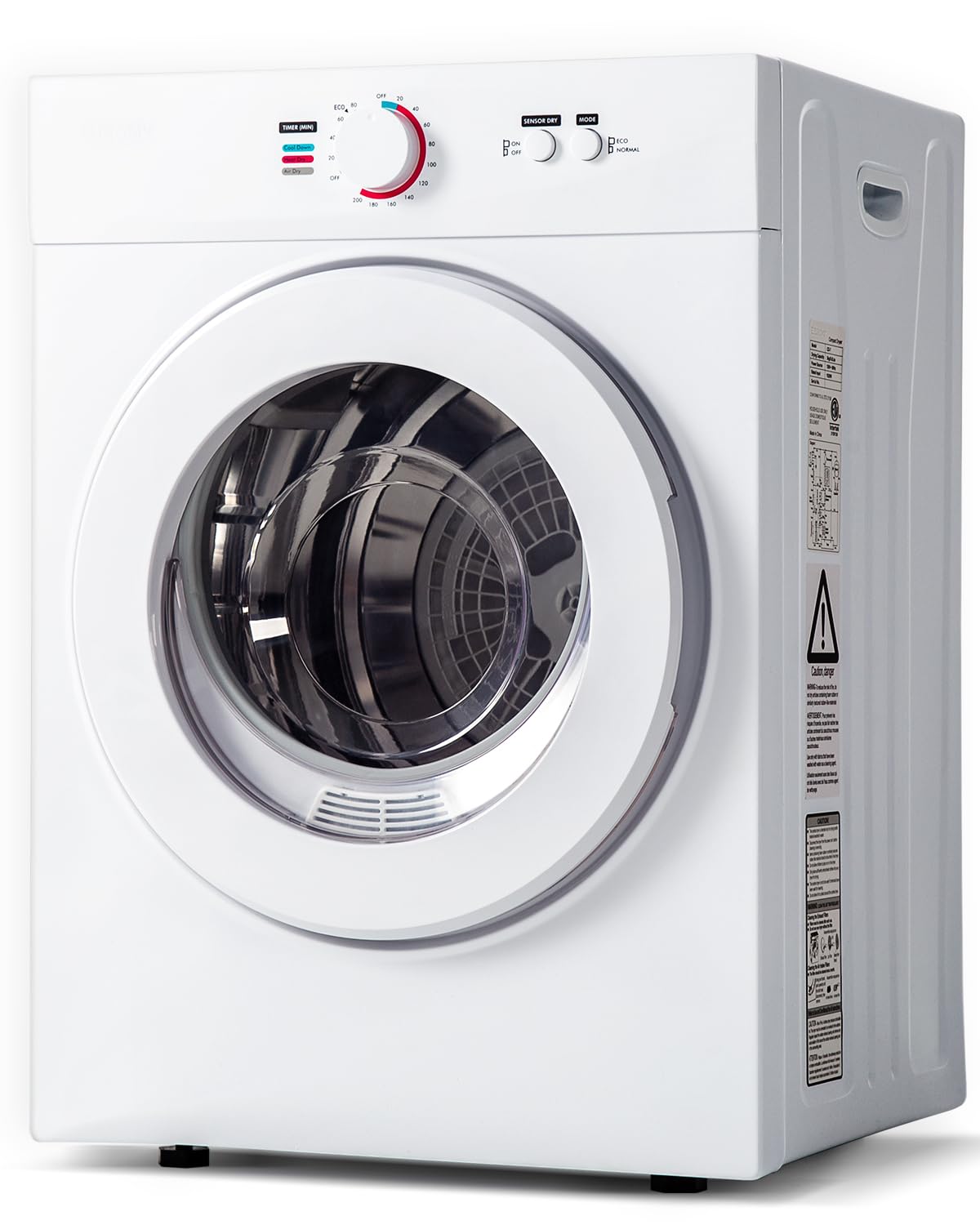
A heavier-duty compact dryer with 1.8 cu.ft drum, higher wattage, and wall-mountability for tight installations.
Why I picked it: I reached for this when I needed more throughput and a unit that could be mounted or floor-placed cleanly.
Best for: People who want a compact dryer with slightly larger capacity and installation flexibility.
A practical step up in capacity without moving to full-size units.
Pros
- Higher wattage for quicker heat
- Forward and reverse tumbling
- Transparent door window
- Wall-mountable with included hardware
Cons
- Exhaust hose sizing required adaptation
- Smaller than expected for some buyers
- Lint filter needs regular cleaning
My take
I liked that the Feelfunn gives a little more drum space than the smallest portables—it handled denser items with better ease. The 1020W heater brought quicker heat and the reverse tumble helped with wrinkle reduction.
Installation was straightforward, but I did adapt the supplied exhaust hose to match my home fittings. If you’re replacing an older unit, measure carefully; this model can require minor adjustments to vents and platforms.
For everyday small loads I found the machine reliable and efficient. The lint system is effective but takes a routine clean after each couple of loads to keep airflow optimal.
5. Euhomy 2.65 cu.ft Portable Dryer – Best for Smart Modes and Power
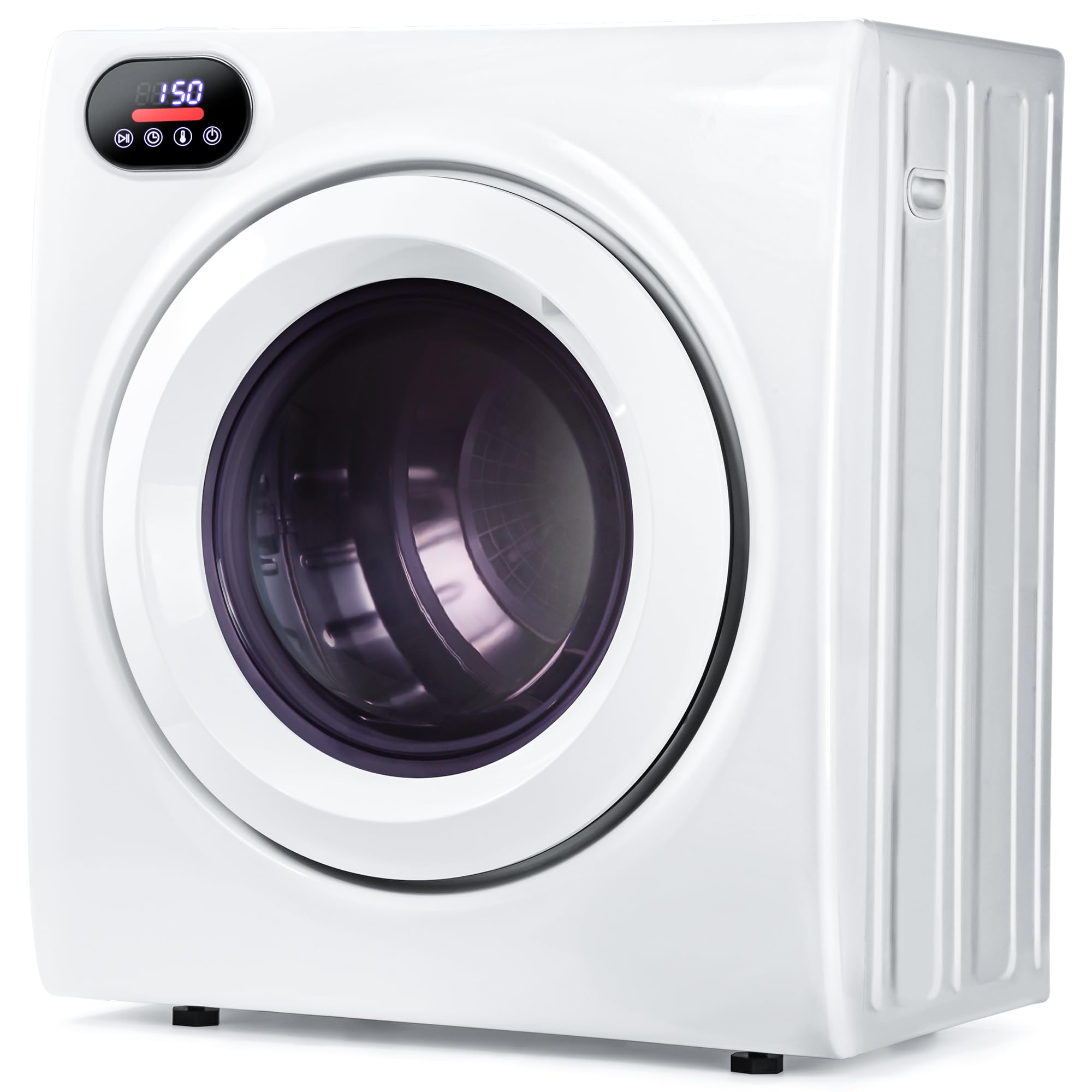
The most powerful portable option here with intelligent drying modes, ECO sensing, and a larger 2.65 cu.ft drum.
Why I picked it: I used this when I needed the biggest compact capacity and smarter sensing to avoid over-drying.
Best for: Larger small-home loads and anyone who wants sensor-driven cycles and higher wattage.
A higher-powered portable with advanced drying modes.
Pros
- 1400W motor for stronger drying
- Intelligent sensor-driven modes
- Biggest drum among portables
- Wide door and ergonomic handles
Cons
- Not as quiet as smaller units
- Needs cool-down breaks on heavy use
- May stop periodically to reverse direction
My take
I appreciated the Euhomy when I needed to dry larger small loads—the extra drum volume and stronger 1400W heater shorten run time compared with the lower-wattage portables.
The intelligent and ECO modes are genuinely useful: the sensor will shut the heater off when the load is dry, which saved me time and energy during repeated use. That said, it runs warmer and I noticed it needed a cooling interval after a couple heavy cycles.
If your priority is capacity plus smart cycles, this is the model I’d reach for first. Just plan for slightly more noise and occasional cool-down pauses during back-to-back loads.
6. 1.6 cu.ft Portable Clothes Dryer – Best Budget Compact (Quiet)
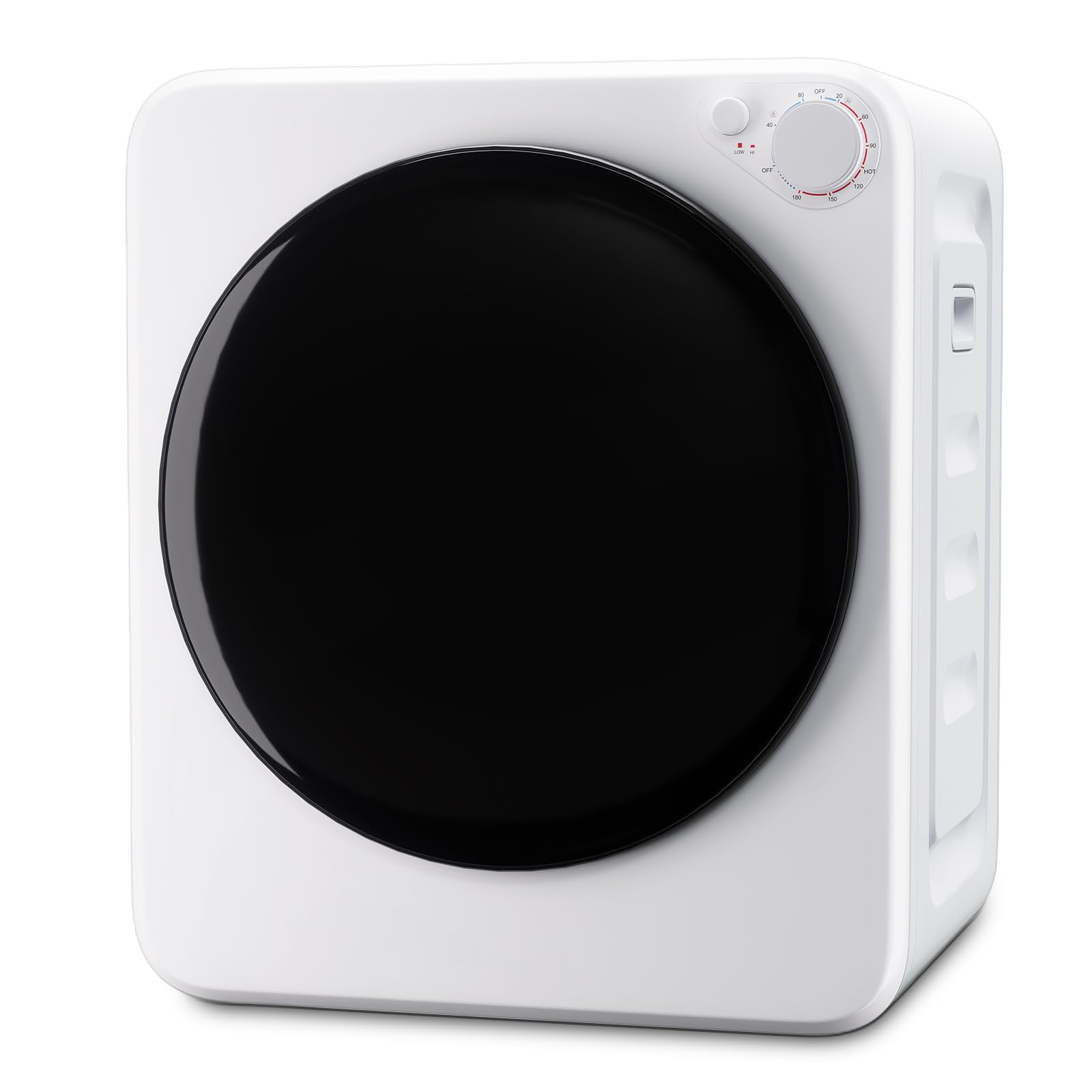
An affordable, very compact dryer with five programs and user-friendly controls that worked well in a camper and small apartment.
Why I picked it: I used this as a low-cost, reliable option when space and weight were the top constraints.
Best for: Campers, tiny apartments, and anyone wanting a simple, quiet unit on a tight budget.
Budget-friendly and compact—great for light, frequent loads.
Pros
- Very compact and lightweight
- Multiple drying programs
- Quiet operation
- Easy to install and move
Cons
- Small capacity limits load size
- May wrinkle if overloaded
- Less powerful heating for thick items
My take
This 1.6 cu.ft dryer impressed me for what it is: tiny and straightforward. I used it in a camper and it delivered consistent heat without much noise.
I recommend keeping loads modest—when I overpacked it the clothes came out wrinkled and took longer to finish. For regular underwear, small towels, and shirts it performed admirably and proved very portable.
If you need an inexpensive, low-profile dryer you can move around, this one served that role well during my testing.
7. Amana 6.5 cu.ft Front Load Electric Dryer – Best Full-Size Traditional Option
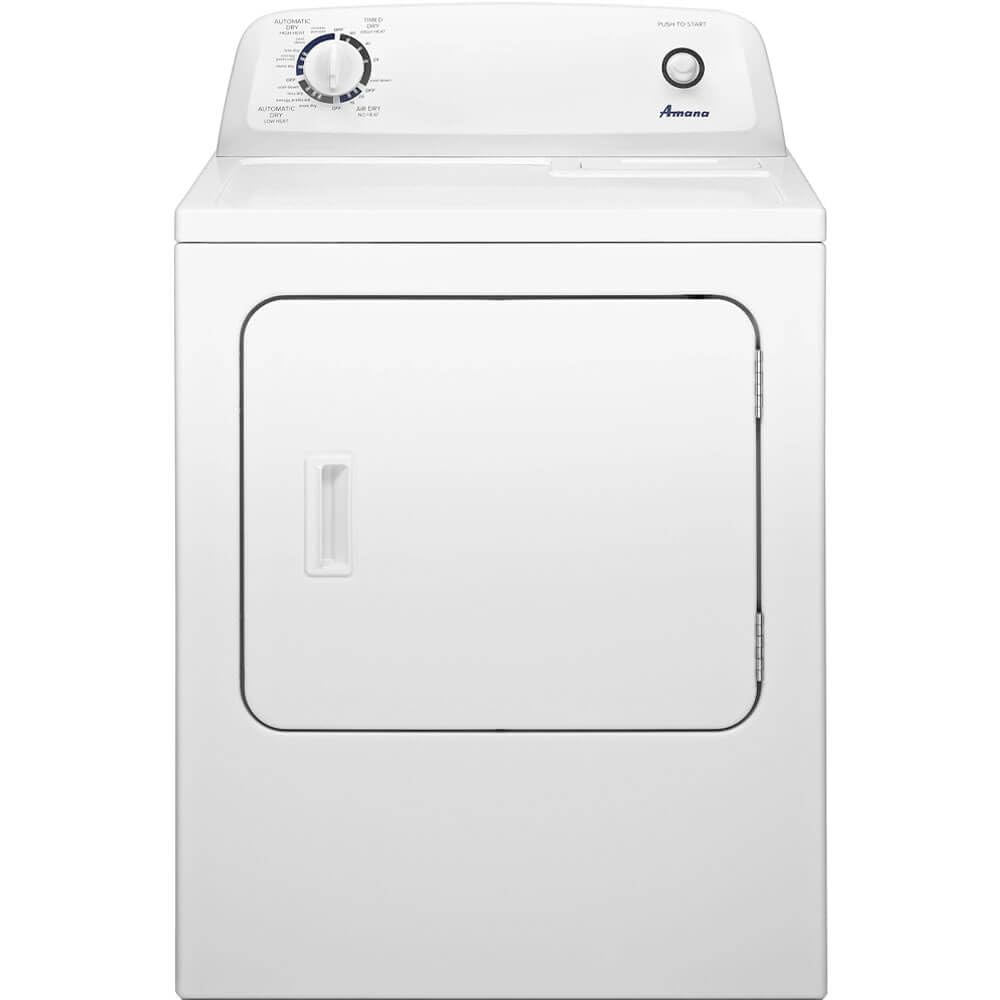
A conventional full-size electric dryer with a large drum and multiple cycles for household laundry.
Why I picked it: I relied on this Amana when capacity and conventional tumble drying were the priority.
Best for: Homes that want a traditional full-size electric dryer rather than a compact portable.
A mainstream full-size dryer choice for traditional laundry rooms.
Pros
- Large 6.5 cu.ft capacity
- Multiple drying cycles
- Durable and straightforward
- Made in the United States
Cons
- Requires appropriate outlet/installation
- Missing accessories occasionally reported
- Not portable
My take
When I needed to do larger household loads I reached for the Amana. The drum size accommodates bedding and full loads that the portables simply can’t handle.
Controls are simple and the machine feels robust in everyday use. Expect a traditional installation requirement—this is not a plug-and-play portable unit.
If you have the space and need capacity, the Amana is the most conventional option in my lineup and it performs like a standard household dryer.
How I Choose a Ventless or Portable Dryer
Capacity and Load Size
I always start by matching capacity to how I do laundry. If I need to dry small, frequent loads or swimsuits, compact or spin-style units save time and space. For whole-house loads and sheets I prefer a full-size or the largest portable drum available.
- Spin dryers remove the most water quickly; follow with hanging to finish.
- Portable tumblers work best with small, modest loads to avoid long runtimes.
Power and Drying Speed
Wattage and heater design determine how fast a unit dries. I found 1,000W+ models heat faster, while 800–850W machines take longer but are gentler on electricity use.
- Higher wattage shortens run time but can increase heat and noise.
- Sensor or intelligent modes prevent over-drying and save runtime.
Installation and Venting
Think through where the dryer will live. Some portables need an exhaust hose or a window vent; spinners only need a bucket for drainage. I always plan the hose routing and measure clearance before purchase.
- Spin dryers: gravity drain into a bucket—no hose required.
- Electric tumblers: expect to attach an exhaust or use room ventilation.
Drum Material, Modes and Maintenance
I look for stainless steel drums for longevity and multi-filter lint systems for easy maintenance. Forward/reverse tumble and steam or sensor modes improve results on mixed loads.
- Clean lint traps frequently to maintain airflow and performance.
- Reverse-tumble features reduce tangling and wrinkles.
Noise and Location
Noise matters depending on where you run the dryer. I used quieter models in bedrooms and louder, more powerful units in a laundry closet or utility area.
- Spinner units are quiet when balanced; they can vibrate if loaded unevenly.
- Larger, higher-watt machines can be noticeably louder during heat cycles.
Frequently Asked Questions
Can a spin dryer replace a tumble dryer?
In my experience a spin dryer won’t replace a heated tumbler for finishing clothes—spin units excel at removing water so garments hang dry much faster, but they don’t add heat to fully dry thick items.
Do portable electric dryers need an exhaust?
Many compact electric dryers do use an exhaust hose to move moist air out; I plan for hose routing or a window kit when I install one. Some small setups can operate ventless with condensing designs, but check the model details.
How do I avoid vibrations in high-speed spinners?
I balance the load carefully and avoid overfilling. When garments are distributed evenly the spinner runs quietly; an off-balance load causes wobble and noise.
Are sensor-driven modes worth it?
Yes—I've saved time and prevented over-drying using intelligent or sensor modes. They stop heating when items reach target dryness, which I value for energy savings and fabric care.
Final Take
I picked these models because they solved different problems: the Panda for fast water extraction, the compact ROVSUN and Feelfunn units for small-space tumble drying, Euhomy for the largest portable capacity and smarter sensing, and the tiny 1.6 cu.ft unit when portability and quiet operation mattered most. The Amana remains my choice when capacity and a traditional laundry room setup are required.
Match the machine to how you actually do laundry—spin first if you hang-dry, choose higher wattage and sensors if you want dryer-ready clothes, and measure your space before buying. That approach made my laundry routine faster and simpler.
