
I tested seven compact fabric-and-frame dressers so you can find the right vertical storage tower for closets, nurseries, and tight corners. I focused on build, drawer capacity, footprint, and ease of assembly.
I chose these vertical dressers because I often need storage that fits narrow footprints without sacrificing capacity.
In my testing I looked at materials, drawer depth, tabletop usefulness, assembly time, and how each unit handled everyday loads.
I compared units by footprint, drawer count and depth, construction (metal frame + wood top vs. all-fabric), assembly simplicity, and usefulness as a nightstand or closet organizer.
1. YITAHOME 5-Drawer Fabric Dresser – Best Overall
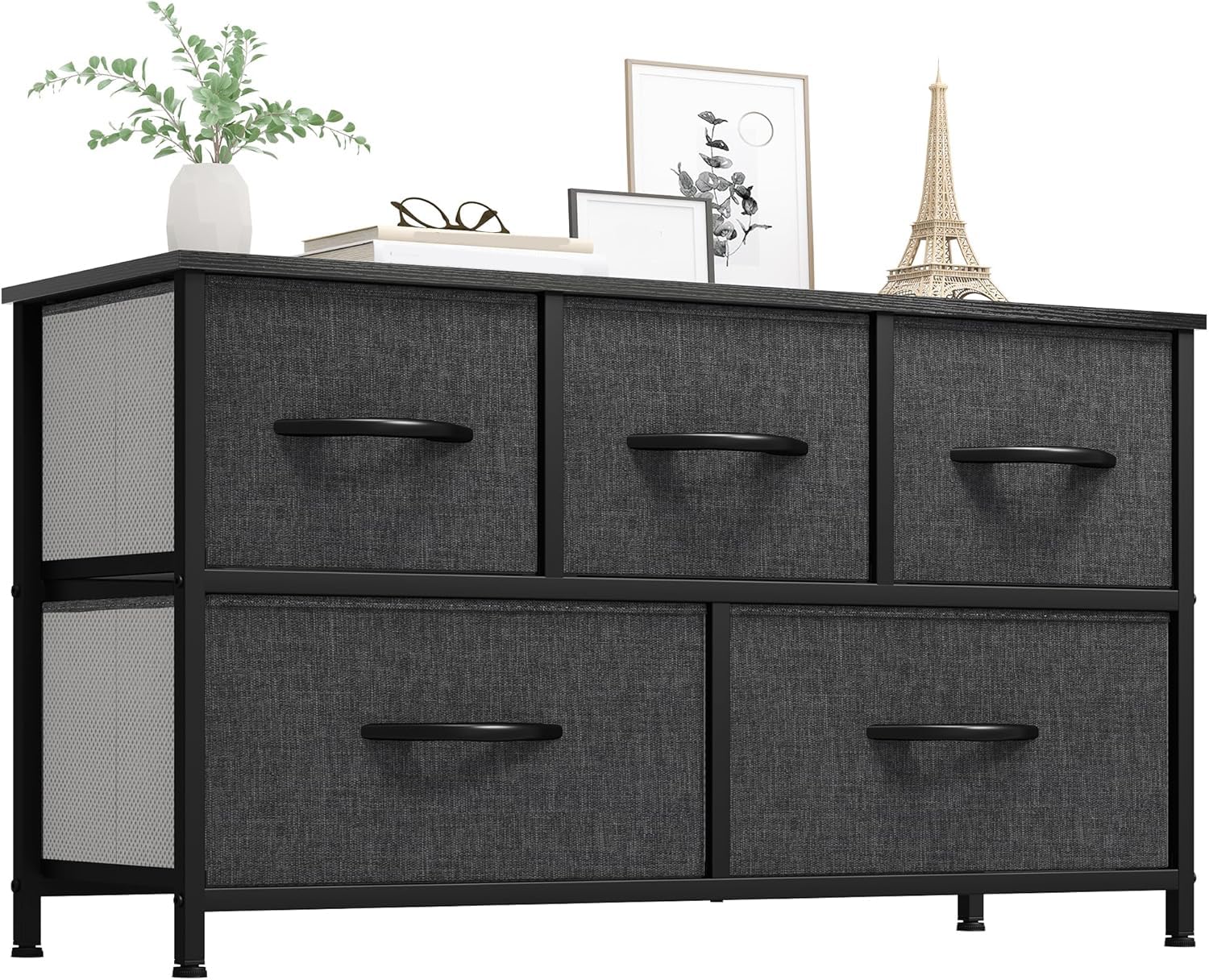
I found a strong balance of capacity, a solid wood top, and an impressively lightweight frame in this five-drawer tower.
Why I picked it: Balances roomy fabric drawers with a durable metal frame and a usable wood top.
Best for: Closets, guest rooms, nurseries, and small apartments where I need moderate storage.
Affordable fabric-tower option.
Pros
- Sturdy metal frame
- Useful MDF wood top
- Five large, removable drawers
- Easy assembly with included hardware
- Adjustable feet protect floors
Cons
- Not meant for very heavy items
- Plastic handles feel basic
- Fabric can sag if overloaded
My take
This YITAHOME unit became my go-to when I needed a mid-capacity dresser that didn’t dominate a room. The metal frame gives the whole piece a solid feel while the MDF top provides a hard surface for a lamp or baby monitor—something I appreciated in a nursery setup.
Assembly was straightforward and quicker than I expected; the included instructions and video were helpful. I left the drawers removable for moving and used the adjustable feet to level the unit on my uneven floor.
In daily use the breathable non-woven drawers wipe clean easily and hold folded shirts, pajamas, and linens without sagging much. I wouldn’t store very heavy items in the fabric drawers, but for clothing and bedroom odds-and-ends this is a reliable, good-looking option.
2. WLIVE 8-Drawer Fabric Dresser – Best for Deep Drawers
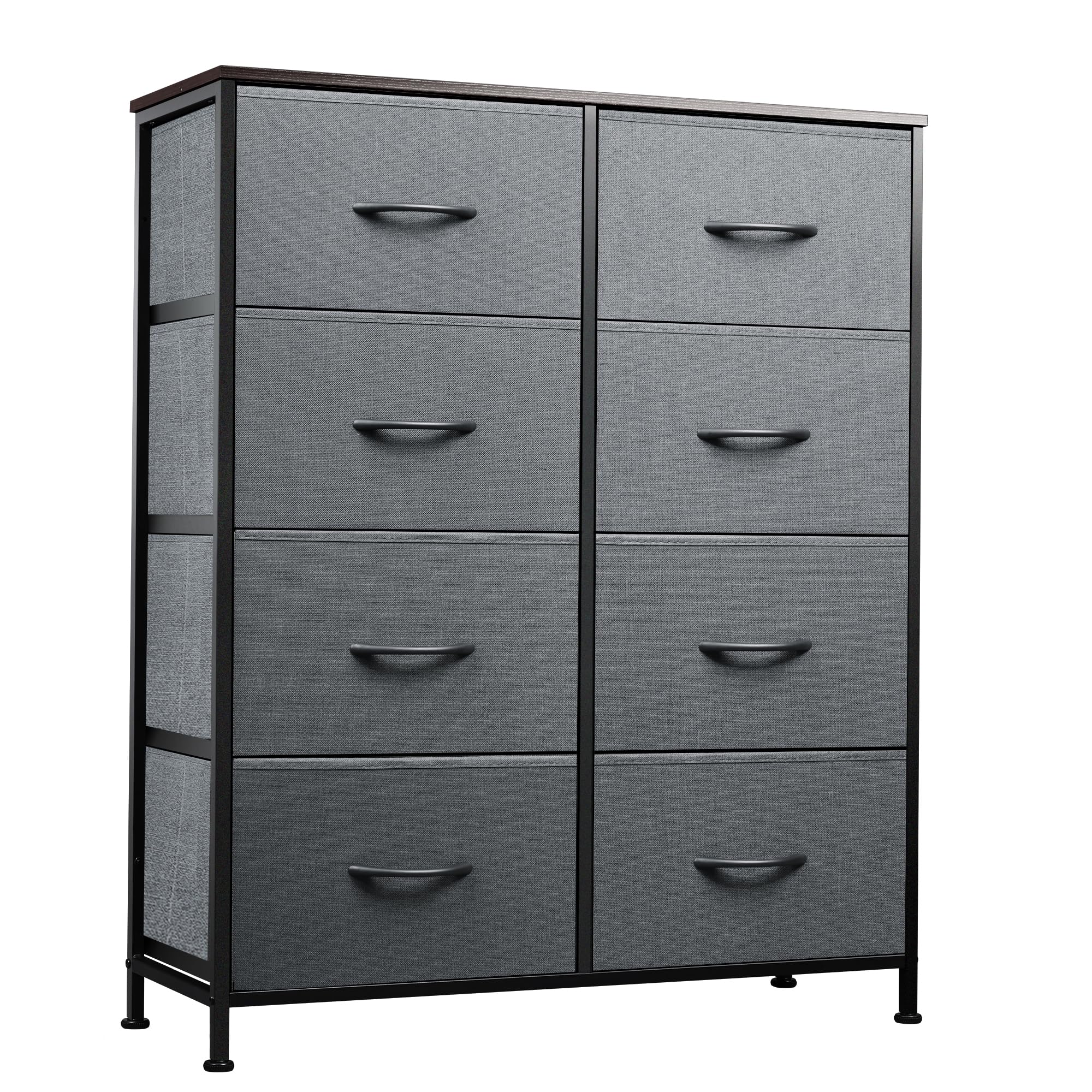
I appreciated the eight deep, walk-in-able drawers and the anti-tip hardware for taller storage needs.
Why I picked it: Eight deep drawers plus anti-tipping accessories make it practical for vertical storage.
Best for: Closets, dorms, and entryways where I need deeper drawer space.
Mid-range, value-packed option.
Pros
- Eight deep storage bins
- Wood top for daily essentials
- Anti-tip hardware included
- Adjustable feet for leveling
- Solid steel frame
Cons
- Not ideal for bulky jeans
- Avoid overpacking the fabric drawers
My take
When I needed more depth in each compartment, this WLIVE tower delivered. The drawers are deeper than many fabric cubes, which let me fit folded tees and most lightweight pants in a single drawer.
The included anti-tip hardware gave me confidence placing it in an upstairs bedroom, and the wood-grain top serves well as a landing spot for a clock and charge station. Assembly is manageable solo and the finished look blends with both rustic and modern decor.
I did find that very thick or bulky items require careful folding to fit, and I kept heavier pieces on the lower shelves to avoid stretching the fabric drawers.
3. Sorbus 6-Drawer Fabric Dresser – Best for Kids & Nurseries
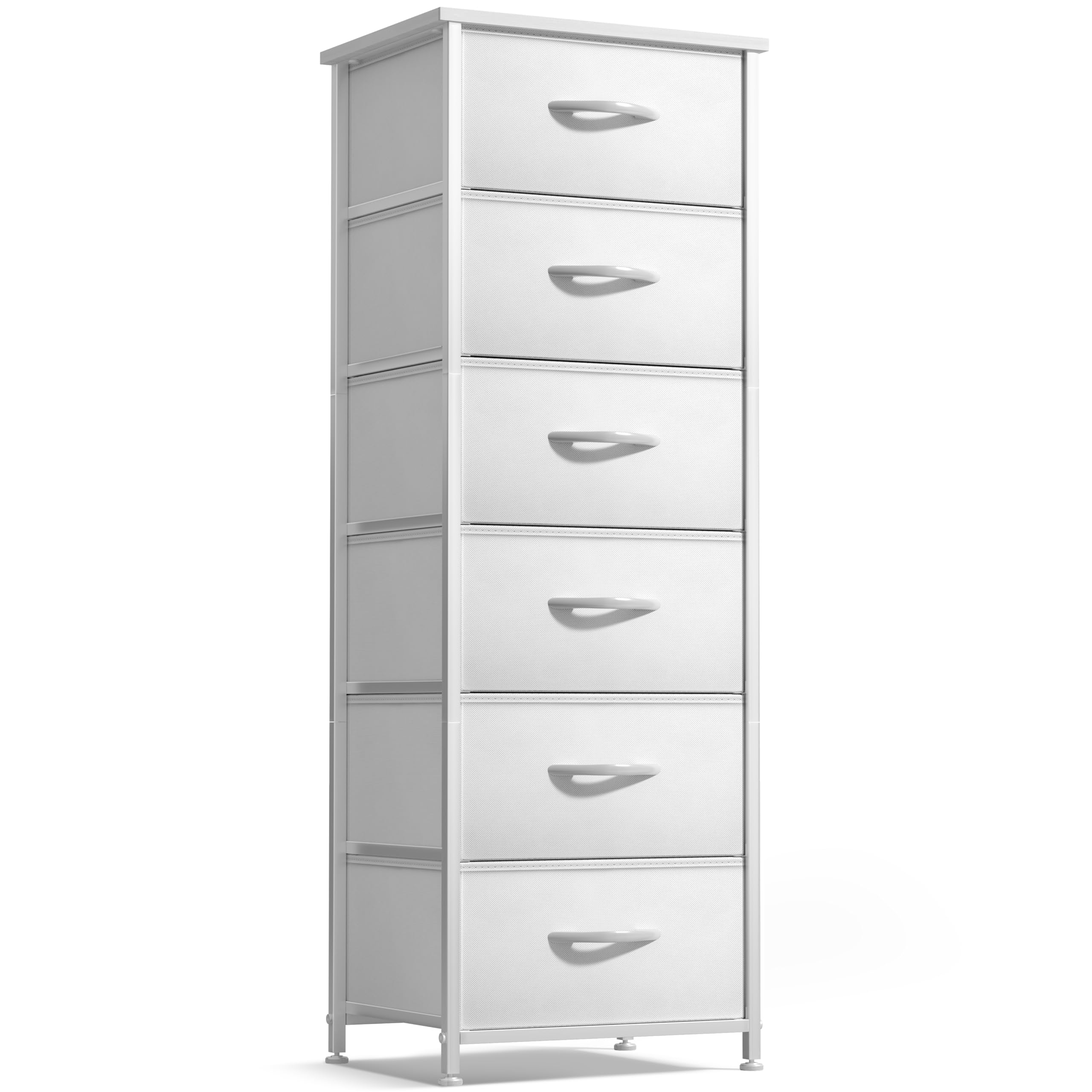
I like this compact six-drawer option for children's rooms thanks to its waterproof wood top and friendly scale.
Why I picked it: Small footprint with practical waterproof top and child-friendly sizing.
Best for: Nurseries, playrooms, and tight corners where I want simple, safe storage.
Budget-friendly kid-focused dresser.
Pros
- Compact and tall profile
- Waterproof wood top
- Durable handles
- Easy, quick assembly
- Six usable fabric drawers
Cons
- Fabric drawers can misshape if overloaded
- Not as sturdy as solid-wood dressers
My take
This Sorbus unit is the kind of compact dresser I reach for when floor space is limited. The wooden top is waterproof, so I felt fine placing an alarm clock and small lamp on it in a kid’s room.
Putting it together took only minutes; the frame is surprisingly sturdy for the price point and the drawers slide smoothly. I used the drawers for pajamas, socks, and smaller items—each drawer handles that use well, but I wouldn’t cram them with heavy objects.
For short-term bedroom or nursery storage this is a practical pick that keeps a room tidy without taking up much space.
4. mDesign Narrow 4-Drawer Tower – Best Slim Design
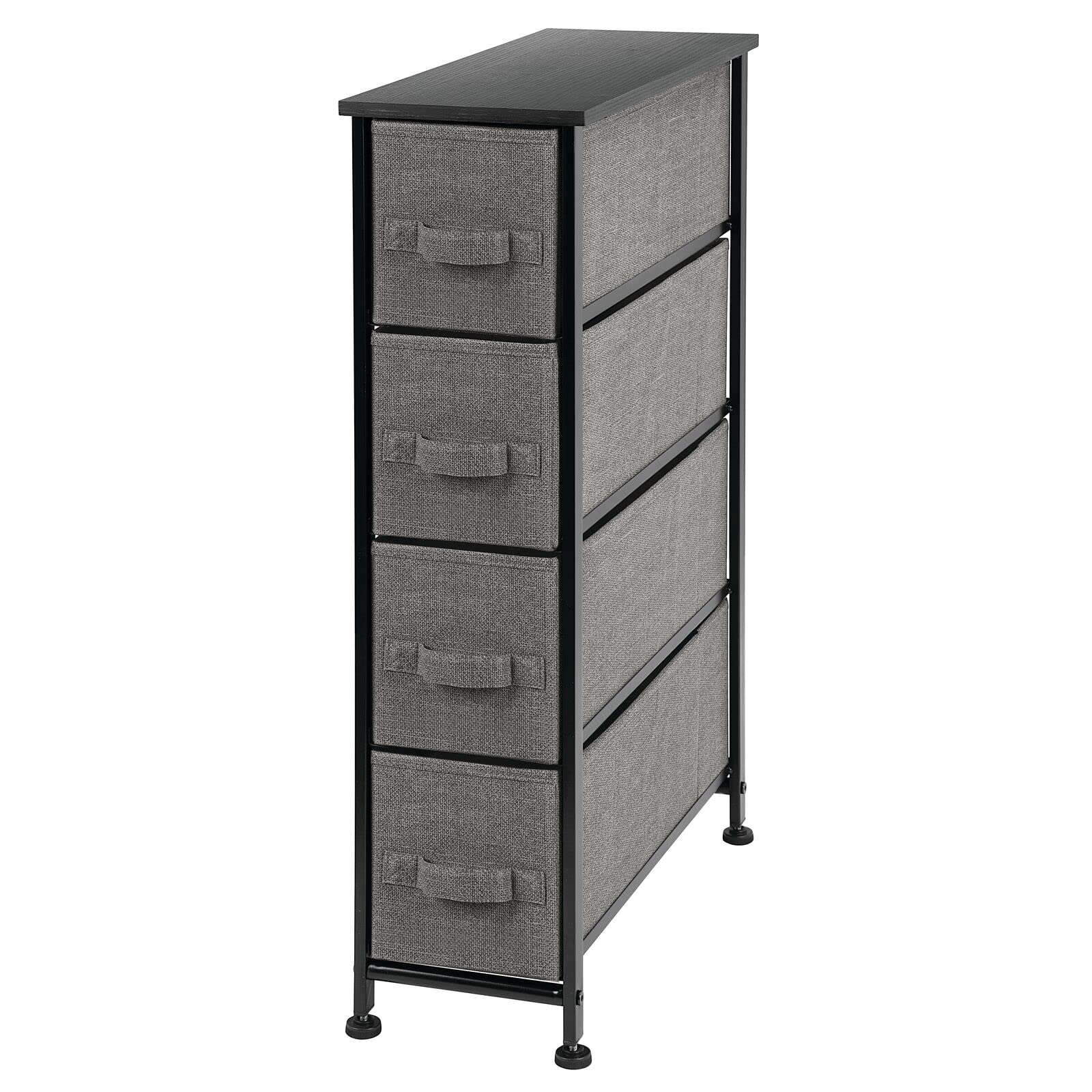
I relied on this slim tower when I needed storage in very narrow gaps—bathroom, beside a vanity, or squeezed next to a bed.
Why I picked it: Slim footprint fits tight gaps while still offering deep drawers.
Best for: Bathrooms, narrow spaces, and as a compact nightstand.
Affordable slim solution.
Pros
- Exceptionally narrow profile
- Deep removable drawers
- Quick assembly
- Adjustable leveling feet
- Wood top for small items
Cons
- Not suitable for tall bottles
- Drawers bulge if overloaded
My take
This mDesign tower earned its place in my utility shortlist by fitting into gaps where nothing else would. I used one in a bathroom to store washcloths, spare toilet roll, and small toiletries; the drawers held a surprising amount despite the slim width.
Assembly was easy and fast. The adjustable feet helped me stabilize it on slightly uneven tile. I did keep heavier items on the bottom drawer to reduce any wobble, and I found the unit most useful for folded items and toiletries rather than heavy or tall containers.
5. WLIVE 6-Drawer White Dresser – Best White Finish
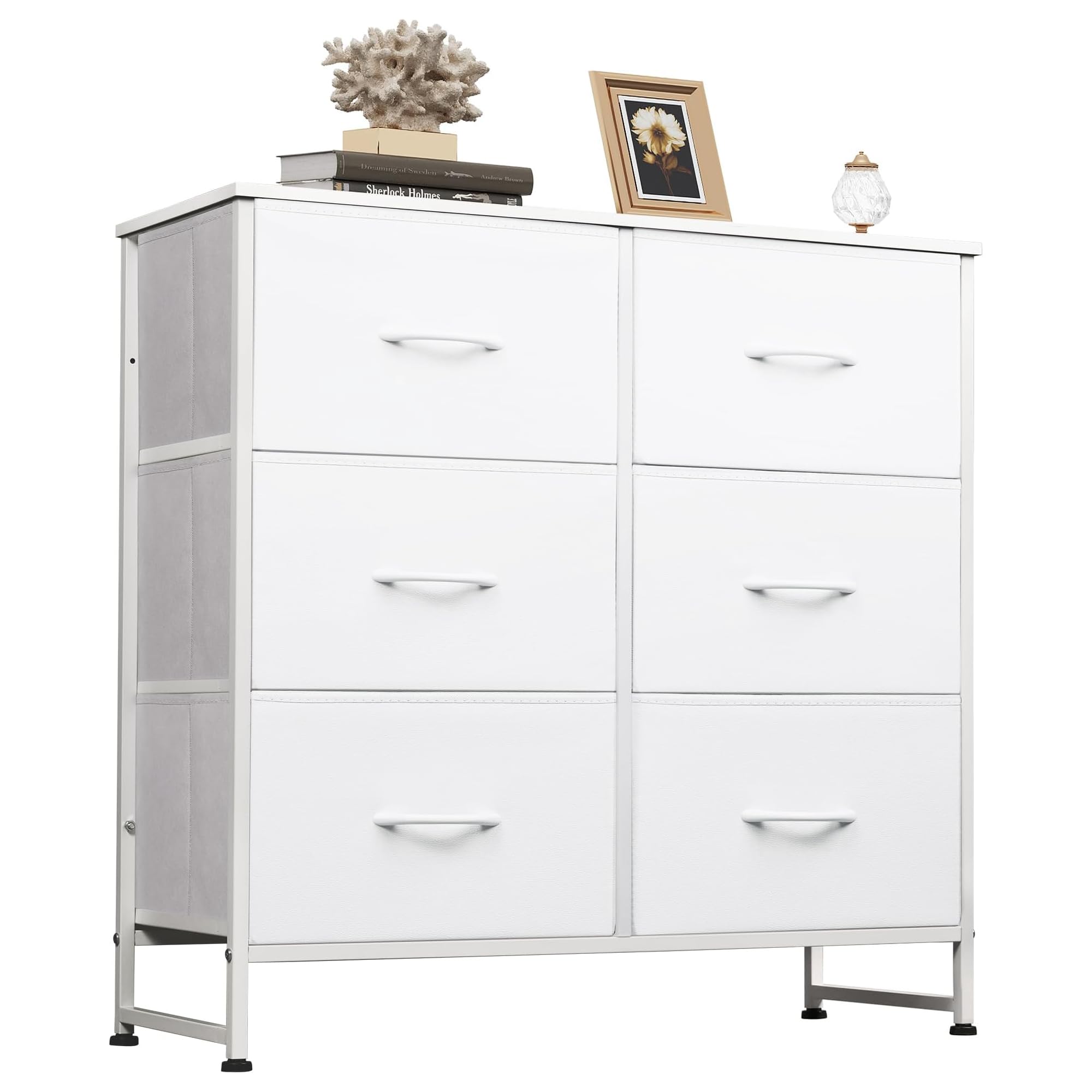
I chose this white, six-drawer tower when I wanted a clean, modern look that still performs as a reliable storage unit.
Why I picked it: Clean aesthetics and a stable build that blends into closets or bedrooms.
Best for: Closets, children's rooms, and entryways needing tidy storage.
Good-value white option.
Pros
- Clean, modern look
- Sturdy steel frame
- Wood top with water resistance
- Adjustable feet included
- Easy to move and assemble
Cons
- Limited capacity for heavy adult jeans
- Handle screws can be fiddly
My take
I put this WLIVE white tower into a closet where I needed visual brightness and extra organization. The fabric drawers surprised me with how much they held for their size and the wooden top is robust enough for folded towels or a small lamp.
Assembly was straightforward and parts were well labeled. I did take extra care when installing the drawer handles and recommend using your own screwdriver to avoid stripping the softer screws that come in the kit.
Overall it’s a practical, attractive option when you want white storage that reads more finished than basic fabric cubes.
6. Sorbus 9-Drawer Fabric Dresser – Best for Maximum Organization
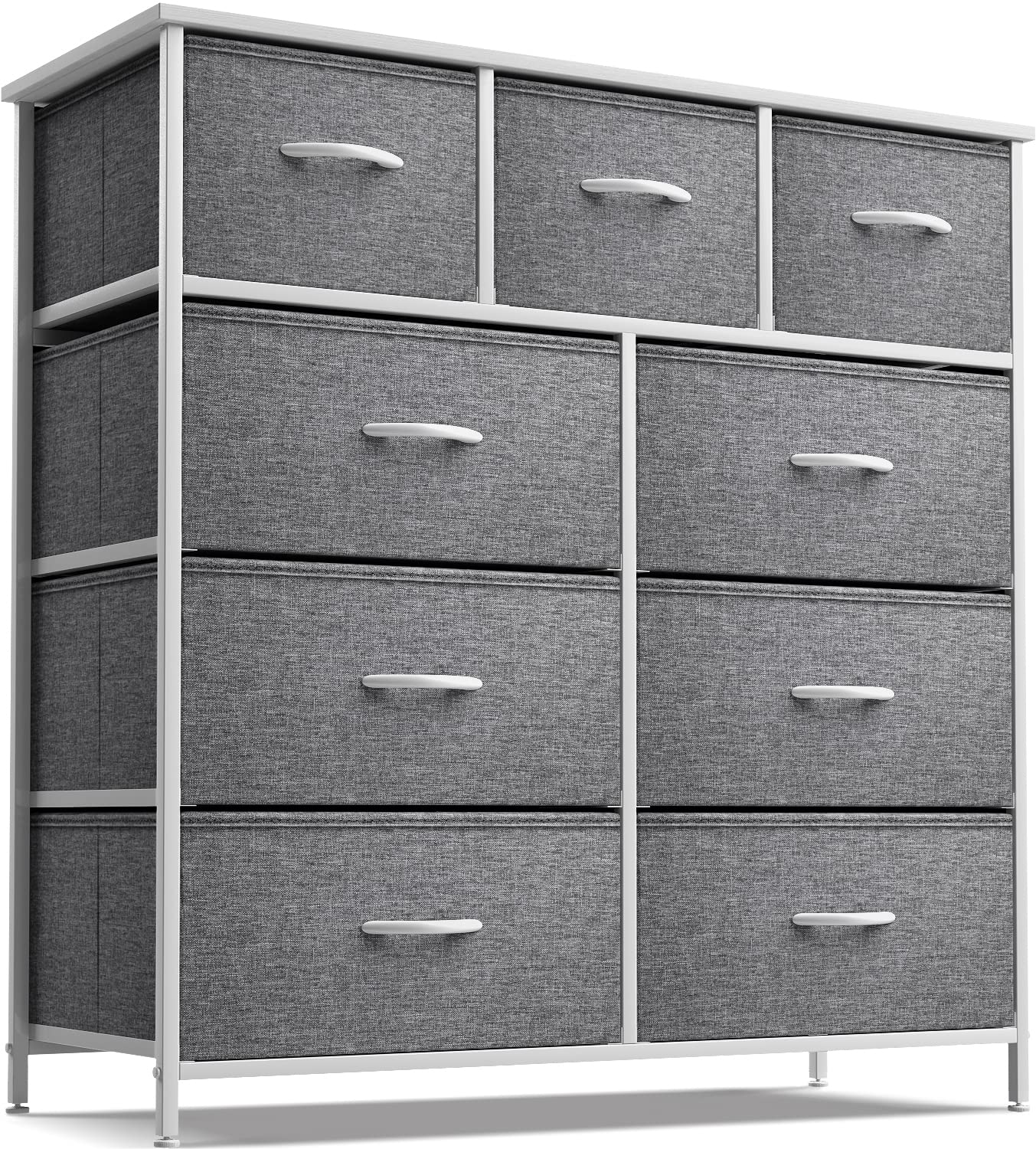
I relied on this nine-drawer tower when I needed to sort lots of small categories—supplies, linens, and pet gear worked well here.
Why I picked it: High drawer count for intensive, separated storage needs.
Best for: Offices, sewing rooms, nurseries, or anyone needing many small compartments.
Higher-capacity option.
Pros
- Nine separate drawers
- Reinforced drawer bases
- Lightweight and portable
- Hard wood top for display
- Simple, minimal assembly
Cons
- Can be a bit wobbly under heavy top load
- Strong initial odor for some units
My take
I used the Sorbus nine-drawer tower in a spare room to separate linens, accessories, and pet supplies. The drawer count makes it easy to dedicate each bin to a specific category, which kept clutter to a minimum.
Assembly was quick and the unit is light enough to move around as needs change. I did notice a factory smell on arrival with one unit, so I aired the drawers for a couple of days before loading clothing.
The frame and wood top are attractive and practical, but I treated the top more like a display surface than a place for very heavy electronics to keep the whole unit steady.
7. WLIVE 10-Drawer Tall Dresser – Best for Lots of Drawers
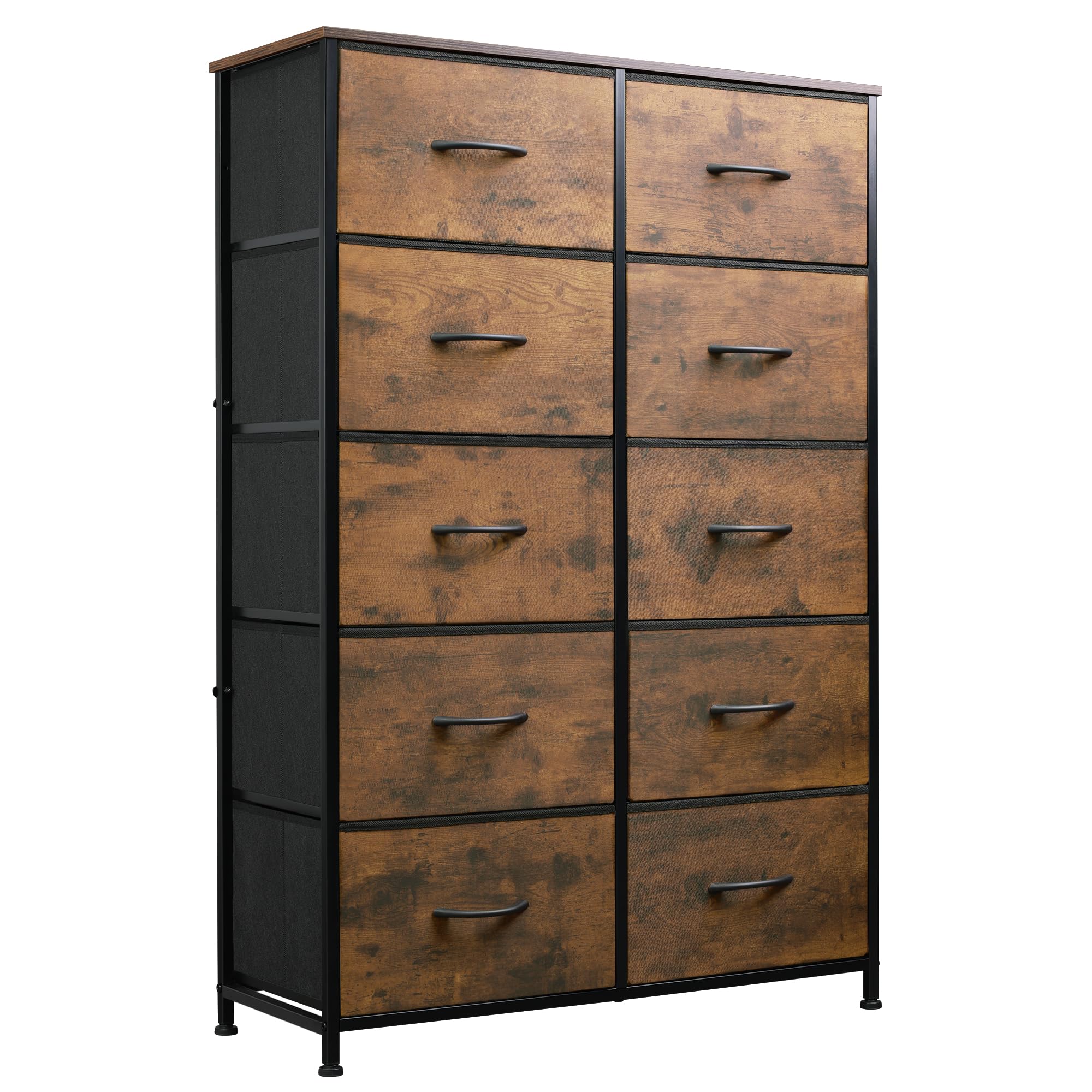
I reached for this tall WLIVE tower when I needed the most compartments in the smallest footprint—the ten drawers make short work of categorizing small items.
Why I picked it: Tall profile packs ten drawers into a narrow footprint for superior compartmentalization.
Best for: Closets and small bedrooms that need many small compartments.
Great value for high-capacity.
Pros
- Ten foldable drawers
- Narrow footprint, tall storage
- Anti-tip accessories included
- Deep drawers for compact items
- Modern wood-grain finish
Cons
- Drawers not on tracks, can pull out
- Edge finish can be delicate
My take
I placed this WLIVE tall dresser in my closet where floor space is tight; the ten drawers allowed me to split socks, underwear, gym clothes, and accessories into separate bins.
The wood-grain finish reads nicely in a bedroom and assembly was reasonable for a tall unit. I anchored it to the wall using the included anti-tip kit since the drawers are not track-mounted and can come out if pulled too far.
For anyone who needs many compartments but limited depth, this is one of the most space-efficient options I tested.
How I Choose a Vertical Dresser
Footprint and Fit
I always measure the available width and depth before anything else. Many fabric towers are narrow front-to-back but can be taller than expected.
Keep clearance for drawers to open fully and consider whether the top will need to hold a lamp or other items.
- Measure closet depth and door swing before buying.
- Allow an extra inch or two for adjustable feet and leveling.
Materials and Durability
I prefer a metal frame with an MDF or wood top for everyday stability. Fabric drawers keep weight down but aren’t meant for very heavy loads.
If you plan to store bulky jeans or heavy towels, use lower drawers for those items.
- Steel frame + MDF top = best balance of weight and sturdiness.
- Non-woven fabric drawers are breathable but can deform if overpacked.
Drawer Count vs. Drawer Depth
More drawers means better sorting; deeper drawers hold bulkier items. I match drawer count to how I plan to group clothing.
For kids and accessories, many small drawers work well. For wardrobes, I prefer fewer, deeper drawers.
- 10+ drawers = excellent for accessories and small categories.
- 4–6 drawers = better for folded shirts and some pants.
Assembly and Anchoring
I factor in whether I can assemble the unit alone and whether anti-tip hardware is included.
Anchoring is non-negotiable in bedrooms with children or on uneven floors; I always use the provided kit or a wall anchor.
- Check if tools are included; I still bring my own screwdriver for faster handle installation.
- Use anti-tip straps even if the unit feels stable.
Frequently Asked Questions
Are fabric drawers durable enough for daily clothing?
In my experience fabric drawers hold folded shirts, underwear, and light pants well, but they’ll misshape if overloaded with heavy items. I keep heavier clothing on the bottom drawers and use reinforced bases when provided.
Can I use these dressers as nightstands?
Yes—I used several as nightstands. The MDF or wood tops are fine for lamps, clocks, and phones, but I avoid placing very heavy TVs or large electronics on them.
How difficult is assembly?
I assembled most units alone within 15–45 minutes. Instructions and basic tools are usually included, though I prefer my own screwdriver for the drawer handles.
Do these dressers need to be anchored to the wall?
I always anchor taller units or those in child-accessible spaces. Many of the models I tested include anti-tip hardware—use it for safety and stability.
Final Take
I found a great option for every tight-space storage need, from the slim mDesign tower to the high-capacity Sorbus nine-drawer unit.
If I had to pick one for general use, the YITAHOME 5-drawer balances capacity, build, and a usable wood top; for maximum compartmentalization I turn to the WLIVE 10-drawer or Sorbus 9-drawer.
Measure first, anchor tall units, and distribute heavier items low to get the most from any fabric dresser.
