
I tested compact vintage fans and a room-scale oscillating model to find durable metal looks, whisper-quiet bedside options, and the most effective personal air circulation for desks and small rooms.
I spent time living with every fan in this roundup so I could compare build quality, noise, airflow, and how well each one fit into real spaces like desks, nightstands, and small rooms.
My goal was simple: find fans that deliver the vintage aesthetic without sacrificing performance or durability—whether you need a travel-friendly USB desk fan or a 12-inch oscillating table fan that actually moves air around a room.
I split these choices into small personal circulators and a larger oscillating table fan. The Vornado models focus on Vortex-style targeted airflow and durable construction, the Holmes mini brings a true metal retro look with USB convenience, and the Holmes 12-inch is the practical pick when you need wider coverage and motorized oscillation.
1. Vornado Flippi V6 Compact Air Circulator – Best Compact Desk Fan
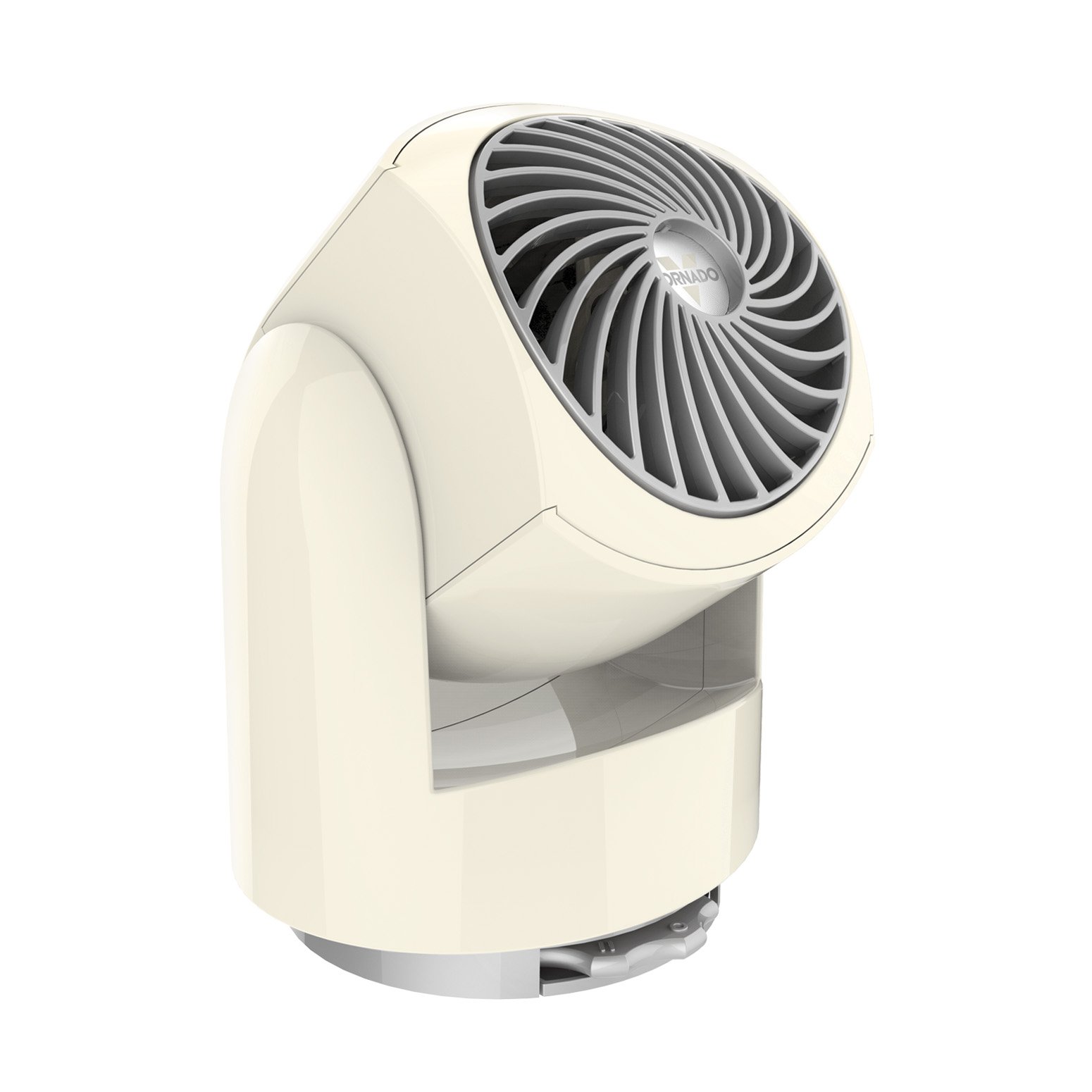
A compact personal circulator that folds away, uses Vornado vortex tech, and gives surprisingly strong airflow for a desk fan.
Why I picked it: Compact, foldable grill and focused vortex airflow for desks and travel.
Best for: Desks, bedside tables, dorm rooms, and travel where a personal breeze is needed.
Affordable personal fan with strong brand support.
Pros
- Excellent airflow for its size
- Fold-down grill for neat storage
- Quiet on low speed
- Adjustable tilt head
- Tight grille increases safety
Cons
- Not intended to cool a whole room
- High setting is noticeably louder
- Must be positioned close for best effect
My take
I keep the Flippi V6 on my desk about 18 inches from my face and it consistently delivers a direct, refreshing breeze without blowing papers off the surface.
The fold-down grill is genuinely useful — I stash it in a drawer when I travel or when I want a cleaner desktop look. Two speeds are simple and reliable; I use low for white noise and high when I need more targeted cooling.
The fan is whisper-quiet on the low setting and safe to run around pets or curious hands thanks to the tight spiral grille, but don’t expect it to replace a room fan. On high it’s louder, so I still prefer it for single-person use close-by.
2. Holmes Heritage 4-Inch Mini USB Desk Fan – Best Vintage USB Fan
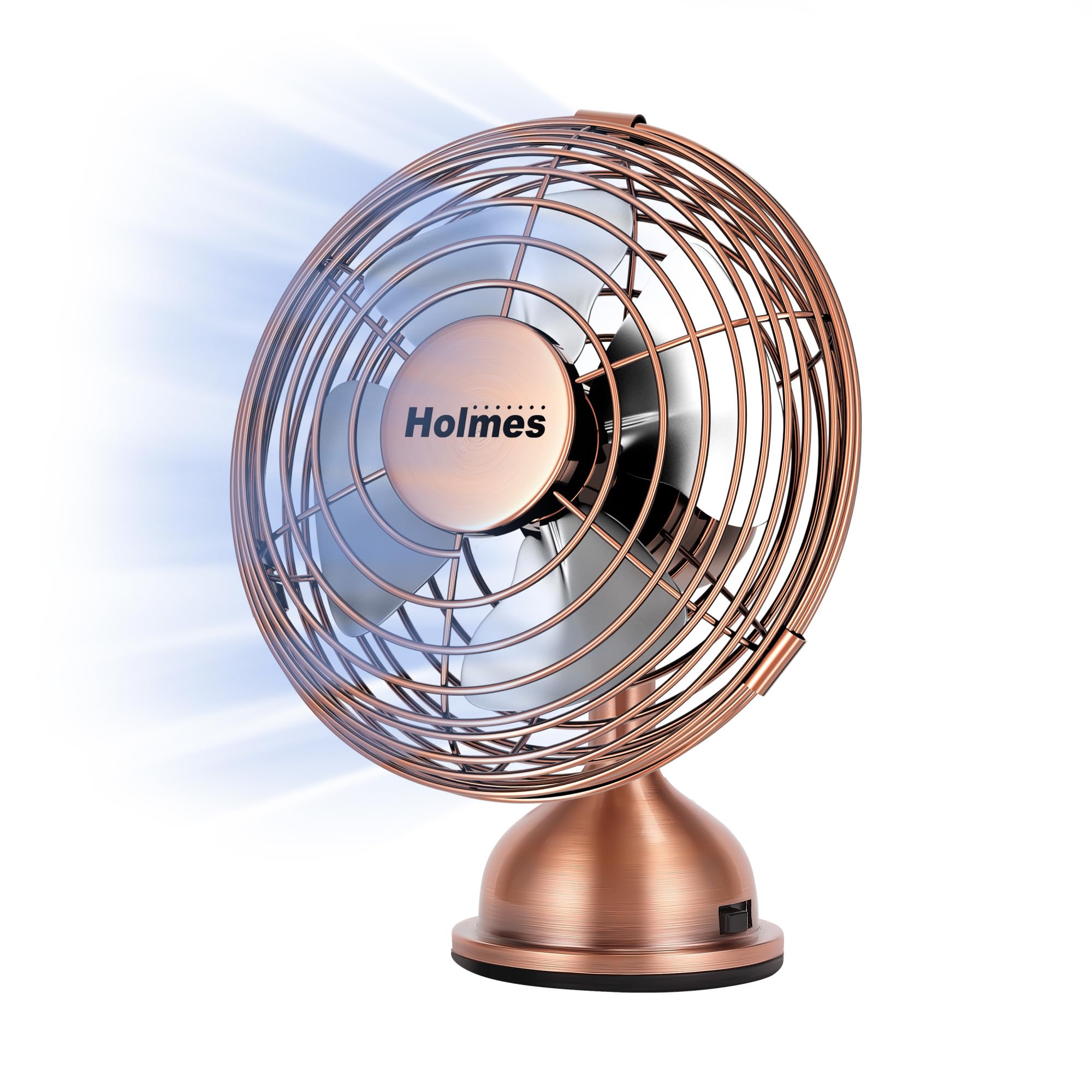
A tiny, all-metal mini fan with a retro brushed-copper look, USB power, and a simple single-speed operation.
Why I picked it: Authentic metal vintage look with USB convenience for plug-and-play desk use.
Best for: Laptop desks, travel, bedside white noise, and anyone wanting a compact metal fan.
Very budget-friendly for a metal-bodied mini fan.
Pros
- True metal construction and finish
- USB-powered for easy use
- Compact footprint for small desks
- Adjustable 100° tilt
- Simple manual on/off
Cons
- Single-speed limits flexibility
- Can slide on smooth surfaces
- Not powerful enough for multiple people
My take
I brought this little Holmes fan into a sun-soaked office and it provided a steady, pleasant breeze while staying quiet enough to keep me focused.
The brushed-copper finish looks great on a desk and the metal construction feels far more durable than the usual plastic minis. Because it’s USB-powered I plug it into my laptop or a small adapter and it’s ready instantly.
One quirk: on glass or slick nightstands it can shift its position while running, so I usually add a non-slip pad underneath. The single speed is sufficient for direct, personal cooling but don’t expect multiple-stage control.
3. Vornado VFAN Mini Classic – Best Retro Metal Build
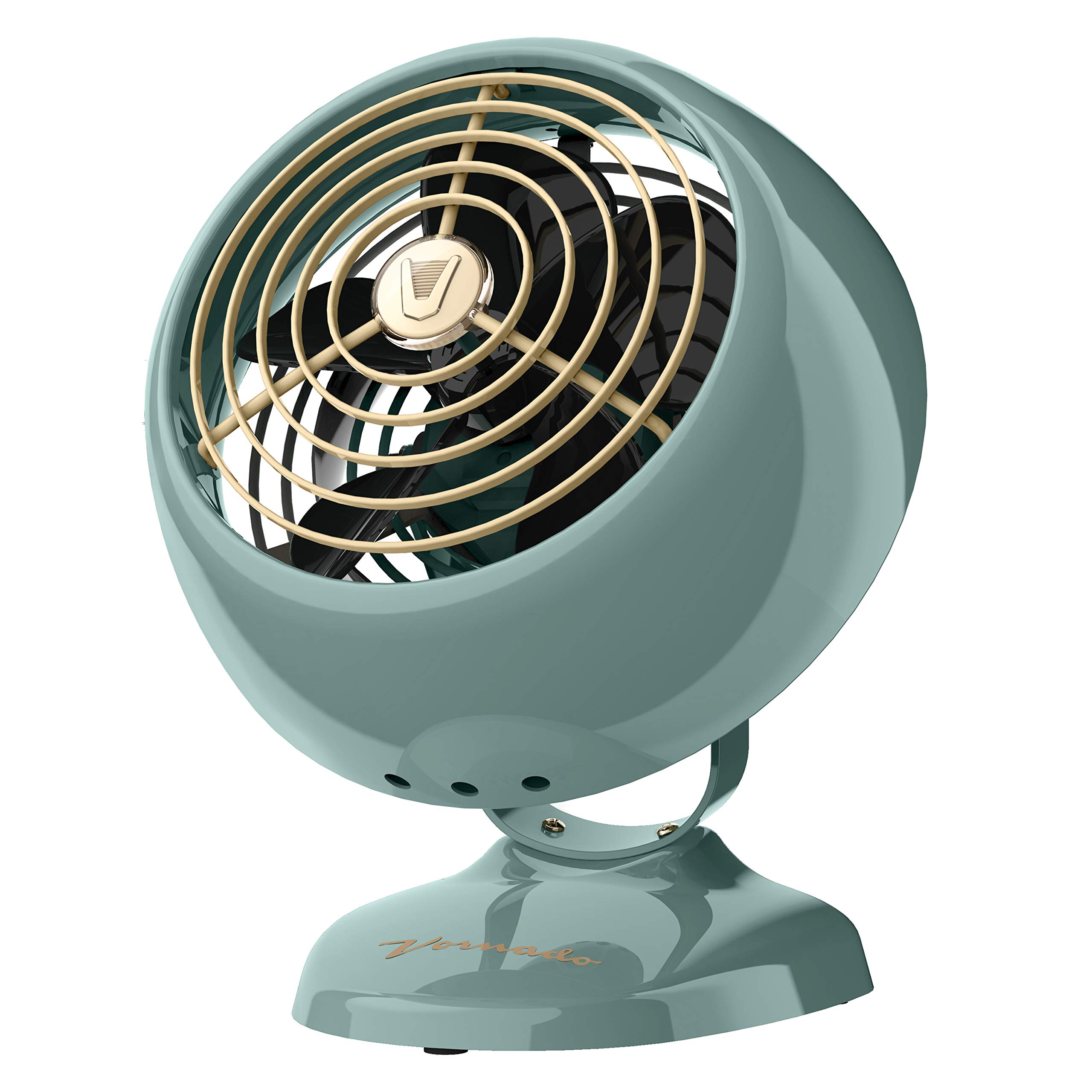
A heavier all-metal mini fan that blends classic VFAN styling with signature Vornado circulation and two-speed control.
Why I picked it: Durable metal construction and a focused, high-velocity airflow for personal cooling.
Best for: Anyone who values a true retro metal aesthetic and a powerful, targeted stream of air.
Mid-range investment with long-term durability.
Pros
- Robust all-metal build
- Strong focused airflow
- Two-speed dial control
- Timeless vintage styling
- Adjustable tilt head
Cons
- Motor whine can bother sensitive ears
- Small blade area won’t cool large rooms
- Heavier so less portable
My take
I was impressed by how much air the VFAN Mini delivers for such a compact unit — it creates a concentrated stream that cools my face without needing to run at full power.
The metal construction gives it heft and longevity; I don’t worry about this one wearing out quickly. The two-speed dial is intuitive and the tilt head directs airflow precisely where I need it.
Take note that some people (I included) notice a high-register motor whine on certain units. That didn’t ruin the fan for me, but if you’re extremely sensitive to motor tone, check one in person if possible.
4. Vornado Pivot Personal Air Circulator – Best Adjustable Pivot
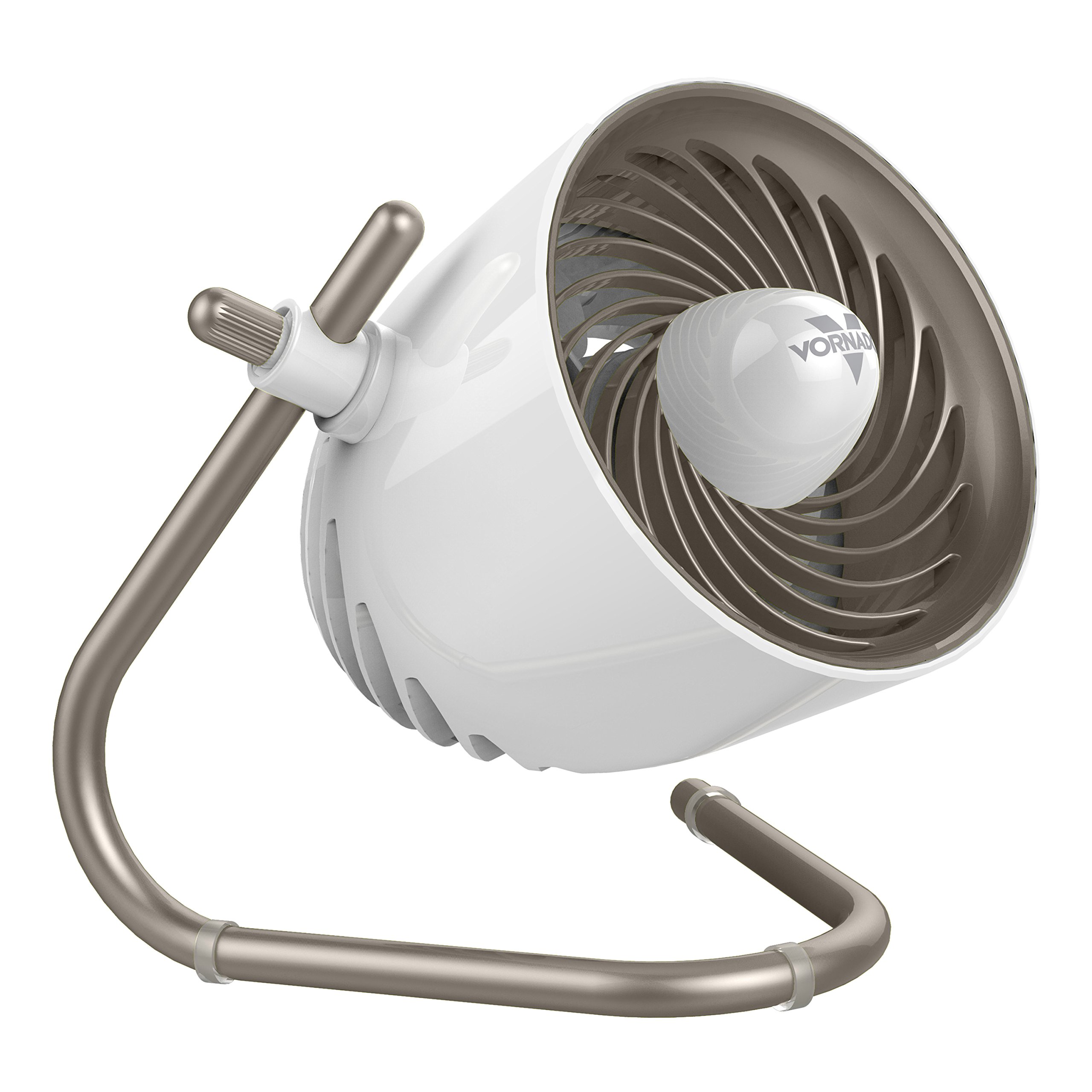
A versatile 6-inch personal circulator with 360-degree axis adjustment, three speeds, and a kid-friendly grille.
Why I picked it: 360-degree axis and compact design make it the most flexible personal circulator here.
Best for: Nightstands, small desks, plant circulation, and low-noise white-noise use.
Affordable pick for adaptable personal airflow.
Pros
- 360-degree adjustable axis
- Three speeds for more control
- Tight-spiral grille for safety
- Compact and sturdy
- Quiet operation at lower settings
Cons
- Not as powerful as larger fans
- Low speed barely moves air for some
- Plastic housing less premium than metal
My take
I use the Pivot on my nightstand and it’s perfect for white noise and a gentle breeze; the 360-degree axis lets me aim the airflow without moving the base.
For delicate tasks — keeping succulents aired or providing subtle cooling during a talk — the three speeds offer useful flexibility. It’s quiet enough to double as a sleep fan on medium.
Remember that this is a small fan: it performs exactly as intended for personal circulation but won’t compete with larger room fans for moving large volumes of air.
5. Holmes 12-Inch Oscillating Table Fan – Best Room Oscillating Fan
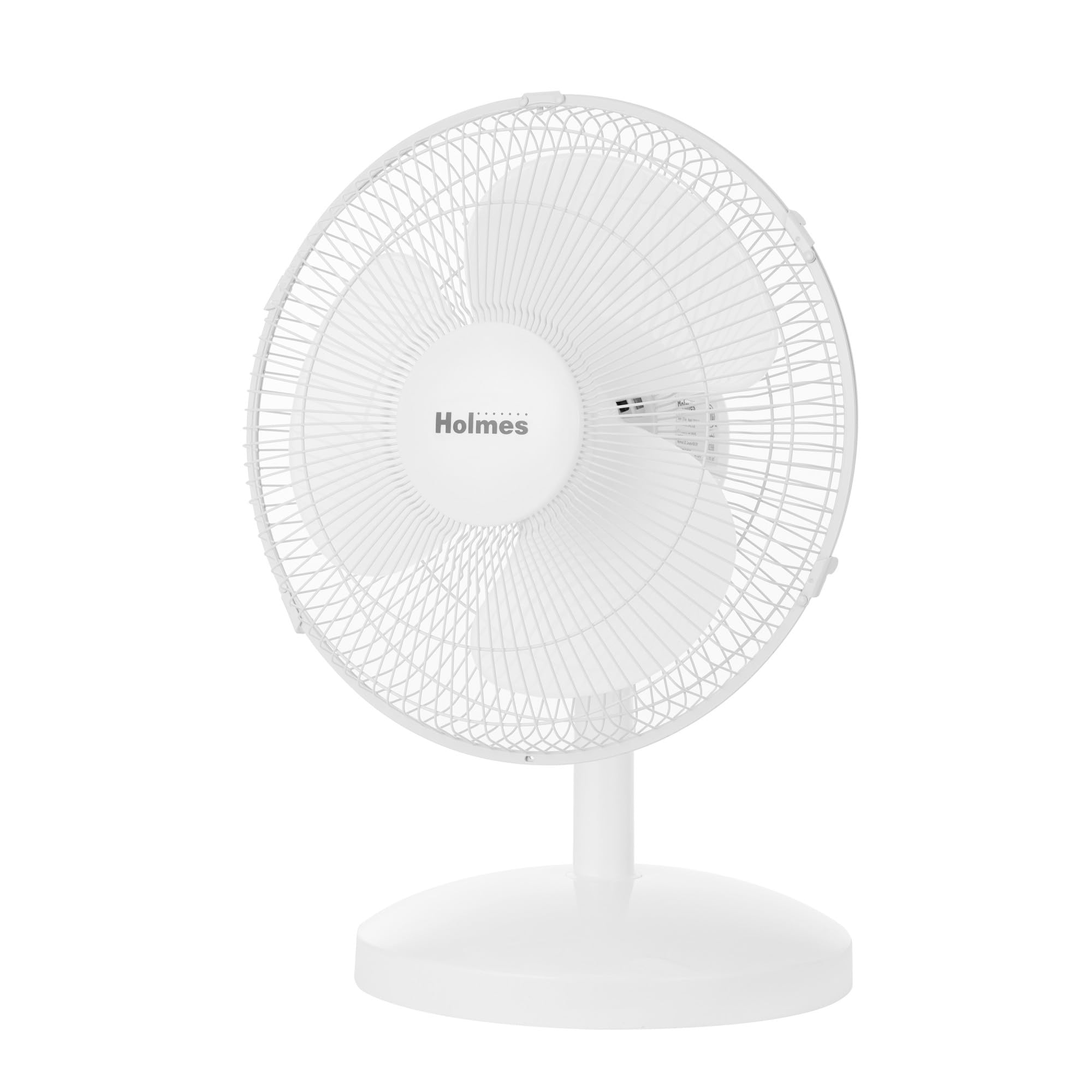
A 12-inch motorized oscillating fan with three speeds, wide 75° sweep, strong airflow up to 1,014 CFM, and a quiet high setting.
Why I picked it: Motorized oscillation and genuine room-moving airflow in a compact package.
Best for: Small bedrooms, craft rooms, home offices, and places that need wider air circulation.
Budget-friendly larger fan with strong performance.
Pros
- Powerful air movement up to 1,014 CFM
- 75° motorized oscillation for wide coverage
- Three speeds with simple buttons
- Quiet even on higher settings
- Adjustable 15° tilt head
Cons
- Larger base occupies more surface area
- Some units can make odd noises on mid/high
- Feels lighter than premium models
My take
I put this Holmes 12-inch fan in my craft room and it immediately improved circulation; the oscillation spreads the airflow so I don’t have to keep repositioning it.
Assembly was quick and the push-button controls are intuitive — I run it on medium most of the time because it moves plenty of air without getting loud. The manufacturer specs about higher CFM and a wide sweep match what I experienced.
If you need more room coverage than a personal fan, this is the one I reach for. The trade-offs are a larger footprint and, in a few units, a quirky noise on upper settings; for me the airflow benefit outweighs those issues.
How I Choose Vintage-Style Fans
Key features I focus on
When I test fans I prioritize build material, airflow performance, and noise because those three determine whether a vintage-style fan is practical as well as pretty.
I also pay attention to power source and control simplicity — USB fans win for travel and desks, while corded oscillating fans win for room coverage.
- Build: metal bodies last longer and feel premium.
- Airflow: targeted vortex action is best for personal cooling.
- Noise: check low and high settings — low should be quiet.
- Power source: USB for portability, corded for continuous room use.
- Size & footprint: smaller fans need to be placed close.
Matching a fan to the room
I pick petite Vornado and Holmes minis for desks and bedside use because they deliver targeted airflow without cluttering my space.
For bedrooms and small living areas I choose an oscillating 12-inch model to move air across the room rather than just in a single spot.
- Desk / travel: choose compact USB or fold-down models.
- Bedside / white noise: prioritize quiet low-speed operation.
- Small room: prioritize oscillation and higher CFM ratings.
Maintenance tips I follow
I always unplug before cleaning and remove dust from grills and blades regularly to keep airflow steady and motors cool.
For metal fans I occasionally check fasteners and wipe with a damp cloth; consult the manual before disassembly for deeper cleaning.
- Unplug before cleaning.
- Remove dust buildup from blades and grills.
- Check stability of bases on smooth surfaces.
Frequently Asked Questions
Are vintage-style metal fans safe around kids and pets?
I trust fans with tight-spiral grilles and small blade gaps around pets and kids, but I still keep them out of reach and supervised since small fingers or paws can be curious.
Do these fans cool entire rooms or just individuals?
From my testing, the minis deliver targeted personal cooling and work best close to the user; the 12-inch oscillating model is the only one here that meaningfully circulates air across a small room.
How noisy are vintage-style fans?
I found low and medium settings are usually quiet enough for sleep or focused work. Some metal units can produce a motor whine at certain speeds — if you’re very noise-sensitive, try to hear one in person first.
Can I use USB fans with a laptop or wall adapter?
I routinely power USB models from laptops and small adapters; they’re convenient for travel and desks, but make sure to use an appropriate adapter for stable power.
Final Take
I recommend the Flippi V6 if you want a compact, foldable desk circulator that balances performance and portability.
Choose the VFAN Mini or Holmes 4" if you prefer a true metal vintage look; pick the Holmes 12-inch oscillating fan when you need actual room coverage.
Whichever you choose, consider where you’ll place the fan and how close you’ll be to it — matching size and power to use case is the most important decision I make when selecting a fan.
