
I tested a range of walk-behind and heavy-duty brush cutters to find machines that actually make reclaiming thick brush and overgrown acreage faster and less tiring. Here are the tools I kept coming back to.
I spent time with every machine in this roundup so I could compare real-world cutting performance, startup reliability, and how each unit handled long runs across rough ground.
My testing covered battery and gas options, handheld trimmers converted for walk-behind use, and true push-style brush cutters. I focused on power delivery, cutting width, durability of the cutting system, and how comfortable each unit was to operate for an hour or more.
If you want a tool that clears heavy grass, creepers, saplings and tough ditch growth without wrestling the equipment, this list is built from what actually worked for me.
I compared cutting swath, engine/motor power, starting reliability, build quality, and operator comfort, then picked machines that balanced performance and practicality for different jobs and budgets.
1. Ryobi ONE+ 18V Brush Cutter – Best for ONE+ Users
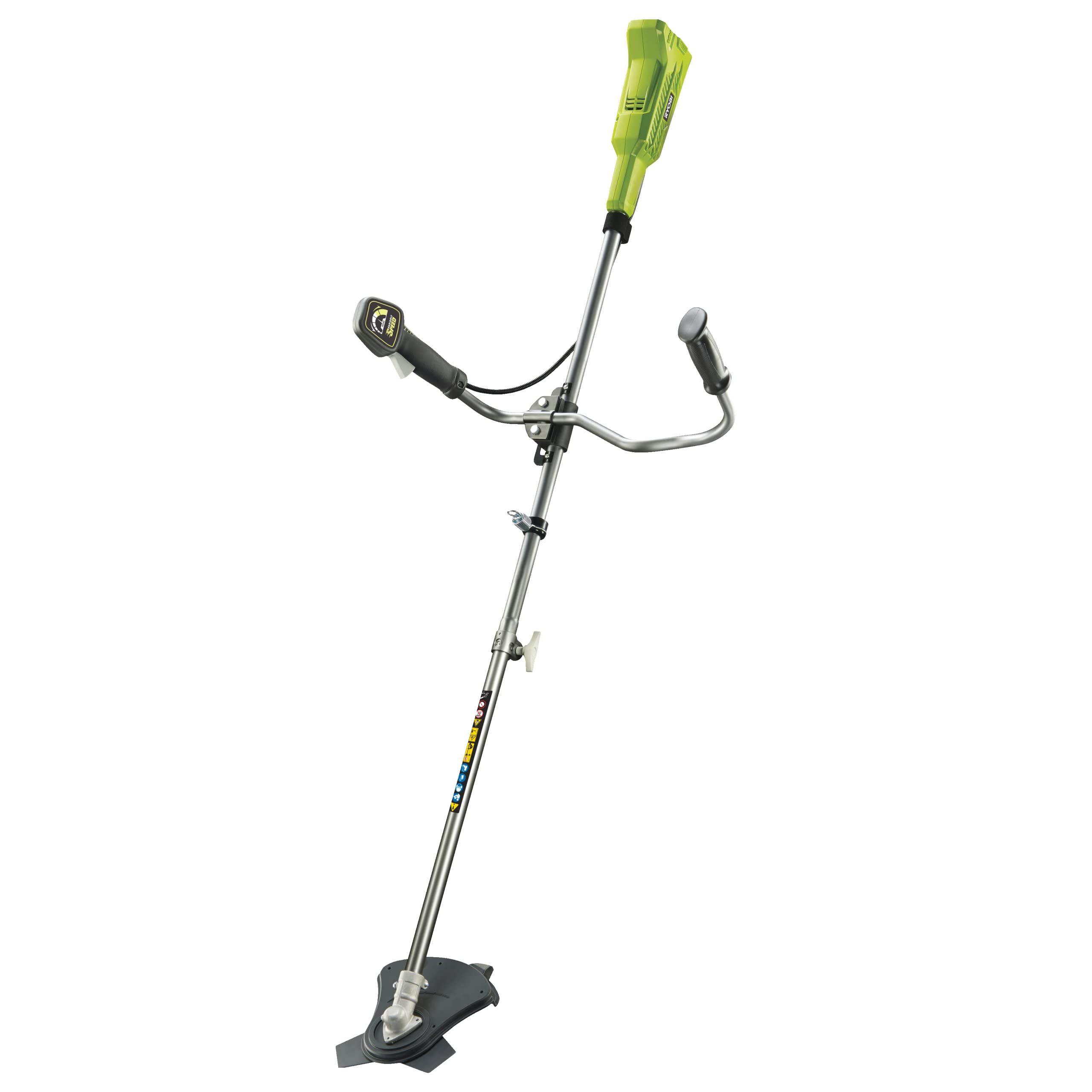
A versatile battery-body brush cutter that pairs with Ryobi’s ONE+ battery family for cordless convenience and a 2-in-1 blade/line head.
Why I picked it: Great versatility for existing ONE+ tool owners and useful 2-in-1 cutting heads.
Best for: Homeowners who already own Ryobi 18V batteries and want cordless trimming with a blade option.
Body-only tool — requires an 18V ONE+ battery and charger (sold separately).
Pros
- Works with all ONE+ 18V batteries
- 2-in-1 blade and line head
- Soft-grip bike handle
Cons
- Sold as body only
- Feels heavy with harness
- Sparse written assembly instructions
My take
I liked the idea of a cordless brush cutter that taps into my existing ONE+ battery inventory. The 18V motor gives a surprising amount of torque for thick weeds, and switching between the hardened steel triarc blade and the large line head is handy depending on the job.
Ergonomically, the bike-handle and soft grip make long passes more comfortable than a straight shaft trimmer. Variable speed control helped me stretch runtime on lighter jobs.
A few practical cautions: this ship-as-body-only item means you must factor in the battery and charger. The unit felt heavy once I added a harness and blade, and the included pictogram-only instructions left me fumbling through harness assembly. I also experienced a short-run stoppage during extended testing that required troubleshooting, so I’d recommend checking fitment and vents if the unit quits unexpectedly.
2. PROYAMA 42.7cc 2-Cycle Gas Brush Cutter – Best Gas Power
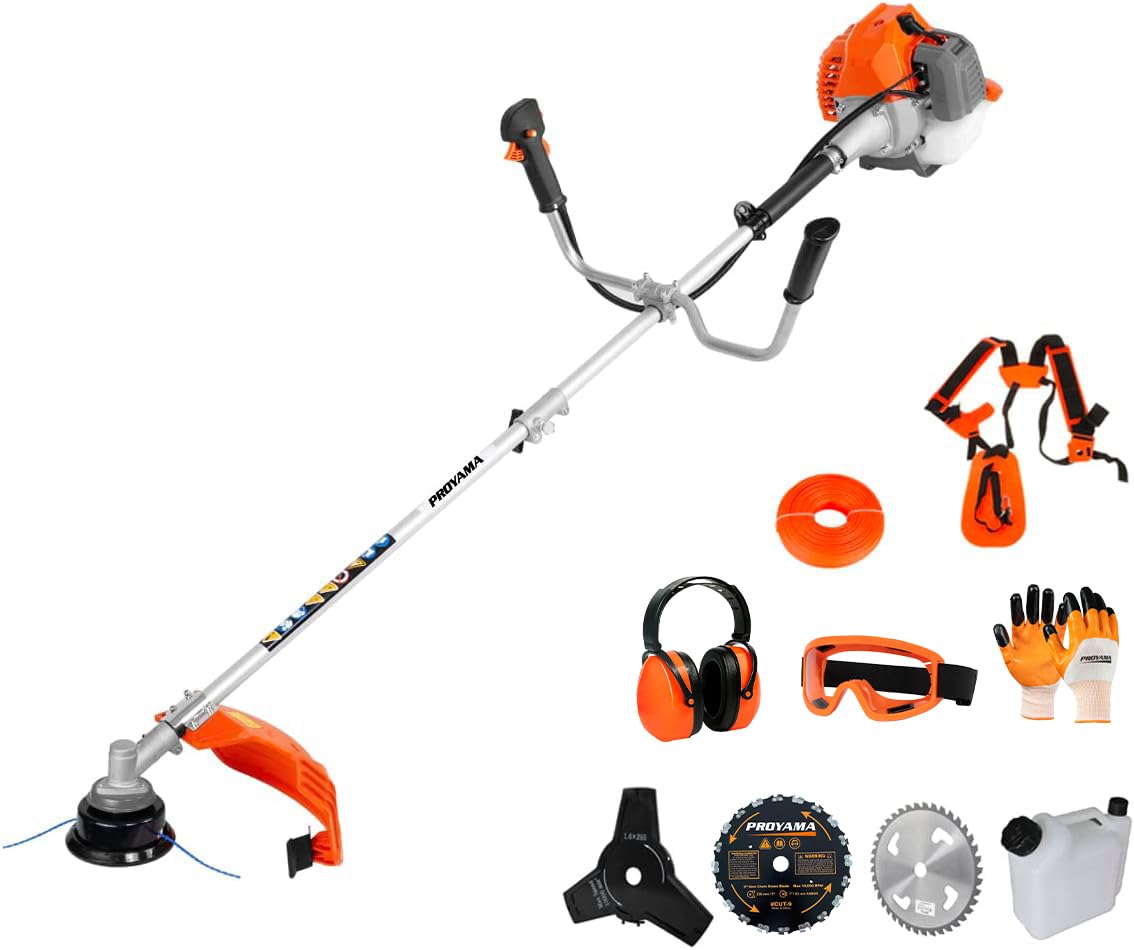
A heavy-duty 42.7cc 2-stroke unit built for commercial-style clearing—big power in a package that needs a solid harness and respect.
Why I picked it: Raw power and commercial feel for heavy clearing at a competitive cost.
Best for: Users tackling acres, thick weeds, and small saplings who need high torque.
Powerful, value-oriented gas option for heavy work.
Pros
- Strong 42.7cc engine output
- Quick-start system
- Commercial-grade cutting power
Cons
- Heavy; requires good harness
- Included accessories feel cheap
- Some starting/reliability quirks reported
My take
This 42.7cc two-stroke unit impressed me with brute force — it chews through dense weeds and handled larger stems that would bog down smaller trimmers.
The quick-start system generally behaved well during my initial runs and the handlebar layout makes long sessions less fatiguing than a poorly balanced unit. I swapped to higher-grade string and blades for sustained heavy work and that made the unit sing.
Be realistic about weight: this is not a lightweight backyard tool. I paired it with a solid vibration-reduction harness. Also, while it started and ran well for me at first, I did encounter a case where the engine became difficult to restart after extended use, so expect routine carb and ignition checks on long projects.
3. 24V Cordless Brush Cutter (2-Battery Kit) – Best Lightweight Cordless
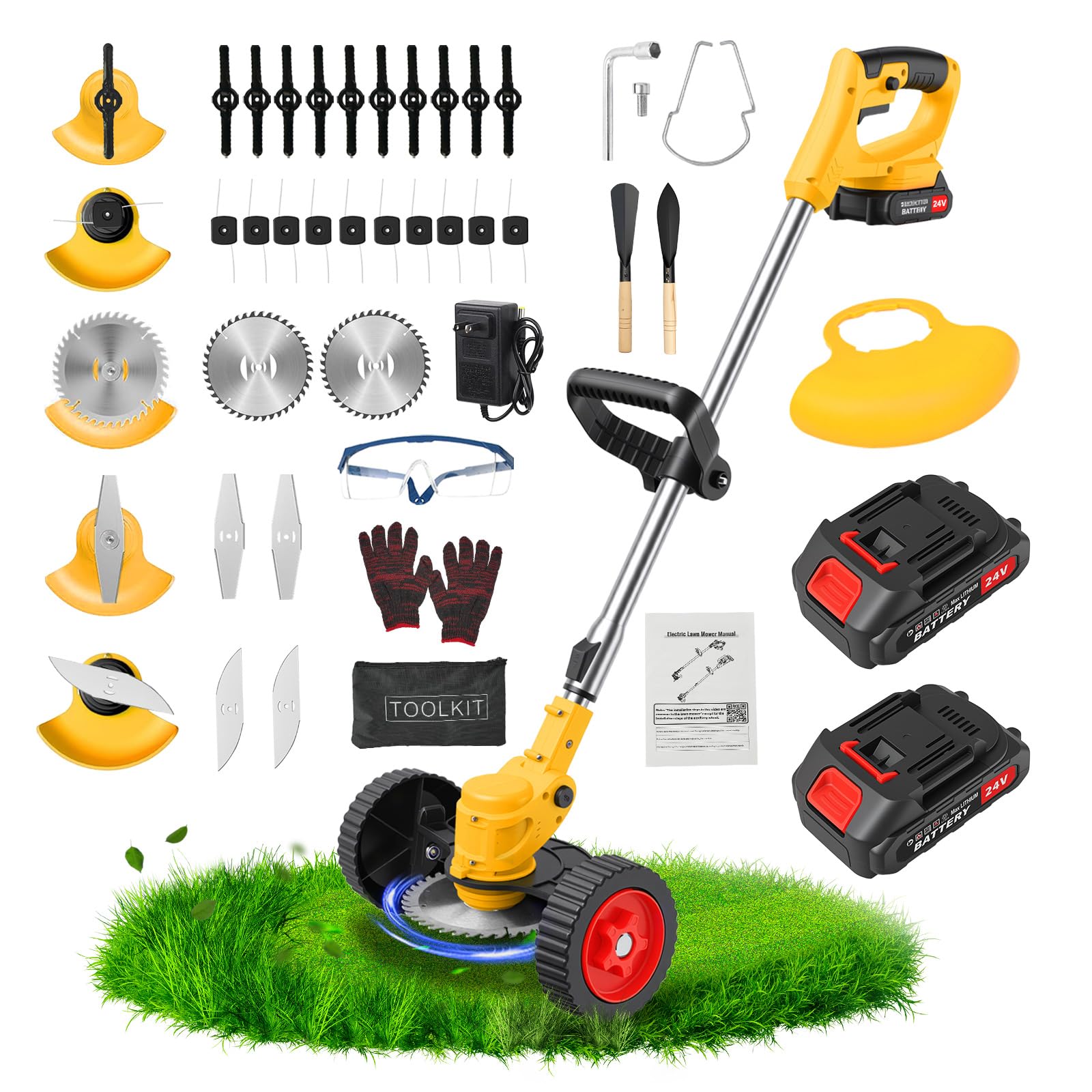
A lightweight, multifunction cordless trimmer with two batteries, adjustable shaft, and three blade types for different vegetation.
Why I picked it: Very light and easy to handle with multiple blade options for varied yard tasks.
Best for: Small to medium yards and spot trimming where portability and low noise matter.
Budget-friendly cordless kit with spare battery swaps for extended jobs.
Pros
- Includes two batteries and a fast charger
- Adjustable shaft and head angle
- Three blade types for versatility
Cons
- Limited battery runtime per pack
- Feels toy-like under heavy load
- Motor needs cooling breaks
My take
I appreciated how quick this one was to assemble and how light it felt — ideal for getting under decks and along fences without wrestling a heavy engine.
The three cutting heads (metal, saw, plastic) expanded what I could tackle: plastic for tender grass, metal for thicker weeds, and a saw blade for thin branches. Swapping blades was straightforward and the adjustable shaft made it comfortable for different heights.
Reality check: the two included batteries are handy, but each only sustained heavy cutting for roughly a quarter-hour in dense growth during my tests. For larger jobs I rotated batteries and paced the motor with rest periods to avoid heat issues. For small property maintenance this is an easy-to-use, affordable cordless solution.
4. PROYAMA 40cc 4-Cycle Brush Cutter – Best 4-Stroke
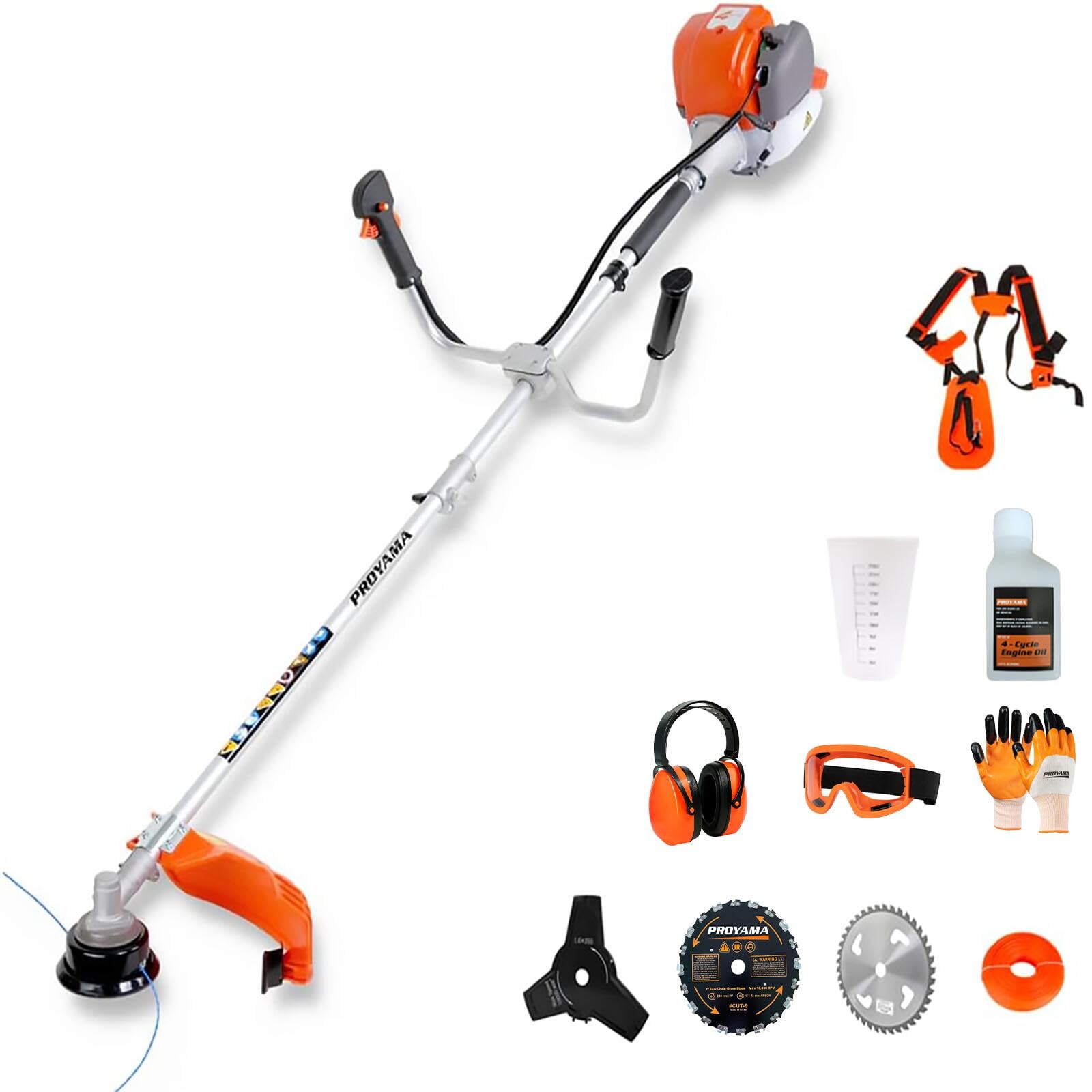
A 4-stroke 40cc machine that delivers 1.5 HP without mixing fuel—solid for heavier work and ditch clearing with quick starts.
Why I picked it: No-mix operation with strong power and easy first-pull starts in my hands.
Best for: People who prefer 4-stroke convenience for heavier clearing and longer sessions.
Good value for a 4-cycle heavy-duty trimmer.
Pros
- No fuel mixing (4-stroke)
- Plenty of cutting power
- Quick-release shaft for transport
Cons
- Heavy for residential use
- Assembly instructions are weak
- Lower-tube attachment can be vulnerable
My take
This 40cc four-stroke was a pleasant surprise — it fired on the first pull after I topped oil and fuel and behaved like a much more expensive machine while cutting thick brush.
I used the string head and then a chainsaw-style blade attachment; both delivered power without the fuss of premixing gasoline, which is a big convenience on longer jobs.
A couple of real notes from my sessions: the unit is heavy and needs a decent harness for long runs, and the lower tube coupling felt like a weak point during aggressive use. Also, expect to fiddle with the small-print manual during setup — it's usable, but terse.
5. PowerSmart 25.4cc Gas Trimmer – Best Budget Gas
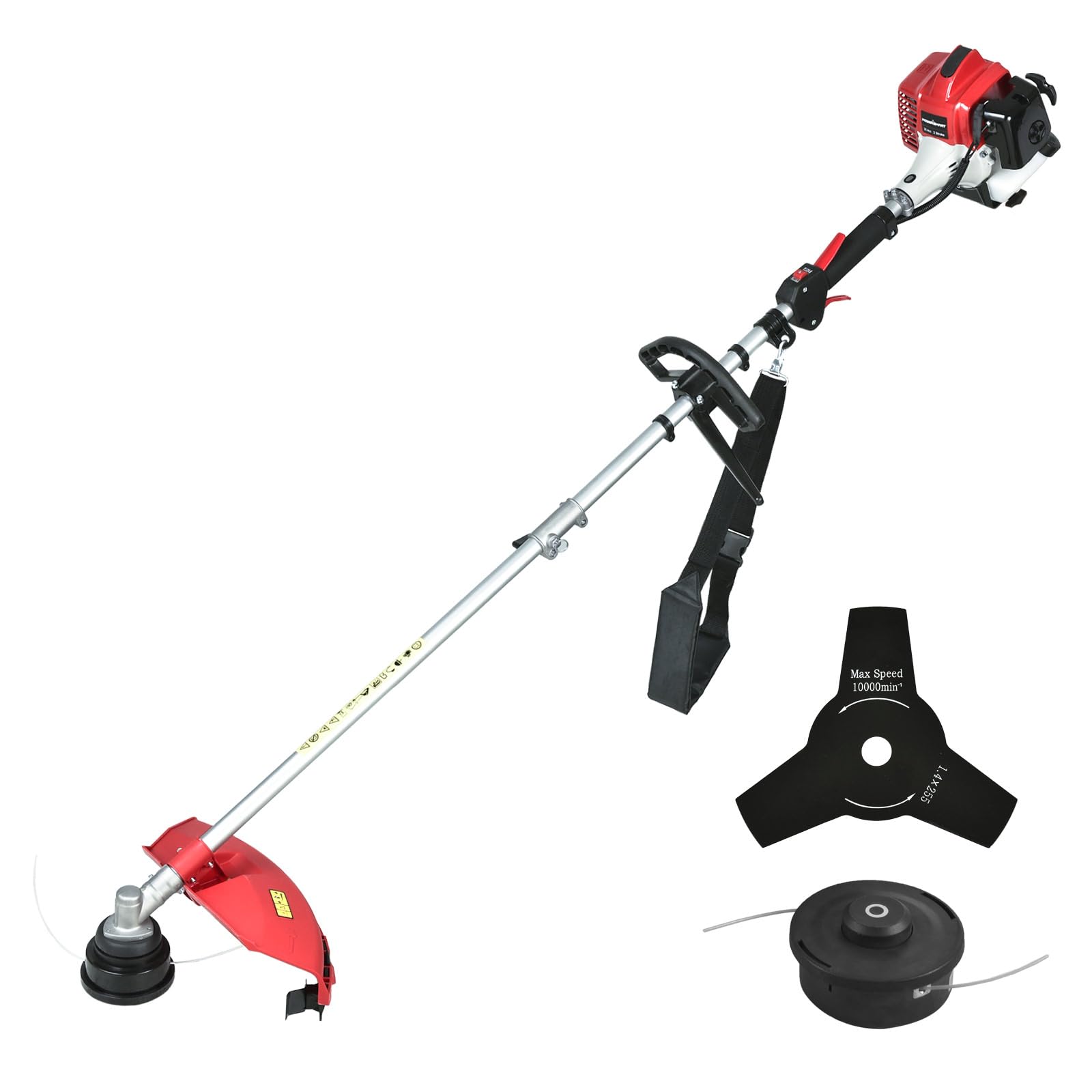
An affordable 25.4cc 2-stroke trimmer that offers solid backyard power, a blade option, and familiar bump-head operation.
Why I picked it: Great entry-level gas power with easy starts and upgrade potential.
Best for: Homeowners who want gas power on a budget and don’t need commercial duty reliability.
Affordable option that competes with name-brand performance for light to medium chores.
Pros
- Plenty of power for home use
- Includes blade and line options
- Easy to start
Cons
- Trimmer head durability varies
- Some long-term reliability concerns
- Lightweight components in places
My take
I found this 25.4cc trimmer to be a reliable workhorse for normal yard cleanup — it starts readily and has enough punch to tackle thick weeds and edging chores.
The included 10-inch brush blade was surprisingly capable on tough stalks, and the bump-feed head works fine for routine trimming. I swapped to a heavier aftermarket head for faster re-strings.
My only caveat: I encountered an intermittently failing head on one sample and read about similar issues elsewhere, so I treat the head as a replaceable consumable. For the price, replacing the head with a better aftermarket spool is a cheap way to extend the tool’s usefulness.
6. SENIX 22-Inch Walk-Behind Brush Cutter – Best for Large Properties
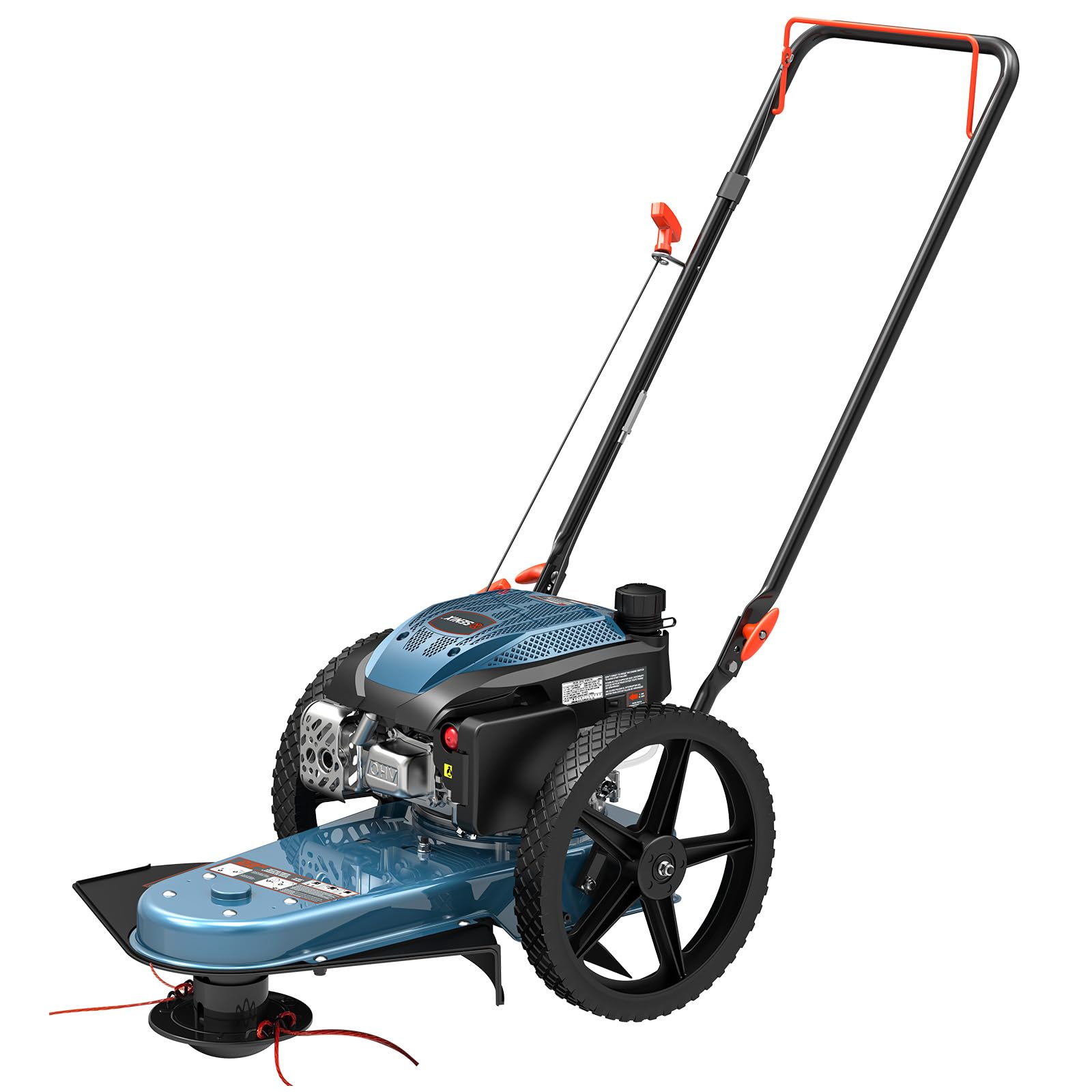
A true walk-behind brush cutter with a 160cc 4-cycle engine, 22-inch cutting swath and adjustable deck—designed to cover big plots faster than handheld units.
Why I picked it: A wide cutting swath and 4-cycle engine make it ideal for acreage and long runs.
Best for: Owners of large lots, farms, or uneven ground who want a push-style brush cutter.
Mid-range walk-behind that balances power and maneuverability.
Pros
- 22-inch cutting swath
- 160cc 4-cycle engine
- Adjustable cutting height
Cons
- Initial air-filter oiling can cause starts
- Some long-term part concerns
- Customer support gaps reported
My take
This is the first unit I reached for when I needed to cover broader swaths quickly. The 22-inch deck and heavy-duty .155 line moved through dense patches far faster than a handheld trimmer.
The 160cc four-stroke engine delivered steady power and felt quieter and less finicky than comparable two-stroke units. The fold-down handle and big rubber wheels made transport and storage easier than I expected.
Be mindful that a test-oil residue can contaminate the air filter during shipping or storage; cleaning the filter cured my hard-starts and returned reliable first-pull starts. After that fix it ran consistently. I’d also keep spare fasteners on hand—the build is good for the price but long-term durability will need routine attention.
7. BILT HARD 170cc Walk-Behind String Trimmer – Best Heavy-Duty Walk-Behind
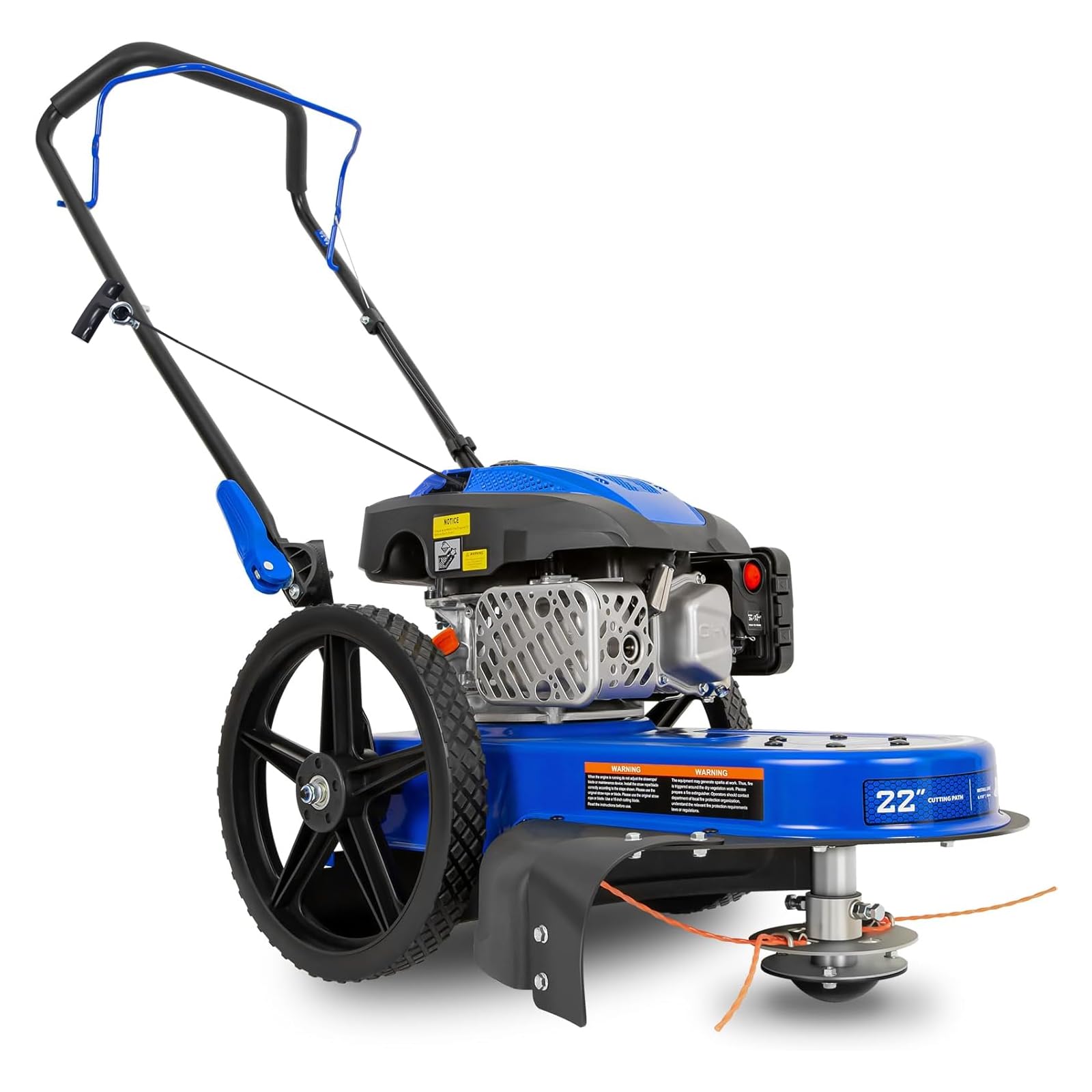
A heavy 170cc four-stroke walk-behind trimmer with a steel deck and 22-inch cut that handles aggressive clearing across rough terrain.
Why I picked it: Serious capacity and a one-piece steel deck for heavy-duty clearing.
Best for: Large properties where a powerful walk-behind can replace long handheld sessions.
Higher displacement walk-behind for heavy work without a rooftop price.
Pros
- Robust 170cc engine
- One-piece steel deck
- Handles heavy brush
Cons
- Hard rubber wheels can be difficult to push
- Cutting line provided is low grade
- Some units had starting/service issues
My take
I used this machine to reclaim several acres of heavy weeds and it performed like a true workhorse — plenty of torque, a wide clearing swath, and a deck that felt durable under real stress.
The 14-inch never-flat wheels helped on uneven terrain, though I found the hard rubber compound a little harder to push over rutted ground than pneumatic tires would be.
Operationally it started easily on good samples and ran all day on a tank for moderate mowing. Do expect to swap the supplied cutting line for a better aftermarket cord if you want longer life between reloads, and be patient with manufacturer support if you need replacement parts.
How I Choose a Walk-Behind Brush Cutter
Power source: gas vs. battery vs. walk-behind
I pick a power source based on the job size. For acres and very thick brush, gas (especially larger-displacement 2- and 4-stroke engines) delivers the torque I need. For small yards and light trimming, cordless units are quieter and easier to maintain. If you’re covering long linear runs, a walk-behind deck saves time versus handheld passes.
- Gas: best torque and run time for heavy work, but heavier and needs fuel/maintenance.
- Battery: best for light-to-medium work, quieter, and lower maintenance.
- Walk-behind: best when you need wide swaths and less operator strain.
Cutting swath and head options
I always match cutting width and head type to vegetation. A 20–22 inch swath makes quick work of tall grass and larger patches, while blades or saw attachments handle saplings that line-only heads can’t.
- Line (.095–.155): versatile for grass and light brush.
- Hardened steel blades: use for thick weeds and stalks.
- Saw or chainsaw-style blades: for small saplings and woody stems.
Engine size and maintenance
I favor four-stroke engines for long sessions because they avoid fuel mixing and run cleaner; two-strokes are lighter and often more powerful for their size but require correct fuel mixture and more frequent tune-ups.
- Bigger cc generally means more torque, but also more weight.
- Regular air-filter and spark-plug checks prevent hard starts.
- Keep a small toolkit and spare fasteners on larger jobs.
Comfort and handling
I pay attention to harness quality, handle ergonomics, and wheel type. A poor harness ruins long jobs, and hard wheels can make a push unit much harder to maneuver on rough terrain.
- Test the harness and balance before long sessions.
- Prefer pneumatic or softer compound wheels for rough yards.
- Variable-speed throttles and bike-style handles reduce fatigue.
Practical buying tips
I always consider the availability of replacement heads, lines, and blades. For gas models, check how easy the engine components are to service. For battery tools, match the cutter to your existing battery platform when possible.
- If you own a battery ecosystem, prioritize compatibility.
- Buy the best harness you can afford — it pays back in comfort.
- Keep spare line and a replacement air filter on hand.
Frequently Asked Questions
Which power type is easiest to maintain?
I find electric cordless models easiest to maintain — no carb adjustments, no fuel mixing, and fewer routine tune-ups. For heavy-duty or long-run tasks I accept gas maintenance for better torque and runtime.
Can a walk-behind replace a handheld trimmer?
For open areas and long runs, yes — a walk-behind covers far more ground with less fatigue. I still keep a handheld for fence lines, tight corners, and detail work.
How important is the harness on heavy trimmers?
Very important. I wouldn’t run a high-displacement trimmer without a comfortable, vibration-reducing harness. It’s the difference between finishing a job and needing a break every five minutes.
Final Take
I chose tools here that solved specific problems: cordless convenience, raw gas power, no-mix operation, lightweight maneuverability, and true walk-behind coverage. Match the machine to the task and plan for the consumables you’ll need.
If you already own batteries in a system, the Ryobi ONE+ option keeps things simple. If you’re clearing acreage or tough brush, look at the larger gas units or the walk-behind decks for speed and endurance.
No matter which machine you pick, I recommend checking the cutting attachments, carrying spare line or blades, and giving the unit a quick tune before a big job — that’s how I get consistent results.
