
I tested a range of walk-behind edgers and multi-function trimmers to find the easiest, most reliable ways to get sharp, maintained borders. Here are the tools I reach for depending on yard size, power needs, and whether
I’ve spent time edging sidewalks, driveways, and garden beds with corded, cordless, and combo tools, and I know which features actually make the job easier. In this roundup I focus on machines that deliver straight edges, useful depth control, and dependable operation without a lot of fuss.
Whether I need a lightweight corded edger for quick touch-ups, a cordless unit for freedom of movement, or a mower-plus-trimmer kit for larger properties, I chose options that balance power, control, and practical features I use every season.
I organized these picks by what I reach for in specific situations: lightweight corded power for tight jobs, multi-function tools for small yards, cordless brushless options for quieter edging, and full mower kits when I want an all-in-one battery system.
1. WORX Electric Edger & Trencher WG896 – Best Overall
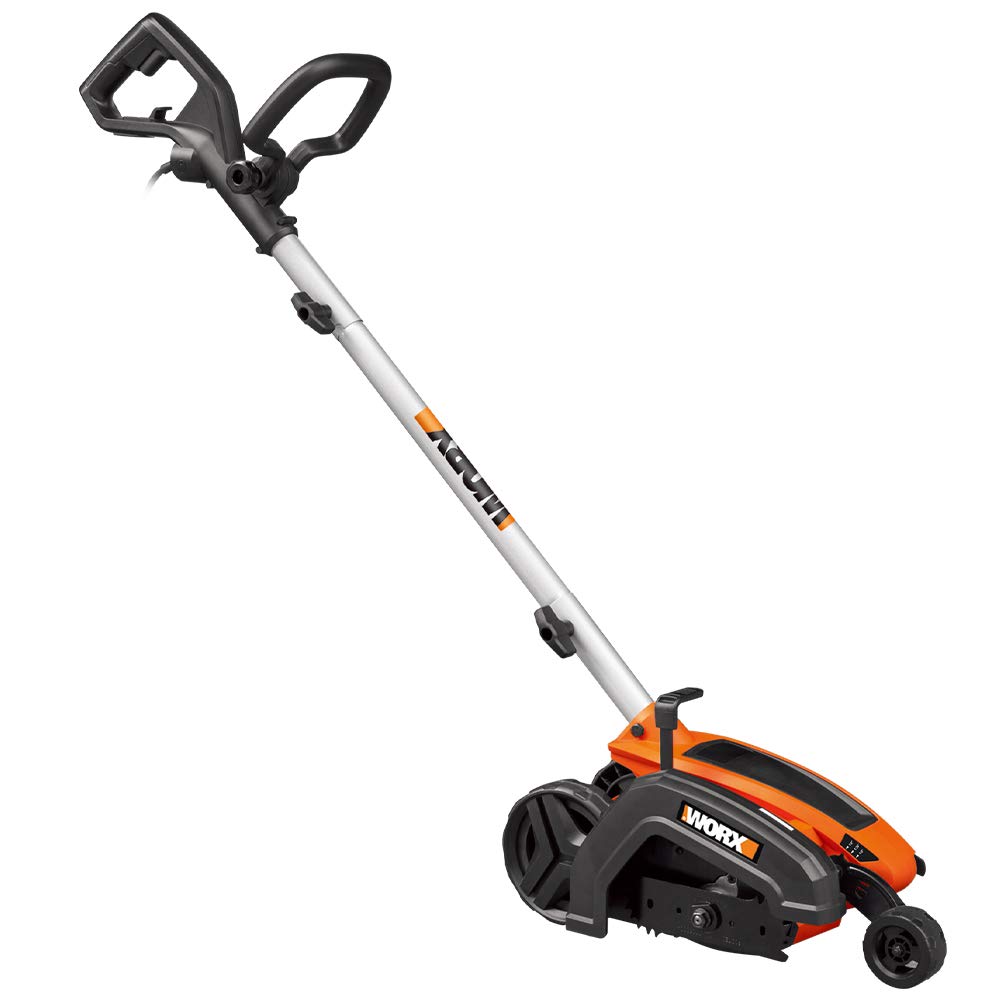
I rely on this as my go-to corded edger for clean lines, surprising power, and simple depth control.
Why I picked it: Strong 12A motor, three depth settings, cutting-line guide, and light weight.
Best for: Sidewalks, driveways, and shallow trenches where a steady corded power source is available.
Affordable corded option that performs like a heavier unit.
Pros
- Powerful 12A motor
- Three depth positions
- Cutting-line guide for straighter edges
- Lightweight and easy to maneuver
- Serrated steel blade with wear indicator
Cons
- Requires extension cord for reach
- Lever angle not adjustable for taller users
- Can throw debris—wear eye protection
My take
I was pleasantly surprised by how much muscle the WG896 has for such a light unit. The 12 amp motor spins the 7.5-inch serrated blade fast enough to create professional-looking edges and even dig shallow trenches for wire.
Assembly and blade changes are straightforward, and the built-in cutting-line guide helps me keep a true edge without second-guessing my path. The wear indicator on the blade is a practical touch so I know when to replace it.
Because it's corded I get steady power without stopping for batteries, but I always plan cord placement to avoid running over it. The unit works best on a dry lawn—wet, sticky soil means more frequent cleaning of the blade—but on dry turf it cuts cleanly with minimal follow-up.
If you want a lightweight edger that behaves like a heavier machine, this has been my most reliable, everyday pick.
2. BLACK+DECKER 3-in-1 Mower, Trimmer & Edger BESTA512CM – Best for Small Lawns
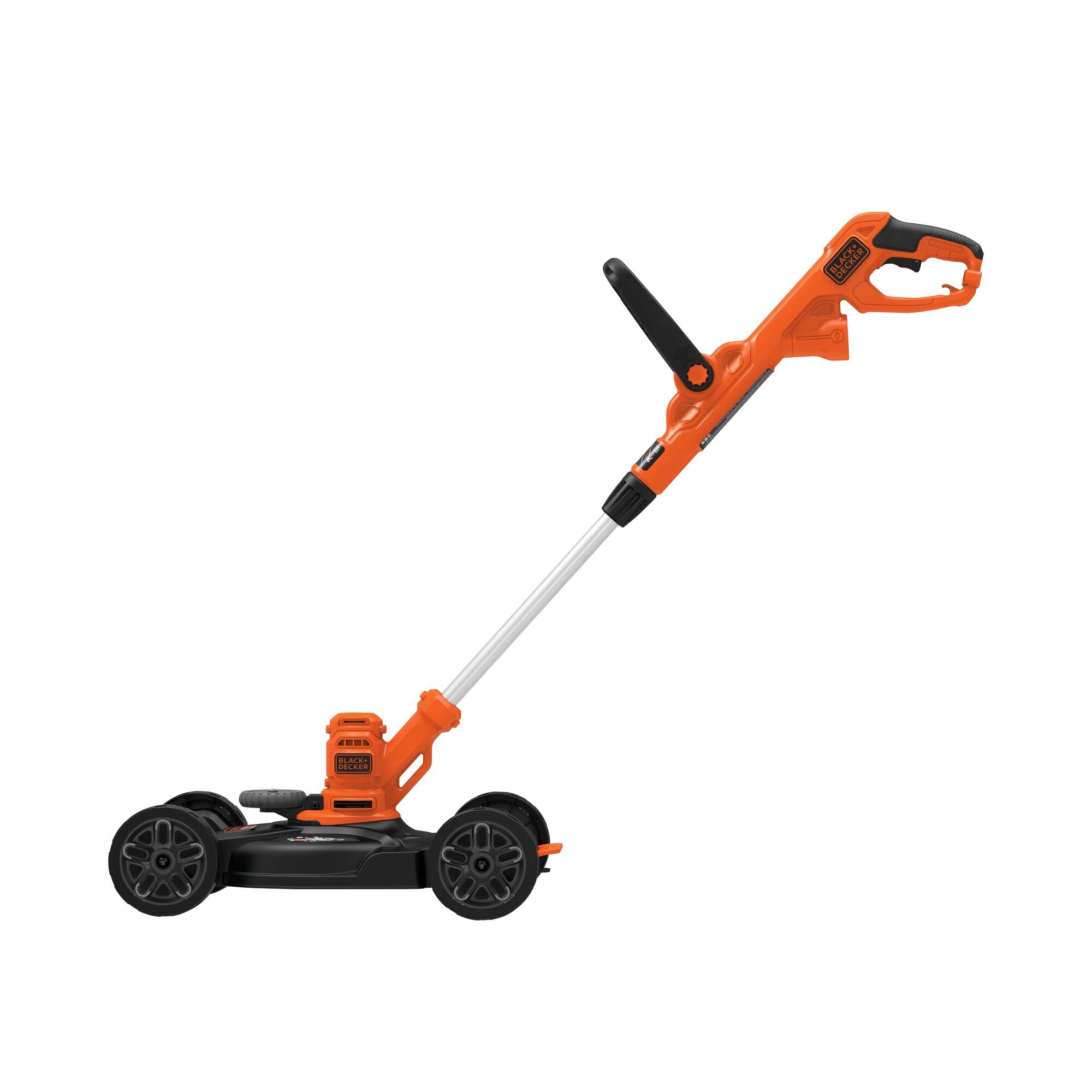
I keep this on hand when I need a single tool to mow tight areas, trim detail, and edge clean lines around the house.
Why I picked it: Three-in-one versatility with an automatic feed spool and a compact footprint.
Best for: Small yards, tight spaces, and homeowners who want one tool for multiple tasks.
Very affordable multi-function solution for compact lawns.
Pros
- 3-in-1 functionality
- Automatic Feed Spool (no bumping)
- Lightweight and easy to carry
- Adjustable handle for comfort
- Cord retention for safety
Cons
- Mower attachment struggles in very thick grass
- Recessed plug may need an adapter
- Not ideal for large properties
My take
This unit is a smart compromise when space and storage matter. I can mow small patches, then pop out the deck and use the same shaft as a string trimmer, and rotate the head for edging—no juggling multiple machines.
The automatic feed spool keeps the string going without constant bumping, which I appreciate during trim work. It’s lightweight enough for extended use and the adjustable handle helps me find a comfortable posture.
Be realistic about the mini mower deck: it performs well on thinner turf and close-in jobs, but thick, dense grass exposes its limits. For regular heavy mowing I’d reach for a full-size mower, but for trimming and edging around beds and sidewalks this combo saves me time and storage space.
If you own a small yard or need one compact tool to handle multiple tasks, this is the model I recommend reaching for first.
3. Greenworks 40V 8” Brushless Cordless Edger – Best Cordless
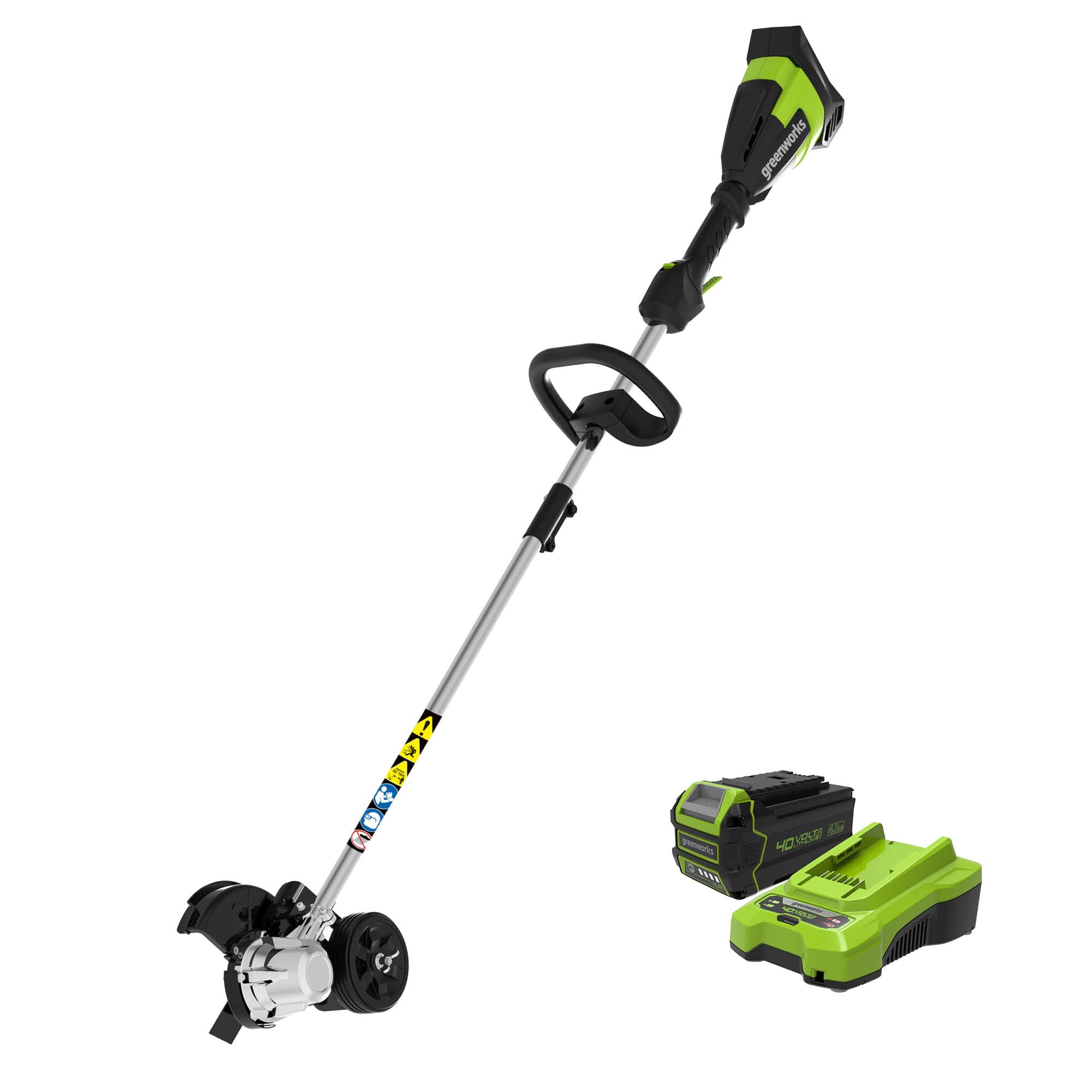
I choose this when I want cordless convenience, a brushless motor, and tool-less depth adjustments for precise edges.
Why I picked it: Brushless motor, included 4.0Ah battery and charger, and easy depth adjustment.
Best for: Homeowners who want quiet, precise cordless edging without gas maintenance.
Mid-range cordless option with an included battery and warranty.
Pros
- Brushless motor for efficiency
- Tool-less depth adjustment
- Included 4.0Ah battery and charger
- Lightweight with low vibration
- 4-year limited warranty
Cons
- Less torque than gas units on heavy stalks
- Battery needs recharging for big jobs
- Can clog on very tall, dense grass
My take
I’ve been switching to the Greenworks 40V platform for cordless convenience, and this edger blends ease-of-use with reliable cutting performance. The brushless motor feels smooth and noticeably quieter than gas alternatives.
Tool-less depth adjustment is genuinely helpful when I move between sidewalks and garden beds—the transition is fast and accurate. The included 4.0Ah battery charged quickly and handled my typical edging tasks comfortably; on very heavy work it required an extra charge, so I plan batteries for larger properties.
It’s not as brutal on woody stalks as a gas engine, so I take smaller passes through dense, fibrous weeds to avoid clogging. For routine border maintenance and cleaner, quieter operation, this cordless unit is the one I reach for.
4. BLACK+DECKER 12A Edger & Trencher LE760FF – Best for Trenching
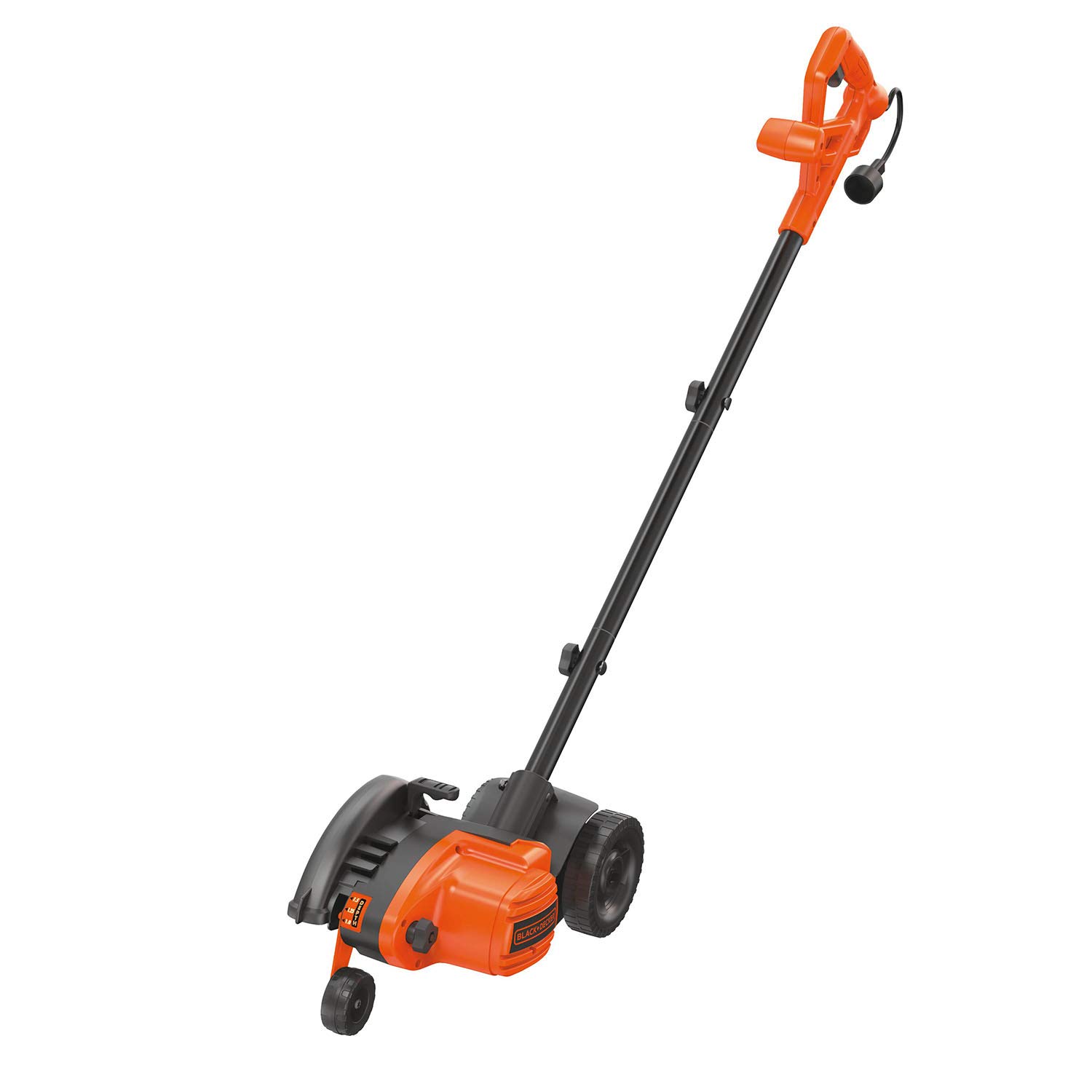
I use this model when I need to dig neat trenches and cut sharp edges with solid corded power.
Why I picked it: High-torque 12A motor, easy conversion between edging and trenching, and three-depth settings.
Best for: Installing irrigation, burying wire, and making clean trenches around beds and hardscapes.
Practical corded choice for trenching and edging tasks.
Pros
- High-torque 12A motor
- Quick conversion to trenching
- Three-position depth adjustment
- Pull-up edge guide for cleaner lines
- Right and left-hand assist grip
Cons
- Cord limits reach
- Requires extension cord management
- Moderately loud in operation
My take
When I need a neat trench for cable or a crisp edge along a patio, this unit delivers consistent performance. The 7.5-inch blade and three-depth settings give me the control I want for both edging and shallow trenching.
The pull-up edge guide helps me align cuts and keeps results tidy. I appreciated the easy-access door for cleaning out debris—simple maintenance that saves time during longer projects.
Because it’s corded I avoid battery swaps, but I plan my extension cord route before I start. For homeowners who need reliable trenching without the upkeep of gas engines, this is the tool I recommend.
5. Toro 14” Corded Trimmer & Edger 51480 – Best Wide-Coverage
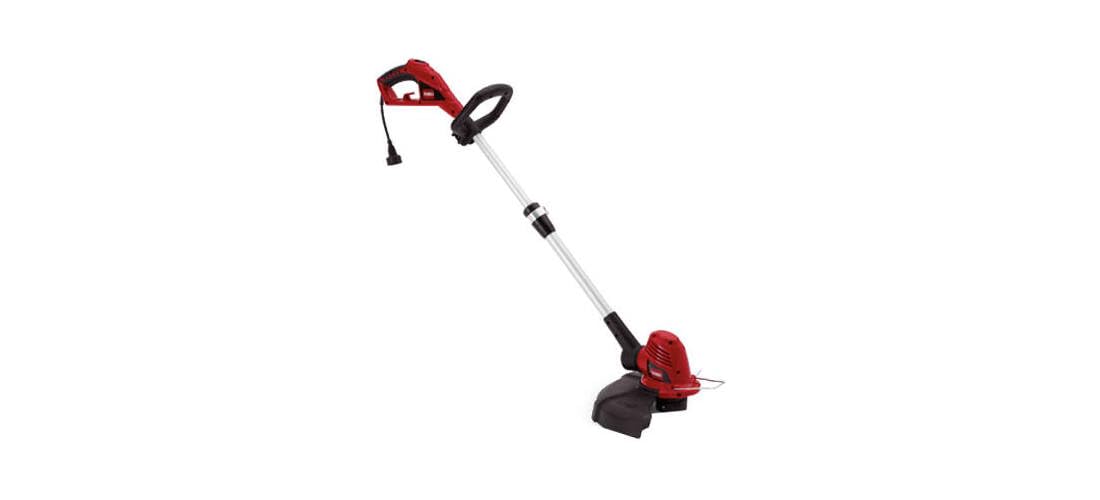
I reach for this Toro when I want a wider cutting path and fast trimming over larger edges.
Why I picked it: 14-inch dual-line head for faster coverage and one-step conversion to edging.
Best for: Wide perimeters, large borders, and areas where a wider cutting swath saves time.
Budget-friendly corded trimmer and edger with wide coverage.
Pros
- 14-inch dual-line cutting width
- Auto-feed trim line
- One-step edging conversion
- Telescoping shaft for reach
Cons
- Auto-feed can be sensitive to line quality
- Requires better quality line to avoid tangles
- Not as compact for storage
My take
This Toro stands out when I need to cover ground quickly. The extra-wide 14-inch cutting head reduces passes and speeds up trimming for long runs of border.
Auto-feed can be temperamental with cheap line—using decent quality cord and winding it evenly solved the common feeding issues I encountered. With the right line, the feed works reliably and saves a lot of time.
I appreciate the simple one-step walk-behind edging conversion and the telescoping shaft when reaching under obstacles. For heavy-duty, fast perimeter work near buildings or fences, this is the model I choose.
6. Greenworks 48V 21” Self-Propelled Mower Kit – Best Mower + Trimmer Kit
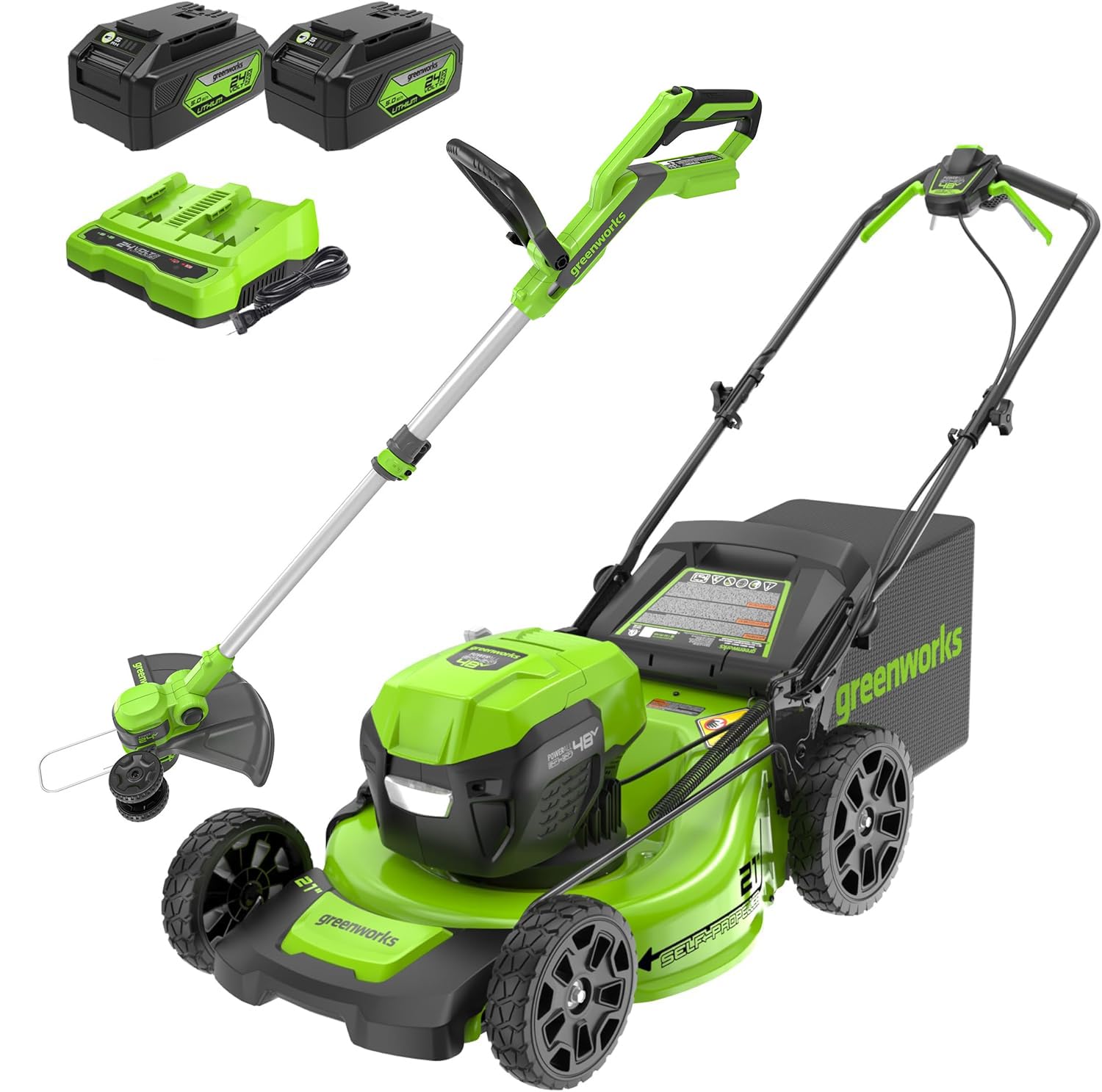
I recommend this kit when you want a cordless mowing system and a matching trimmer that use the same batteries.
Why I picked it: Self-propelled 21-inch mower, dual batteries, and platform compatibility with other 24V tools.
Best for: Owners of medium yards who want a cordless mower plus trimmer in one kit.
Higher-cost kit with broad battery compatibility and extra features.
Pros
- 21-inch self-propelled mower
- Dual 24V batteries (48V total)
- Dual-port charger included
- Trimmer/edger included
- Battery USB port for devices
Cons
- Requires battery management
- Can be a lot of pushing on long runs
- Plastic parts may show wear over time
My take
This Greenworks package gave me a cordless mowing system that actually handles tall, healthy turf better than I expected. The self-propelled drive helps on inclines, and the mower maintained blade speed through dense areas thanks to the intelligent power delivery.
Battery life covered most of my typical sessions—I was able to mow nearly an average suburban lot with measured pauses to swap or recharge depending on grass conditions. Assembly was quick and the mower is noticeably lighter than older gas models, which makes maneuvering around beds and corners easier.
The included trimmer/edger fits the battery ecosystem so I can swap cells between tools, and the USB port on the battery is a nice convenience. This kit is what I pick when I want a cordless, cohesive tool set and I’m willing to manage batteries for the freedom it brings.
How I Choose a Walk-Behind Edger
Power Source: Corded, Cordless, or Gas
I decide first whether I want uninterrupted, steady power or freedom of movement. Corded models give constant torque for longer jobs without battery swaps, while cordless brushless units reduce noise and eliminate extension cords. Gas still wins if I need brute force for heavy, woody roots, but it comes with maintenance.
- Corded — steady power, limited by cord length.
- Cordless — quieter, portable, needs battery planning.
- Gas — most powerful, higher maintenance and noise.
Cutting Method: Blade vs String
I use bladed edgers when I want a crisp, hard edge and the ability to trench for wire. String-based tools are more forgiving and cheaper to maintain, and they’re great for trimming and light edging.
- Blades cut cleaner lines and trench soil.
- String heads are versatile for trimming and edging.
Depth and Control
Depth adjustment matters more than people expect. I look for tool-less depth changes or multiple preset positions so I can work quickly along different surfaces.
- Tool-less depth adjustment saves time.
- Multiple depth settings handle sidewalks and beds.
Comfort and Usability
I test for shaft adjustability, grip comfort, and overall weight. A light machine with an adjustable handle saves my back on long sessions, while a stable wheel or guide helps maintain straight lines.
- Adjustable shaft for different user heights.
- D-grip or assist handles reduce fatigue.
- Guides or wheels help keep a straight path.
Maintenance and Safety
I keep safety glasses, check for clear debris paths, and unplug or remove batteries before blade work. Ease of cleaning and accessible doors for removing clogs are features I value.
- Disconnect power before maintenance.
- Use decent line on auto-feed heads.
- Replace blades or string before heavy jobs.
Frequently Asked Questions
How long do batteries last on cordless edgers?
Battery life depends on grass density and throttle use. In my experience a 4.0Ah 40V battery handles typical edging sessions around a medium yard; large or dense jobs may require a second battery or a recharge break.
Can I use corded edgers on wet soil?
I avoid very wet, sticky soil because it clogs blades more often. Corded edgers work best on dry to slightly moist lawns—wet conditions increase cleaning and maintenance.
Are bladed edgers safe around buried irrigation or cables?
I use a locating tool before trenching for wire or irrigation. Bladed edgers dig clean trenches but you must verify utility lines beforehand to avoid damage.
Do string trimmer conversions to mower decks actually work?
For light, close-in work they’re convenient. I find mini mower attachments handle thin grass well but struggle with dense, high turf—good for touch-ups, not full-size mowing.
Final Take
I choose edgers based on the job: a corded blade edger for clean, repeatable lines; a cordless brushless unit for quiet, cordless convenience; and multi-function combos when storage and versatility matter.
If you want a single, reliable pick for most homeowners, the WORX WG896 balances power and usability. For small yards, the BLACK+DECKER 3-in-1 saves space and handles multiple tasks. For cordless freedom, the Greenworks 40V is my go-to.
Whichever model you select, plan for cord or battery management, wear eye protection, and match the tool to your yard’s typical conditions to get the best results.
