
I tested four very different wall units — from industrial pipe brackets to an all-in-one media center — and I’ll walk you through which one I’d pick for specific rooms, installation styles, and storage needs.
I built, installed, and lived with each of these wall units so I could judge how they perform in real homes.
My testing focused on ease of installation, build quality, usable storage, and how each unit handled everyday wear.
If you want a chunky industrial look, a tool-free display wall, a media center with power and lights, or a sturdy freestanding etagere, I’ve covered the practical tradeoffs here.
I compared an iron-pipe hardware kit, a no-tools modular display unit, a large TV entertainment center, and a double-wide industrial bookshelf so you can match the design and installation effort to your space.
1. Pynsseu Industrial Pipe Shelving Brackets (4-Tier) – Best for Rustic, DIY
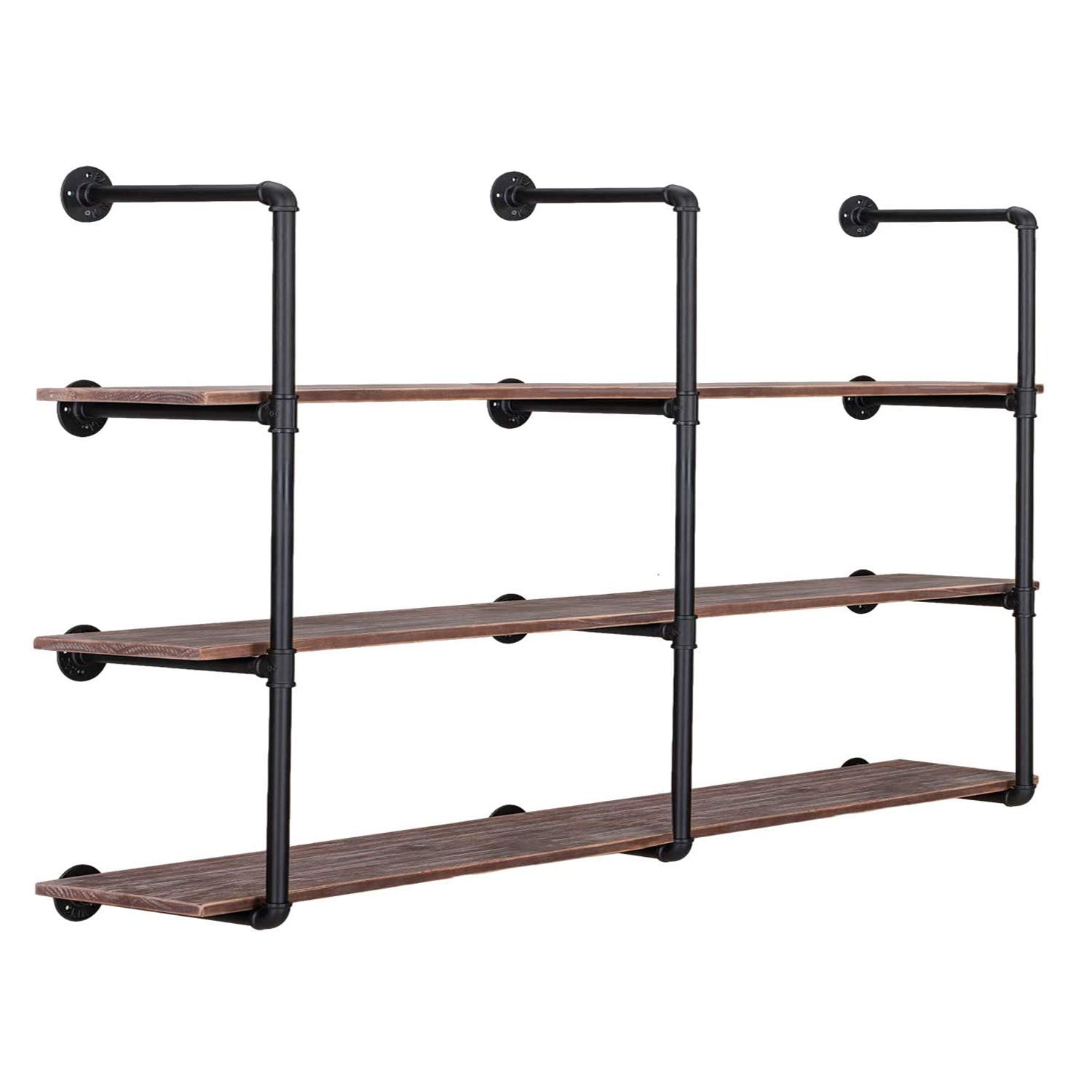
I used this iron-pipe hardware kit to build a farmhouse-style shelving run using my own boards.
Why I picked it: Authentic industrial look and flexible DIY placement.
Best for: People who want a rustic, customizable wall shelving system.
Hardware-only kit; you provide the boards for a budget-friendly build.
Pros
- True industrial iron pipe aesthetic
- Includes screws and flanges
- Customizable shelf spacing and board choice
- Sturdy once anchored to studs
Cons
- Planks are not included
- Requires careful flange alignment
- Some DIY skill needed for perfect leveling
My take
I paired these pipe brackets with plain pine boards from my local big box store and had a full run installed in about 90 minutes once I worked out the alignment.
The kit is metal hardware only — the listing is clear about that — so you get the authentic industrial look but must size and cut your own planks (they recommend boards 12 inches or narrower).
Installation demands patience: flanges need to line up and you’ll likely loosen and retighten connections to get everything plumb. I found it worth anchoring into studs for heavy items like books and albums.
Once mounted properly the bracket assembly feels very sturdy and has held up over months of use. If you like hands-on projects and want a customizable farmhouse shelf, this is a solid hardware-first option.
2. Convenience Concepts Designs2Go No-Tools Wall Unit – Best No-Tools Assembly
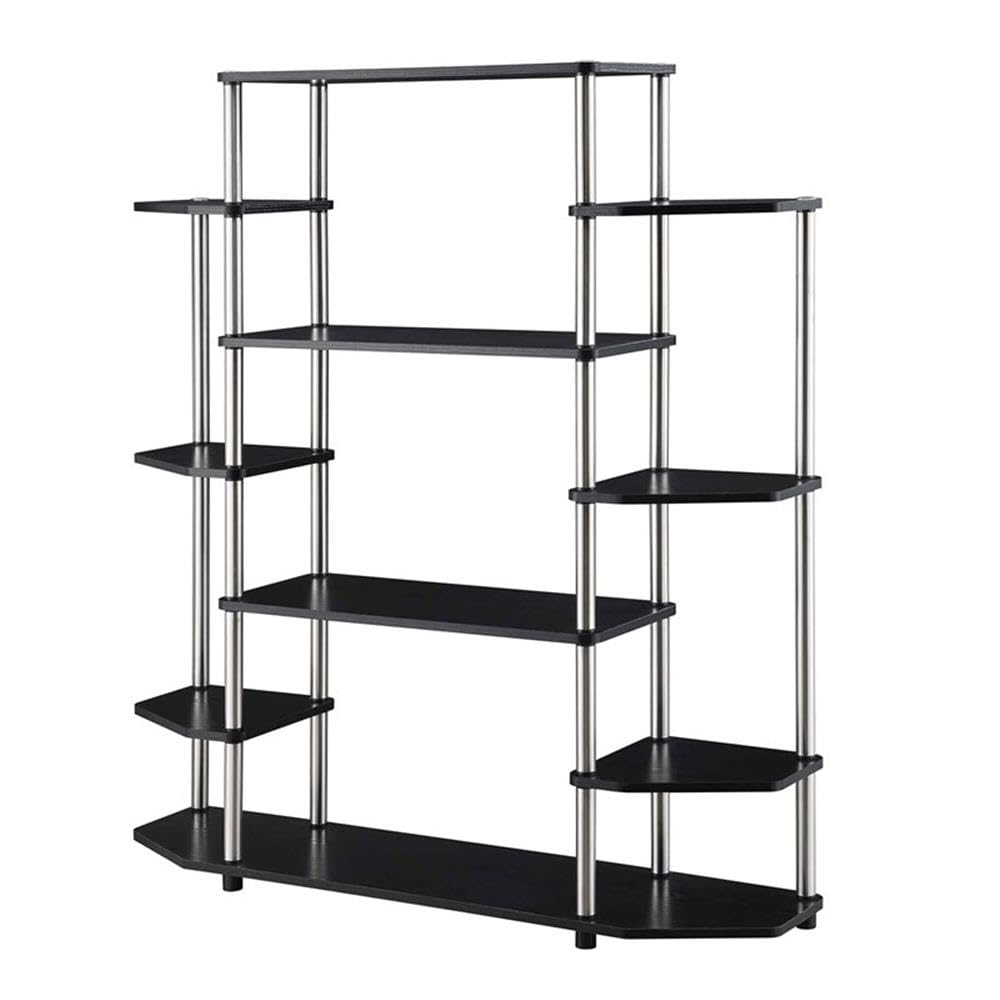
I assembled this modular wall unit without tools and used it as a display-first shelving system.
Why I picked it: Tool-free, quick assembly and lots of open display space.
Best for: Anyone who wants fast setup for decor and collectibles.
A budget-friendly, tool-free shelving solution.
Pros
- Tool-free, screw-in pole assembly
- Ten open shelves for display
- Rubber feet protect floors
- Feels cohesive and solid once built
Cons
- Particle board construction
- Not as heavy-duty as solid wood
My take
I took this out of the box and had it together in minutes — the screw-in pole system truly requires no tools and is very straightforward.
The shelves are particle board supported by stainless-steel poles, so the unit looks modern and works great for decor, books, and lighter displays.
After assembly the piece reads as one cohesive unit rather than a flimsy kit; the rubber feet keep it stable and protect my hardwood floors.
When I received a damaged part the company sent a replacement quickly, which made the whole experience easier. For a fast, no-fuss display wall, this is the option I reach for.
3. EnHomee 65-inch TV Stand Entertainment Center – Best for Media & Storage
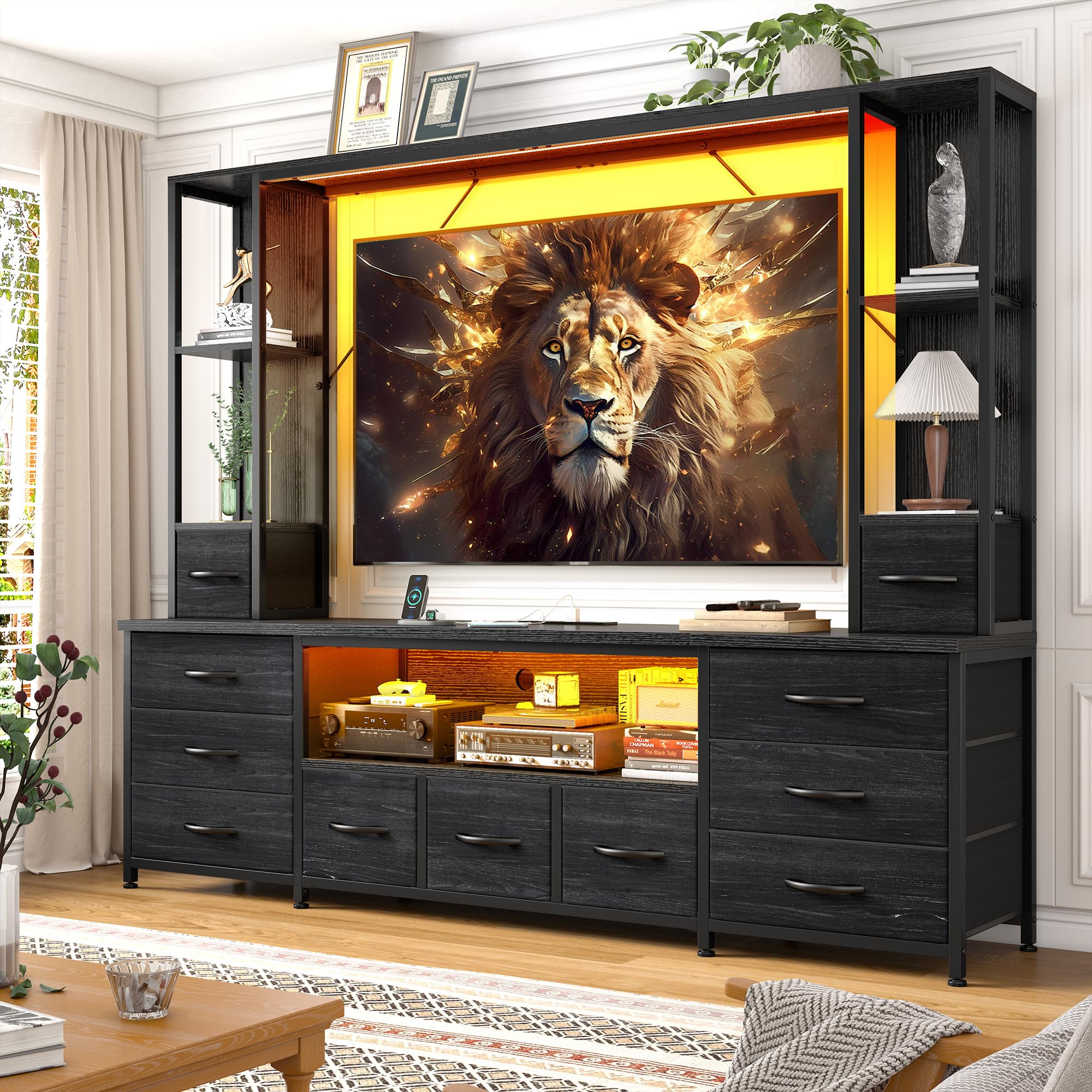
I used this all-in-one unit as the focal point for my living room TV wall and storage needs.
Why I picked it: Ample storage plus integrated outlets, USB ports, and LEDs.
Best for: Homes needing a large TV platform with organized storage.
Larger investment that doubles as a media hub.
Pros
- Supports large TVs up to 65 inches
- Plenty of drawers and open shelving
- Built-in power outlets and USB ports
- LED lighting adds ambiance
Cons
- Lengthy, involved assembly
- Fabric drawers feel less rigid
- LED remote can behave intermittently
My take
This unit filled my TV wall perfectly and turned into the room’s storage center — the top supports large screens and the eleven drawers handled everything from remotes to games.
I appreciated the built-in outlets and USB ports for keeping devices charged and cables organized; the two large cable holes in back made wiring tidy.
Assembly is the tradeoff: it took me many hours solo and I recommend two people for a faster, safer build. The manufacturer includes labeled parts and tools, and the frame feels sturdy once assembled.
The LED strips are a nice touch for atmosphere, though I experienced the remote losing function; unplugging the lights fixed it. Overall this is a practical, heavy-duty media solution if you don’t mind the assembly time.
4. Tribesigns 5-Tier Industrial Bookshelf – Best Freestanding Industrial
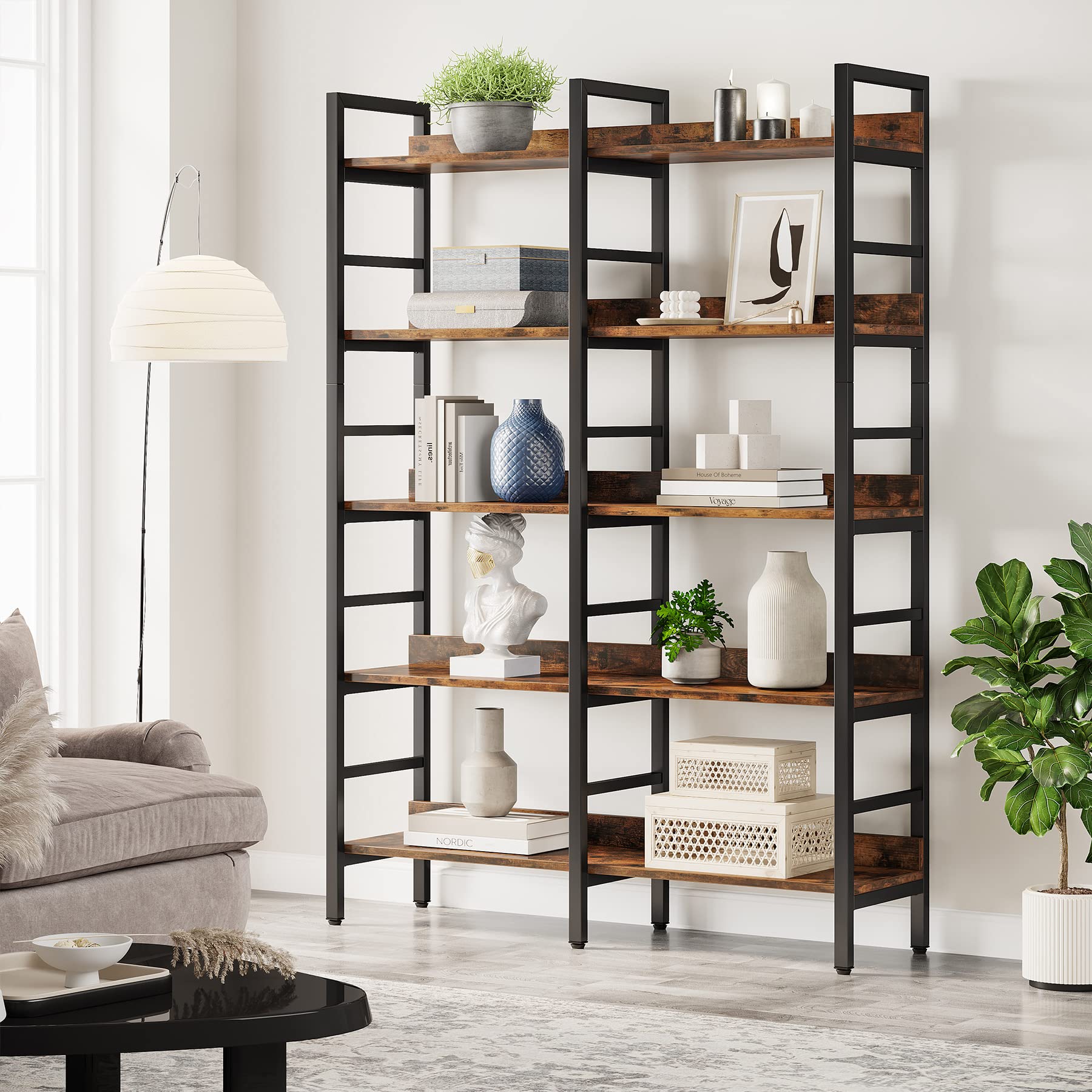
I set this double-wide etagere up as a merchandise-and-storage shelf and it held up to daily use.
Why I picked it: Sturdy construction with industrial styling and safety features.
Best for: Long, narrow display and storage needs in living rooms or offices.
Good value for a heavy-duty freestanding shelf.
Pros
- Sturdy metal frame and thick boards
- Top edge prevents items from sliding off
- Includes wall-attachment hardware
- Adjustable feet for level placement
Cons
- Narrow shelf depth
- Assembly takes time
My take
I put this shelf together solo in about two hours; the hardware quality impressed me and the holes lined up cleanly, which made assembly smooth.
The five open tiers offer a lot of display space without feeling flimsy — once tightened it felt very stiff and stable. The included wall-attachment hardware adds peace of mind in homes with kids or pets.
The boards are finished to resist stains and scratches, and the adjustable foot pads helped me level the unit on my slightly uneven floor.
If you need a wide, industrial-looking etagere that balances price and durability, this is the one I’d choose.
How I Choose Wall Units
Match the unit to the room’s function
I always start by deciding how the unit will be used: display, heavy storage, media center, or decorative accent.
For TVs and consoles, I prioritize built-in power, cable management, and anti-tilt fittings. For kitchens and bathrooms, I look for moisture-resistant finishes and narrower depths.
- Media walls: choose units with cable holes and power outlets
- Display shelves: prioritize open shelving and visual balance
- Heavy storage: seek metal frames or solid wood construction
Consider build materials and weight capacity
I prefer metal frames or thicker boards when I expect heavy loads like books or audio gear.
Particle board is fine for light-to-medium use and keeps cost down, but I avoid it if the shelves will carry long-term heavy weight.
- Metal + wood composite = strength and style
- Check recommended board widths for bracket kits (pipe kits often limit depth)
Think about installation and tools
I decide early if I want tool-free assembly or a project that requires drilling and stud-finding.
Anchoring is non-negotiable for tall or heavy units — I always use studs or robust anchors.
- No-tools units: great for renters and quick setups
- Hardware kits: require measuring, leveling, and more time
Practical features I look for
Lighting, built-in power, and adjustable feet can make a big difference in everyday use.
I also value included anti-tilt straps and clear instructions; they speed installation and improve safety.
- LEDs add ambiance but test controls and connections
- Adjustable feet solve wobble on uneven floors
- Anti-tilt kits are essential for tall freestanding units
Frequently Asked Questions
Do I need to anchor these wall units?
Yes — I anchor any tall or heavy unit. For pipe brackets I secure flanges to studs when possible, and for freestanding shelves I use the included wall-attachment hardware to prevent tipping.
Are shelves or planks included with pipe bracket kits?
Not in this case. I sourced my boards separately to match the rustic look and the kit’s recommendation to keep board depth at or below 12 inches.
How difficult is assembly across these options?
It varies: the no-tools Designs2Go unit goes up in minutes, the pipe-bracket kit takes moderate DIY skill for leveling and anchoring, and large media centers like the EnHomee require the most time and ideally two people.
Can I use the EnHomee unit for a 65-inch TV?
Yes — I tested the unit with a large screen and found the top supports that size; the built-in outlets and cable holes made wiring straightforward.
Final Take
I chose each of these wall units for different priorities: DIY style, speed of assembly, media storage, and freestanding sturdiness.
If I wanted a quick display piece I’d pick the no-tools unit; for a true farmhouse look I’d go with the pipe brackets and custom boards.
For a full media wall with storage and power I’d accept the extra assembly time and pick the EnHomee center, and for versatile freestanding storage the Tribesigns etagere is the best balance of style and function.
