
I tested compact washers, softener pods, covers, and a countertop to find products that actually simplify laundry in apartments, RVs, and tight laundry rooms.
I’ve spent months living with portable washers, softener pods, protective covers, and a laundry countertop so I know what works when space, water access, and convenience matter.
This roundup focuses on practical picks I actually used — from a roomy portable top-loader to the smallest dorm-friendly machine — plus a few accessories that keep laundry running smoothly.
If you want to avoid laundromats and tame daily laundry without sacrificing cleaning power, I’ll walk you through the options that worked for me and why.
I looked for machines and accessories that balance capacity, portability, and reliability. Some of these models are best when space is the primary constraint; others work better when you need near-full-size capacity or long-term durability. I chose options that solved distinct problems I encountered: cramped closets, shared laundry risks, off-grid hookups, and the need for easy organization.
1. BLACK+DECKER 3.0 Cu. Ft. Portable Washer (BPW30MW) – Best for Apartments
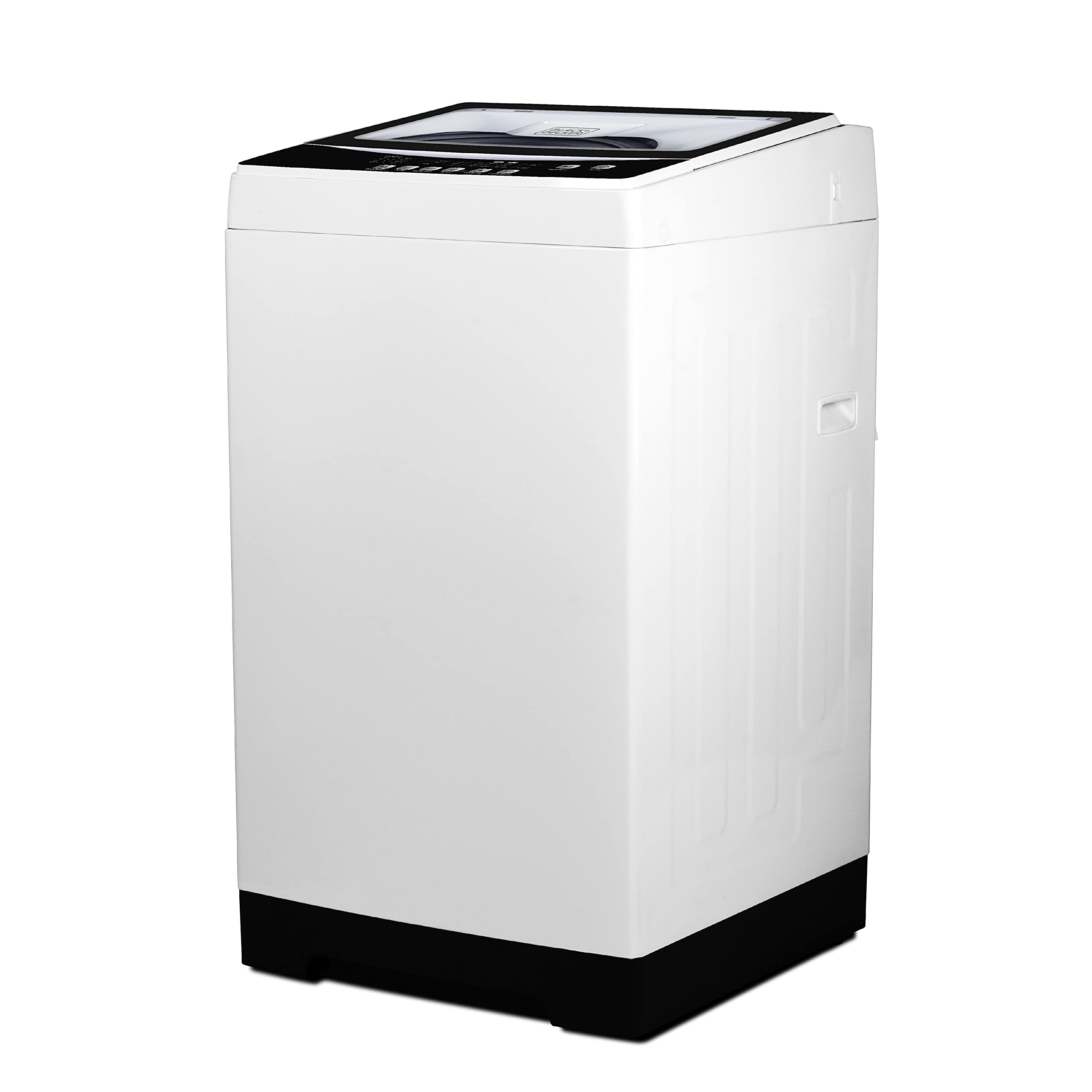
A roomy 3.0 cu. ft. portable top-loader with a stainless steel tub, quick-connect sink adapter, and multiple safety features that make at-home laundry simple.
Why I picked it: Stainless steel tub, generous capacity, sink adapter, and child lock make it a practical apartment solution.
Best for: Apartment living, families with delicates or baby clothes, anyone who needs a portable full-feature washer.
A mid-range portable washer that balances capacity and features.
Pros
- Large 3.0 cu. ft. wash tub
- Rust-resistant stainless steel interior
- Quick-connect sink adapter included
- Child lock and auto shutoff
- Delayed start up to 24 hours
Cons
- Relatively bulky for tight closets
- Heavy to move alone
- May need workaround for permanent hookups
My take
I relied on this BLACK+DECKER as my primary washer for weeks when I wanted full-size cleaning power without a built-in hookup. The stainless steel tub felt solid and resisted the small scratches that show up in cheaper units, and the impeller design is gentle on lingerie and baby clothing.
Connecting to my kitchen sink was straightforward with the included quick-connect adapter and drain hose; I also tested bucket-filling and found the intake pump will draw water until it reaches the machine's programmed level — handy when a direct faucet hookup isn’t available. Spin performance left clothes noticeably drier than some mini models.
Practical features like auto unbalance detection, child lock, and a 24-hour delayed start matter in daily life, and the transparent quiet-close lid is a nice touch. Be realistic about the footprint: it’s heavier and deeper than compact mini-washers, and I couldn’t wrestle it through a narrow bathroom doorway alone.
2. COMFEE’ Portable Washing Machine, 0.9 cu.ft – Best Compact
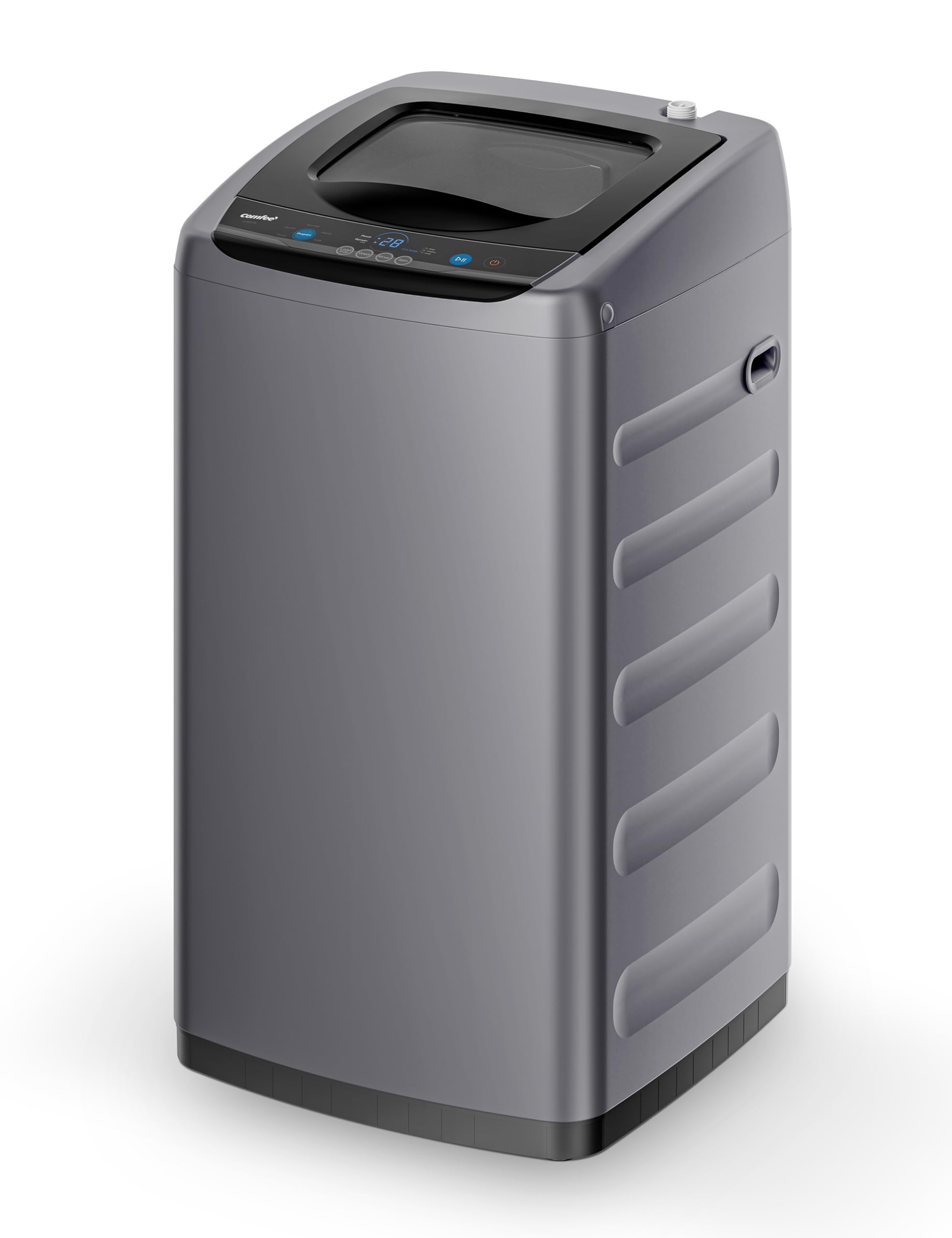
A tiny, full-automatic washer designed to fit in dorms, RVs, or tiny apartments with DOE-rated energy savings and an 840 RPM spin.
Why I picked it: Space-saving footprint, efficient motor, and solid spin for a true mini automatic washer.
Best for: Dorms, RVs, singles, and anyone who needs a compact, energy-efficient washer.
A budget-friendly option for tight spaces.
Pros
- Very compact footprint
- Energy-efficient DOE certification
- Up to 840 RPM spin
- See-through lid and LED display
- Built-in rollers for movement
Cons
- Small capacity limits large loads
- Not a substitute for full-size washing
My take
I used the COMFEE' in a cramped apartment and appreciated how easy it was to tuck into a bathroom or under a counter. Setup to the sink was simple and the drain pump handled the outlet without drama.
Despite the small size, the unit surprised me with spin performance — it handled several pairs of heavy jeans and returned them clean. The energy efficiency is real; the motor stays quiet while running, which makes late-night washes doable.
Expect to plan loads around the capacity. I wouldn’t try to do bulky bedding in this one, but for daily shirts, underwear, and a few pants it made in-unit laundry achievable and convenient.
3. Giantex Full-Automatic 1.34 Cu.ft Portable Washer – Best for Larger Mini Loads
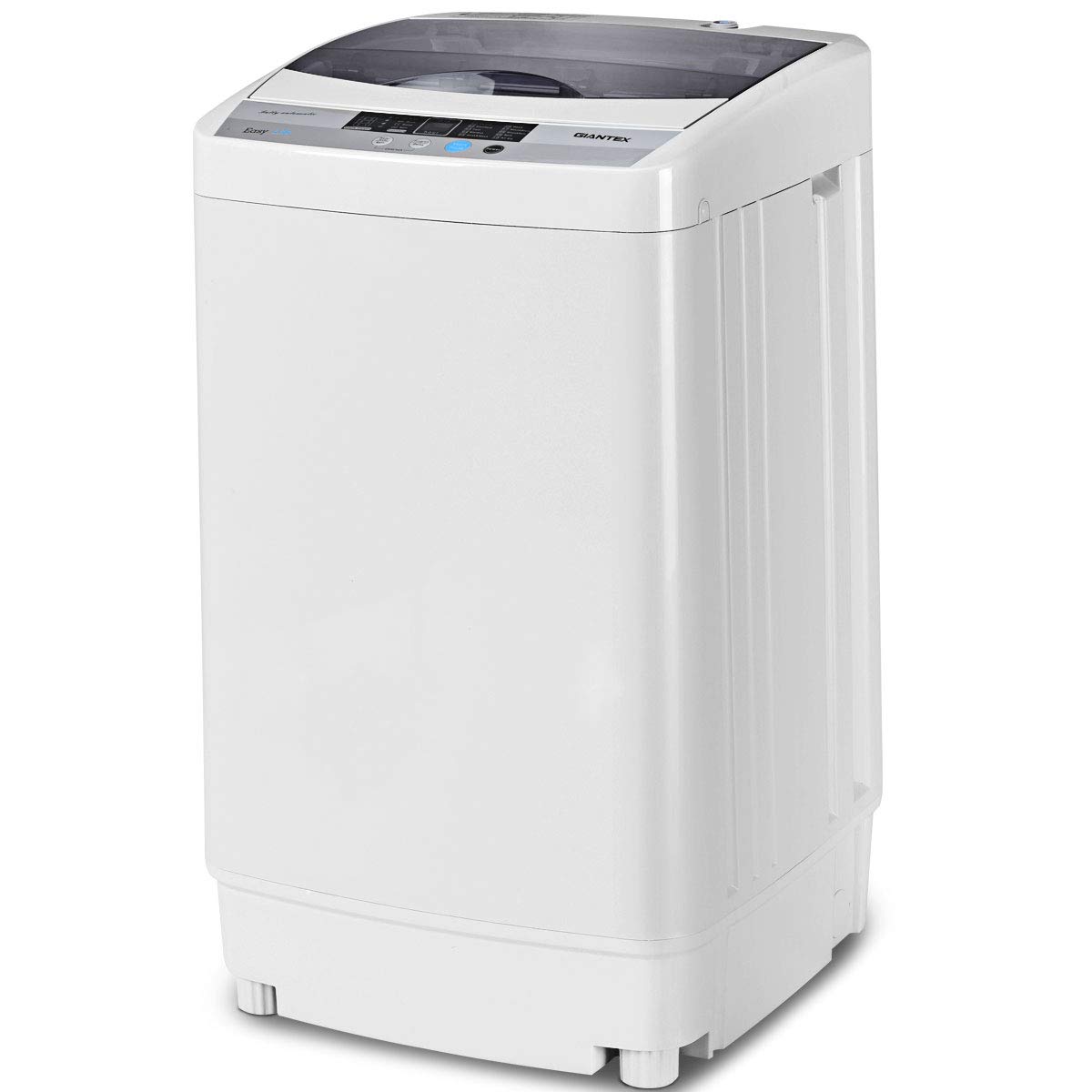
A compact washer with unusually large mini capacity (up to 12 lbs), 10 programs, and 8 water-level choices — a strong pick when you need more room without a full-size machine.
Why I picked it: Biggest capacity in the portable category and extensive program options.
Best for: People who want near-full-size loads in a compact footprint.
A reasonable mid-tier portable with strong capacity.
Pros
- Large 12 lb capacity
- Ten wash programs
- Eight water levels
- Automatic imbalance adjustment
- Transparent lid to monitor cycles
Cons
- Higher water usage on full cycles
- May need a dolly to move
My take
I liked the Giantex when I needed to wash bigger items — king sheets and multiple towels fit without splitting a load. The honeycomb inner tub and the 12 lb capacity make it one of the most generous compact washers I've used.
The control panel feels more sophisticated than typical minis: ten programs, time setting, and a delay function let me customize cycles for delicate or heavy loads. Automatic imbalance adjustment kept the unit from thumping during high-speed spins.
One real caveat: water consumption is higher on normal wash and rinse cycles, which matters if you’re off-grid or strictly conserving water. Spin drying is excellent — I often had clothes almost dry straight out of the machine — so weigh water use versus drying needs when choosing this unit.
4. Dropps Fabric Softener Pods, Crisp Breeze (64 Count) – Best Fabric Softener Pods
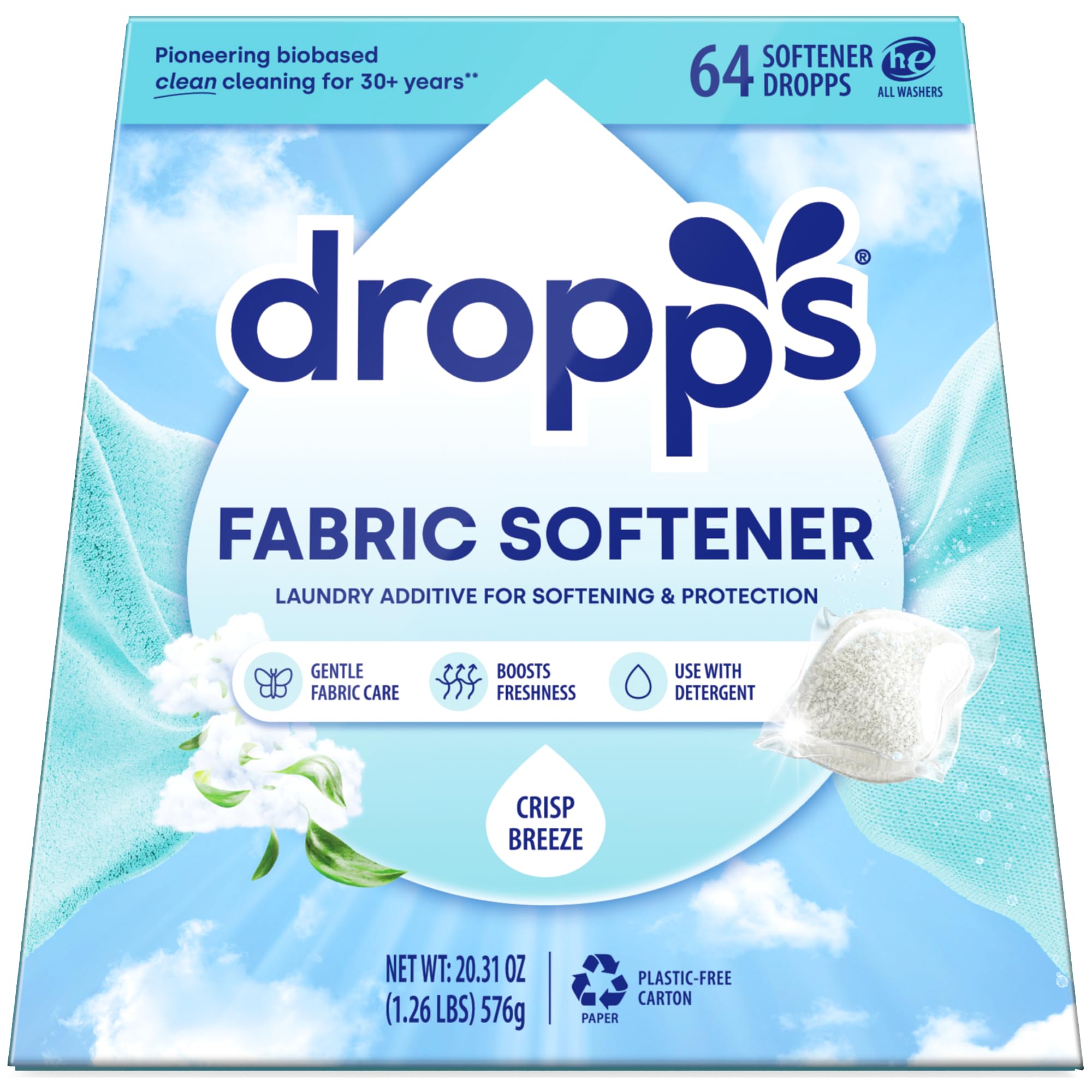
Mineral-based softener pods that add softness without quats or heavy residue, compatible with HE and standard machines and designed for sensitive skin.
Why I picked it: No harsh quats, convenient premeasured pods, and gentle scent for sensitive skin.
Best for: People with sensitive skin, families who want no-residue softening, and users who prefer premeasured convenience.
A cost-effective, low-waste alternative to liquid softener jugs.
Pros
- Mineral-based, no quats
- Premeasured, mess-free pods
- Works in HE and standard machines
- Helps maintain towel absorbency
- Cruelty-free and biodegradable
Cons
- Light scent that fades in dryer
- Must add at start of wash to work
My take
I’ve used Dropps softener pods for a long time because synthetic fragrances irritate my skin; this formula is gentle and leaves towels fluffier without a sticky residue.
Follow the instructions and add the pod at the beginning of the wash cycle — doing so made the pods dissolve reliably in my tests. I noticed a subtle scent on hang-dry items; tumble-dried loads had a milder fragrance but remained soft.
If you expect a strong perfume-like smell, these won’t deliver that. For me, the trade-off is worth it: soft fabrics without chemicals I don’t want near baby clothes or eczema-prone skin.
5. Ericlin 2Pack Washer and Dryer Covers (W29 x D28 x H43 in) – Best Protective Covers
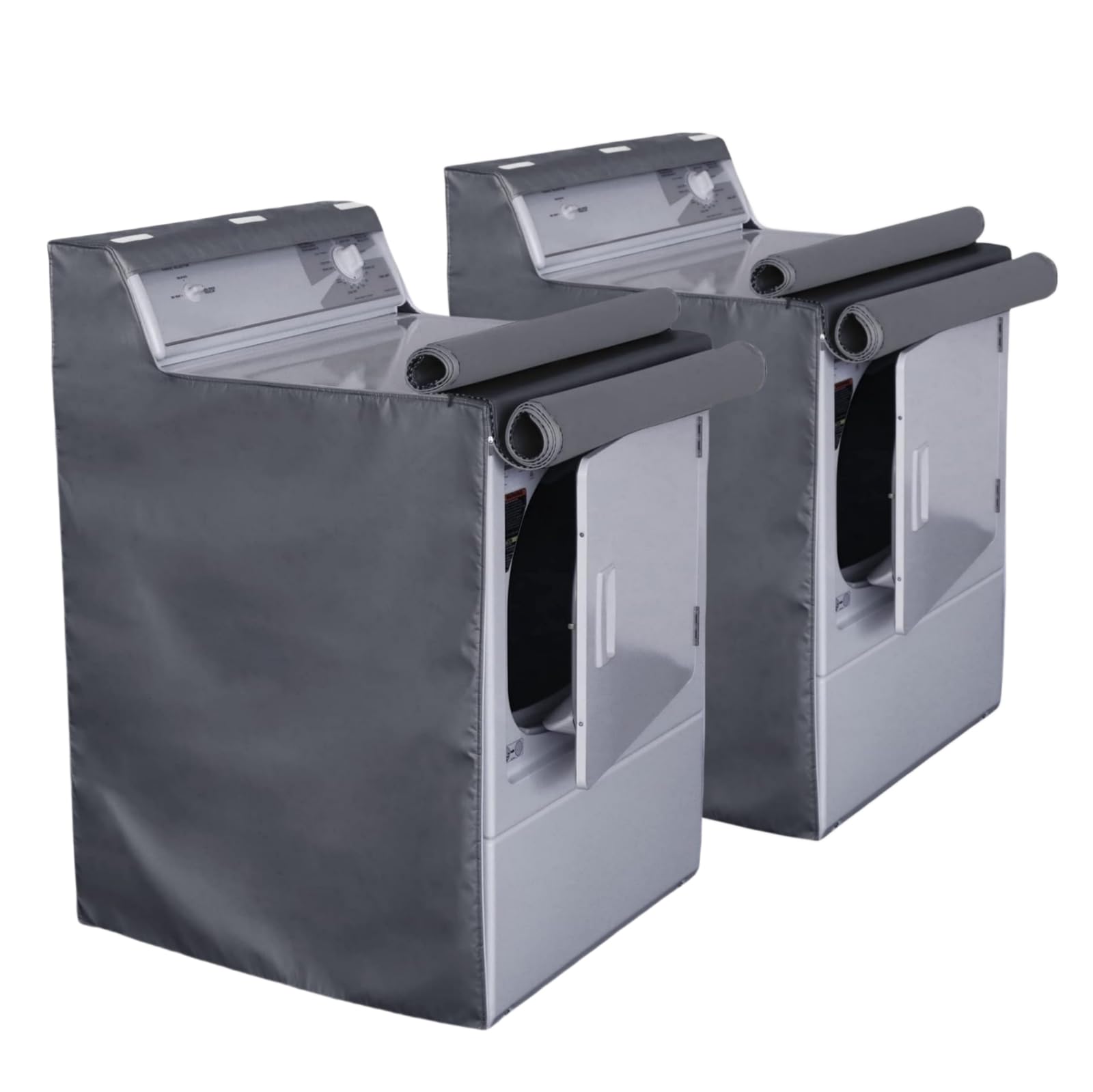
420D oxford polyester covers that protect washers and dryers from dust, moisture, and sun with a zipper design for easy access.
Why I picked it: Durable, waterproof fabric and zipper design for convenient access and protection.
Best for: Outdoor laundry areas, porches, or dusty indoor spaces where machines need protection.
An affordable way to extend appliance life and protect finishes.
Pros
- Durable 420D oxford polyester
- Waterproof and easy to wipe clean
- Zipper design for front access
- Fits most top and front loaders
Cons
- No full back coverage
- Can catch wind if unsecured
My take
I keep my washer and dryer covers on an exposed porch and was impressed by how well they fend off dust and rain. The material feels robust and has held up in sun and light rain without fading.
Installation was quick and the zipper windows mean I don’t have to remove the cover to open the front panel for routine use. My only practical tip: weigh the top or position the back against a wall if the area gets strong gusts.
The covers arrived in nice storage bags and look neater than bulky tarps. For the price, they’re a simple and effective protective upgrade for machines that live outside or in a semi-open laundry area.
6. VEVOR Washer Dryer Countertop with 2-Tier Shelf, 54″ x 27″ – Best Countertop & Organizer
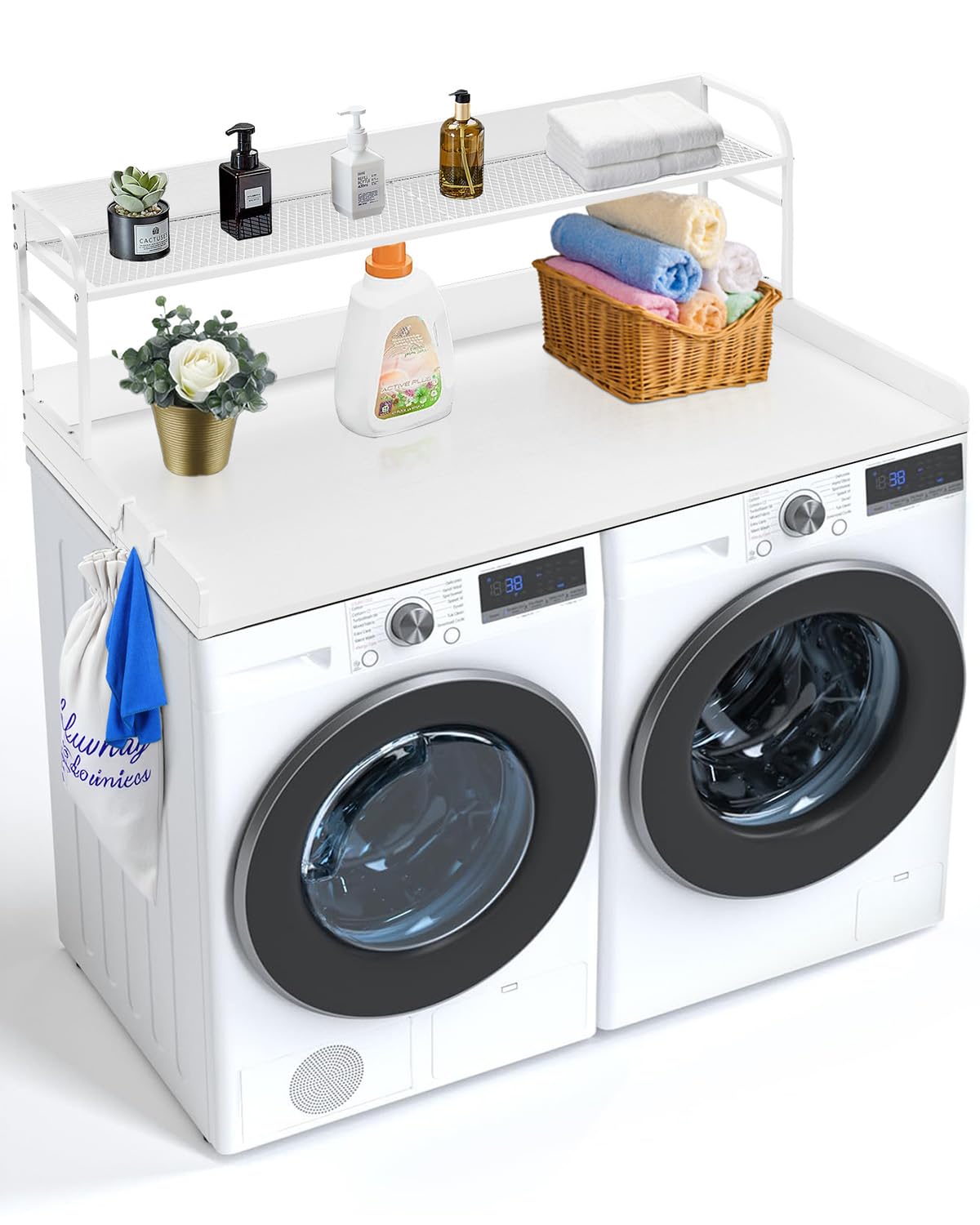
A wide washer and dryer topper that creates folding space, storage, and organization with a sturdy surface, anti-slip pads, and side hooks.
Why I picked it: Adds a large, sturdy workspace and useful storage without major installation.
Best for: Small laundry rooms, stacking front-loaders, or anyone needing folding and storage space.
A practical, affordable way to reclaim laundry room real estate.
Pros
- Spacious 54 x 27 surface
- 2-tier shelf for detergent storage
- Anti-slip pads for stability
- Holds up to 250 lbs
Cons
- Assembly required
- Included fabric drawers are lower quality
My take
I assembled the VEVOR topper in under an hour using the pre-drilled holes; the instructions were clear and the unit felt solid once installed.
The large surface instantly became my go-to folding station, and the hooks and shelf kept detergents and lint rollers organized. Anti-slip pads actually stop the countertop from sliding when my machines vibrate.
My only gripe was the fabric-style drawers that come with it; they’re serviceable but not as sturdy as the shelf itself. I swapped them for more rigid bins, but the countertop and shelf remain the best money I’ve spent to make my laundry routine faster and neater.
How I Choose Washers, Softener, and Laundry Accessories
Capacity and Cycle Needs
I start by matching capacity to household laundry volume. If I shared laundry or had bedding to wash, I chose the larger portable (3.0 cu. ft. or 12 lb capacity). For one-person households, the 0.9 cu. ft. or similar mini-washers gave me enough room without wasting space.
Cycle options matter: multiple programs plus adjustable water levels let me protect delicates and attack heavy soils without guessing the right settings.
- Pick 3.0 cu. ft. or higher for family-sized portable use.
- Choose models with delicate and quick cycles for mixed loads.
- Look for adjustable water levels to avoid overuse.
Portability and Installation
I evaluate how I’ll connect the machine: direct faucet adapters, drain hoses, or bucket-fill workarounds. If I had no permanent hookup, a unit with an intake pump or easy bucket-fill instructions was essential.
Wheels and side handles are small features that make a big difference if you plan to move the machine seasonally or store it between uses.
- Confirm faucet adapter compatibility with your sink.
- Wheels and handles simplify storage and repositioning.
- Measure doorway depth and closet clearances before buying.
Energy, Water, and Spin Performance
I weigh energy certifications and spin RPMs against water use. Some compact machines spin very well and leave clothes drier, but several use more water on full cycles — important if you’re off-grid or conserving.
Higher spin speeds mean faster drying and less time in a dryer, which can save energy even if a washer uses more water.
- DOE or energy certifications help reduce power draw.
- Look for spin RPMs if you rely on machine drying.
- Consider water consumption if you use bucket fill or limited supply.
Accessories That Actually Help
A durable cover protects machines stored outdoors or in a dusty area. I prefer waterproof, UV-resistant materials with access zippers so I don’t have to remove the cover for use.
A solid countertop or shelf transforms cramped laundry rooms into functional workspaces. Even simple hooks and anti-slip pads change how usable a small space feels.
- Choose 420D or higher fabric for outdoor covers.
- Countertops should have anti-slip pads and at least 200+ lb capacity.
- Premeasured pods simplify dosing and reduce spills.
Frequently Asked Questions
Can portable washers be hooked to any kitchen sink?
I’ve connected several portable washers to standard kitchen faucets using quick-connect adapters included with many models. Measure your faucet before buying and confirm the adapter fits; if a direct hookup isn’t possible, some machines accept bucket filling or have intake pumps to draw water.
Do fabric softener pods need to go in the rinse cycle?
From my testing, Dropps pods dissolve best when placed at the very start of the wash cycle, not the rinse. The manufacturer’s instructions specify adding the pod at the beginning, and I saw reliable dissolution and softening when I followed that method.
Will a portable washer handle heavy items like jeans or sheets?
It depends on the model. Compact washers like the COMFEE' can handle a few heavy jeans, while the Giantex and BLACK+DECKER units are better suited for larger items and multiple towels or a king sheet. Always follow the manufacturer’s weight guidance to avoid imbalance.
How do I stop covers from blowing off outside?
I secure covers by orienting the open side toward a wall, adding a small weight on top, or using straps if available. The Ericlin covers I used benefit from a back-facing wall or a weight on the top in windy conditions.
Final Take
I chose products for this roundup that solve specific laundry headaches: space constraints, lack of hookups, protection from the elements, and better organization.
If you need a do-it-all portable for an apartment, the BLACK+DECKER model gave me the balance of capacity and features. For tiny spaces, the COMFEE' is an efficient, quiet choice. The Giantex is my pick when I want the biggest portable capacity, while Dropps pods and a sturdy cover or countertop are low-cost upgrades that improve everyday laundry.
Pick the item that addresses your biggest pain point — capacity, water access, or space — and you’ll be surprised how much easier laundry becomes.
