
I tested a mix of liquid reagent kits, strip tests, moisture meters, and a lab mail-in kit so I could recommend practical options for pond keepers, pool owners, and gardeners who need reliable results.
I spend a lot of time maintaining ponds, containers, and lawns, so knowing what’s actually in my water and soil matters. Over many weeks I used the kits below to check pH, ammonia, nitrite, phosphate, hardness, chlorine, and moisture across different situations.
My goal was simple: find tools that give clear, actionable results and hold up to regular use. The roundup mixes lab-grade analysis, liquid reagent kits for precise chemical checks, dip strips for quick hardness readings, and simple moisture meters for everyday watering decisions.
I prefer liquid reagent kits for chemical accuracy, test strips for speed and bulk checks, analog moisture meters for fast watering decisions, and a mail-in lab test when I want a full nutrient prescription.
1. API Pond Master Test Kit – Best Overall
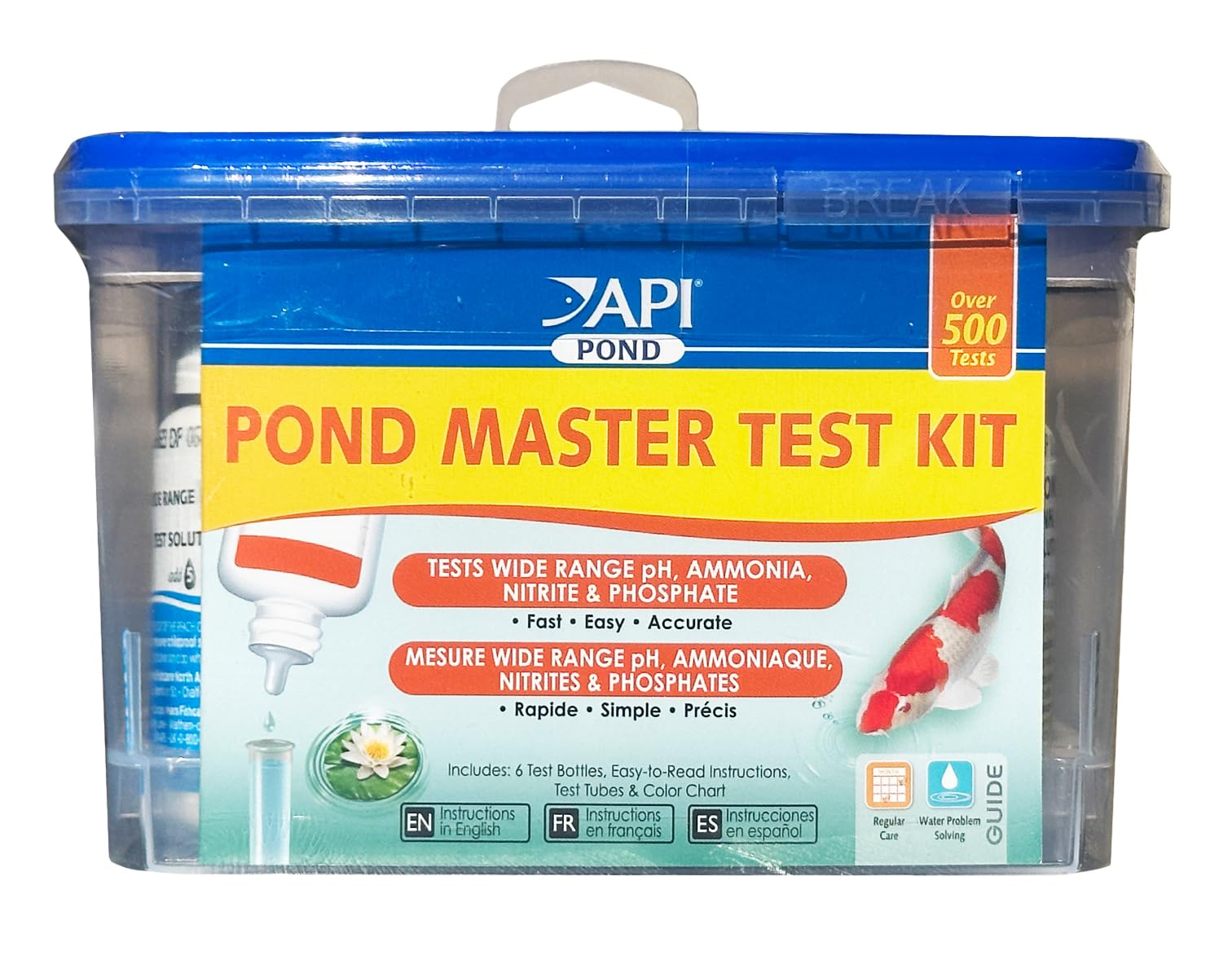
Comprehensive pond kit that measures pH, ammonia, nitrite and phosphate with enough reagents for 500+ tests.
Why I picked it: I picked this for its full set of liquid reagents and long supply of tests.
Best for: Pond and freshwater hobbyists who test weekly and want dependable liquid reagents.
Good value for the number of tests included.
Pros
- Covers pH, ammonia, nitrite and phosphate
- Supplies for 500+ tests
- Liquid reagents improve accuracy
- Clear color charts and instructions
Cons
- Plastic test tubes replaced original glass
- Each measurement takes several steps
My take
I rely on the API Pond Master kit when I want a solid, all-in-one chemical picture of my pond. The kit’s liquid reagents give me cleaner color shifts than the test strips I’ve used in the past, so I can distinguish small but important changes.
The included color cards and step-by-step instructions make routine testing fast once you get the hang of the drops and timings. The kit contains enough reagents for hundreds of tests, so I don’t worry about running out during a season of increased monitoring.
Two practical notes from my experience: check the expiration dates on the bottles before you start using the kit, and be prepared for plastic test tubes instead of the glass tubes older hobbyists might expect. Those plastic tubes work fine, but I find glass easier to clean.
2. General Hydroponics pH Test Kit – Best for pH Precision
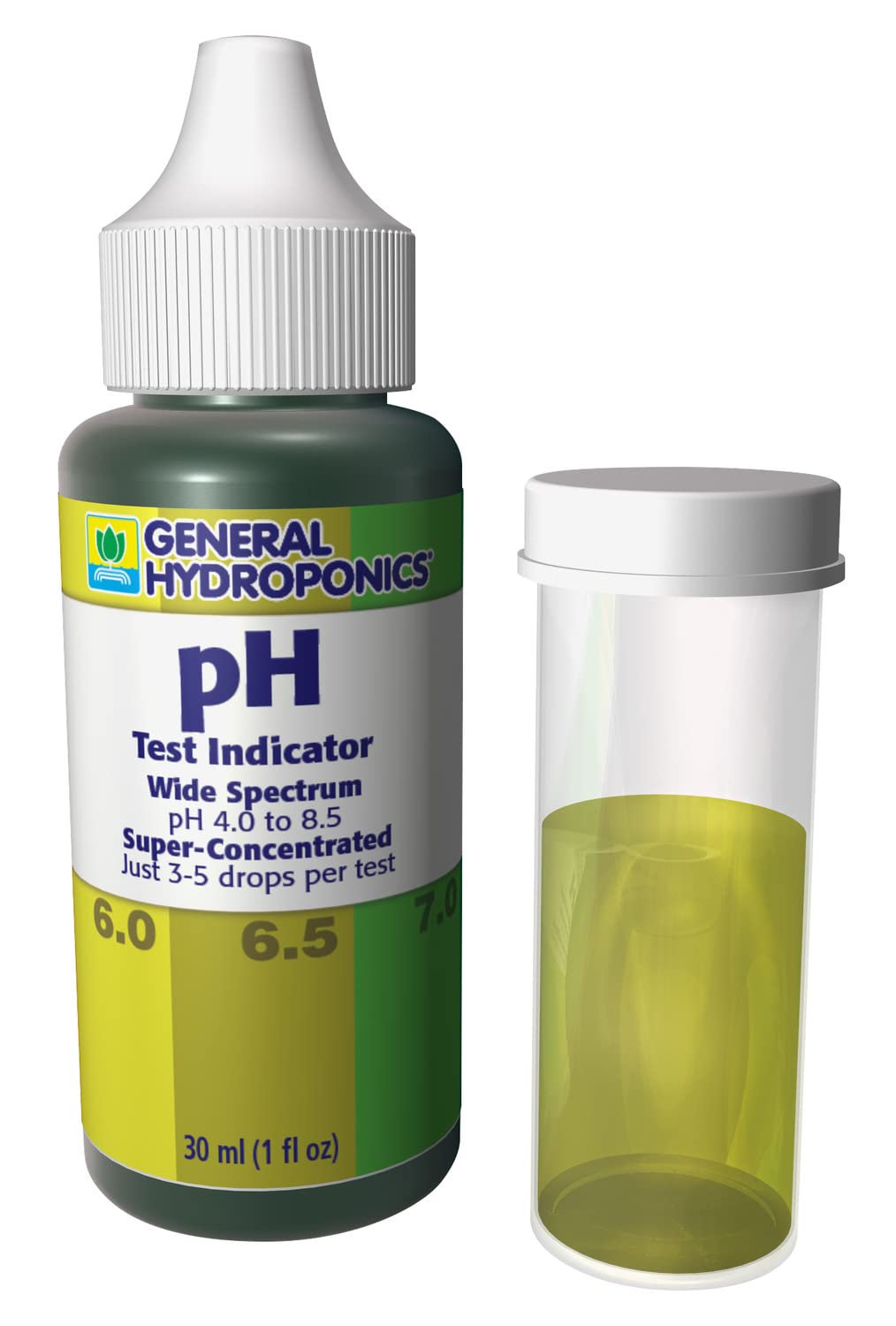
Compact pH kit with indicator fluid, built-in color chart, vial and pipette for quick pH checks.
Why I picked it: I wanted a small, reliable kit that gives quick pH readings without a meter.
Best for: Hydroponic growers and gardeners who need accurate pH checks on nutrient solutions.
Inexpensive single-purpose pH testing solution.
Pros
- Built-in color chart on the bottle
- Includes vial and pipette
- Quick and easy to use
- Works well compared to a meter
Cons
- Only measures pH
- Occasional leakage in shipment
My take
When I need a pH check fast I reach for the General Hydroponics kit. The color scale printed on the bottle makes matching straightforward and the small vial and pipette mean I can test right away without extra tools.
I compared a few readings against my calibrated meter and consistently landed within a useful range for gardening decisions — good enough for routine work where a meter isn’t necessary. Be aware that shipping can sometimes leave the packaging wet if a seal fails; the individual jars are usually still sealed.
3. Gouevn Soil Moisture Meter – Best Simple Moisture Meter
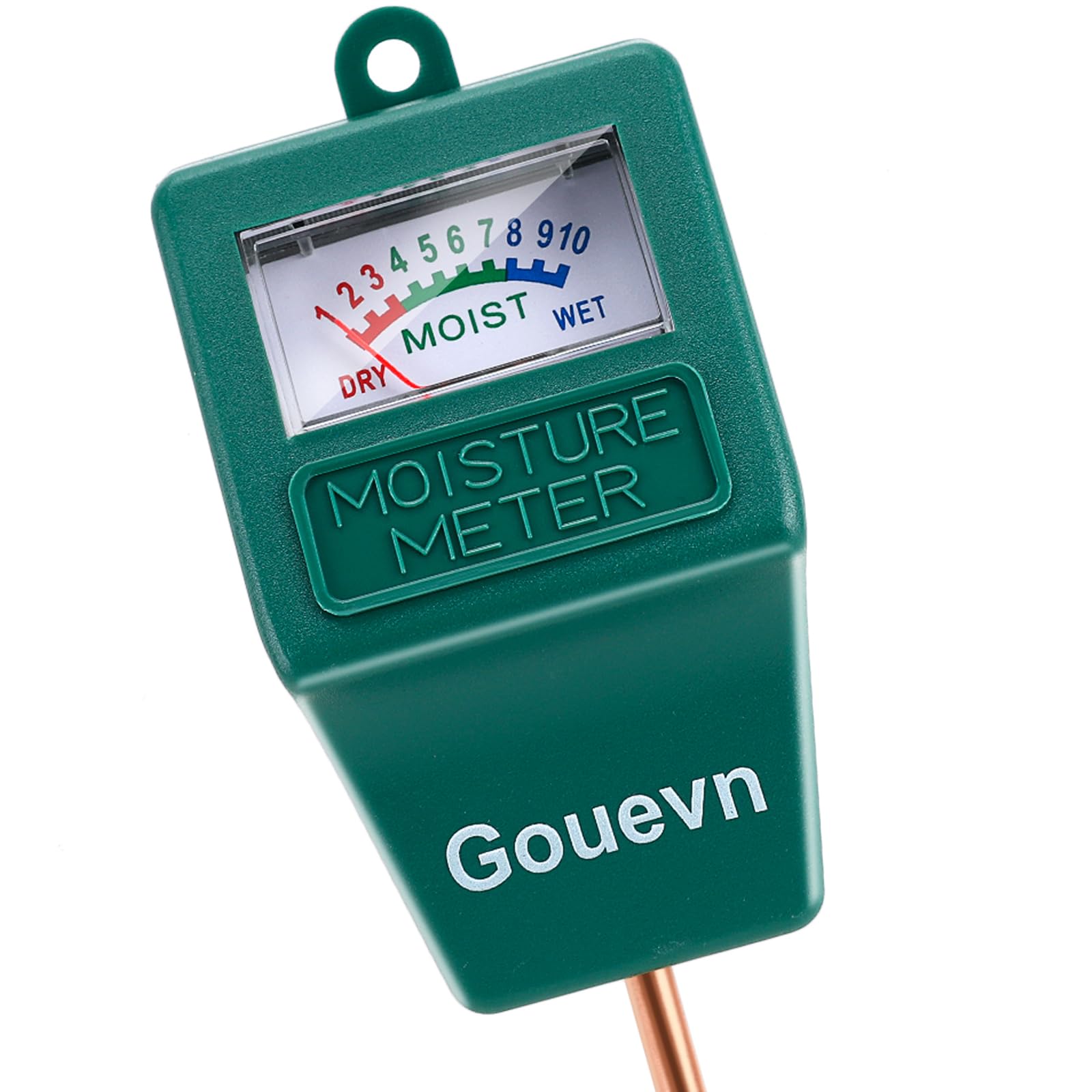
Analog moisture meter with large dial, battery-free operation, and a probe suited for indoor and outdoor use.
Why I picked it: I chose this for quick, battery-free moisture checks across many pots.
Best for: Houseplants and casual gardeners who want a no-fuss moisture gauge.
Extremely budget-friendly basic moisture checker.
Pros
- No battery required
- Large, easy-to-read dial
- Quick response
- Portable and lightweight
Cons
- Not for testing liquids
- Should not be left in soil
My take
This Gouevn meter is my go-to when I’m juggling lots of houseplants. It gives an instant needle reading that helps me avoid overwatering the most sensitive specimens.
The probe length is handy for deeper pots and the dial is readable without squinting. I do take it out after each check and wipe it clean, because the unit isn’t meant to be left in the soil long-term.
A minor caveat: I received one faulty unit in earlier purchases, but replacements arrived quickly. For the price I keep a spare on hand.
4. Dr.meter Soil Moisture Sensor – Best Value Moisture Meter
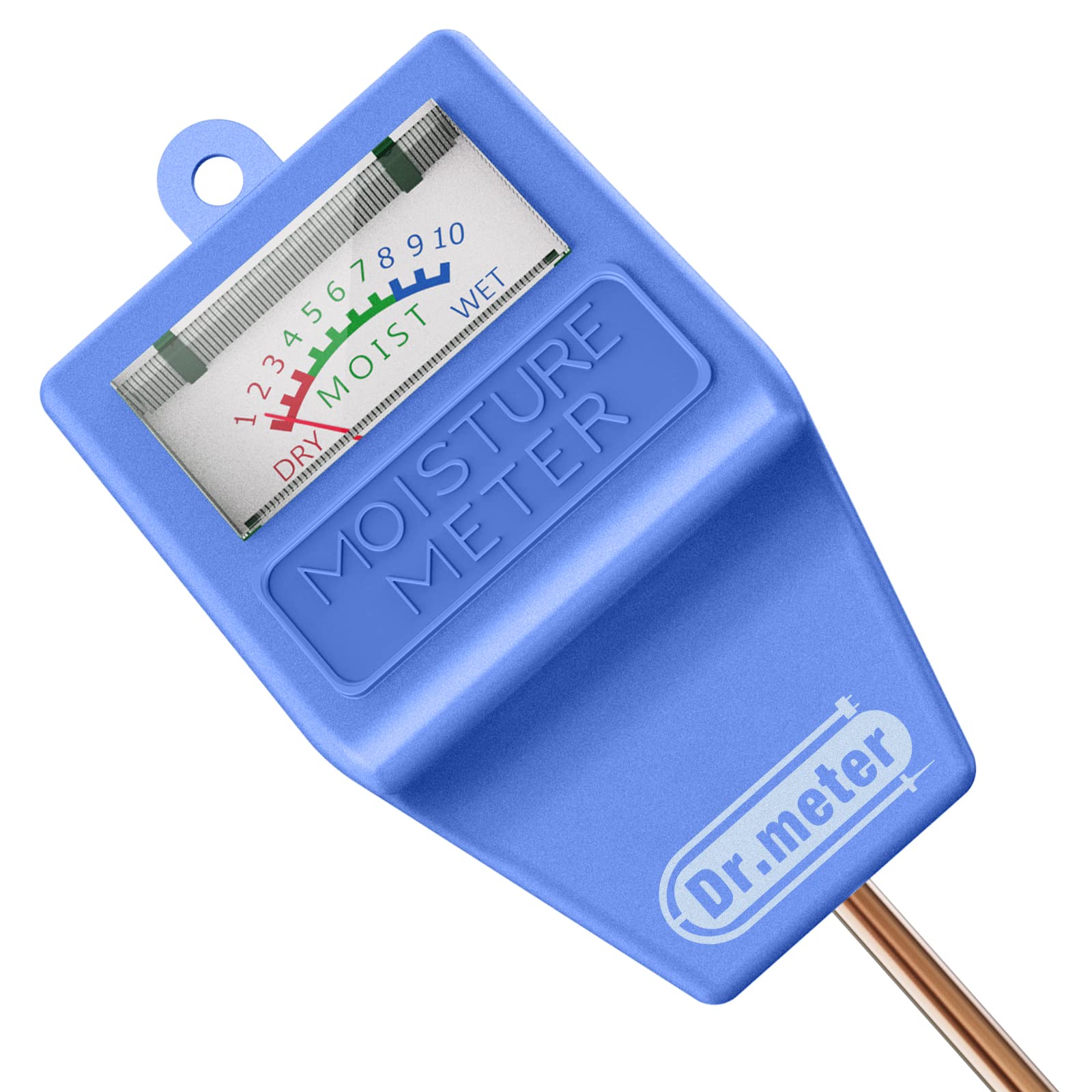
Simple color-coded moisture meter with a single probe that’s gentle on roots and requires no batteries.
Why I picked it: I appreciated the color-coded scale and the gentle single-probe design.
Best for: Gardeners who want fast, visual moisture guidance for pots and small plots.
Affordable and practical for routine checks.
Pros
- Color-coded readout
- No batteries required
- Gentle on plant roots
- Compact and portable
Cons
- Not for extremely hard soil
- Limited precision compared to meters
My take
I’ve used the Dr.meter unit both indoors and on the lawn to spot-check moisture levels, and it performs exactly as intended: quick, clear readings without fuss.
The color bands make decisions obvious—water now, wait, or comfortably moist—which is all many plants need. It won’t replace a lab or high-end meter for scientific work, but for everyday gardening it’s reliable.
5. Varify Water Hardness Test Strips – Best for Hardness Testing
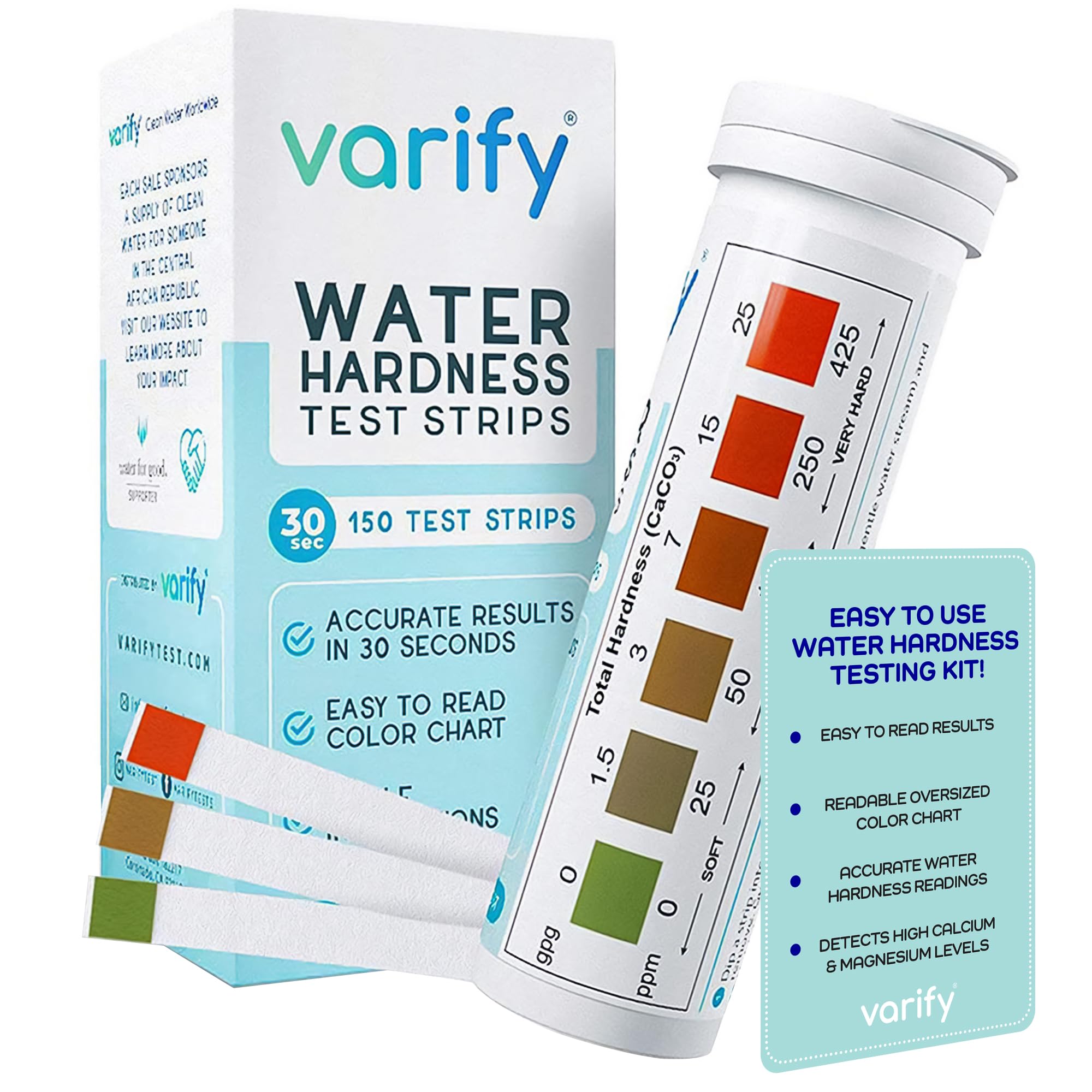
Dip-and-read strips for total hardness from 0–425 ppm, supplied in sealed pouches for longer shelf life.
Why I picked it: I valued the bulk supply and sealed pouches for ongoing hardness monitoring.
Best for: Home tap water, well owners, pool checks, and water softener adjustments.
Good value for frequent testing needs.
Pros
- Fast dip-and-read action
- 150 strips with sealed pouches
- Clear oversized color chart
- Wide measurement range
Cons
- Reports total hardness only
- Outer packaging can arrive crushed
My take
For checking hardness in tap water, dishwasher lines, and softener output I grab the Varify strips. The dip-and-compare routine takes seconds and the sealed pouches keep strips fresh between uses.
I used them to dial in a water softener and found the color comparisons straightforward. Keep in mind they read total calcium and magnesium together; they won’t break those two minerals apart if you need that level of detail.
6. WWD POOL Chlorine & pH Test Kit – Best for Pools & Spas
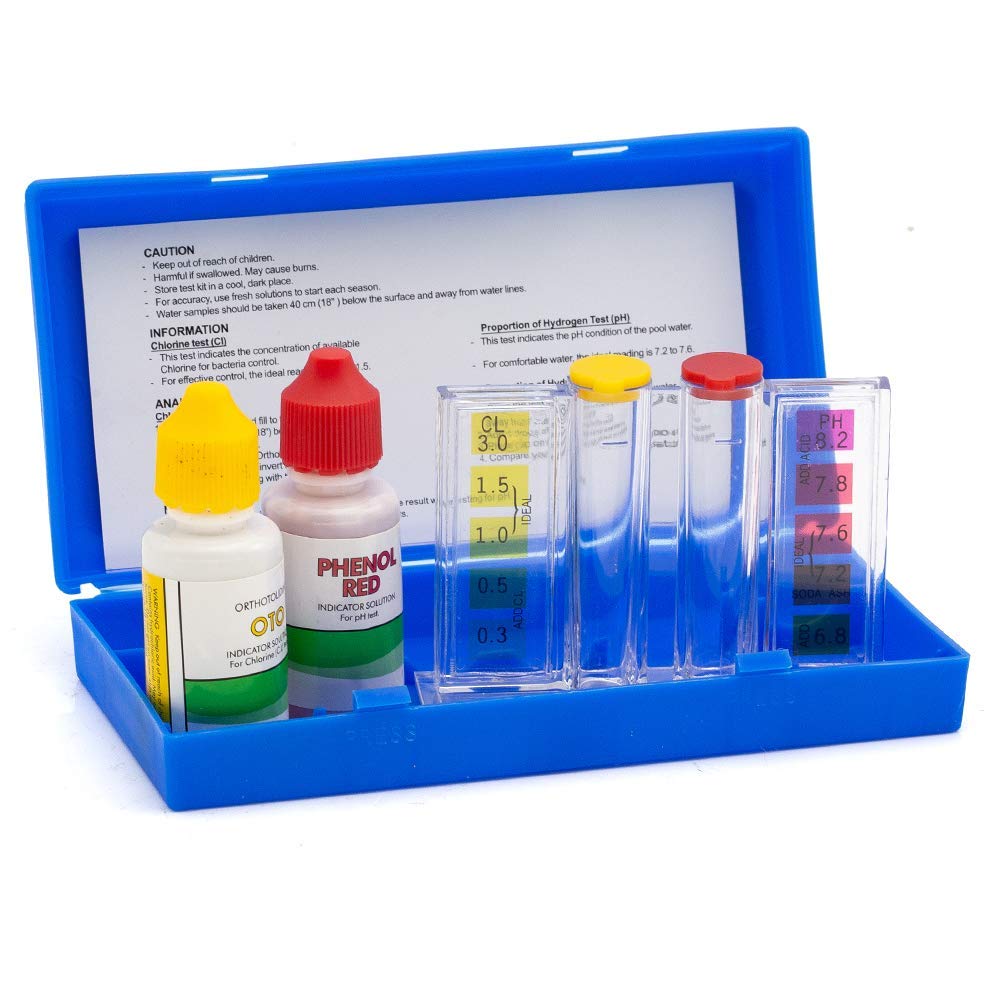
Two-way pool kit that tests chlorine (OTO) and pH with reagent bottles, plastic tester and carrying case.
Why I picked it: I kept this kit on hand for quick chlorine and pH spot checks of my pool.
Best for: Pool and spa owners who perform routine chemical checks.
Low-cost basic pool testing solution.
Pros
- Tests chlorine and pH
- Includes tester and protective case
- Simple drop-count procedure
- Portable for poolside use
Cons
- Color scales may fade over time
- Limited to basic pool chemicals
My take
This kit is exactly what I use for routine pool maintenance: fill the vials, add the drops, and compare colors. It gives quick peace of mind about sanitation and acidity.
My only operational tip is to store the kit away from direct sunlight so the printed color scales don’t fade, and check the reagent expiration dates before heavy usage. When the printed scales faded on my older kit the company replaced it, which I appreciated.
7. Dr.meter 2-Pack Soil Moisture Meters – Best for Multiple Plants
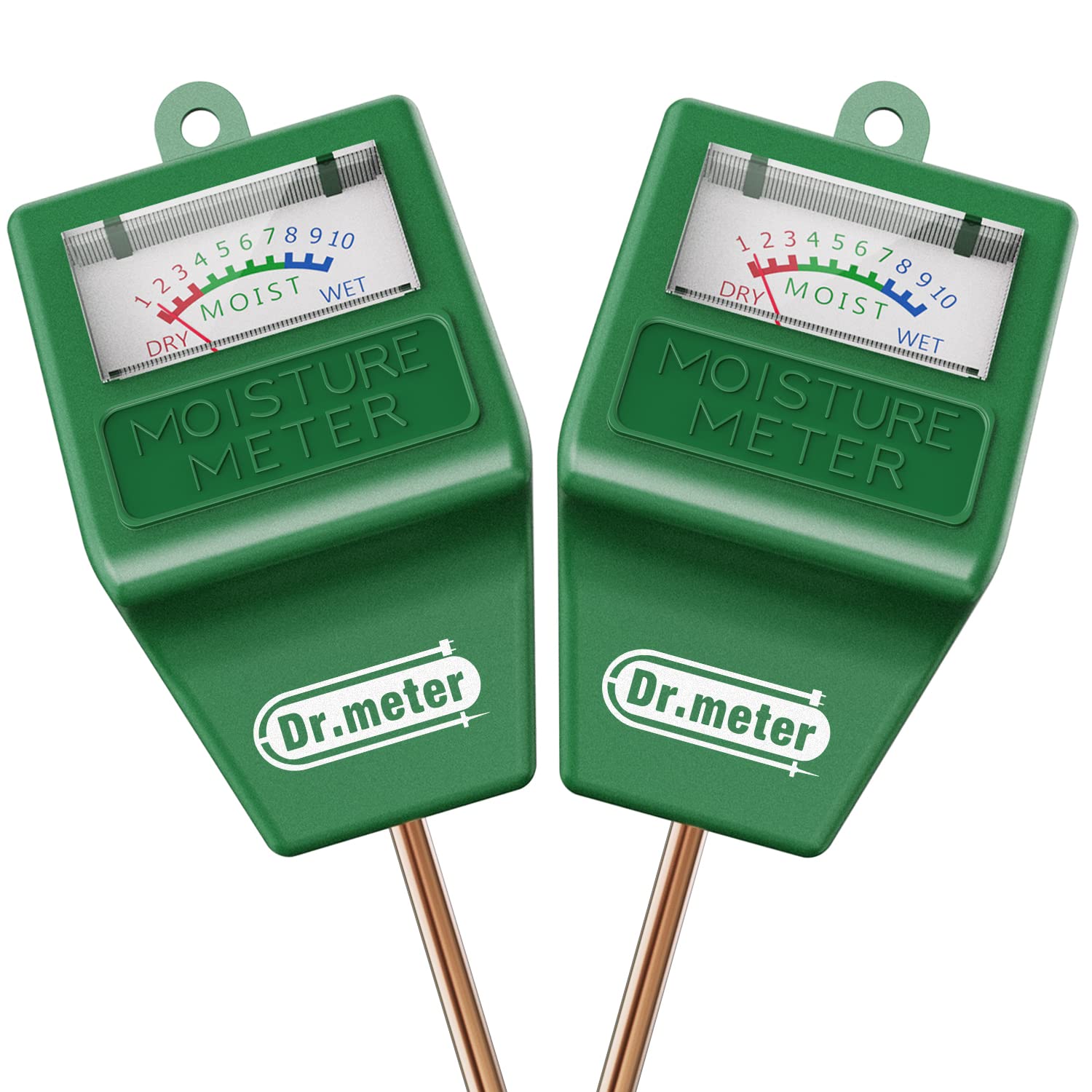
Two no-battery moisture meters with color-coded dials, giving quick checks for several plants or locations.
Why I picked it: I wanted two meters so I could check multiple zones without moving a single tool around.
Best for: Owners of many houseplants or gardeners who want a spare meter.
Good value when you need coverage for multiple spots.
Pros
- Two meters included
- No batteries needed
- Color-coded, easy readouts
- Great as backups
Cons
- Single probe limits depth options
- Not designed for liquid testing
My take
Having two meters made my routine rounds faster—one for indoor pots and one for the patio. The units are identical in feel and give consistent visual guidance.
I treat them as quick check tools: insert, read, remove, wipe. They’re lightweight and inexpensive enough that I don’t worry about leaving one in the shed for guests to use.
8. MySoil Professional Soil Test Kit – Best Lab-Grade Analysis
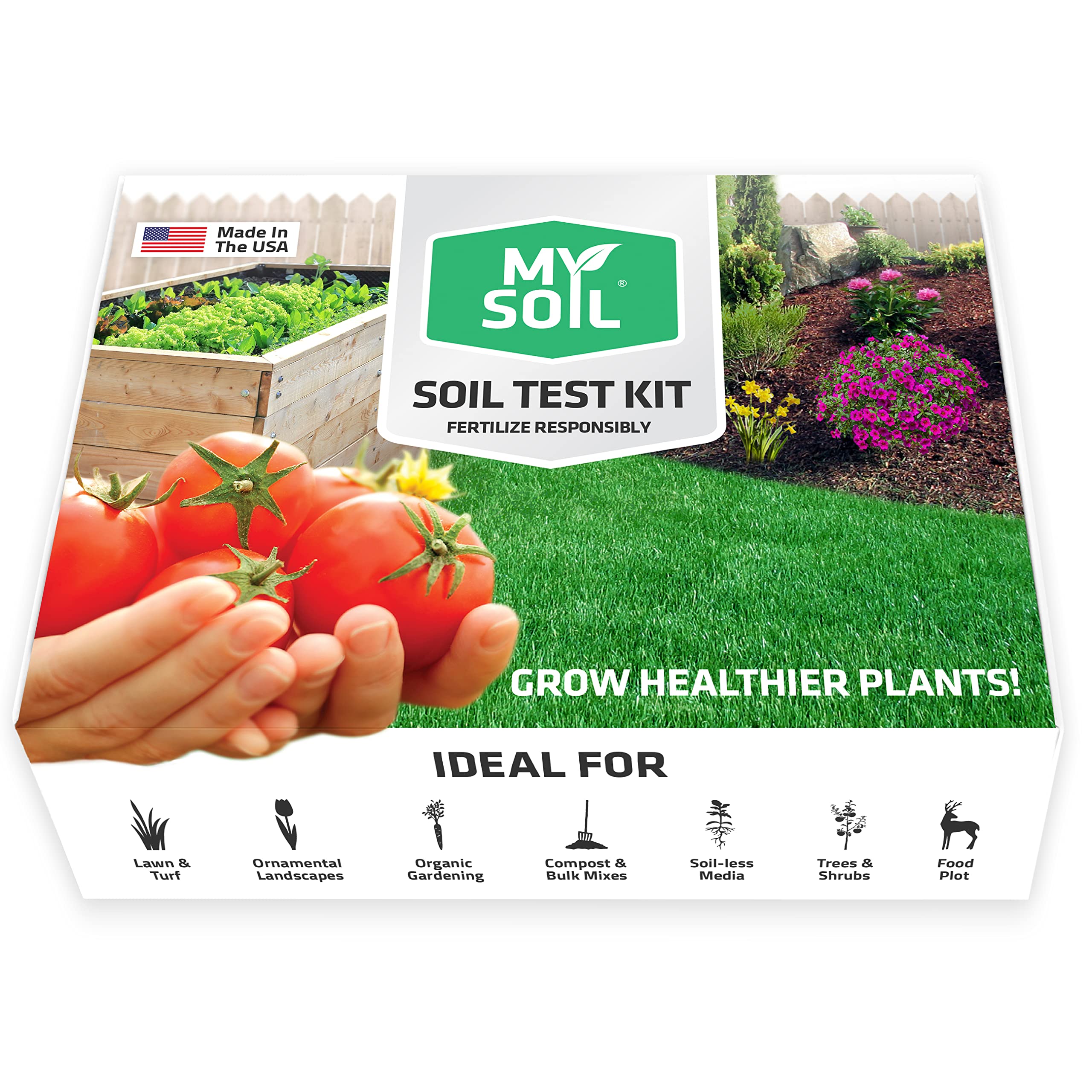
Mail-in soil test that measures 13 nutrients and pH, returns lab results with customized fertilizer recommendations.
Why I picked it: I wanted lab-accurate nutrient data and specific amendment guidance.
Best for: Gardeners who want a detailed, actionable soil nutrient plan.
Higher cost but provides professional lab accuracy.
Pros
- Professional lab analysis
- Measures 13 nutrients and pH
- Custom fertilizer recommendations
- Prepaid mailer included
Cons
- Single-use kit
- Results take several days
My take
When I needed a precise diagnosis of my lawn’s poor condition I mailed a sample in to MySoil and appreciated the depth of the report. The analysis covered nitrogen, phosphorus, potassium and trace nutrients and translated those findings into clear recommendations.
I followed the suggested amendments and saw measurable improvement in weeks. The trade-off is time and the single-use nature of the kit, but for targeted fixes and for planning seasonal fertilizer applications it’s worth it.
How I Choose a Water Garden Test Kit
What to test for first
I always start with pH and a primary sanitizer or nutrient measure for any water body. For ponds that means pH, ammonia, nitrite, and phosphate; for pools I focus on chlorine and pH; for tap water I check hardness.
- Pond basics: pH, ammonia, nitrite, phosphate.
- Pool basics: chlorine (or bromine) and pH.
- Tap/well: total hardness and occasional chlorine.
- Garden soil: moisture and a lab nutrient test when planning amendments.
Types of test kits and when I use them
I use liquid reagent kits when I need better visual accuracy for chemicals. Test strips are my go-to for fast, frequent hardness checks. Analog moisture meters are perfect for daily watering decisions, and a mail-in lab test is what I choose when I need a full nutrient prescription.
- Liquid reagent kits: better color gradients and repeatable results.
- Test strips: quickest method for high-volume checks.
- Analog moisture meters: cheap, no batteries, fast readings.
- Mail-in lab tests: best for full nutrient analysis and long-term plans.
Using kits effectively
I always follow reagent timings and use clean vials. For moisture meters I clean the probe after each use and avoid leaving the unit in the soil. For strips I keep the bottle sealed and avoid touching the reactive pad.
- Check reagent expiration dates regularly.
- Rinse and dry test tubes and probes after every use.
- Store strips in sealed pouches to preserve accuracy.
- Repeat tests at the same time of day for consistency.
Frequently Asked Questions
How often should I test my pond or pool?
I test pools weekly during active season and more often when conditions change. For ponds I test weekly and immediately if fish act unusual or after heavy rain.
Are liquid reagent kits better than strips?
I find liquid reagents give clearer color shifts and finer resolution for chemicals like ammonia and phosphate, while strips are faster for routine hardness checks.
Can I leave moisture meters in the soil permanently?
I don’t leave analog meters in soil long-term; manufacturers advise removing and cleaning them after each check to avoid probe damage and inaccurate readings.
Final Take
I use a mix of these tools depending on the job: a liquid reagent pond kit for detailed chemistry, strips for quick hardness checks, simple analog meters for watering decisions, and a mail-in lab test when I want a full nutrient prescription.
If you want one kit to start with for ponds, I keep a comprehensive reagent kit on hand. For lawns and gardens, pair a moisture meter with a lab test once a season to fine-tune fertilizer choices.
